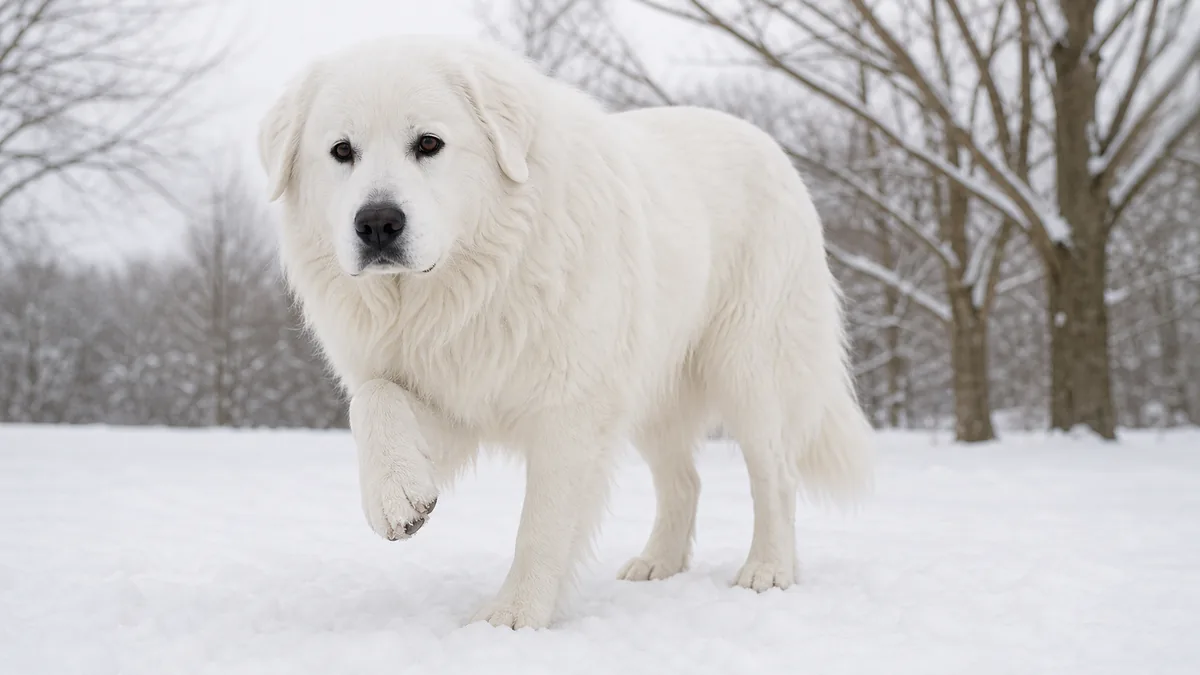
The first winter I walked one of my dogs on a freshly salted sidewalk, she stopped mid-stride and started chewing at her own foot. I thought she'd stepped on something sharp. She'd stepped on rock salt, and it was already starting to sting.
Paw pads are tough, but they were never built for road salt, ice, or hours of standing on frozen ground. A few small habits before and after every winter walk make the difference between sore, cracked pads and paws that come through the season fine.
None of this replaces a vet visit if something looks wrong. Think of it as the daily checks worth building into your walk routine.
Jump to a section
How to protect your dog's paws in winter
Salt, ice, and cold pavement all hit paw pads differently — here's the daily check, the booties training method, and the frostbite signs that mean call the vet.
1. Why Winter Is Hard on Paws
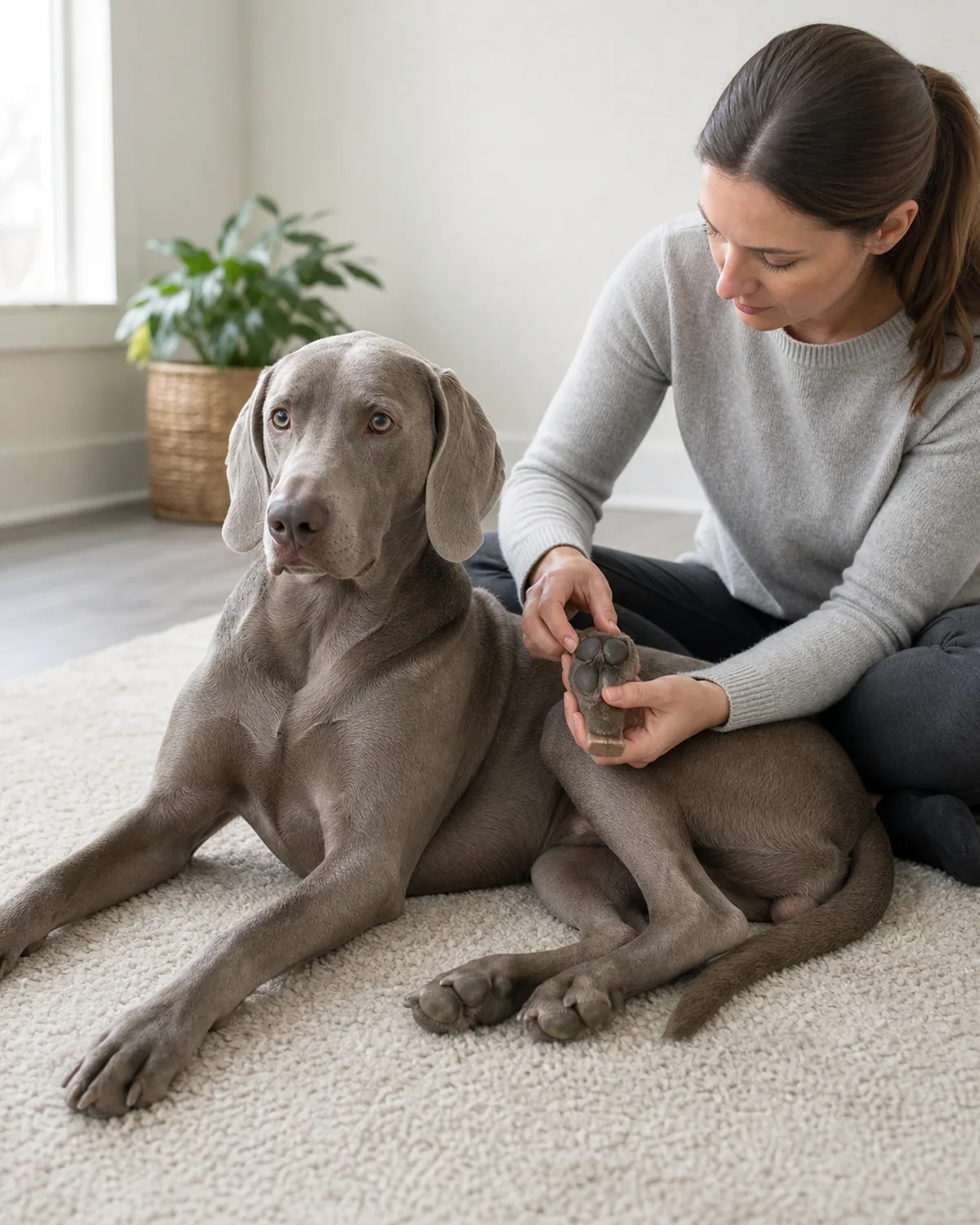
Paw pads are made of thick, fatty tissue built to handle rough ground, not sustained cold and chemical exposure. Winter throws both at them at once.
Cold pavement pulls moisture out of the pad, the same way cold air dries out your own skin. Add road salt and ice-melt chemicals on top of that, and the pad's protective barrier breaks down faster than most owners expect.
The result shows up as cracking, dryness, or small splits along the edge of the pad. None of that heals quickly if the same exposure repeats every single walk.
2. The Everyday Paw Check
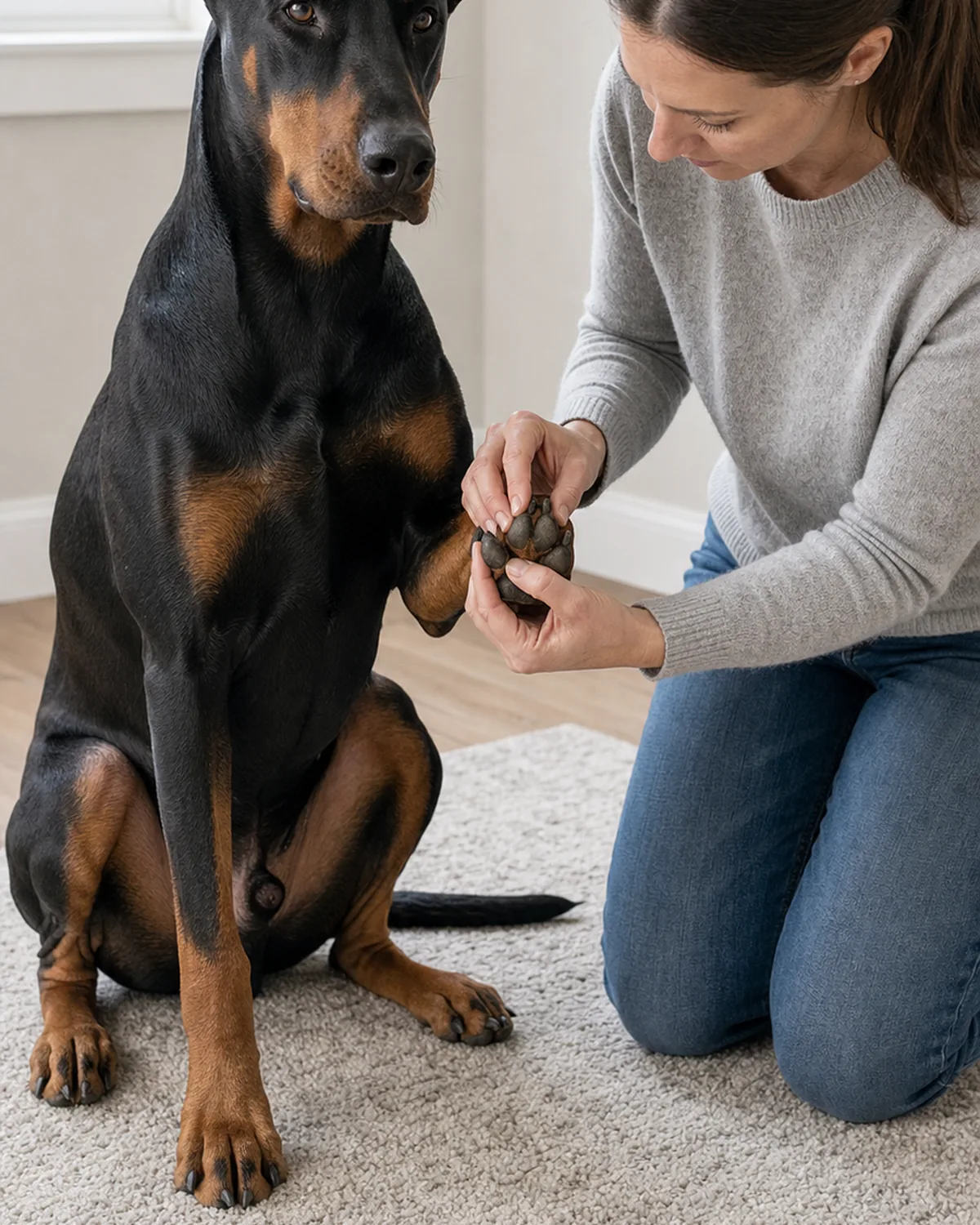
A healthy paw pad feels smooth and slightly springy, not hard, cracked, or flaking. Run a hand over each pad before and after a walk and you'll notice a problem long before it turns into a limp.
Spread the toes gently and check between them too. That's where ice balls, salt crystals, and small cuts hide, and it's the spot most owners skip.
Make this part of your normal routine rather than something you only do when a dog is already favoring a foot. Thirty seconds per paw, four paws, every walk.
3. Ice-Melt and Road Salt: The Hidden Burn Risk
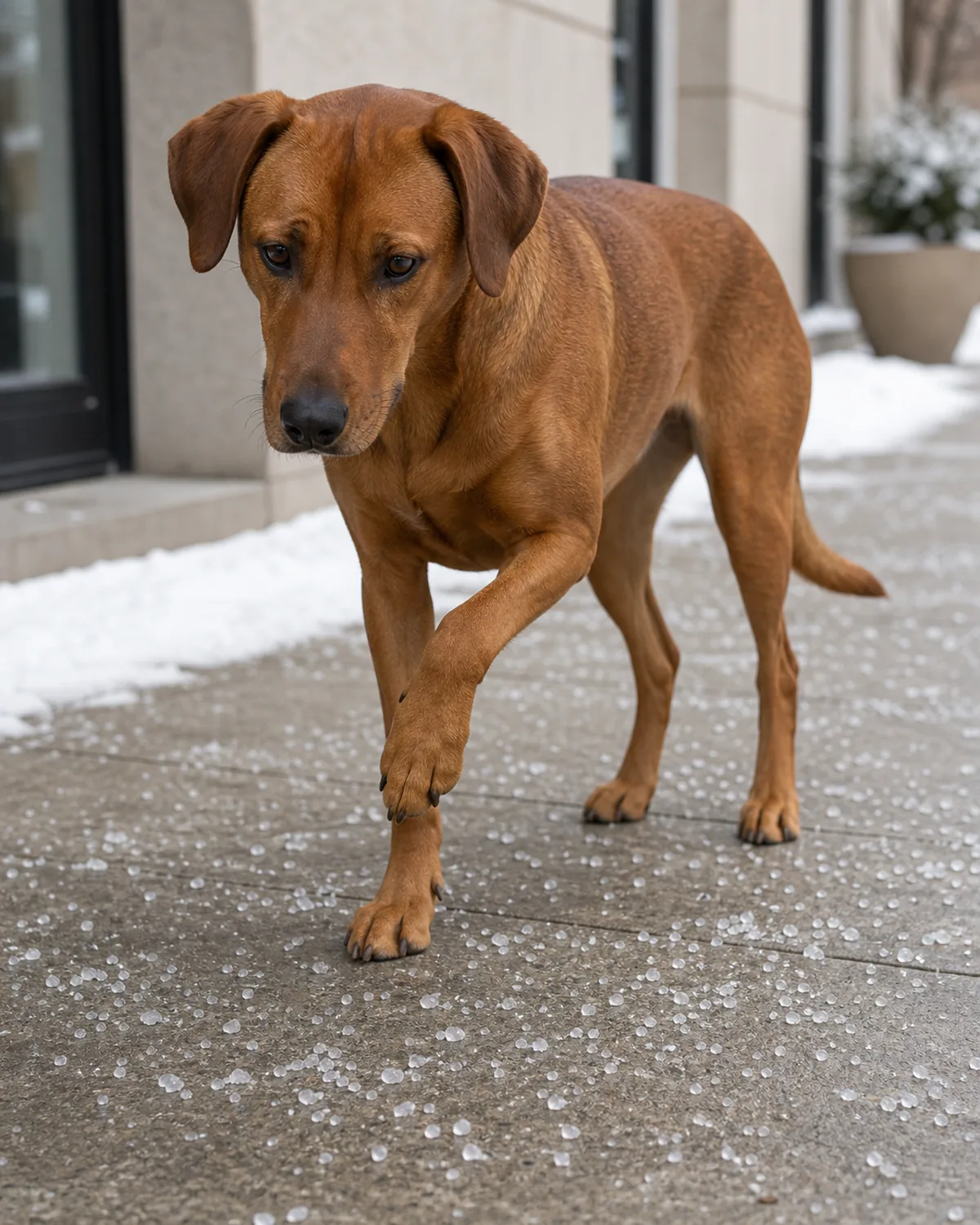
Rock salt and most ice-melt products are mild chemical irritants. On contact, they can dry out and crack a paw pad the same way they'd irritate bare skin left in contact too long.
The bigger risk is what happens after the walk. Dogs lick their paws to clean them, which means any salt residue gets swallowed along with the licking, and that can upset a dog's stomach or worse in larger amounts.
Wipe or rinse paws the moment you're back inside, before your dog gets a chance to lick them clean on the doormat.
Before you head out the door
The one thing that decides whether today's walk is paw-safe
Skip the guesswork. Touch the ground for five seconds and check for these two things before you decide what your dog needs today.
Dry & ClearBare paws are fineNo visible salt, no ice, no standing snow. A normal walk with a paw check after is enough.
Fresh SaltBooties or balmVisible white crystals on the sidewalk mean the heaviest chemical concentration is right now, not tomorrow.
Snow & IceCheck for ice ballsLonger fur between the toes picks up snow that refreezes. Plan a mid-walk toe check either way.
Deep ColdShorten the walkExtreme cold calls for a shorter route regardless of coat type, plus a full paw check the moment you're back inside.
Small, thin-coated, and senior dogs need the safer tier a size up. When in doubt, treat today's walk like the harder condition, not the easier one.
4. Snow and Ice Balls Between the Toes
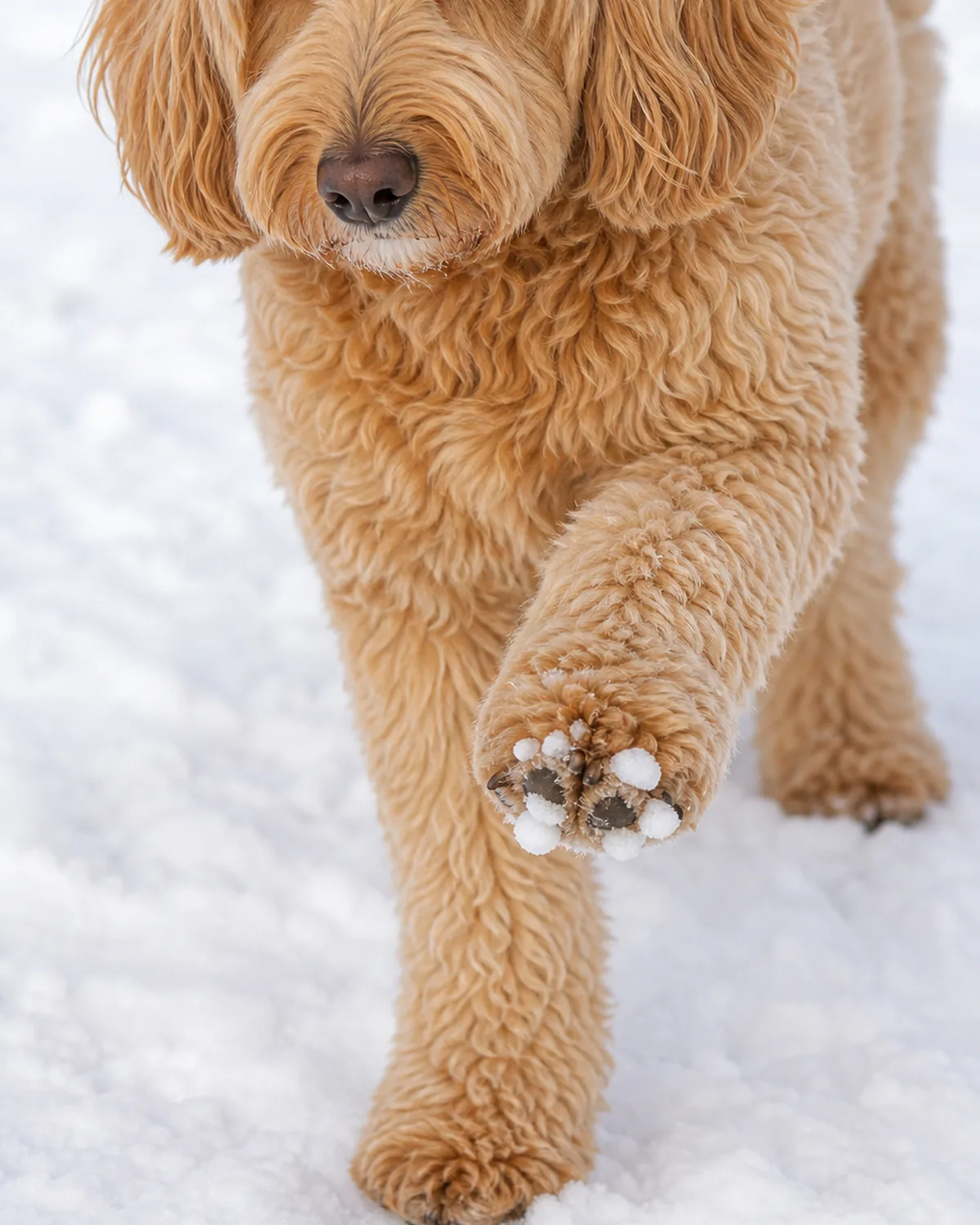
Dogs with longer fur between their toes pick up snow that melts slightly from body heat, then refreezes into hard little ice balls. Those balls press into the pad with every step and can be more painful than the cold itself.
If your dog starts limping, hopping, or stopping to chew at a paw mid-walk, ice balls are the first thing to check, not an injury.
A quick trim of the fur between the pads before winter starts keeps snow from having anywhere to stick. A groomer or a careful pass with blunt-tip scissors handles this in a few minutes.
5. Booties: Getting a Dog to Actually Wear Them
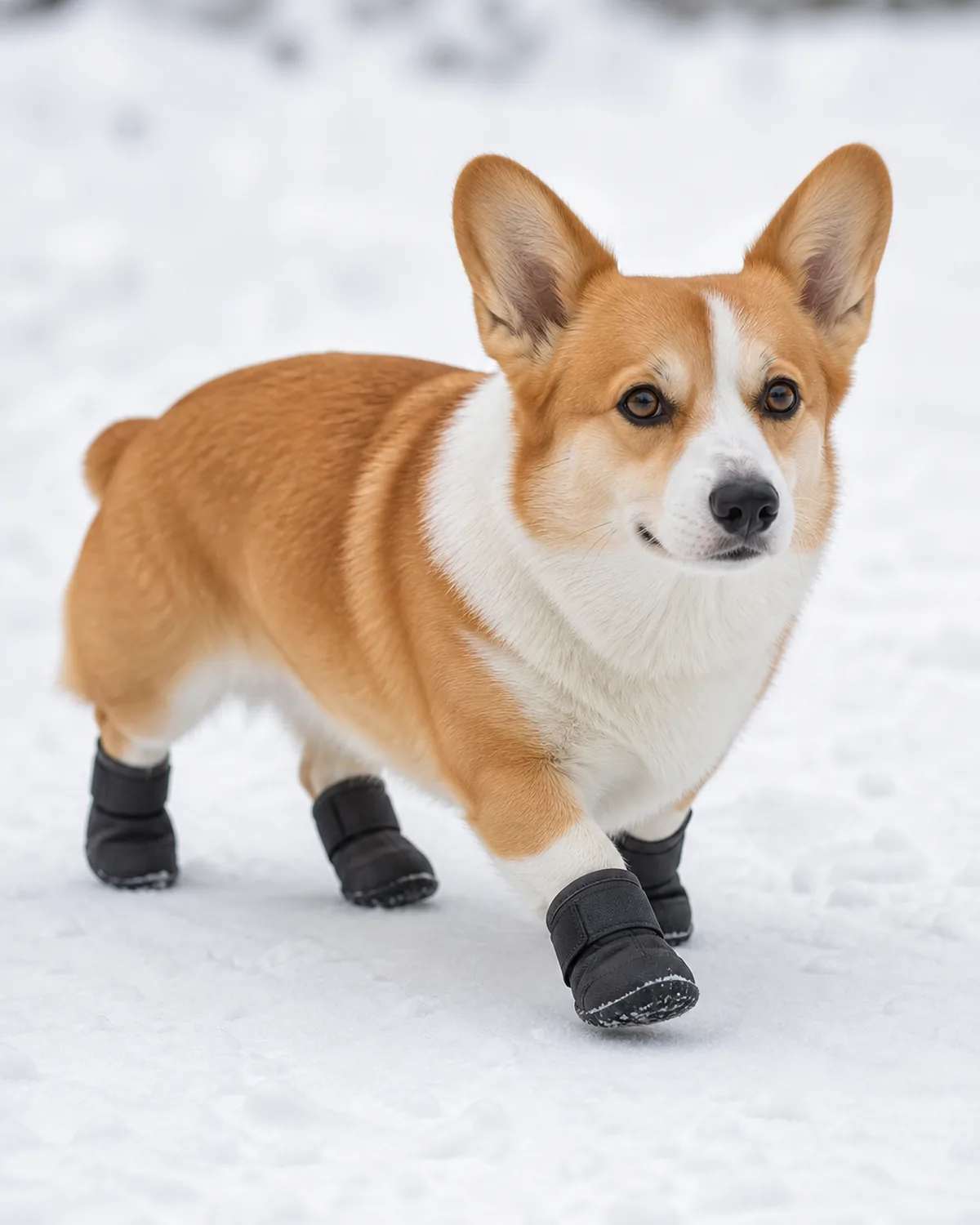
Most dogs freeze in place the first time booties go on, and most owners give up right there. Treat that stiff, confused walk as normal, not as proof the dog hates them.
Start indoors with one bootie at a time, pairing each one with a treat, and let your dog walk around the house for a few minutes before adding the rest. Repeat that a few days in a row before the first outdoor test.
Once a dog tolerates all four indoors without pawing at them, a short walk outside is the next step. Building it up over a week beats forcing all four on for a long walk on day one.
6. Paw Wax and Balm: What They Do (and Don't)
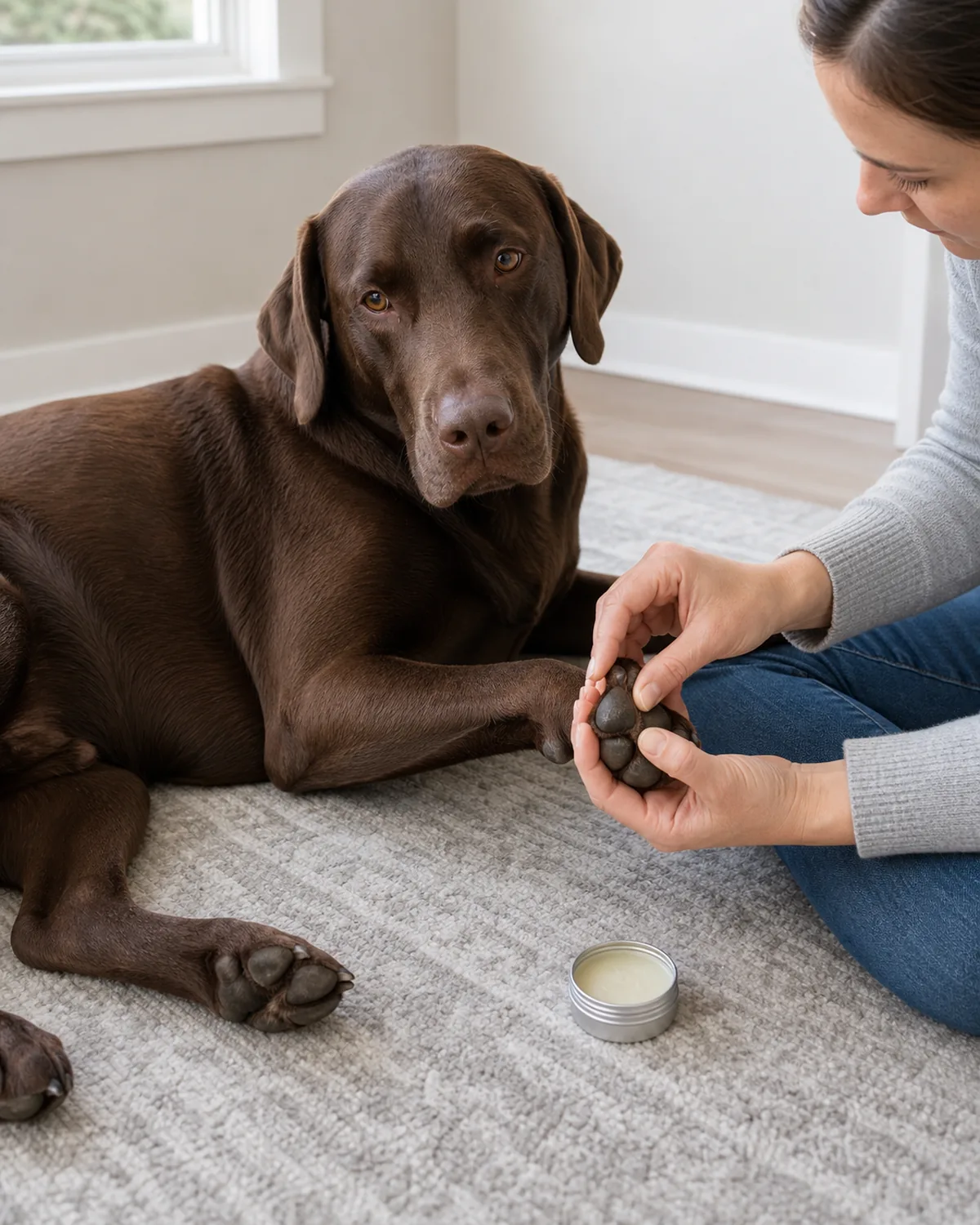
Paw wax and balm coat the pad in a thin protective layer that blocks salt and moisture from soaking in, similar to how lip balm protects chapped lips. Rubbed in before a walk, it buys the pad some real protection against drying and mild chemical exposure.
What it won't do is replace booties for a dog that struggles on ice or walks long distances on heavily salted routes. Balm protects against dryness and chemicals, not against the mechanical wear of a long walk on rough frozen ground.
The two work well together: balm for everyday walks, booties for longer outings or especially harsh conditions.
The winter paw care do’s and don’ts
What to do — and skip — all season long
Most winter paw problems trace back to one of these lines. Read both columns once before the first snowfall.
Always Do
- Rinse or wipe every paw the moment you're back inside.
- Dry fully between the toes, not just the tops of the paws.
- Check between the toes for ice balls and salt crystals.
- Trim the fur between paw pads before winter starts.
- Introduce booties indoors first, one at a time, with treats.
- Keep nails trimmed short for better ice traction.
- Watch for pale, grey, or unusually cold-feeling paws.
- Call your vet the same day for any frostbite warning sign.
Never Don’t
- Never use hot water to warm a cold paw — lukewarm only.
- Never ignore a dog licking or chewing at its own foot.
- Never shave the fur between the pads down to bare skin.
- Never force all four booties on for a long walk on day one.
- Never skip the toe check on a "quick" five-minute walk.
- Never extend outdoor time in extreme cold to finish a routine.
- Never substitute human hand lotion for a dog-safe paw balm.
- Never wait out a limp assuming "it's probably just the cold."
7. The Post-Walk Paw Rinse and Dry Routine
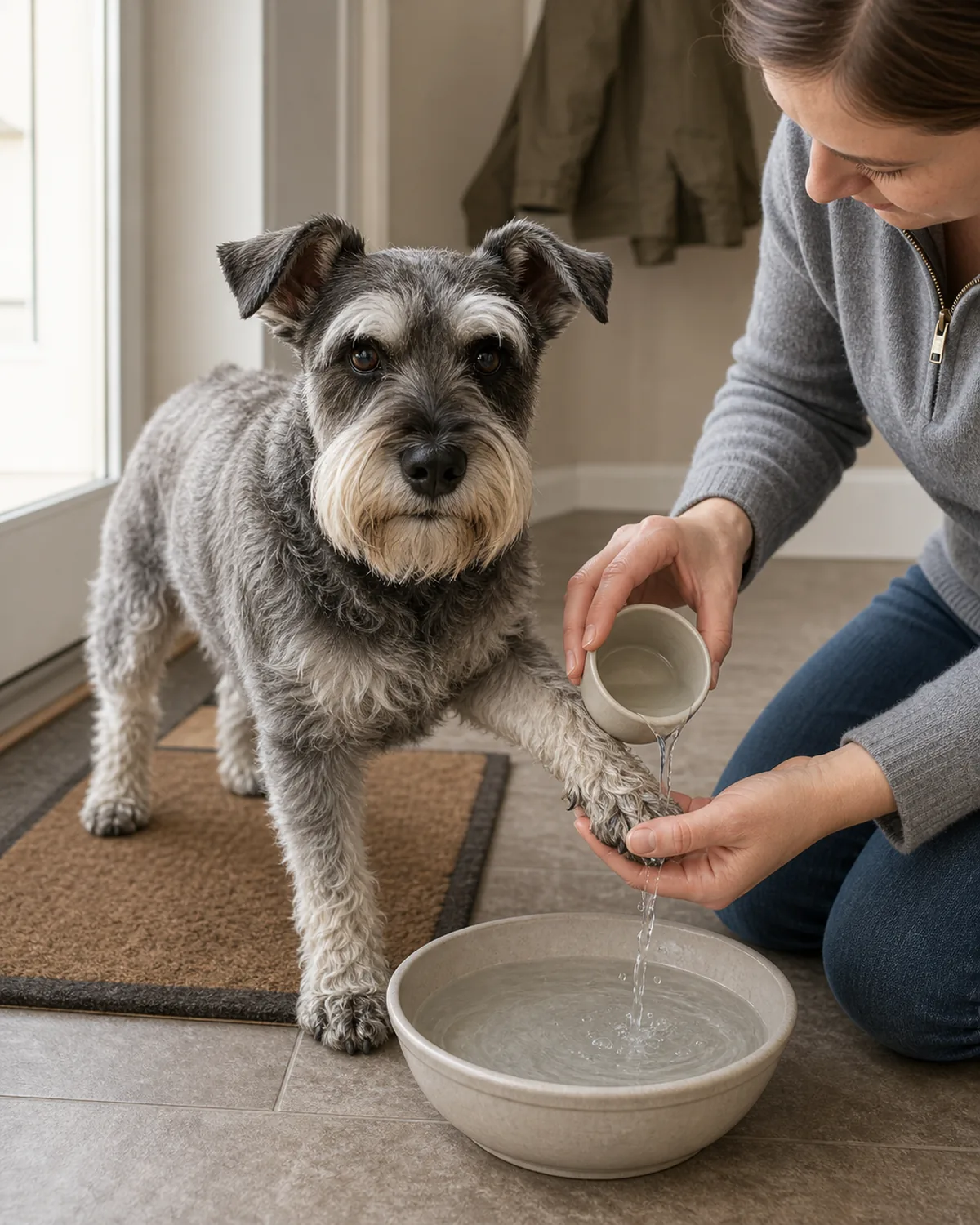
A shallow basin of warm water by the door makes this routine easy to keep. Dip and wipe each paw for a few seconds, working between the toes where salt and ice tend to collect.
Dry each paw fully with a towel afterward. Leftover moisture between the toes in cold weather is exactly what encourages cracking and irritation overnight.
Keep the basin and towel by the door all season so the routine takes under a minute per walk instead of becoming a chore you skip on busy days.
8. Nail Length and Winter Traction
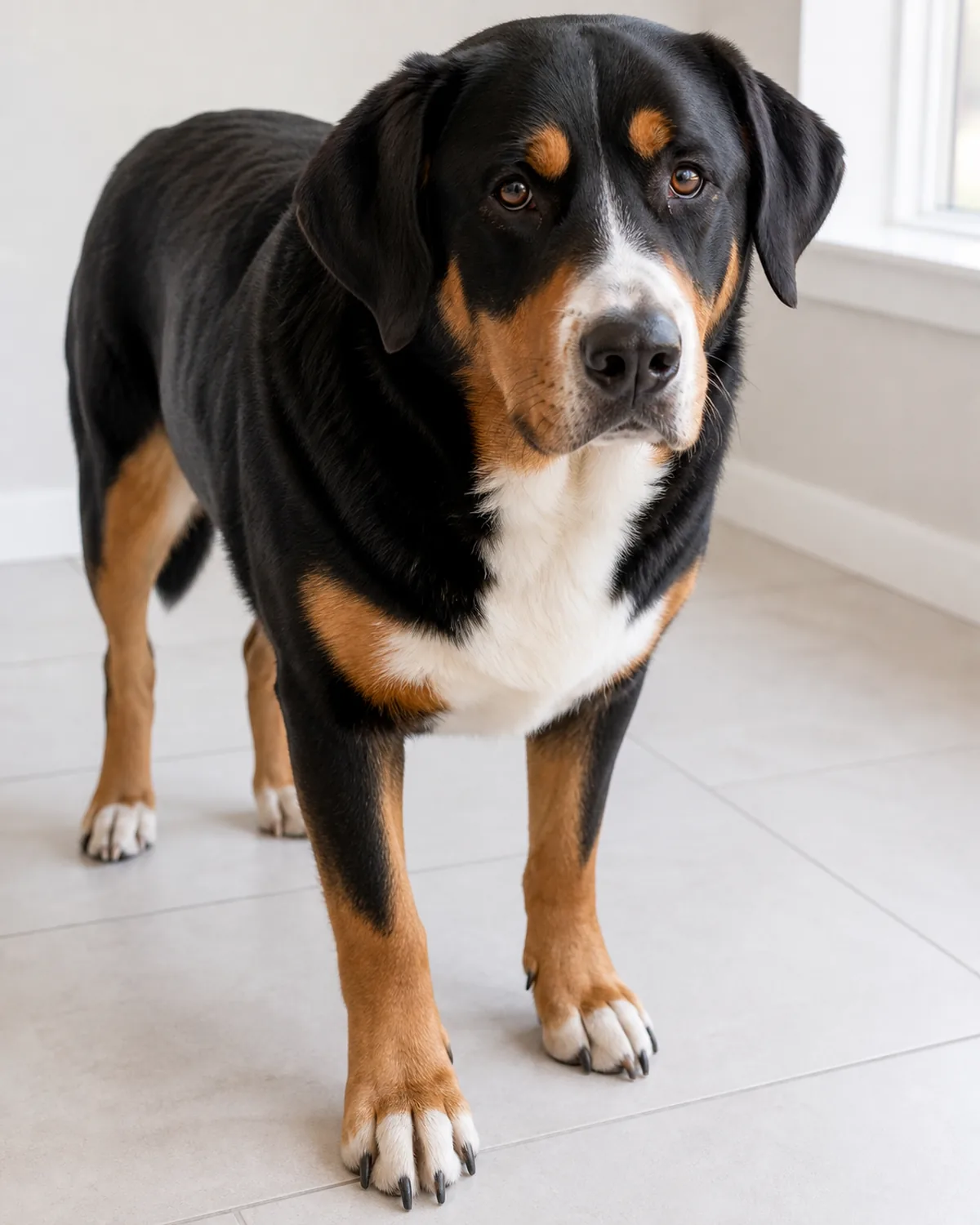
Long nails change how a paw contacts the ground, pushing the toes slightly out of their normal grip position. On ice or packed snow, that small shift is often the difference between a stable step and a slide.
Nails that click on hardwood floors are already too long for good traction anywhere, and winter conditions make that gap in grip much more obvious. Regular trims through the season keep the paw's natural traction working the way it's supposed to.
For a full walkthrough of doing this safely at home, see how to trim your dog's nails.
9. Frostbite Warning Signs (When to Call the Vet)
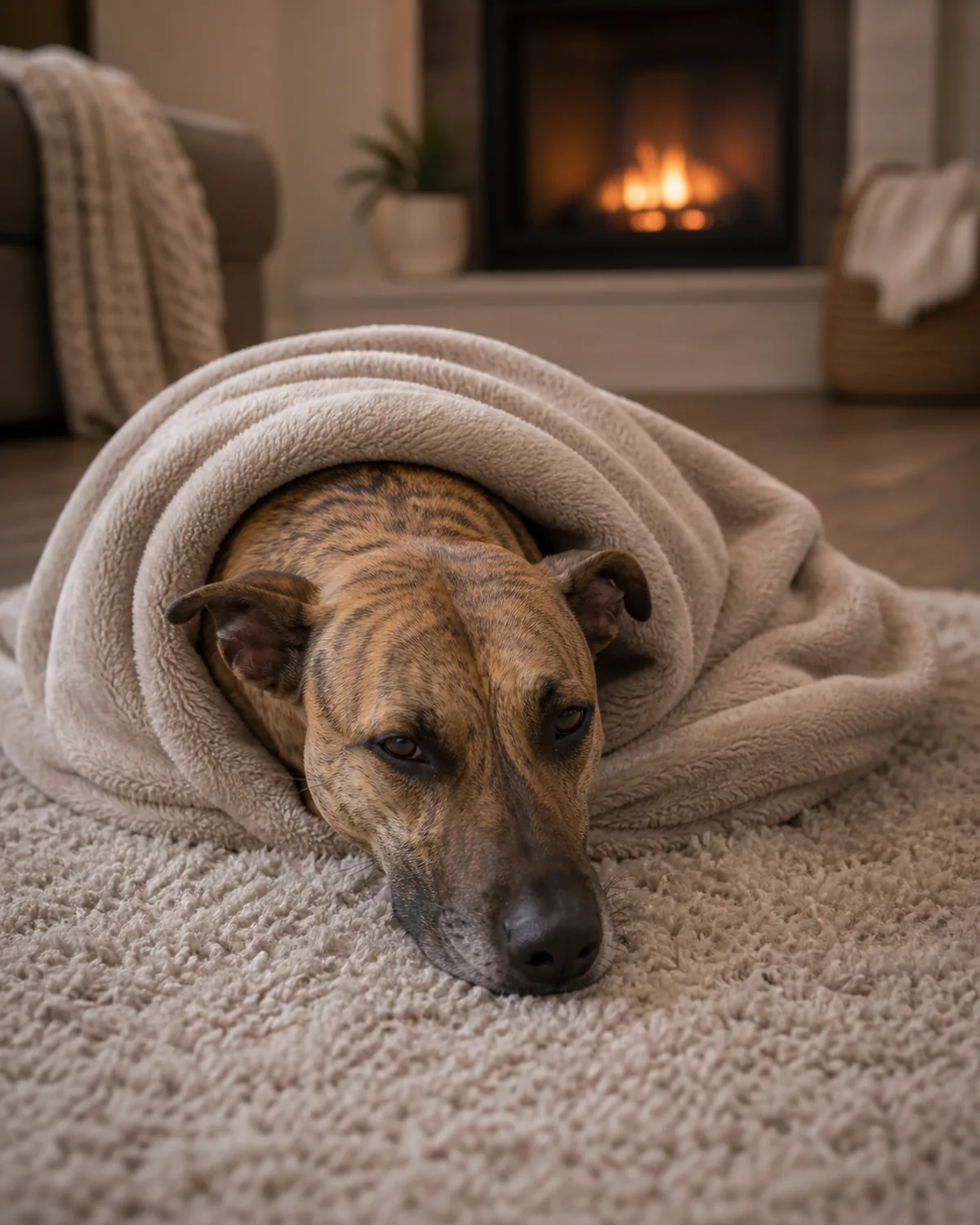
Frostbite targets the parts of a dog with the least blood flow and the least fur coverage, which is exactly why paw pads, ear tips, and tail tips are the areas to watch. Early signs include skin that looks pale, grey, or bluish, and a paw that feels unusually cold or stiff compared to the others.
A dog reacting strongly when a paw is touched, or limping after time outside in extreme cold, is worth a same-day call to your vet rather than a wait-and-see approach.
This isn't something to diagnose or treat at home. If you notice any of these signs, warm the dog gradually indoors and call your vet.
Save this before the first snowfall
Winter Paw Care Cheat Card
Keep this handy by the door all season.
- Daily check: soft, springy pads with no cracks; clear between the toes.
- Frostbite signs: pale, grey, or bluish skin; unusually cold or stiff paw.
- Post-walk step 1: rinse or wipe all four paws right away.
- Post-walk step 2: dry fully between the toes with a towel.
- Post-walk step 3: apply paw balm if pads feel dry or cracked.
- Booties step 1–2: one bootie at a time indoors, paired with a treat.
- Booties step 3–4: all four indoors first, then a short outdoor test.
General guidance, not a substitute for your veterinarian's advice for your specific dog.
10. Cold Tolerance by Coat Type and Size
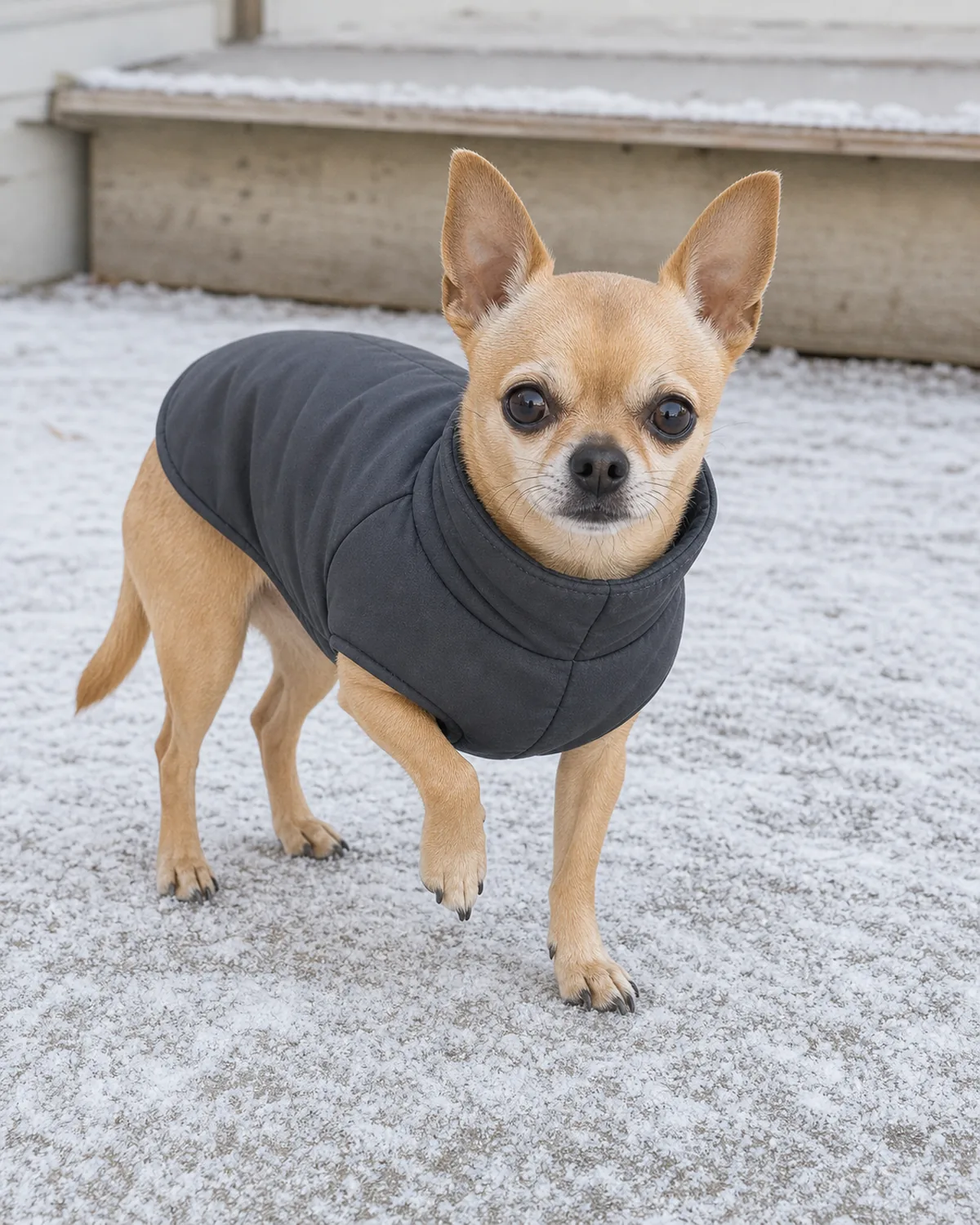
A thick double coat and a bigger body hold heat far longer than a thin single coat on a small frame. That's why the same ten-minute walk can be easy for one dog and genuinely cold for another standing right next to it.
Small dogs, short-haired dogs, puppies, and senior dogs typically need a coat or sweater and a shorter time outside once temperatures drop toward freezing. Thick double-coated dogs usually do fine longer, though their paws still need the same checks as everyone else's.
Watch your own dog's behavior, not a chart. Shivering, tucking a paw up, or wanting to turn back early are all signs to head inside regardless of what the thermometer says.
11. Indoor and Yard Setup for a Paw-Friendly Winter
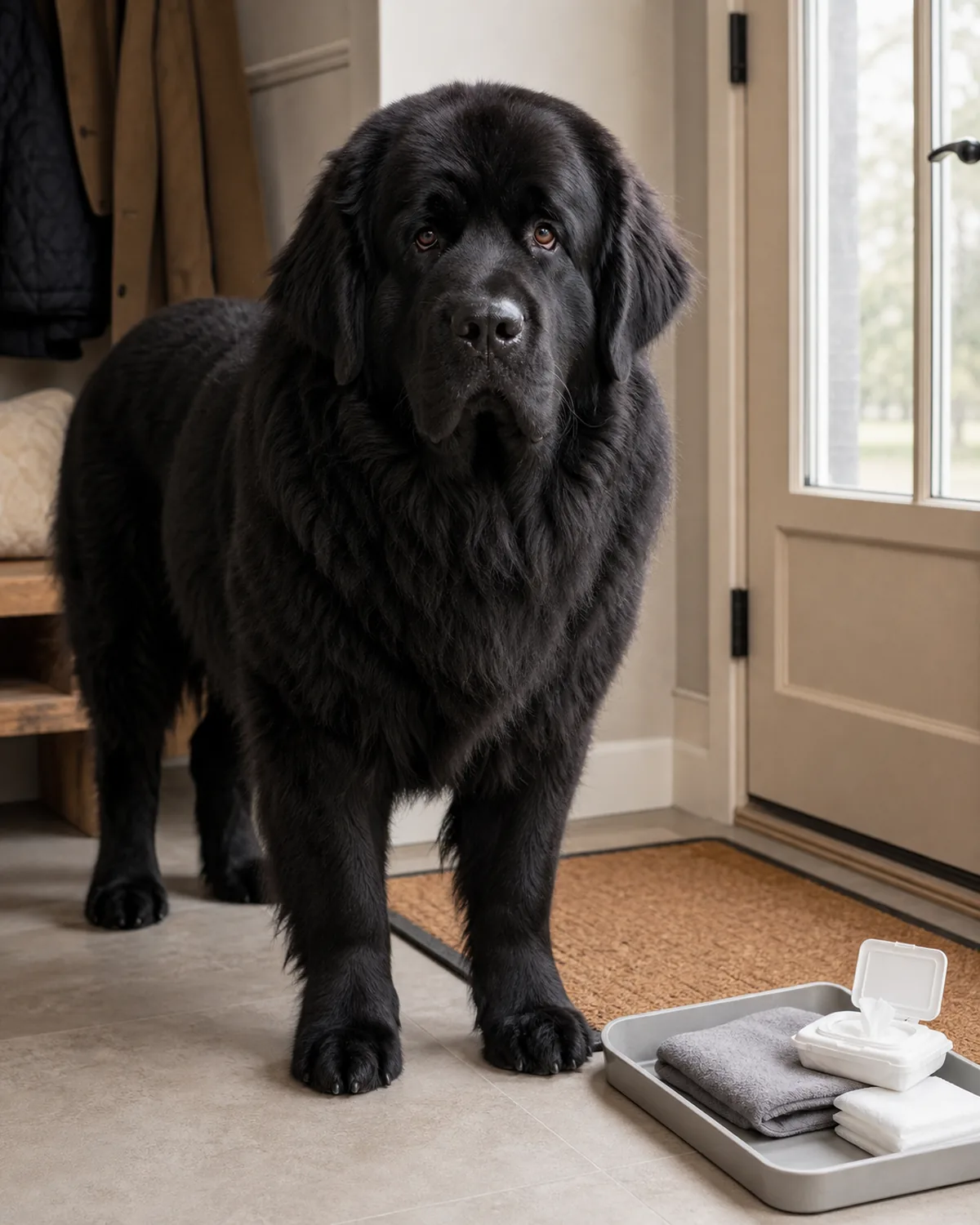
An absorbent mat right inside the door catches most of the mess and gives you a natural spot to do the paw wipe-down before your dog tracks salt through the house.
Keep a small tray or basket with a towel and paw wipes right there, so the routine is grab-and-go instead of a trip to another room while a wet dog waits.
In your own yard, skip rock salt and ice-melt entirely if you can, and use sand or a pet-safe de-icing product instead. Your dog's paws are on that surface far more than any visitor's shoes are.
12. Walk Timing and Surface Choices in Winter
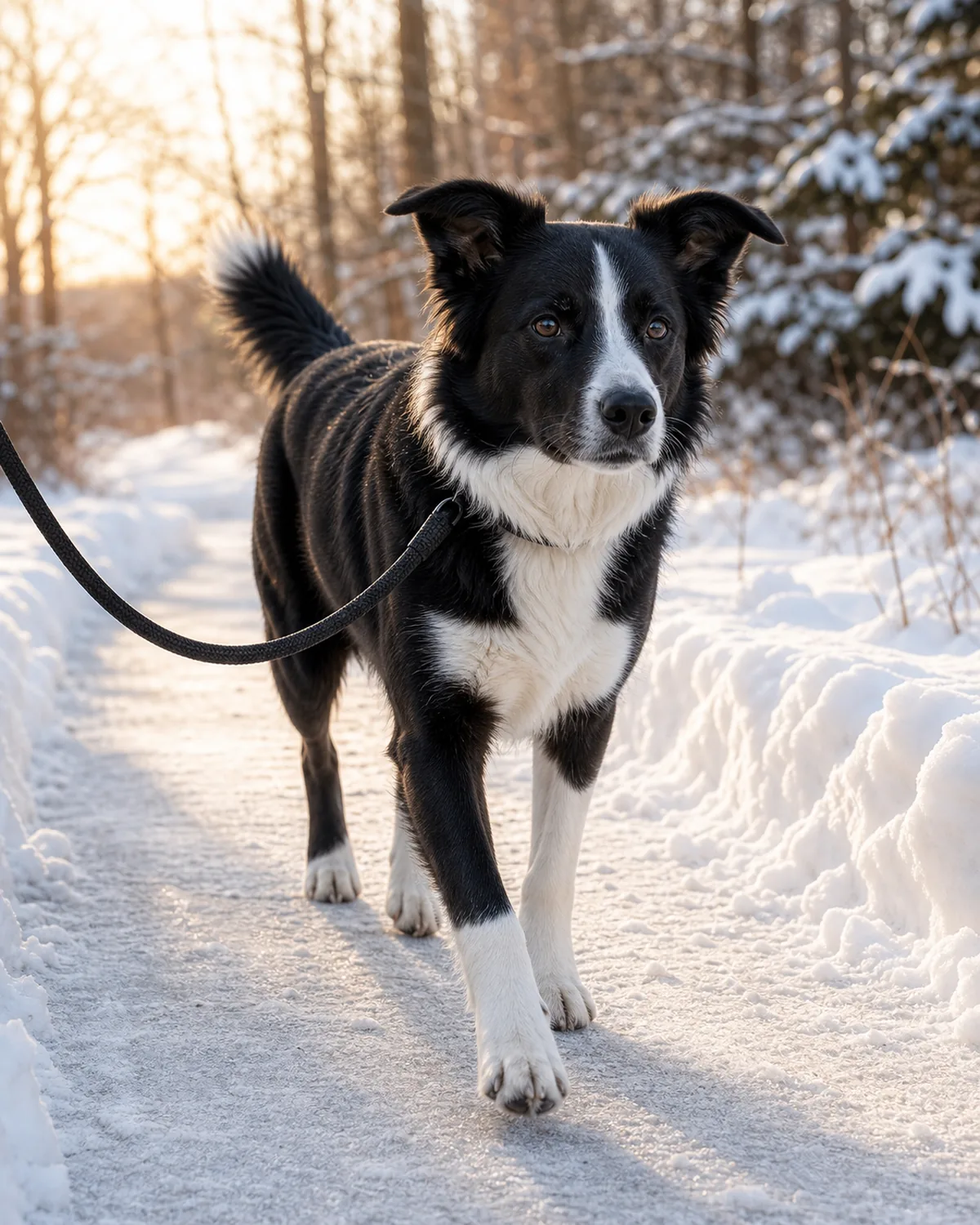
Freshly salted sidewalks right after a snowfall carry the heaviest concentration of ice-melt chemicals, before rain or foot traffic dilutes them. Waiting a day, or choosing a route with less salted pavement, cuts down on paw exposure without cutting the walk short.
Your dog's daily exercise needs don't disappear in winter, they just need a different route. A cleared park path or a stretch of packed snow is often gentler on paws than a heavily treated sidewalk.
For the full breakdown of how much exercise your dog needs by size and age, see how much exercise does your dog need, then adjust the timing and surface for the season rather than the total minutes.
13. The Winter Paw Care Mistakes to Avoid
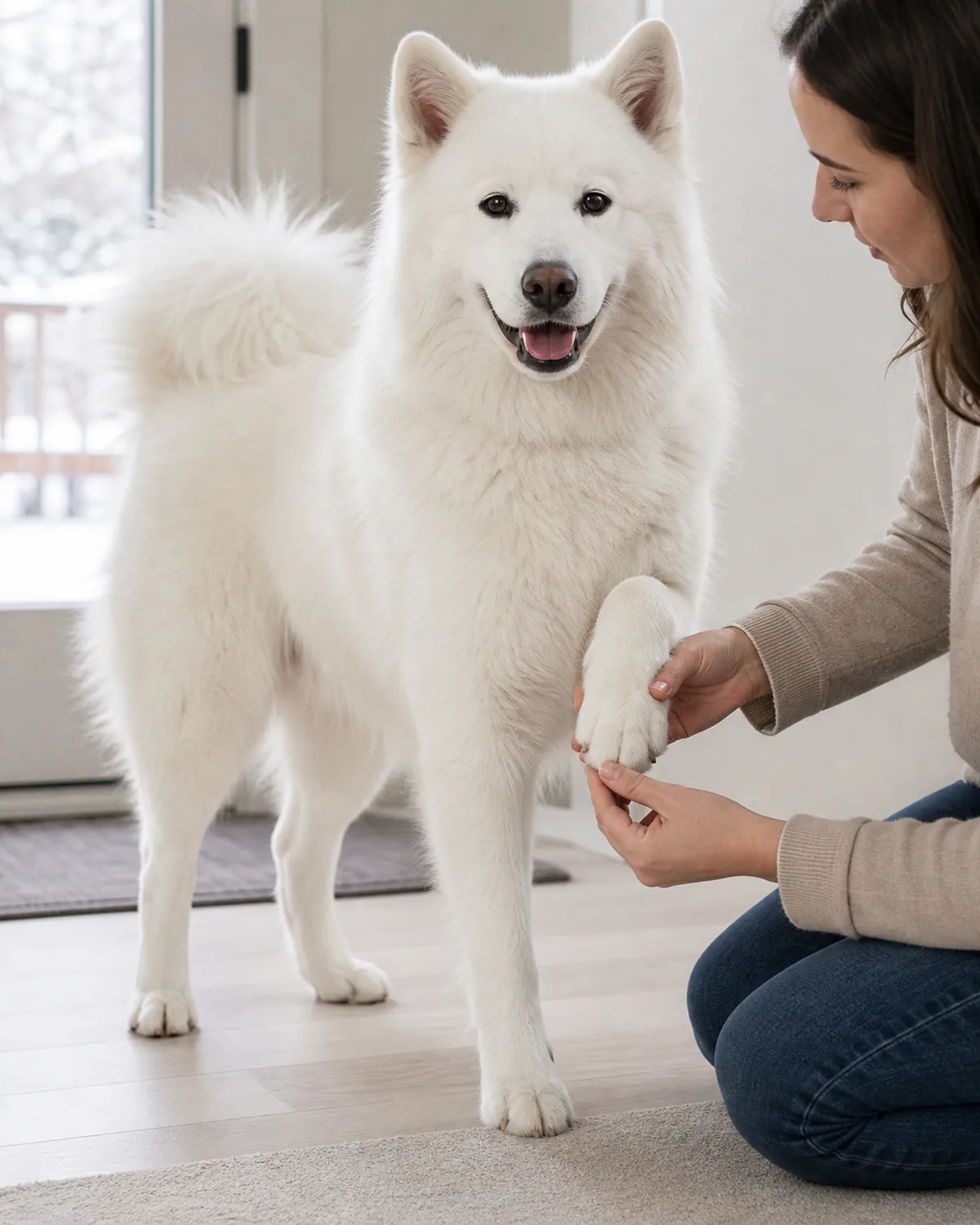
Skipping the post-walk rinse is the most common mistake, usually because it feels unnecessary on a short walk. Salt exposure adds up over a season even when each individual walk seems fine.
Shaving the fur between the paw pads down to the skin removes a layer of natural insulation and protection, when a careful trim would have done the job. Forcing booties on for the first time right before a long walk sets a dog up to fight them the whole way instead of tolerating them.
Ignoring a limp because "it's probably just the cold" skips right past checking for ice balls, cracked pads, or early frostbite signs, the three things a thirty-second paw check would have caught.
About the author
Jess Calloway
Jess is a dog mom of three, and the first winter with one of them turned into an accidental lesson about rock salt after a mid-walk stop to chew at a paw. This guide covers why winter is hard on paw pads, the daily check worth building into every walk, the hidden ice-melt burn risk, ice balls between the toes, getting booties to actually stay on, what paw balm does and doesn't replace, the post-walk rinse routine, nail length and traction, frostbite warning signs, cold tolerance by coat and size, indoor and yard setup, walk timing, and the mistakes that cause the most regret each season. Pawliqa is not a substitute for veterinary care — any frostbite concern is a same-day call to your own vet. Visit the About page.