Our first long drive with a dog lasted twenty minutes before the whining started, the panting followed, and we pulled over on the shoulder wondering what we were doing wrong.
Most dogs do not hate the car. They hate the lack of routine, the unfamiliar motion, and the zero sense of control. Fix those three things and the ride changes.
Here are eleven tips that turn dog car travel from a stressful chore into something your dog can actually settle into.
1. Start with Short Practice Drives Before Long Trips
A dog that only rides in the car to the vet has one data point, and it is not a good one. Short drives to a park, a friend's yard, or just around the block give your dog positive associations that overwrite the old pattern.
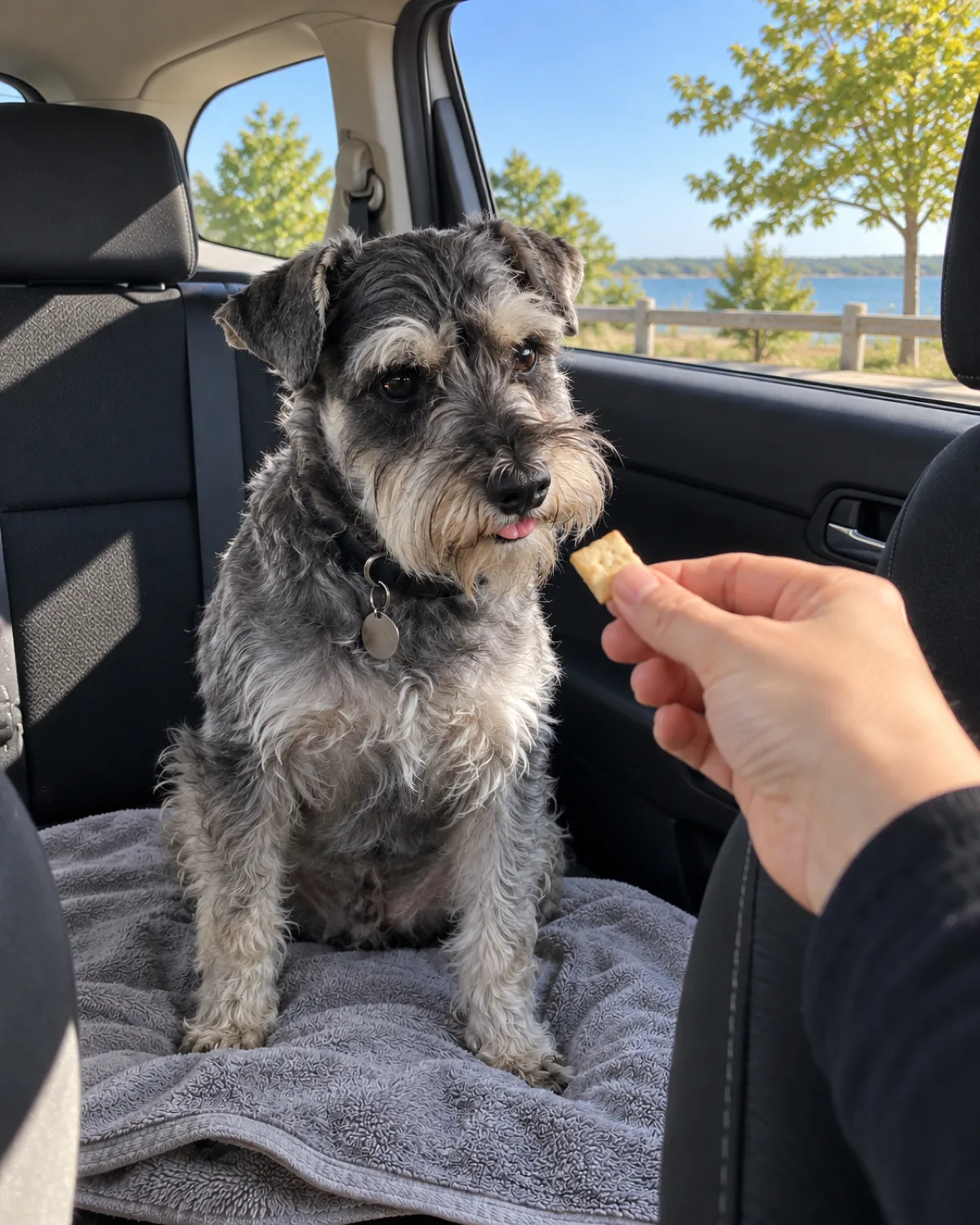
Start with the engine running and the car parked. Let your dog sniff, sit, and accept a treat in the backseat without going anywhere. Once that feels normal, try a five-minute loop around your neighborhood with a fun destination at the end.
Three to five short practice drives over a week usually shift the association
Always end the drive somewhere good, not back home to a crate
Keep the first real trip under thirty minutes
2. Match the Restraint System to Your Car Layout
The right restraint depends less on your dog and more on where in the car your dog will ride. A sedan backseat, an SUV cargo area, and a truck crew cab each call for a different setup because the anchor points, crash geometry, and space all differ.
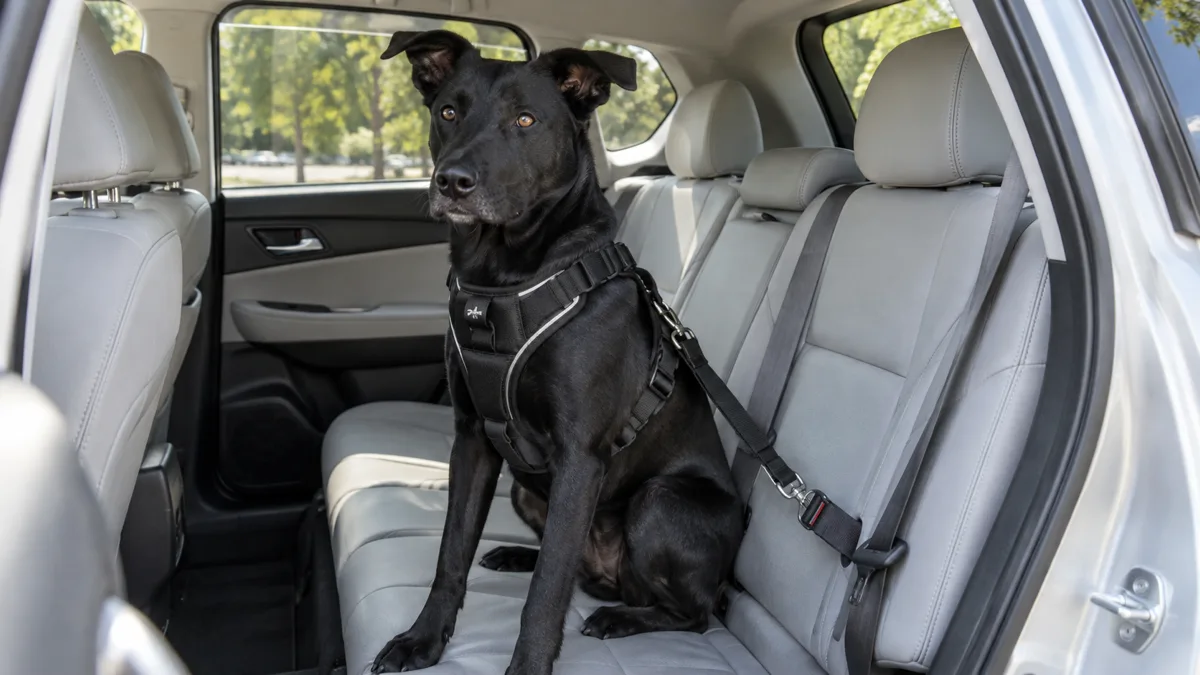
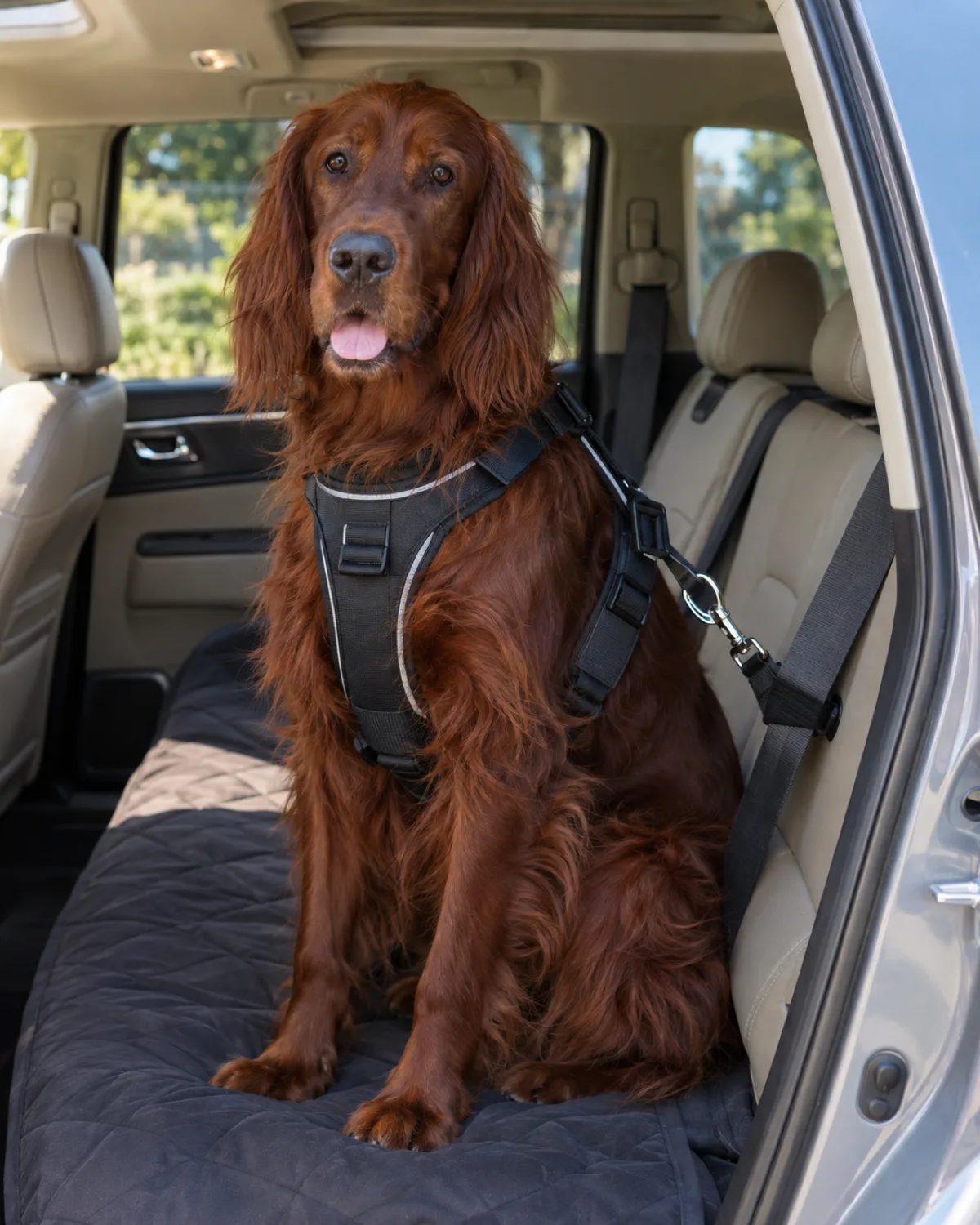
Sedans work best with a seatbelt-mounted harness because the rear seat has latch anchors designed for load. SUVs with a flat cargo area behind the second row suit a secured crate or a cargo barrier that bolts to factory tie-down hooks. Truck crew cabs have shorter rear benches, so a booster seat with a short tether keeps a small dog centered and away from the door panels.
Check your vehicle's manual for rear cargo tie-down locations before buying a crate mount system
Harness straps should route through the seatbelt path, not wrap loosely around the headrest post
Test the restraint at home in the driveway first so your dog associates it with calm, not highway speed
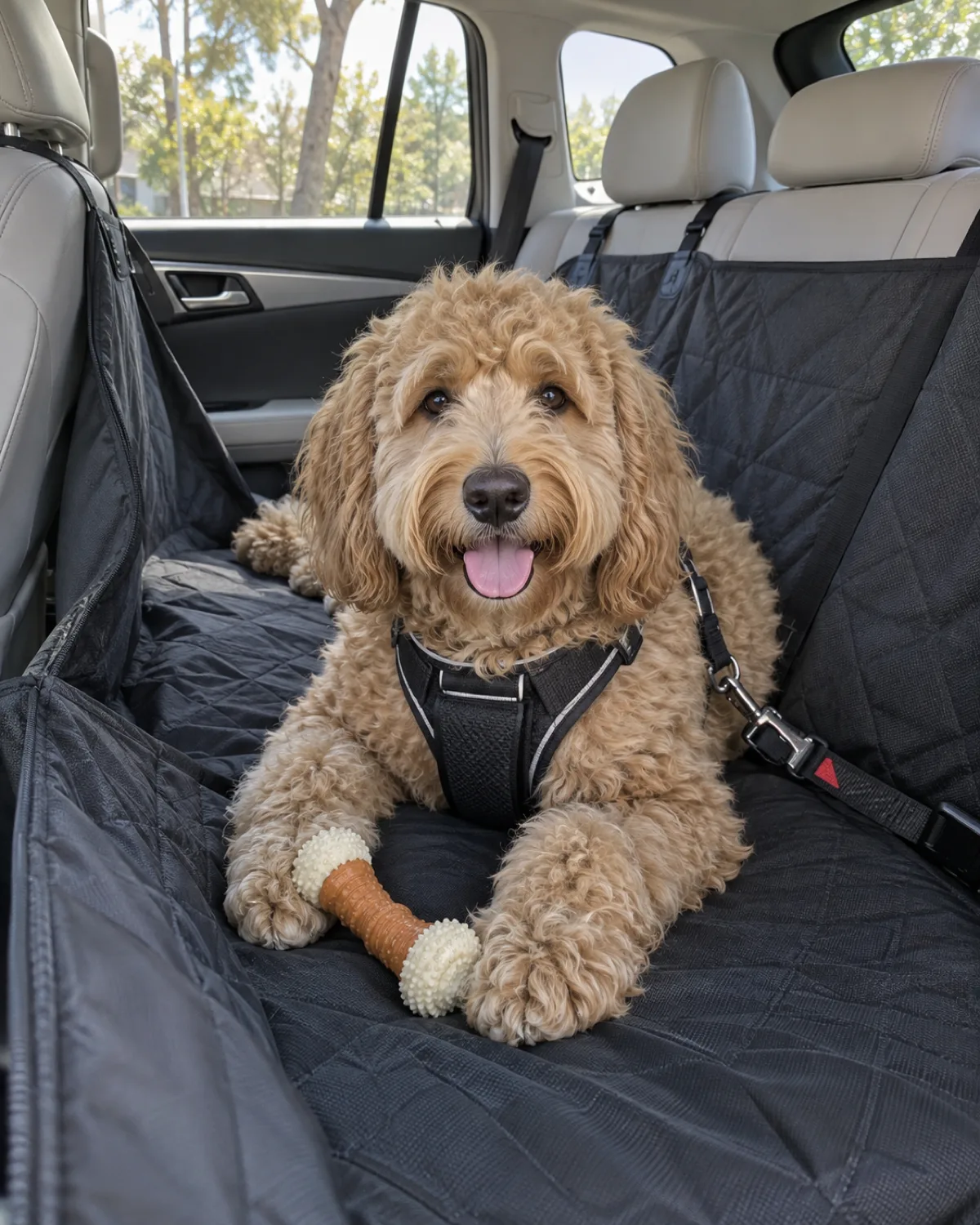
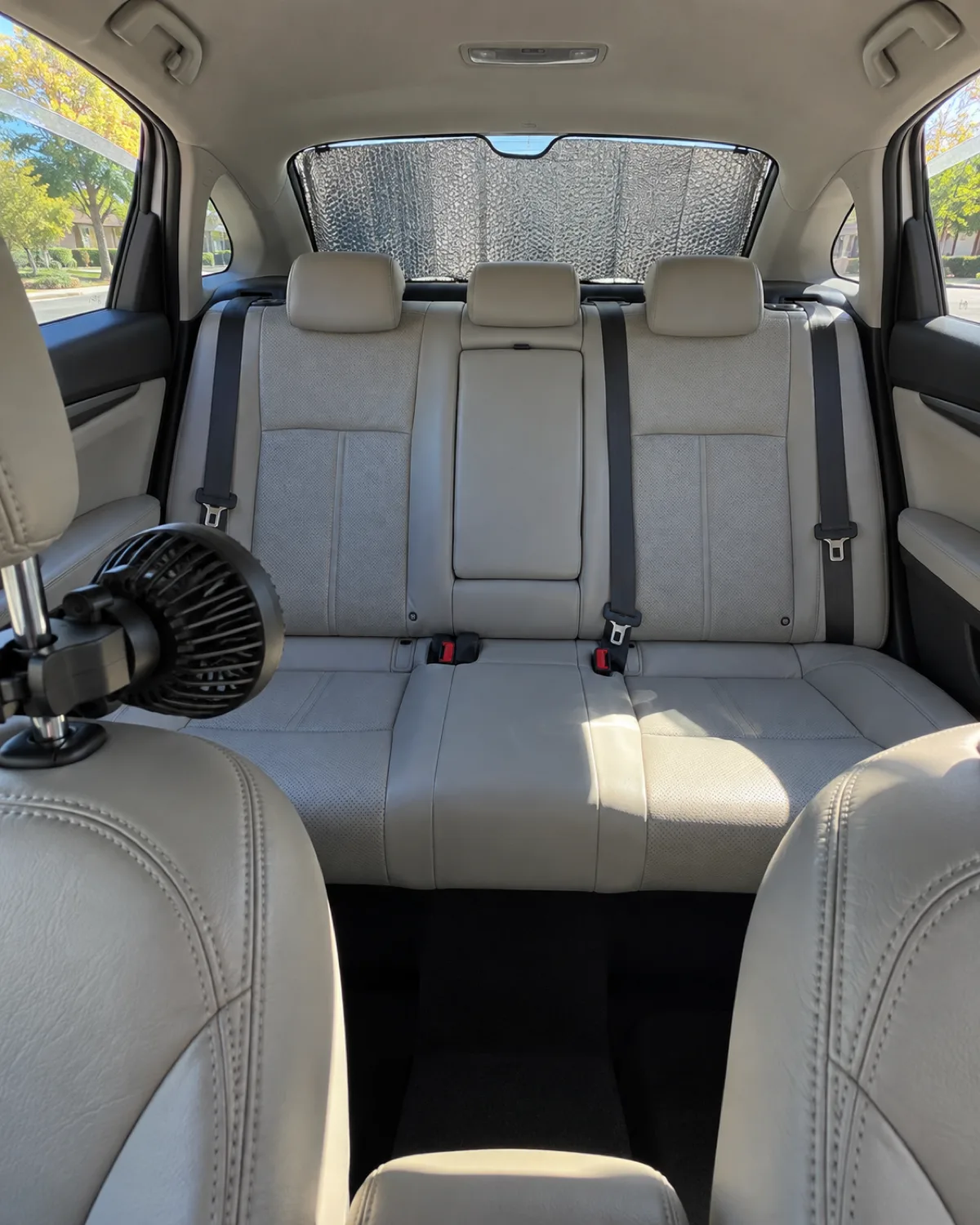
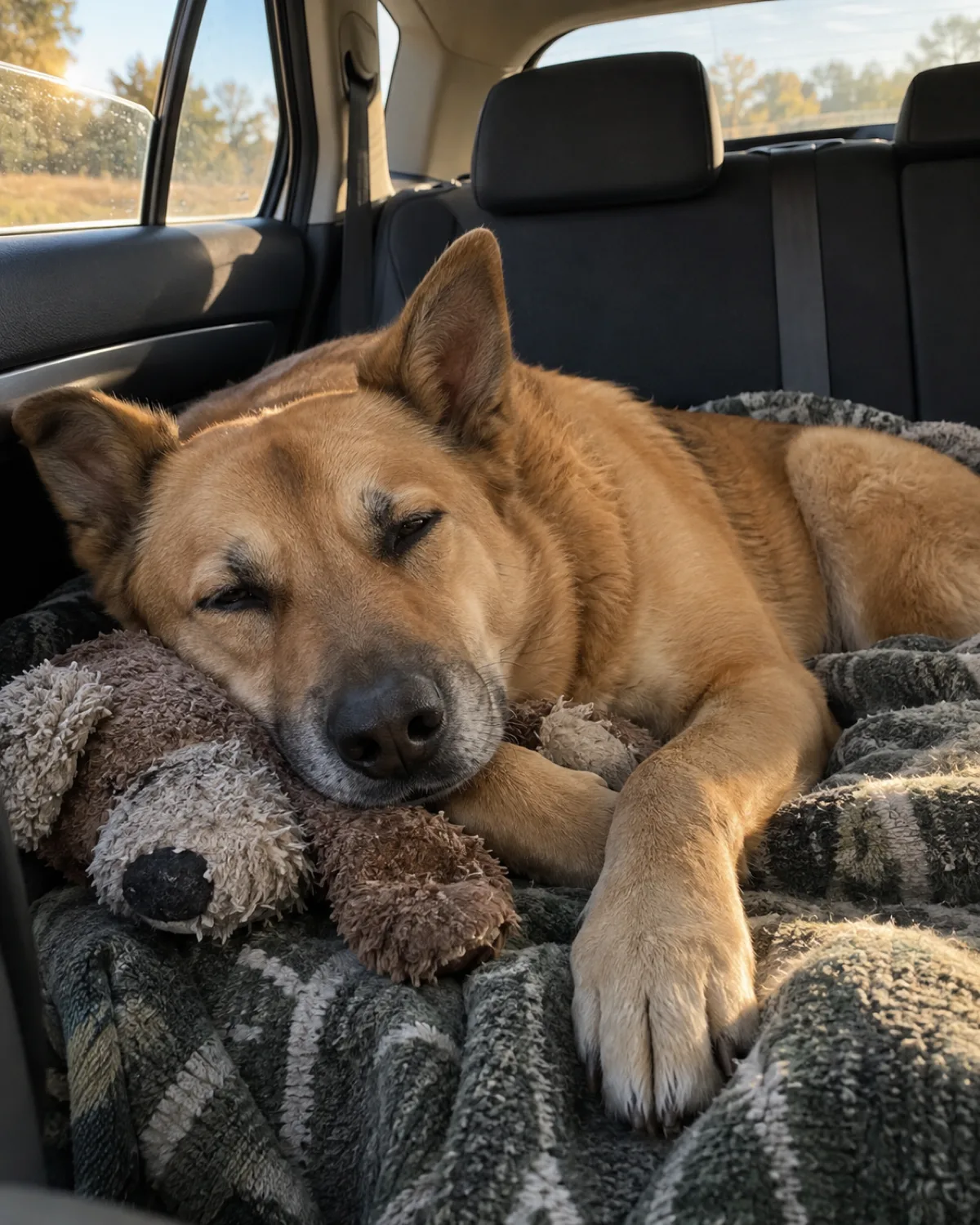
Your dog rides better when the backseat feels like a familiar space rather than an afterthought. A waterproof hammock cover protects the upholstery while giving your dog a stable, non-slip surface that does not bunch up when they shift position.
Add one chew toy and a small blanket that smells like home. That combination gives your dog something to do and something that signals safety. Skip the pile of toys because loose objects slide and create noise that adds to the sensory overload.
Hammock-style covers anchor to the front and rear headrests, blocking the footwell gap
Non-slip backing matters more than thickness, as the cover needs to stay put during turns
Wash the cover between long trips so it stays fresh but do not wash the blanket too often because the familiar scent is the point
Key takeaway
Restraint + station = the foundation
Crash-tested harnessKeeps your dog in place during sudden stops. Non-negotiable for any dog that rides in the seat area.
Dedicated backseat stationNon-slip cover, one chew toy, and a familiar blanket turn the car into a known space your dog can settle into.
Pre-coolingA hot car is the fastest way to lose your dog's trust in the ride before it even starts.
Routine builds trustSame seat, same blanket, same sequence every trip. Predictability is the biggest anxiety reducer.
4. Keep the Car Cool Enough Before Your Dog Gets In
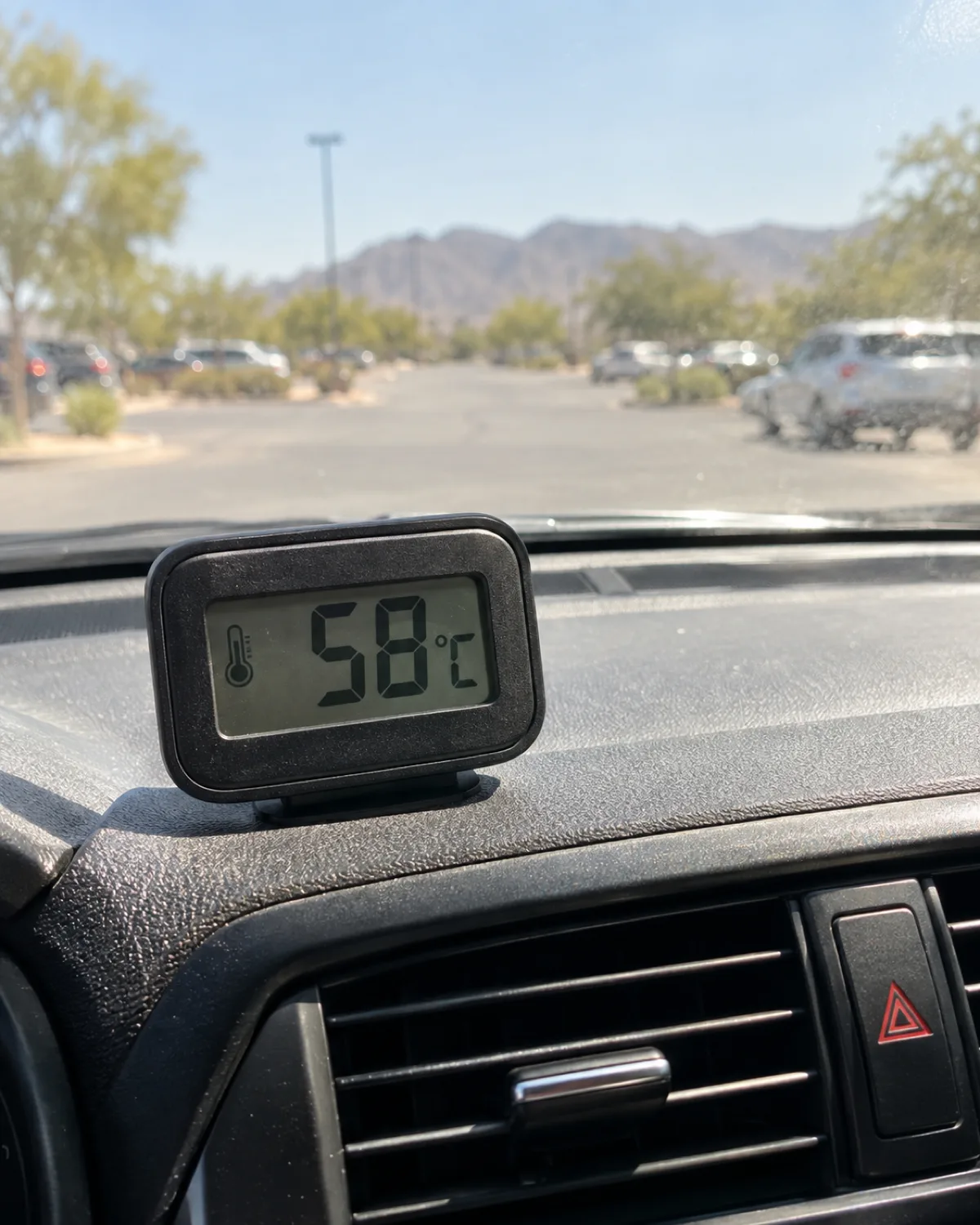
A parked car in direct sun reaches dangerous interior temperatures in under ten minutes. Before loading your dog, start the engine, run the air conditioning for at least five minutes, and crack the rear windows slightly for airflow.
If the car sat in a hot parking lot, open all four doors for a minute to flush the trapped heat before turning on the AC. The backseat, where your dog will sit, heats up faster than the front because the rear vents are usually weaker.
Park in shade when possible, or use a reflective windshield sunshade
A clip-on battery fan on the rear headrest moves air directly over your dog
Dark leather seats absorb more heat than cloth, so consider a light-colored seat cover
5. Plan Rest Stops Every Ninety Minutes
Dogs cannot tell you they need a break, but they show you. Panting that does not match the temperature, lip-licking, yawning, or fidgeting in the seat are all signs your dog needs to get out and move.
Ninety minutes is a reasonable maximum between stops. At each stop, let your dog walk on grass for five to ten minutes, offer fresh water, and give them a chance to relieve themselves. These short breaks reset your dog's stress meter and make the next stretch calmer.
Pick rest areas with grassy strips rather than concrete-only gas stations
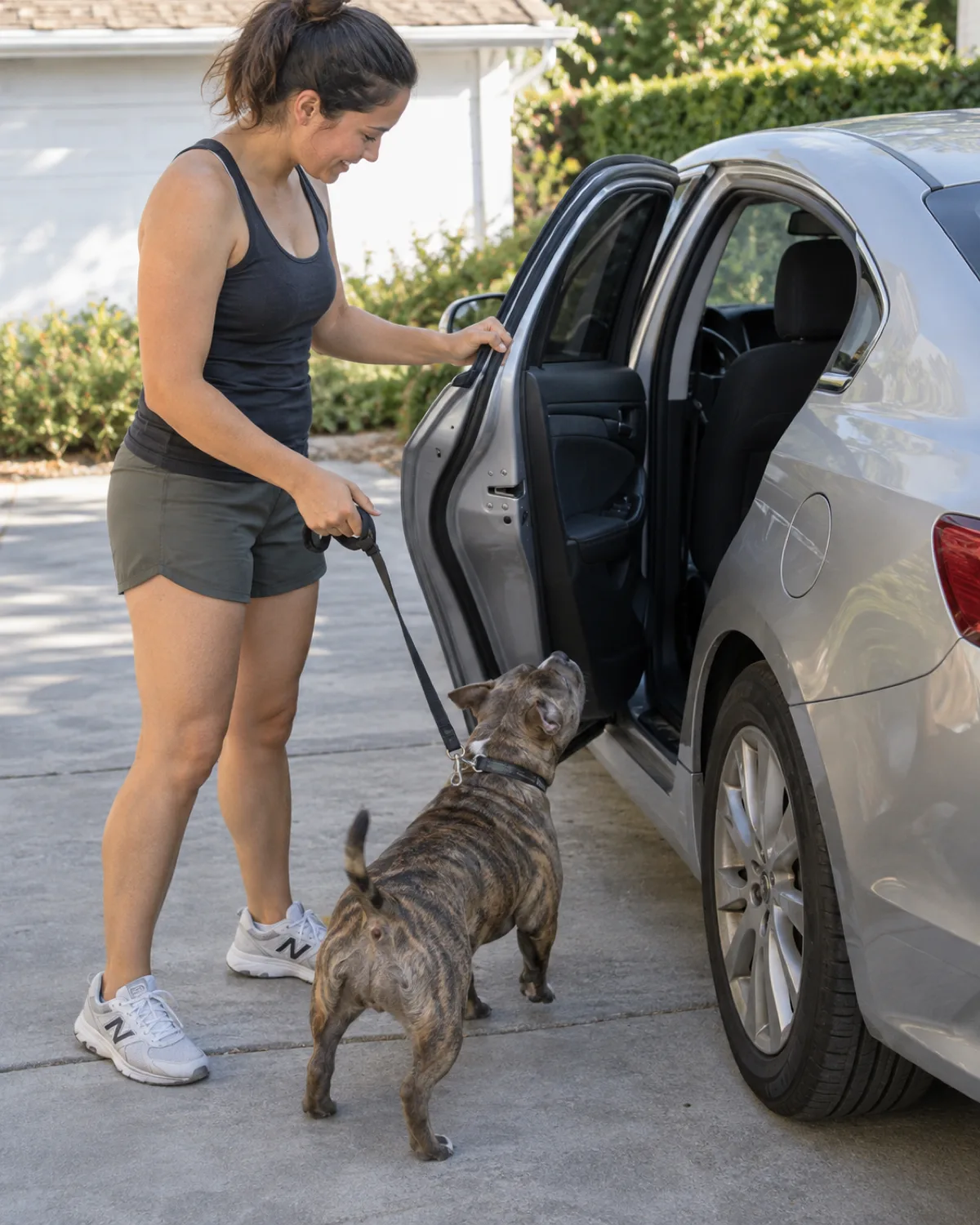
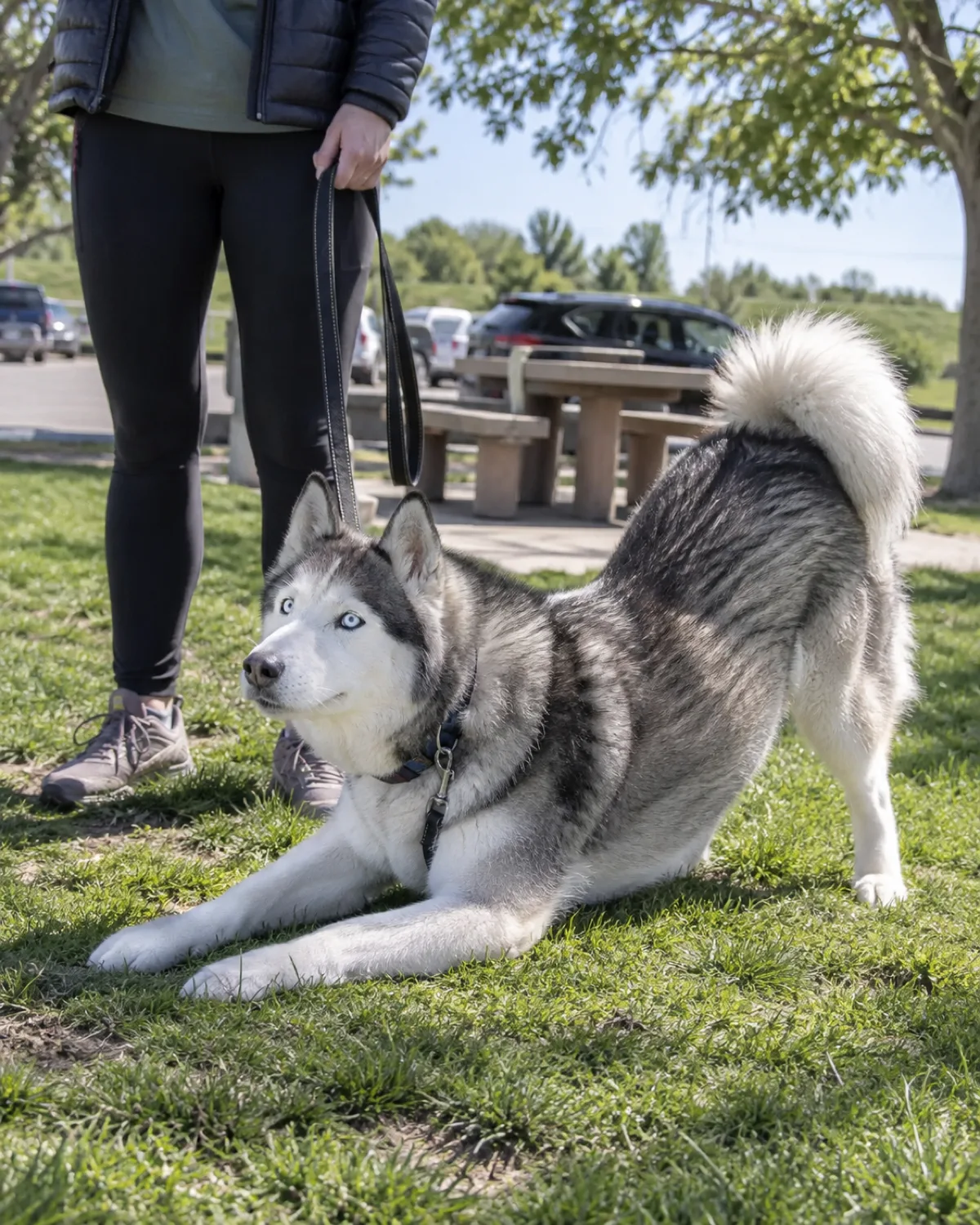
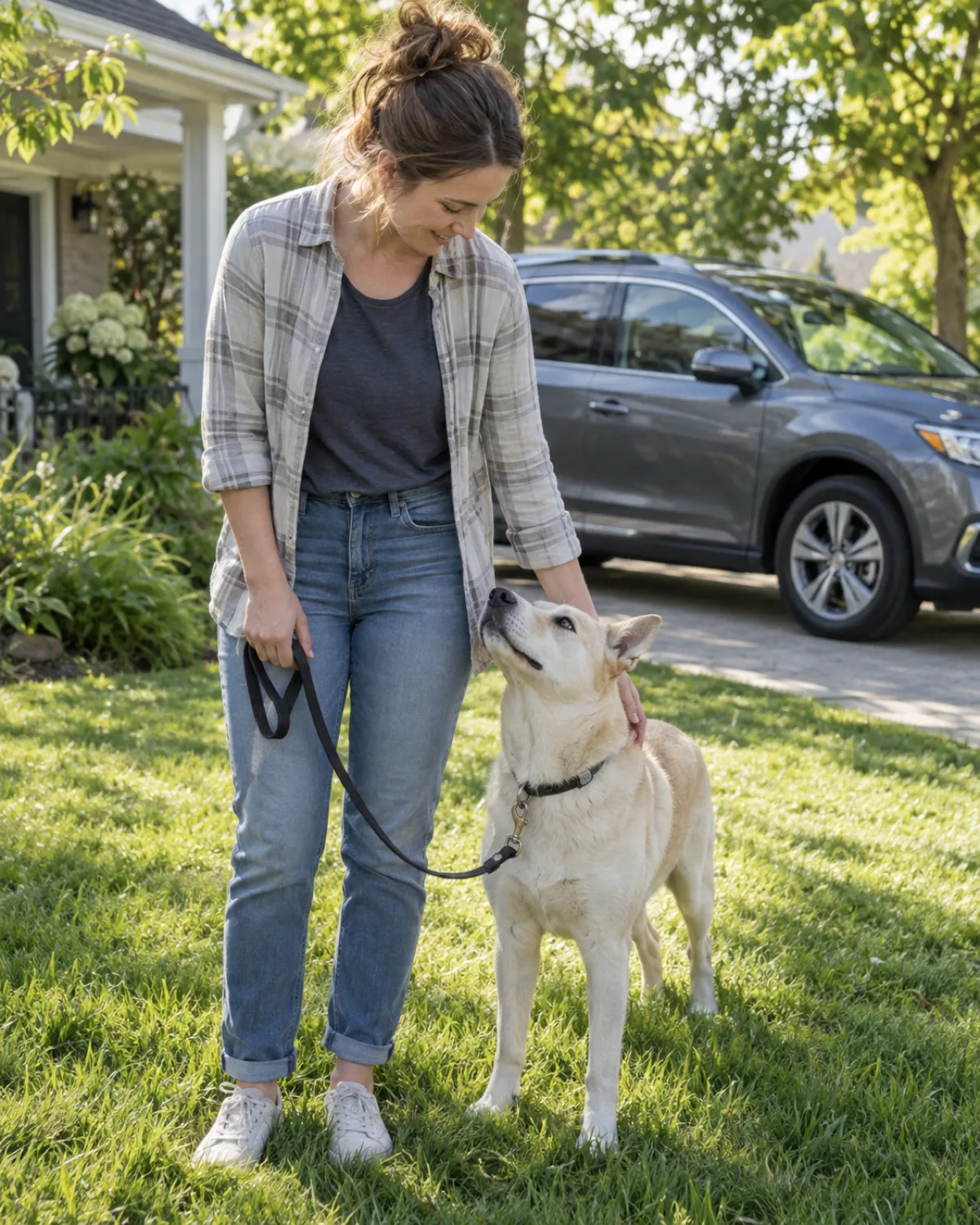
Always leash before opening the car door, even if your dog has reliable recall
Bring water from home in a collapsible bowl rather than relying on public water sources
6. Use a Crate If Your Dog Already Crate-Trained
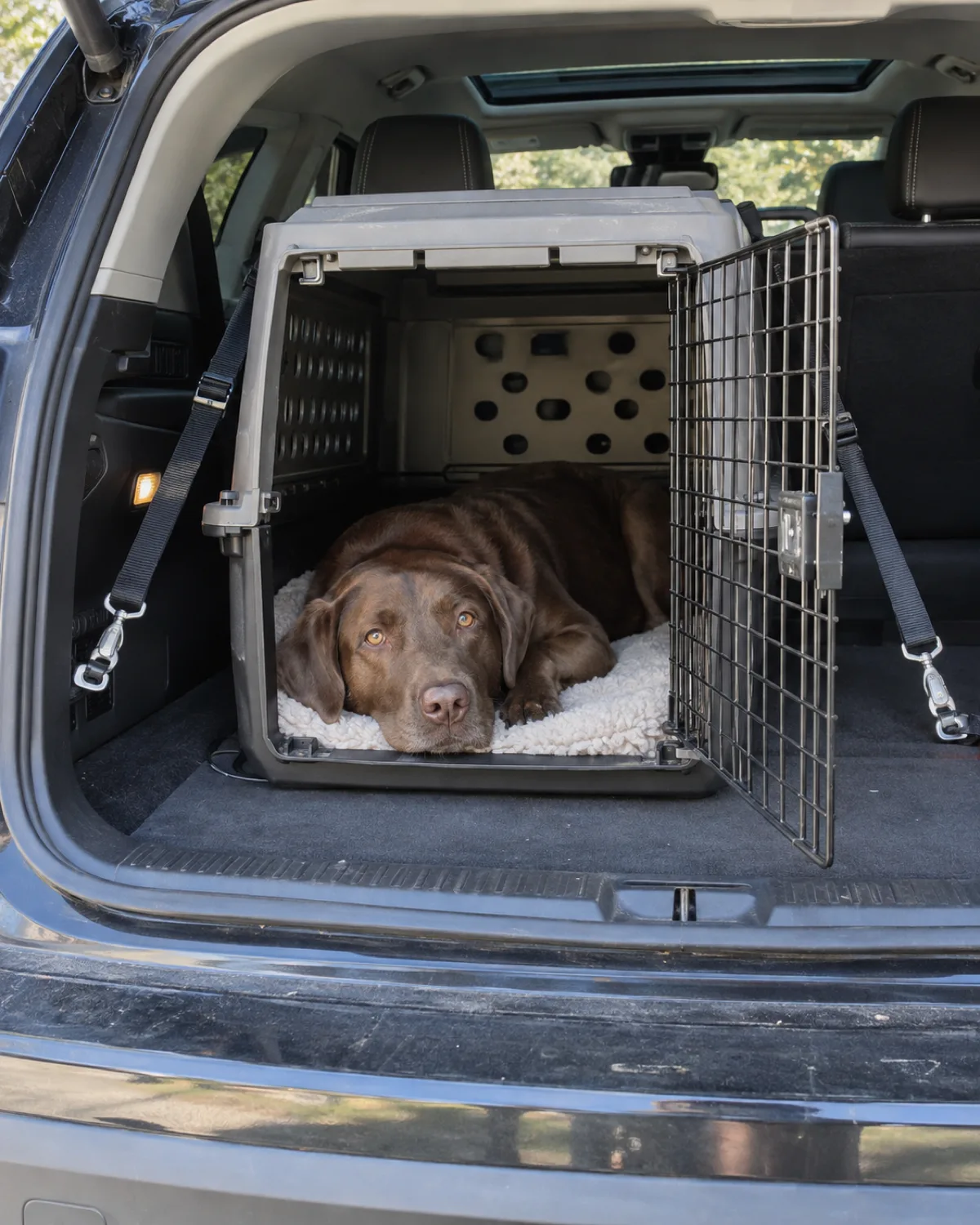
A dog that already views the crate as a safe den at home will often settle faster in a crate inside the car than on an open seat. The enclosed space blocks visual stimuli, dampens road noise, and gives your dog a defined boundary that feels familiar.
Secure the crate in the cargo area with ratchet straps or cargo tie-downs so it cannot slide during braking. The crate should be large enough for your dog to stand, turn around, and lie down, but not so large that your dog slides from side to side during turns.
Line the crate with a washable fleece pad and one familiar-scent item
Leave the crate door open during stops so your dog can exit and re-enter by choice
Never force a dog into a car crate if they have not been crate trained at home first
7. Handle Motion Sickness Before It Starts
Motion sickness in dogs looks like excessive drooling, repeated lip-licking, whining, or vomiting. Puppies are especially prone because their inner ear structures are still developing, but many dogs outgrow it by their first birthday.
Practical steps make a real difference before you consider medication. Feed a light meal at least three hours before the drive, keep fresh air flowing through cracked windows, and face your dog forward when possible so their visual input matches the motion.
Ginger treats designed for dogs can settle mild nausea on short drives
For persistent sickness, ask your vet about anti-nausea medication before the next trip
Avoid strong air fresheners and smoking in the car because dogs process scents at a much higher intensity than humans
Did you know
Why some dogs get carsick and others never do
Inner ear maturityPuppies under one year have underdeveloped vestibular systems, which is why car sickness is more common in young dogs and often resolves on its own.
Visual mismatchA dog that cannot see out the window gets conflicting signals between what the inner ear senses and what the eyes report. A booster seat or raised platform helps smaller dogs see the horizon.
Stress amplifies nauseaA dog that already associates the car with anxiety is more likely to get nauseous. Positive short drives reduce both the anxiety and the sickness over time.
Temperature mattersA hot, stuffy car makes nausea worse. Cool air flowing over your dog's face is one of the cheapest and most effective anti-nausea tools available.
8. Pack a Car-Specific Travel Kit
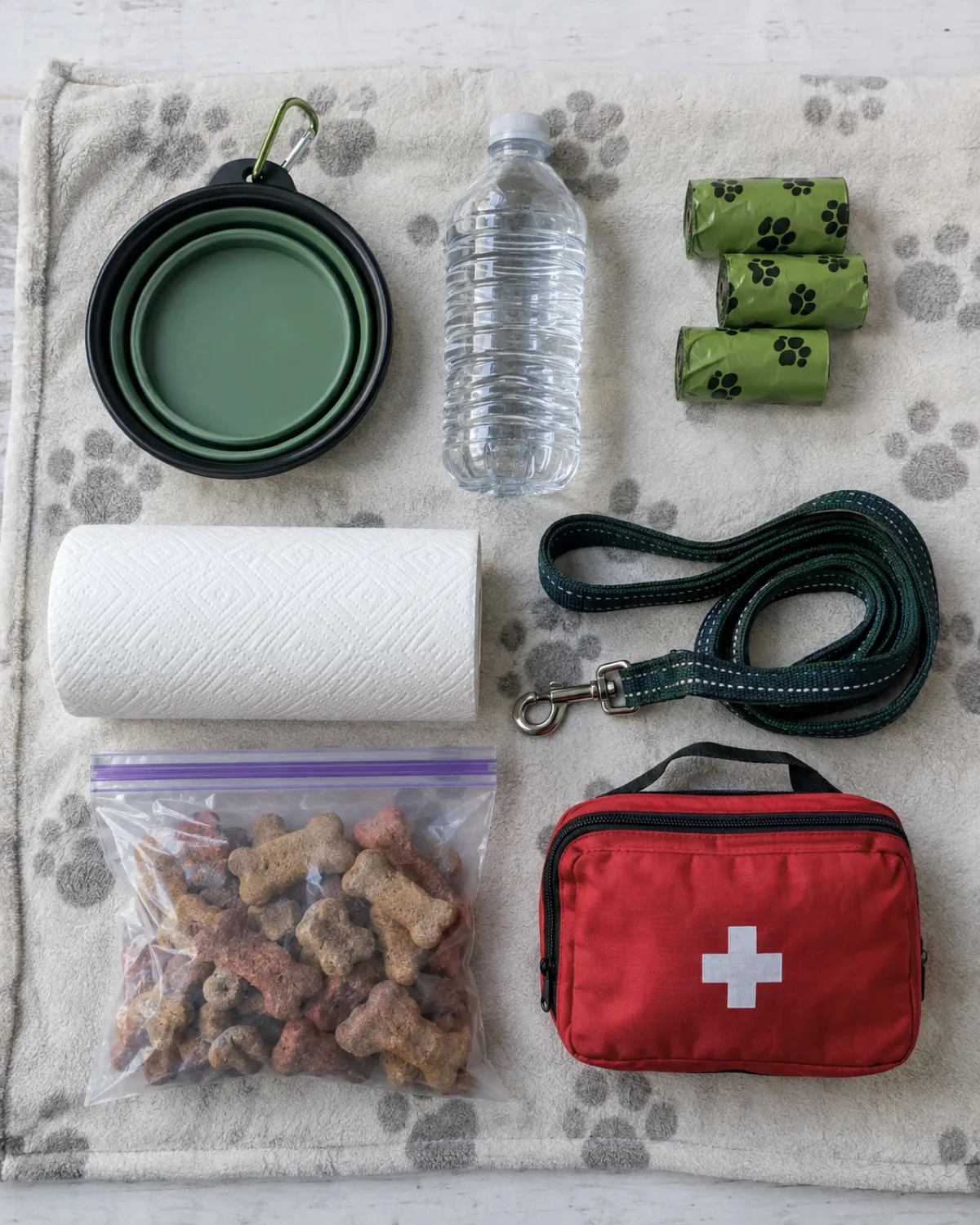
Keep a dedicated bag in the car that never comes inside. When it is always packed and always in the trunk, you never leave for a drive and realize the water bowl is on the kitchen counter.
The essentials fit in a small duffel or tote bag. Collapsible water bowl, a bottle of fresh water, poop bags, paper towels, a spare leash, a handful of treats in a sealed bag, and a basic pet first aid pouch. Add a towel for wet or muddy paws and an extra set of ID tags in case the primary set falls off the collar.
Rotate the water bottle weekly so it stays fresh
Include a copy of your dog's vaccination records and your vet's phone number
A roll of paper towels and a gallon-size zip bag handle unexpected messes on the seat
A parked car with the windows cracked in seventy-degree weather can reach over a hundred degrees inside within thirty minutes. Dogs cool themselves through panting, which works poorly in a sealed, humid box of hot air.
There is no safe amount of time to leave a dog in a parked car on a warm day. Not five minutes while you run into a store. Not with the windows down. Not with water in the car. If your errand does not allow the dog inside, leave the dog at home.
In many states, leaving a dog in a hot car is a criminal offense with fines and possible animal cruelty charges
Some states have Good Samaritan laws that protect bystanders who break a car window to rescue an overheating animal
If you see a dog in a hot car, note the car make, color, and plate number, then contact local animal control or call 911
Save this for later
11 Dog Car Travel Tips
1Practice short drivesFive-minute trips to fun destinations rewire the car association before you attempt anything long.
2Match restraint to car layoutSedan seatbelt harness, SUV cargo crate, or truck booster seat based on anchor points and space.
3Build a backseat stationNon-slip hammock cover, one chew toy, and a blanket that smells like home.
4Pre-cool the carRun AC five minutes before loading. Open all doors to flush trapped heat first.
5Stop every ninety minutesGrass walk, fresh water, potty break. Resets stress for the next stretch.
6Crate in the cargo areaGreat for dogs already crate trained at home. Strap it down so it cannot slide.
7Prevent motion sicknessLight meal three hours before, fresh air through windows, forward-facing position.
8Keep a travel kit in the carWater bowl, poop bags, paper towels, spare leash, treats, first aid pouch.
9Never leave dog in hot carSeventy degrees outside equals over a hundred inside within thirty minutes.
10Use routine for anxietySame seat, same blanket, same sequence. Predictability calms a nervous traveler.
11Skip when neededA dog with severe anxiety, recent surgery, or a medical condition rides better by staying home.
pawliqa.com
10. Manage Anxiety with Routine and Familiarity
Dogs handle new experiences better when the surrounding details stay the same. Use the same door to load, the same seat position, the same blanket, and the same pre-drive routine every trip. That sameness is not boring to your dog; it is the frame that tells them what to expect.
A simple pre-drive ritual helps more than you might think. Walk to the car together, ask for a sit, open the door, treat once they load, clip the harness, then start the engine. Within a few trips, your dog runs through the steps before you do.
A calming supplement or pheromone spray on the blanket can take the edge off for anxious dogs
Avoid high-energy play right before a drive because an amped-up dog has a harder time settling
Music designed for dogs or simple talk radio at low volume provides a steady background that masks road noise
11. Know When to Skip the Car Ride Entirely
Not every trip needs to include the dog. A dog recovering from surgery, dealing with a flare-up of joint pain, or running a fever belongs at home where the temperature is controlled and movement is limited. The same applies during extreme heat when even a well-prepared car ride adds unnecessary thermal stress.
Dogs with severe car anxiety that has not responded to gradual training may also benefit from staying home while you continue to work on short practice drives separately. Forcing a panicking dog into the car for a long trip does not build tolerance. It reinforces the fear.
Post-surgical dogs should avoid car rides until your vet clears them for travel
Senior dogs with mobility issues may need a ramp to load and a shorter maximum drive time
If your dog has a condition that requires temperature-controlled environments, check the forecast before deciding
The goal of dog car travel is a calm, safe ride for both of you. Some trips are better without the dog, and making that call is part of good dog ownership.
Common questions
FAQ
How long can a dog ride in a car without stopping?
Most dogs do well with a stop every sixty to ninety minutes. Puppies, senior dogs, and dogs prone to anxiety or sickness may need stops more frequently. Watch for panting, restlessness, or whining as cues that your dog needs a break sooner.
Should a dog ride in the front or back seat?
The back seat is safer. Airbags in the front seat deploy with force calibrated for adult humans and can injure or kill a dog. The back seat also keeps your dog from interfering with the driver's controls.
Can I crack the window for my dog while driving?
Yes, cracking the window one to two inches provides airflow and helps with motion sickness. Avoid opening it wide enough for your dog to stick their head out, as road debris, insects, and wind pressure can cause eye and ear injuries.
What temperature is too hot to leave a dog in a car?
There is no safe temperature for leaving a dog unattended in a parked car. Even on a seventy-degree day, the interior can exceed a hundred degrees in under thirty minutes. If you cannot take your dog inside with you, leave them at home.
Do calming treats work for dogs in the car?
Calming treats with ingredients like chamomile, L-theanine, or melatonin can take the edge off mild car anxiety. They are not a substitute for gradual training and positive associations, but they can help while you build those habits. Talk to your vet before trying them.
P
About the author
Jess Calloway
Jess Calloway edits Pawliqa, where she shares dog care, grooming, training, and new-owner tips — plus DIY and pet-friendly home ideas — for anyone who wants a happy, well-cared-for dog. As a dog mom to three very different dogs, she writes the honest, tested version of what actually works. Every guide is image-led and reviewed for clarity, usefulness, image accuracy, and Pinterest-to-page alignment before it goes live. Visit the About page.
Dog beds collect more than fur. This guide covers machine-washable beds, hand washing, memory foam inserts, proper drying, and the quick spot-clean tricks that keep a bed fresh between full washes.