A trip with your dog does not require a logistics degree, but it does require a plan. One missing health certificate or one hotel that quietly dropped its pet policy can derail everything.
The gap between wanting to bring your dog and the dog actually enjoying the trip is preparation. Not more gear. Just the right paperwork, packing order, and a schedule built around your dog's needs.
Here are ten essentials that cover every stage of traveling with a dog, from booking to the drive home.
Book Pet-Friendly Lodging Before You Book Anything Else
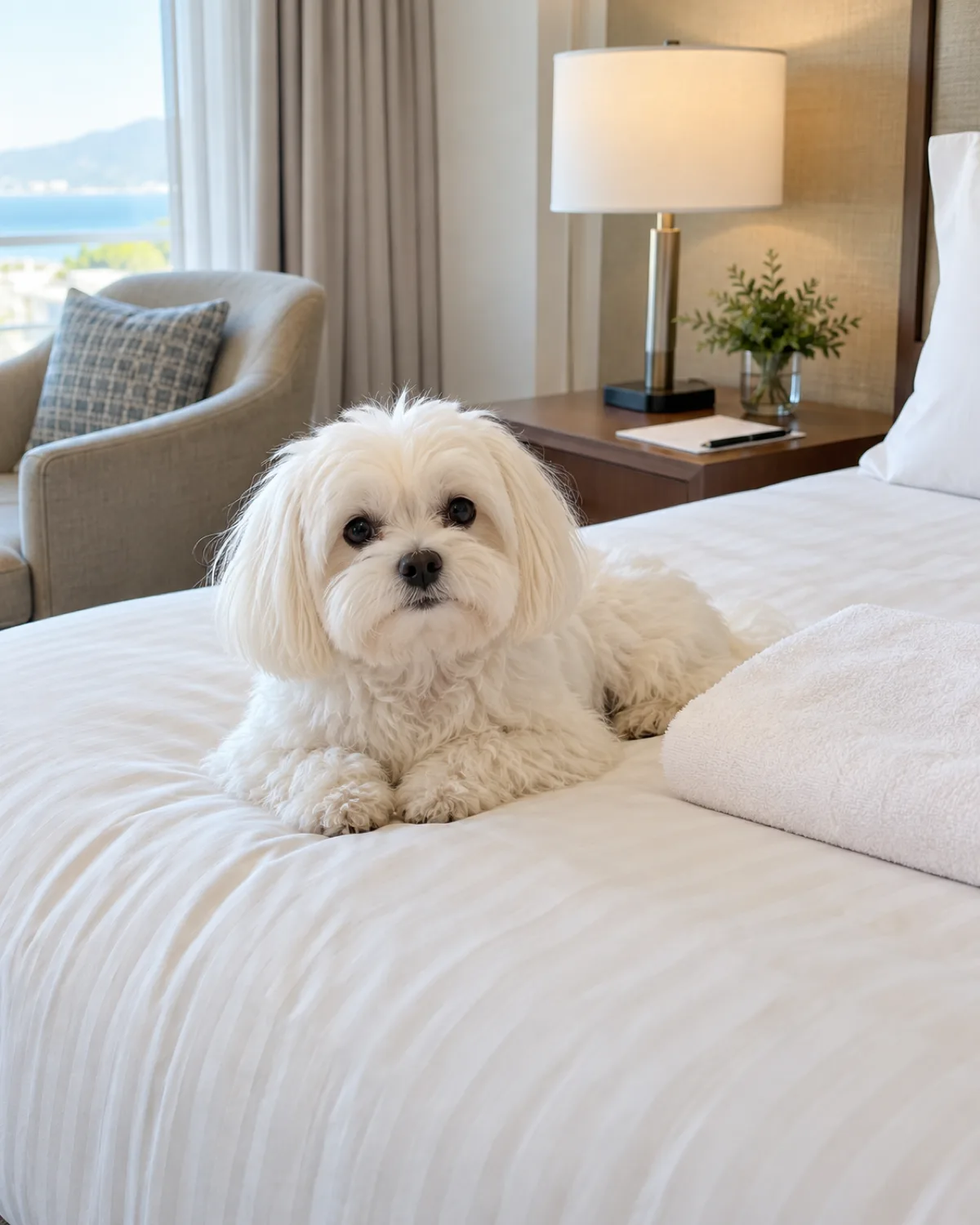
The lodging decides everything else. A hotel that accepts dogs shapes your route, your daily schedule, and your dog's stress level for the entire trip. Book it first, then plan the rest around it.
Not all pet-friendly hotels mean the same thing. Some allow dogs under twenty-five pounds with a seventy-five dollar fee per night. Others welcome any size with no deposit but charge for damage after the fact. A few provide bowls, beds, and a designated relief area on the property.
Before you confirm a reservation, verify these details directly with the front desk — not the booking website:
Weight and breed restrictions: many hotels cap at fifty pounds or exclude certain breeds regardless of temperament
Number of dogs allowed per room: most limit to two
Pet fee structure: one-time deposit versus per-night surcharge versus refundable damage deposit
Designated relief area: a grassy patch on-site saves you a 3 a.m. walk around an unfamiliar parking lot
Floor and room assignment: ground-floor rooms near an exit make late-night bathroom trips far easier
If you are staying at a vacation rental, read the pet clause in the listing terms, not just the headline. Some allow dogs in the listing title but specify "only in the garage" or "crated at all times" in the fine print.
Save this
10 Traveling With a Dog Essentials
1Lodging FirstBook pet-friendly hotels before anything else. Verify weight limits and fees by phone.
2Health CertificateGet a vet-issued certificate within ten days of departure. Bring vaccination records.
3Dog Travel BagCollapsible bowl, leash, treats, poop bags, kibble, and a familiar blanket. Always packed.
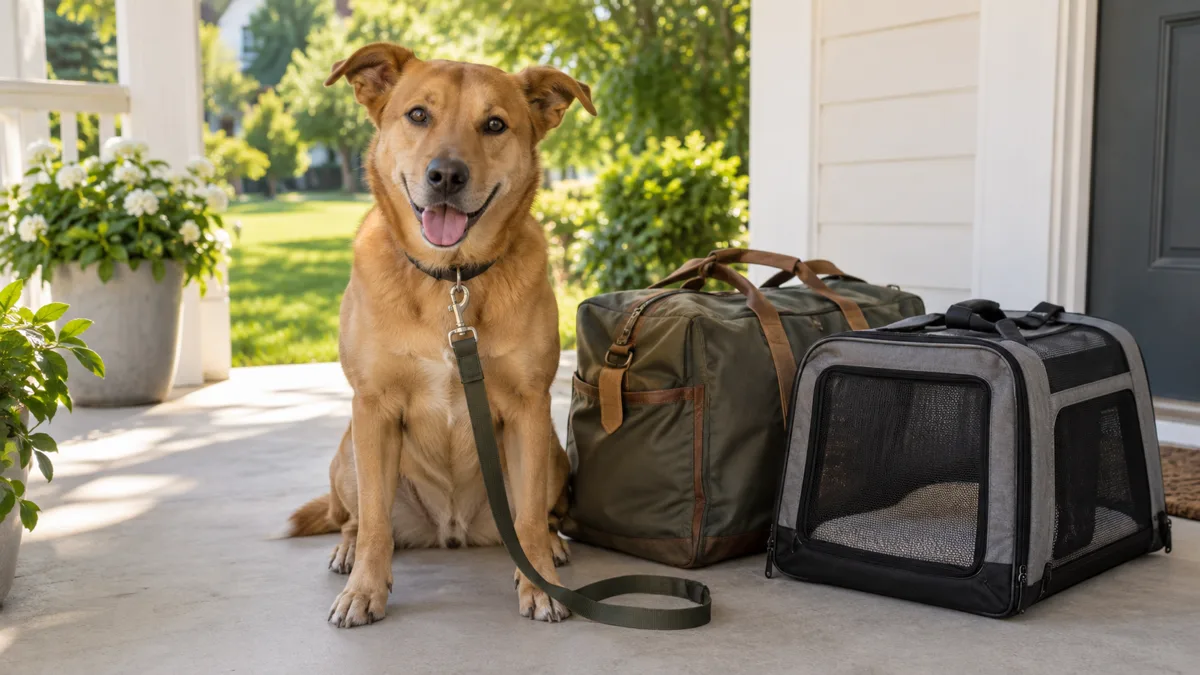
4Right CarrierHard-sided for airlines, crash-tested harness for cars. Size it to your dog.
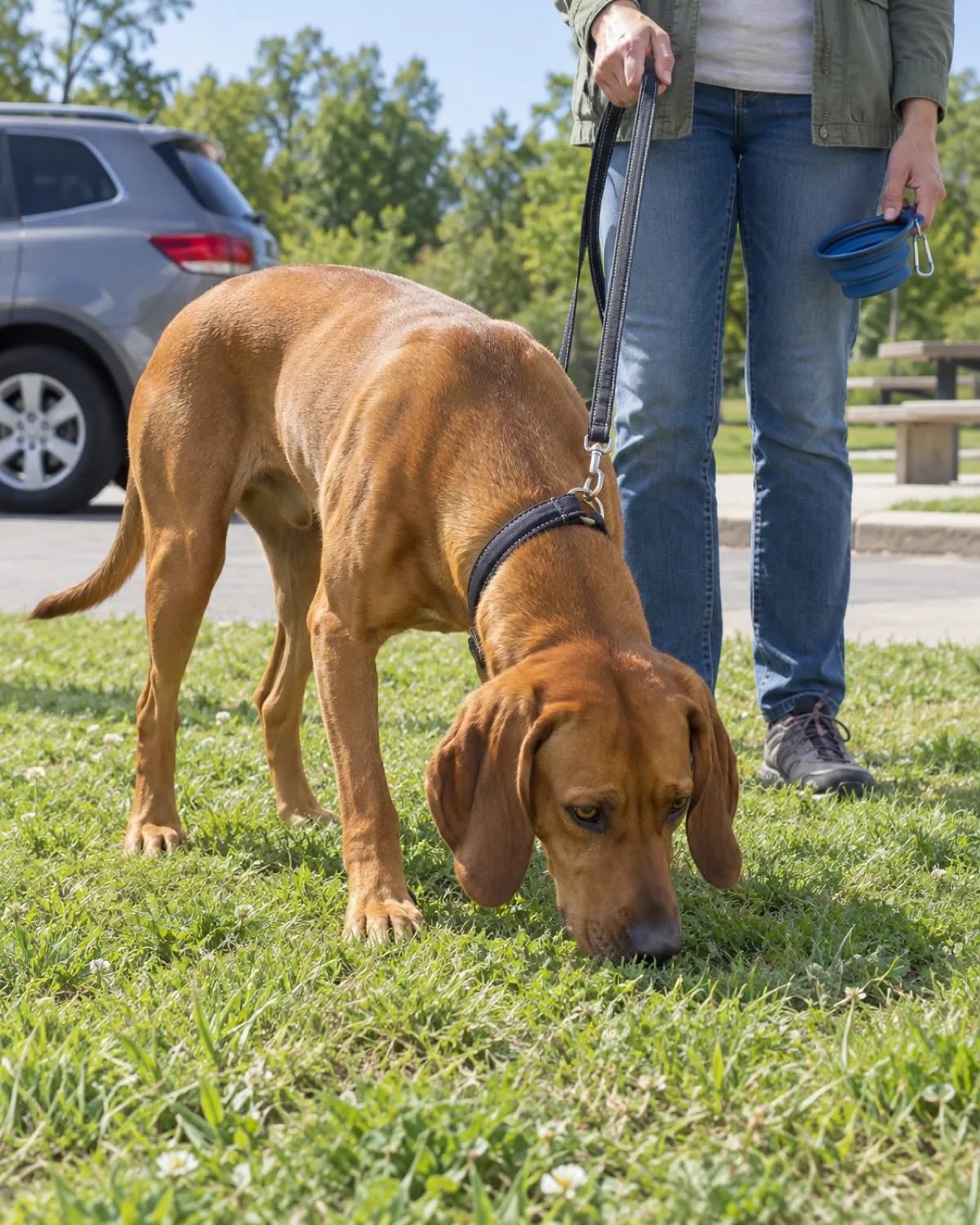
5Rest Stops MappedOne stop every ninety minutes. Mark pet-friendly parks and gas stations with grass.
6Fly Only When NecessaryCabin only for dogs under twenty pounds. Cargo is a last resort, never for flat-faced dogs.
7Meal ScheduleFeed at the same times you do at home. Light meal before travel, normal portions after.
8Familiar ItemsBlanket, chew toy, collapsible crate. The smell of home lowers cortisol in a new room.
9Arrival RoutineLeashed walk around the property, bathroom break, water, then let the dog sniff the room.
10Plan BBackup hotel, alternate route, emergency vet number. One thing will go wrong. Plan for it.
pawliqa.com
Get a Health Certificate and Updated Vaccination Records
A health certificate is not optional for most forms of travel, and getting caught without one can mean your dog does not board the plane, does not cross the state line, or gets turned away at a border checkpoint.
For domestic travel within the United States, most airlines require a Certificate of Veterinary Inspection (CVI) issued within ten days of your departure date. Some states also require one for driving across the border, particularly Hawaii, which has strict quarantine rules.
For international travel, the requirements jump significantly. Most countries require a USDA-endorsed health certificate, which means your vet fills out the paperwork and then it must be endorsed by a USDA APHIS office. This process can take weeks, not days. Start at least thirty days before your departure.
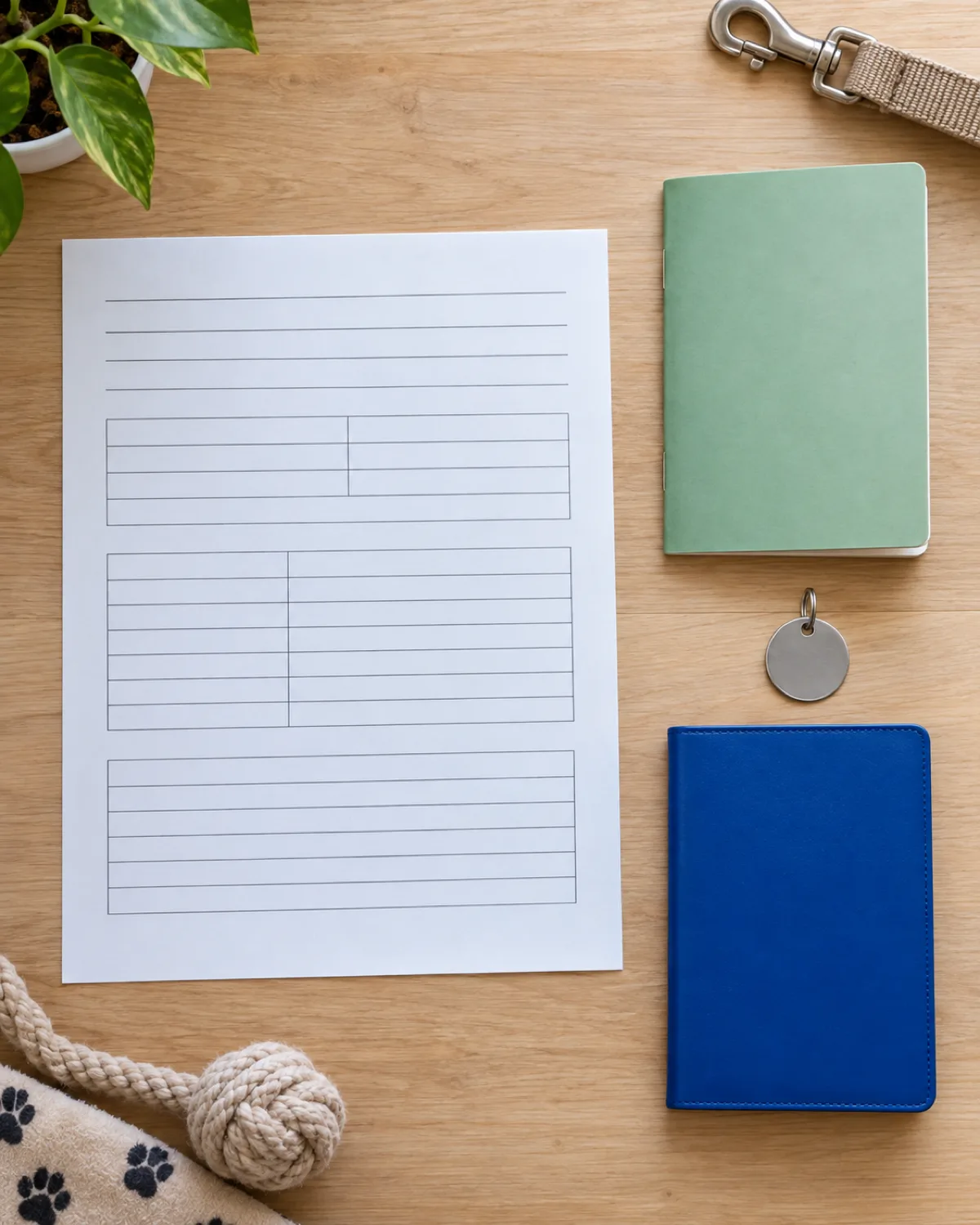
What to bring in your document folder:
Health certificate (CVI) dated within ten days of travel
Proof of rabies vaccination with the tag number and expiration date
Record of core vaccinations: distemper, parvovirus, adenovirus
Microchip documentation if traveling internationally — the chip number must match the health certificate
Any destination-specific permits (Hawaii's pre-arrival program, EU pet passport requirements)
Make two copies of every document. Keep one in your carry-on and one in your checked luggage. A screenshot on your phone is a backup, not a replacement.
Pack a Dog-Specific Travel Bag That Stays Packed
The biggest packing mistake is scattering your dog's supplies across three bags and two grocery sacks. When you need the leash at a rest stop and it is buried under the suitcase in the trunk, the dog waits and you lose patience.
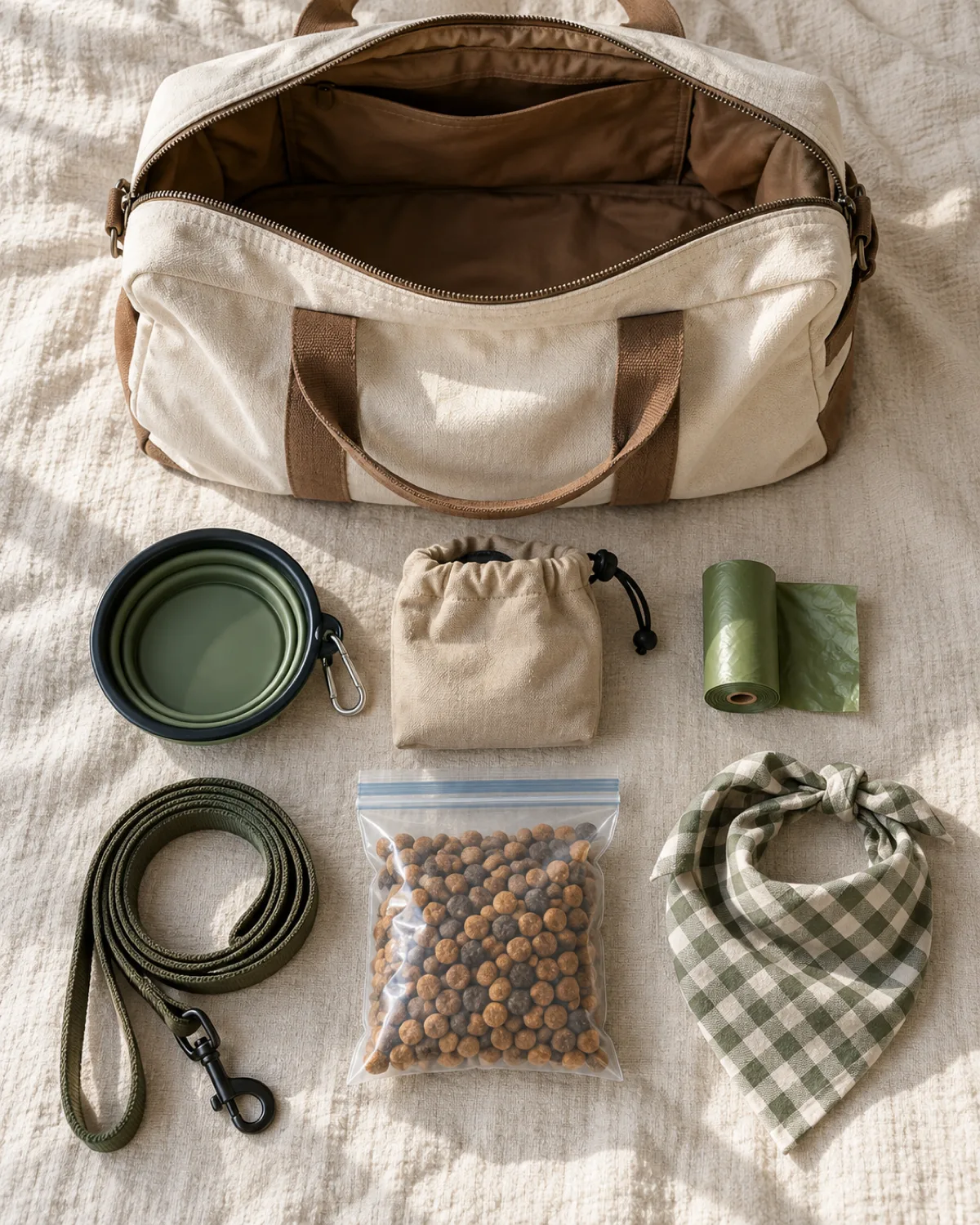
One dedicated dog travel bag, always packed, always in the same spot. Restock it after every trip so it is ready to grab and go.
What goes in the bag:
Collapsible water bowl and a full water bottle — rest stops do not always have clean water
Two leashes: one standard six-foot and one spare in case one breaks or gets muddy
Poop bags: more than you think you need, because you will always need more
Treats: a small pouch of high-value training treats for reward-based calm behavior in new environments
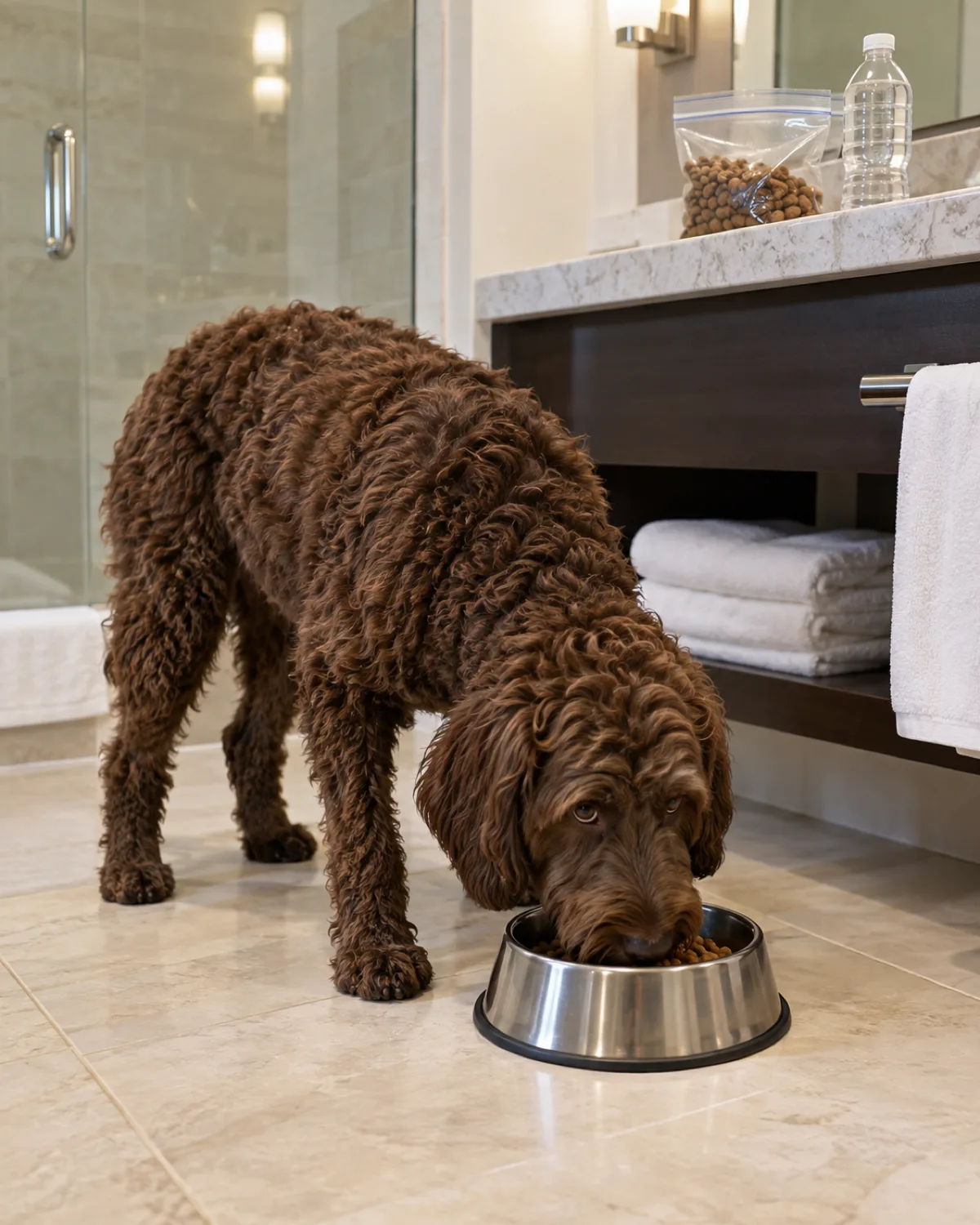
Three days of kibble in a sealed ziplock — even if you plan a two-day trip, delays happen
Familiar bandana or small blanket that carries the smell of home
Basic first-aid supplies: styptic powder, a roll of gauze, antiseptic wipes, tweezers for ticks
Keep the bag by the front door on travel days. It goes in the car last, on top of everything else, so it is the first thing you can reach.
Packing rules
The Travel Bag Checklist
WaterCollapsible bowl plus a sealed bottle. Refill at every stop.
FoodThree days of kibble in a ziplock. Treats in a separate pouch.
CleanupPoop bags, paper towels, a small spray bottle of enzyme cleaner.
ComfortFamiliar blanket, one chew toy, a bandana that smells like home.
Choose the Right Carrier or Restraint for Your Travel Mode
The carrier that works for a road trip is not the same one that works for a flight. Choosing the wrong type means your dog is either uncomfortable, unsafe, or not allowed to board.
For car travel, the two safest options are:
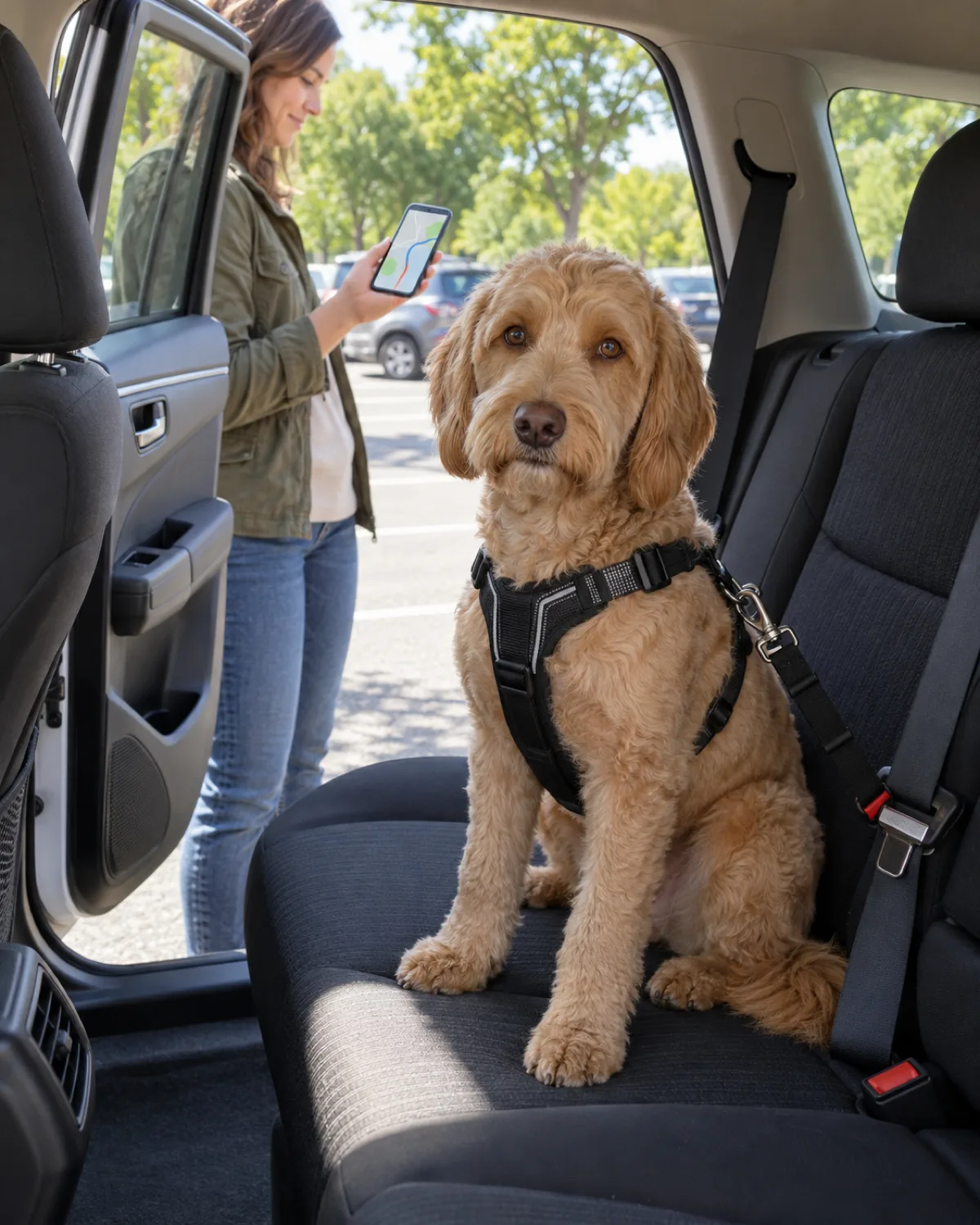
Crash-tested harness that clips into the seatbelt buckle — keeps the dog in the backseat without roaming
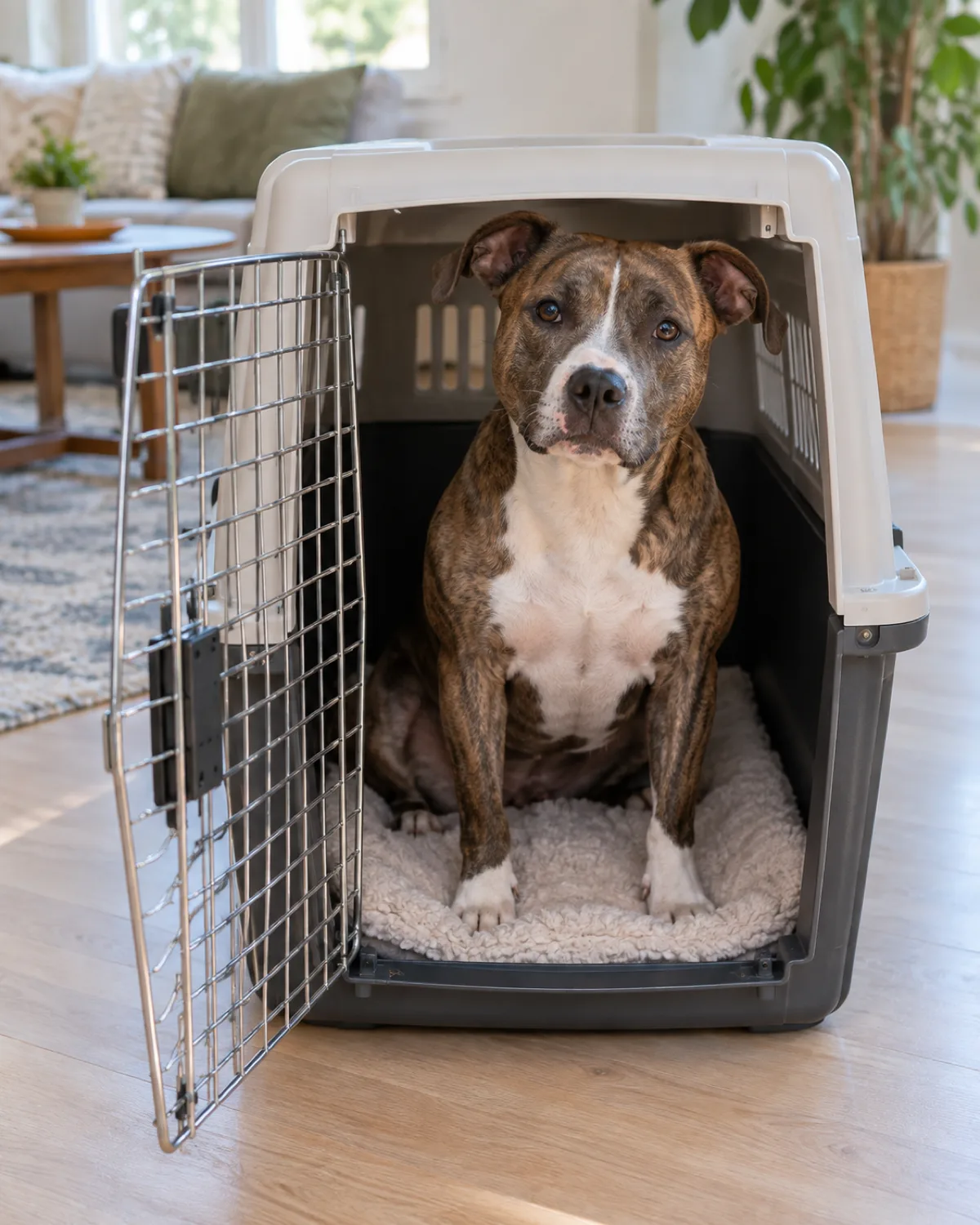
Secured crate in the cargo area — gives anxious dogs a den, strapped so it cannot slide
Both beat a loose dog sliding across the seat on every turn. For the full car setup checklist, our dog car travel guide walks through backseat stations, restraint sizing, and rest stop routines.
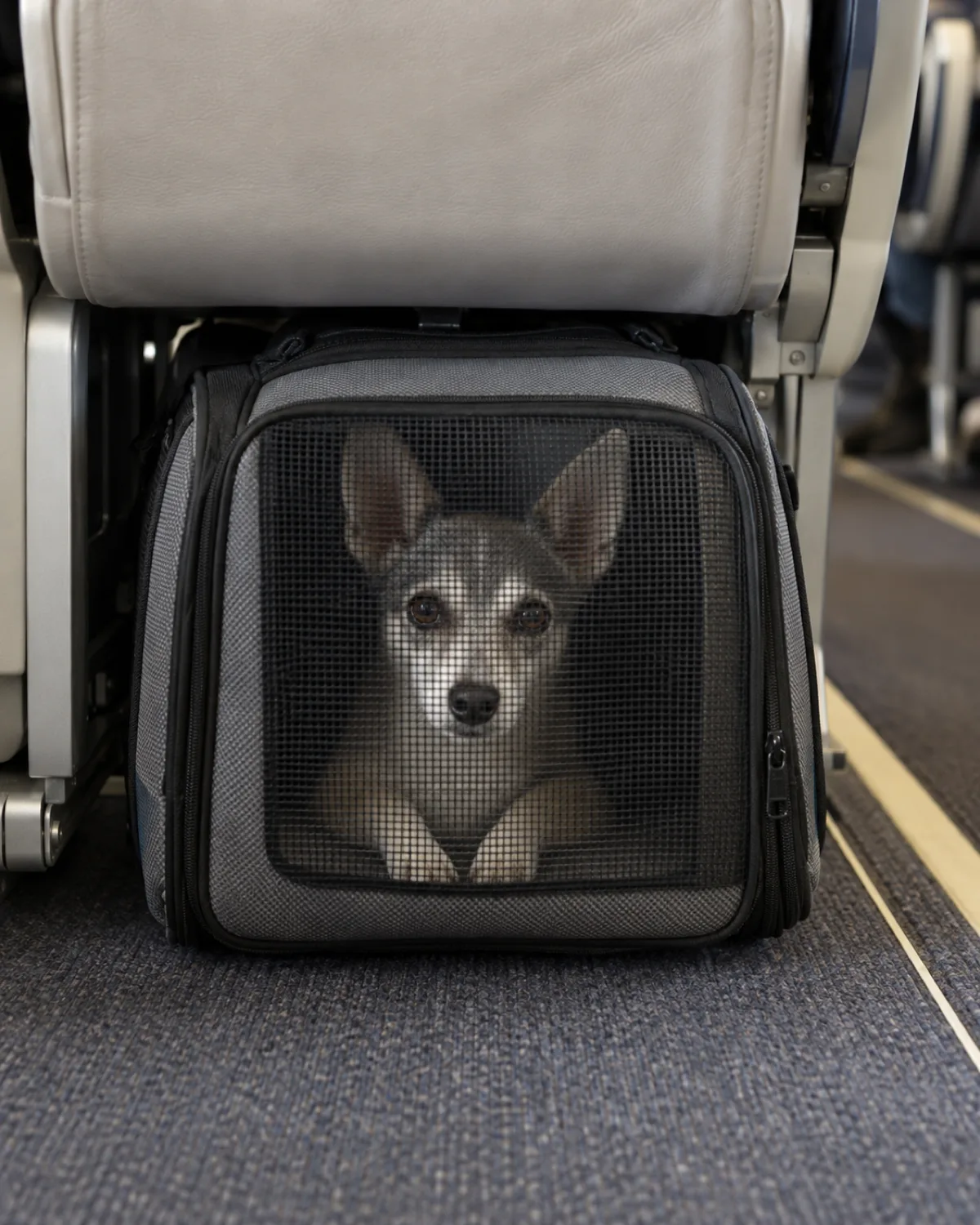
For air travel in the cabin, you need a soft-sided carrier that fits under the seat in front of you. Most airlines cap dimensions at eighteen by eleven by eleven inches. The dog must be able to stand, turn around, and lie down inside it.
How to match the restraint to your travel:
Travel mode
Best restraint
Why
Car — calm dog
Crash-tested harness
Clips into seatbelt, no roaming
Car — anxious dog
Secured crate
Den effect, strapped in place
Airplane cabin
Soft-sided carrier
Fits under seat, mesh vents
Airplane cargo
Hard-sided IATA crate
Reinforced, bolted water dish
If your dog has never been in a carrier, start acclimation at home at least two weeks before the trip. Leave the carrier open in the living room with a treat inside. Let the dog enter on its own terms. The crate training guide covers this process in depth — the same principles apply to travel carriers.
Map Every Rest Stop and Green Space Along Your Route
A dog's bladder does not run on your schedule. Neither does its need to stretch, sniff, and decompress after an hour in a moving vehicle. Plan the stops before you leave, not when the dog starts whining.
The general rule is one stop every sixty to ninety minutes. That sounds like a lot of stops for a six-hour drive, but each one only needs to be ten to fifteen minutes: a short walk, a water break, a quick bathroom opportunity, and back in the car.
Before you leave, open your map app and mark:
Rest areas with grass (not just parking lots — dogs need to sniff and relieve themselves on natural ground)
Pet-friendly parks near the highway in case the dog needs a longer stretch
Gas stations with green strips as backup stops between rest areas
The location of the nearest emergency vet clinic at each major point along your route
Avoid rest stops where the grass borders a busy highway with no barrier. A spooked dog on a leash near fast-moving traffic is a dangerous combination.
At every rest stop
Do This, Skip That
Leash first, door secondClip the leash before you open the car door. Always.
Skip the dog parkUnfamiliar dogs in an unfamiliar park mid-trip is a recipe for a bite or a bolted dog.
Offer water every stopEven if the dog does not drink. Dehydration builds quietly.
Skip feeding at the stopMotion sickness risk spikes if the dog eats right before driving again.
Fly Only When Driving Is Not an Option
Flying with a dog is stressful for the dog, complicated for you, and sometimes dangerous. If you can drive to the destination in under twelve hours, drive.
When flying is the only option, cabin is always preferable to cargo. In the cabin, your dog is with you, the temperature is controlled, and you can monitor stress signals in real time. In cargo, the dog is alone in a pressurized but noisy hold, exposed to tarmac heat during boarding, and handled by ground crew who may not be gentle with the crate.
Cabin rules by most major US airlines:
Dog must weigh under twenty pounds including the carrier
Carrier must fit under the seat (typically 18 × 11 × 11 inches)
One pet per passenger
Pet fee ranges from seventy-five to two hundred dollars each way
Advance reservation required — most flights limit the number of pets in the cabin
If your dog is too large for the cabin, cargo is the alternative, but it comes with real risks:
Never fly a flat-faced dog in cargo. Their respiratory anatomy makes them vulnerable to heat stress and restricted airflow at altitude. Several airlines have banned them from cargo entirely.
Avoid flying in summer or winter extremes. Tarmac temperatures can exceed 130 degrees in summer and drop below freezing in winter during boarding delays.
Book direct flights only. Every connection is another loading and unloading, another chance for a missed transfer or extended tarmac wait.
Talk to your vet before booking. Some dogs with heart conditions, severe anxiety, or respiratory issues should not fly at all, regardless of cabin or cargo.
Keep Your Dog's Meal Schedule as Close to Normal as Possible
Travel disrupts everything about your dog's routine. The smells are different, the sounds are different, and the sleeping surface is different. The one thing you can keep constant is the meal schedule, and that consistency becomes an anchor for the dog's sense of normalcy.
Feed at the same times you do at home, using the same food, in the same bowl if you brought it. A dog that eats at 7 a.m. and 5 p.m. at home should eat at 7 a.m. and 5 p.m. in the hotel room.
Practical rules for feeding on the road:
Light meal before travel: half the normal portion two to three hours before a long drive or flight. A full stomach plus motion equals nausea.
Normal portions once you arrive: the dog needs calories after a stressful day. Do not skip the evening meal thinking the dog is too tired to eat.
Same kibble, no surprises: bringing your dog's regular food prevents digestive upset. A new food in a new place is two disruptions at once.
Water always available: offer water at every rest stop and keep a bowl in the hotel room. Some dogs drink less when stressed, so monitor intake.
If you are crossing time zones, shift the feeding schedule by thirty minutes per day until it matches the local time. An abrupt two-hour shift confuses the dog's internal clock and can cause refusal to eat or digestive issues.
Bring Enough Familiar Items to Make Any Room Feel Like Home
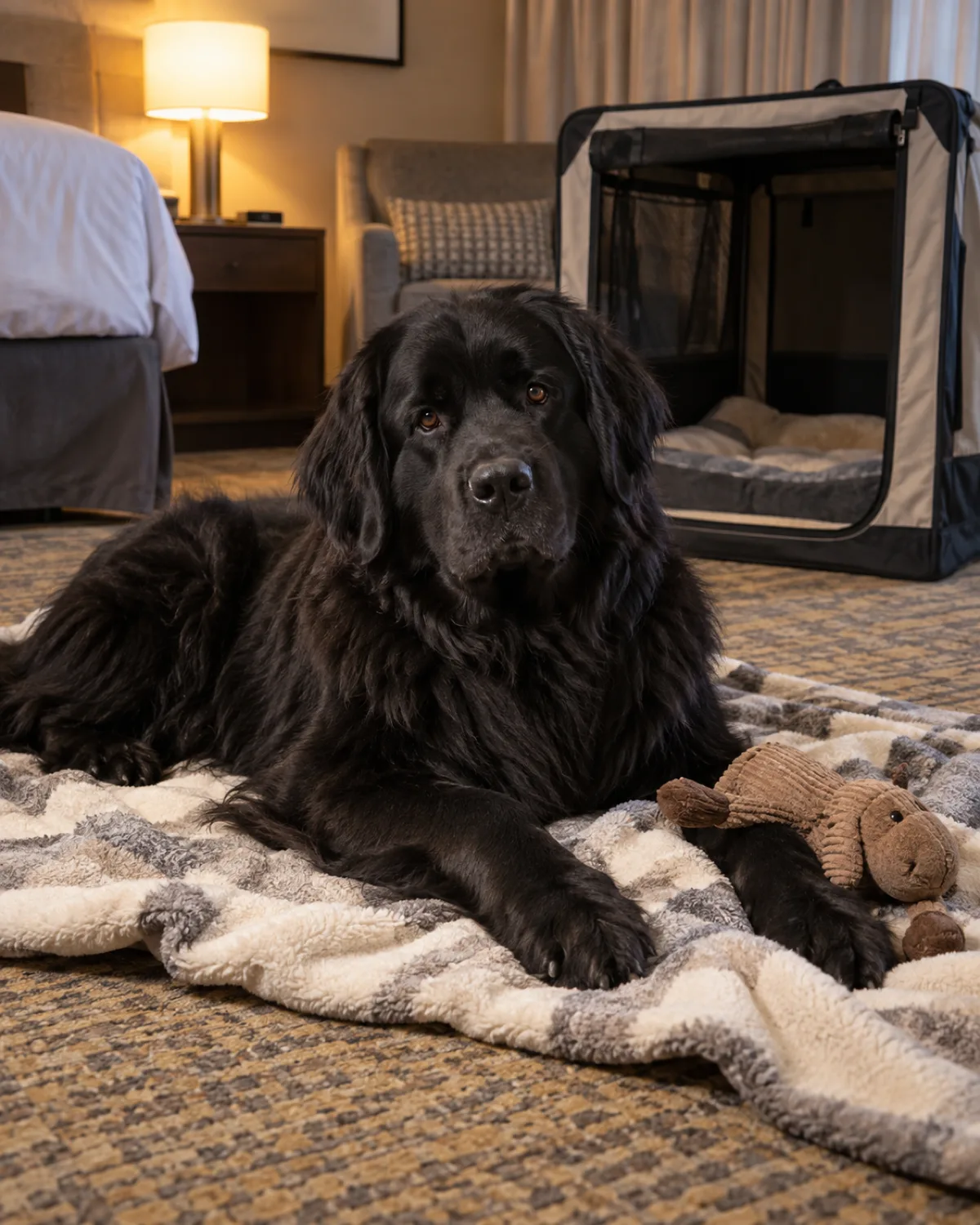
A hotel room is a box of strange smells. The cleaning products, the previous guests, the HVAC system — none of it registers as safe to your dog. Familiar objects bridge the gap between "this is foreign" and "I can relax here."
The three items that make the biggest difference:
A blanket or bed the dog sleeps on at home. It carries the dog's own scent and yours. Lay it in the same relative position as the dog's bed at home — near the wall, away from the door.
A chew toy the dog already associates with calm. A stuffed toy, a durable chew, or a puzzle feeder that the dog uses during downtime at home. New toys in a new place can overstimulate instead of calm.
A collapsible crate if the dog is crate trained. Open the door and let the dog choose to enter. In a strange room, a crate is not confinement — it is the only object in the room that the dog recognizes as its own space.
Do not bring the entire house. Three to four familiar items are enough. The goal is to create one small zone in the room that smells and feels like home, not to replicate the living room.
How scent works as a calming tool
Dogs process their environment through smell before anything else. A blanket that carries the scent of home triggers a neurochemical response that lowers cortisol and heart rate. This is not a metaphor — it has been measured in shelter studies where dogs given owner-scented items showed significantly less pacing, whining, and lip licking compared to dogs given clean blankets.
You do not need to buy calming sprays or pheromone diffusers for most dogs. The blanket you already have is more effective because it carries the specific scent profile the dog has been associating with safety since it was a puppy.
Frequently Asked Questions About Traveling With a Dog
Can I give my dog medication to calm them during travel?
Only if your vet prescribes it. Over-the-counter sedatives and supplements marketed for travel anxiety vary widely in safety and effectiveness. Some antihistamines make dogs drowsy but do not actually reduce anxiety — the dog is still stressed but cannot move.
Your vet can prescribe the right medication at the right dose for your dog's weight and health history. Never give human anti-anxiety medication to a dog.
Do all hotels charge a pet fee?
Most do, but the structure varies. Some charge a one-time cleaning fee between twenty-five and one hundred fifty dollars. Others add a per-night surcharge of fifteen to fifty dollars. A few charge nothing. Always confirm the exact fee with the hotel directly before booking, because third-party websites do not always reflect current pet policies.
How do I keep my dog from barking in a hotel room?
Barking in a hotel room usually means the dog is anxious, bored, or reacting to hallway noise. A white noise machine or a phone playing low ambient sound masks unfamiliar sounds. A chew toy or frozen treat occupies the dog during the first hour when anxiety peaks.
If the dog only barks when you leave the room, do not leave it alone until it has settled. Take it with you, or crate it with a familiar blanket and return quickly.
Can flat-faced dogs fly at all?
Most major airlines ban flat-faced breeds from cargo. Some allow them in the cabin if they meet the weight and carrier requirements. The risk is real: short-nosed dogs overheat faster and struggle to breathe in warm, low-oxygen environments. If you must fly with a flat-faced dog, cabin only, direct flights only, and talk to your vet first.
What if my dog gets carsick?
Motion sickness is common, especially in puppies whose inner ears are still developing. Keep the car cool, crack a rear window slightly for fresh air, and avoid feeding within two hours of driving.
Face the dog forward if possible — rear-facing positions increase nausea. If the problem persists, your vet can prescribe anti-nausea medication that is safe for dogs. Our dog car travel guide covers motion sickness management in more detail.
Build a Calm Arrival Routine for Every New Destination
The first thirty minutes in a new place set the tone for the entire stay. Rush that window and the dog spends the rest of the night pacing, whining, or chewing the hotel bedspread.
A calm arrival routine looks the same at every destination, every time. Consistency is the point:
Park and leash up before opening any doors. Clip the leash while the dog is still secured in the car. An excited dog bolting into an unfamiliar parking lot is how dogs get lost.
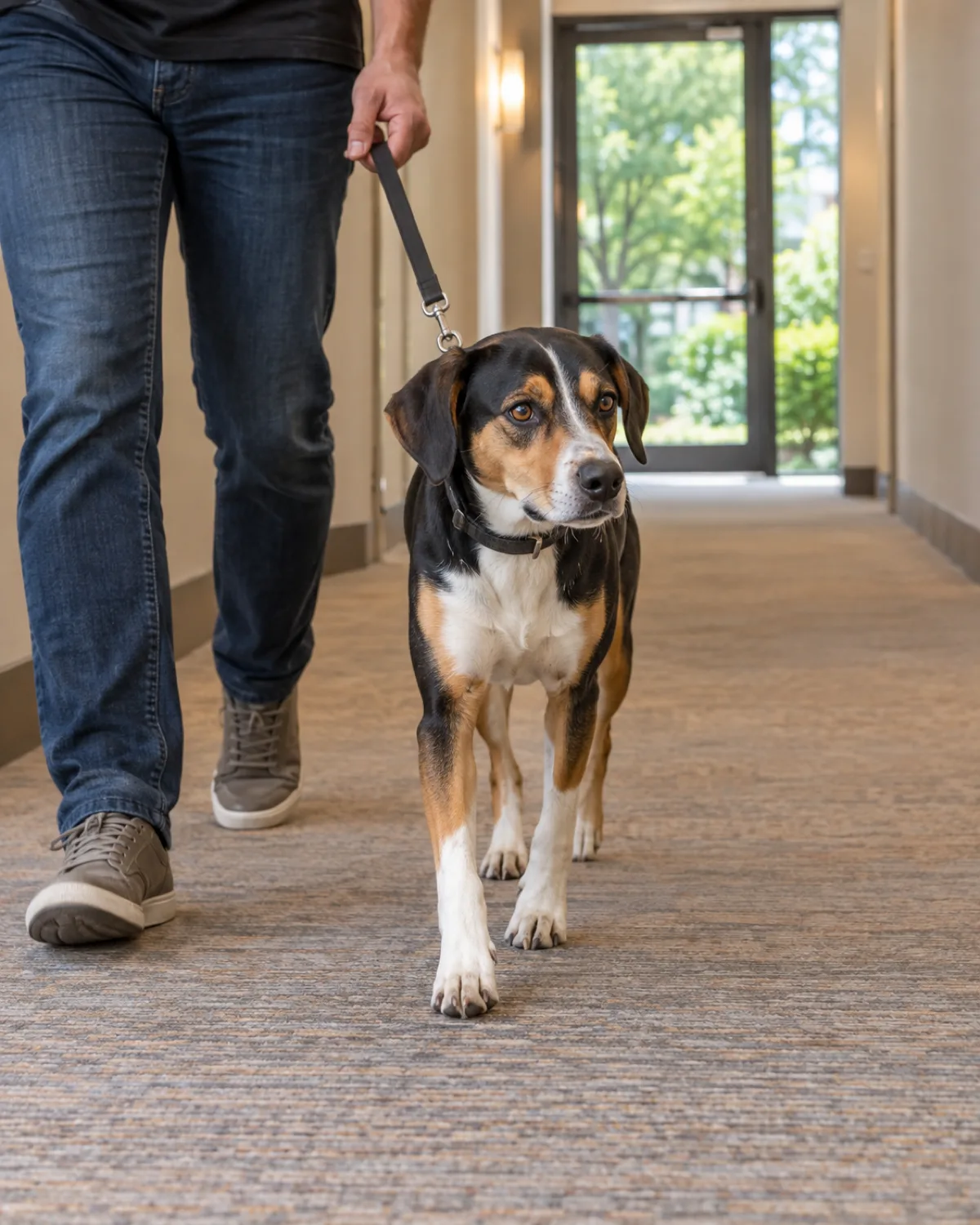
Walk the perimeter first. Take the dog on a slow, leashed walk around the building or property. Let it sniff every corner, every bush, every trash can. This is not a bathroom break — it is a reconnaissance mission.
Bathroom break in the designated area. After the perimeter walk, take the dog to the relief area and wait. Some dogs need five to ten minutes to feel safe enough to go in a new spot.
Enter the room calmly. No excitement, no high-pitched voice. Walk in, set the blanket down, fill the water bowl, and let the dog explore the room at its own pace.
Offer water, then a small treat. Food and water in a familiar bowl signal that this space is now part of the routine.
If you are staying multiple nights, repeat the perimeter walk each morning. The dog's confidence in the space builds with repetition, not with time alone.
Have a Plan B for Every Leg of the Trip
Something will go wrong. The hotel lost your reservation. The flight got canceled. The dog vomited twice before you reached the highway. Traveling with a dog means planning for the plan to fail.
Before you leave, build a backup for each leg:
Backup hotel: identify a second pet-friendly option within thirty minutes of your primary booking. If your reservation falls through at 10 p.m., you need somewhere to go, not somewhere to search.
Alternate route: if your main highway has construction or closures, know which secondary roads still have rest stops with grass and clean water.
Emergency vet along the route: save the name, address, and phone number of a 24-hour emergency vet clinic at your destination and at the midpoint of your drive. A dog that eats something toxic at a rest stop cannot wait six hours for your regular vet.
Backup carrier or harness: a spare leash and a collapsible crate in the trunk. If the primary harness buckle jams or the carrier zipper breaks, you need a replacement immediately, not at the next pet store.
The backup plan does not need to be elaborate. It needs to exist. Write it on a single sheet of paper — hotel name and number, vet clinic and number, alternate route — and tape it to the inside of your dog's travel bag.
A trip that goes perfectly is luck. A trip that recovers from one bad break is planning. That is the difference between a dog that learns to enjoy travel and a dog that panics every time it sees a suitcase.
Written by
Jess Calloway
Dog mom to three very different dogs and the voice behind Pawliqa. Jess writes about the messy, rewarding reality of life with dogs — from the training wins to the chewed-up couch cushions. Every tip here has been tested on at least one reluctant traveler.
Dog beds collect more than fur. This guide covers machine-washable beds, hand washing, memory foam inserts, proper drying, and the quick spot-clean tricks that keep a bed fresh between full washes.