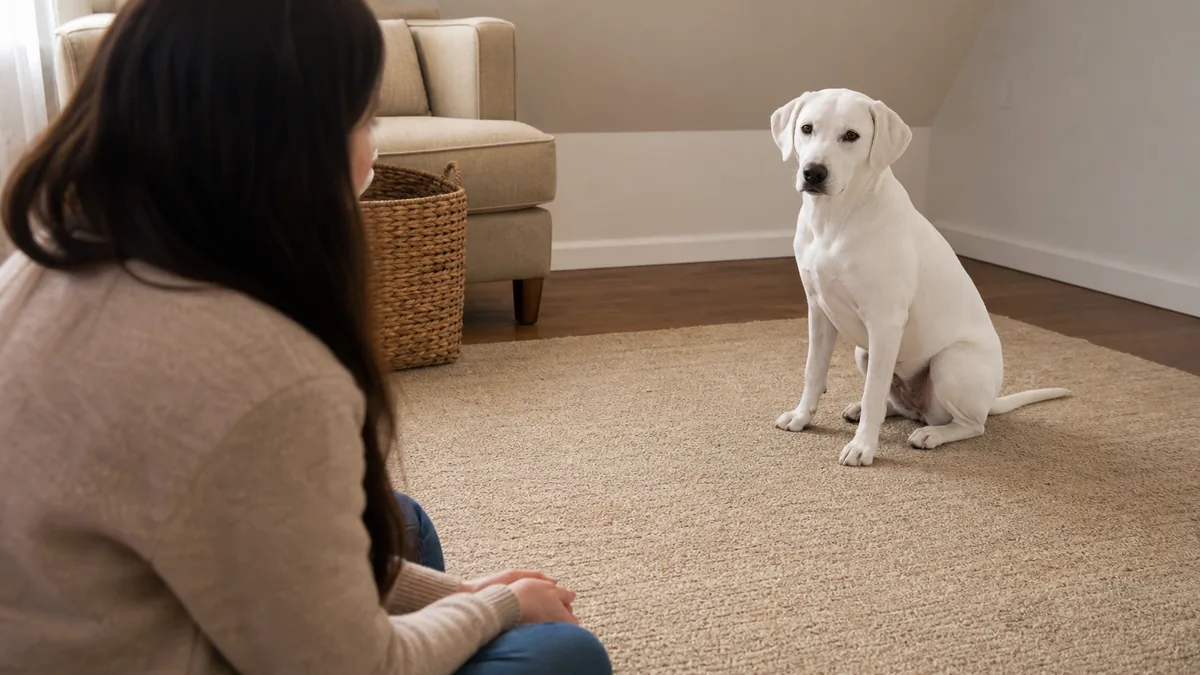
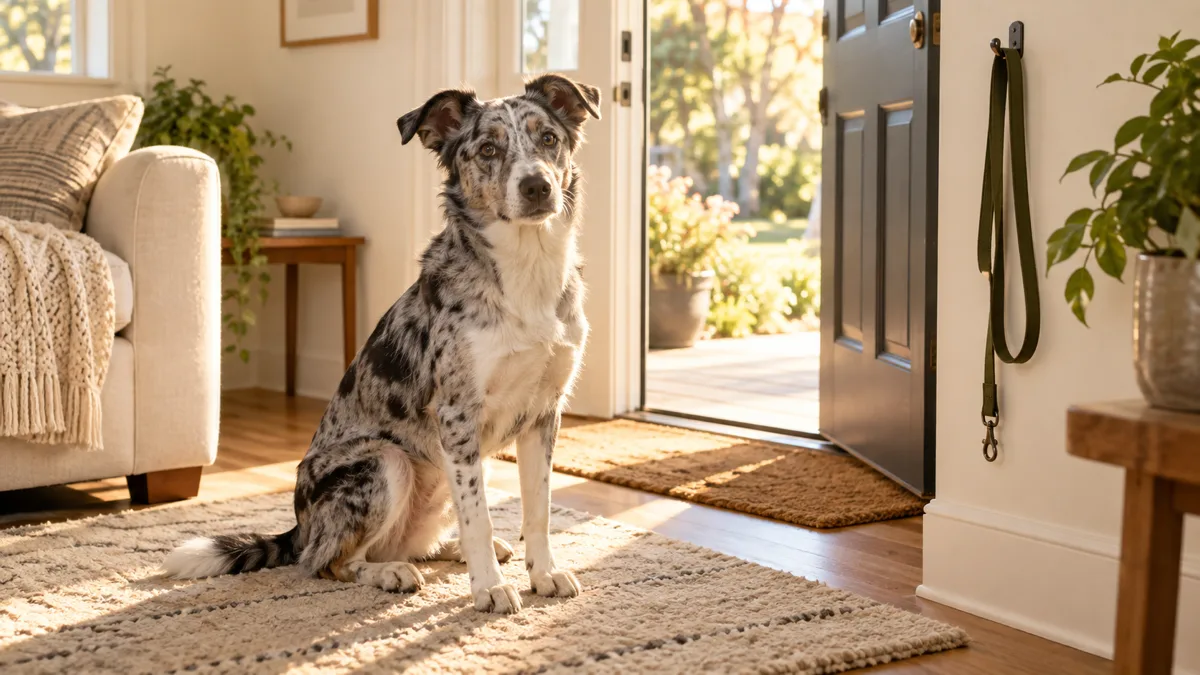
The first night with our rescue was quiet in a way that worried me. He wouldn't eat, wouldn't come near us, and spent most of it facing the kitchen wall. I thought something was wrong with him. Turned out my expectations were the problem.
A newly adopted dog isn't a blank slate walking into a fresh start — they're a stressed-out animal in an unfamiliar place, carrying a past you don't need to know to help them through it. The adjustment period is real and predictable.
This is that shape: what to expect the first days, weeks, and months, how to set up a space that helps instead of overwhelms, and the mistakes that quietly slow trust down.
Jump to a section
How to help a newly adopted dog settle into your home
What to expect the first days, weeks, and months, and the mistakes that quietly slow trust down.
1. Why the First Few Weeks Look Different With an Adopted Dog

A dog who just left a shelter, a foster home, or a previous owner is running on stress hormones, not bad behavior. Cortisol stays elevated for days after a major environment change, which can look like shutting down, pacing, or refusing food that has nothing to do with how they'll act once they've settled.
None of that is a preview of their real personality. A dog who seems withdrawn in week one is often playful and affectionate by week four, once their nervous system stops treating every sound and smell as a threat to assess.
Reframing the quiet, watchful version of your dog as normal — not broken — changes how patiently you respond to it, which is exactly what speeds the process along.
2. The 3-3-3 Rule: What to Expect Days, Weeks, and Months In

The first three days are for decompressing, not bonding. Expect a dog who's overwhelmed, possibly not eating much, and not yet showing you who they really are.
By three weeks, a routine starts to take hold. Your dog begins to learn the house rules, the schedule, and where they fit into the household, even if some hesitancy remains.
By three months, real trust tends to be in place. Personality comes forward, routines feel automatic, and the dog who barely moved that first night is usually unrecognizable in the best way.
Where is your dog on the timeline right now
Match what you're seeing to the right tier
The 3-3-3 rule is a guideline, not a countdown — use what your dog is actually doing to place them.
Days 1–3Decompression onlyOverwhelmed, quiet, maybe not eating much. Lower demands, don't force bonding yet.
Weeks 1–3Routine formingLearning the schedule and house rules, still some hesitancy. Keep the routine steady and predictable.
Around Week 3Testing the edgesMore personality showing, occasional pushback on rules. Add gentle structure now that trust is building.
Around Month 3Trust establishedRoutines feel automatic, real personality is visible. Keep the same structure that got you here.
Still fully shut down well past week three? That's outside the typical curve — worth a conversation with your vet or a certified trainer rather than waiting it out alone.
3. Setting Up a Quiet Decompression Space Before They Come Home

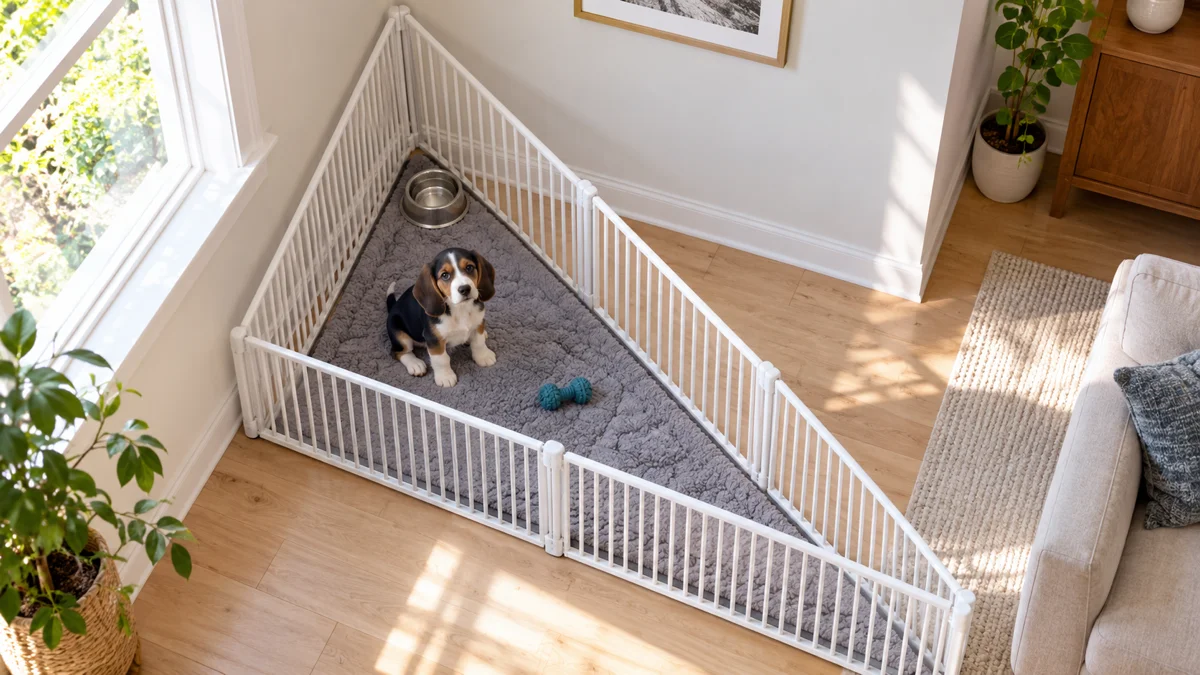
Before your new dog arrives, pick one low-traffic room or corner and set it up with a bed, water, and a few chew items — the same forward-planning logic covered in handling a puppy's first week home, just built for a dog who's carrying more history than a new puppy is.
Keep the space away from constant foot traffic and loud household sounds for at least the first several days. A dog who has somewhere predictable to retreat to settles faster than one who's expected to be comfortable everywhere at once.
Resist the urge to rearrange it once your dog starts using it. Consistency in that one space is doing a lot of the emotional work in these early days.
4. Skip the Welcome-Home Party the First Few Days

It's tempting to invite family and friends over to meet the new dog right away, but a houseful of new faces and voices is exactly the kind of stimulation an already-overwhelmed dog doesn't need yet.
Keep the first few days low-key: immediate household only, quiet voices, and no forced greetings. Let visitors wait until your dog has had at least a week to find their footing.
The dog who gets a calm, boring first week is almost always the one who warms up to new people faster once you do start introducing them.
5. Building a Predictable Daily Routine From Day One
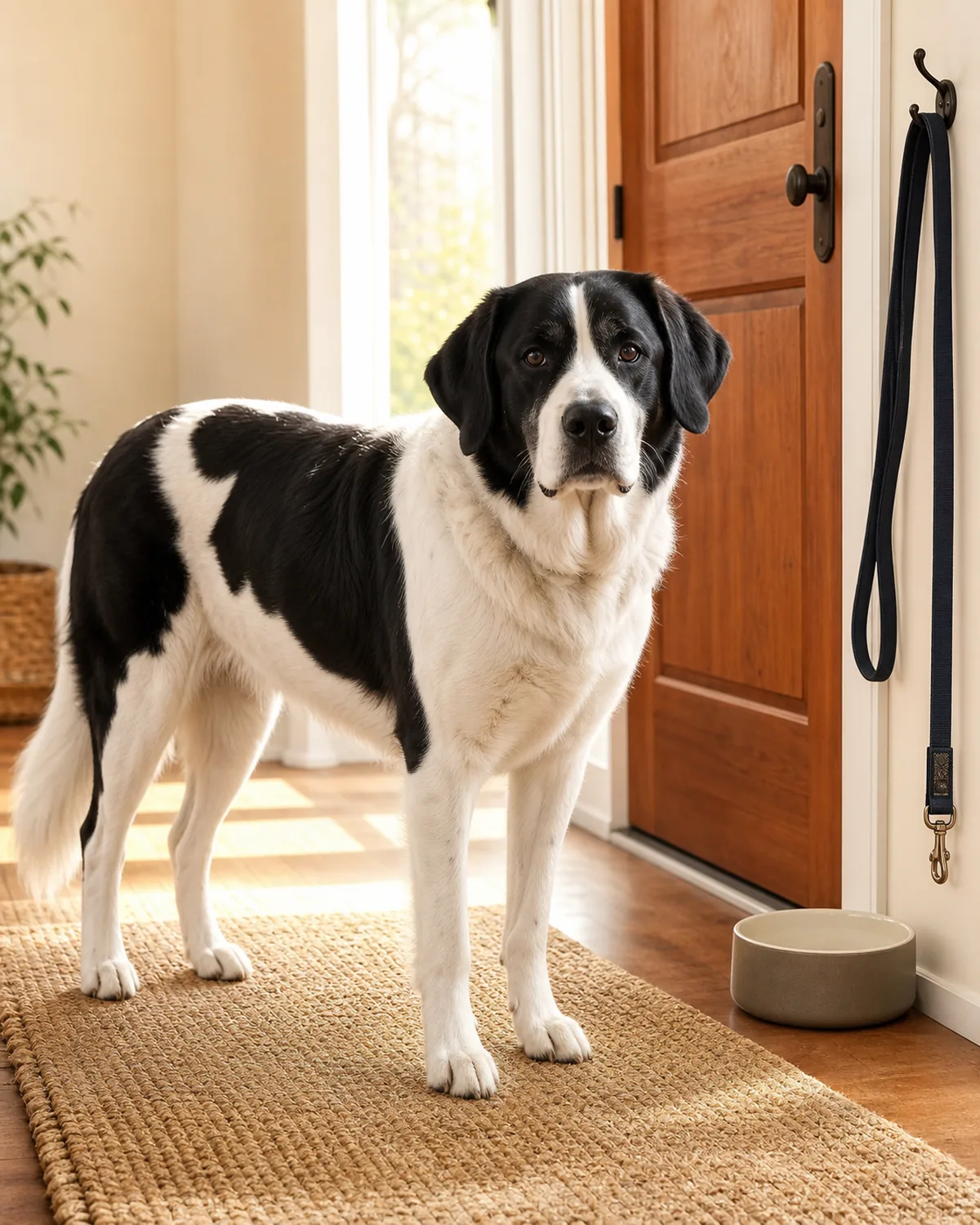
Feed, walk, and settle for the night at roughly the same times every day, starting on day one. Predictability itself is calming — a dog who knows what's coming next doesn't have to stay on alert wondering what happens now.
You don't need the routine to be elaborate. The value is in the repetition: the same few cues, in the same order, every single day for the first few weeks.
A dog adjusting to a new home is also adjusting to an entirely new set of rules. A steady routine is the fastest way to teach those rules without a single formal training session.
6. Reading Stress Signals Before They Escalate

Yawning outside of tiredness, lip licking with no food nearby, turning their head away, or moving stiffly are all early signs that a dog is uncomfortable, well before growling or snapping ever enters the picture.
Give a dog showing these signals more space and lower the intensity of whatever's happening — fewer people, quieter voices, more distance — rather than pushing through to see if they "get used to it."
Dogs who are heard at this early, subtle stage rarely need to escalate to a louder warning to get the space they're asking for.
The adjustment-period do’s and don’ts
What to do — and skip — in the first weeks
Most stalled adjustments trace back to one of these lines.
Always Do
- Set up one quiet decompression space before your dog even arrives.
- Keep the first few days low-key, immediate household only.
- Feed, walk, and settle for the night at the same times every day.
- Let your dog choose when to approach new people.
- Keep leashes on, even in the backyard, for the first few weeks.
- Give more space the moment you see a subtle stress signal.
- Treat the first three months as one continuous decompression period.
Never Don’t
- Never force physical affection on a dog who's keeping their distance.
- Never invite a houseful of visitors in the first week.
- Never drop the leash or leave a gate unlatched before trust is built.
- Never assume resident pets will "sort it out" loose together.
- Never close a dog into a crate they aren't already comfortable in.
- Never mistake normal decompression for a permanent personality.
- Never rearrange your dog's one settled space once they start using it.
7. Introducing Your Dog to the Rest of the Household Slowly

Introduce new people one at a time, seated and low-key, letting your dog approach on their own terms rather than crowding around them. A dog who gets to choose when to make contact builds trust faster than one who's handed from person to person.
Keep early interactions short and low-pressure — a calm presence in the same room counts as progress, even without any direct contact yet.
Let each family member earn a positive association gradually: a treat dropped nearby, a calm voice, patience with distance. Forcing affection on day one rarely produces affection any sooner.
8. Bringing a New Dog Home to Resident Pets

Introduce resident pets in neutral territory or in brief, supervised, distance-controlled sessions rather than putting everyone loose together the moment your new dog walks in. First impressions between animals set a tone that's hard to undo.
Watch body language closely on both sides — a stiff body, hard stare, or raised hackles from either animal is a sign to add distance, not push through to see if they "sort it out."
Expect this to take longer than a single afternoon. Some pets warm to each other in days; others need several structured weeks of gradually closer supervised time before they're ever left alone together.
9. Why It's Too Early for Off-Leash Freedom or Big Outings
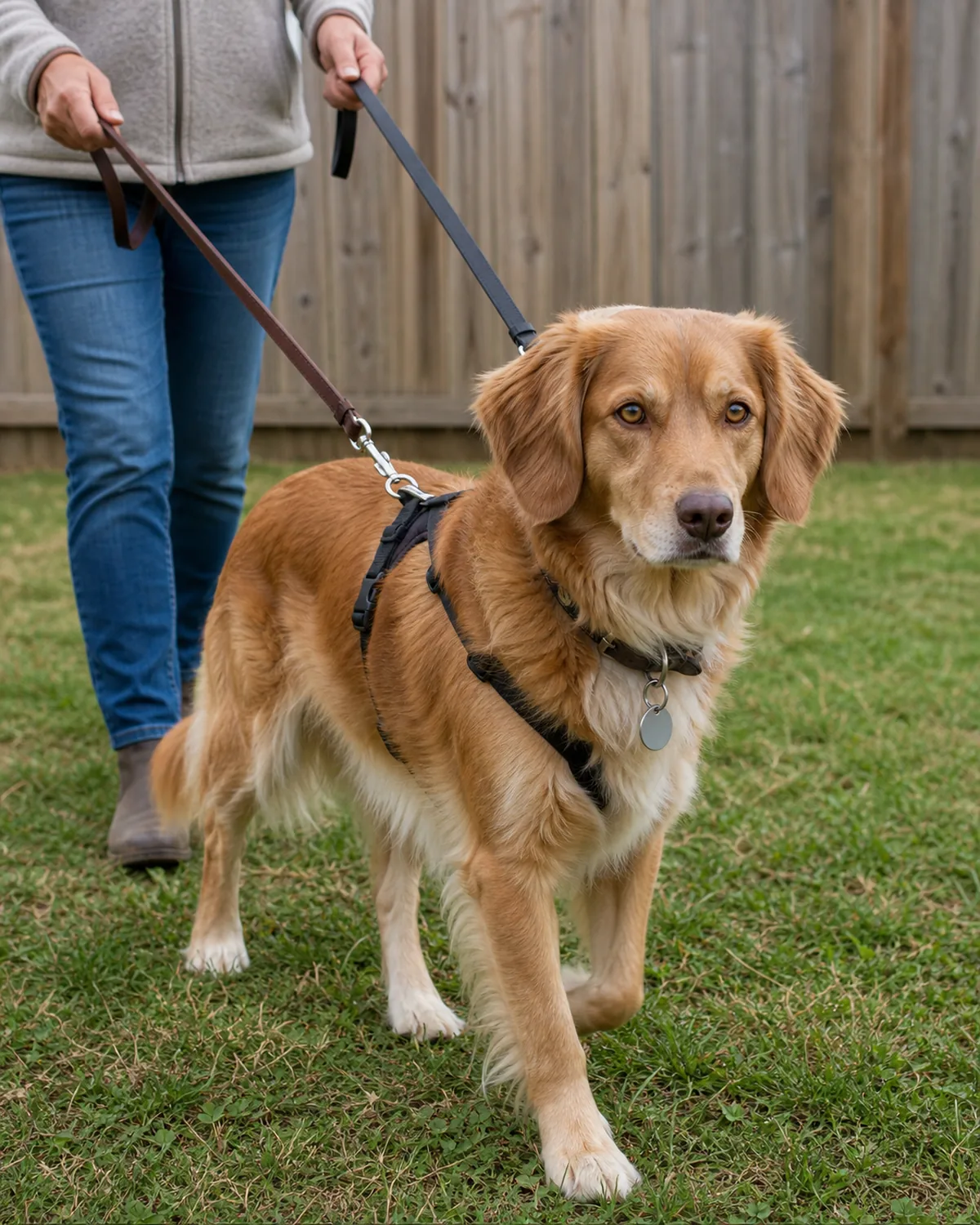
A newly adopted dog doesn't yet know your home as "home," which means a dropped leash or an unlatched gate can turn into a genuinely lost dog with no learned reason to come back. Keep leashes on, even in the backyard, for at least the first few weeks.
Skip the dog park, the crowded street festival, and the big group hike until your dog has a real routine and a reliable response to their name. Those environments ask a lot of a dog who's still learning the basics of your household.
A collar with an ID tag plus a second point of connection — a harness with a separate leash attachment — adds a real safety margin while your dog is still a flight risk.
Save this before your new dog comes home
3-3-3 Adjustment Checklist
Set up the space in advance, then work through the timeline as your dog settles in.
- Set up one quiet decompression space before your dog arrives.
- Days 1–3: expect overwhelm, not bonding — keep it low-key.
- Keep leashes on, even in the backyard, for the first few weeks.
- Feed, walk, and settle for the night at the same times daily.
- Introduce people and pets one at a time, at a distance, on your dog's terms.
- Weeks 1–3: watch for a routine starting to take hold.
- Month 3: expect real trust and personality to settle in.
General adjustment-period guidance, not a substitute for your vet or a certified trainer on persistent shutdown or fear.
10. Turning a Crate Into an Anytime Home Base, Not a Timeout Spot
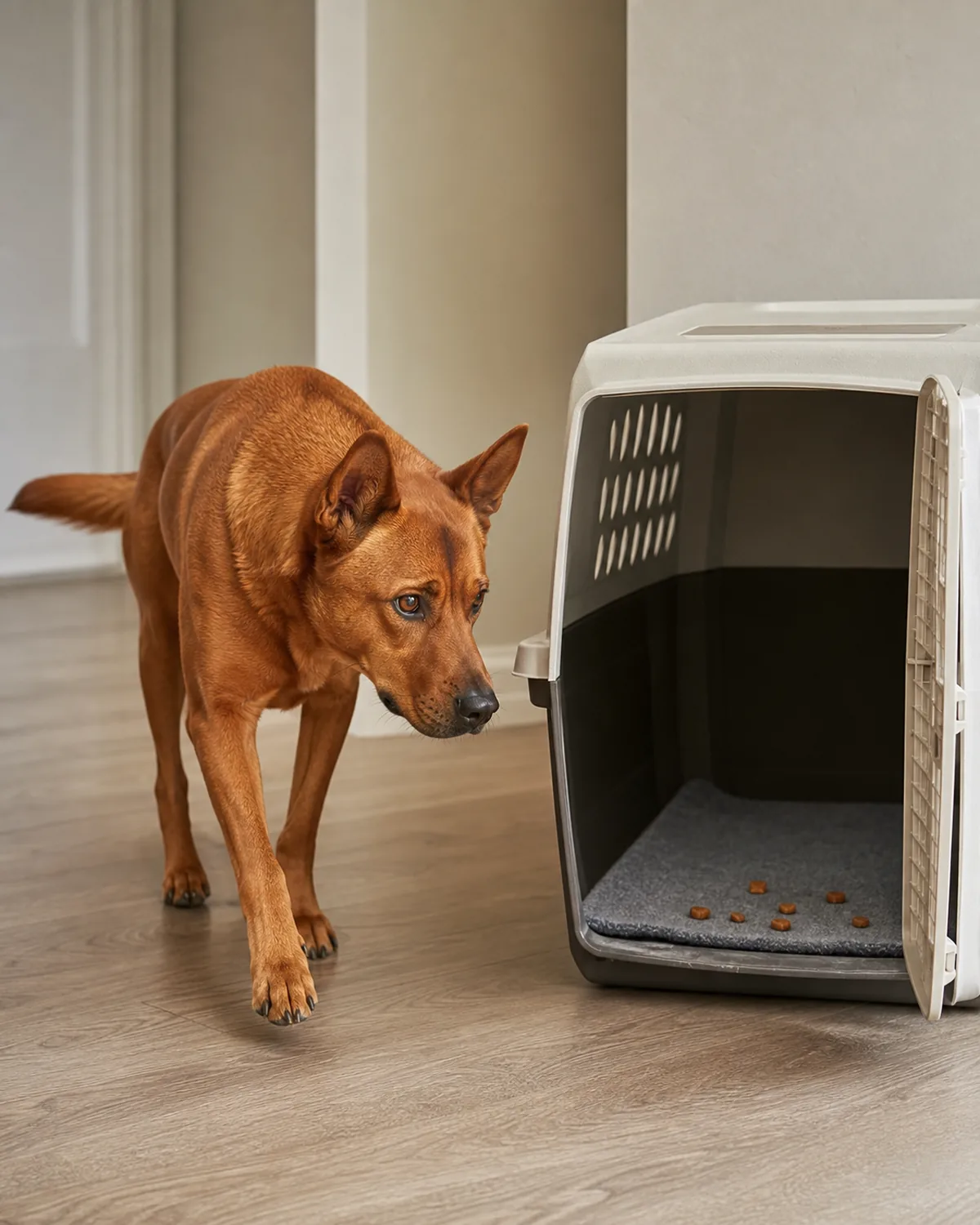
The groundwork covered in crate training a puppy applies just as well to an adjusting adult dog: a crate works best as neutral territory a dog can wander into on any ordinary afternoon, not something that only comes out when things feel like too much.
Leave the door open from day one and drop treats near it during the first week without ever calling your dog toward it. Let the space earn its own reputation instead of introducing it during a moment of stress, which tends to attach the wrong association from the start.
The goal is a crate your dog treats the same way they'd treat a favorite corner of a couch — somewhere neutral and theirs, not a tool you reach for only when behavior needs managing.
11. Common Mistakes That Slow Down Trust

Forcing physical affection on a dog who's still keeping their distance — pulling them close, picking them up, reaching over their head — usually reads as pressure rather than comfort, and slows down the very trust you're trying to build.
Giving too much freedom too soon, before a routine and a reliable recall exist, invites exactly the kind of incident that makes an already-uncertain situation worse.
And mistaking the normal 3-3-3 decompression period for a permanent personality or a bad match is the single biggest reason dogs get returned in the first weeks, when most of them simply needed more time.
12. Celebrating the Small Wins as Confidence Builds
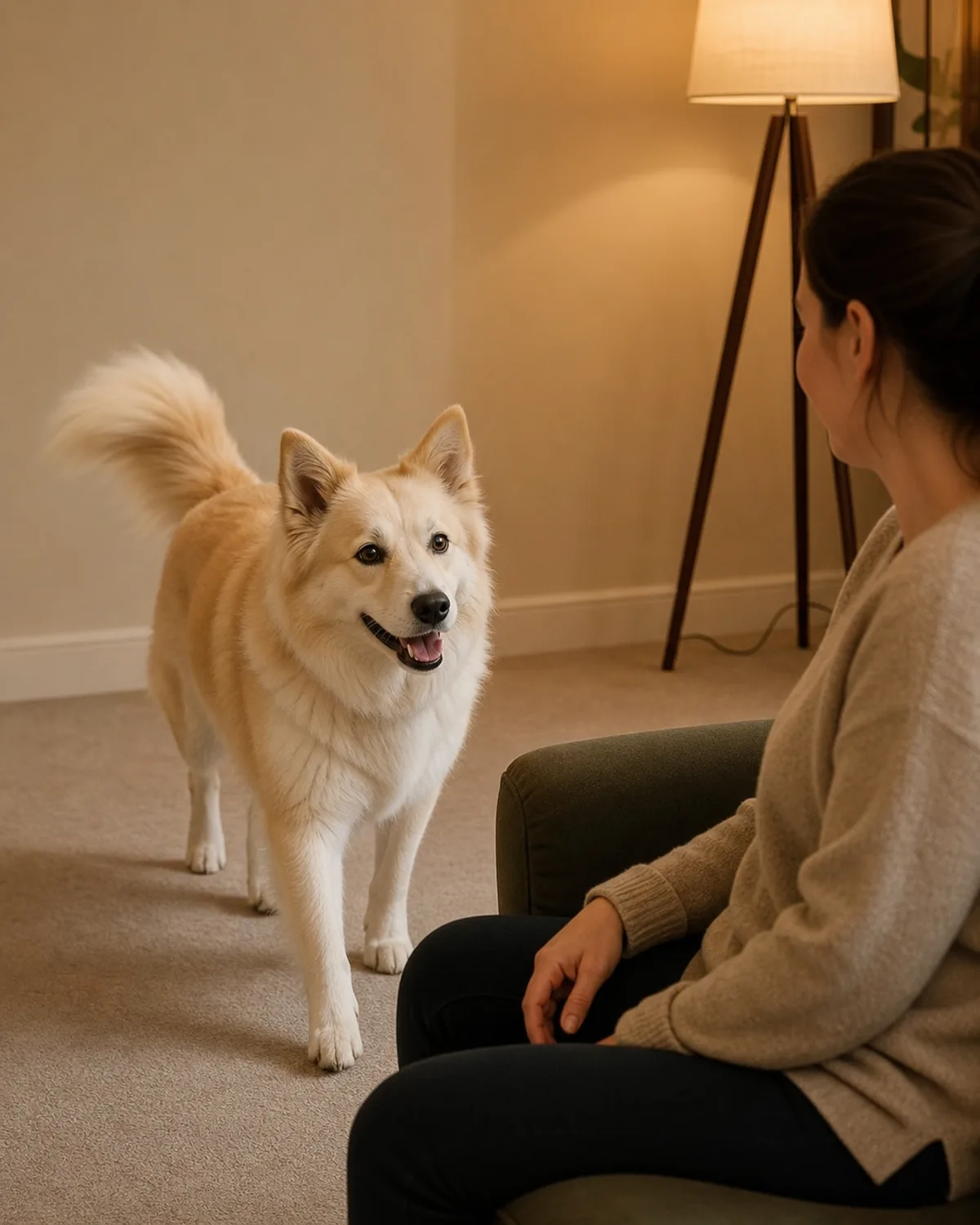
The first time your dog chooses to walk into the room where you're sitting, the first tail wag, the first time they eat a full meal without hesitation — these are the real milestones, well before anything that looks like a fully settled dog.
Keep track of them, even loosely. It's easy to feel like nothing is changing day to day when the actual shift is happening gradually, under the surface.
A dog who's had a calm, patient, predictable first few months usually arrives at a version of themselves that looks nothing like the uncertain animal who first walked through your door.
13. Building Real Trust Over the Months Ahead
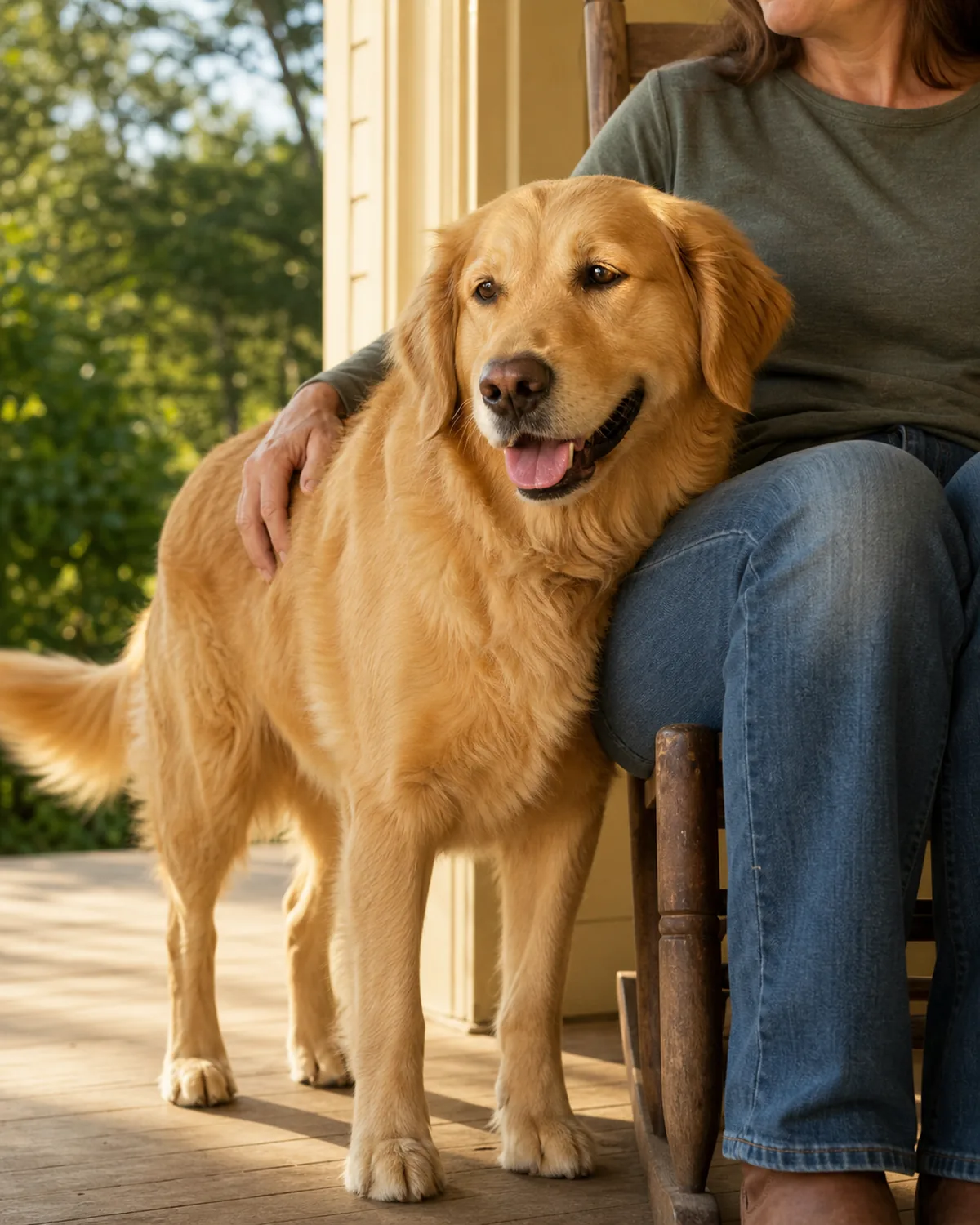
Trust isn't a single event — it's the accumulation of every predictable meal, every calm greeting, every time you gave space instead of pushing for connection. By three months, most of that groundwork has quietly paid off.
Keep the routine steady even after your dog seems fully comfortable. The structure that helped them settle in the first place is still doing quiet work in the background.
The dog hiding in the corner of the kitchen that first night and the dog greeting you at the door six months later are the same animal — just given the time they actually needed to get there.
About the author
Jess Calloway
Jess is a dog mom of three, including a rescue who spent his first night facing the kitchen wall and needed months, not days, to come around. This guide covers why the first few weeks look different with an adopted dog, the 3-3-3 rule for what to expect days, weeks, and months in, setting up a quiet decompression space in advance, skipping the welcome-home party, building a predictable daily routine from day one, reading stress signals before they escalate, introducing your dog to the rest of the household slowly, bringing a new dog home to resident pets, why it's too early for off-leash freedom or big outings, turning a crate into an anytime home base, common mistakes that slow down trust, celebrating the small wins as confidence builds, and building real trust over the months ahead. Visit the About page.