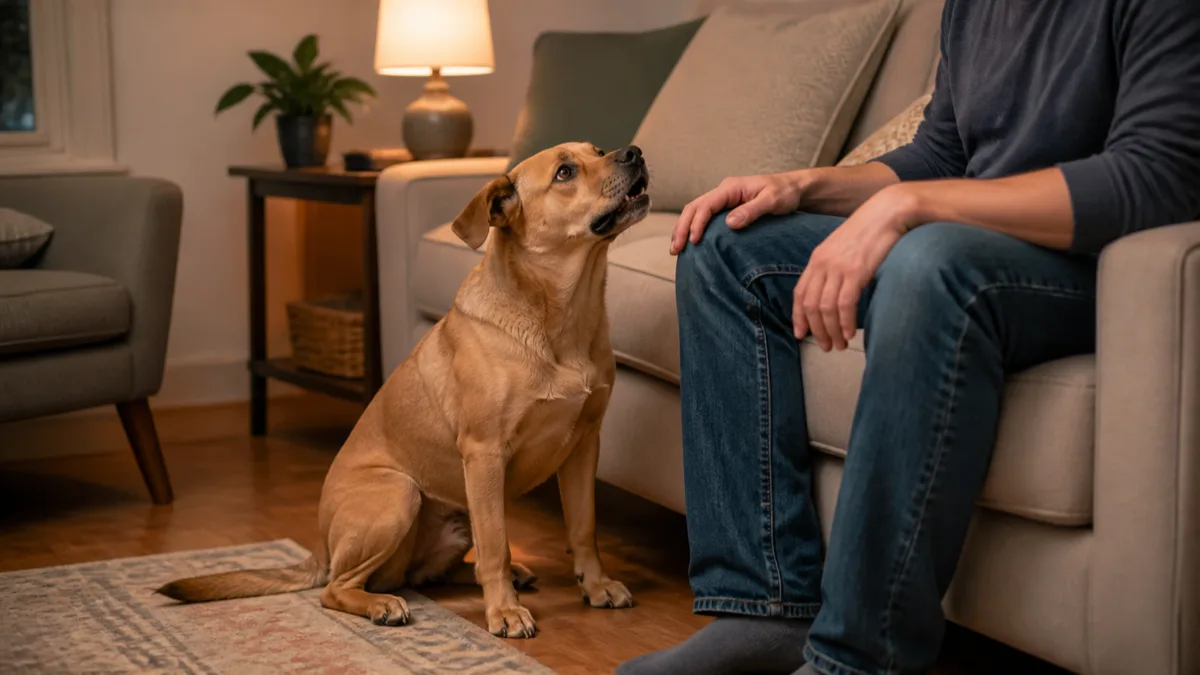
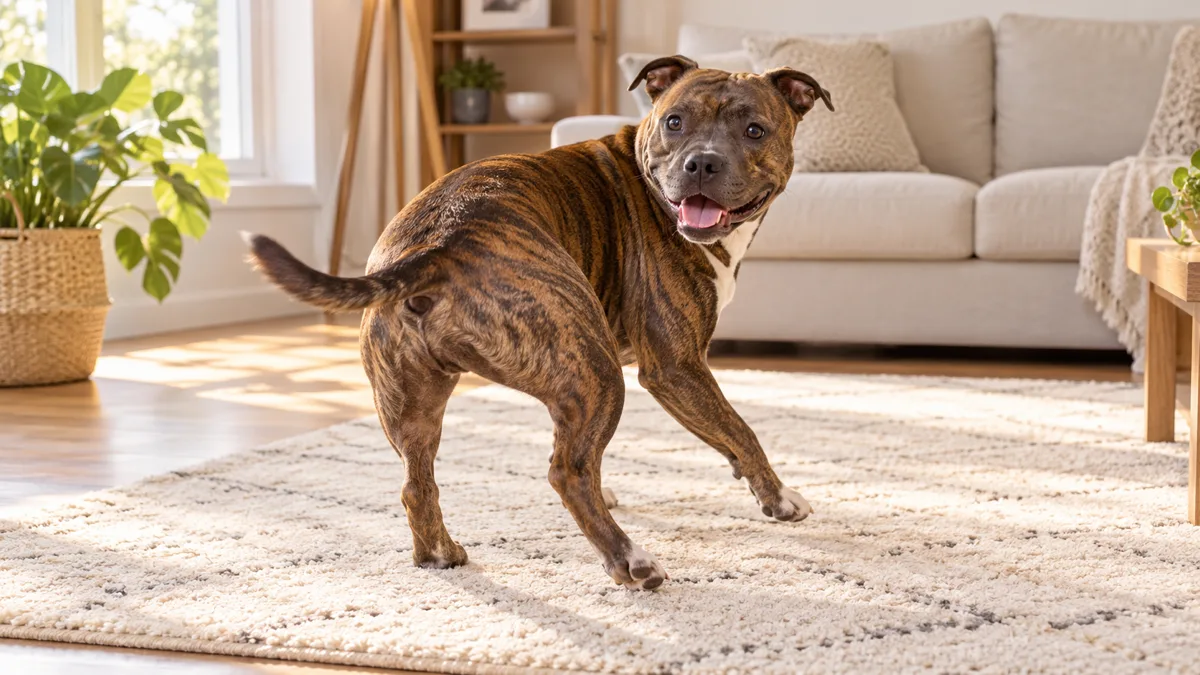
Our youngest dog went through a phase where she whined every time we sat down to eat, every time we picked up car keys, and every time the wind rattled a window. It sounded the same each time, but each whine meant something completely different.
That was the turning point. Once we figured out what the whine actually meant, we stopped guessing and started responding in ways that made a real difference for all three of our dogs.
Here are fourteen ways to figure out why your dog is whining and what to do about each cause, from attention-seeking habits to genuine pain signals that need a vet visit.
Jump to a whining fix
14 ways to stop your dog from whining
Different whines need different fixes. Find the cause that sounds most like your dog and jump straight to the solution.
1. Figure out why your dog is whining before you try to fix it
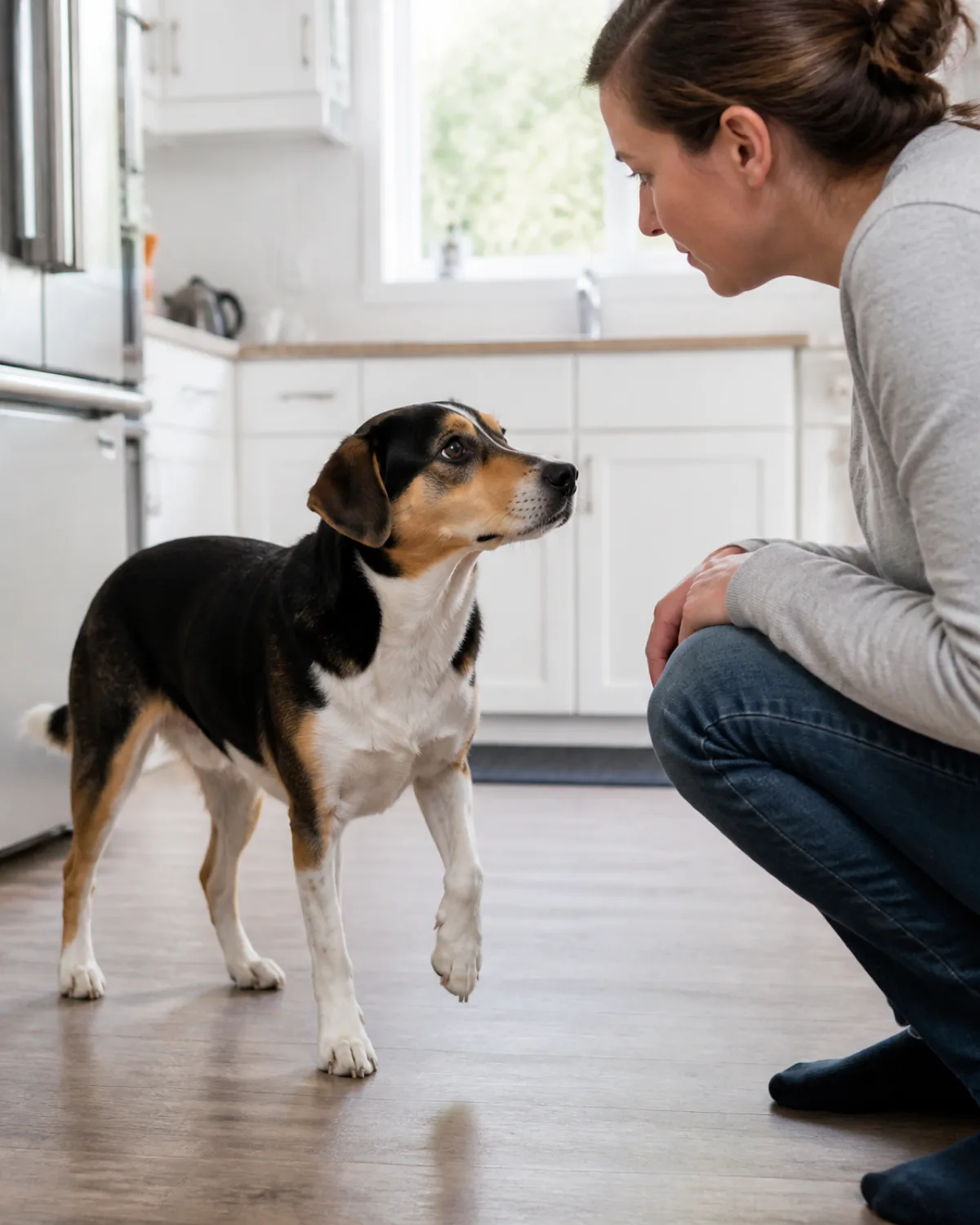
Whining is not one behavior. It is a single sound that can mean five or six completely different things, and each one needs a different response.
A dog whining at the front door while wagging and spinning is excited. A dog whining while lying still with a tense jaw is uncomfortable. A dog whining at your feet while staring at you wants attention. Same noise, different cause, different fix.
Before you react to any whine, pause for thirty seconds and watch:
- Tail position: wagging high means excitement, tucked or low means fear or pain, neutral and loose means a general request
- Body posture: stiff or hunched points to discomfort, bouncing and loose points to excitement, pacing suggests anxiety or boredom
- Timing: right after you sit down means attention, before meals means hunger, when alone means separation, during storms means fear
- Duration: brief whines that stop on their own are requests, sustained whining for minutes signals anxiety or pain
The biggest mistake is treating every whine the same way. Ignoring a pain whine is dangerous. Comforting an attention whine reinforces it. Read the body language first, then pick the right tool from the list below.
2. Stop reinforcing attention-seeking whining by waiting for silence

This is the most common type and the easiest to fix once you commit to the process.
Every time your dog whines and you look at them, talk to them, or touch them, you teach them that whining works. The fix is straightforward: when the whining starts, do not make eye contact, do not speak, and do not reach down. Wait.
The moment your dog is quiet for two to three seconds, turn to them calmly, offer a treat or a gentle pat, and give quiet praise. You are rewarding silence, not punishing noise.
Expect an extinction burst in the first few days. Your dog will whine louder, longer, and more dramatically because the old strategy stopped working. This is normal and temporary. If you give in during the burst, you teach your dog that louder whining is what works.
- Stay consistent across every family member; one person caving undoes everyone else's progress
- Keep sessions short at first and mark even two seconds of quiet
- If you need to leave the room to avoid reacting, that counts; come back when it is quiet
This principle is the same one used in crate training: wait for calm before opening the door, every single time.
3. Teach a quiet settle on a mat or bed as the default calm behavior
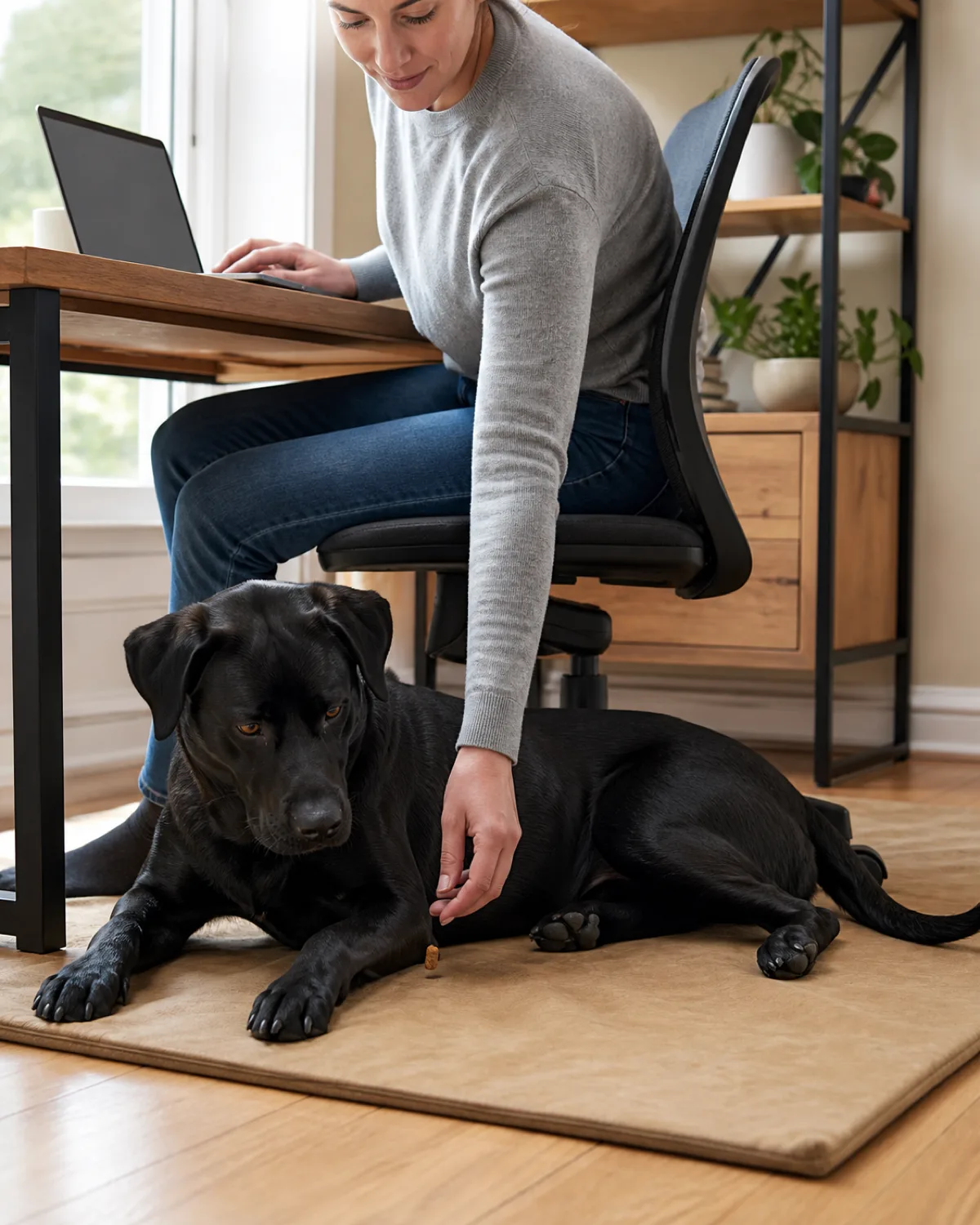
A dog that knows how to settle on command has a built-in off switch for whining. This is not about forcing your dog to stay somewhere. It is about making lying quietly on a mat the most rewarding thing to do.
Start with a mat, bed, or folded towel placed near where you spend time.
- Step 1: Drop treats on the mat whenever your dog walks onto it voluntarily. No commands yet.
- Step 2: Once your dog starts going to the mat on purpose, add a treat for lying down on it.
- Step 3: Gradually wait longer before treating. Five seconds of quiet, then ten, then thirty.
- Step 4: Add real-life distractions like you eating, the doorbell, or someone walking past, and reward your dog for choosing the mat over whining at you.
The goal is a default behavior: whenever you sit down to work, eat, or watch television, your dog goes to the mat without being told. This replaces the old default of whining at your feet.
Keep the mat stocked with a chew or stuffed Kong for longer sessions. A mat with something to do beats a mat with nothing to do.
Not sure which fix fits your dog? Match the whine to the cause
What type of whining are you hearing?
You do not need all fourteen strategies. Find the pattern below that sounds most like your dog and start there.
4. Address crate whining with gradual desensitization not cold turkey
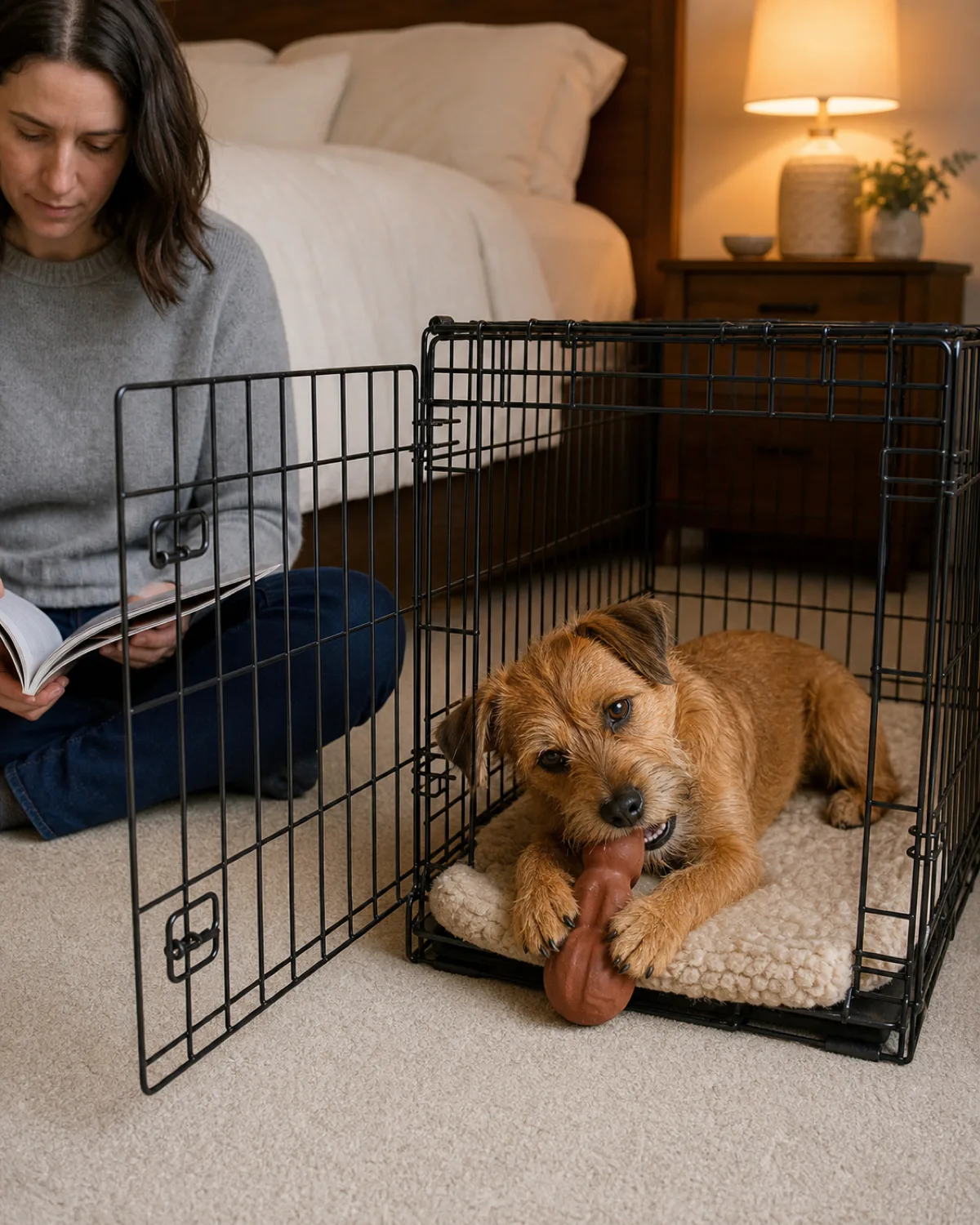
The number one cause of crate whining is going too fast. Closing the door on day one and walking out of the room for an hour almost guarantees a dog that screams in the crate.
The fix is to go painfully slow at first so you can go fast later:
- Feed meals inside the crate with the door open for a full week
- Close the door for five seconds while your dog eats, then open before the food is gone
- Stretch to ten seconds, then thirty, then a minute, always opening before distress starts
- Step out of sight for three seconds, then come back calmly
- Double the time only when the previous step gets zero whining for three sessions in a row
If your dog starts whining at any point, you have pushed too far too fast. Go back one step and stay there longer.
A stuffed frozen Kong placed inside the crate makes the math easy: the dog wants to be in there because something good is happening, not because the door is locked.
For the full step-by-step program, see our crate training guide.
5. Give your dog enough physical exercise and mental stimulation to prevent boredom whining
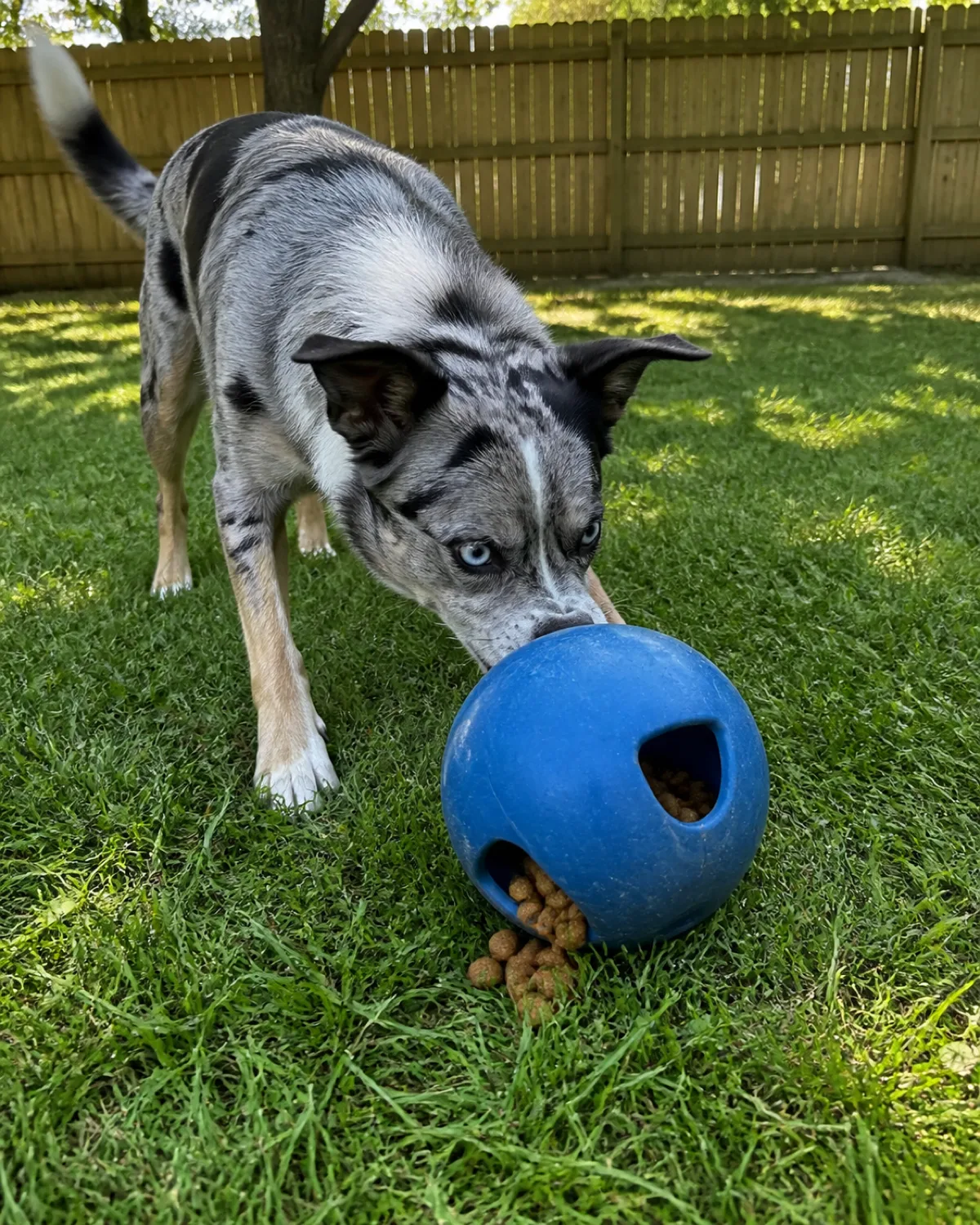
Boredom whining has a distinct pattern: no obvious trigger, happens throughout the day in short bursts, and often comes with pacing, sighing, or staring at nothing.
A medium to large dog that only goes outside twice a day for quick bathroom breaks has energy with nowhere to go. That leftover energy comes out as whining.
The fix is rarely more exercise alone. It is the right mix of physical and mental work:
- Physical: at least one proper walk per day where the dog gets to sniff freely, plus a play session like tug, fetch, or chase
- Mental: puzzle feeders, snuffle mats, frozen Kongs, or short training sessions practicing known commands
- Social: time actually interacting with you, not existing in the same room while you scroll your phone
If your dog is getting thirty minutes of real exercise and fifteen minutes of mental stimulation daily and still whining out of boredom, increase the mental side first. Most dogs are physically tired but mentally understimulated.
6. Manage excitement whining by teaching impulse control
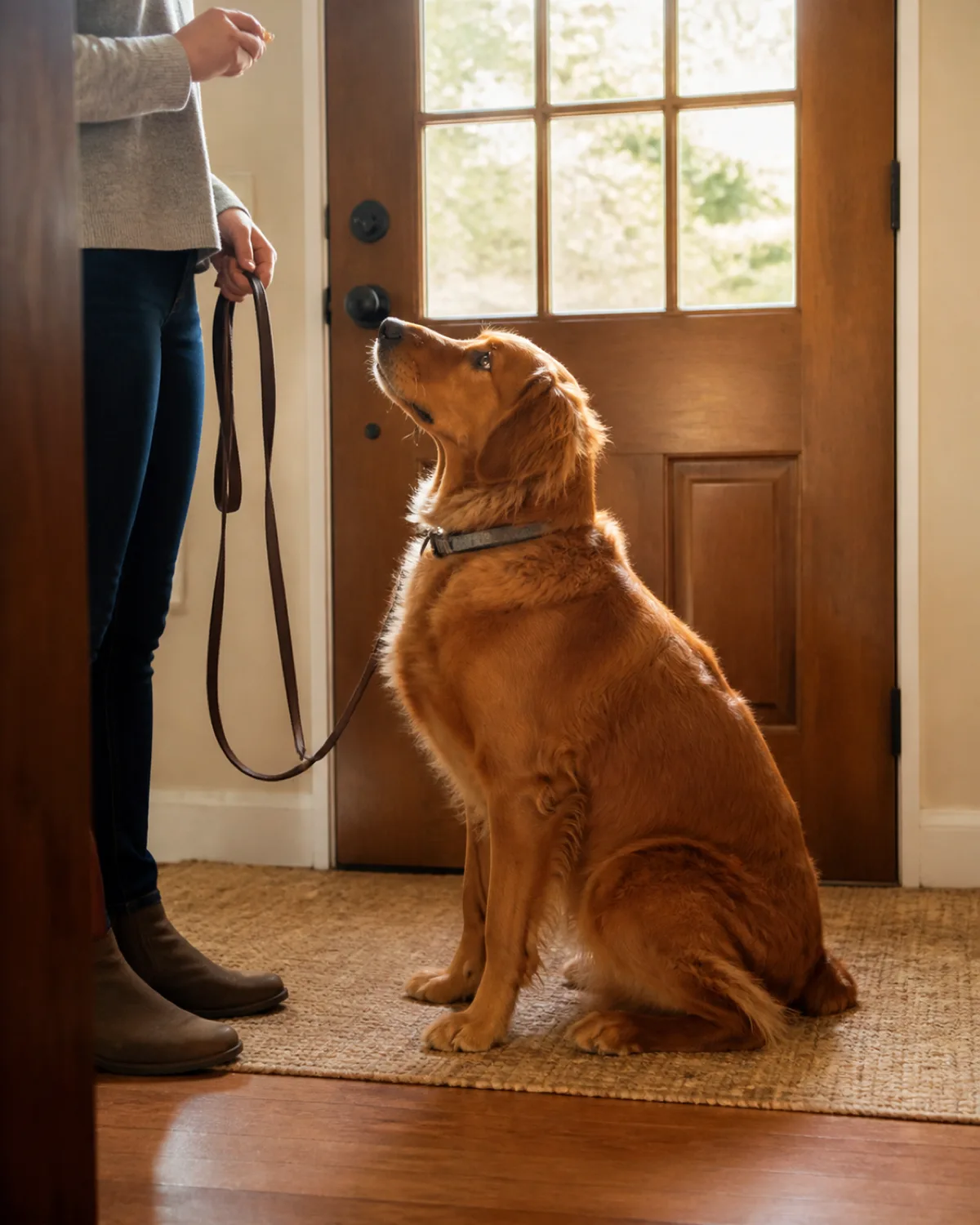
The doorbell rings and your dog starts a high-pitched whine that does not stop until the door opens. You pick up the leash and the whining hits a frequency only dolphins should hear.
This is excitement whining. Your dog is not anxious. They are so excited they cannot contain the sound. You do not want to eliminate the excitement. You want to teach your dog a calmer way to express it.
- At the door before walks: hold the leash until all four paws are on the floor and the whining stops, even for one second, then clip and go. If whining restarts, freeze until it stops again.
- When you come home: walk in without making eye contact or speaking for thirty seconds. Greet your dog only after they stop whining and sit or stand calmly.
- Before meals: hold the bowl until quiet. Set it down the moment whining stops. If it starts again while you are lowering the bowl, lift it back up and wait.
Every one of these exercises teaches the same lesson: calm behavior makes the good thing happen. Whining makes the good thing pause.
Four principles that make every whining fix work faster
The quiet-dog philosophy
Whether you are working on attention whining, crate whining, or excitement whining, these four habits make or break the process.
Reward the silence, not the noiseQuiet is a behavior you can mark and treat. The faster you catch two seconds of silence and reward it, the more silence you get.
Everyone in the house plays by the same rulesOne person ignoring whining while another person caves teaches the dog to try harder. Consistency across all humans is non-negotiable.
Go slower than you think you need toPushing past your dog's threshold creates bigger setbacks than going too slow ever will. If whining starts, you skipped a step.
Rule out pain before training anythingBehavioral strategies do not fix physical problems. A sudden change in whining patterns always warrants a vet check before a training plan.
7. Never ignore whining that might signal pain or discomfort
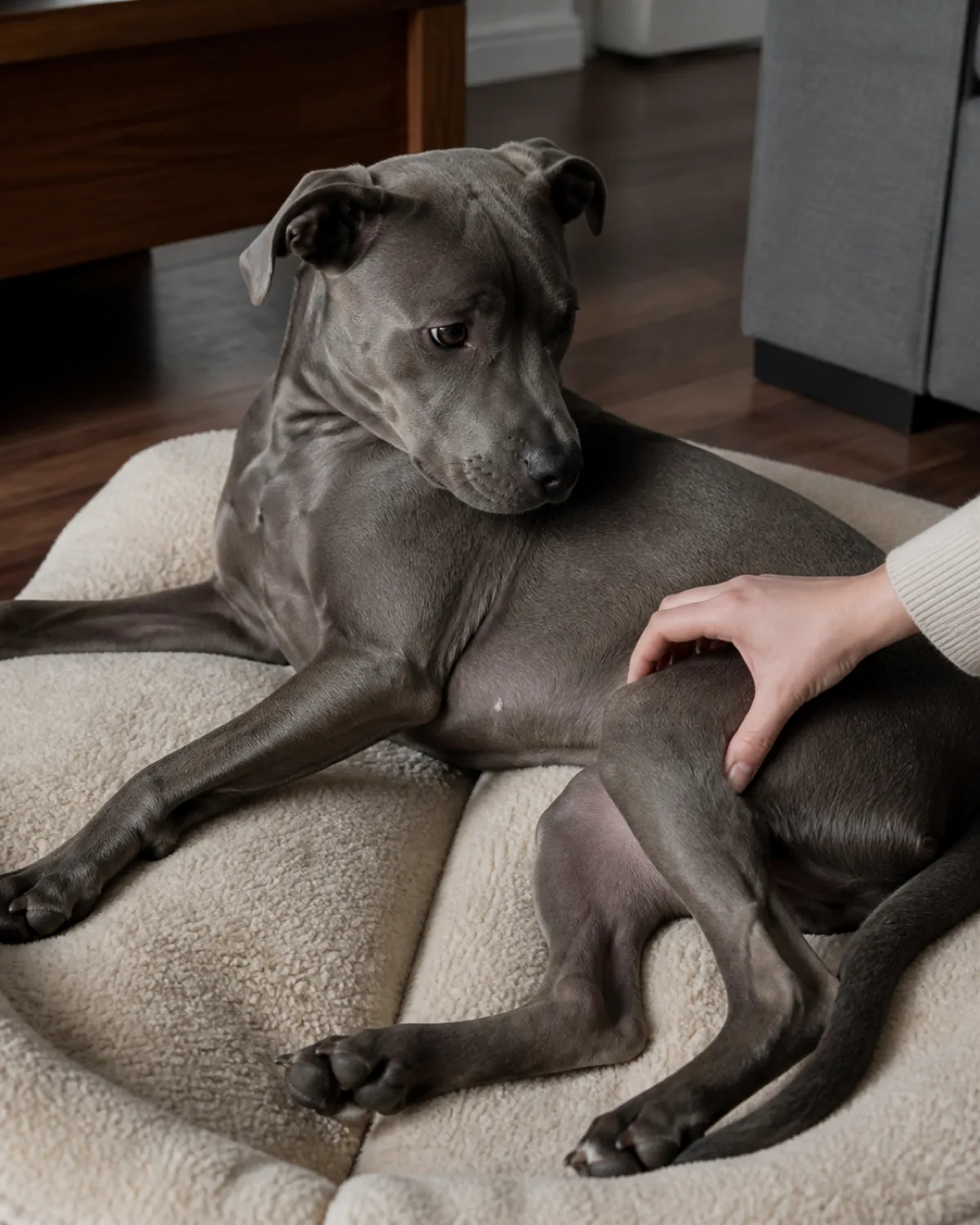
This is the one exception to every training strategy in this article. If there is any chance your dog is whining because something hurts, stop training and start investigating.
Pain-related whining typically comes with at least one of these signs:
- Sudden onset in a dog that does not normally whine
- Whining increases when you touch or move a specific body part
- Decreased appetite or refusal to eat
- Reluctance to jump, climb stairs, sit, or lie down
- Licking or chewing one spot repeatedly
- Hunched posture or guarding a part of the body
- Panting without physical exertion
A dog cannot tell you where it hurts in words. Whining is sometimes the only signal you will get. Punishing or ignoring this type of whining is both ineffective and harmful.
If you notice a sudden change in your dog's whining pattern, especially in a dog over seven years old, schedule a vet appointment before trying any behavioral approach.
8. Handle car whining with short positive trips and a secure setup
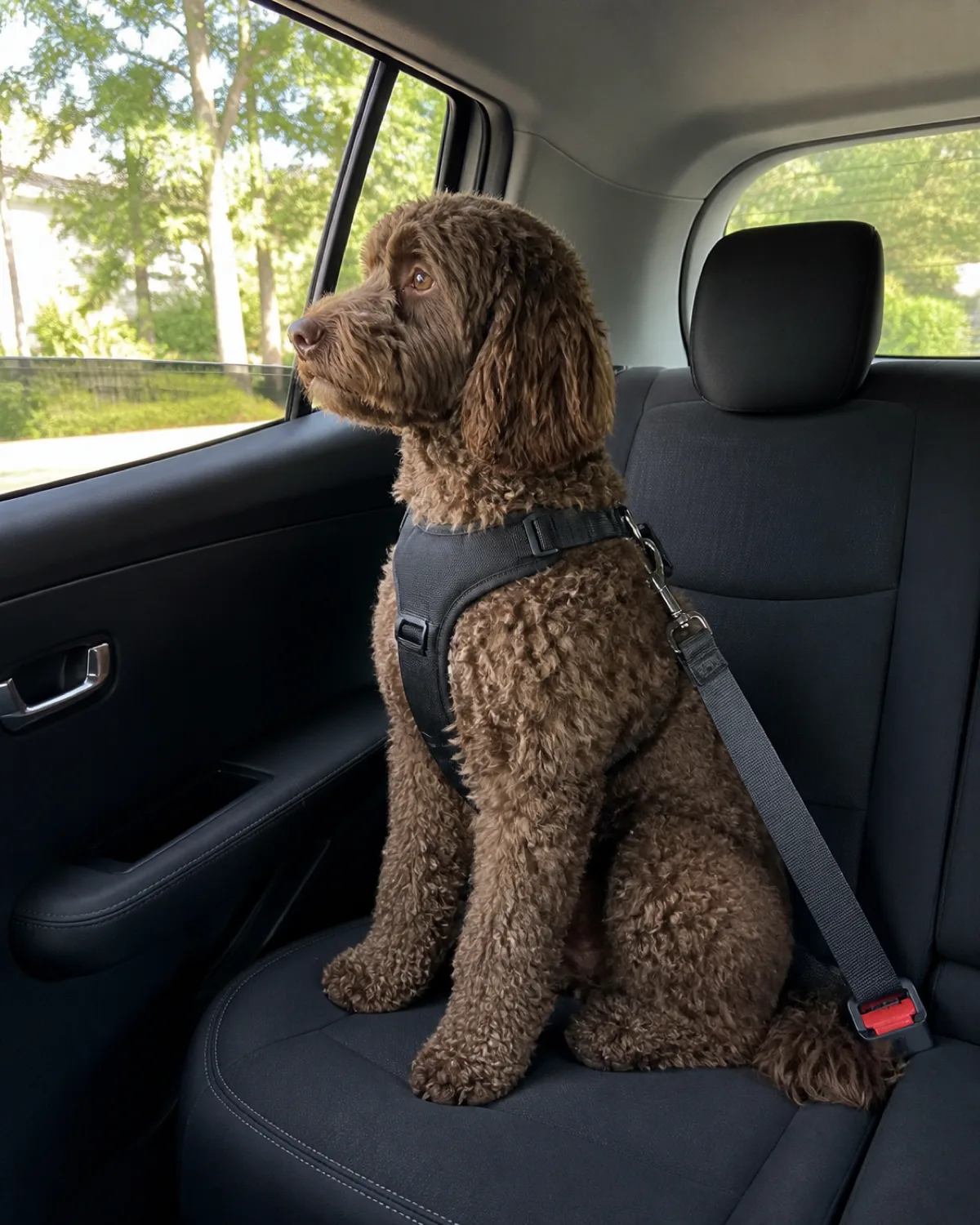
Many dogs only ride in the car to go to the vet. It does not take long for them to connect car with scary place where strangers poke me.
Changing that association takes short, pleasant trips:
- Drive to a park and let your dog play, then drive home
- Go through a drive-through and hand your dog a plain piece of grilled chicken
- Take a five-minute drive around the block with treats and calm praise, then return
For the car itself, reduce the sensory overload:
- A padded seatbelt harness or travel crate keeps your dog secure and reduces sliding on turns, which helps with motion sickness
- Window shades or a crate cover cut down on visual stimulation that triggers anxiety
- A frozen Kong or lick mat gives your dog something to do besides worry
If your dog's car whining is severe with drooling, trembling, or vomiting, talk to your vet about anti-nausea medication or calming aids before relying on training alone.
9. Reduce separation-related whining with gradual alone-time practice
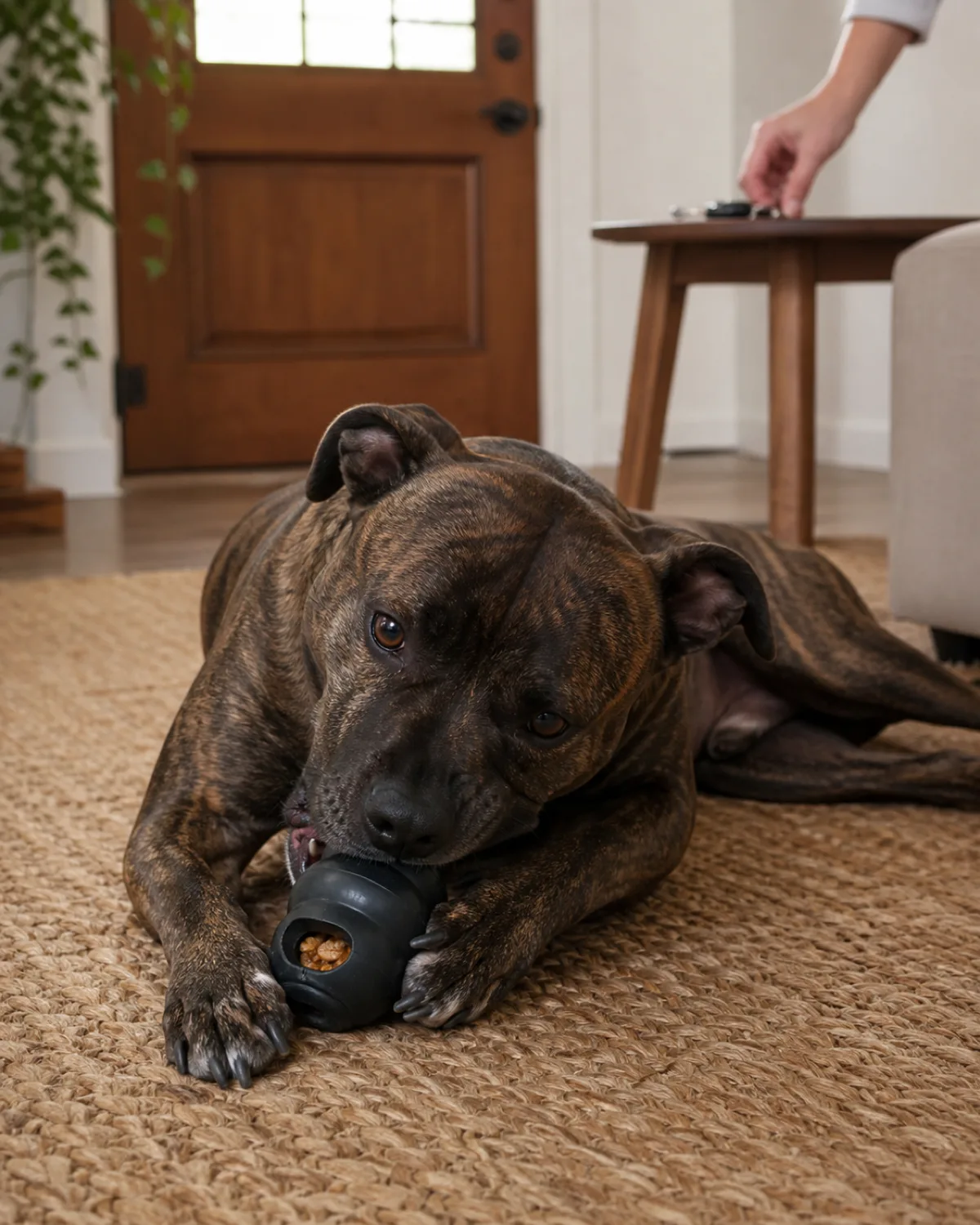
You pick up your keys and the whining starts before you even reach the door. You put on shoes and the pitch climbs. This is separation-cue anxiety: your dog has learned that certain actions predict you leaving.
The fix has two parts: desensitize the cues and build tolerance for being alone.
Desensitize departure cues:
- Pick up your keys and sit back down. Do this fifty times across a week until keys mean nothing.
- Put on shoes and watch television. Walk to the door and come back without opening it.
- Open the door, step out, step back in within three seconds. Gradually increase to ten seconds, thirty, a minute.
Build alone time with enrichment:
- Leave a stuffed Kong or snuffle mat whenever you step out
- Play background music or white noise (studies show classical music reduces shelter-dog stress)
- Keep departures and returns low-key with no dramatic goodbyes and no excited hellos
True separation anxiety with destructive behavior, self-harm, or non-stop vocalization for the entire absence needs professional help from a veterinary behaviorist. The strategies above work for mild separation-related whining, not clinical anxiety.
10. Stop dinnertime begging whines with a consistent feeding routine
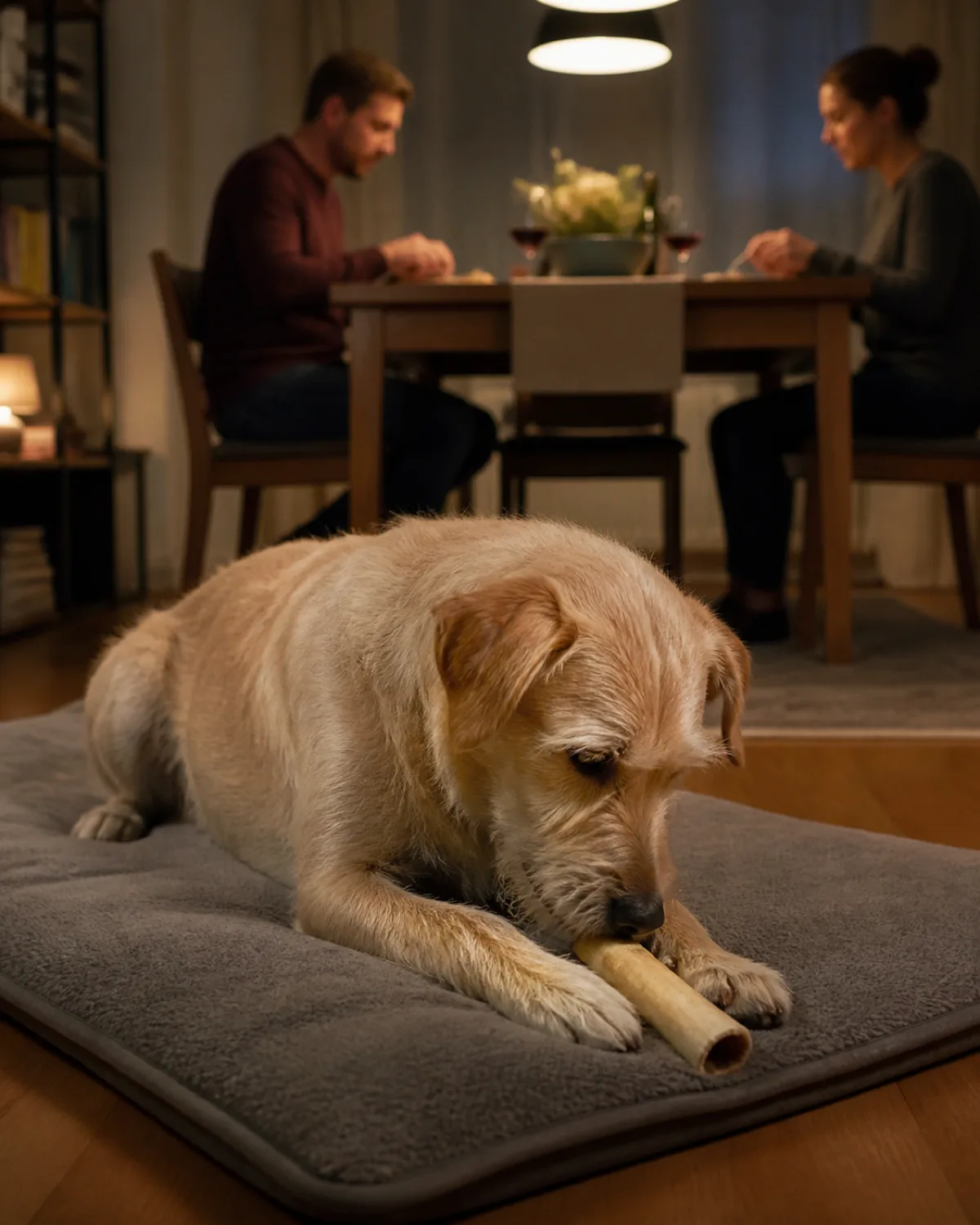
If your dog whines the entire time you eat, someone at the table fed them at some point. That one table scrap created a slot machine: if I whine long enough, food might fall.
The fix connects back to the mat settle from idea three:
- Before you sit down to eat, send your dog to their mat or bed with a long-lasting chew like a bully stick, frozen Kong, or stuffed bone
- If whining starts, do not look, do not speak, and do not toss food to make it stop
- After your meal is done and the dog is quiet, calmly release them from the mat
A consistent feeding schedule for your dog helps too. A dog that eats at seven in the morning and five in the evening is less likely to beg at your eight o'clock dinner because their stomach is already full.
The hardest part is getting every person at the table on the same page. One person sneaking a scrap resets the entire process.
11. Teach your dog what to do at the door instead of whining to go out
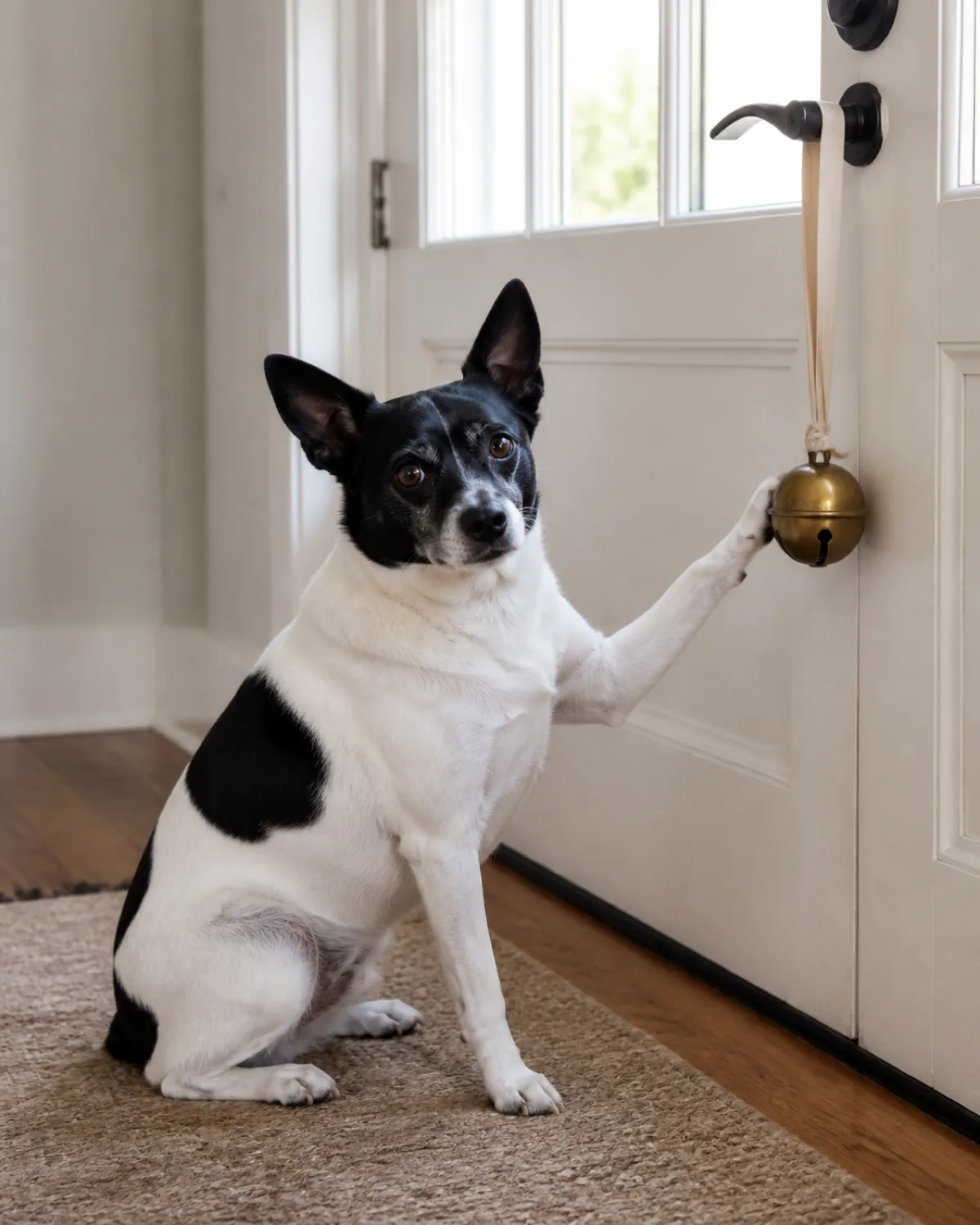
Door whining is tricky because sometimes it is a legitimate need. A dog that whines at the back door because they need to go to the bathroom should not be ignored.
The solution is to teach a replacement signal that you can read more clearly:
- Bell method: hang a set of jingle bells at nose height on the door handle. Every time you take your dog out, guide their paw or nose to touch the bell first. Within a week or two, most dogs learn that touching the bell opens the door.
- Sit and stare method: wait for your dog to sit quietly at the door before opening it. If they whine, turn away. If they sit, open the door.
Once the new signal is established, you can tell the difference between a real need (bell ring or quiet sit) and a want (whining and pawing). You honor the signal and ignore the whine.
This takes about two weeks of consistent practice to stick, and it works for both puppies and adult dogs.
12. Manage storm and noise anxiety whining with a safe retreat
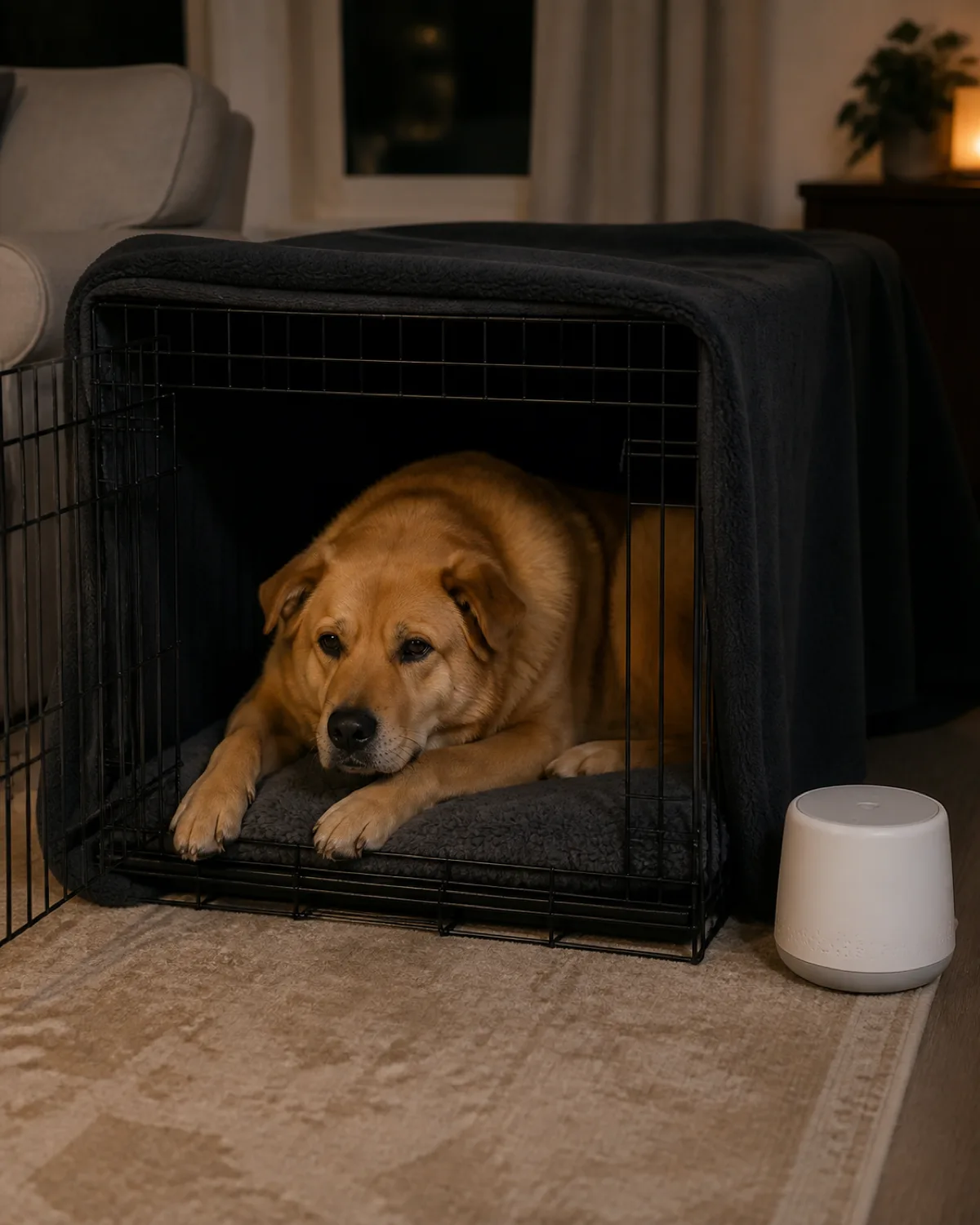
Whining during thunderstorms, fireworks, or construction noise is a fear response. This is the one type of whining you should not try to extinguish through ignoring, because ignoring a scared dog does not make the fear go away.
What works:
- Safe space: a crate with the door open, draped with a blanket to muffle sound and create a den, placed in the quietest room of the house
- White noise or music: a white noise machine, fan, or calm classical music to mask the sharp cracks and booms
- Calm presence: stay nearby in a relaxed posture. You do not need to coddle, but sitting in the same room reading a book tells your dog the world is not ending.
- Pressure wraps: some dogs respond well to snug-fitting anxiety wraps that provide gentle calming pressure
Do not force your dog into or out of their hiding spot. Let them choose where they feel safe.
For a full noise-anxiety management plan, see our guide on keeping your dog calm during fireworks and thunderstorms.
13. Respond calmly to visitor-triggered whining instead of adding to the chaos
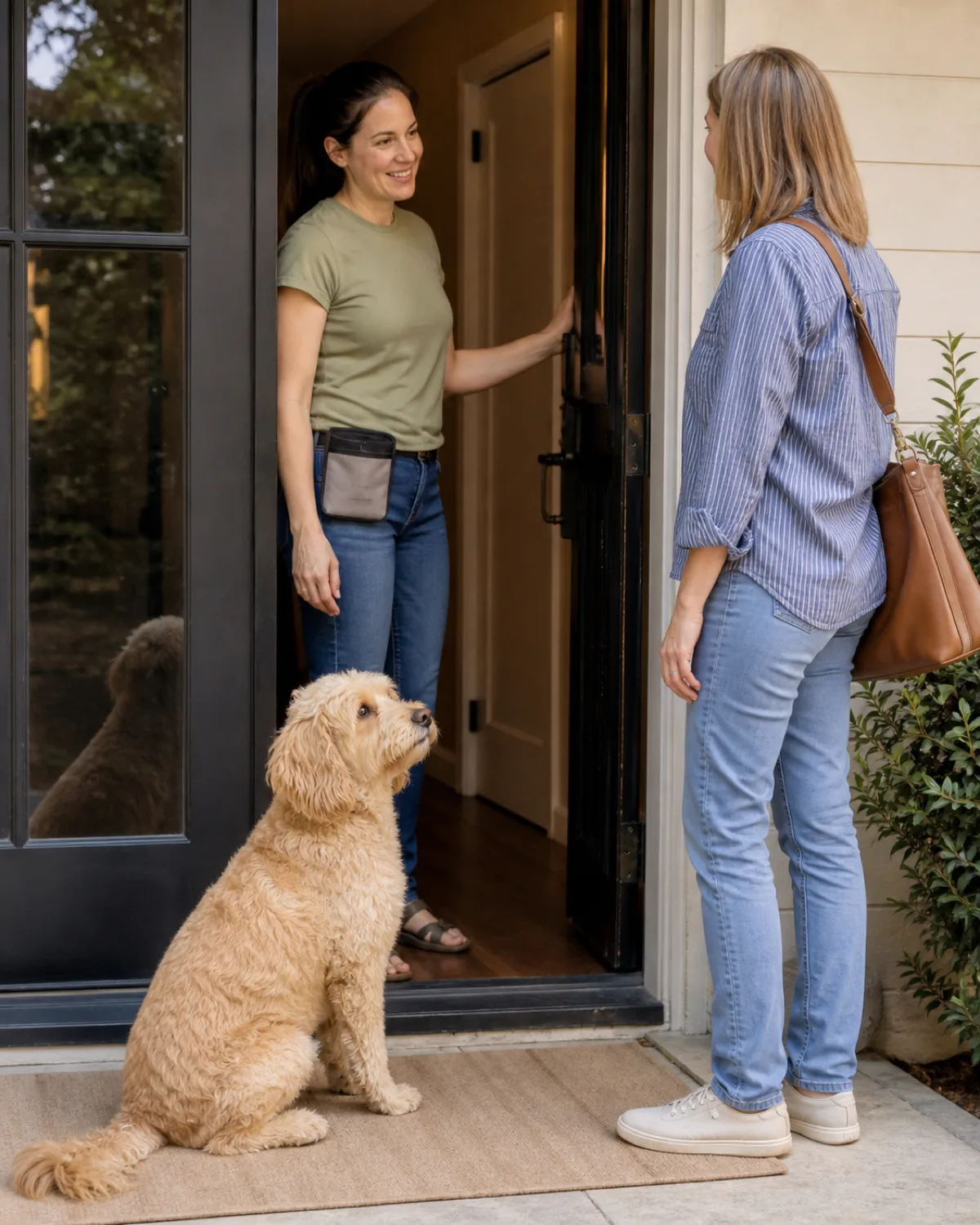
When guests arrive, the noise level goes up: doorbell, voices, footsteps, excitement. Your dog adds whining to the mix, and then you add yelling be quiet on top of that. Now there are three layers of noise and no one is calm.
The calmer approach:
- Before the guest arrives, put your dog on their mat with a high-value chew
- When the doorbell rings, do not react loudly yourself and walk to the door normally
- If your dog stays on the mat and is quiet, mark it with a treat after you greet the guest
- After the initial greeting settles, let your dog approach the visitor calmly for a sniff
If your dog cannot handle staying on the mat yet, use a baby gate or leash tether attached to furniture to create distance until the excitement passes.
Practice with a friend who can ring the bell and walk in repeatedly. Ten practice arrivals in one afternoon teach more than two months of real-guest chaos.
14. Talk to your vet if your senior dog starts whining more than usual
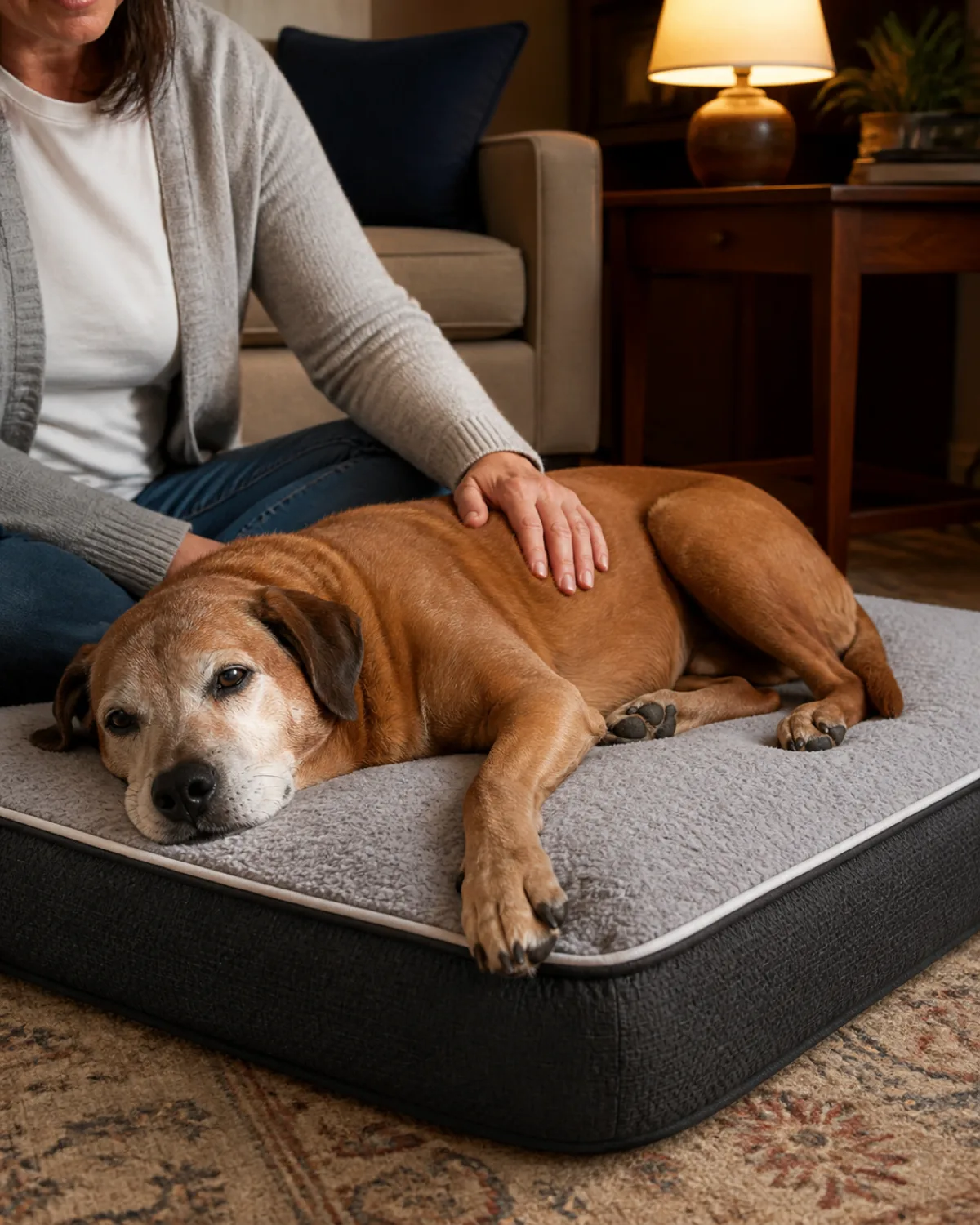
An older dog that starts whining when they used to be quiet is not being stubborn or demanding. Something has changed, and it is usually physical.
Three common causes of increased whining in senior dogs:
- Joint pain: whining when standing up, lying down, or after long walks. Arthritis is common in dogs over eight and very treatable with medication, joint supplements, and environmental changes like ramps, orthopedic beds, and rugs on slippery floors.
- Cognitive dysfunction syndrome: whining at night while pacing or staring at walls, getting stuck in corners, or seeming disoriented. This is the dog equivalent of dementia and affects roughly one in three dogs over eleven. Medication and enrichment routines can slow progression.
- Sensory loss: a dog losing hearing or vision may whine because they feel uncertain about their environment. Keeping furniture in the same place and using touch-based communication helps.
Do not assume age is the explanation. A vet visit can identify treatable pain, prescribe anti-inflammatory medication, and recommend cognitive support, all of which genuinely improve quality of life.
Your senior dog's whining is information, not a behavior problem. Listen to it.
Save this for later
14 Ways to Stop a Dog from Whining
- 1Read the body language firstThirty seconds of watching tells you whether the whine means attention, pain, excitement, or fear.
- 2Wait for silence before respondingNo eye contact, no talking, no touching until two seconds of quiet. Then reward the silence.
- 3Teach a mat settleDrop treats on a mat until lying there quietly becomes your dog's default behavior during meals and work.
- 4Desensitize the crate graduallyOpen door meals first, then five-second closes, then ten. Go back a step if whining starts.
- 5Exercise body and brainOne real walk plus a puzzle feeder daily. Most boredom whining is mental understimulation.
- 6Teach impulse control for excitementHold the leash until quiet. Hold the bowl until quiet. Calm makes the good thing happen.
- 7Never ignore possible painSudden whining plus stiffness, appetite loss, or guarding a body part means vet visit first.
- 8Make car rides positiveShort trips to fun places, a seatbelt harness, and a frozen Kong change the car association.
- 9Practice alone time graduallyPick up keys and sit back down fifty times. Step out three seconds and return. Build slowly.
- 10Replace begging with a mat routineSend your dog to their mat with a long-lasting chew before you sit down to eat.
- 11Teach a door signalBells on the handle or a quiet sit replace whining with a clear signal you can choose to honor.
- 12Provide a storm safe spaceCovered crate with the door open, white noise, and your calm presence nearby. No force.
- 13Stay calm when visitors arriveMat settle plus a high-value chew before the doorbell. Practice arrivals with a friend.
- 14See the vet for senior changesJoint pain, cognitive decline, and sensory loss are treatable. Whining in older dogs is information.

About the author
Jess Calloway
Jess Calloway edits Pawliqa, where she shares dog care, grooming, training, and new-owner tips — plus DIY and pet-friendly home ideas — for anyone who wants a happy, well-cared-for dog. As a dog mom to three very different dogs, she writes the honest, tested version of what actually works. Every guide is image-led and reviewed for clarity, usefulness, image accuracy, and Pinterest-to-page alignment before it goes live. Visit the About page.