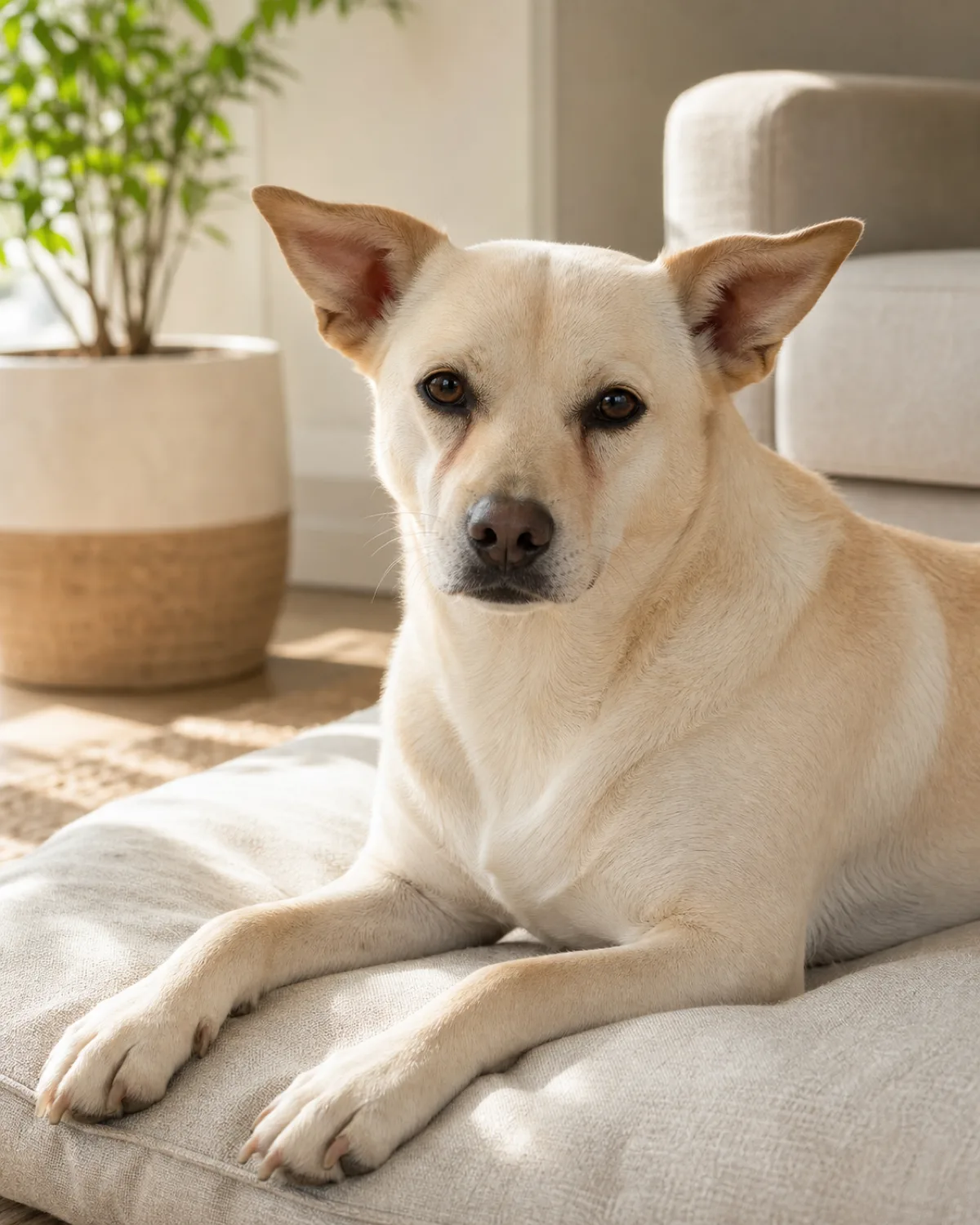
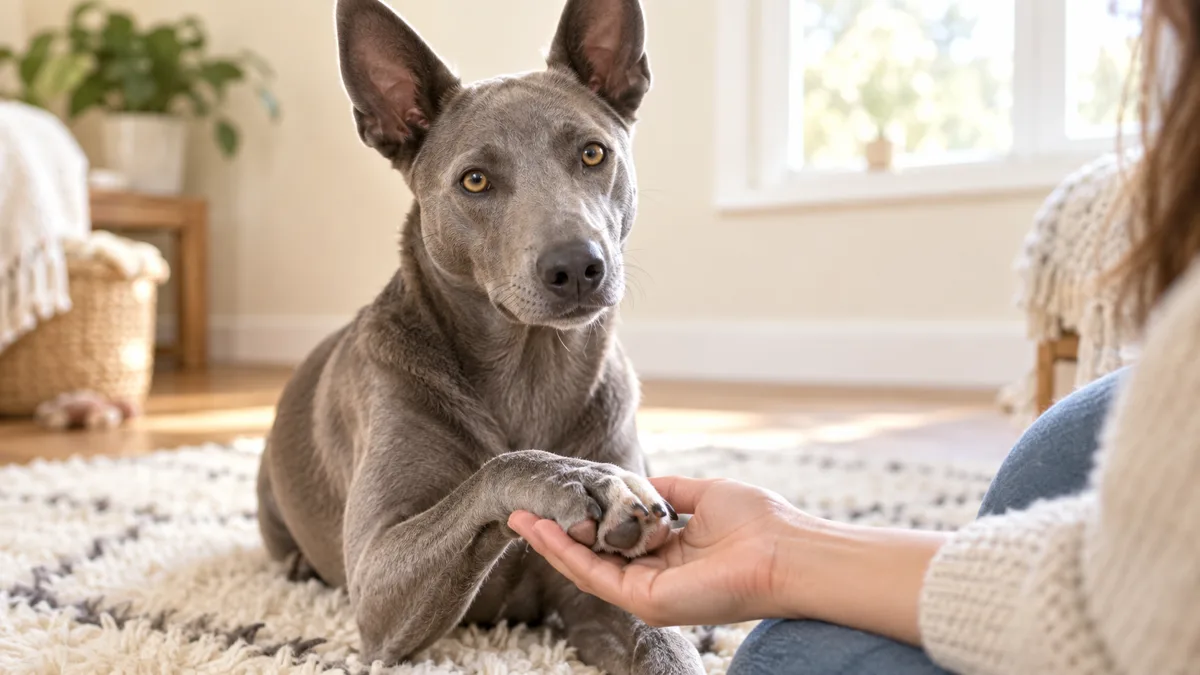
Those reddish-brown streaks below your dog's eyes are not dirt. They are the result of a pigment called porphyrin that lives in tears, saliva, and urine.
When tears overflow and sit on fur, porphyrin oxidizes on contact with air and light. It leaves a stain that no amount of water will wash away.
Most people try to scrub the stain off. That treats the surface. The real fix starts with understanding why the tears are overflowing and stopping that first.
Jump to a section
How to remove dog tear stains
From understanding what causes tear stains to removing them safely and keeping them from coming back.
What Tear Stains Actually Are (And Why They Turn Brown)
Every dog produces tears. Tears contain porphyrin, an iron-containing molecule that is a natural byproduct of red blood cell breakdown. In most dogs, tears drain through a tiny duct at the inner corner of the eye into the nasal cavity. You never see them because they never sit on the fur long enough to oxidize.
When that drainage system is overwhelmed, tears spill over the lower eyelid and run down the face. Within hours, the porphyrin in those tears begins to oxidize. The stain starts as a damp pink streak and deepens to rusty brown over days.
The brown color is not bacteria, though bacteria can colonize the damp area later. It is a chemical reaction. Understanding this distinction matters because it explains why wiping alone does not remove old stains. The pigment has bonded to the fur shaft. Only growing out the stained fur and preventing new oxidation will make the stain disappear.
Why Some Dogs Get Tear Stains and Others Do Not
Tear staining is not random. It follows anatomy and environment. Dogs with shallow eye sockets have less space for tears to pool before overflowing. Dogs with narrow or partially blocked tear ducts cannot drain tears fast enough. Dogs with facial hair that wicks moisture toward the cheek create a highway for tears to travel and sit.
Allergies are the other major driver. Food sensitivities can trigger excess tear production. Environmental allergens like pollen, dust, and mold do the same.
The connection between ears and eyes matters here: the tear duct and ear canal share drainage pathways, so a chronic ear infection can cause increased tearing on the same side. For more on ear care, see how to clean dog ears at home.
Puppies who are teething often develop temporary tear stains that resolve once the adult teeth come in. The inflammation and pressure from emerging teeth affects the sinuses and tear ducts. If your puppy develops tear stains around four to six months of age, teething is the most likely cause and the stains will fade on their own.
The Daily Wipe That Prevents New Stains From Setting
Before you try to remove old stains, stop new ones from forming. This single habit is more effective than any product you can buy.
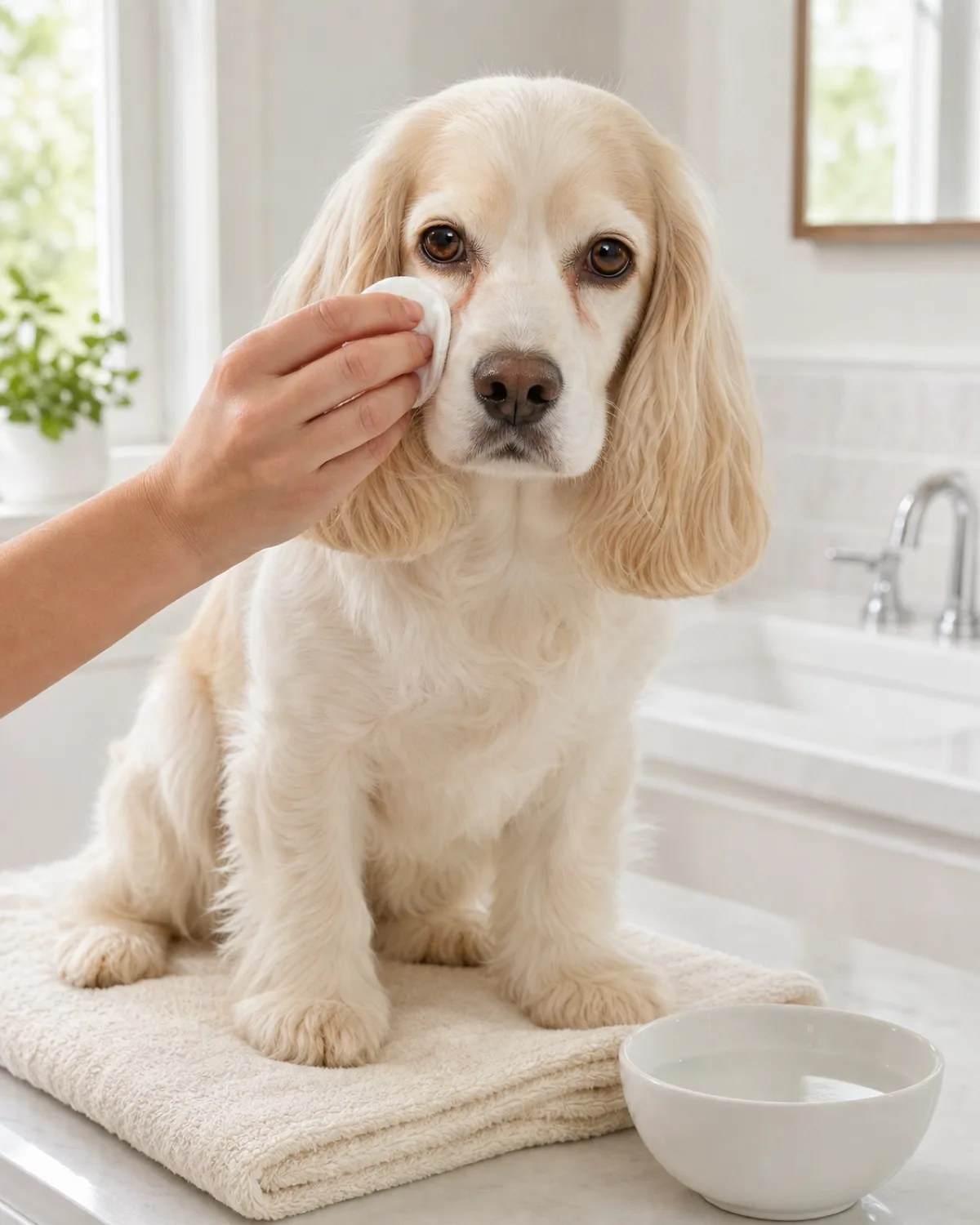
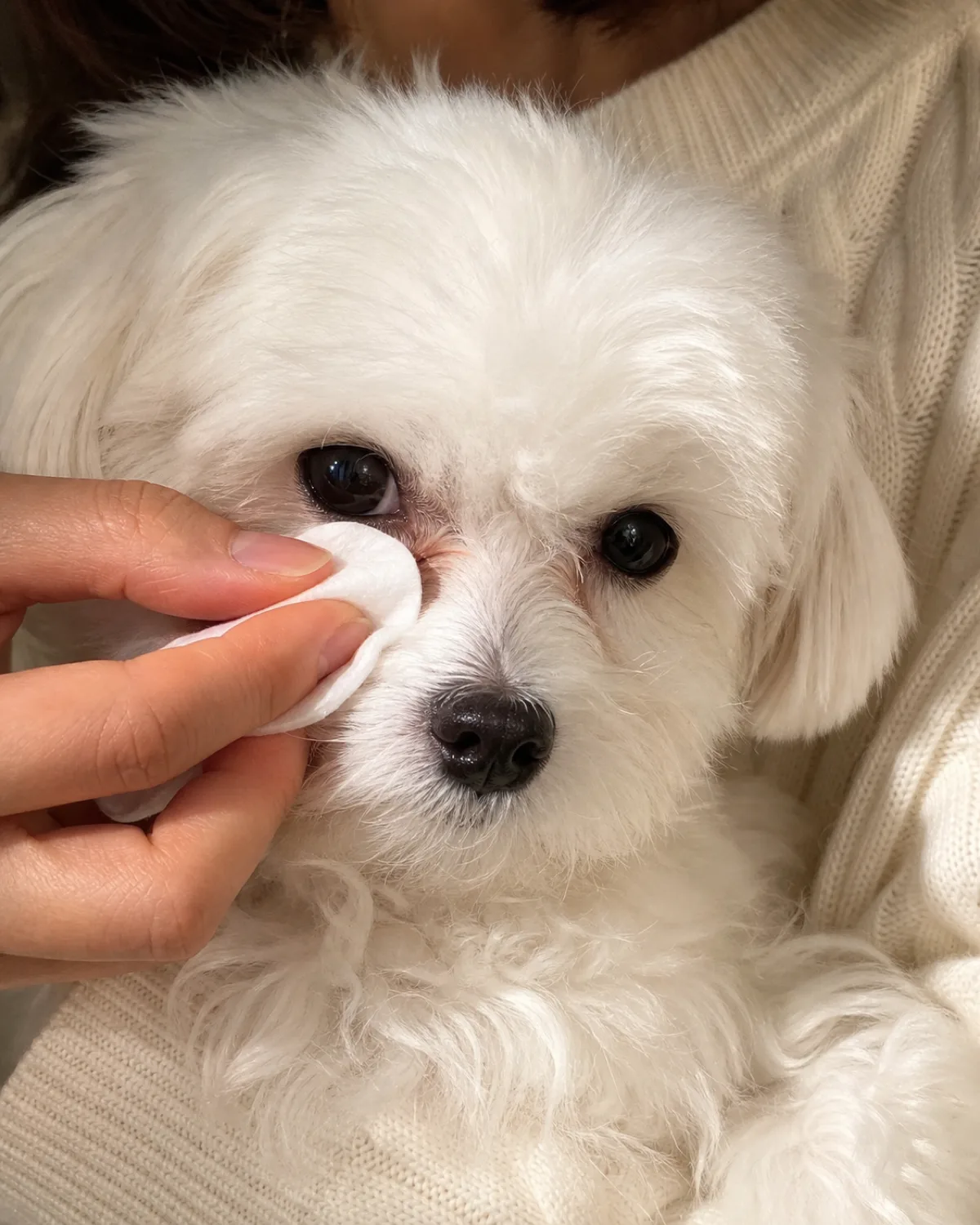
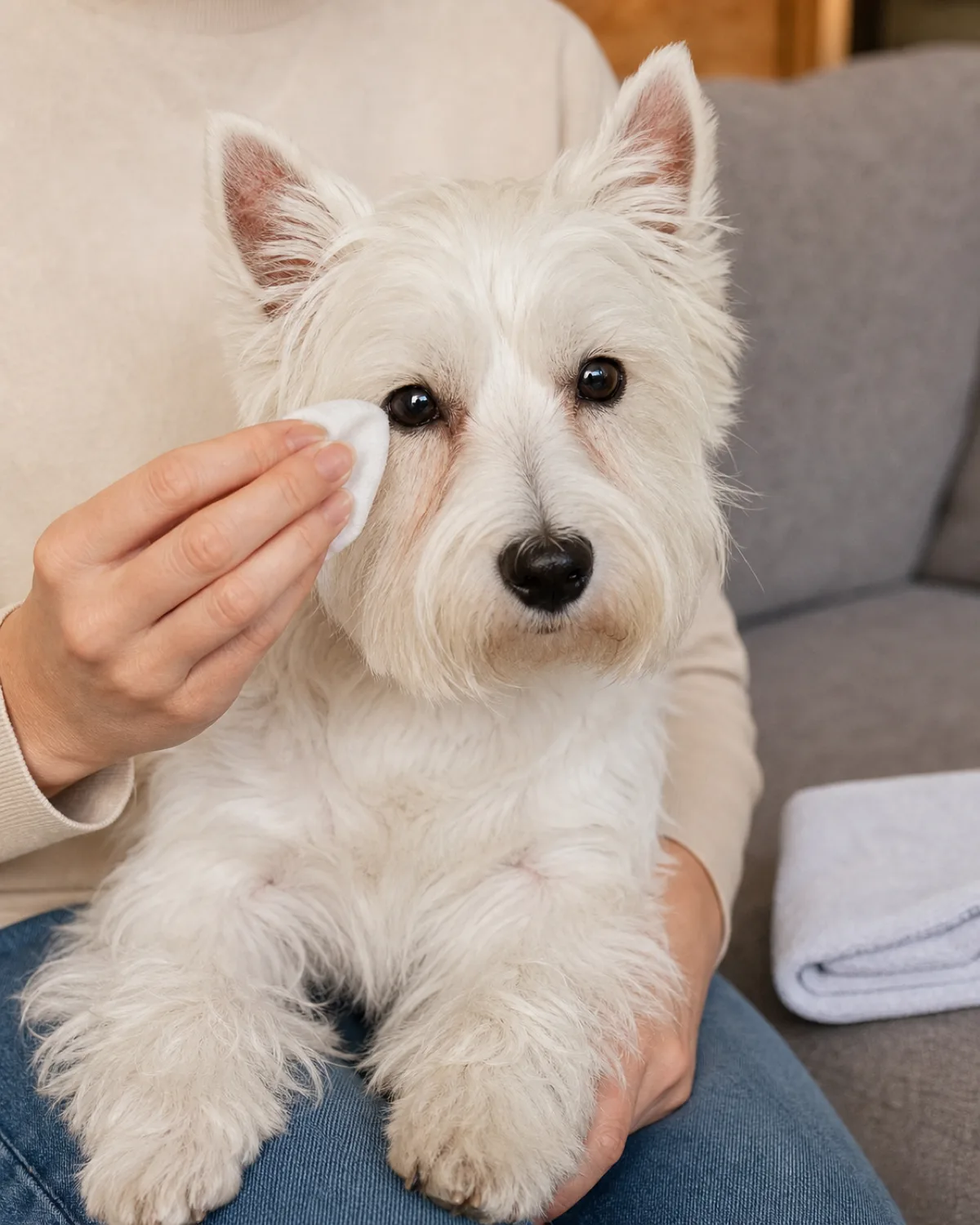
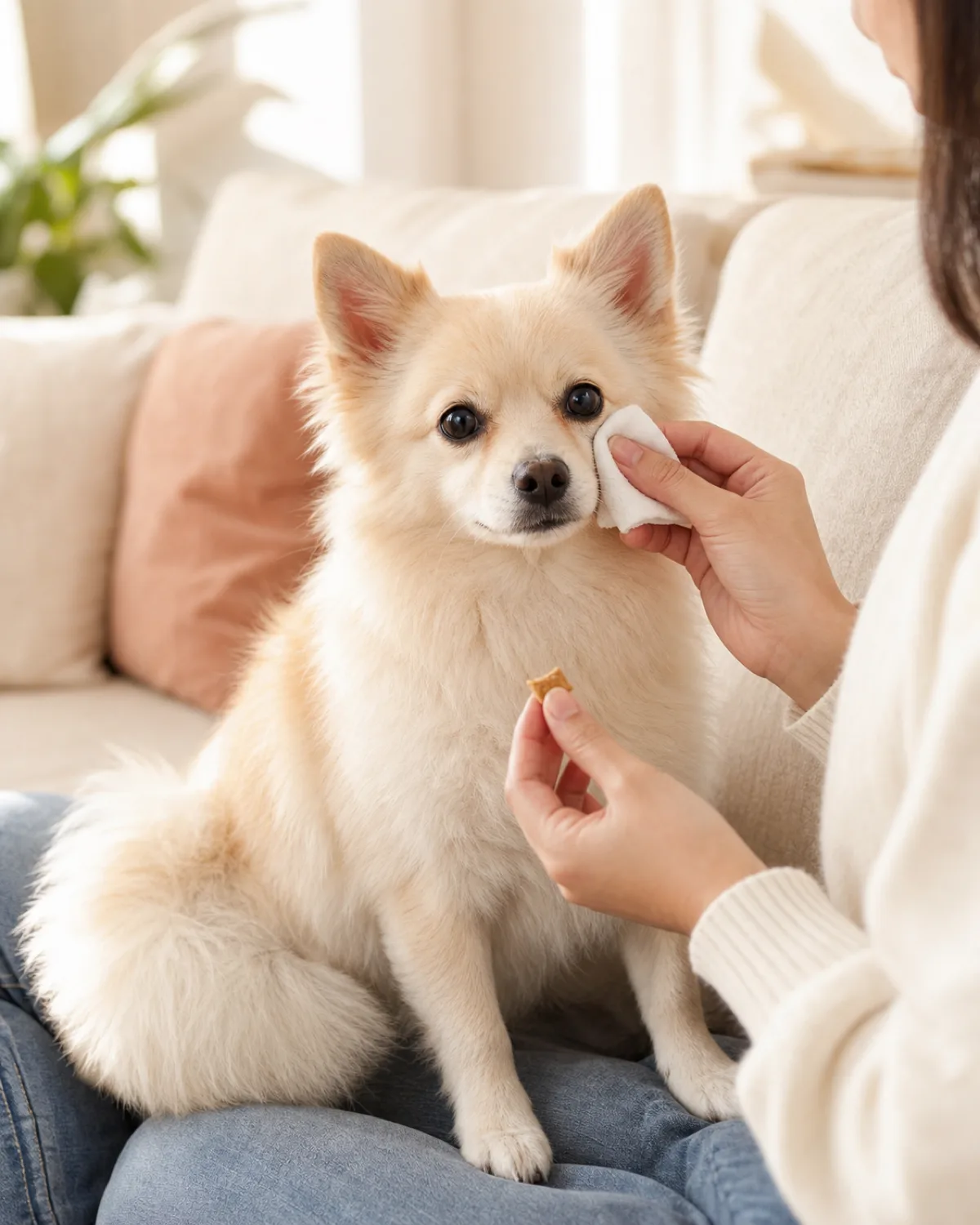
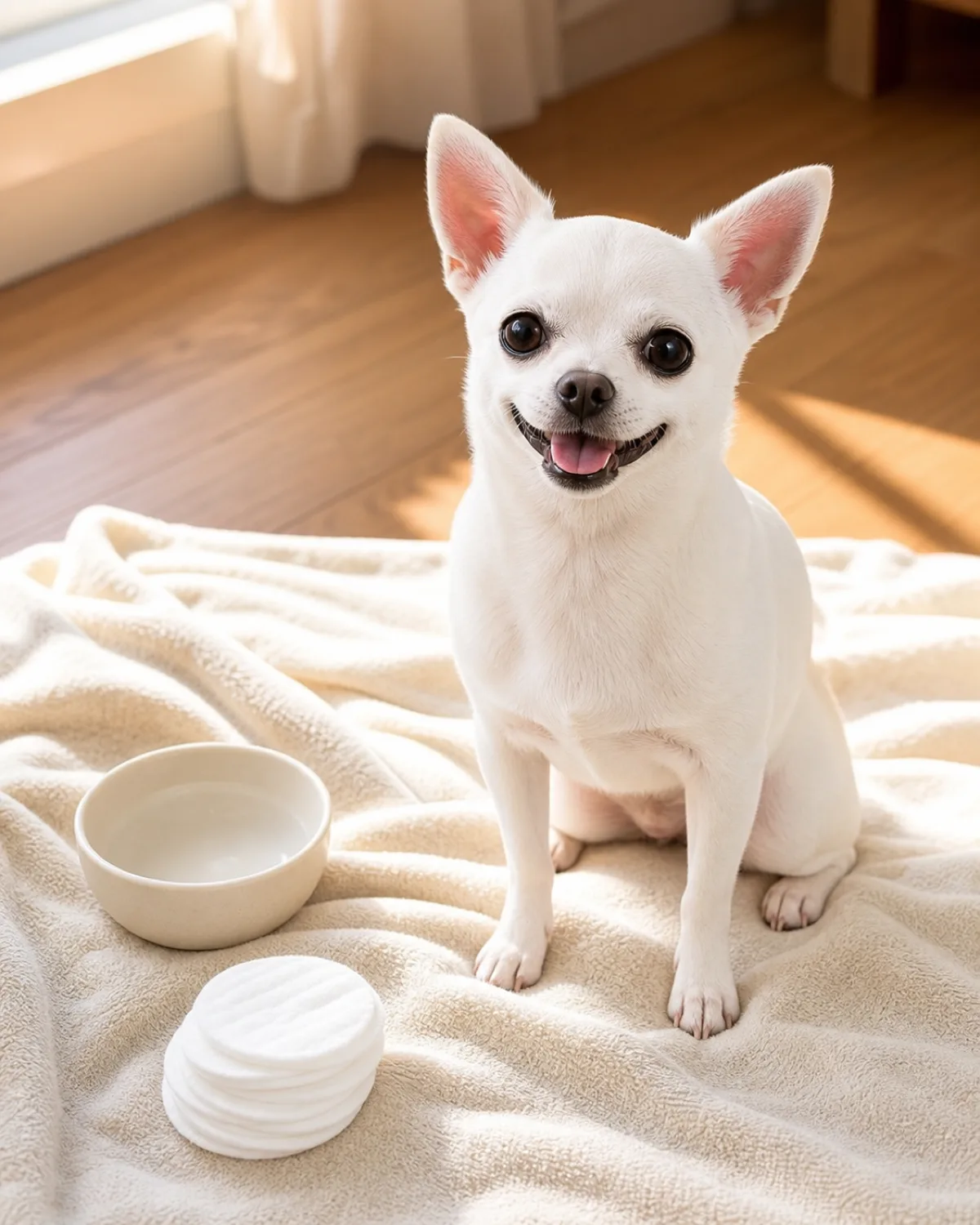
Dampen a soft cloth or cotton pad with warm water. Gently wipe the area directly below each eye, following the natural direction of the fur. Do not scrub. Do not push into the eye. You are removing the thin film of tears that has accumulated since the last wipe, before porphyrin has time to oxidize and bond to the fur.
Do this once a day, ideally in the morning. Within about two weeks of consistent daily wiping, you will notice that new staining has slowed dramatically. The stained fur below the clean area will still be brown, but the freshly wiped zone will stay lighter.
Do not use hydrogen peroxide, household bleach, or whitening shampoos near the eyes. The tissue around a dog's eye is thin and sensitive. Chemical irritation can cause more tearing, which causes more staining.
How to Remove Existing Tear Stains Safely
Old tear stains will not disappear in a single session. The porphyrin has chemically bonded to the fur, and the only way to fully eliminate it is to grow out the stained hair while preventing new staining. But you can soften and reduce the visible stain significantly over five to seven days.
Start with a warm compress. Soak a clean cloth in warm water, wring it out, and hold it gently against the stained area for about thirty seconds. This softens any crusty buildup and loosens dried porphyrin from the fur surface.
Follow the compress with a wipe using a cotton pad dampened with sterile saline solution. Saline is gentle enough for the eye area and dissolves dried residue without irritating the skin.
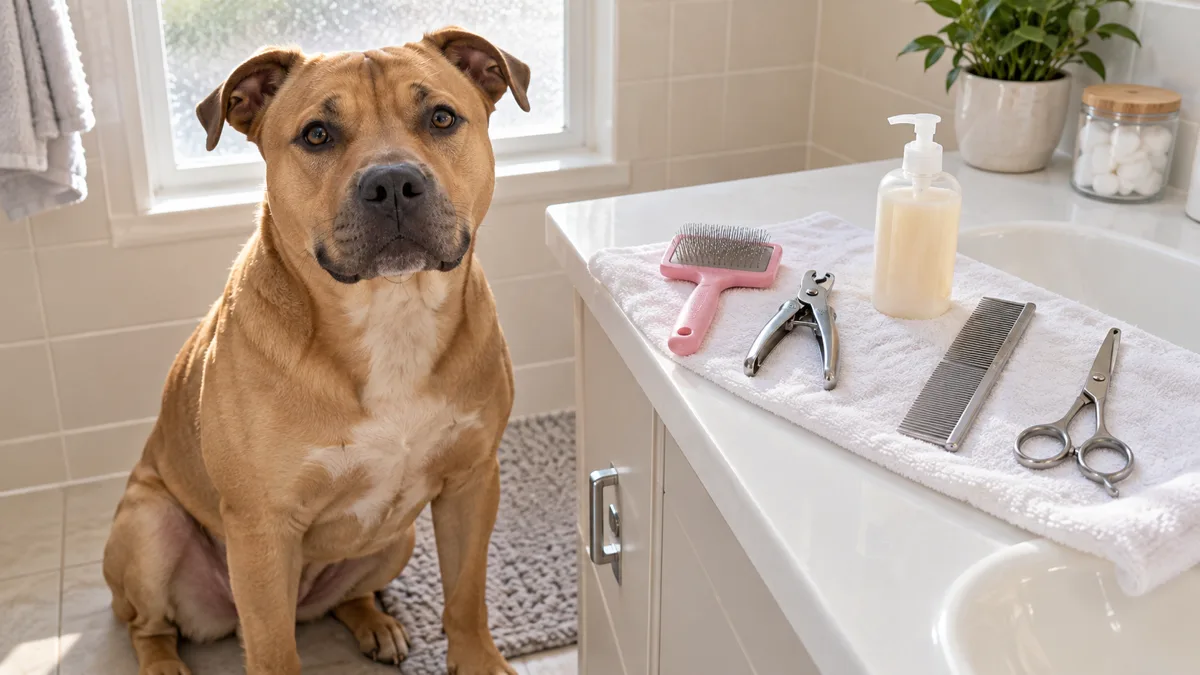
For stubborn crusty buildup, use a fine-tooth flea comb to carefully work through the matted section after softening with the compress. Comb in the direction of fur growth, working from the outer edge of the crust inward. Never pull or tug against a mat near the eye.
Repeat this daily. By day five to seven, the visible intensity of the stain will have reduced noticeably. But full removal depends on the stained fur growing out and being replaced by clean fur. For most dogs, this takes three to six weeks of consistent daily maintenance.
What to Avoid (Products That Do More Harm)
The pet industry sells dozens of tear stain removers, and most are either ineffective or actively harmful near a dog's eyes.
Hydrogen peroxide applied around the eyes risks corneal damage if even a small amount gets into the eye. The concentration sold in drugstores is strong enough to cause chemical burns on the delicate mucous membranes around the eye.
Tylosin-based supplements are antibiotics given orally to reduce porphyrin in tears. They work while the dog takes them. The problem: using an antibiotic for cosmetic purposes contributes to antibiotic resistance, and the staining returns the moment you stop.
Corn starch and boric acid pastes are sometimes recommended as drying agents. They can absorb moisture, but when they cake and dry on the skin beneath the eyes, they create a crusty layer that traps moisture underneath. If the paste gets into the eye, it irritates.
The decision framework: if a product would sting or burn if you put it in your own eye, keep it away from your dog's eye area. Warm water, sterile saline, and a soft cloth handle the job safely.
Know the difference
Safe vs. unsafe near your dog's eyes
The right tools are gentle and boring. The wrong ones risk real damage for a cosmetic result.
SAFE TO USE
Warm water, sterile saline, soft cotton padsGentle enough for daily use around the eye area. Removes fresh porphyrin before it oxidizes. No risk of irritation or corneal damage when used correctly.
AVOID
Hydrogen peroxide, tylosin supplements, bleach-based wipesPeroxide risks corneal burns. Tylosin builds antibiotic resistance for a cosmetic result. Bleach-based wipes irritate the delicate skin around the eyes and can trigger more tearing.
When Tear Stains Signal a Health Problem
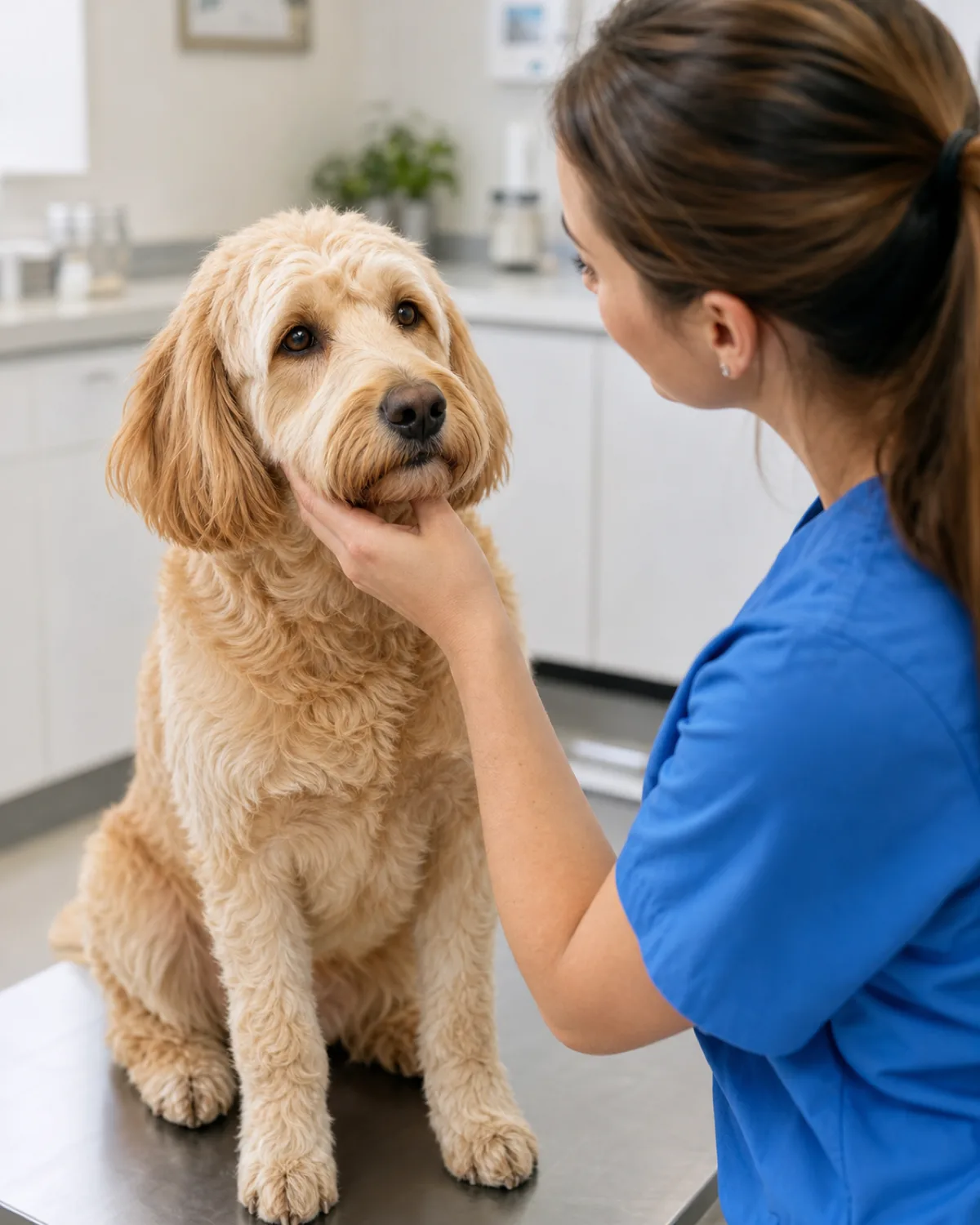
Most tear staining is cosmetic. But sometimes it is the visible symptom of something that needs veterinary attention.
See your vet if the staining appeared suddenly in an adult dog that never had tear stains before. A change in tear production without an obvious cause may indicate a blocked tear duct, an eye injury, or an emerging allergy.
One eye staining significantly more than the other is another reason to visit. Asymmetric tearing often means something is physically different on that side: a partial duct blockage, an ingrown eyelash, or a foreign body lodged under the eyelid.
Discharge that is thick, green, or yellow is not tears. That is a sign of infection and it needs treatment, not a wipe-down routine.
If the skin beneath the stain is red, swollen, or has a foul smell, yeast or bacteria have colonized the chronically damp area. The staining itself is not the problem at that point. The skin infection underneath is.
Persistent staining that does not improve after six weeks of daily wiping and diet review is worth discussing with your vet. There may be a structural issue that can be flushed or evaluated.
How Diet Changes Can Reduce Tear Staining
For dogs whose tear staining is driven by food sensitivity, changing the diet is the only intervention that addresses the root cause.
Start with water. Switch from unfiltered tap water to filtered water. Tap water contains minerals that can increase porphyrin concentration in tears. Use a stainless steel or ceramic bowl, not plastic, because scratches in plastic bowls harbor bacteria that can worsen facial irritation.
For food, try a limited-ingredient diet for six to eight weeks. This means a single protein source and a single carbohydrate source that your dog has not eaten before. The goal is to eliminate potential triggers and then reintroduce foods one at a time. Common trigger proteins include chicken and beef. Common trigger additives include artificial food dyes and unnamed meat byproducts.
Dietary changes take four to eight weeks to show results because you are waiting for the body's inflammatory response to calm down and existing porphyrin levels to normalize. If after eight weeks on a clean limited-ingredient diet the staining has not changed, food is probably not the primary driver.
Keeping the Eye Area Dry Between Wipes
Moisture is the accelerant. The longer tears sit on fur, the more porphyrin oxidizes and the higher the chance of yeast or bacteria colonizing the damp skin underneath.
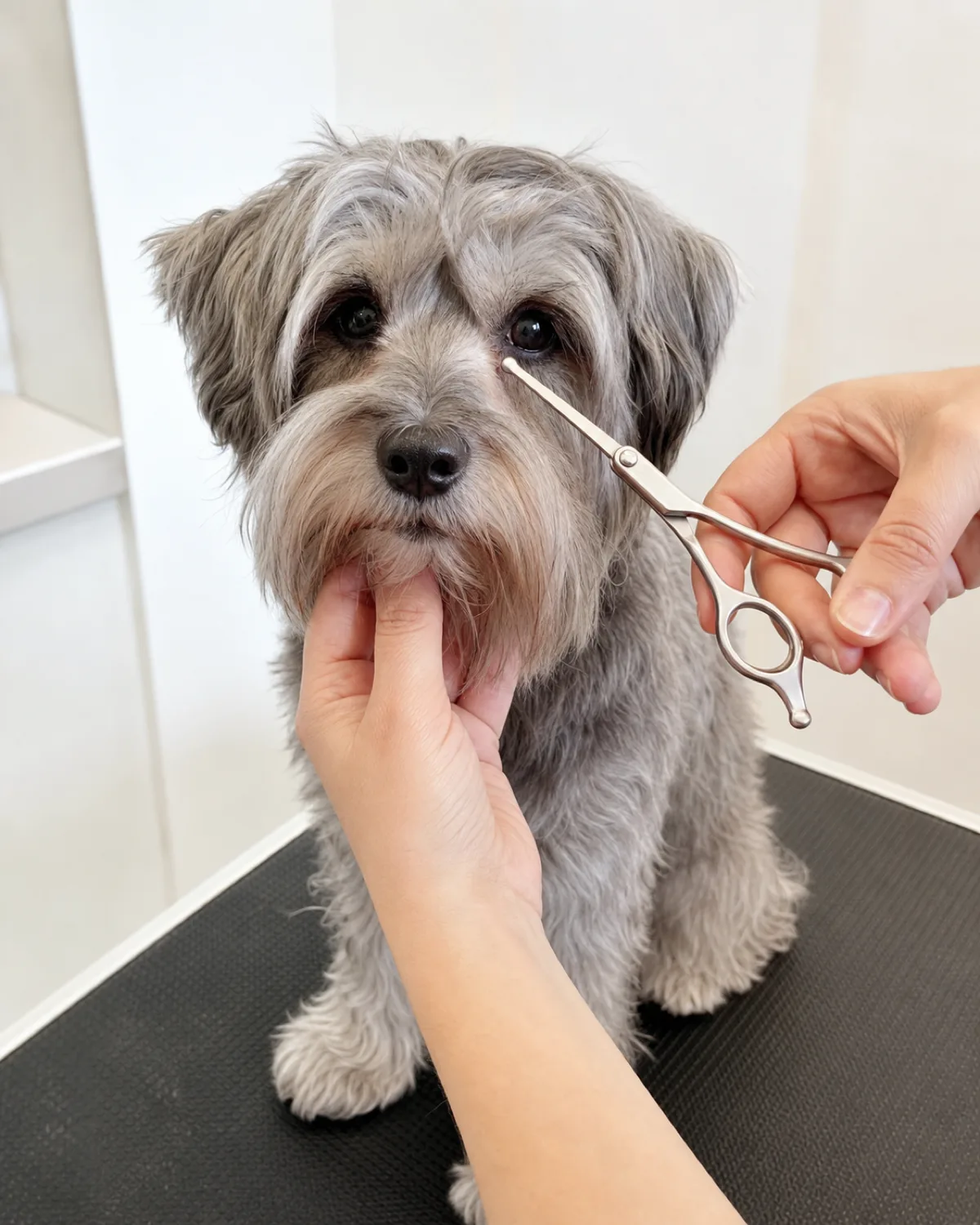
If your dog has long facial fur, trim the hair directly below the inner corner of each eye using blunt-tip scissors. You are not giving a dramatic haircut. You are shortening the fur that acts as a wick, pulling tears from the eye and spreading them across the cheek.
Shorter fur means less surface area for tears to cling to and faster drying. The desensitization techniques from how to brush a dog that hates being brushed apply to face handling too.
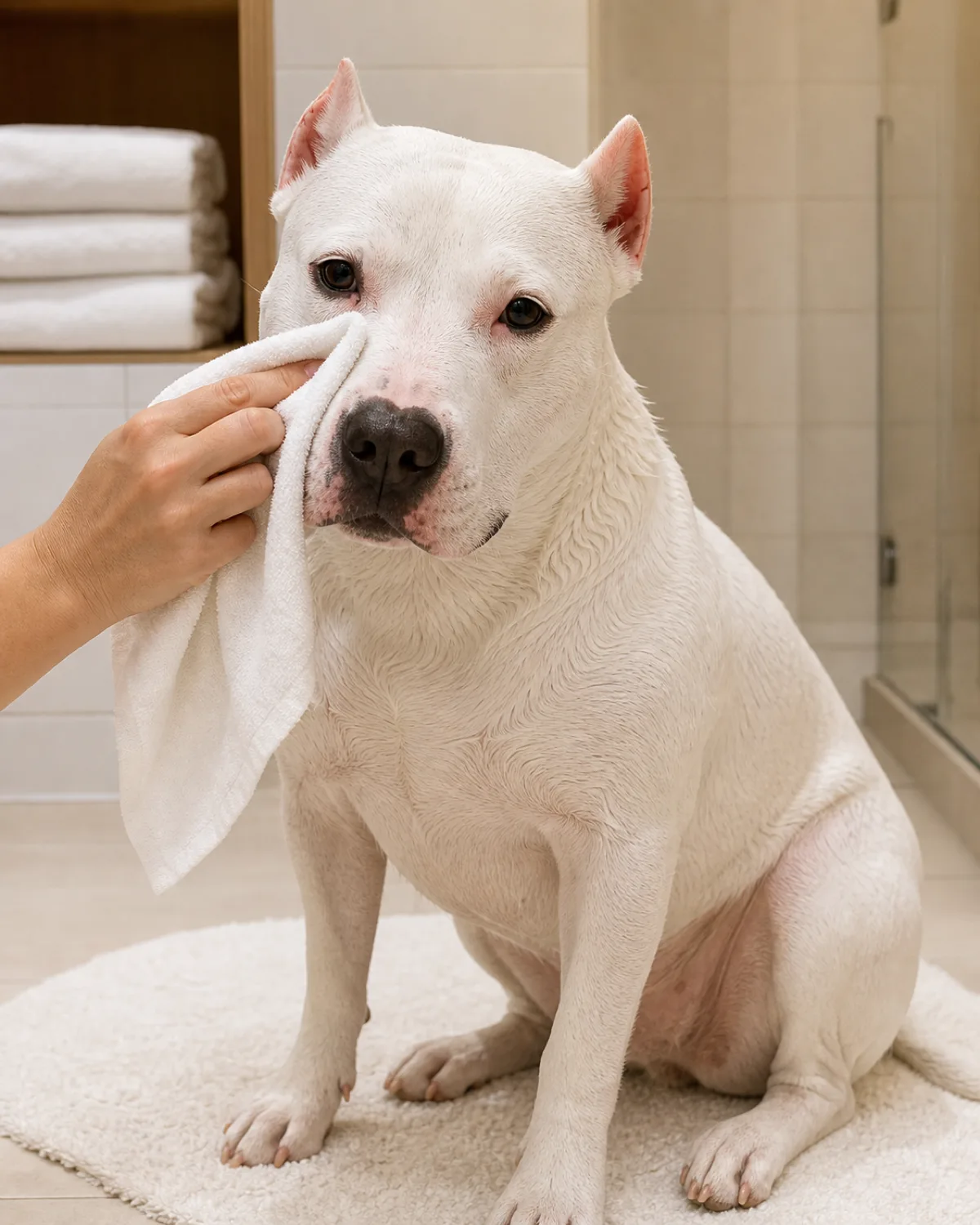
After baths, dry the eye area before drying the rest of the body. Water that pools in the crease between the eye and the muzzle contributes to the same staining process as tears. A quick blot with a dry cloth immediately after the bath prevents this.
For dogs with facial folds, the creases near the eyes trap moisture from tears and from the dog's own breath. Wipe these folds dry with a soft cloth once a day. Do not apply powder or corn starch into the folds. A dry cloth removes the moisture. Powder masks it and can cake.
The ground rules
Eye area maintenance
The habits that keep tear stains under control and the mistakes that make them worse.
Always
Wipe below each eye once daily with warm water
Dry the area after wiping and after baths
Use sterile saline for stubborn dried residue
Trim long fur below the inner eye corner
Use filtered water in a steel or ceramic bowl
See your vet for sudden or one-sided tearing
Never
Use hydrogen peroxide near the eyes
Give antibiotics for a cosmetic issue
Apply corn starch or boric acid paste near eyes
Scrub or press hard against the eye area
Use bleach-based wipes on the face
Ignore green or yellow discharge as normal tearing
A Daily Routine That Works
The routine takes less than two minutes total. It is not complicated, but it needs to happen every day to work.
Morning: dampen a soft cloth or cotton pad with warm water. Wipe gently under each eye, following the direction of the fur. Dry the area with a separate dry cloth. If there is crusty buildup, hold the damp cloth against it for ten seconds to soften before wiping. Run a fine-tooth comb through the area if needed. Give a treat.
Evening: check the eye area. If there is visible new dampness or buildup, repeat the wipe. If the area looks dry and clean, skip it. Over-wiping can irritate sensitive skin.
Weekly: assess whether the fur below the eyes needs a trim. If the fur is long enough to wick tears onto the cheek, trim it with blunt-tip scissors.
Monthly: step back and compare to last month. Take a photo on the same day each month so you can see progress objectively. Stable or improving means your routine is working. Worsening after four to six weeks of consistent effort means it is time to revisit the cause with your vet.
Save this
Your Tear Stain Care Routine
1
Morning WipeWarm damp cloth under each eye. Dry with a separate cloth. Treat.
2
Evening CheckOnly wipe if new dampness or buildup is visible.
3
Weekly TrimBlunt-tip scissors on long fur below the inner eye corner.
4
Monthly PhotoSame angle, same lighting. Compare to track real progress.
5
Filter the WaterFiltered water in a steel or ceramic bowl. No plastic.
6
Review DietLimited-ingredient trial for 6-8 weeks if stains persist.
pawliqa.com
What to Expect (The Honest Timeline)
Tear stain management is maintenance, not a one-time fix.
Days one through seven: you will not see improvement in the existing stains. You are preventing new oxidation, but the old stains remain. This is the stage where most people quit because nothing looks different. Keep going.
Days seven through fourteen: the area closest to the eye starts to look cleaner. The stained fur below that zone is still brown because it has not had time to grow out.
Weeks three through six: the clean zone expands as the stained fur grows and is replaced by unstained fur. This is when the difference becomes visible enough that other people notice.
Six weeks and beyond: for dogs whose tear staining was caused by something you fixed, the stains may be completely gone. For dogs whose staining is structural, you will have clear fur as long as you maintain the daily wipe. Skip a week and the staining starts to return. That is not failure. That is how porphyrin works when tears overflow chronically.
The dogs who look stain-free did not get there by using a special product. They got there through a boring, consistent daily routine that most people are not willing to do. Now you know what it takes.
Jess Calloway
Dog mom to three very different dogs and the editor behind Pawliqa. I write grooming guides, training walkthroughs, and first-year survival plans based on what actually works at home — not what sounds good in theory. I am not a veterinarian. When something in a guide is beyond home care, I will tell you to call yours.
Fifteen dog paw care tips covering pad checks, nail length, moisturizing, hot pavement tests, winter balm, cracked pad first aid, and seasonal routines.