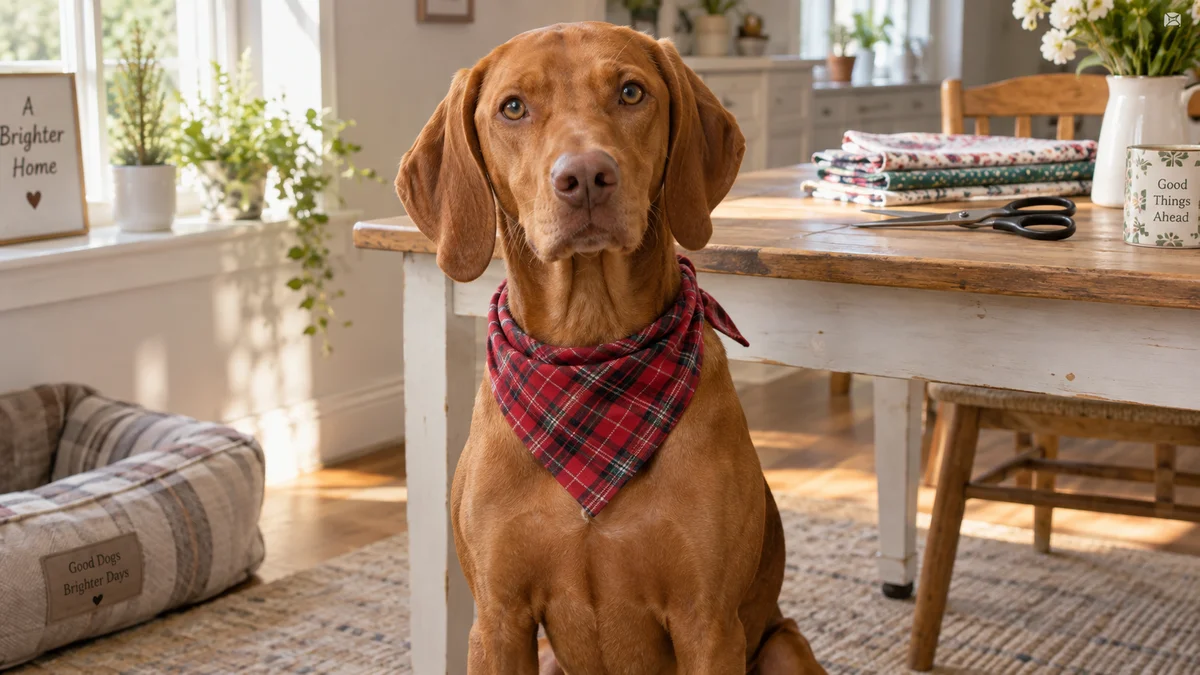
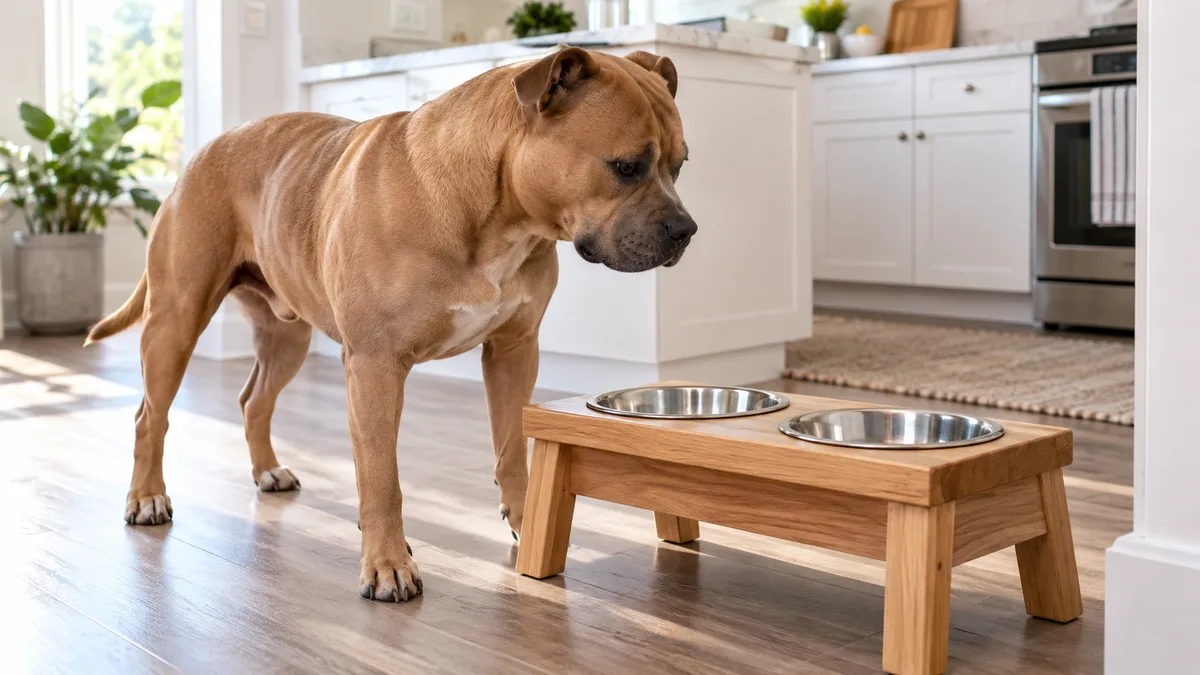
A store-bought dog bandana either hangs too loose and slides off or bunches up around the collar and looks like a crumpled napkin. The fix is making one yourself, sized to your actual dog.
You do not need a sewing machine, and you do not need sewing experience. The whole project takes about fifteen minutes once you know the neck measurement, and the materials cost less than a single ready-made bandana from a pet store.
This guide covers measuring, cutting, sewing (or skipping sewing), and adding a collar slot so it stays on all day. If you enjoy this kind of project, the DIY dog toys guide covers more scrap-fabric ideas.
Jump to a section
Make a Dog Bandana That Stays On
This guide goes from measuring your dog through cutting, sewing or no-sew options, adding a collar slot, and checking the fit.
You do not have to read top to bottom. Pick the situation that matches where you are right now.
You have a sewing machineMeasure, cut, then jump to Sew the Edges for a finished-edge bandana in under ten minutes.
You have never sewn anythingStart at No-Sew Method for a fusible-tape bandana that needs zero stitching.
Your bandana keeps falling offSkip to Add a Collar Slot to thread the bandana onto the collar so it cannot slide.
Measure Your Dog's Neck the Right Way
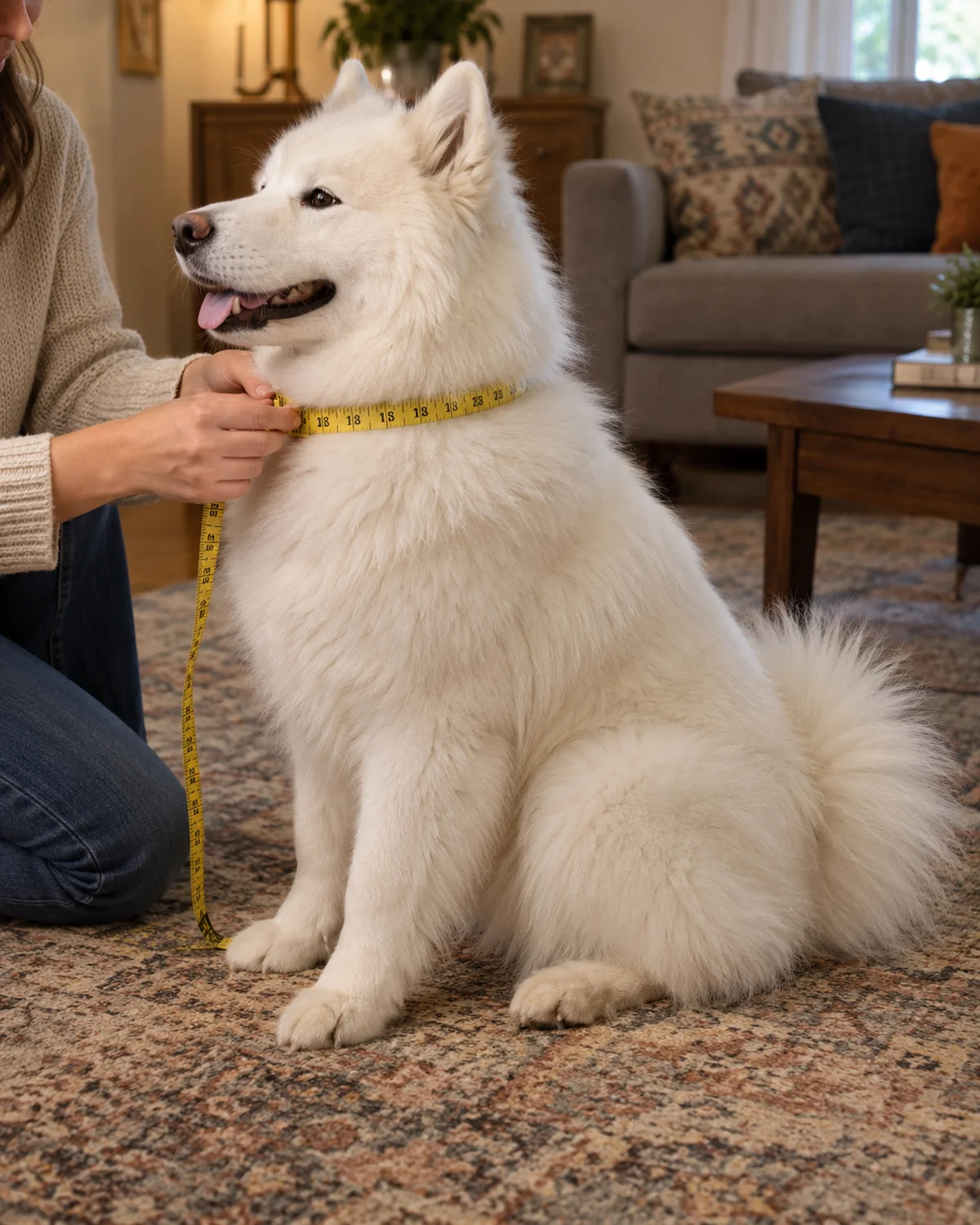
Every bandana project starts with the neck measurement. Use a soft fabric measuring tape, not a rigid ruler. Wrap it around the base of the neck where the collar normally sits, then add two finger-widths of ease so the finished bandana is not snug.
Write the number down. You will use it to calculate the square you cut in the next section.
Here is a quick reference for converting neck circumference to fabric square size:
Dog size
Neck range
Square to cut
Small (under 14 in / 36 cm)
10–14 in
14 × 14 in (36 × 36 cm)
Medium (14–20 in / 36–51 cm)
14–20 in
21 × 21 in (53 × 53 cm)
Large (20–26 in / 51–66 cm)
20–26 in
28 × 28 in (71 × 71 cm)
Extra large (over 26 in / 66 cm)
26+ in
32 × 32 in (81 × 81 cm)
The formula is simple: the long edge of the folded triangle needs to be roughly 1.5 times the neck measurement. Cutting a square and folding it on the diagonal gives you that ratio automatically.
If you are between sizes, go with the larger square. You can always fold the top edge down to shorten the bandana, but you cannot add fabric back.
Choose the Right Fabric
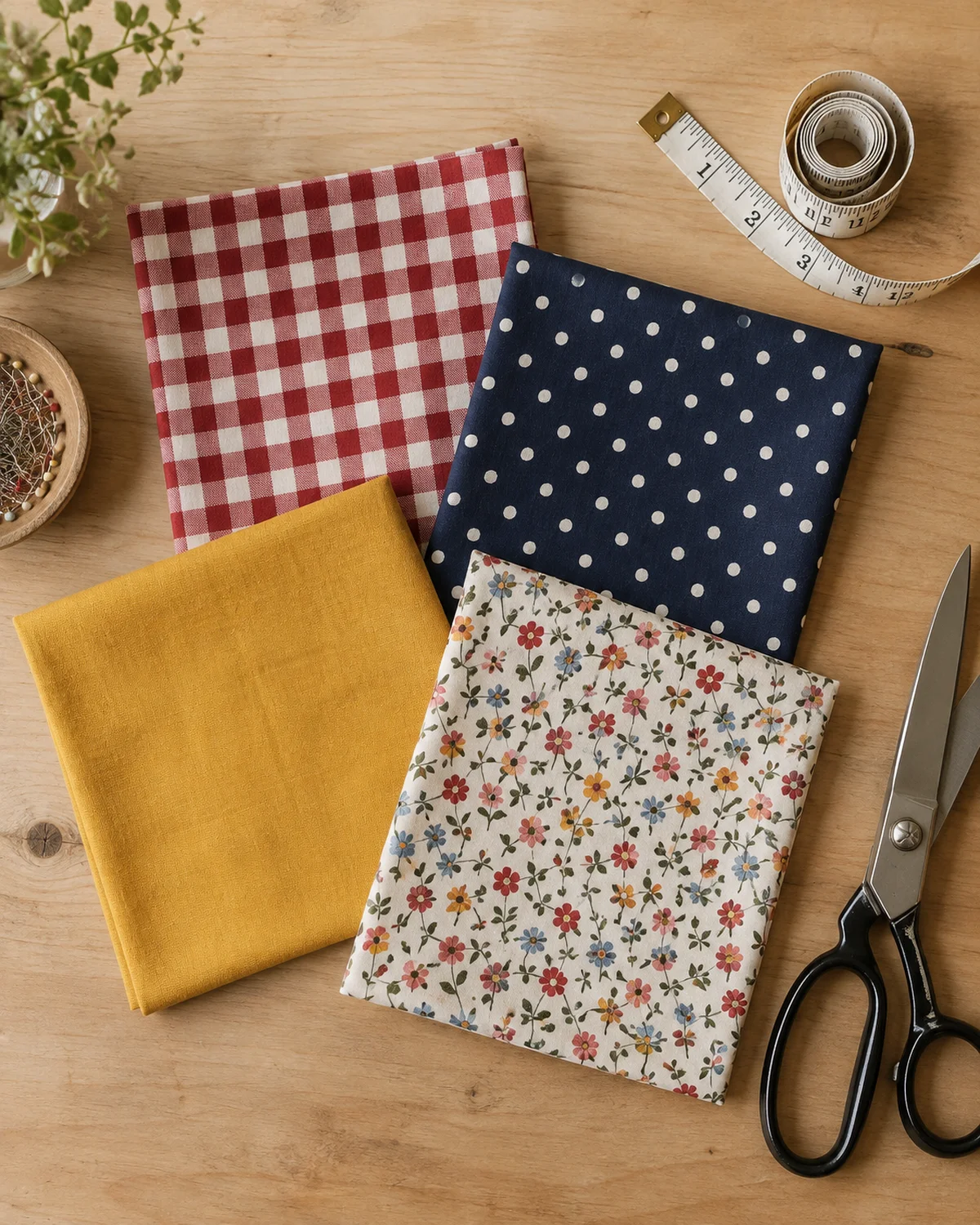
Quilting cotton is the easiest fabric to work with for a first bandana. It holds a fold, feeds through a sewing machine without bunching, and comes in hundreds of prints at any craft store.
For warmer months, stick with lightweight cotton or cotton-linen blends. Both breathe well and dry fast after a drool-heavy walk. For fall and winter, flannel adds a little warmth without making the bandana stiff.
Avoid the following:
Stretch knits (jersey, spandex blends) — they curl at the edges and are hard to hem without a serger
Canvas or denim — too rigid to tie or fold comfortably around a smaller dog's neck
Silk or satin — slippery, does not hold a knot, and snags on collar hardware
Pre-wash the fabric before cutting. Cotton shrinks anywhere from three to five percent on the first wash, and cutting before washing means the finished bandana will shrink unevenly after its first trip through the machine.
One fat quarter from a quilt shop (18 × 22 inches) is enough for a small or medium bandana. For a large or extra-large dog, buy a half yard.
Cut the Classic Triangle
Lay the pre-washed fabric right side up on a flat surface. Use the size chart from the first section to determine the square dimensions for your dog.
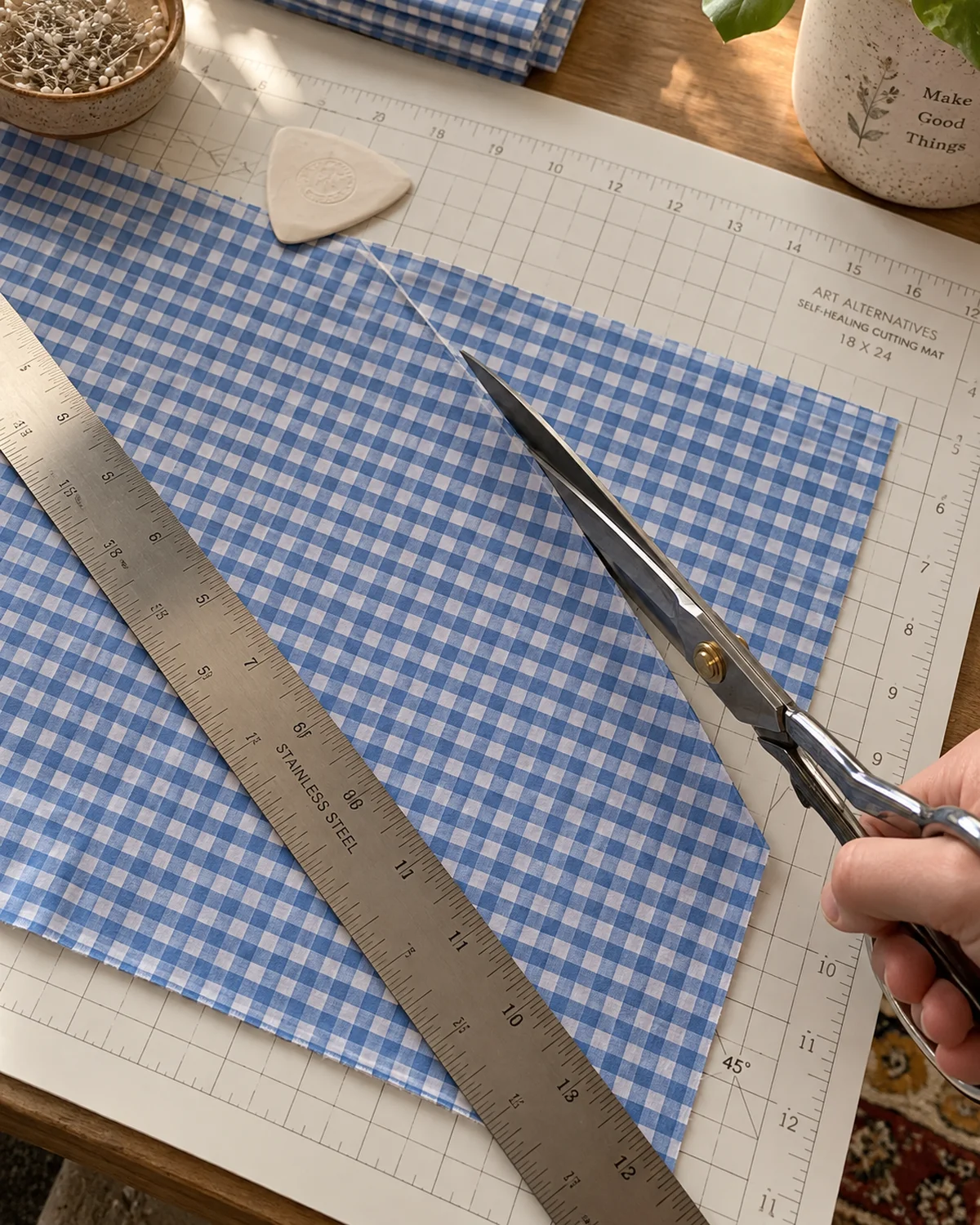
Mark the square with tailor's chalk or a washable fabric marker, then cut along the lines with sharp fabric shears. Dull scissors will chew the edge and leave frayed threads that unravel faster.
Fold the square in half on the diagonal to create a triangle. The long folded edge is the top that sits against the neck. The point hangs down at the chest.
Two methods from here:
Single-layer triangle — cut the square on the diagonal so you get two triangles. Each one becomes a bandana. The raw edges need finishing (next section) or the fabric will fray within a few washes.
Double-layer fold — fold the square in half on the diagonal without cutting. The folded edge is naturally finished, and the two raw edges are shorter. This gives a thicker bandana that holds its shape better on larger dogs.
For a first project, the double-layer fold is faster because you skip hemming the longest edge entirely. If you want a thinner, lighter bandana for summer, cut the triangle and finish the edges with the sewing or no-sew method below.
Sew a Finished-Edge Bandana
If you cut a single-layer triangle, all three edges are raw and need finishing. If you used the double-layer fold, only the two shorter open edges need hemming.
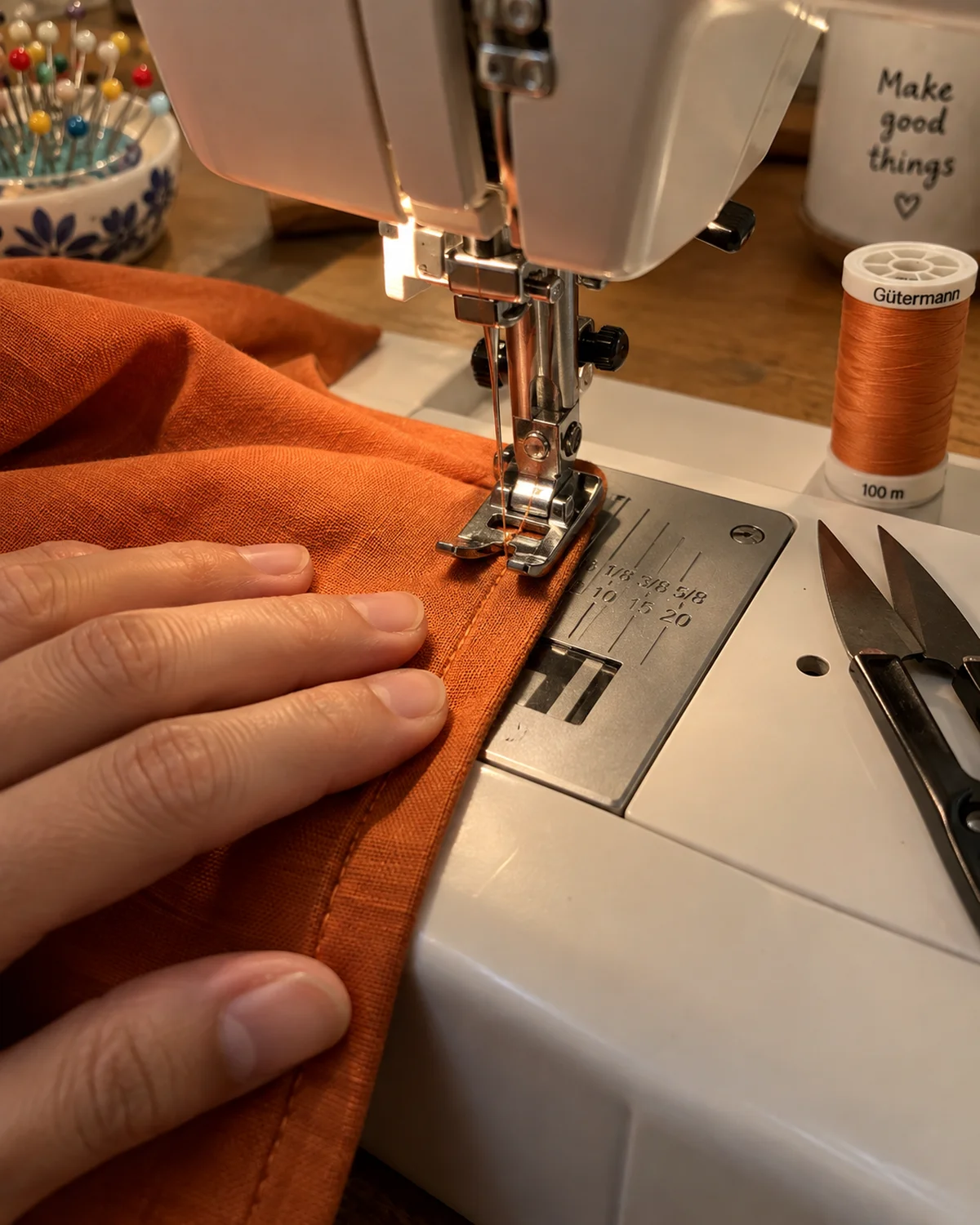
Set up your sewing machine with a straight stitch, stitch length around 2.5 mm, and thread that matches or coordinates with the fabric.
Follow these steps:
Fold each raw edge under about a quarter inch (6 mm) toward the wrong side of the fabric
Press the fold with an iron to hold it in place — this makes sewing much easier than trying to fold and sew at the same time
Fold under another quarter inch to enclose the raw edge completely (this is called a double-fold hem)
Press again, then pin or clip every few inches
Sew close to the inner folded edge, about an eighth of an inch from the fold
Backstitch at the start and end of each seam to lock the stitches. Clip the thread tails close to the fabric.
The entire hemming process takes about five to eight minutes on a machine. Hand sewing with a simple running stitch works too but takes closer to twenty minutes.
If you want closures instead of tying, sew a snap or a strip of sew-on hook-and-loop tape at the two ends of the long edge. This lets you wrap the bandana around the neck and snap it shut instead of knotting it. For dogs who like to scratch at knots, snaps are worth the extra minute.
Three rules that save your bandana project
Get These Right Before You Start
Skip any one of these and the bandana either does not fit, falls apart, or ends up in the trash after one wash.
Measure first, cut secondEyeballing the neck size is the number one reason homemade bandanas look wrong. Wrap the tape, write the number, check the chart. A bandana cut two inches too small cannot be fixed.
Two-finger fit test every timeAfter tying or snapping the bandana, slide two fingers between the fabric and the neck. If you cannot fit two fingers, it is too tight and will irritate the skin. If three fingers slide in easily, it will fall off.
Cotton fabric, pre-washedSynthetic blends trap heat against the neck. Unwashed cotton shrinks unevenly after the first laundry cycle. Pre-wash, dry, and iron before you touch the scissors.
Make a No-Sew Bandana
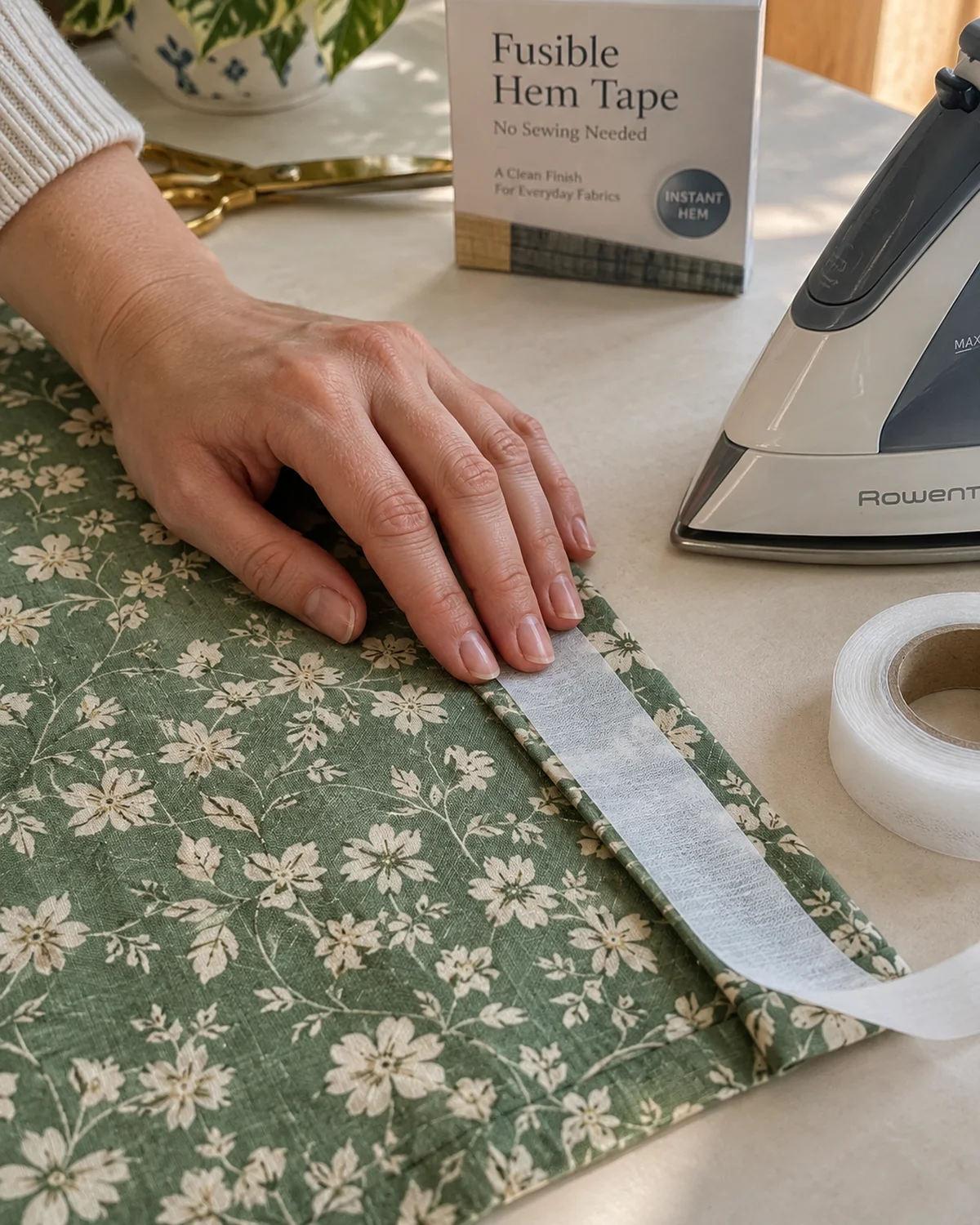
No sewing machine and no interest in hand stitching is not a problem. Fusible hem tape (also called iron-on hem tape or bonding web) creates a permanent bond when you press it with a hot iron.
You will need:
The cut triangle from the earlier section
A roll of fusible hem tape (available at any craft or fabric store for a few dollars)
A household iron
A pressing cloth or thin cotton towel
Here is the process:
Fold the raw edge under a quarter inch, just like the sewn version
Tuck a strip of hem tape between the folded layers so the adhesive side faces the fabric
Cover with a pressing cloth
Press the iron down firmly for ten to fifteen seconds without sliding — sliding can shift the fold
Lift, check the bond, and move to the next section of edge
Work your way around all raw edges. Let the bandana cool flat for a minute before handling it.
The bond from fusible tape holds up to machine washing on a warm cycle. Avoid the hot dryer setting for the first few washes to let the adhesive fully cure.
If a section peels up later, just cut a new strip of tape, tuck it under, and press again. It takes thirty seconds.
Add a Collar Slot for Security
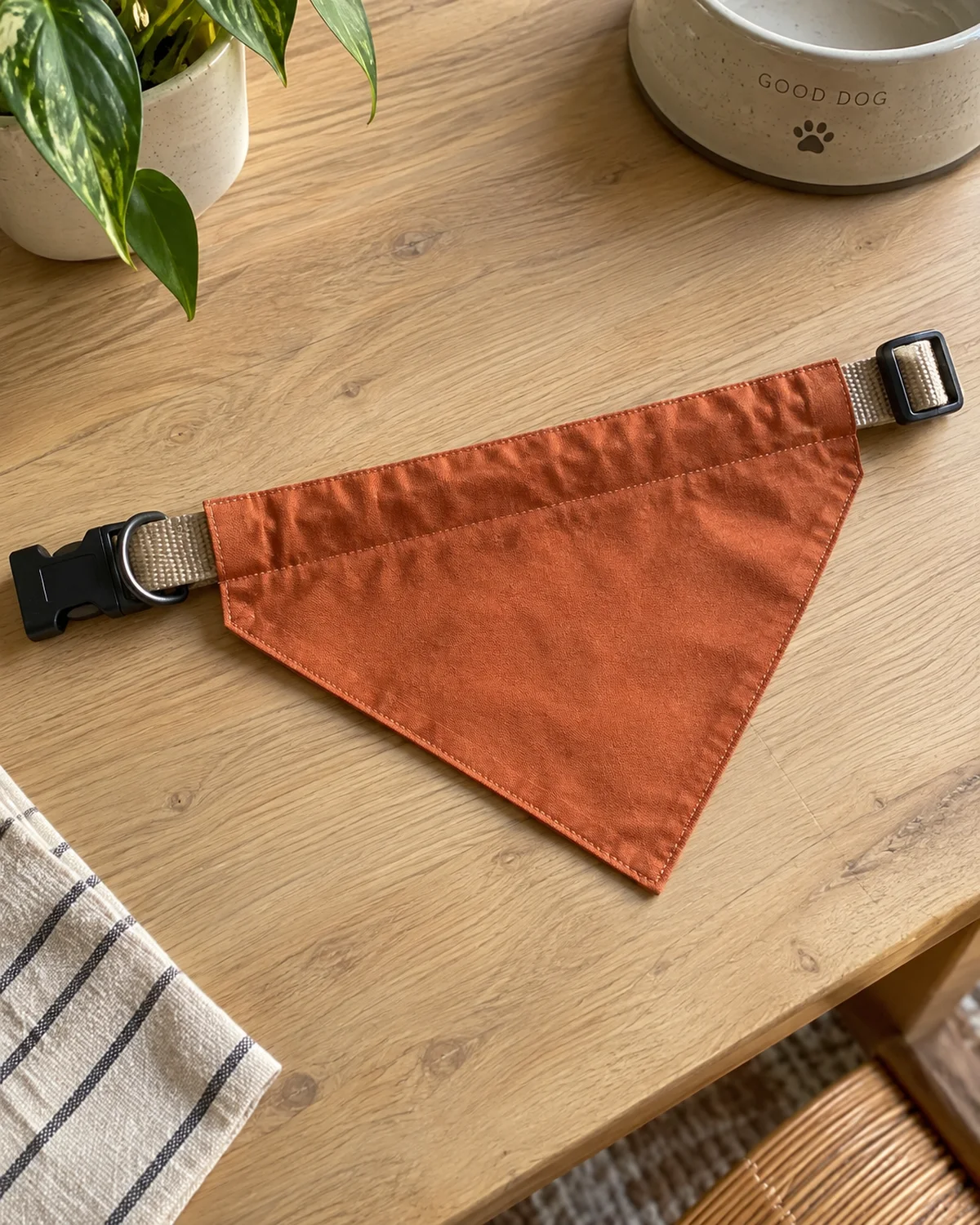
A tied bandana works fine for a calm indoor photo, but it will shift, bunch, or fall off entirely on a walk. The collar-slot method solves this by turning the top edge of the bandana into a tunnel that the collar threads through.
Here is how to make it:
Lay the bandana flat with the point facing you and the long edge at the top
Fold the top edge down about one and a half inches (enough to fit your dog's collar through the channel)
Sew or iron-bond a straight line along the bottom of the fold, leaving both ends open so the collar can slide through
Thread the collar through the channel
Buckle the collar back on the dog
The bandana now hangs from the collar and cannot slide off over the head. It also sits in the same position every time, centered at the chest, without you having to adjust it.
This is the method used by most bandana sellers on Etsy and at craft fairs. It takes less than two minutes to add and makes every bandana dramatically more practical.
For dogs who wear a harness instead of a collar on walks, make the channel wide enough to fit the harness chest strap. Measure the strap width and add a half inch of ease.
Check the Fit Before Wearing
Put the bandana on your dog using whichever method you chose — tied, snapped, or threaded onto the collar — and check these three things:
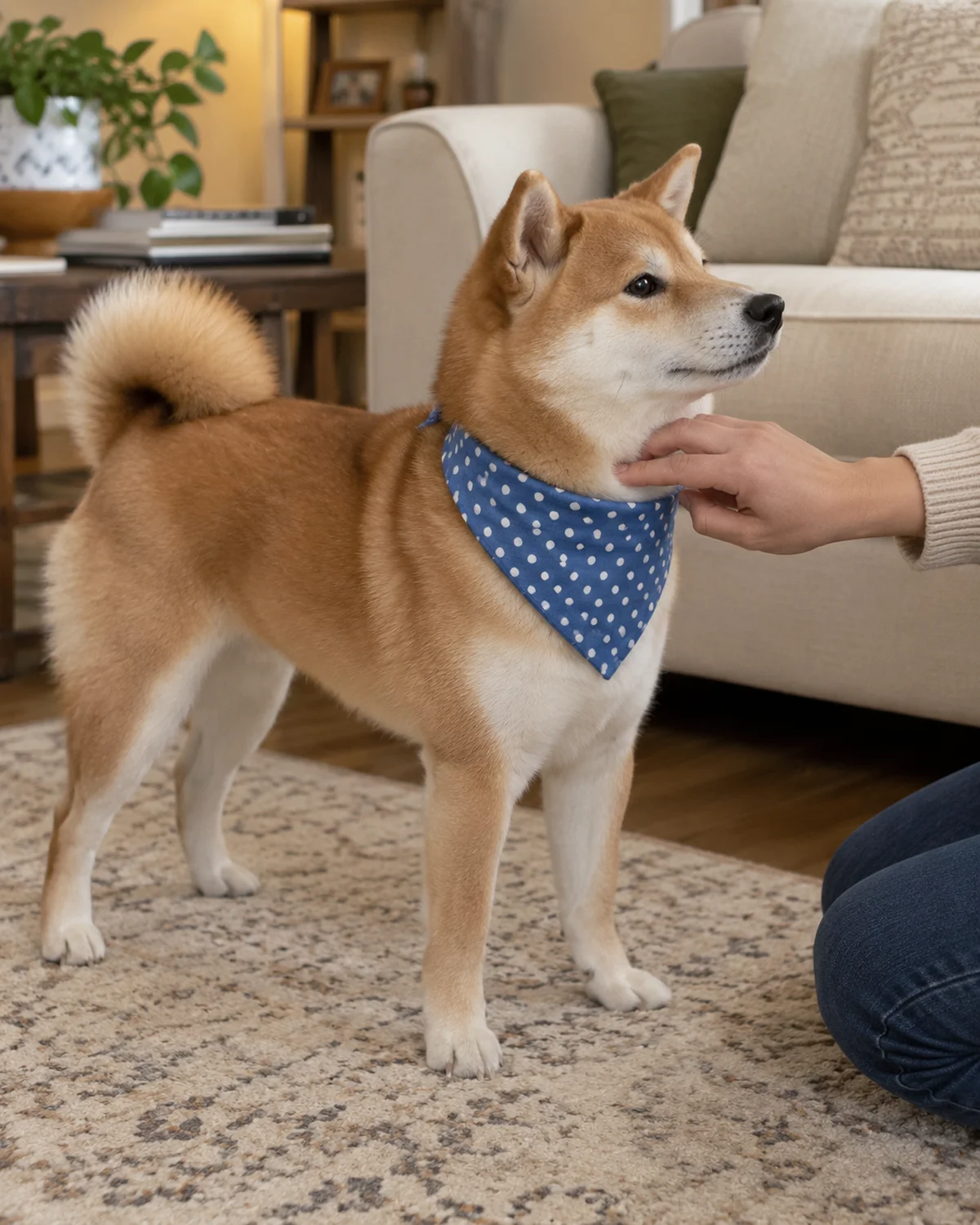
Two-finger test. Slide two fingers between the bandana and the neck. They should fit without forcing. This confirms the bandana is secure but not restrictive.
Point length. The triangle point should reach roughly to the mid-chest. If it hangs past the front legs, the dog will step on it or catch it on things. Fold the top edge down to shorten it.
Movement check. Let the dog walk around the room for a minute. Watch for scratching at the bandana, head shaking, or the bandana rotating to one side. Scratching usually means too tight. Rotation means too loose or the knot is uneven.
If you used snaps or hook-and-loop tape, verify they hold when the dog shakes. A vigorous full-body shake is the real stress test — if the closure survives that, it will survive a walk.
For the first bath after wearing the bandana, check whether the fabric left any dye on light-colored fur. Most quilting cotton is colorfast, but cheaper prints sometimes bleed on the first wet contact. If you see color transfer, wash the bandana two more times before using it again.
Wash and Store Your Bandanas
Machine wash bandanas on a warm cycle with a mild detergent. Skip fabric softener — it coats the fibers and reduces breathability, which matters when the bandana sits against skin and fur.
Dry flat or hang to dry. Cotton bandanas take about an hour to air dry indoors. You can tumble dry on low heat, but high heat may shrink the fabric slightly and weaken fusible-tape bonds over time.
Iron on medium heat after drying to flatten any wrinkles. A crisp bandana looks noticeably better than a crumpled one, and pressing takes less than thirty seconds per bandana.
Storage tips that keep bandanas ready to grab:
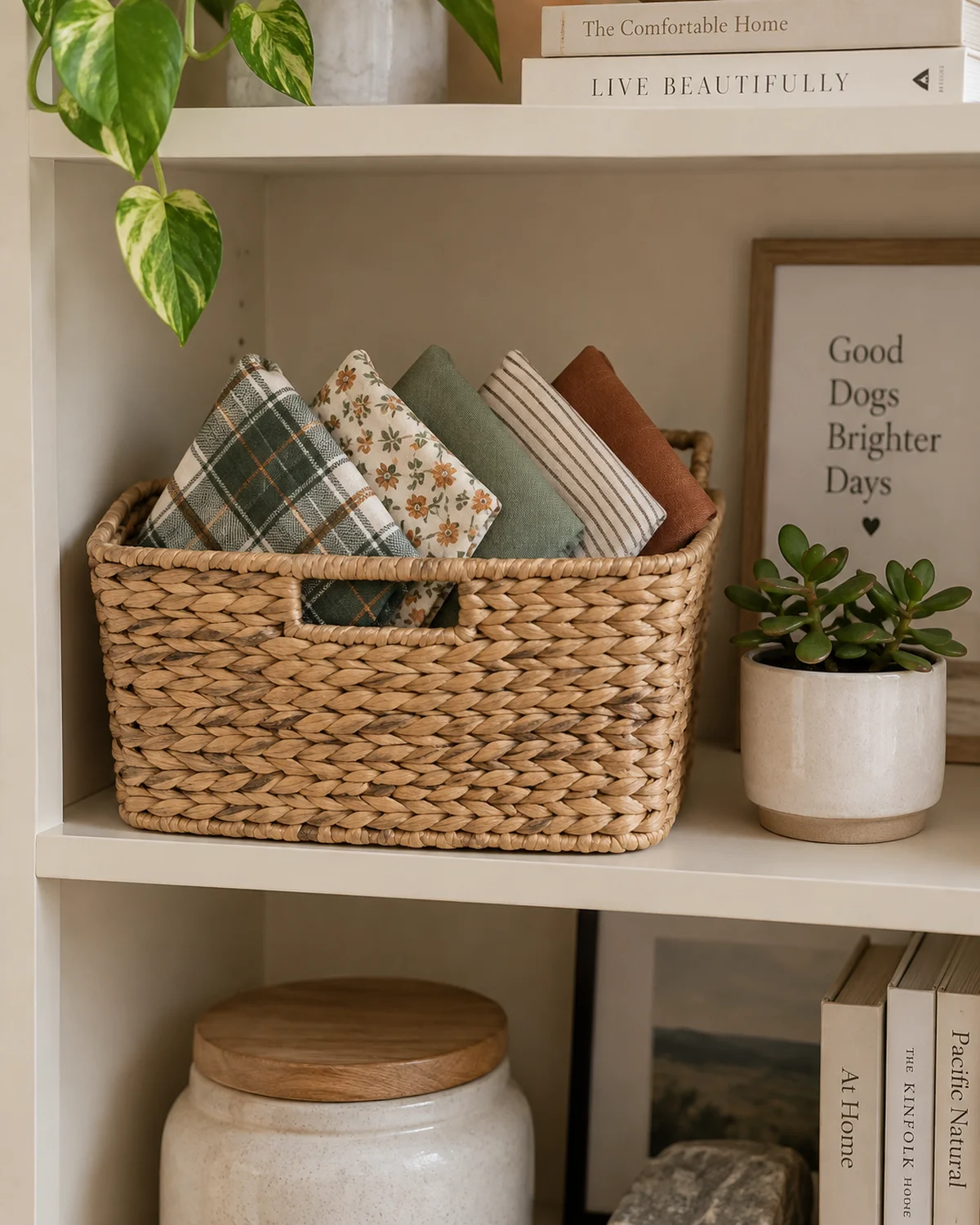
Basket method — fold each bandana into a small square and stand them upright in a basket near the leash hooks. You see every pattern at a glance and can grab one on the way out the door.
Hanging method — clip bandanas to a small towel bar or a row of Command hooks inside a closet door. Good for seasonal rotation when you have a larger collection.
Roll method — roll each bandana from the long edge toward the point. Rolled bandanas take up less space in a drawer and do not wrinkle as much as flat-folded ones.
Once you have the pattern dialed in, making a new bandana takes under ten minutes. Keep a few in rotation — one on the dog, one in the wash, and one waiting in the basket.
Seasonal fabrics (plaid for fall, holly print for December, pastels for spring) make easy gifts for other dog owners too. If your dog has Halloween costumes already, a matching bandana pulls the whole look together without adding bulk.
Save this for later
Making Dog Bandanas in 8 Takeaways
1Measure the neckWrap a soft tape at the collar line, add two finger-widths of ease, and use the size chart to pick the right fabric square.
2Choose breathable cottonQuilting cotton or flannel works best. Pre-wash before cutting to prevent uneven shrinkage.
3Cut on the diagonalMark and cut a square to size, then fold or cut it diagonally into a triangle.
4Sew a double-fold hemFold raw edges under twice, press, and sew a straight line to finish the edges cleanly.
5Or skip sewing entirelyFusible hem tape bonds fabric with just an iron and holds through machine washing.
6Add a collar slotFold the top edge down, sew a channel, and thread the collar through so the bandana cannot slide off.
7Two-finger fit testTwo fingers between fabric and neck means the bandana is secure without being tight.
8Wash warm, dry flatMachine wash with mild detergent, skip fabric softener, and air dry or tumble on low to preserve the fabric.
pawliqa.com
Dog Bandana FAQ
What size bandana does my dog need?
Measure the neck at the collar line and check the size chart in the first section. Small dogs (under 14-inch neck) need a 14-inch square, medium dogs need 21 inches, large dogs need 28 inches, and extra-large dogs need 32 inches. When in doubt, go one size up and fold the top edge down to adjust.
Can I use a regular handkerchief as a dog bandana?
A standard handkerchief is about 16 inches square, which fits most small to medium dogs. For larger dogs it will be too small and the point will barely reach the chest. The fabric is usually cotton, so the material works fine, but you may still want to add a collar slot to keep it from sliding.
How do I keep a bandana from falling off my dog?
The collar-slot method described in section six is the most reliable fix. Threading the bandana onto the collar means it cannot slide over the head or untie during movement. Snaps and hook-and-loop closures are the next best option if you prefer a tie-on style.
Is it safe for dogs to wear bandanas all day?
A properly fitted cotton bandana is safe for all-day wear during supervised time. Remove it at night, during crate time, and anytime the dog is unsupervised for extended periods. The two-finger test confirms it is not too tight. Watch for excessive scratching, which could mean the fabric is irritating the skin or the fit needs adjusting.
What fabric is best for dog bandanas in summer?
Lightweight quilting cotton or cotton-linen blends breathe the best in warm weather. Avoid polyester blends and flannel in summer because both trap heat against the neck. If your dog runs hot, soak the bandana in cool water before putting it on for a brief cooling effect during walks.
P
About the author
Jess Calloway
Jess Calloway edits Pawliqa, where she shares dog care, grooming, training, and new-owner tips — plus DIY and pet-friendly home ideas — for anyone who wants a happy, well-cared-for dog. As a dog mom to three very different dogs, she writes the honest, tested version of what actually works. Every guide is image-led and reviewed for clarity, usefulness, image accuracy, and Pinterest-to-page alignment before it goes live. Visit the About page.
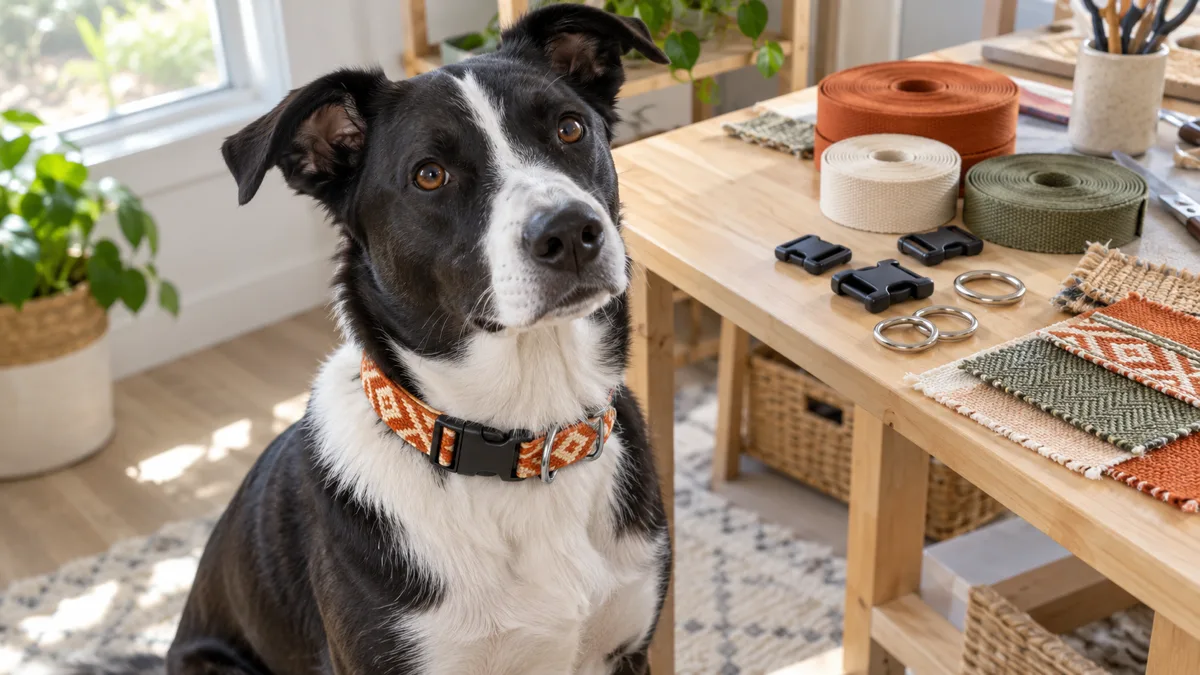
Making a dog collar at home gives you full control over fit, material, and style. This guide walks through picking the right webbing, threading hardware, hand-sewing a box stitch that holds, and running the safety checks that matter before your dog wears it out the door.