We brought our second rescue home on a Tuesday, and by Wednesday morning our cat had relocated to the top of the refrigerator. The introduction took about twelve seconds — we opened the front door, the dog bolted inside, the cat vanished.
It took three weeks of careful work to undo that one bad moment. Introducing a dog to a cat is not a single event — it is a slow process with stages, and the speed depends entirely on the two animals, not on your schedule.
Here are ten steps that give both animals the best chance at a peaceful life under the same roof.
Jump to a section
10 steps to introduce a dog to a cat
A gradual process that keeps both animals safe and builds trust one stage at a time.
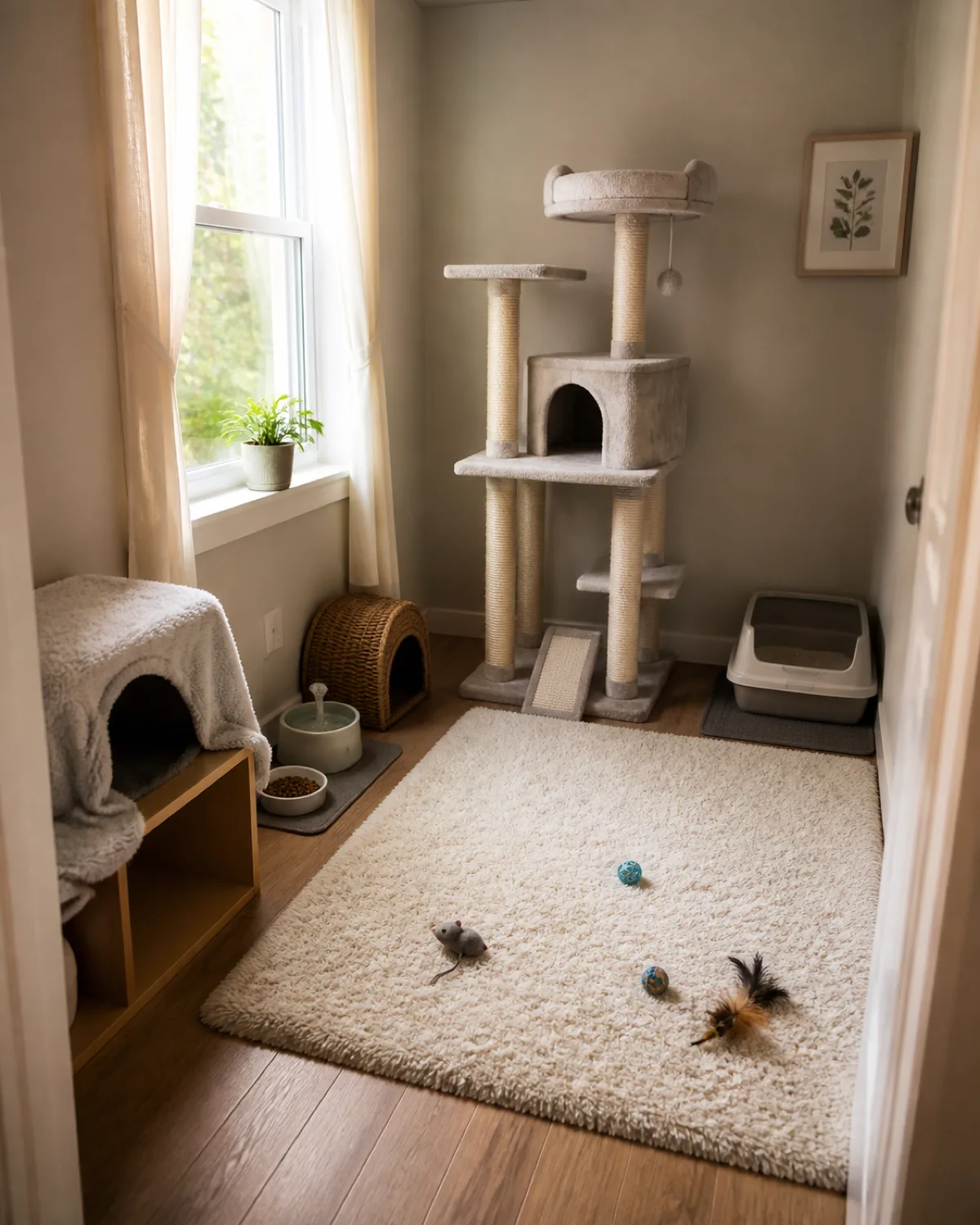
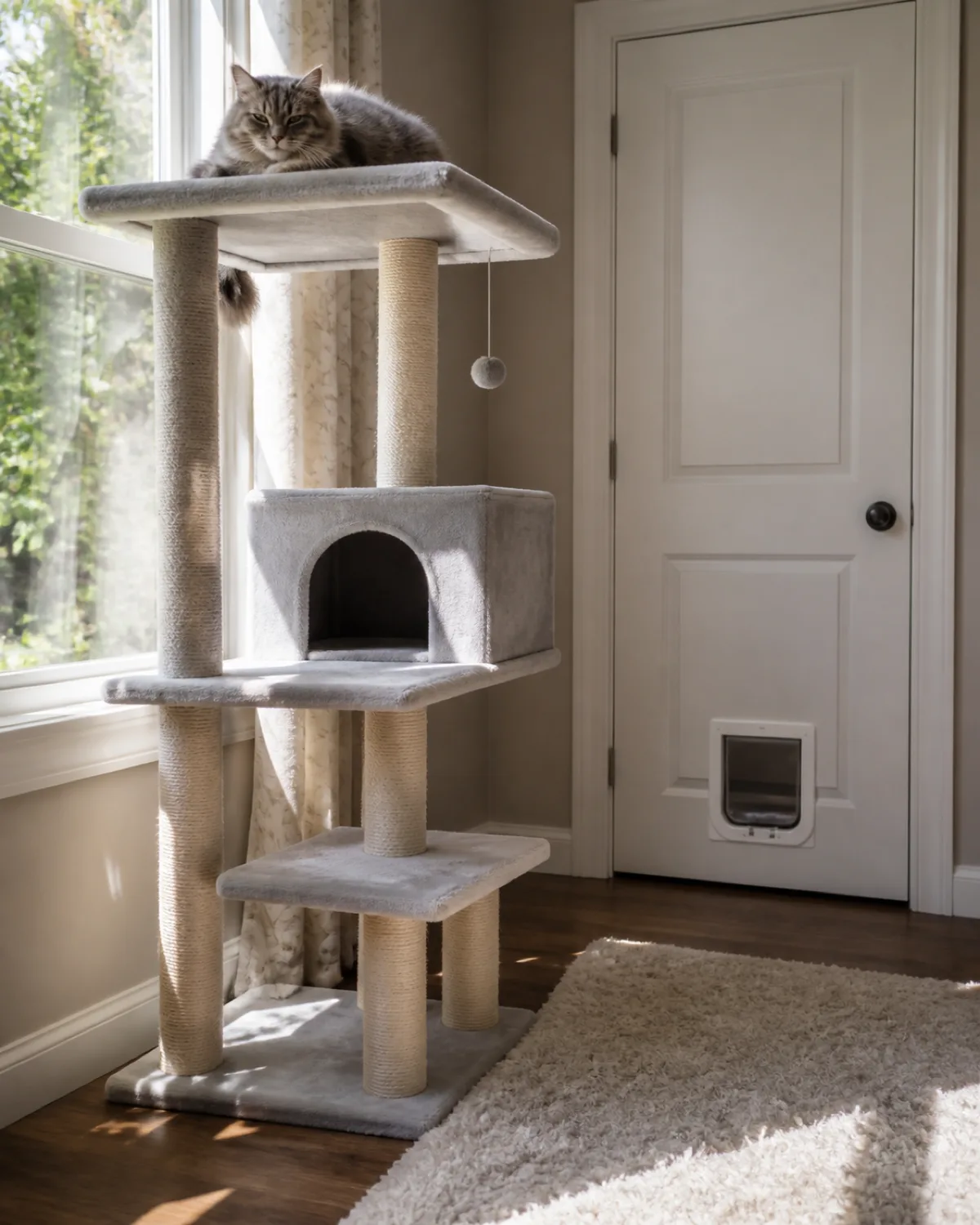
Before the dog sets foot in your home, set up a room that belongs entirely to the cat. This room should have everything the cat needs: a litter box, food and water bowls, a cat tree or high shelf for climbing, and a cozy hiding spot like a covered bed or a cardboard box turned on its side.
The door stays closed. The point is not to lock the cat away — it is to give the cat a territory that smells like home and has zero dog presence. Cats are territorial, and losing control of their entire space at once is deeply stressful.
This room becomes the cat's anchor for the entire introduction process, and it should stay available even after the animals are sharing common areas.
Let Them Swap Scents Before They Meet Face to Face
Dogs and cats both rely heavily on scent to evaluate new animals. Before they see each other, let them smell each other. Take a soft cloth and rub it gently along your cat's cheeks and chin, where scent glands are concentrated. Place that towel near your dog's bed.
Do the same in reverse — rub a towel on your dog and leave it in the cat's safe room near the food bowl. Watch how each animal reacts. Calm sniffing and then walking away is a good sign. Hissing, growling, or fixating on the towel means you need more time at this stage before moving forward.
Feed Meals on Opposite Sides of a Closed Door
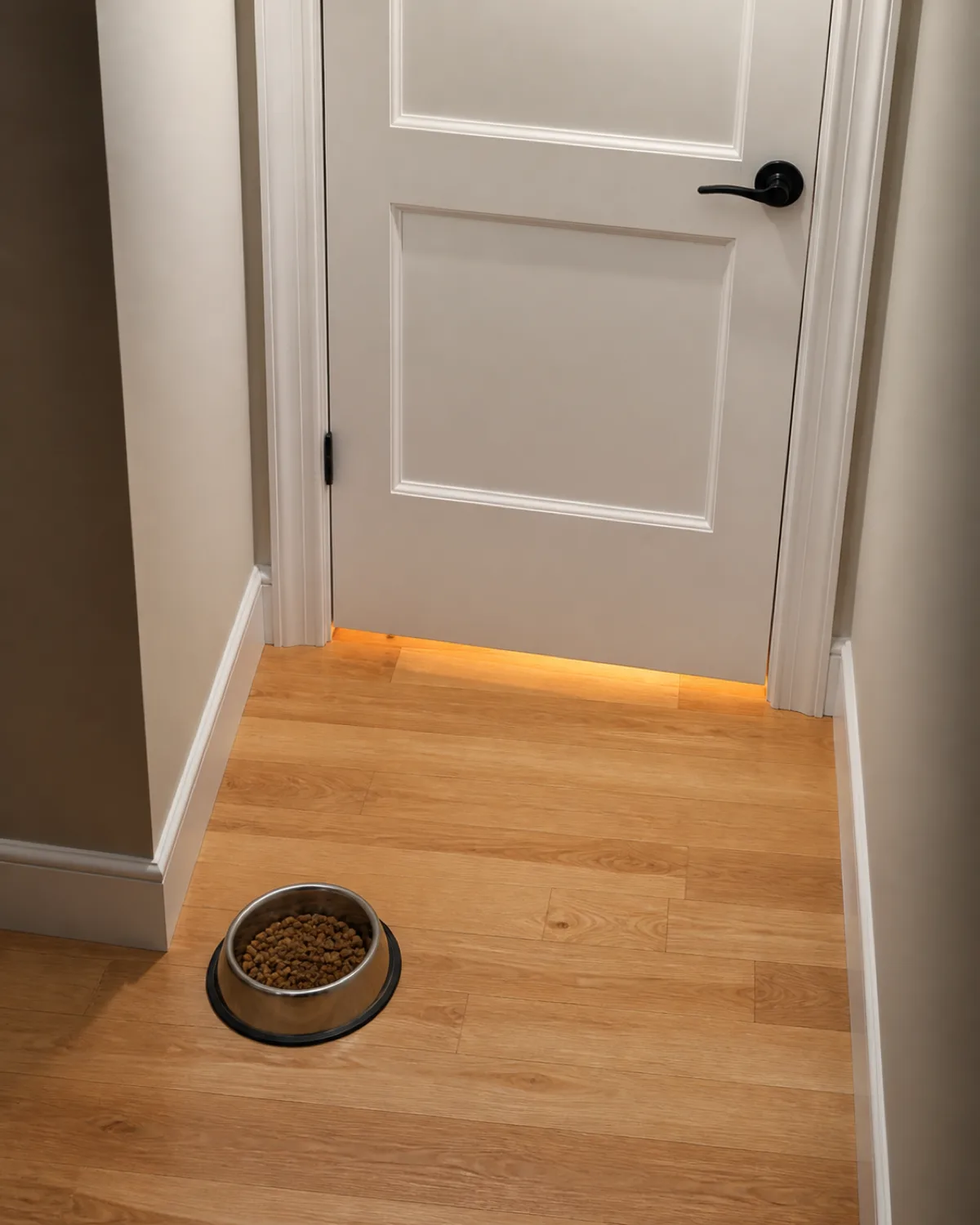
Once both animals are relaxed around each other's scent on a towel, move to feeding on opposite sides of a closed door. Place the dog's bowl on one side and the cat's bowl on the other, close enough that both can hear and smell each other eating, but far enough from the door that neither feels cornered.
The goal is to create a positive association — the other animal's presence means food arrives. Start with the bowls several feet from the door and gradually move them closer over a few days. If either animal refuses to eat or shows stress signals, move the bowls farther apart and slow down.
Reading the signals
Two reactions at the door
Both eat calmlyRelaxed body, finishes the meal, walks away from the door without fixating. Ready to move closer or try the next stage.
One refuses food or fixatesStaring at the door, growling, hissing, or ignoring the bowl entirely. Move bowls farther from the door and stay at this stage longer.
Use a Baby Gate for the First Visual Introduction
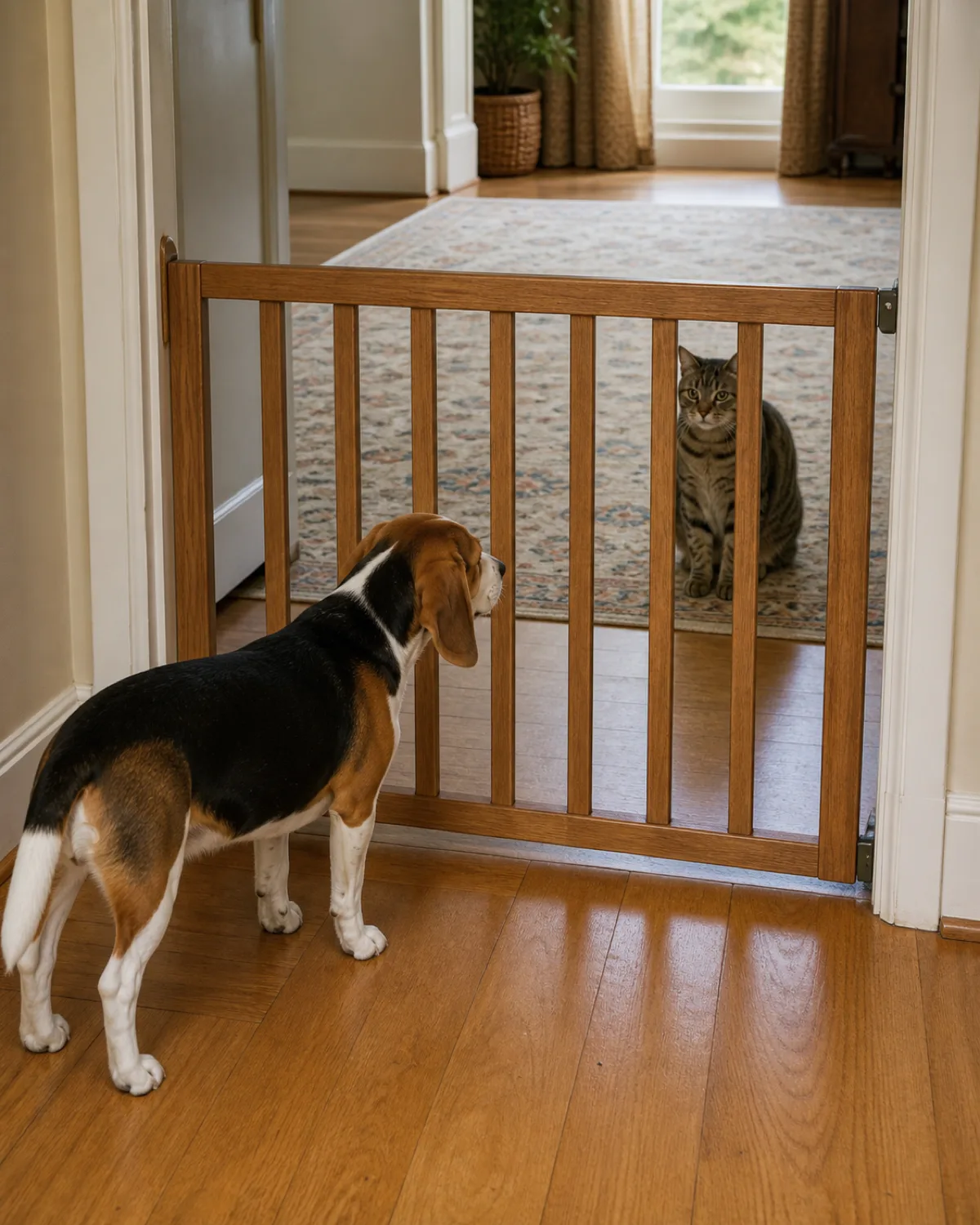
The first time the dog and cat see each other should not be a free-roaming encounter. A sturdy baby gate in a doorway creates a physical barrier that lets both animals look at each other without full access. The cat can jump over it if it needs to leave. The dog stays on its side.
Keep the first session short — three to five minutes. A dog that sits or stands calmly and glances at the cat occasionally is doing well. A dog that lunges, barks, or fixates with a stiff body needs more work at the scent-and-door stage first.
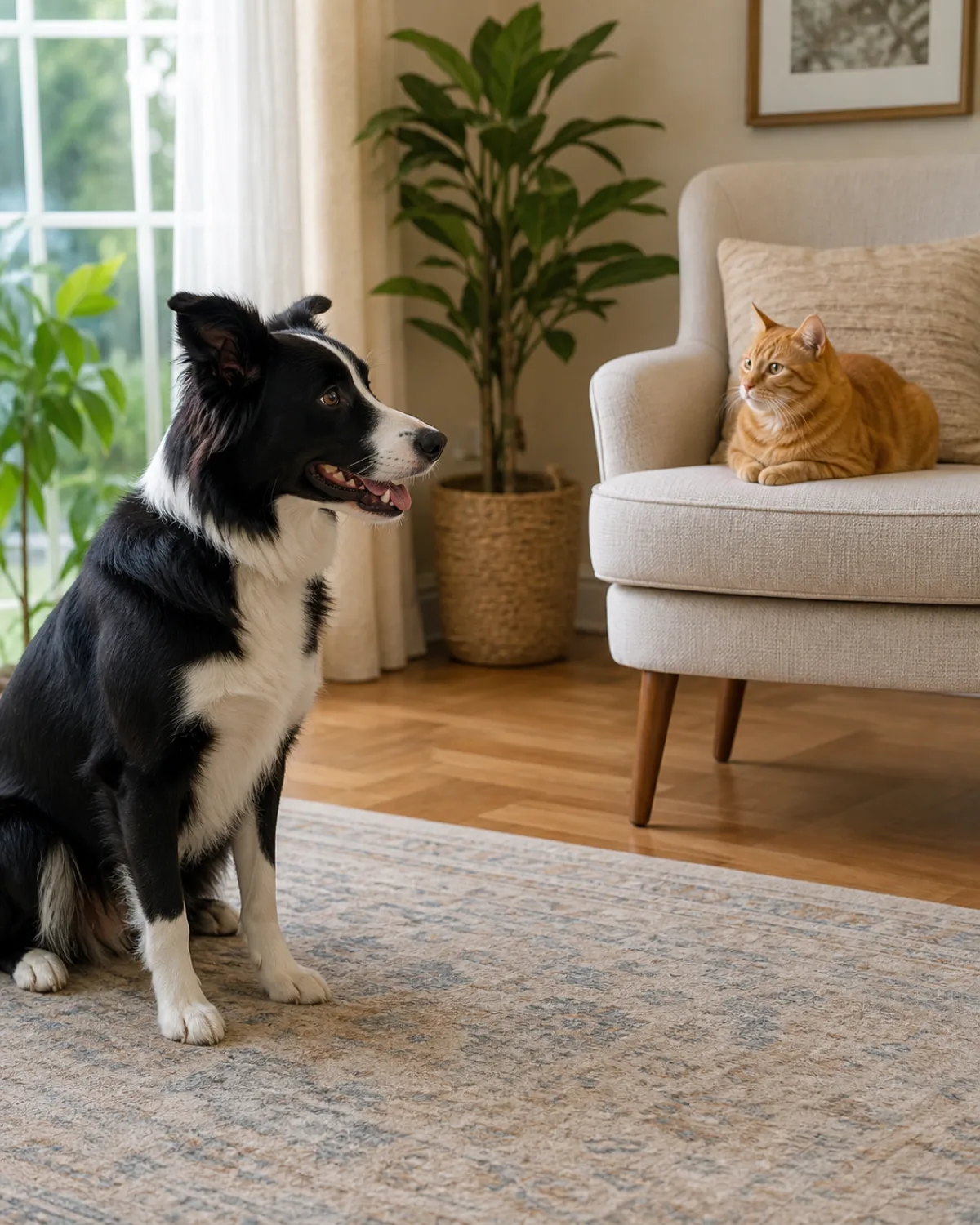
Once gate sessions go smoothly, try a supervised face-to-face meeting in a common room. The dog stays on a short leash the entire time. Sit with the dog and let the cat enter the room on its own terms. Do not carry the cat toward the dog or push them together.
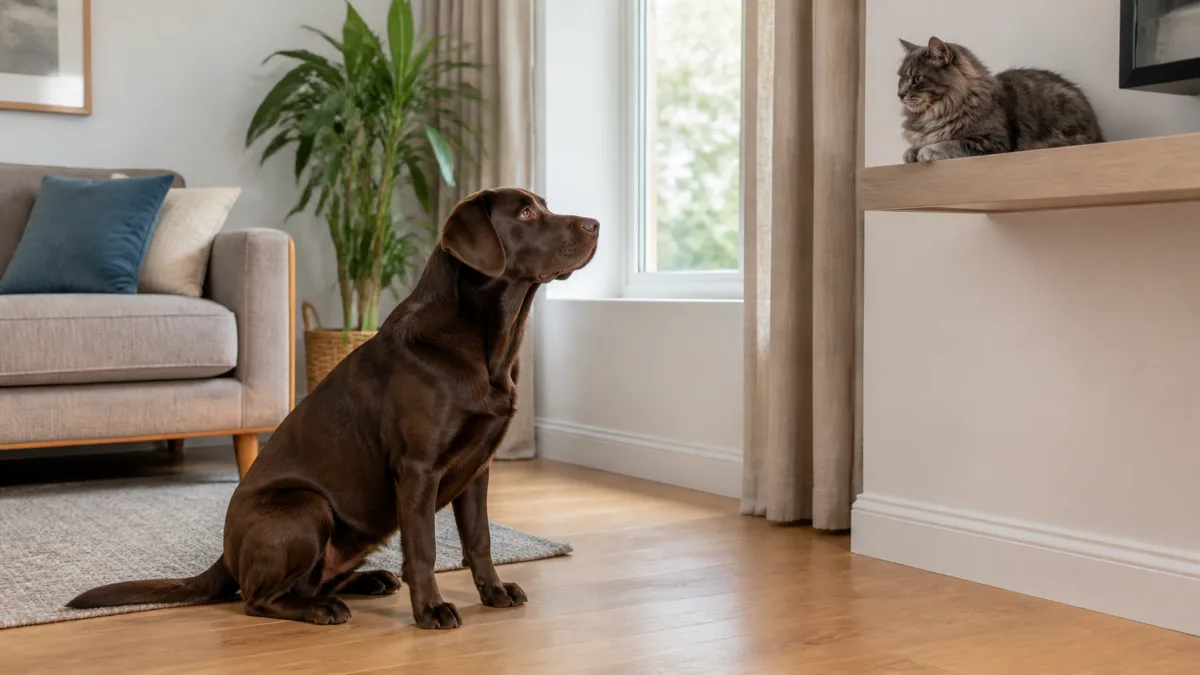
Let the cat approach at its own pace, and if the cat chooses to stay on a high shelf and just watch, that is a perfectly good session. The leash prevents a chase if the dog's excitement spikes. Even a playful chase will set the process back, because the cat will remember being pursued.
Non-negotiable safety rules
Four rules that protect both animals
Leash the dogEvery face-to-face meeting starts with the dog on a short leash. No exceptions until trust is proven over weeks.
Cat decides paceNever carry the cat to the dog. The cat approaches when it is ready, or it does not. Both are fine.
Escape route openThe cat must always have a way out of every room. A blocked cat panics or attacks.
End before stressStop the session while both animals are still calm. Ending on a good note builds trust faster than pushing limits.
Learn the Body Language That Says Slow Down or Stop
Both dogs and cats give clear signals when they are uncomfortable, but you have to know what to look for. In the dog, watch for a stiff body, hard stare, forward-leaning posture, raised hackles, a closed mouth with tension in the jaw, or a tail held high and rigid.
In the cat, watch for ears flattened sideways or backward, a puffed-up tail, rapid tail flicking, dilated pupils, or hissing. Any of these means the animal feels threatened and needs space immediately.
The moment either animal shows these signs, calmly separate them without yelling or sudden movements. Yelling adds stress and makes future introductions harder for both of them.
Make Sure the Cat Always Has an Escape Route
At every stage of the introduction — and permanently once the animals share the house — the cat must have a way to leave any room the dog is in. A cat that feels trapped will either freeze in fear or lash out, and neither outcome builds a relationship.
Install a cat door in the door of the cat's safe room. Add tall cat trees or wall-mounted shelves that give the cat vertical escape routes the dog cannot follow. Even a cleared-off bookshelf or the top of a sturdy dresser works.
The rule is straightforward: the cat decides when it wants to be near the dog, and the cat decides when it wants to leave. Never block that choice.
Use the Crate As a Calm-Down Zone, Not a Punishment
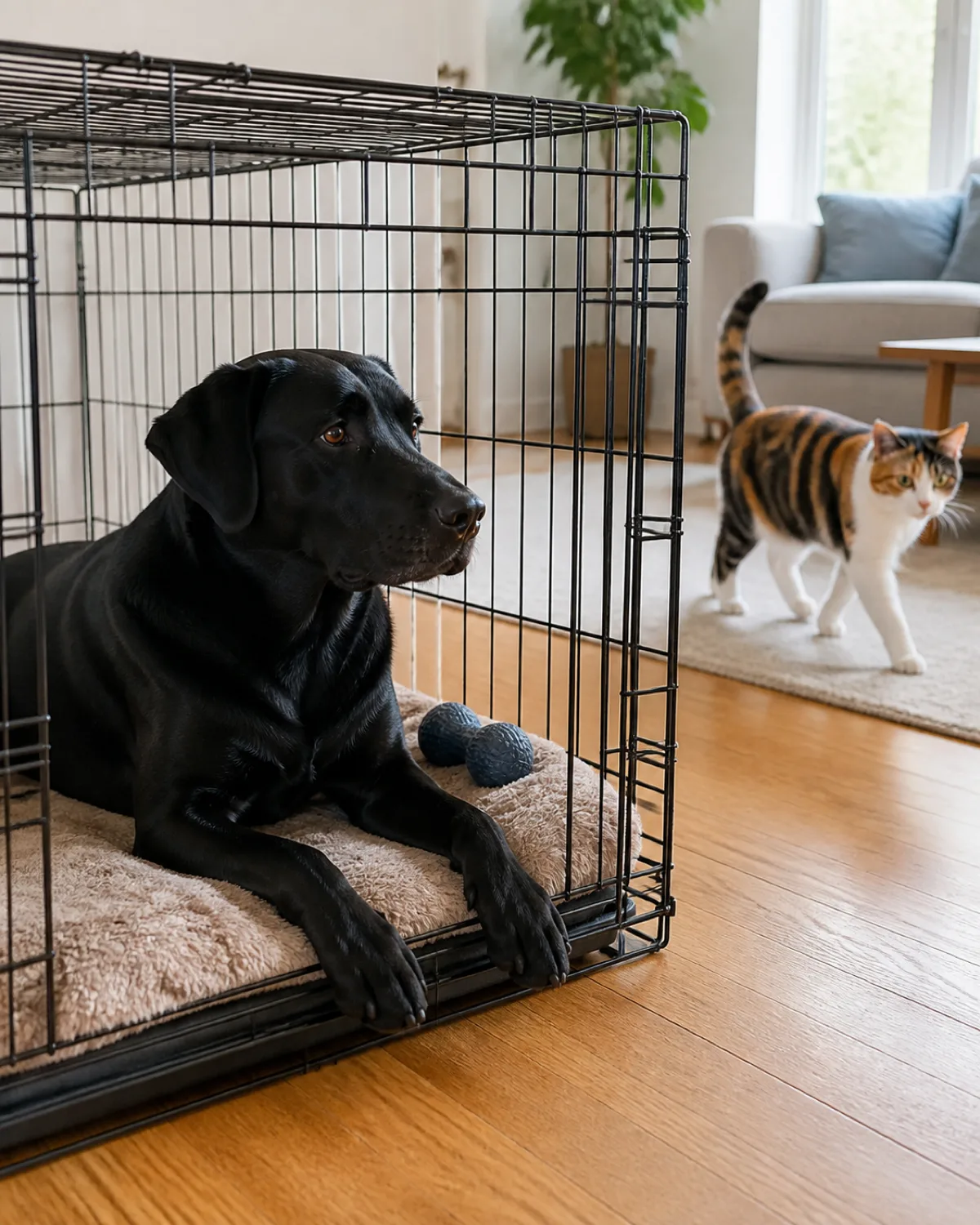
If your dog is already crate trained, the crate becomes one of your most useful tools during the introduction. When the dog is in the crate with the door closed, the cat can explore the shared space freely and get used to the dog's presence without any risk of being chased.
The dog can watch the cat walk around and learns that calm observation gets rewarded. Toss a treat into the crate when the dog watches the cat without whining or lunging at the door.
The crate should always be a positive place — never put the dog in the crate as a reaction to a bad moment with the cat, because the dog will associate the crate with the cat and resent both.
Reward Calm Behavior From Both Animals
Every time the dog and cat are in the same space and both are relaxed, mark that moment. Give the dog a small, soft training treat for lying down calmly while the cat is visible. Give the cat a treat or a slow chin scratch for staying in the room without hiding.
Over time, both animals learn that the other one's presence predicts good things. Be consistent — do not only reward during formal sessions. If you walk into the living room and find the dog napping on its bed while the cat sits on the windowsill, quietly give both a treat.
These spontaneous calm moments are the foundation of a peaceful household, and reinforcing them speeds up the process more than any structured session alone.
Save this for later
10 Steps to Introduce a Dog to a Cat
1
Safe room firstSet up a private room with everything the cat needs before the dog arrives
2
Swap scentsExchange towels rubbed on each animal so they smell each other before meeting
3
Door feedingFeed meals on opposite sides of a closed door to build a positive association
4
Baby gate lookUse a gate for the first visual contact — cat can jump over if it wants out
5
Leash meetingsDog stays on a short leash every time they share an open room
6
Body languageStiff dog or flat-eared cat means stop the session right now
7
Escape routeThe cat must always have a way out — cat tree, cat door, high shelf
8
Crate calm zoneDog in the crate lets the cat explore freely without risk of a chase
9
Reward bothTreat both animals every time they share space calmly
10
Their timelineSome pairs take a week, some take two months — both timelines are normal
pawliqa.com
Accept That the Timeline Is Theirs, Not Yours
Some dogs and cats are sharing a sofa within a week. Others need two months of daily gate sessions before the cat will voluntarily walk into the same room. Both timelines are normal.
The biggest mistake owners make is setting a deadline — expecting the animals to be friends by a certain date and then forcing proximity when progress stalls. Forced proximity does not build trust. It builds anxiety, and anxious animals make unpredictable decisions.
If you have been at the gate stage for three weeks and neither animal is showing stress, that is not a failure — that is two animals who are comfortable with the current arrangement. Let them tell you when they are ready for the next step.
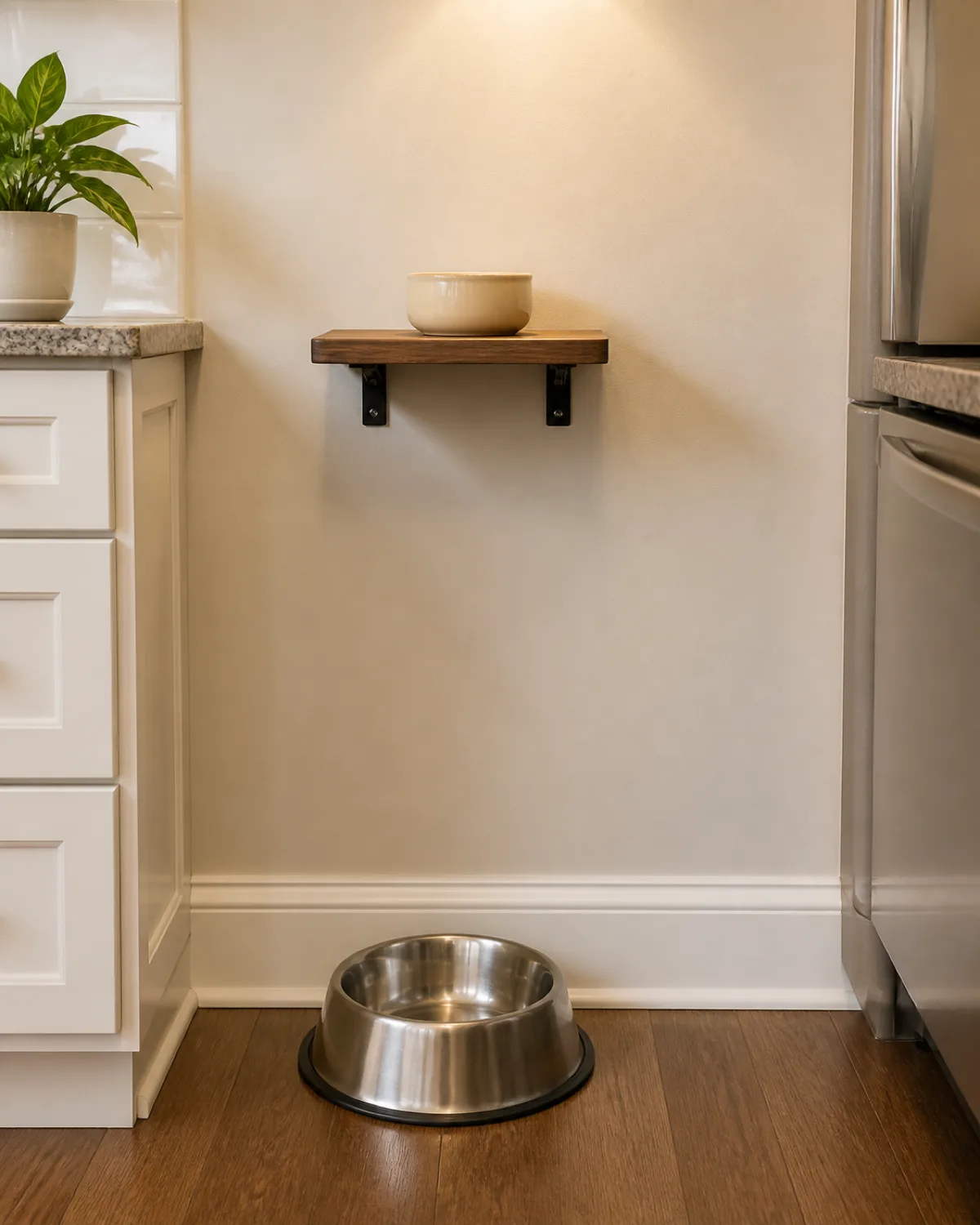
Keep resources separate even after the animals are coexisting. The dog eats on the floor, the cat eats on an elevated shelf or counter the dog cannot reach. Litter boxes stay in rooms the dog cannot access.
Steady, small progress is always better than one dramatic setback. The best multi-pet households are not the ones where the animals became instant friends. They are the ones where the owners went slowly, read the signals, and never once forced an interaction that neither animal was ready for.
About the author
Jess Calloway
Jess Calloway edits Pawliqa, where she shares dog care, grooming, training, and new-owner tips — plus DIY and pet-friendly home ideas — for anyone who wants a happy, well-cared-for dog. As a dog mom to three very different dogs, she writes the honest, tested version of what actually works. Every guide is image-led and reviewed for clarity, usefulness, image accuracy, and Pinterest-to-page alignment before it goes live. Visit the About page.
Frequently Asked Questions
How long does it take for a dog to get used to a cat?
It varies widely. Some dogs and cats reach a comfortable coexistence within a week or two. Others need six to eight weeks of structured introductions. Puppies and kittens raised together tend to adapt faster, while adult animals with no prior cross-species experience may take longer. Let their behavior guide the pace rather than a calendar.
What if my dog has a high prey drive?
A strong prey drive does not mean the introduction will fail, but it does mean every step needs to be slower and more controlled. Keep the dog on leash for all meetings and reward every moment of calm behavior heavily.
Never leave the two unsupervised until you have seen weeks of consistent calm interactions. If the dog fixates, trembles, or lunges despite gradual work, consult a certified animal behaviorist.
Should I let my cat swat the dog?
A single warning swat from a cat is a natural boundary-setting behavior, and most dogs learn from it quickly. However, repeated swatting sessions or a cat that is constantly on the defensive means the introduction is moving too fast. Go back to the gate or door stage and give both animals more time to adjust before trying open-room sessions again.
Can I leave them alone together?
Not until you have observed consistent, relaxed coexistence during supervised sessions for at least two to three weeks straight with zero incidents. Even then, start with short unsupervised periods while you are nearby, and make sure the cat always has an accessible escape route. Full unsupervised access should be the last stage, not an early milestone.
What if the cat is the aggressor?
Cats can be the ones escalating, especially if they feel their territory has been invaded. Go back to the safe room and scent swap stages. Give the cat more vertical space, more hiding options, and more time to feel secure.
Feliway diffusers in the cat's safe room can help reduce territorial stress. If aggression persists, consult your vet to rule out pain or illness, then work with a behaviorist.
Twelve tips for bringing home a rescue dog covering setting up a safe room before pickup day, stocking essentials before arrival, keeping the first day quiet and boring, letting the dog explore one room at a time, using a crate as a decompression den, establishing a feeding routine from day one, starting house training from scratch regardless of age, expecting and allowing the shutdown period, following the three-three-three decompression timeline, introducing existing pets on neutral ground, building trust through boring predictability, and knowing rescue-specific behaviors that need professional help.
Fourteen rules for building a puppy feeding schedule from eight weeks to twelve months, covering meal frequency, portion sizing, food transitions, treat budgets, and warning signs that something needs adjusting.