I brought my youngest dog home at eight weeks old. The first time I picked up a brush near her, she grabbed it with her mouth and ran under the couch.
That was not a grooming failure. That was the starting line.
This guide covers every piece of puppy grooming from brushing to nails to teeth, with one rule: short sessions, high rewards, stop before they want you to stop.
Jump to a section
How to groom a puppy for the first time
From the first gentle touch to a full grooming routine, covering brushing, bathing, nails, ears, teeth, and desensitization.
Why the First Grooming Session Matters More Than the Haircut
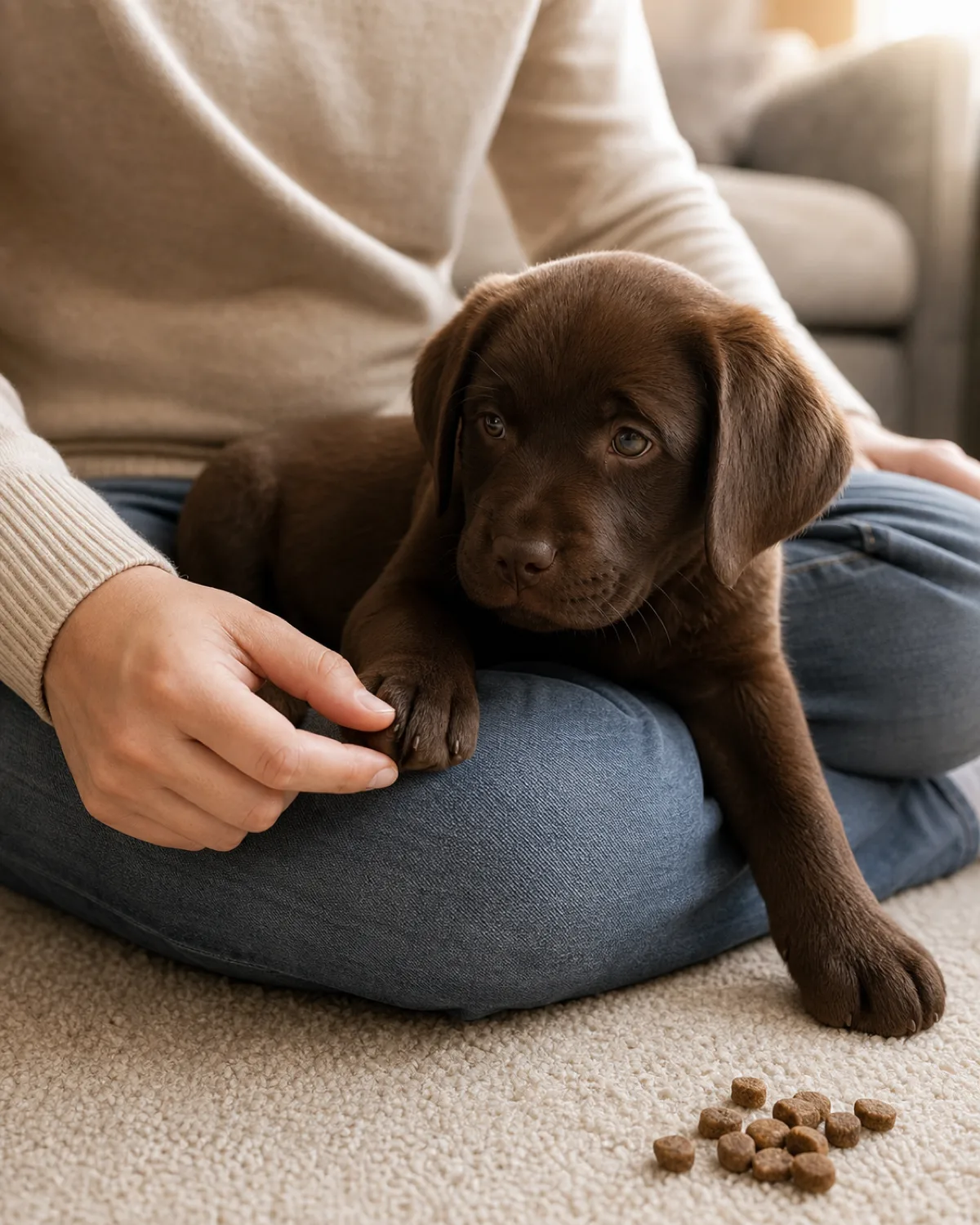
The first time you groom a puppy, you are not trying to get clean ears or trimmed nails. You are building a file in your puppy's brain labeled "being handled by a human." What goes into that file during the 8-to-16-week socialization window sticks.
If the file says "grooming equals treats and calm hands," every grooming session for the next decade starts from a good place. If the file says "grooming equals being held down while something scary happens," you are looking at years of wrestling matches.
Dogs who hate grooming as adults were almost always puppies who had a bad first experience, or no early experience at all. That is exactly the situation covered in the 14-day plan for dogs that hate being brushed — a repair job that takes weeks instead of the few days it would have taken to get it right the first time.
Your goal today is not a groomed puppy. Your goal is a puppy who thinks "that was worth doing again."
When to Start (Hint: Earlier Than You Think)
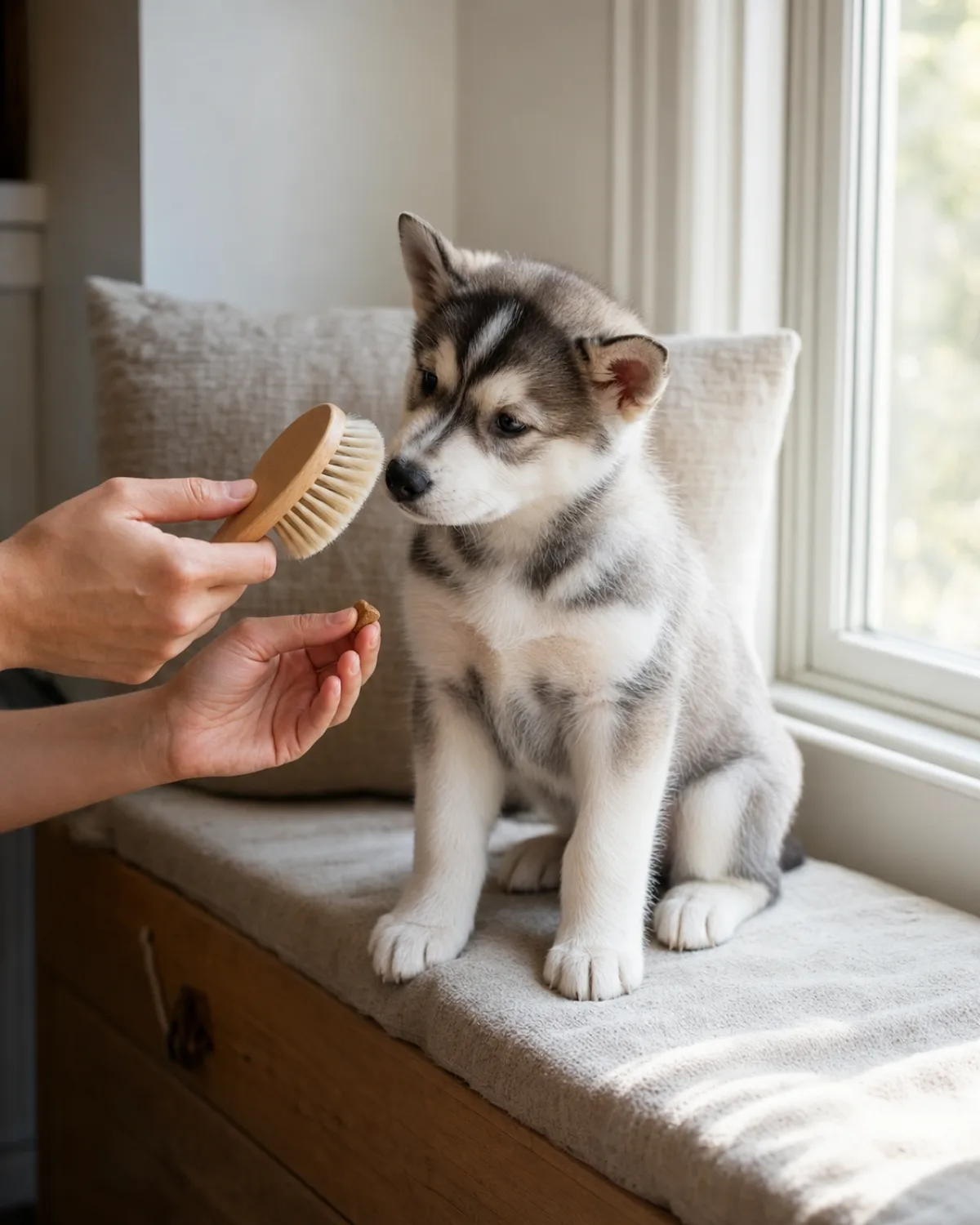
Most people wait until their puppy is visibly dirty or smelly before picking up a brush. By then the socialization window is already closing.
The ideal start is the first week home — not a full bath, not a nail trim, just thirty seconds of touching paws, flipping ears open to look inside, running a finger along the gum line. Zero-pressure contact that builds the idea that your hands go everywhere and nothing bad follows.
By eight weeks old you can introduce a soft brush. By ten weeks a damp cloth rubdown. By twelve weeks, if the vaccination schedule allows, the first real bath. Every day you wait past eight weeks is a day of socialization window you cannot get back.
The Starter Kit (Skip Everything Else for Now)
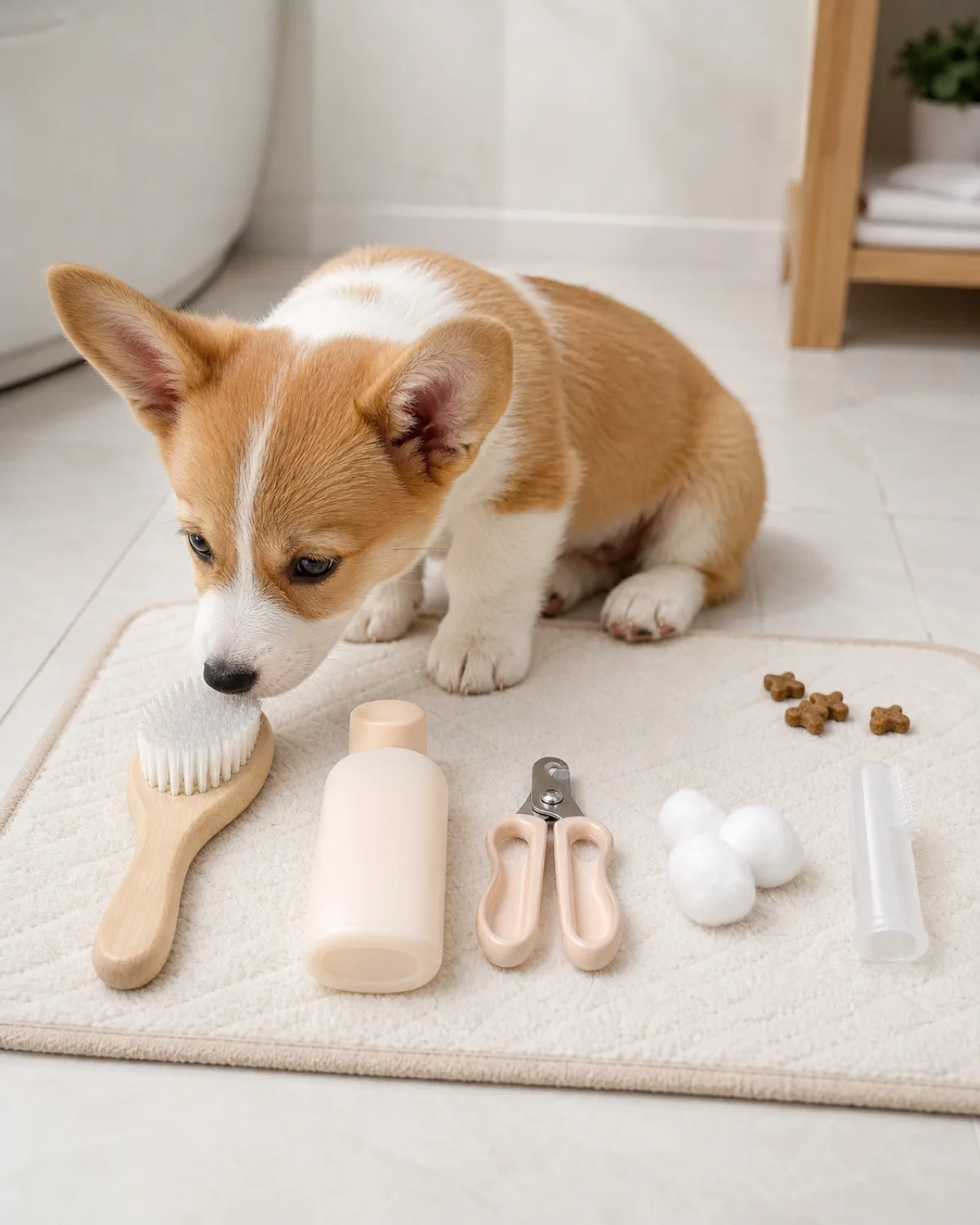
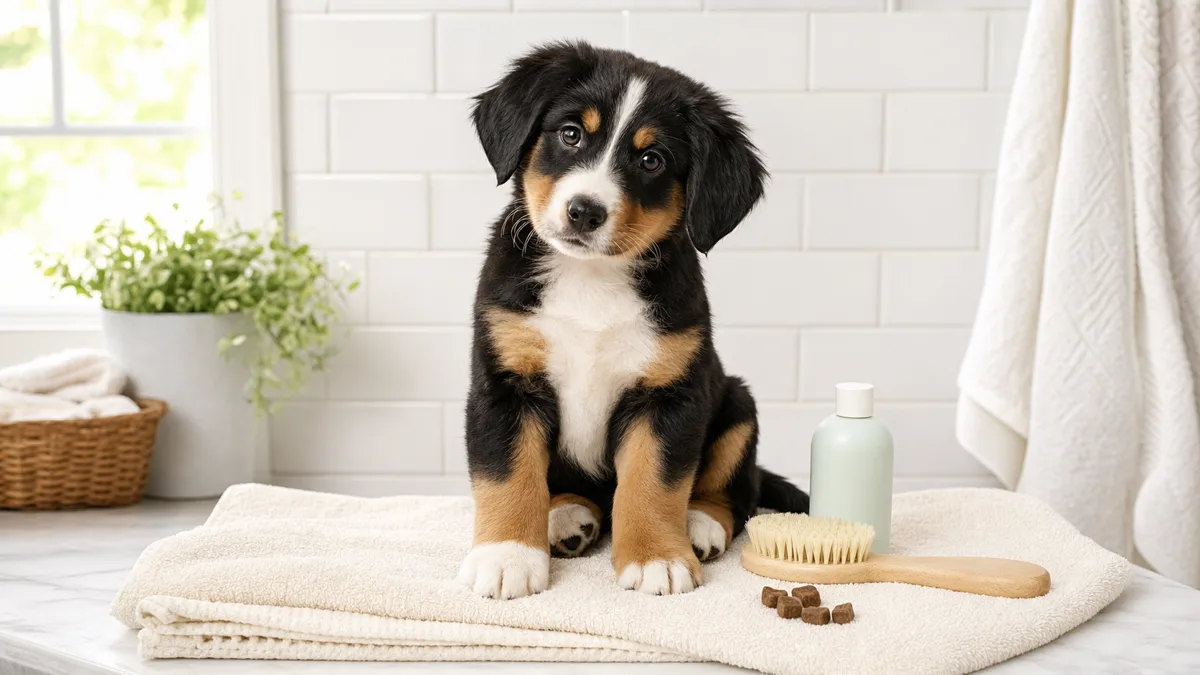
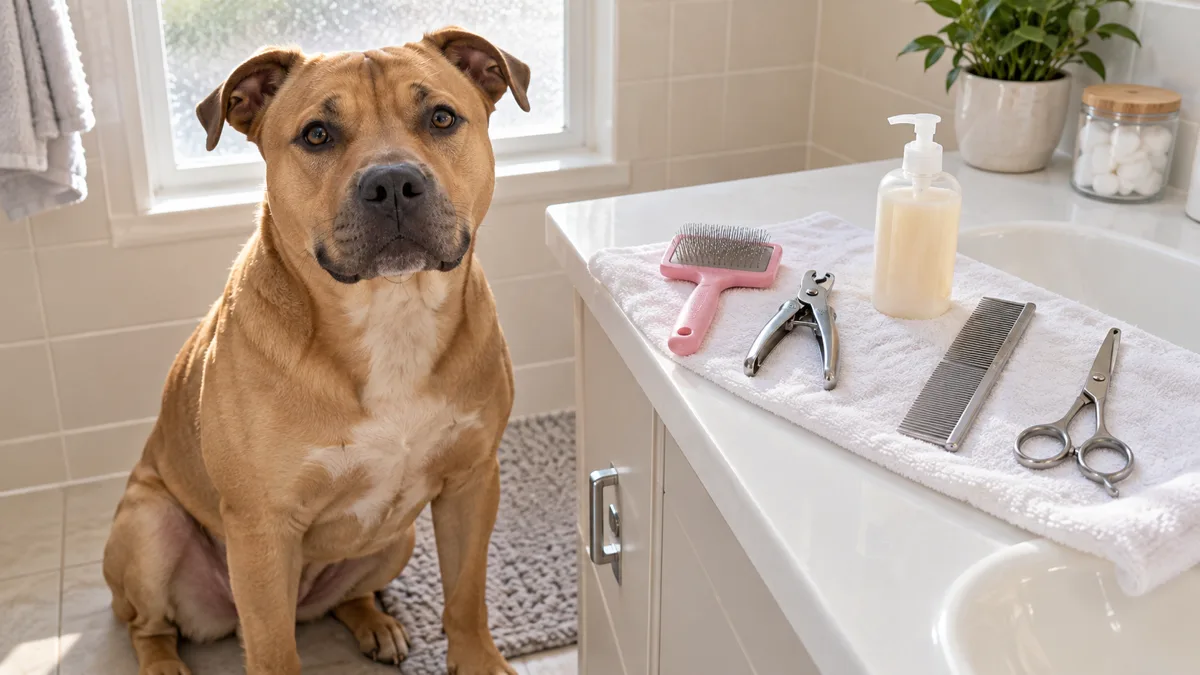
Walk into any pet store and the grooming aisle will try to sell you thirty tools. Your puppy needs five.
A soft-bristle pin brush or a rubber grooming glove — not a stiff slicker brush, which can scratch sensitive puppy skin. A tearless puppy shampoo — adult formulas are too harsh.
A pair of small rounded-tip nail clippers — not the guillotine style, which is harder to control on tiny nails. A few cotton balls — never cotton swabs, which can push debris deeper. A finger toothbrush or a square of gauze.
That is the complete kit. No clippers, no undercoat rakes, no enzymatic toothpaste yet. Fewer tools means fewer things your puppy needs to get used to, which means you can properly desensitize each one instead of rushing through a rotation of scary objects.
How to Introduce the Brush (Without It Becoming a Chew Toy)
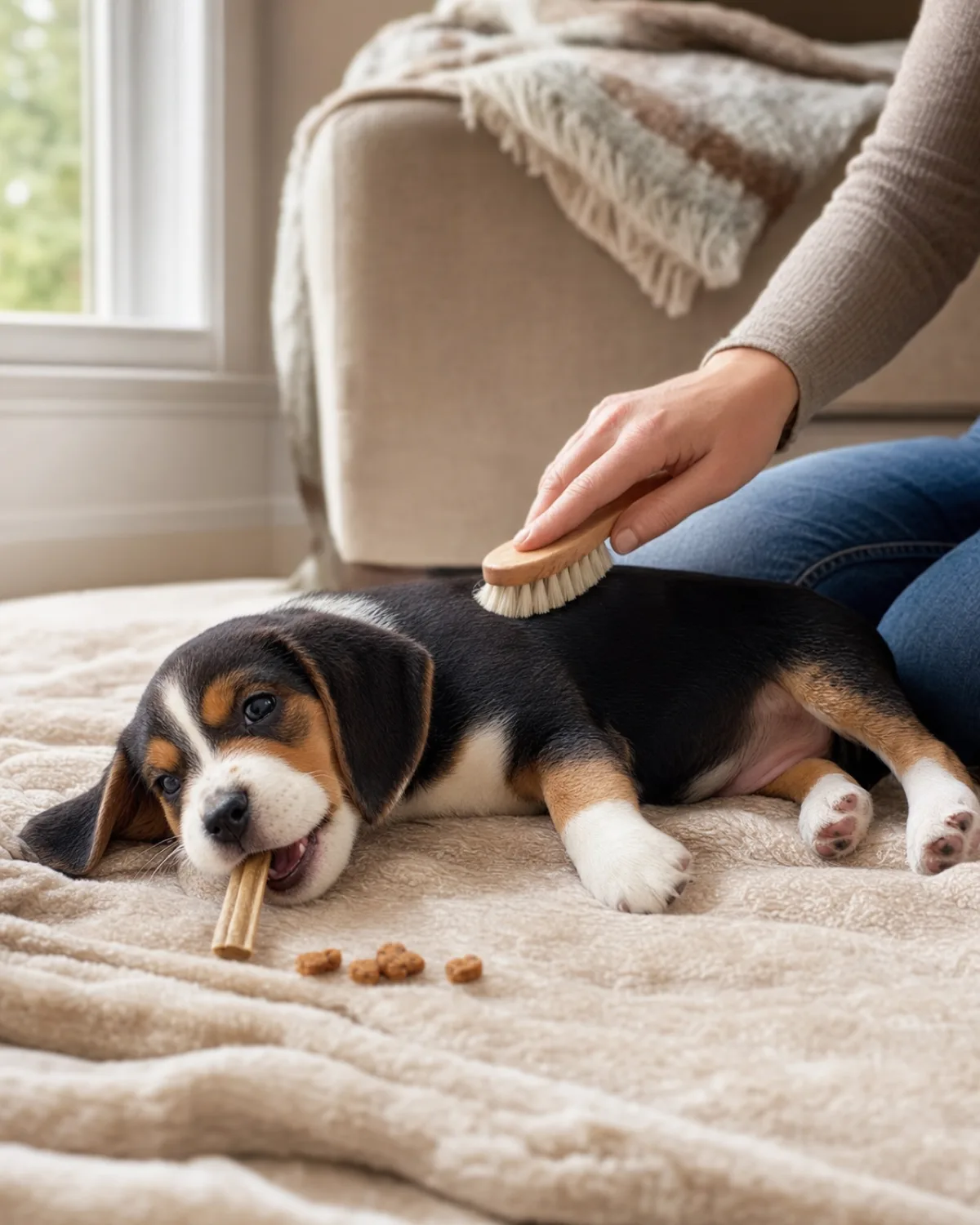
The first time you bring a brush near your puppy, it will try to eat it. This is completely normal and not a sign of aggression or resistance. It is how puppies investigate everything.
Step one: set the brush on the floor and let the puppy sniff it. Treat. Step two: pick up the brush and let it touch the puppy's back for one second. Treat. Step three: two gentle strokes down the back. Treat. Step four: a full stroke from shoulder to hip. Treat.
You might get through four brush strokes on day one. That is a win. Four calm strokes are worth more than forty forced ones. If the puppy keeps grabbing the brush, smear a thin layer of peanut butter on a silicone lick mat and let the puppy work on that while you brush.
Within a week of daily thirty-second sessions, most puppies stop treating the brush as prey and start leaning into it.
The First Real Bath (Keep It Warm, Keep It Short)
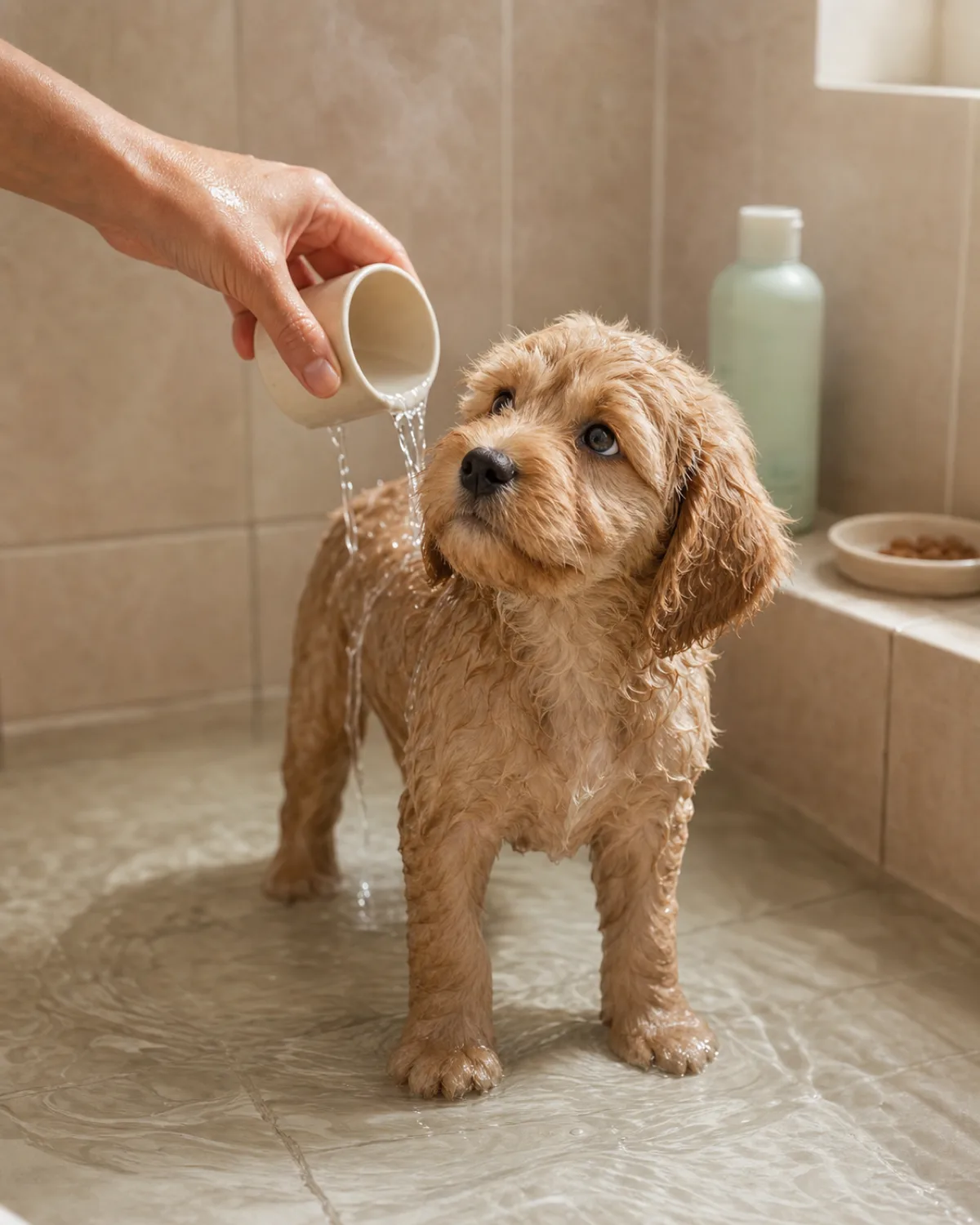
Before twelve weeks, a damp cloth or a waterless puppy foam is enough. When the time comes for a real bath, temperature is the single biggest factor in how it goes.
Cold water is the number one reason puppies learn to hate baths. Run the water warmer than you think it needs to be — slightly above lukewarm, close to what you would use for a baby. Fill the basin to ankle depth only. Lower the puppy in gently and let it stand for a moment before any water touches its back.
Use a cup to pour water over the shoulders and back. Keep water away from the face and ears entirely. A coin-sized amount of tearless puppy shampoo is enough for most breeds. Lather with your hands, not a washcloth. Rinse thoroughly — leftover shampoo irritates skin.
The whole bath should take under five minutes. When it is over, wrap the puppy in a large towel immediately. Skip the blow dryer — the noise and heat are two stressors at once, and a towel-dried puppy in a warm room will dry on its own within an hour.
Pick the situation that matches your puppy right now
Your puppy is resisting grooming — what is happening?
Resistance looks different depending on whether the puppy is uncomfortable with touch itself or with a specific tool. Start with the path that fits.
Path APuppy squirms or cries from the startThe puppy is not yet comfortable with being handled at all. Go back to zero-pressure touch sessions — no tools, just your hands on paws, ears, belly for a few seconds at a time with high-value treats. Focus on ideas 1 and 2 above before introducing any equipment.
Path BPuppy is fine with touch but reacts to a specific toolThe puppy accepts handling but panics when the nail clippers or water appear. Isolate that one tool: let it sit on the floor for a few days so the puppy can sniff it on its own terms, then gradually pair it with treats before using it. Jump to the section covering that specific tool.
Trimming Tiny Nails (Just the Tips)
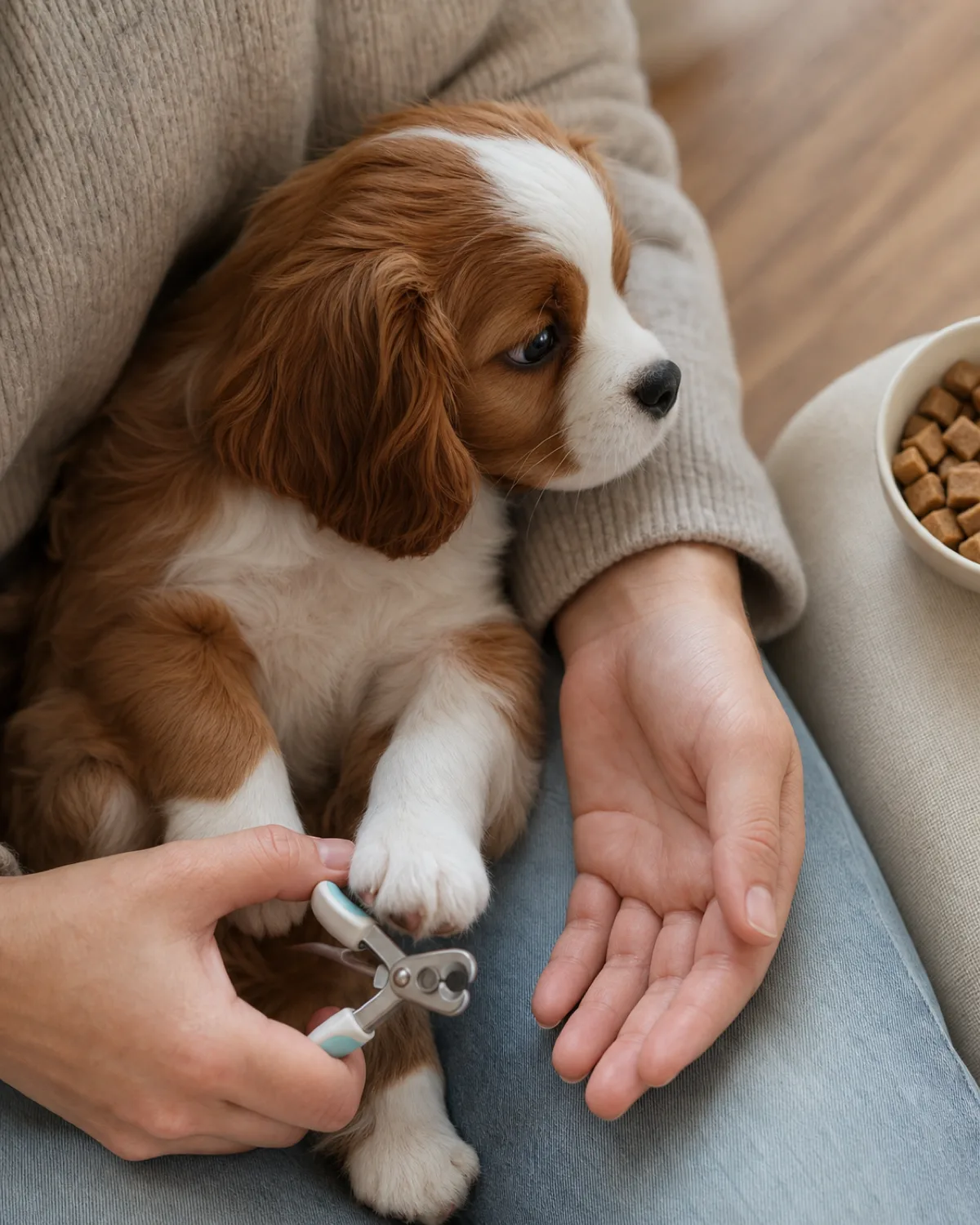
Puppy nails are thin but sharp enough to leave scratches on your arms from normal play. They also grow fast, which means you will trim more often than you do for an adult dog — every seven to ten days.
The only rule that matters: take less than you think you should. Clip the very tip, about one millimeter, no more. The quick — the blood vessel inside the nail — sits closer to the tip in puppies than in adult dogs, which means there is less margin.
Use small rounded-tip clippers and position them so you can see the nail clearly. If the puppy pulls back after one paw, stop. Do the other three paws tomorrow, or the day after.
A puppy who gets one calm paw done per day will have all nails trimmed by Friday with zero drama. A puppy who gets all four paws done in one restraint session learns that nail time means getting pinned down.
Cleaning Those Little Ears
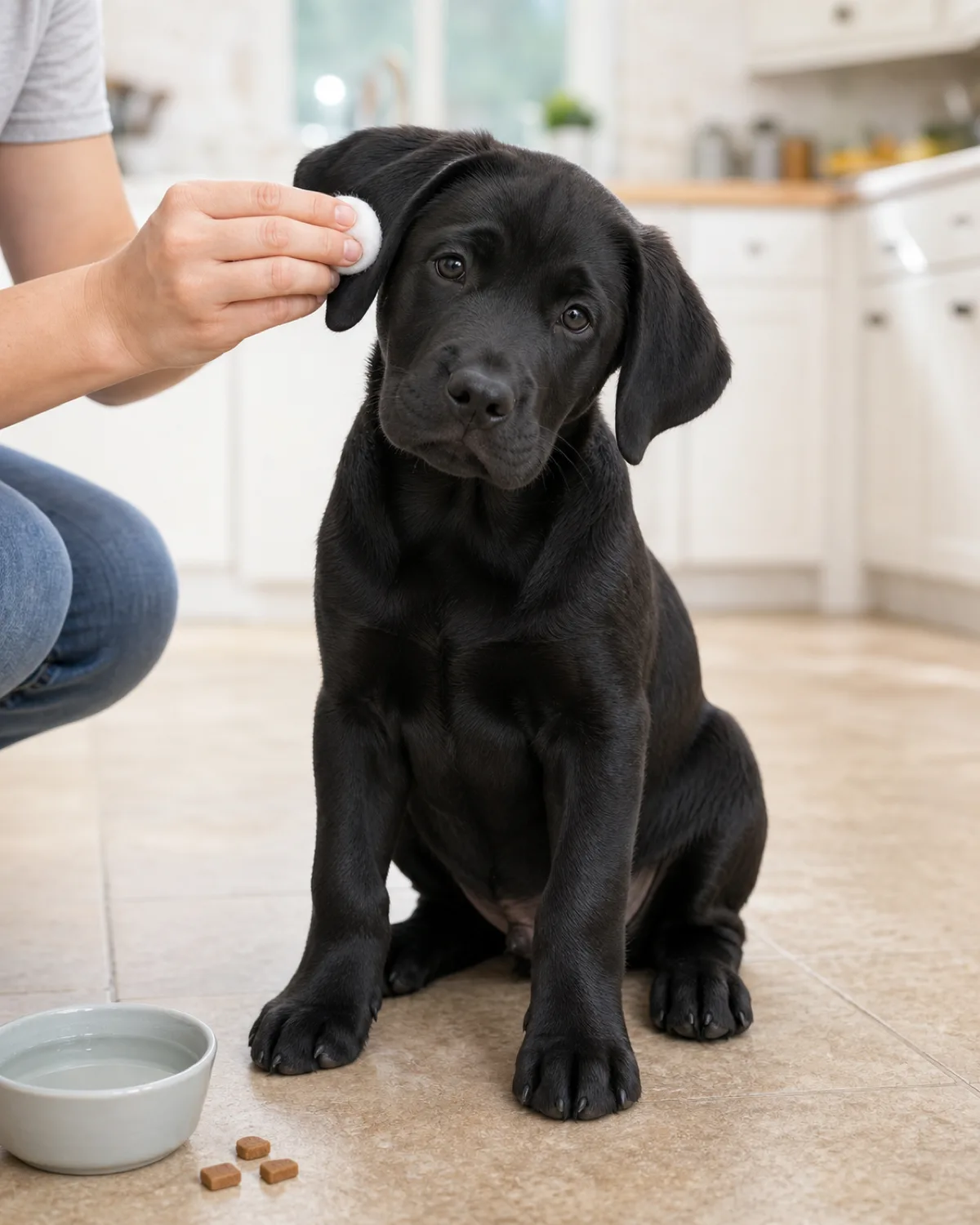
Ear checks are about frequency and restraint. Once a week, flip the ear flap open and look. Healthy ears are pink, dry, and mostly odor-free.
Use a cotton ball dampened with warm water or a vet-approved ear cleaner and gently wipe the visible outer ear. Do not insert anything into the ear canal — not a cotton swab, not a finger, not a rolled-up tissue.
Puppies with long floppy ears that cover the canal need extra attention to airflow. After baths, flip the ears up and let them air out for a few minutes.
If you see redness, swelling, dark or smelly discharge, or the puppy is scratching at one ear obsessively, that is a vet visit, not a home cleaning session.
Starting Tooth Care Before the Adult Teeth Come In
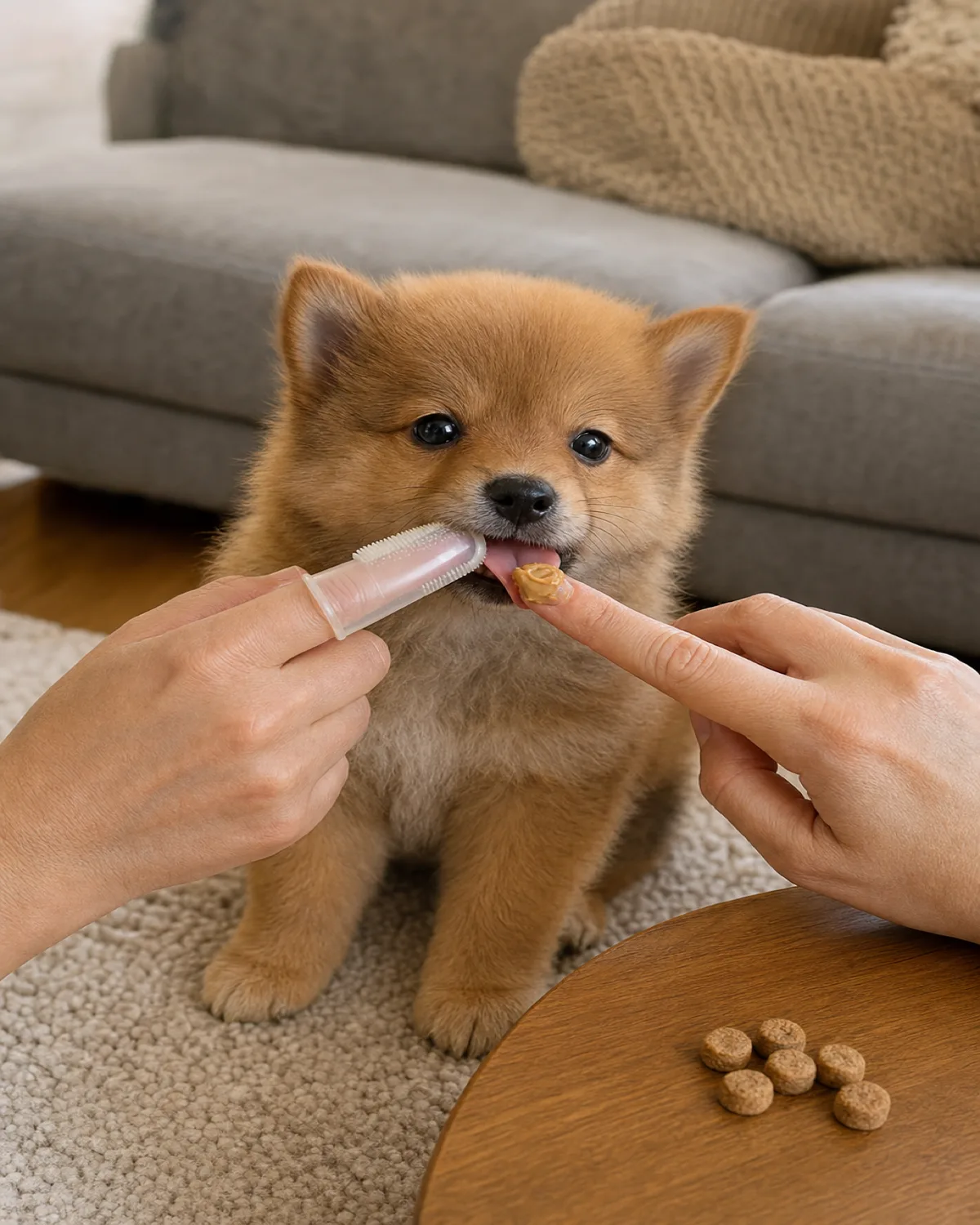
Most people start thinking about dog dental care when tartar is already visible. By then, the challenge is convincing an adult dog to accept a toothbrush in its mouth — a process that can take weeks of gradual introduction.
Puppies give you a head start. Baby teeth do not need serious brushing. What you are building is the habit of hands and tools going into the mouth without a fight.
Start by dipping your finger in something tasty — plain peanut butter or a dab of broth — and running it along the gum line. Once the puppy accepts that, switch to a finger toothbrush with water only. Touch the outer surfaces of the front teeth. Ten seconds is a full session.
When the adult teeth come in around six months, switch to an enzymatic dog toothpaste and a proper soft-bristle brush. By that point, your puppy has months of positive mouth experiences and will not treat the toothbrush as an invader.
The boundaries that keep every grooming session positive
Puppy grooming ground rules
These apply to every grooming task — brushing, bathing, nails, ears, and teeth. Break one and you undo days of trust building.
Always
- End every session with a treat, even if it was only five seconds long
- Stop while the puppy is still calm — never push until it squirms away
- Introduce each tool separately before using it on the puppy
- Keep sessions under two minutes for the first month
- Use a calm, steady voice throughout the entire session
- Do only one grooming task per sitting in the first few weeks
Never
- Never hold down a struggling puppy and keep going
- Never introduce a new tool when the puppy is already stressed
- Never clip nails past the very tip — one millimeter is enough
- Never insert anything into the ear canal
- Never use cold water for a bath
- Never try to do everything in one session
Handling the Sensitive Zones (Paws, Muzzle, Belly, Tail)
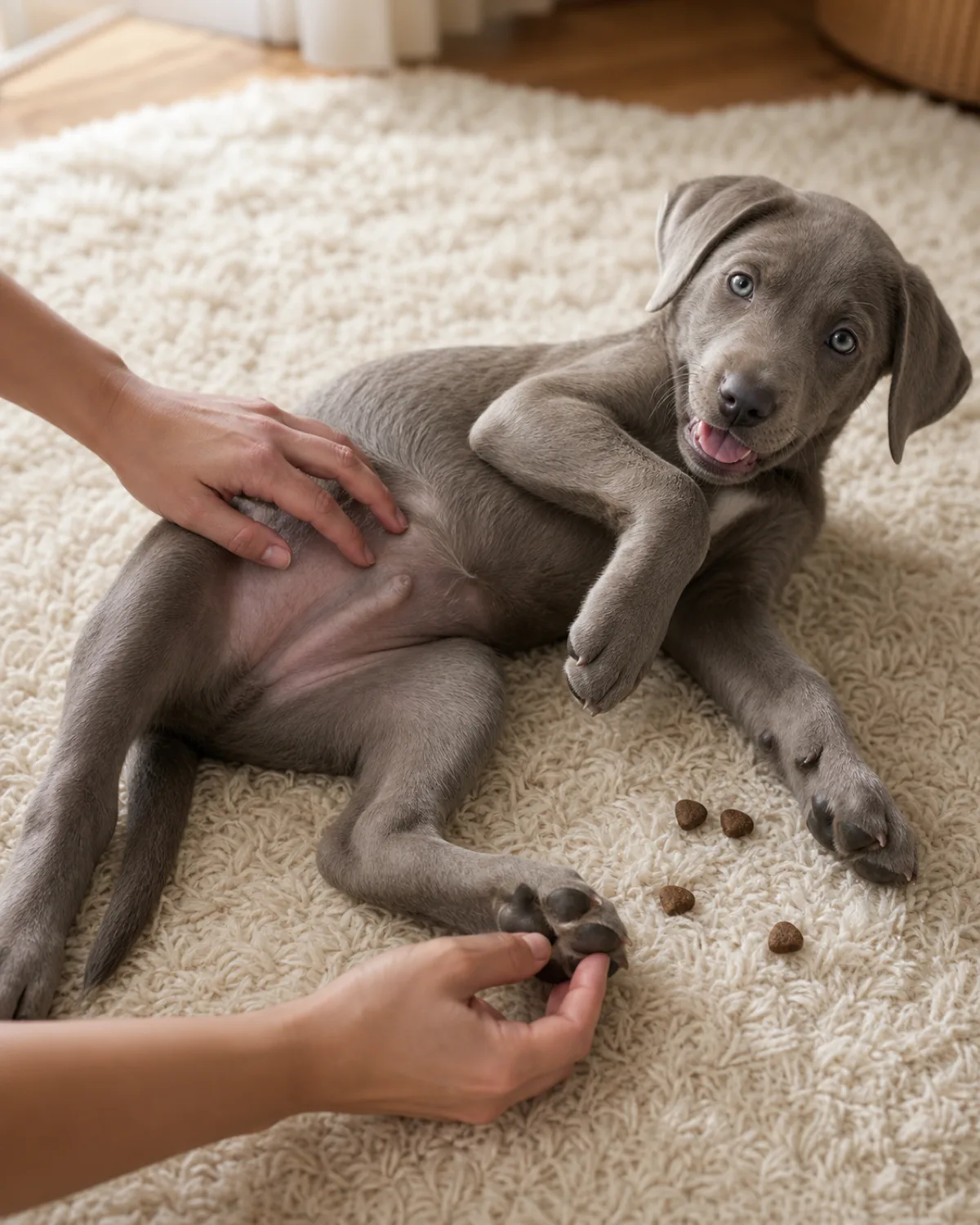
These areas do not belong to any single grooming task, but they control whether any grooming task is possible. A puppy who will not let you touch its paws turns nail trims into a two-person restraint job. A puppy who flinches when you reach for its mouth makes tooth care a nonstarter.
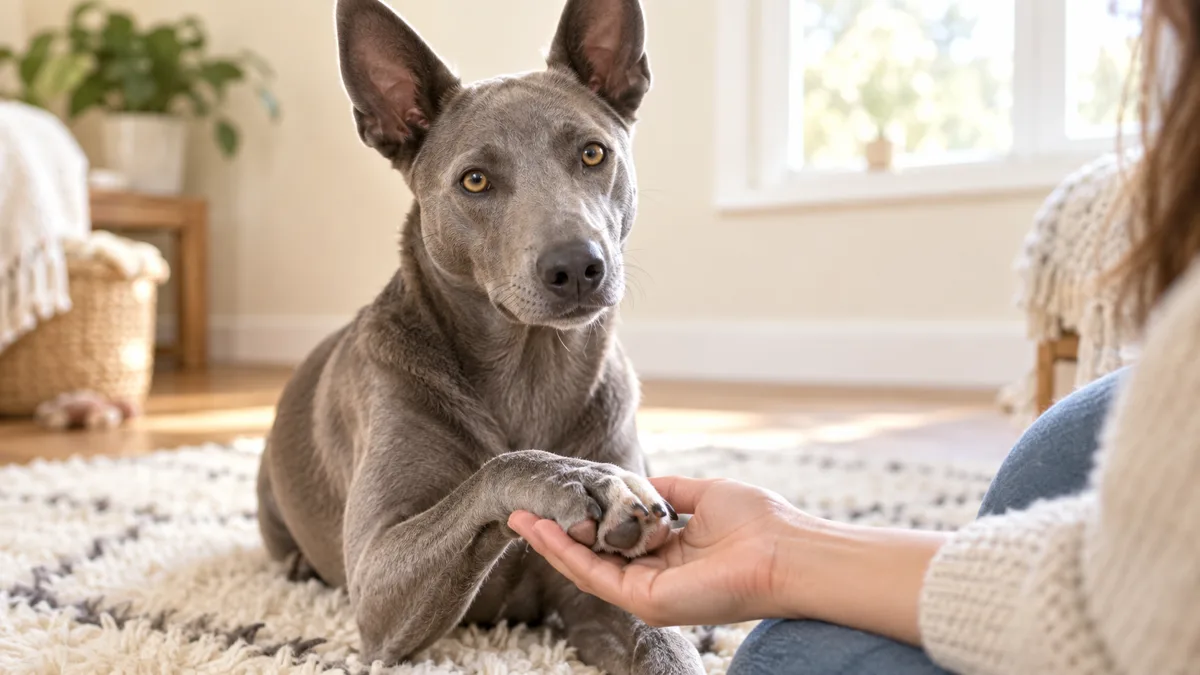
Desensitization follows one pattern regardless of the zone: wait until the puppy is relaxed (after a meal, after a nap, during calm lap time), touch the sensitive area with your fingertips for one second, treat. Repeat daily, gradually increasing duration and pressure.
Paws: hold each paw for two seconds, then three, then five, then gently spread the toes. Muzzle: lift the lip on one side, then the other, then hold the mouth open for a second. Belly: roll the puppy onto its side, touch the belly, treat, release. Tail base: lift the tail gently, touch underneath, release.
Within two to three weeks of daily practice, you should be able to handle every zone without resistance.
A Realistic Grooming Schedule for the First Six Months
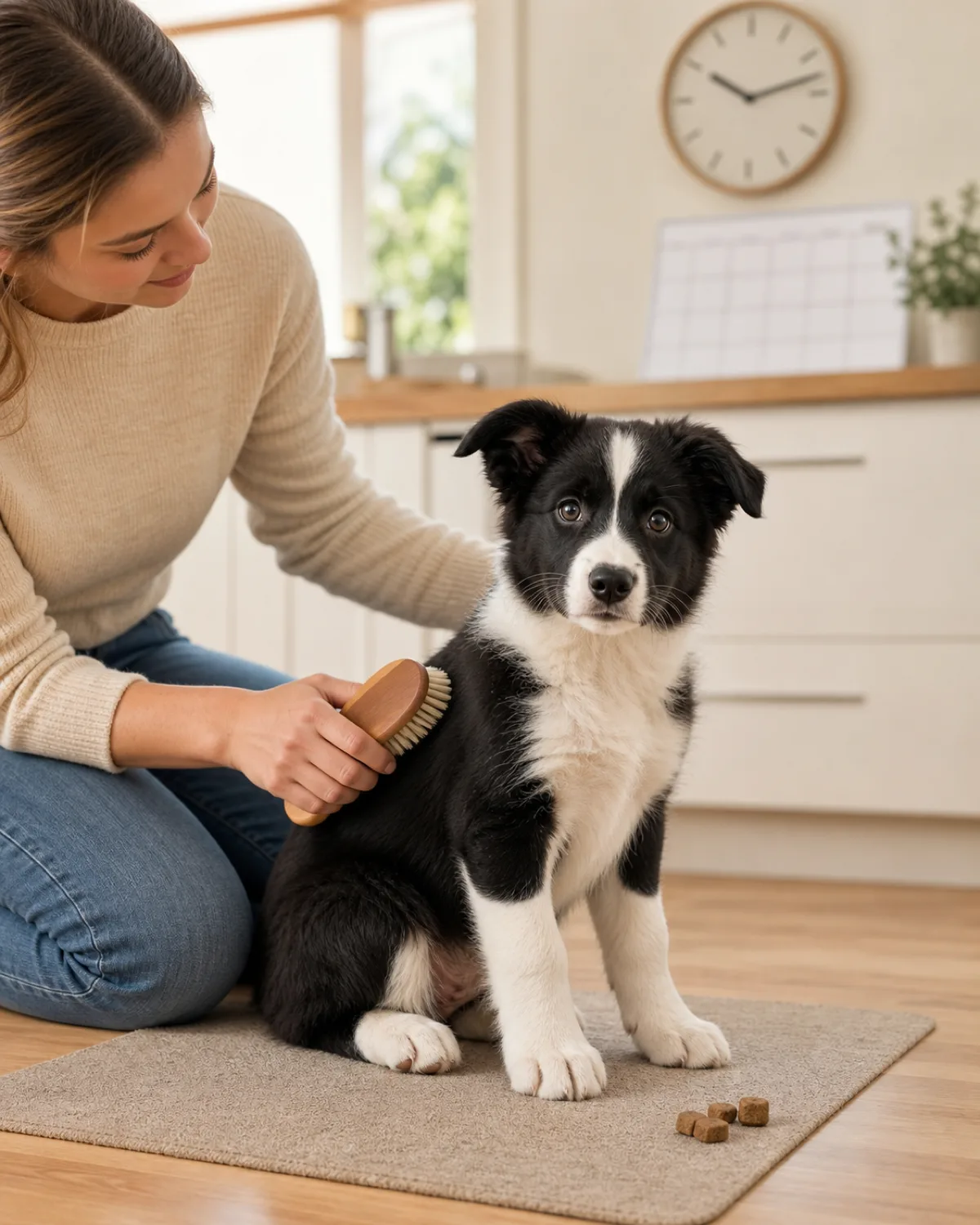
Trying to do everything every day guarantees that nothing gets done well. Spread tasks across the week.
Daily: thirty seconds of touch desensitization on one sensitive zone, plus one minute of gentle brushing starting from the back. Weekly: check ears and wipe the outer flap, run a finger along the gum line for ten seconds. Every seven to ten days: trim nail tips on one or two paws per session. Every two to four weeks: a bath (or as needed, since puppies who stay indoors do not get very dirty).
The pattern matters more than the schedule. Monday might be brush and paw practice. Wednesday might be ears and muzzle. Friday might be two paws worth of nail tips.
The Key Timing Rule
Every session ends with a treat and ends before the puppy gets restless. If you stop while the puppy is still engaged, the last memory of grooming is positive. If you push until the puppy squirms away, the last memory is escape.
Save this for later
Your Puppy Grooming Starter Checklist
- Gather 5 basic tools: soft brush, puppy shampoo, rounded-tip nail clippers, cotton balls, finger toothbrush
- Start daily 30-second touch desensitization with treats from week one
- Introduce the brush: let puppy sniff it, then one stroke at a time with treats
- Build to 1 minute of calm daily brushing (start from the back)
- Check ears weekly — wipe outer flap only, never insert anything
- Trim nail tips every 7-10 days — just 1mm, one paw per session is fine
- Touch gum line daily for 10 seconds with a tasty finger
- First warm bath at 12 weeks — ankle-depth water, under 5 minutes
- Desensitize all 4 sensitive zones: paws, muzzle, belly, tail base
- Keep every session under 2 minutes and end while puppy is still calm
- By 6 months: puppy accepts handling of every body part without resistance
Grooming Is a Relationship, Not a Chore
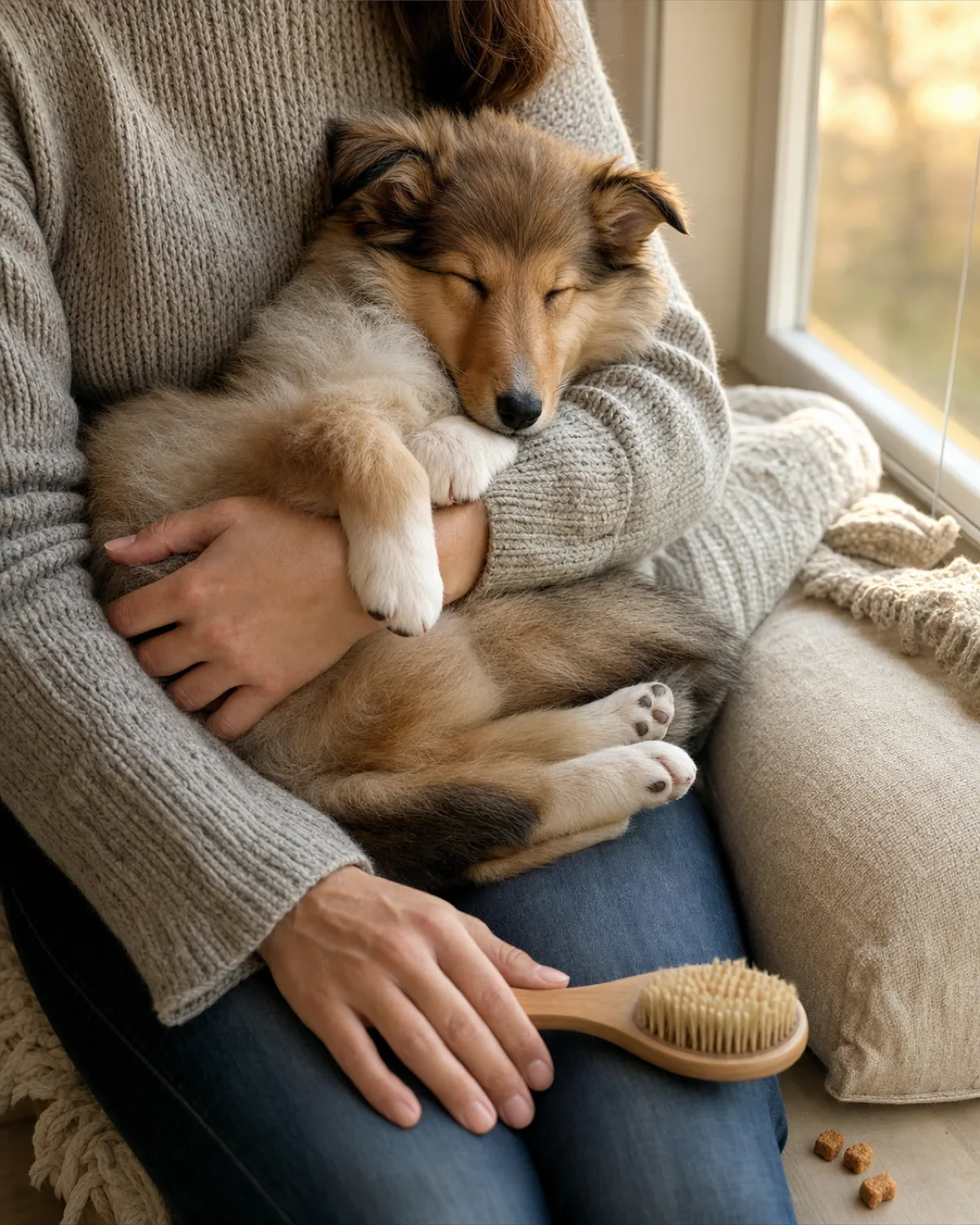
Six months from now you will look back and realize that puppy grooming was never about the brush or the shampoo or the nail clippers. It was about building a specific kind of trust — the kind where your dog lets you touch every inch of its body because every inch has been paired with patience and treats and a calm voice.
That trust does not come from one perfect grooming session. It comes from a hundred tiny ones. Thirty seconds of brushing that end with a treat. One paw clipped and then a walk. A finger on the gum line followed by a belly rub.
These moments stack. They compound. And one day you realize that grooming time is not something your dog tolerates. It is something your dog walks toward.

About the author
Jess Calloway
Jess Calloway edits Pawliqa, where she shares dog care, grooming, training, and new-owner tips — plus DIY and pet-friendly home ideas — for anyone who wants a happy, well-cared-for dog. As a dog mom to three very different dogs, she writes the honest, tested version of what actually works. Every guide is image-led and reviewed for clarity, usefulness, image accuracy, and Pinterest-to-page alignment before it goes live. Visit the About page.