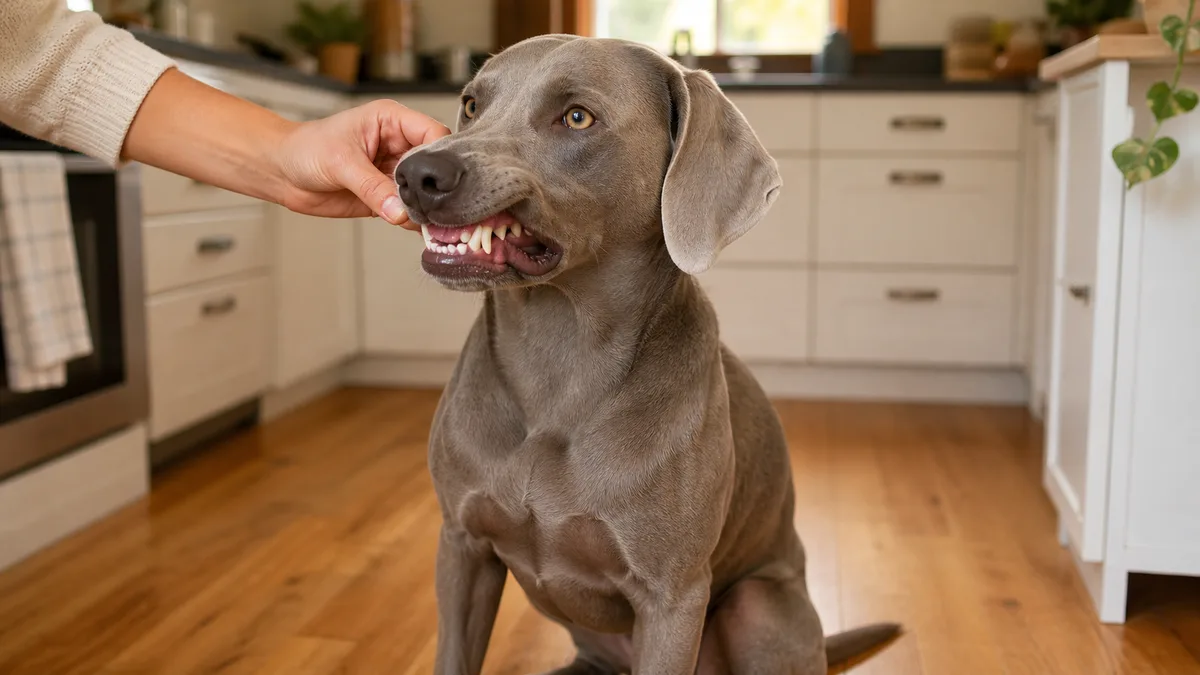
Our middle dog will let you trim her nails, clean her ears, and bathe her without flinching. The second a toothbrush appears, though, it is a completely different story. Mouth clamped shut, head jerking away, full retreat under the coffee table.
So we built a daily dental routine that keeps her teeth clean without a brush ever entering the picture.
Here are eleven ways to clean your dog's teeth without brushing, from VOHC-certified dental chews to a two-minute daily routine that covers morning, evening, and bedtime.
Jump to a no-brush method
11 ways to clean your dog's teeth without brushing
Each method targets plaque a different way. Pick the ones your dog tolerates best and combine two or three for daily coverage.
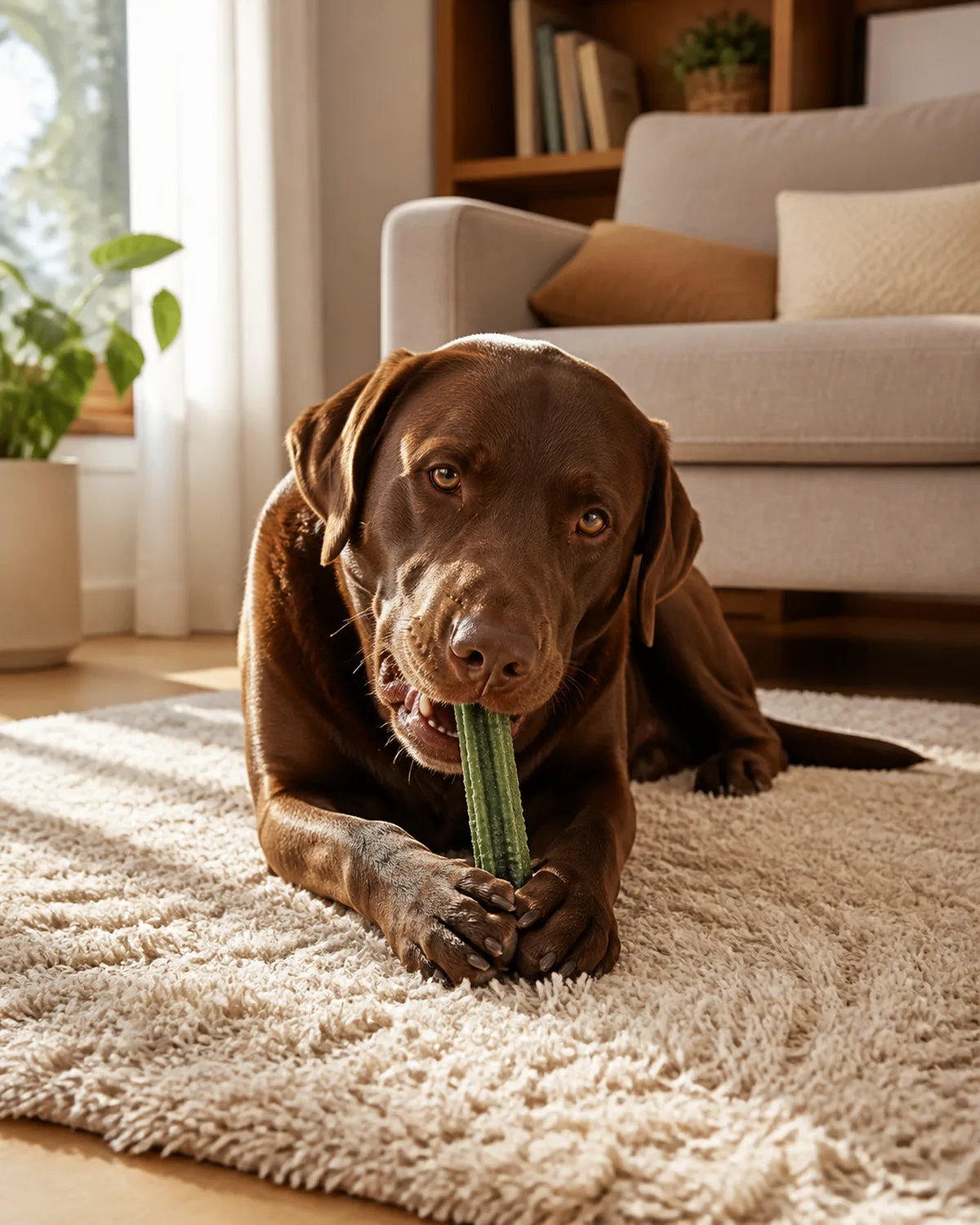
1. Give your dog dental chews designed to scrape away plaque as they chew
Dental chews are the closest brush-free substitute to actual toothbrushing. The mechanical friction of chewing works on the same principle as bristles against enamel, and most dental chews add an enzymatic layer that breaks down plaque while the dog gnaws.
Look for the VOHC (Veterinary Oral Health Council) seal on the package. Products with that seal have been independently tested and proven to reduce plaque or tartar by a meaningful margin. Without the seal, you are buying a treat that tastes good but may not be doing much for teeth.
Size matters more than flavor:
Too small: the dog swallows it whole, zero cleaning, choking hazard
Too large: the dog gives up before finishing, less friction time
Right fit: the dog chews for at least five minutes and works through the entire piece
One chew after dinner each evening is the simplest habit to build. Dinner residue is still fresh on the teeth, so the mechanical scrubbing hits plaque before it hardens overnight. If your dog has a sensitive stomach, give the chew thirty minutes after the meal rather than right away.
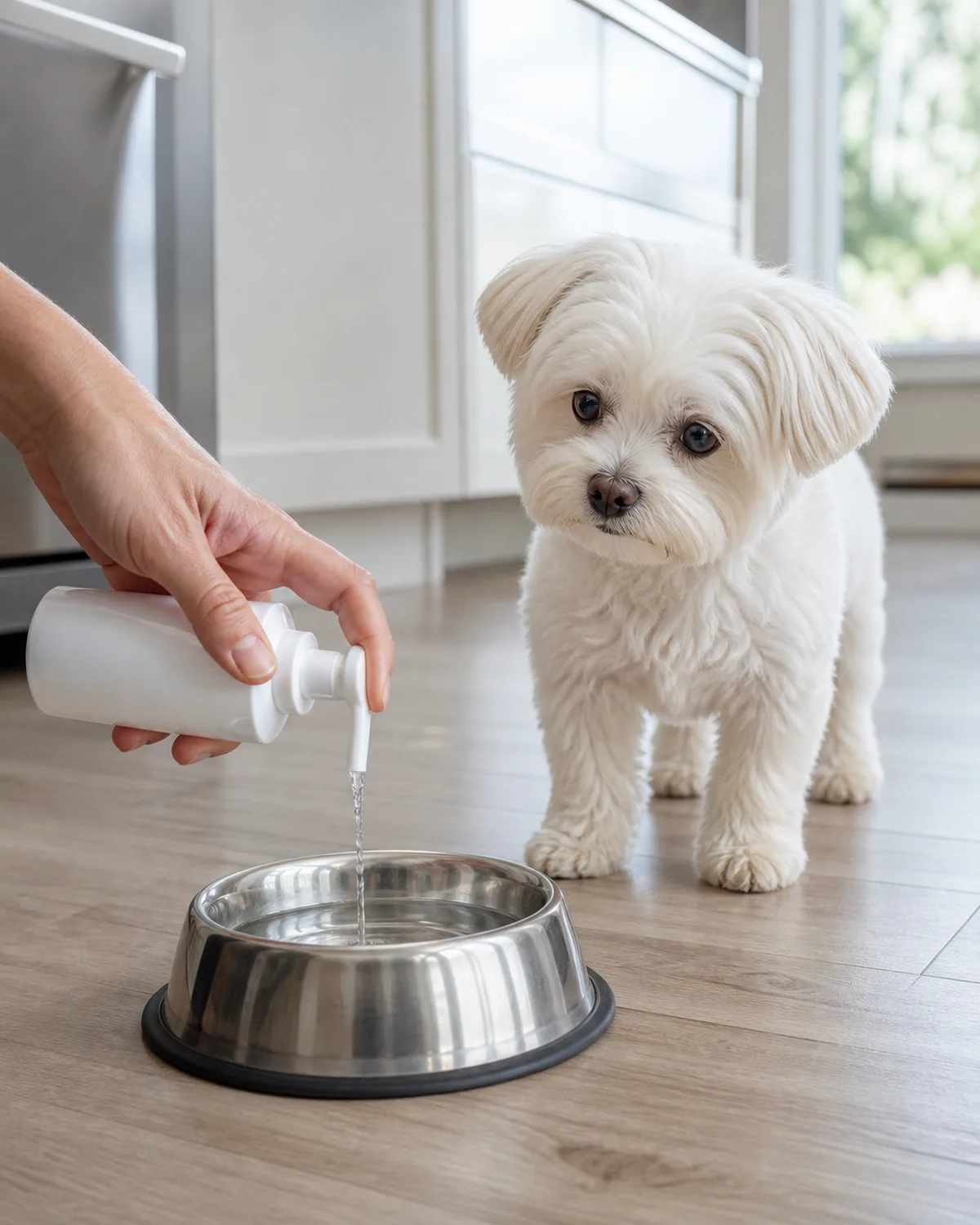
2. Add a dental water additive to your dog's bowl every morning
Water additives work around the clock with zero physical contact. You pour a capful into the water bowl each morning, and the antibacterial solution mixes into every sip your dog takes throughout the day.
The better products are tasteless and colorless, which means most dogs drink without noticing anything different. That said, some dogs have a sharper nose than others and will hesitate or drink less for the first few days. Start with half the recommended dose for three or four days, then move to full strength once your dog is drinking normally.
What water additives do well:
Slow the rate at which plaque forms on tooth surfaces
Reduce bacterial load in the mouth between meals
Require zero cooperation from the dog
What they do not do:
Remove existing tartar or hardened plaque
Replace physical cleaning methods like chews or wipes
Fix gum disease that has already started
Think of the water additive as your background layer, the one that runs all day even when you are not actively doing anything. Pair it with one physical method and you cover two different angles.
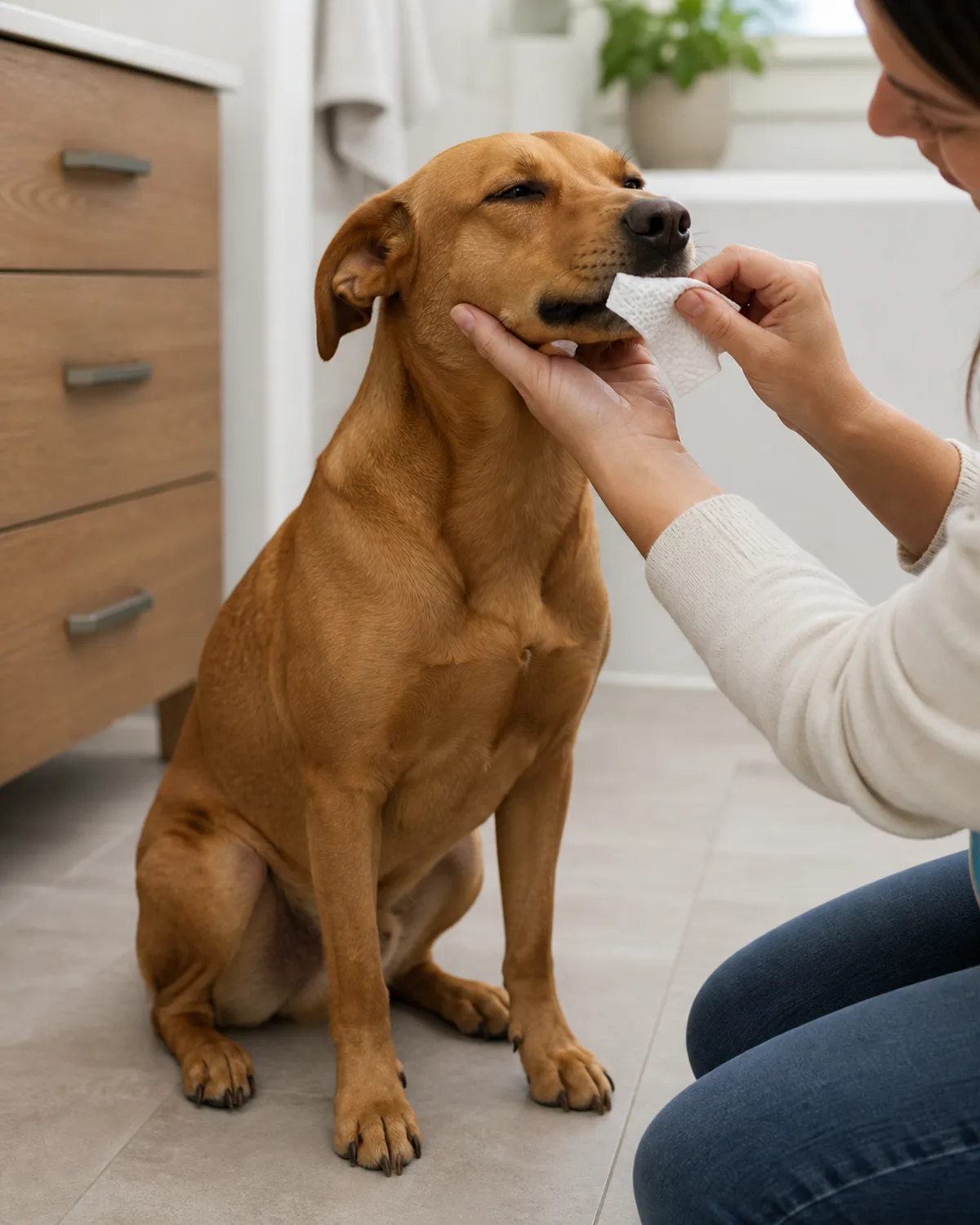
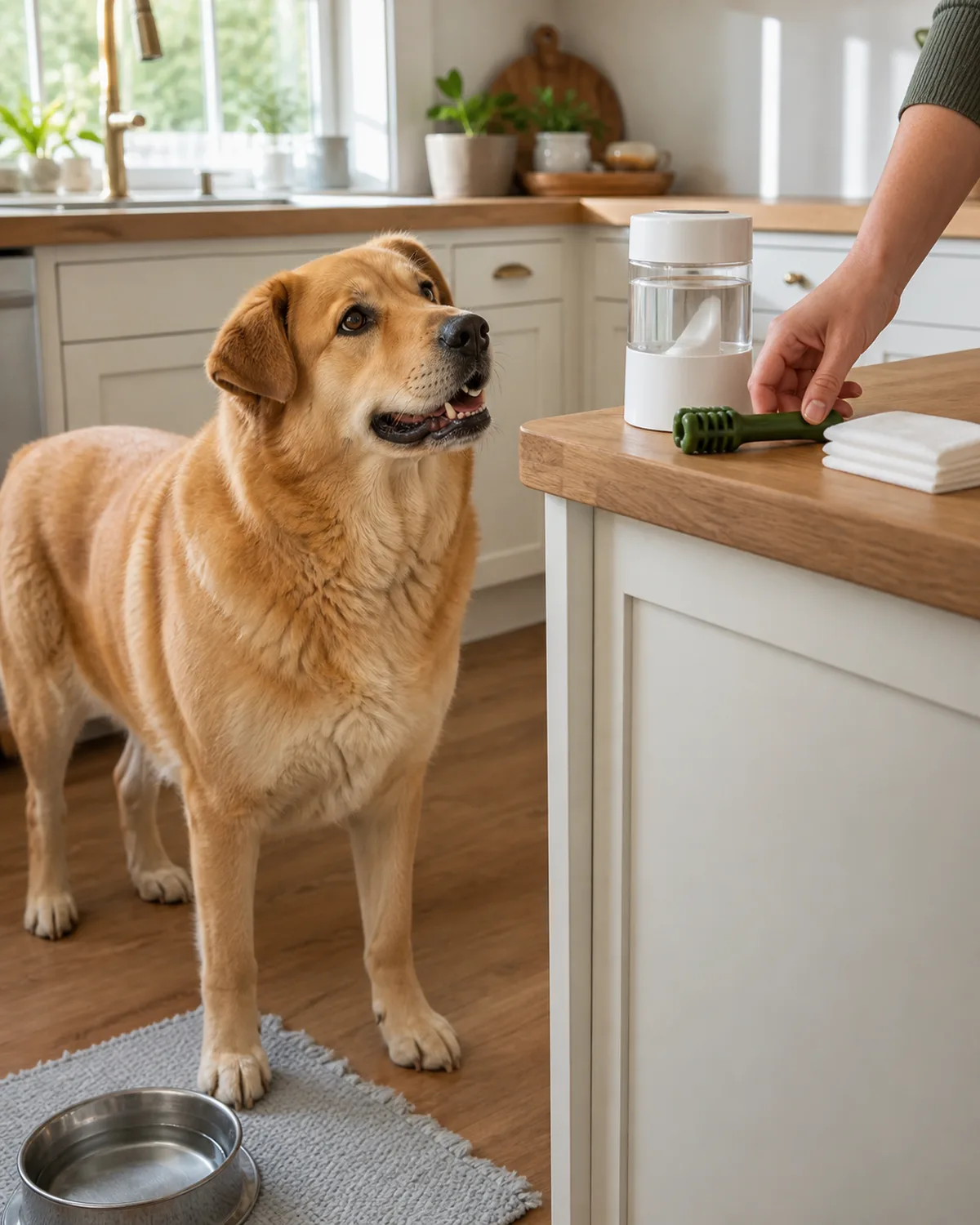
3. Wipe your dog's teeth with a dental wipe after meals
Dental wipes sit right between doing nothing and using a full toothbrush. You wrap the wipe around your index finger and run it along the outer gum line, which is where plaque builds fastest and where the most visible staining happens.
Most dogs tolerate wipes far better than a brush because there is no rigid plastic handle poking around inside their mouth. Your finger is soft, familiar, and easy to control. The textured surface of the wipe does the scrubbing.
You do not need to reach the inner surfaces of the teeth. The tongue naturally scrubs the inner side throughout the day, so the outer surface facing the cheek is where all the buildup accumulates. A quick pass along the upper and lower outer gum lines takes about thirty seconds total.
Quick wiping technique:
Wrap the wipe snugly around your index finger
Lift the upper lip on one side and sweep from the back molar forward along the gum line
Cross the front teeth and continue along the other side
Repeat on the lower teeth if your dog allows it
If commercial dental wipes are not available or your dog reacts to certain ingredients, wrap a square of gauze around your finger and dip it in a small amount of coconut oil. The gauze texture provides friction, and coconut oil adds a mild antibacterial boost that most dogs enjoy the taste of.
Start with the method that fits your dog right now
Which no-brush method should you try first?
You do not need all eleven at once. Pick the starting point below that matches your dog, then layer in a second method after the first one becomes routine.
Your dog is easygoing about mouth handlingStart with dental wipes after dinner. Add a water additive as your background layer. You are two steps away from solid daily coverage.
Your dog refuses all mouth contactGo zero-touch. Dental chews plus a water additive plus a dental spray let you cover teeth without touching the mouth at all.
You have almost no timeSpend ten seconds adding a water additive each morning and hand your dog a dental chew after dinner. Under thirty seconds total, every single day.
Your dog is a senior with sensitive teethGentle options first. A dental spray or gel applied along the gum line is the least invasive physical method. Pair it with dental kibble so meals do the cleaning work.
4. Use a dental spray or gel that works without any rubbing at all
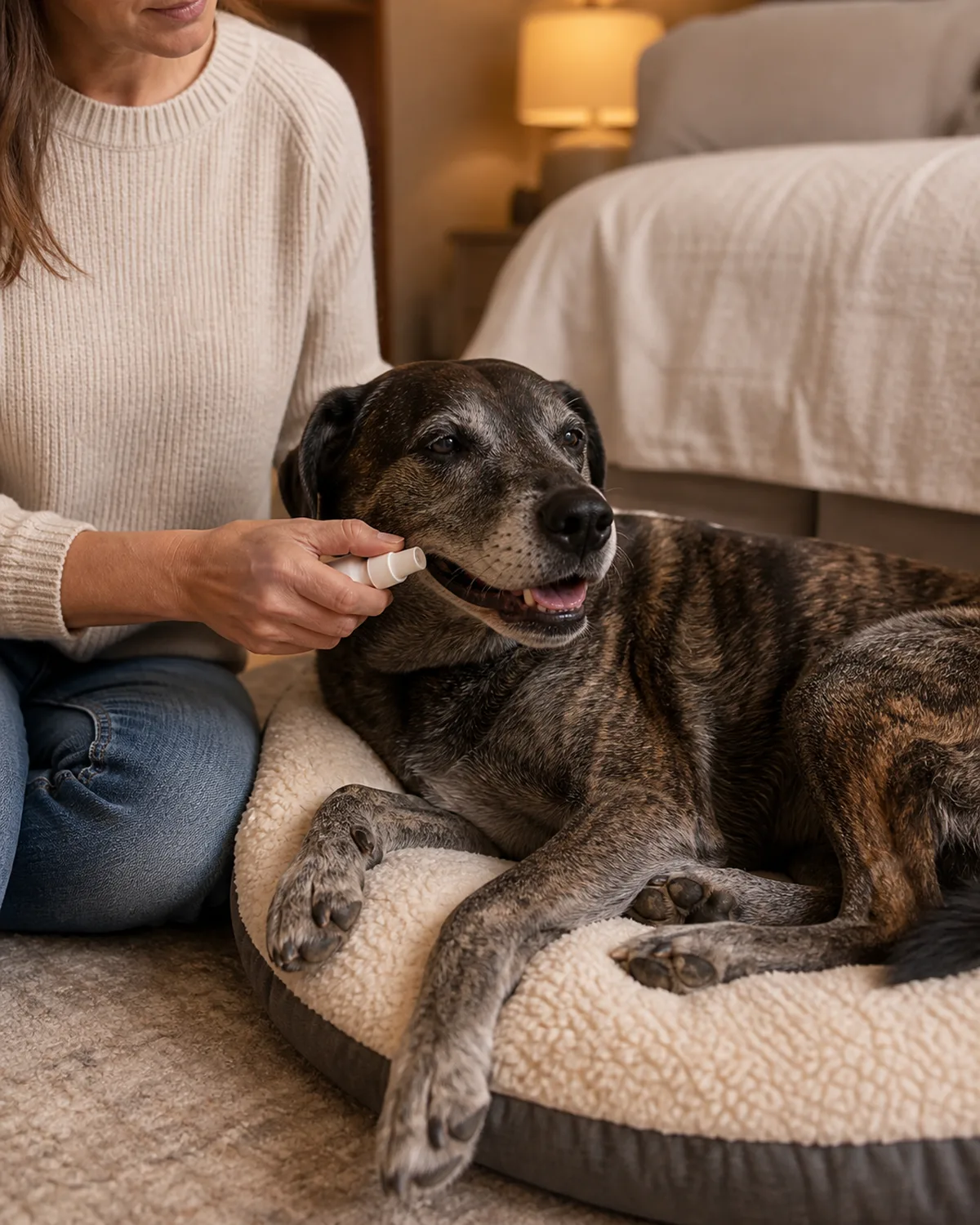
Dental sprays and gels are the gentlest physical option because they require almost no contact at all. You either spray a quick burst into the corner of the mouth or squeeze a thin line of gel along the outer gum line, and the enzymatic formula mixes with saliva and works for four to six hours.
This is the best entry point for dogs that refuse any mouth handling and for senior dogs whose gums may be tender. The dog barely needs to open its mouth. You can apply it while the dog is lying down, relaxing, or half asleep.
For the best results, apply twice a day. Most owners find morning and bedtime easiest because the dog is calm and still. Avoid applying right before a meal or a big water session, since eating and drinking wash the product away before it has time to work.
Dental sprays do not remove tartar that has already hardened. They slow the rate at which new plaque forms, which means they work best as part of a daily routine rather than as a rescue tool after months of no care.
5. Offer raw recreational bones for natural teeth-cleaning action
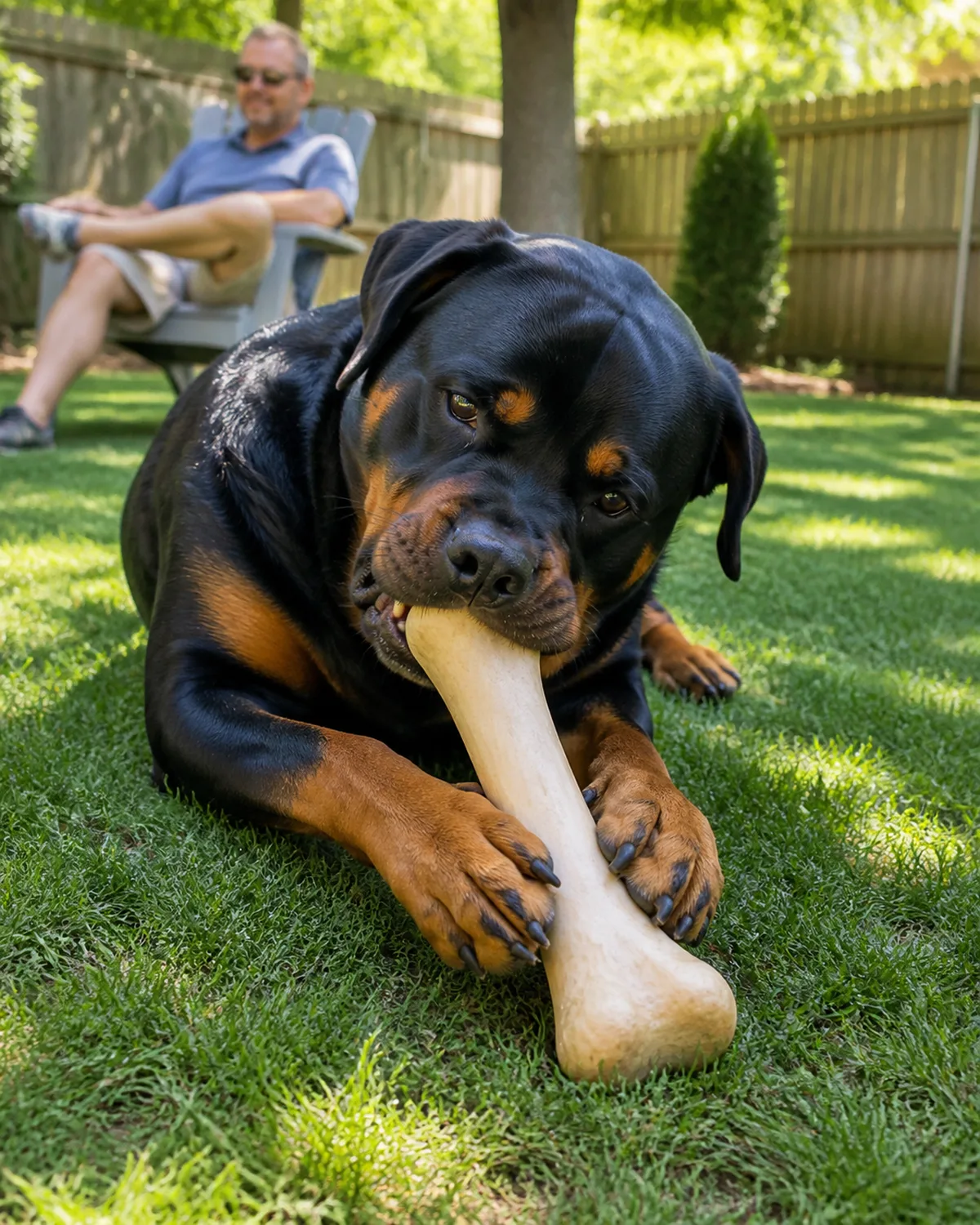
Raw bones provide the most natural form of mechanical tooth cleaning. The tearing and scraping action that happens when a dog gnaws on a raw marrow bone or knuckle bone physically strips soft plaque from the tooth surface in a way no chew treat can match.
The safety rules are non-negotiable:
Never cook the bone first. Cooking changes the structure of bone so that it splinters into sharp shards instead of crumbling safely. Raw bones flex slightly under pressure. Cooked bones fracture.
Size the bone to the dog. The bone must be large enough that the dog cannot fit the whole thing in its mouth or attempt to swallow it. For a medium dog, that means a bone at least the size of your fist.
Supervise the entire session. Sit nearby and watch. The moment the bone gets chewed down to a piece small enough to swallow, take it away.
Limit frequency. Two to three sessions per week, fifteen to twenty minutes each. Daily heavy gnawing can wear down tooth enamel or crack a tooth in aggressive chewers.
Raw bones are not for every dog. Power chewers who bite with extreme force are better off with a VOHC-certified dental chew that is designed to take heavy jaw pressure without fracturing. If you are unsure, ask your vet whether your dog is a good candidate for recreational bones.
6. Switch to a dental-specific kibble that physically cleans teeth during meals
Standard kibble shatters on contact. The tooth pushes through the piece, it breaks into small fragments, and those fragments do nothing for the tooth surface on their way down.
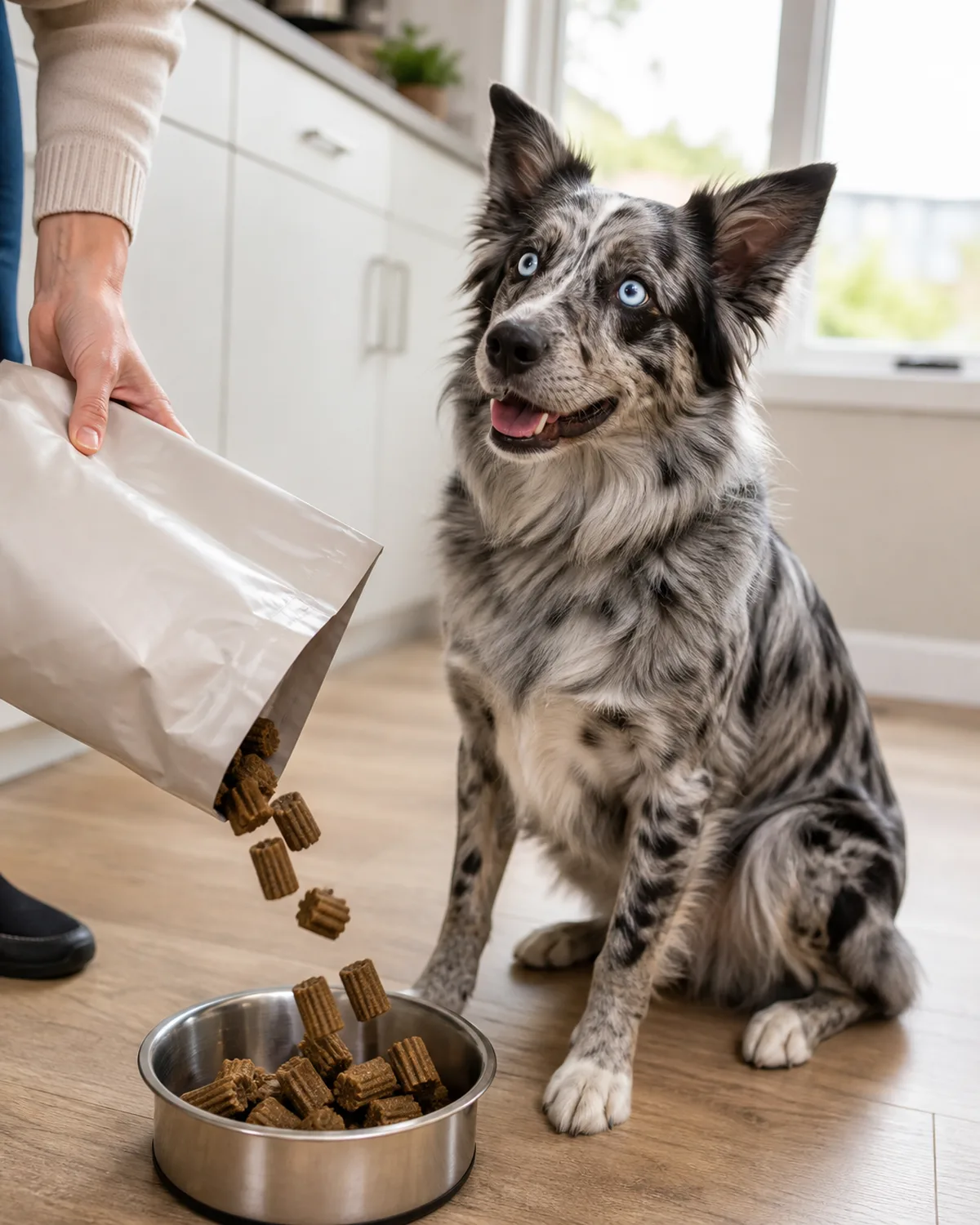
Dental kibble is engineered differently. The pieces are larger than standard kibble, and the fiber matrix holds together so the tooth has to penetrate the full depth of the piece before it finally splits. That sustained pressure creates friction across the entire tooth surface, which scrubs away soft plaque during every meal.
The difference in how these two types of kibble interact with teeth:
Standard kibble
Dental kibble
Size
Small, uniform
Oversized, often irregular
Structure
Brittle, shatters on first bite
Dense fiber matrix, resists cracking
Cleaning action
None
Tooth penetrates full piece, scrubbing surfaces
VOHC certification
No
Available for certain brands
You can switch entirely to dental kibble or mix it with your current food at a 50/50 ratio. Either way, every meal becomes a passive cleaning session without any extra effort from you. Check the VOHC website for a current list of dental diet brands that have been independently verified.
The four principles that make no-brush dental care work
Why combining methods matters more than picking the best one
No single brush-free method does everything a toothbrush does. The trick is layering two or three so each one covers what the others miss. These four rules keep the system effective.
Pair one physical method with one passive methodPhysical methods (chews, wipes, bones) scrub surfaces. Passive methods (water additive, spray) fight bacteria between sessions. One of each gives you two angles of attack around the clock.
Hit three time windows every dayMorning (water additive), after dinner (chew or bone), and bedtime (wipe or spray). Plaque reforms every twelve to sixteen hours, so three touch points a day keep it from hardening into tartar.
Pick what your dog will tolerate, not what sounds bestThe best method is the one you actually do every day. A dental wipe that your dog accepts calmly is worth more than a raw bone session that turns into a wrestling match.
Vet check-ups are not optional, everHome care delays professional cleanings but never eliminates the need. Annual dental exams catch problems under the gum line that no chew, spray, or wipe can reach.
7. Try coconut oil as a natural antibacterial tooth-coating trick
Coconut oil contains lauric acid, a medium-chain fatty acid with natural antibacterial and anti-inflammatory properties. Applying a small amount along the outer gum line creates a temporary coating that slows bacterial growth between meals.
This is not a primary dental care method. It has not gone through the kind of controlled clinical testing that earns a VOHC seal, and it does not remove plaque mechanically. What it does is add a supplemental antibacterial layer with essentially zero downside risk and one significant practical advantage: most dogs love the taste.
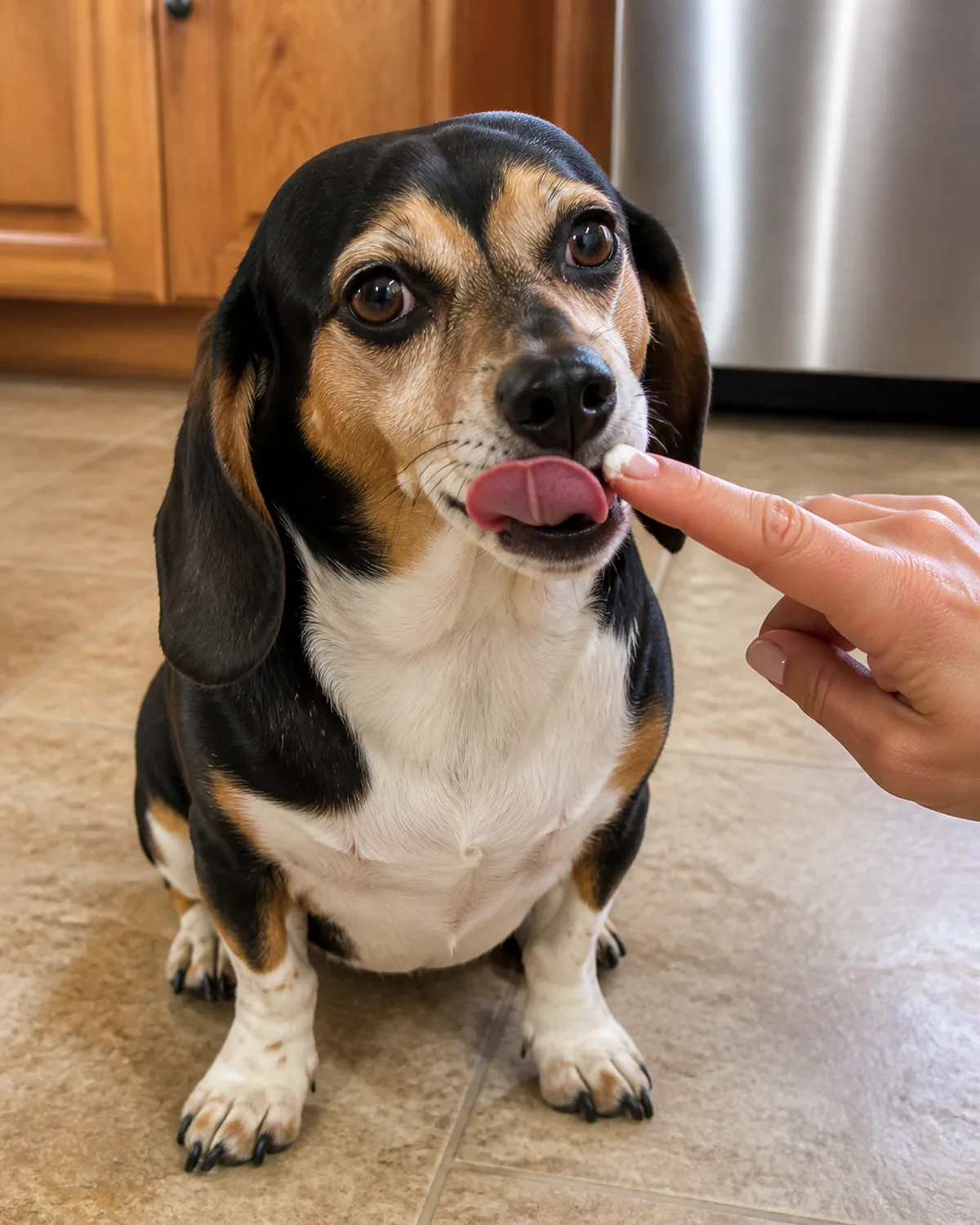
That taste advantage is genuinely useful. If your dog resists having its mouth handled, coconut oil gives you a positive association to build on. Here is how to introduce it:
Let the dog lick a small dab off your finger a few times until it comes to you expecting the treat
Transition to rubbing the oil along the outer gum line with your fingertip while the dog licks
Combine with a dental wipe for friction plus antibacterial coating in one pass
Keep the amount small, about half a teaspoon per session, to avoid adding unnecessary calories. Most dogs that refuse a toothbrush will accept a coconut-oil finger without any fuss at all.
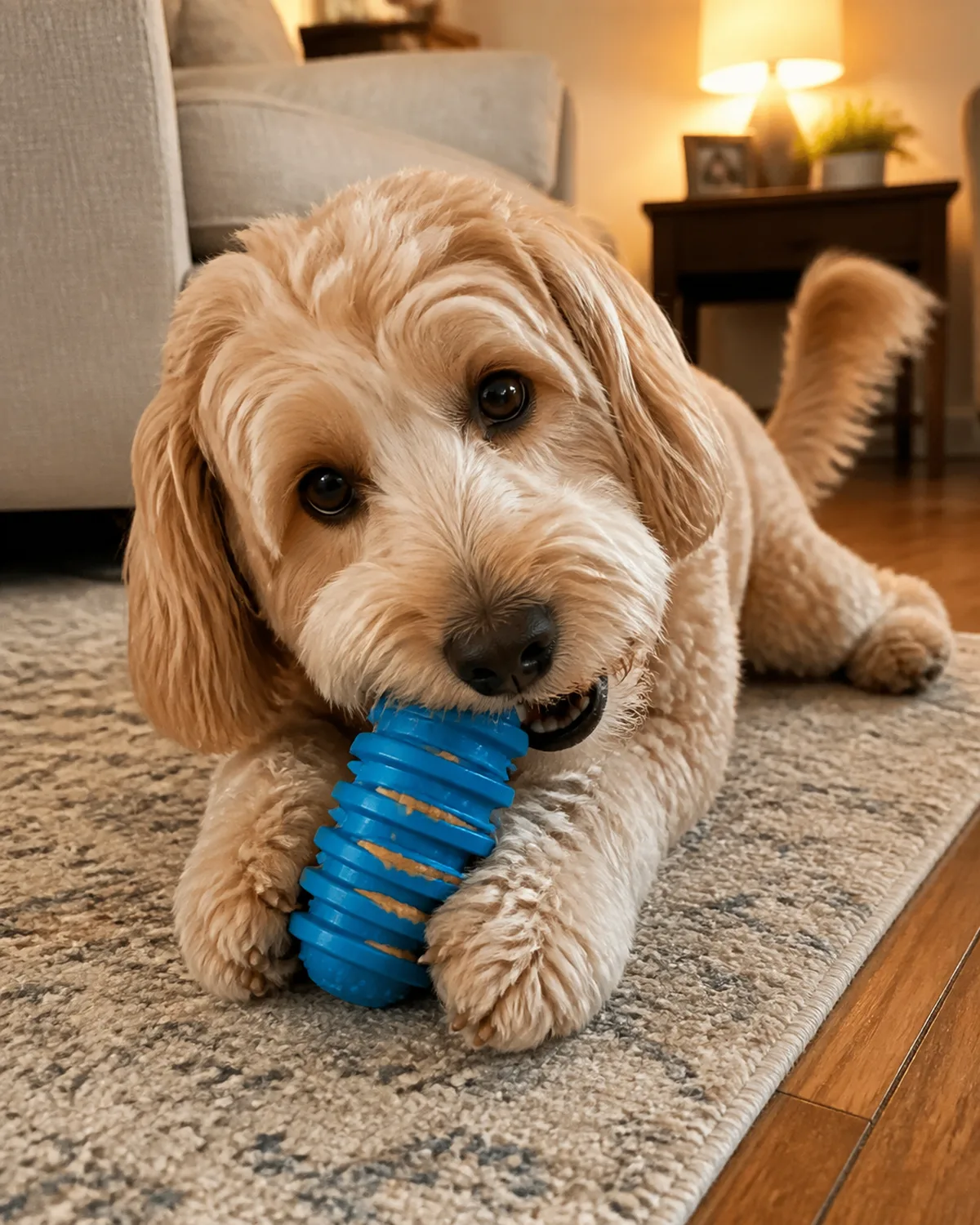
8. Choose chew toys with texture ridges that massage gums and scrape plaque
Not every chew toy cleans teeth. A smooth rubber ball provides entertainment but creates almost no friction against tooth surfaces. The toys that work for dental care are specifically designed with raised ridges, nubs, and grooves that press against the teeth and gums during chewing.
When the dog bites down on a ridge, it pushes into the tooth surface and physically scrapes soft plaque away. The grooves between ridges massage the gum line, which promotes blood flow and keeps gum tissue healthy. The combination of scrubbing and massaging mimics what bristles do, just at a lower intensity.
To extend chewing time and increase the cleaning effect:
Spread peanut butter or treat paste into the grooves so the dog has to work the toy against its teeth to get the food out
Choose toys sized so the dog can get a good grip but cannot fit the entire toy in its mouth
Rotate between two or three textured toys to keep interest high
Check every toy weekly for signs of wear. Cracks, loose pieces, or chunks bitten off mean the toy needs to be replaced immediately. Swallowed rubber or plastic fragments are a veterinary emergency.
9. Build a simple daily dental routine that takes less than two minutes
Each of the methods above works better as part of a combined routine than on its own. Here is the no-brush daily workflow we use for all three of our dogs, and it takes less than two minutes of active effort across the entire day.
Morning (ten seconds): Pour a capful of dental water additive into each water bowl when you refill them. Passive antibacterial coverage running all day through drinking water.
After dinner (sixty seconds): Hand each dog one dental chew. On alternating days, swap the chew for a supervised raw bone session in the yard for whichever dog handles bones safely. Mechanical plaque removal right when residue is freshest.
Bedtime (thirty seconds): Run a dental wipe along the outer upper and lower gum lines. Start on one side, sweep across the front teeth, finish on the other side. If your dog will not tolerate the wipe, apply a dental spray into the corners of the mouth instead.
Three methods, three time windows, under two minutes total. Consistency matters more than perfection. Missing the bedtime wipe once a week is not a crisis. Skipping the entire routine for a month is. Plaque hardens into tartar in about seventy-two hours, so daily coverage prevents the kind of buildup that requires professional removal.
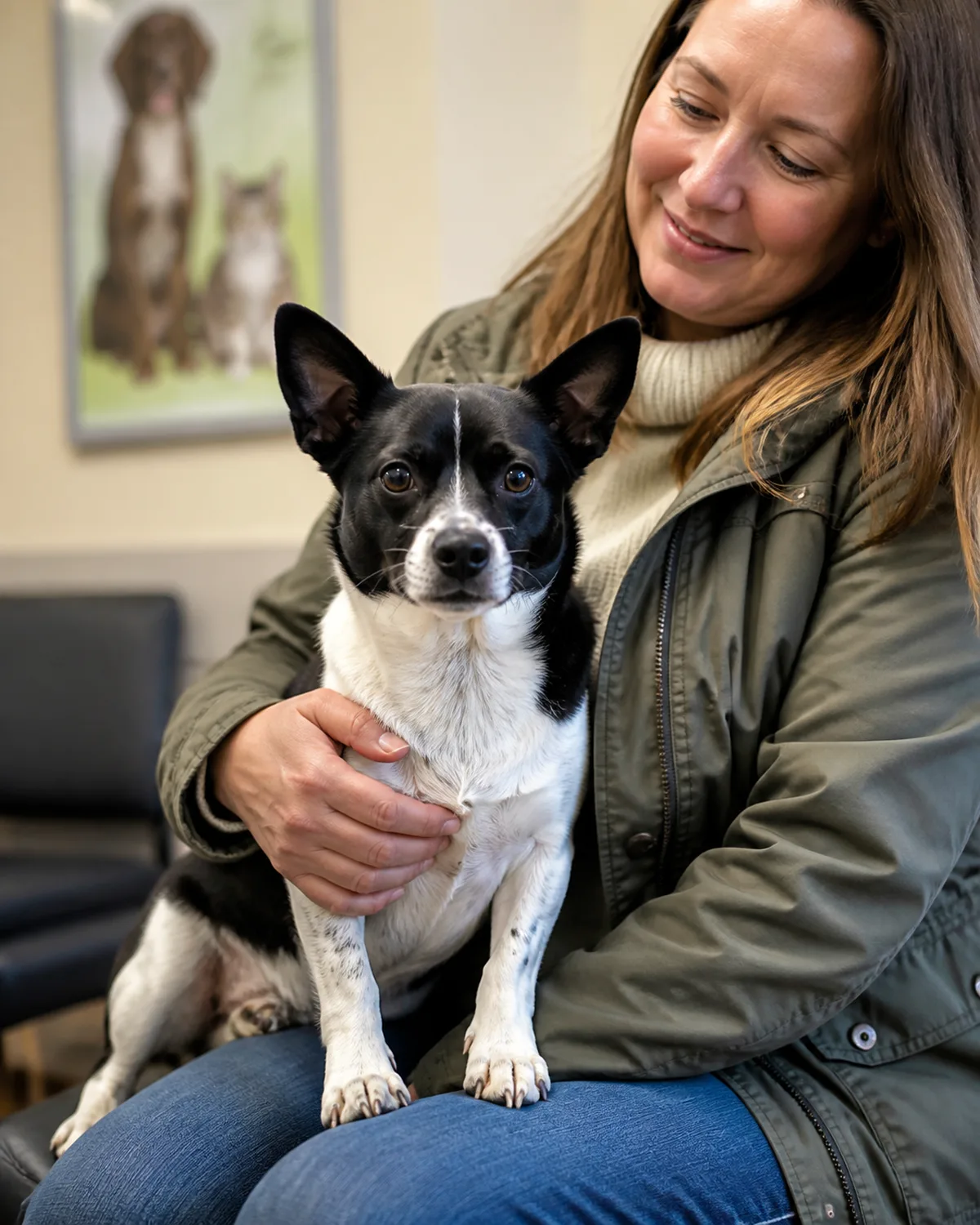
10. Know the warning signs that mean your dog needs a professional cleaning
Home dental care delays the need for professional cleaning but does not eliminate it permanently. There are five warning signs that mean your dog needs a veterinary dental exam regardless of how consistent your daily routine has been.
Persistent bad breath that does not improve after a week of dental chews and water additive. Occasional dog breath is normal. Breath that smells rotten or metallic suggests bacteria trapped under the gum line where no home method can reach.
Red, swollen, or bleeding gums along the gum line or around specific teeth. Healthy gums are pink and firm. Inflammation means bacteria are irritating the tissue and could be progressing toward periodontal disease.
Visible tartar buildup showing as brown or yellow crusty deposits along the gum line, especially on the upper back molars. Once plaque hardens into tartar, no chew, wipe, or additive can remove it. Only professional scaling under anesthesia breaks it off.
Dropping food while eating or chewing on only one side of the mouth. This often means a cracked tooth, a loose tooth, or gum pain on the avoided side.
Facial swelling below the eye or along the jaw. This can indicate a tooth root abscess, which is a dental emergency requiring veterinary treatment.
Any one of these signs means scheduling a veterinary dental exam. Do not wait for multiple signs to appear. The earlier the problem is caught, the less invasive and less expensive the treatment.
Save this for later
11 No-Brush Ways to Clean Your Dog's Teeth
1Give dental chews after dinnerVOHC-certified chews scrape plaque through mechanical friction plus enzyme formulas.
2Add a water additive each morningTasteless antibacterial solution works around the clock in every sip.
3Wipe teeth after mealsWrap a dental wipe around your finger and run it along the outer gum line in thirty seconds.
4Use a dental spray or gelZero-contact enzymatic formula for dogs that refuse all mouth handling.
5Offer raw recreational bonesRaw marrow bones provide natural mechanical cleaning under supervision.
6Switch to dental kibbleOversized fiber-matrix pieces force the tooth to scrub through the entire piece.
7Try coconut oil on the gum lineLauric acid adds antibacterial coating and most dogs love the taste.
8Use textured chew toysRidges and nubs on rubber toys scrape plaque and massage gums during play.
9Build a two-minute daily routineMorning additive, evening chew, bedtime wipe covers three time windows.
10Watch for warning signsPersistent bad breath, red gums, visible tartar, or dropping food means call the vet.
11Schedule yearly dental check-upsAnnual exams catch problems under the gum line that no home method can reach.
pawliqa.com
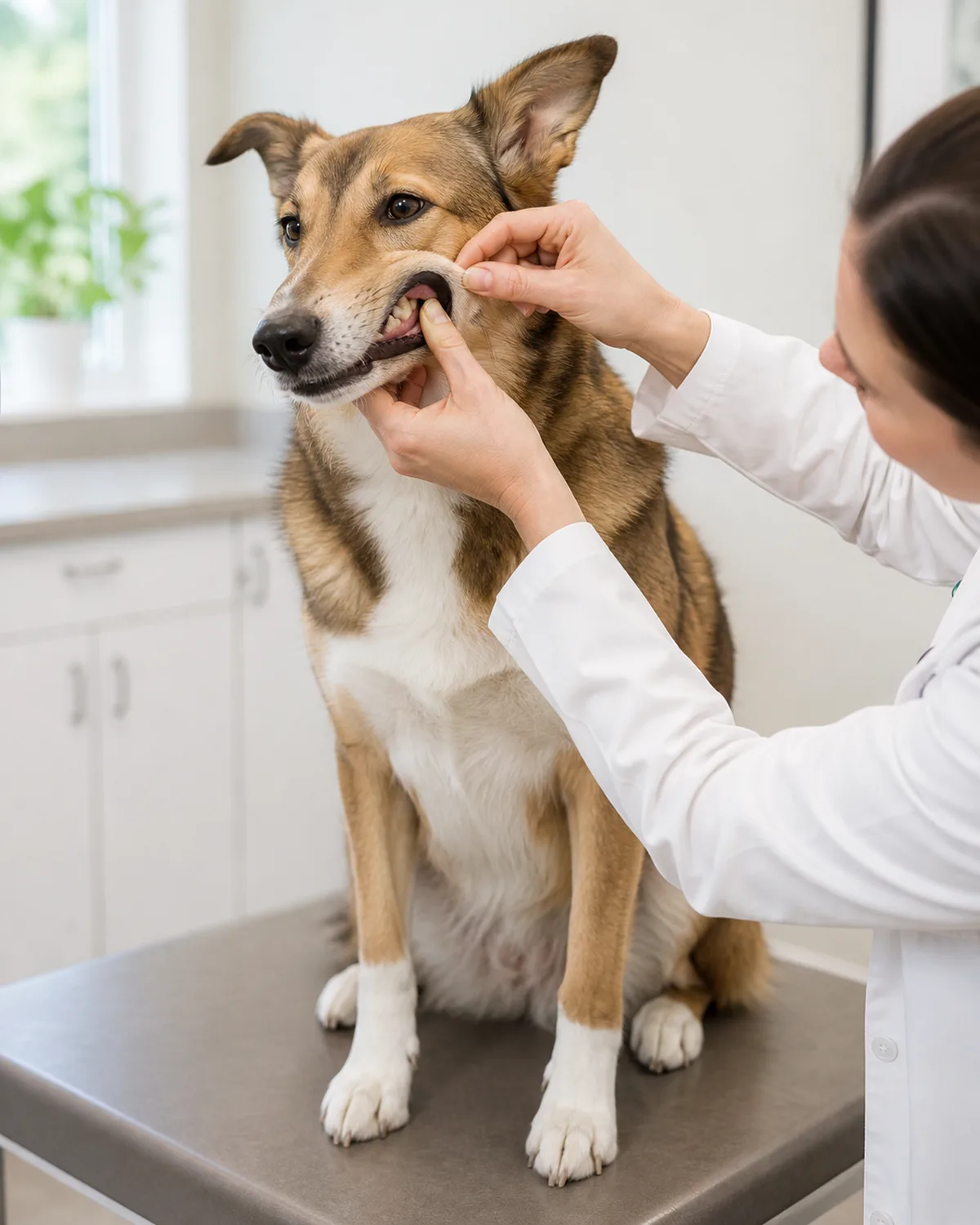
11. Schedule yearly dental check-ups even if your dog's teeth look fine
This is the non-negotiable foundation underneath every other method in this article. Every dental chew, water additive, wipe, spray, bone, and toy in the world cannot see what is happening beneath the gum line, and that is where the most serious dental problems start.
Your dog can have teeth that look white and clean on the surface while harboring infection, bone loss, or abscess formation at the root level. Only a veterinary dental exam with probing (and often dental X-rays) reveals what is actually going on underneath.
Annual dental check-ups accomplish three things that home care cannot:
Catch root-level problems early before they cause pain, infection, or tooth loss
Determine your dog's individual cleaning schedule, because some dogs need professional cleaning every six months while others are fine every two years based on breed, size, diet, and chewing habits
Remove tartar below the gum line using professional scaling tools under anesthesia, which is the only way to eliminate hardened deposits in areas no wipe or chew can reach
The cost difference between early detection and late intervention is significant. A routine cleaning costs a fraction of what emergency extraction under general anesthesia costs, and the recovery is dramatically easier on the dog.
Your vet will tell you exactly how often your specific dog needs professional dental work. Some small breeds with crowded teeth need cleanings more frequently. Some large breeds with wide-spaced teeth go longer between cleanings. The annual exam is what gives you that answer.
Making homemade dog treats that are low in sugar and high in crunch can complement your daily dental routine by reducing the sticky residue that processed treats leave behind.
About the author
Jess Calloway
Jess Calloway edits Pawliqa, where she shares dog care, grooming, training, and new-owner tips for anyone who wants a happy, well-cared-for dog. As a dog mom to three very different dogs, she writes the honest, tested version of what actually works. Every guide is image-led and reviewed for clarity, usefulness, image accuracy, and Pinterest-to-page alignment before it goes live. Visit the About page.
Fifteen dog paw care tips covering pad checks, nail length, moisturizing, hot pavement tests, winter balm, cracked pad first aid, and seasonal routines.