We used to groom our dogs wherever we could catch them — the kitchen floor, the bathtub edge, once even the back porch in January. Fur ended up everywhere and tools vanished into junk drawers.
Then we cleared one corner of the laundry room, hung a pegboard, and put down a rubber mat. That was it. Grooming went from a dreaded chore to a fifteen-minute habit with a designated spot for every brush, every bottle, and every treat.
Here are twelve dog grooming station ideas that turn any corner of your home into a functional grooming space — without spending a fortune or renovating a room.
Jump to a station idea
12 dog grooming station ideas for any home
From picking the right spot to building a portable outdoor kit, these twelve ideas turn a corner of your house into a grooming zone that works every time. Jump to the one you need most.
1. Pick a spot that is easy to clean and close to water
The single biggest decision is where to put your station. The best spots share three things: a hard floor you can sweep or mop, access to a water source, and enough room for your dog to stand and turn around.
Bathrooms, laundry rooms, and garages top the list because they already have tile or concrete and a sink or tub nearby. Spare bedrooms with carpet might feel spacious, but you will spend more time vacuuming fur out of fibers than you will grooming.
If you have a covered patio or mudroom, consider that too. Outdoor stations solve the fur-everywhere problem completely — the wind carries loose hair away instead of embedding it in upholstery.
Tile or vinyl flooring lets you sweep up in under a minute
A nearby sink or tub means you can rinse tools without walking across the house
A door you can close keeps the dog contained and fur contained with it
Enough overhead clearance matters if you plan to use a grooming arm or dryer mount
Pick the room first, then build the station around what the room already offers.
2. Set up a sturdy non-slip surface at a comfortable height
Your dog needs to feel stable, and you need to reach every part of them without hunching over or kneeling on tile for thirty minutes.
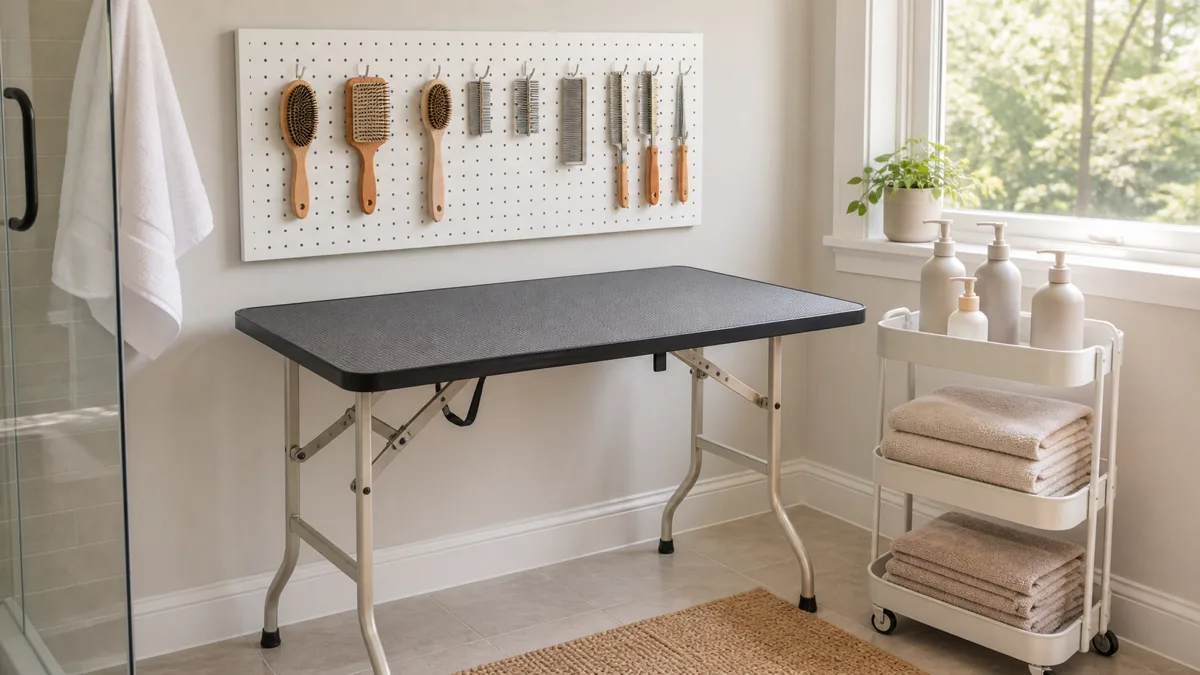
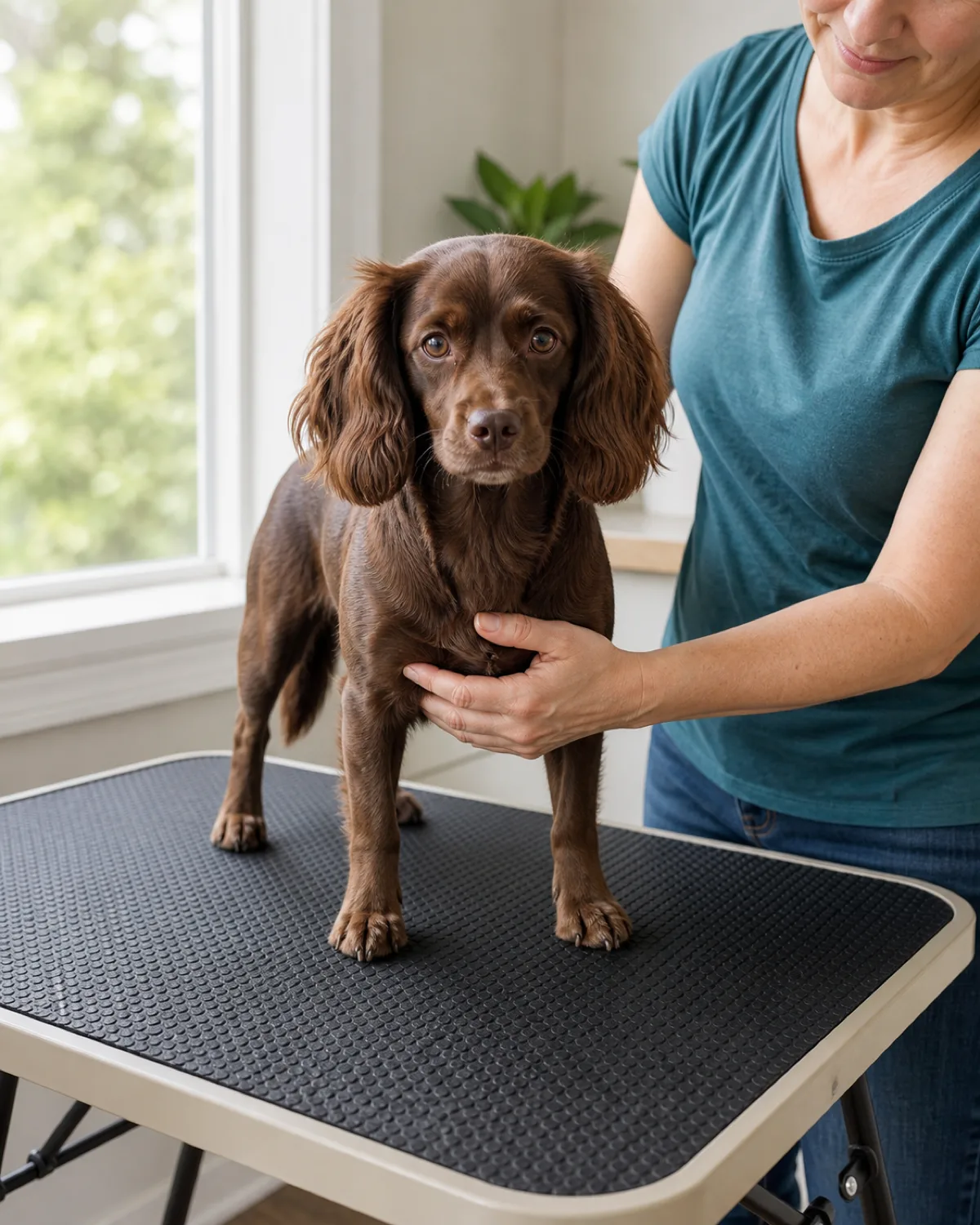
For small dogs under thirty pounds, a folding table with a textured rubber mat works perfectly. The table brings your dog to waist height, which saves your back and gives you a clear line of sight for detail work like nail trimming and ear cleaning.
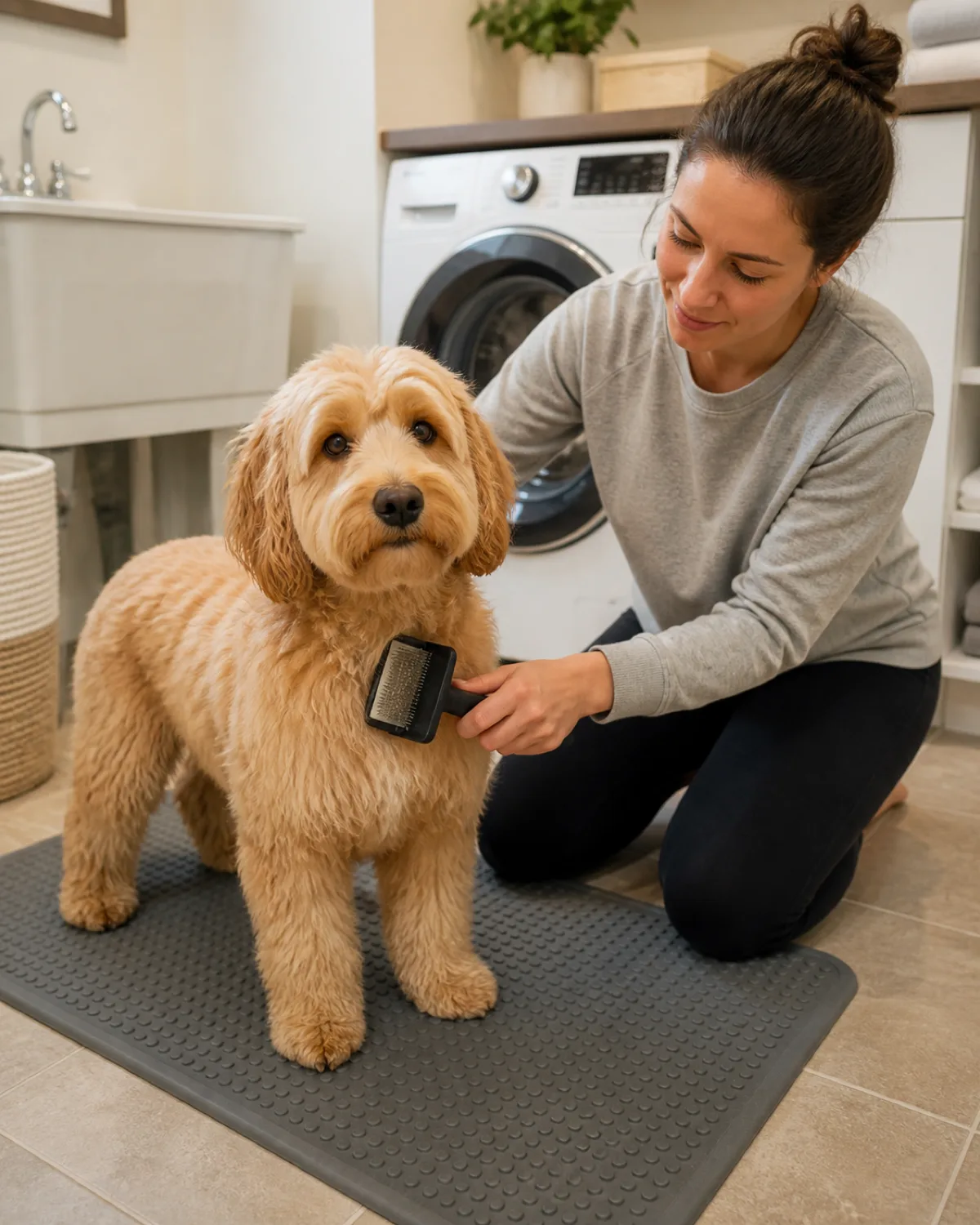
For large dogs, the floor is usually the most practical surface. A thick rubber mat — the kind sold for gym floors — gives traction and cushioning without the risk of a seventy-pound dog jumping off a table.
Non-slip mats cost between eight and fifteen dollars and prevent the single most dangerous grooming scenario: a dog scrambling on a slick surface
If using a table, check the weight limit — most folding tables handle fifty to seventy-five pounds, not enough for a large breed
Rubber-backed bath mats work as a budget alternative inside a bathtub
The surface matters more than the table. A twenty-dollar mat on a sturdy surface beats a two-hundred-dollar grooming table with a slippery top.
Not sure where to begin? Match the fix to the frustration you have right now
Where should you start?
You do not need all twelve ideas on day one. Find the problem below that sounds most like yours, and start there.
You want a station but have zero budgetStart with almost nothing. See Idea 12 start simple — a mat, a brush, and a treat jar is a station.
3. Organize your tools on a wall-mounted rack or rolling cart
Every second you spend digging through a drawer for nail clippers is a second your dog spends losing patience on the table.
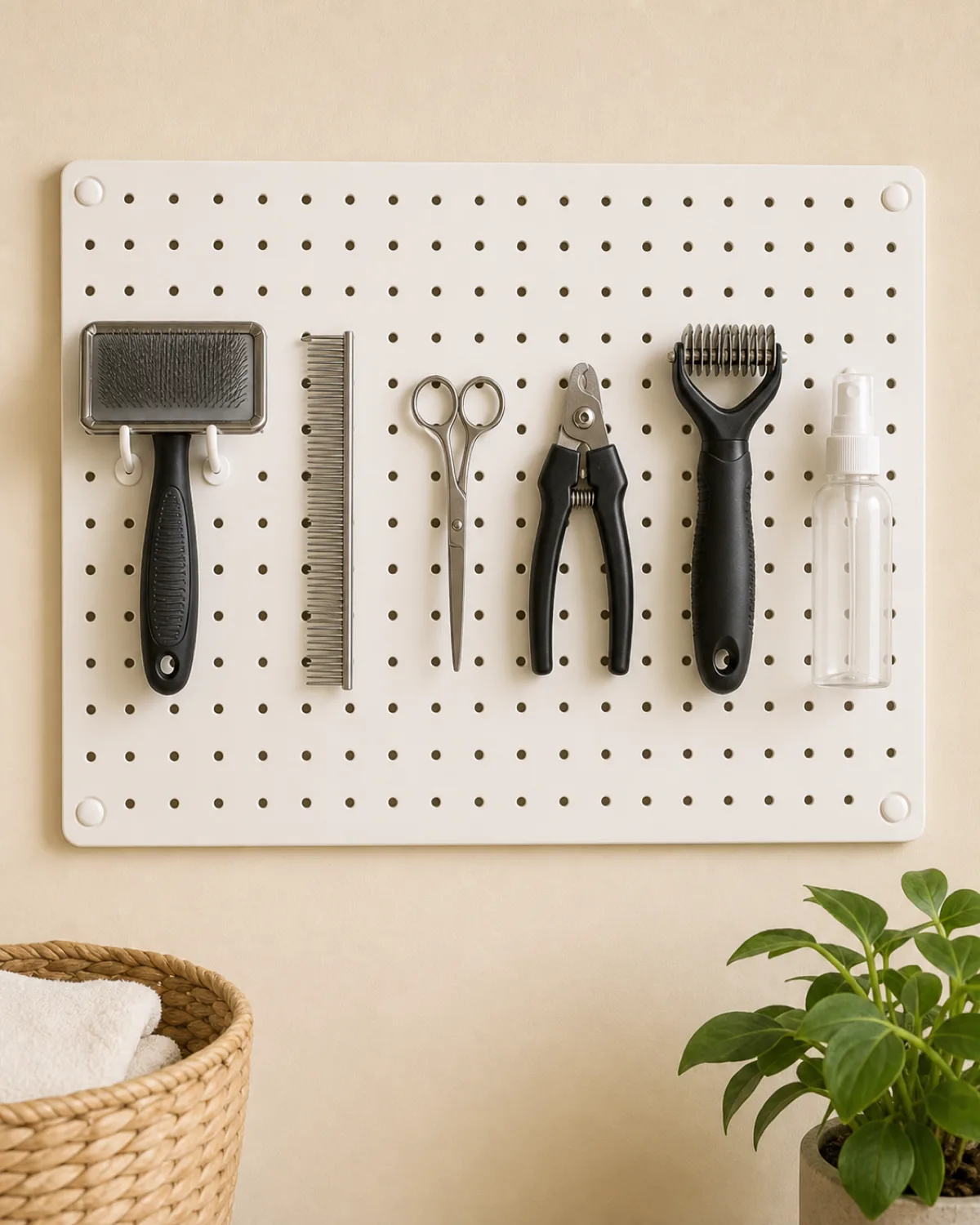
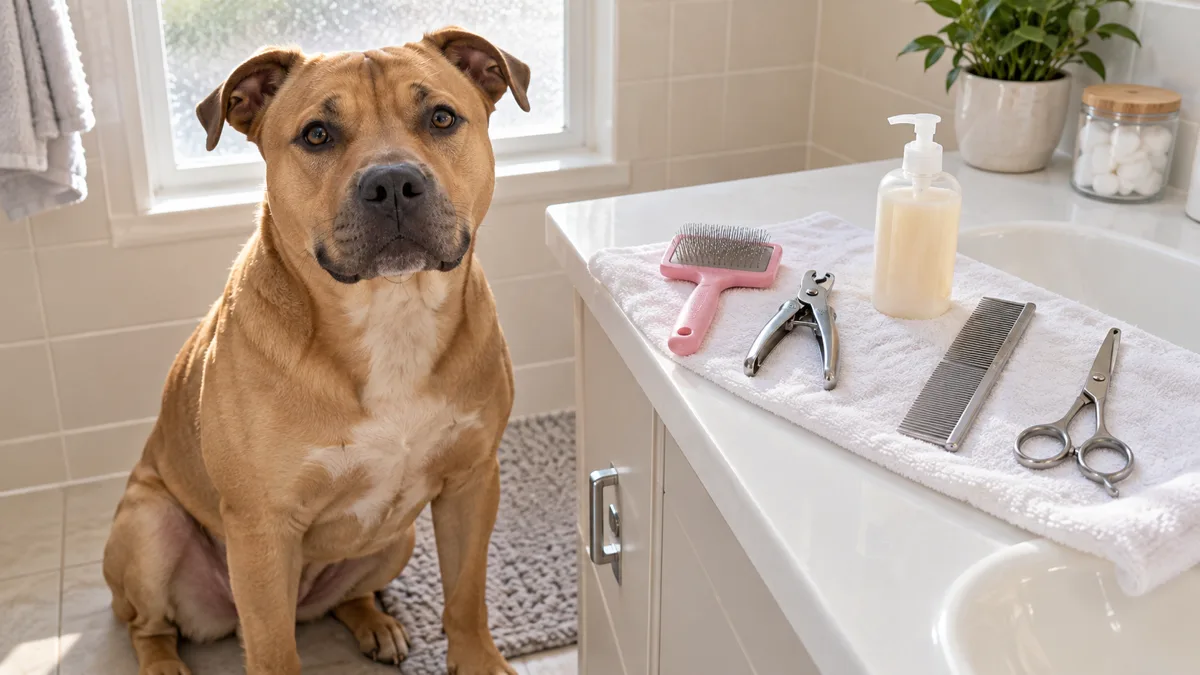
A pegboard with hooks is the simplest wall-mounted solution. Hang your slicker brush, metal comb, dematting rake, round-tipped scissors, and nail clippers where you can see and grab them with one hand. Arrange them by how often you use them — daily brushes at eye level, monthly tools higher up.
A rolling cart offers the same one-glance access with the bonus of mobility. Three-tier carts from any home store hold tools on top, towels in the middle, and products on the bottom shelf. Roll it to whatever room you are grooming in, then roll it back to storage.
Pegboard + hooks: best for a permanent station with wall space
Rolling cart: best if you groom in different spots or want to tuck the station away between sessions
Magnetic strip: works for metal tools like scissors and clippers — mounts flat on the wall and frees up counter space
Labeled bins: prevent the classic mistake of grabbing ear cleaner when you meant paw balm
One organizing pass on day one saves hundreds of small frustrations over the next year.
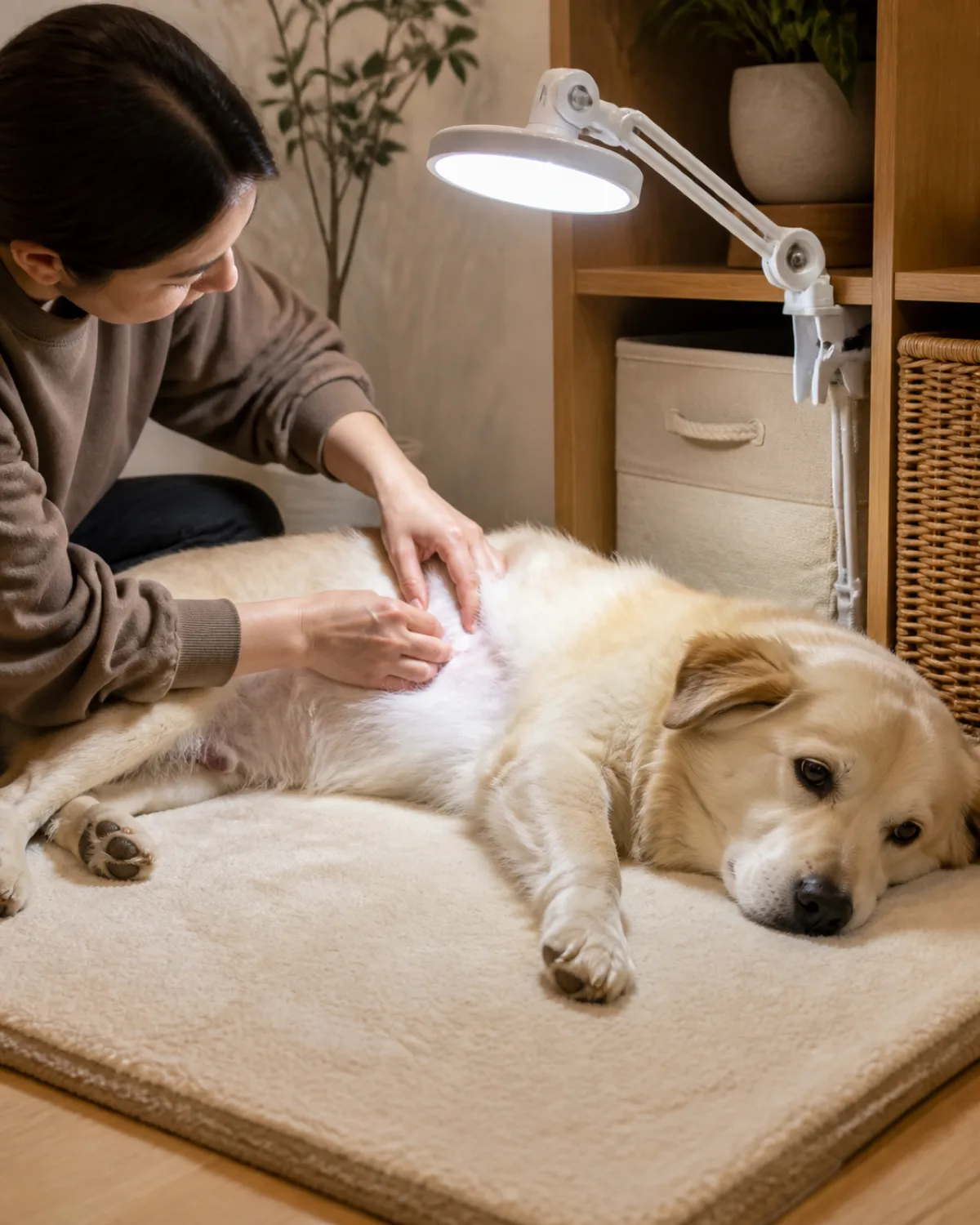
4. Install good lighting so you can actually see what you are doing
Overhead bathroom lights cast shadows exactly where you need to see clearly — under the chin, inside the ears, and along the belly where skin issues hide.
Add a clamp-on LED desk lamp or a gooseneck task light aimed at your grooming surface. Daylight-temperature bulbs (5000K to 6500K) show true coat and skin colors, which matters when you are checking for redness, dry patches, or the quick inside a dark nail.
Position the light to your non-dominant side so your working hand does not cast a shadow
A rechargeable clip light works well for portable setups where you cannot plug in
Good lighting is the cheapest upgrade that makes the biggest difference — a ten-dollar LED lamp turns guesswork into precision
If you have ever trimmed a nail too short because you could not see the quick, this one fix solves that problem. The same task light helps you spot skin irritation during brushing sessions before it becomes a bigger issue.
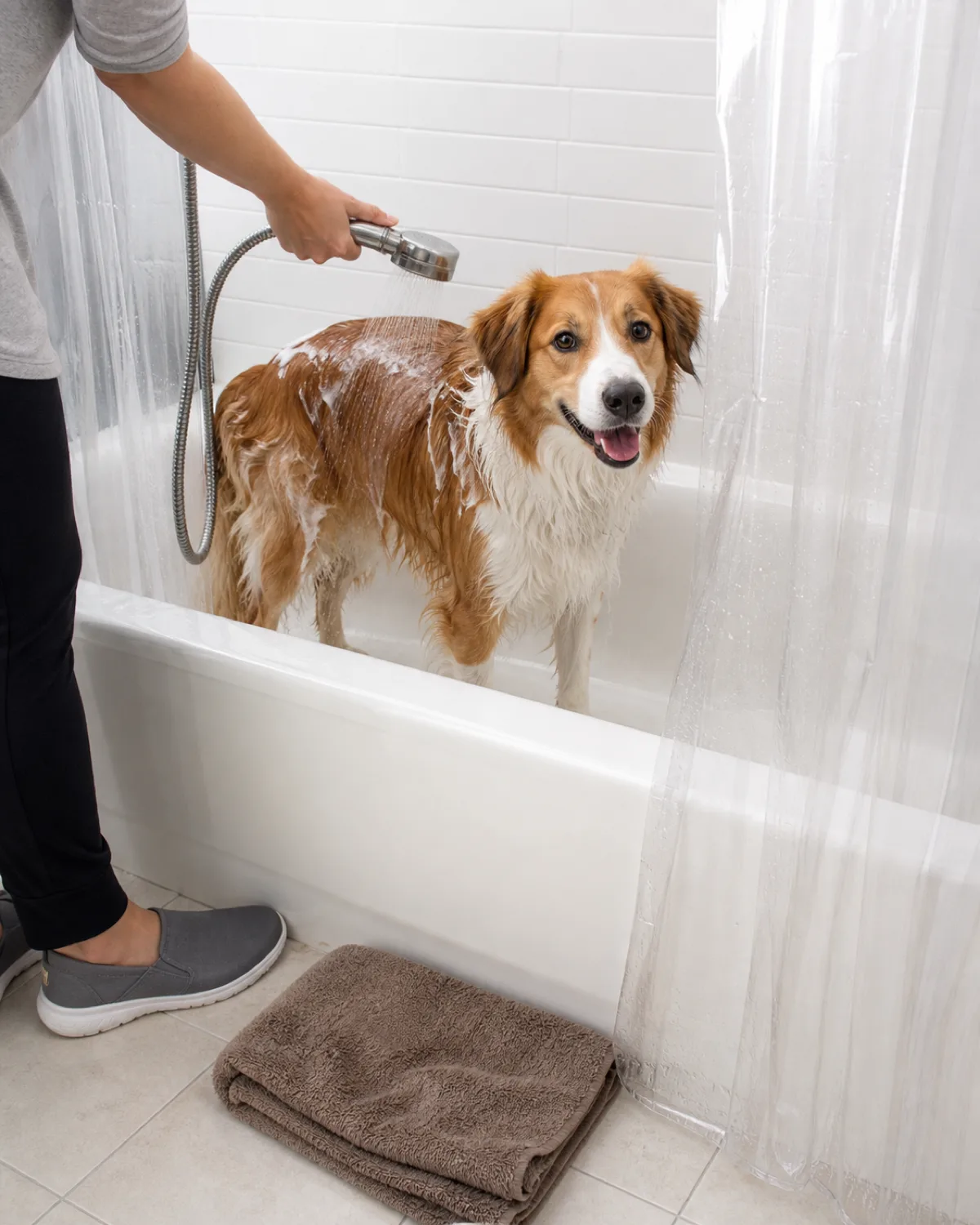
5. Add a waterproof splash zone if bathing is part of your routine
Not every grooming station needs water. If yours is strictly for brushing and trimming, skip this step entirely.
But if you bathe your dog at your station, you need to contain the splash radius. A dog shaking off inside a bathtub sends water two to three feet in every direction. Wet floors outside the tub become a slip hazard for both of you.
A shower curtain pulled partway around the tub blocks the worst of the spray
A folded towel or bath mat on the floor beside the tub gives your dog a non-slip landing zone when they step out
A plastic drop cloth taped to the wall behind the tub protects drywall from repeated water exposure
For stand-alone basin setups, a large plastic storage bin works as a contained wash station for small dogs
The goal is a defined wet zone that you can wipe down in five minutes, not a bathroom-wide cleanup after every bath.
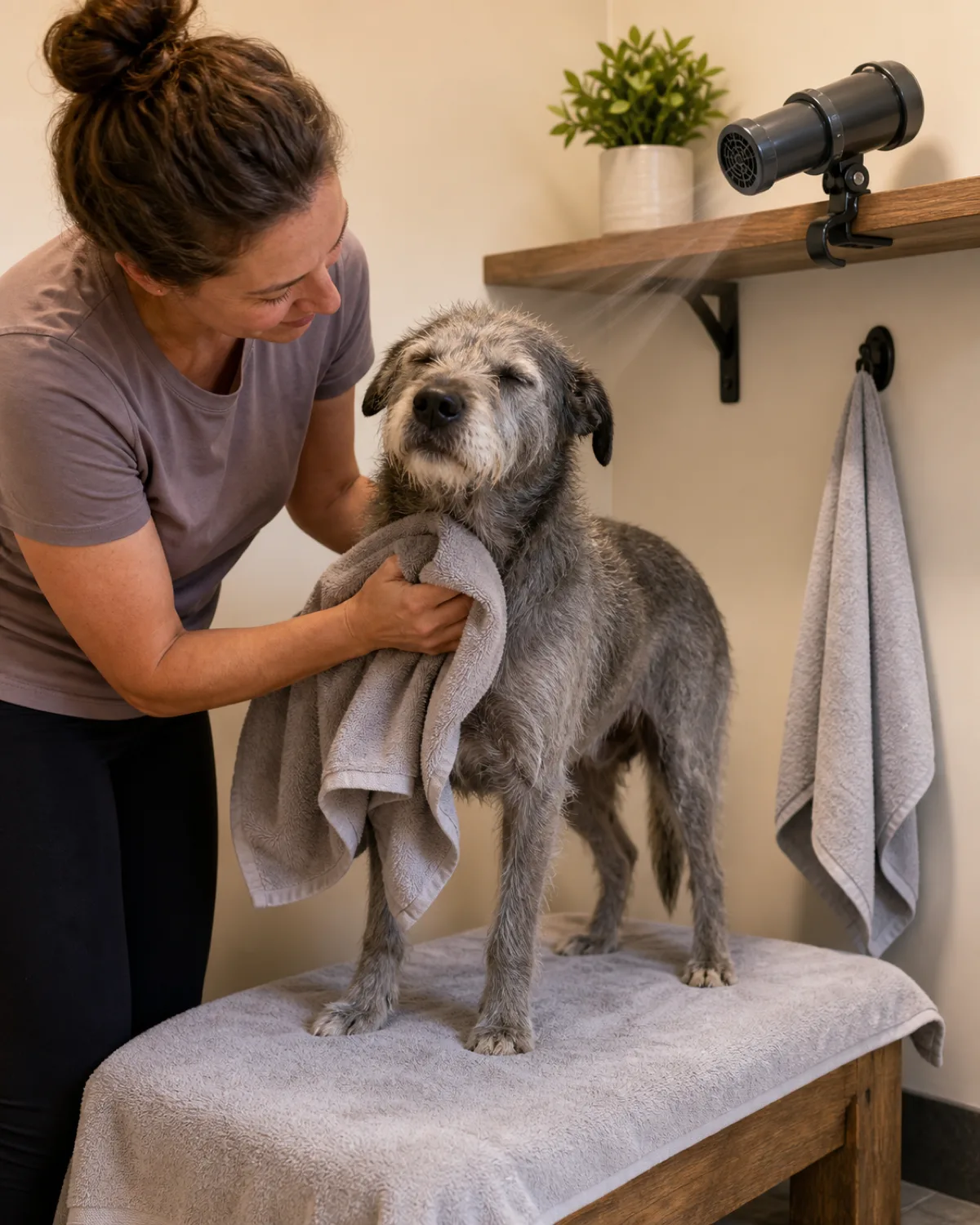
6. Keep a dedicated towel and drying station within arms reach
The thirty-second gap between turning off the water and grabbing a towel is when your freshly washed dog decides to shake. Hard.
Mount a towel hook or small rack within arms reach of your grooming station so you never have to step away to grab a dry towel. Keep at least two towels staged — one for the initial wrap and one for the follow-up pat-dry.
Microfiber towels absorb four to five times more water than cotton bath towels and dry faster between uses. They are worth the small upgrade, especially for thick-coated breeds that hold water like a sponge.
A clip-on dryer holder or wall-mounted bracket lets you aim the dryer hands-free while you towel or brush
Low speed and low heat prevent burns and reduce anxiety — most dogs tolerate dryer noise better when it is not on full blast
Hang towels to air-dry between sessions rather than tossing them straight into a hamper — they will last longer and stay fresher
Drying is half the bath. Having everything staged before you start the water makes it feel like one smooth process instead of a wet scramble.
Four principles that separate a grooming station that works from one that collects dust
The station design philosophy
The best grooming stations are not the most expensive ones. They are the ones built around four habits that keep sessions short, tools accessible, and the dog willing to come back.
Surface before styleA non-slip mat on the right surface matters more than a matching tool set. If your dog feels stable and you are not hunching, the station is working regardless of how it looks.
One-hand access to everythingYour other hand is on the dog. Every tool, product, and treat should be reachable without letting go, stepping away, or opening a drawer.
Contain the mess at the sourceA sheet on the floor catches fur. A drain filter catches hair. A designated caddy keeps products together. Containment beats cleanup every time.
Grow the station around real useStart with a mat and a brush. Add what you actually need after a few sessions, not what a shopping list tells you to buy before your first one.
7. Store grooming products in a caddy that moves with you
Shampoo in the bathroom cabinet. Ear cleaner under the kitchen sink. Paw balm in the bedroom nightstand. Styptic powder somewhere in the garage.
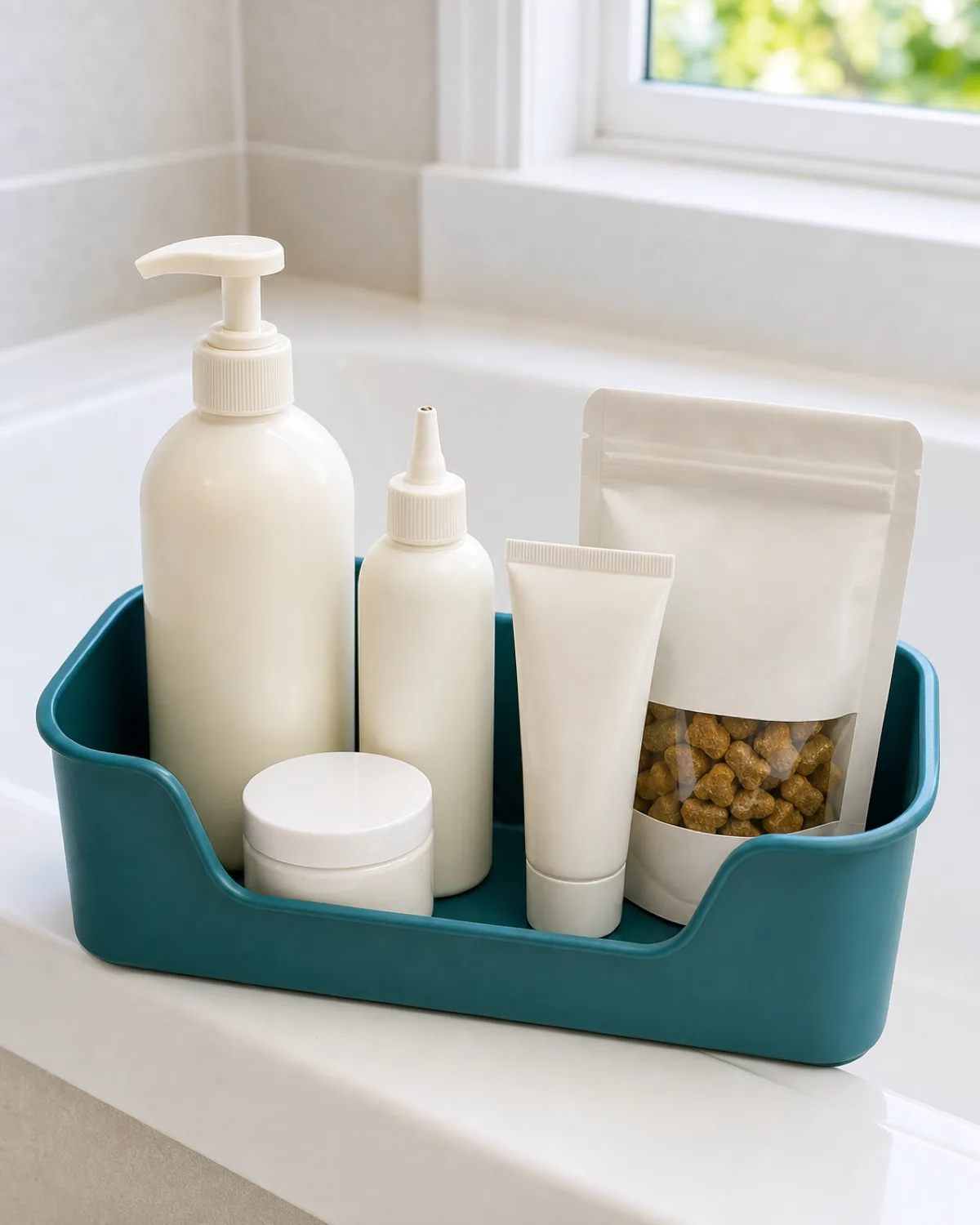
If this sounds familiar, you need a caddy. One portable container that holds every product you use during grooming, travels to whatever station you are working at, and returns to a single storage spot when you are done.
A plastic shower caddy with a handle works perfectly. Load it with your dog shampoo, conditioner, ear cleaning solution, paw balm, styptic powder, and a small bag of training treats. Everything upright, everything visible, everything in one grab.
Label bottles if anyone else in the house might confuse dog products with human ones
Check expiration dates every few months — ear cleaners and medicated shampoos lose effectiveness
Keep the caddy off the floor between sessions to prevent moisture buildup on the bottom
A five-dollar caddy eliminates the most common grooming delay: walking room to room collecting supplies while your dog waits.
8. Make your dog comfortable with a calming pre-grooming routine
The best-designed station in the world fails if your dog panics the moment they see it. Equipment is half the equation. The other half is how your dog feels about standing there.
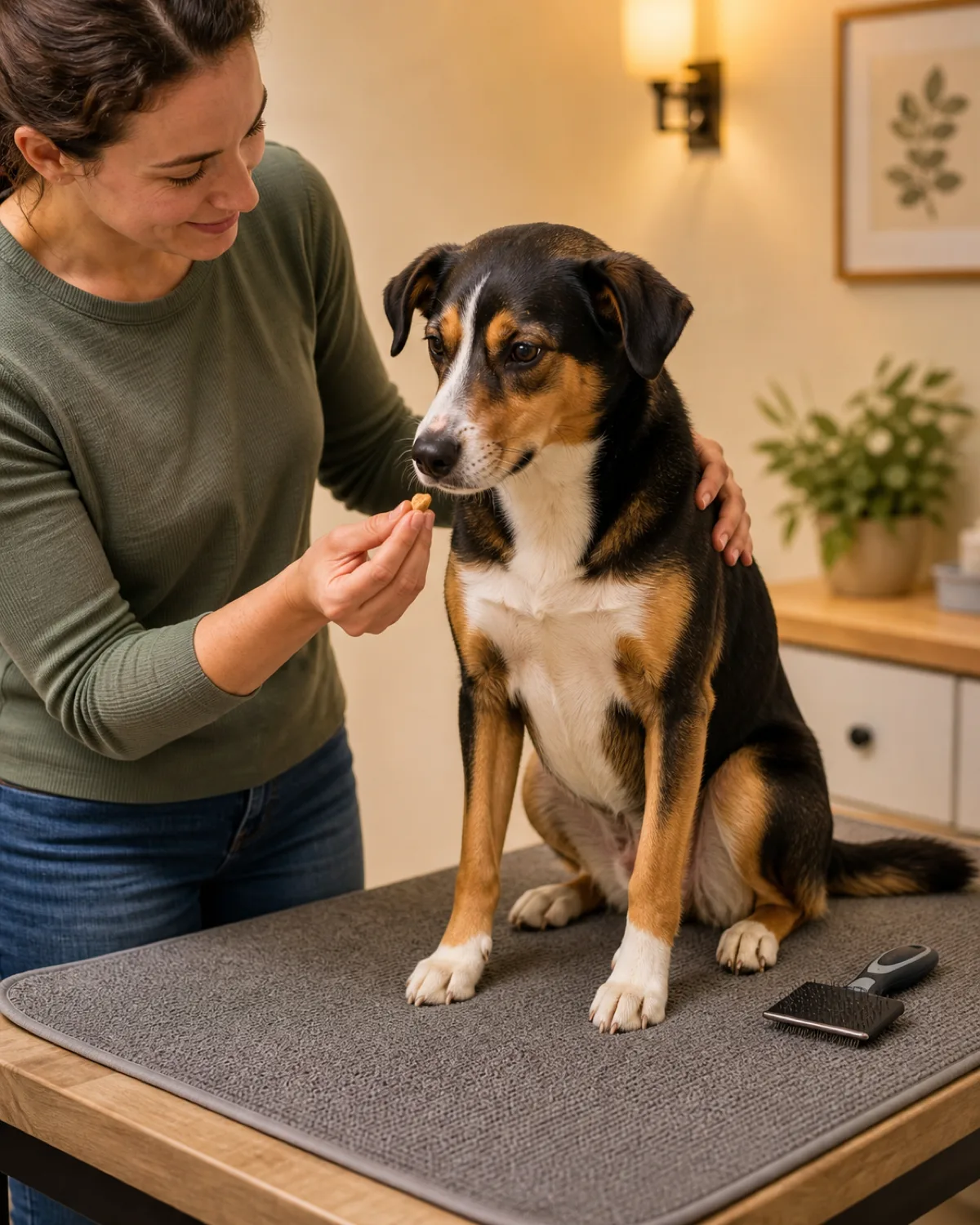
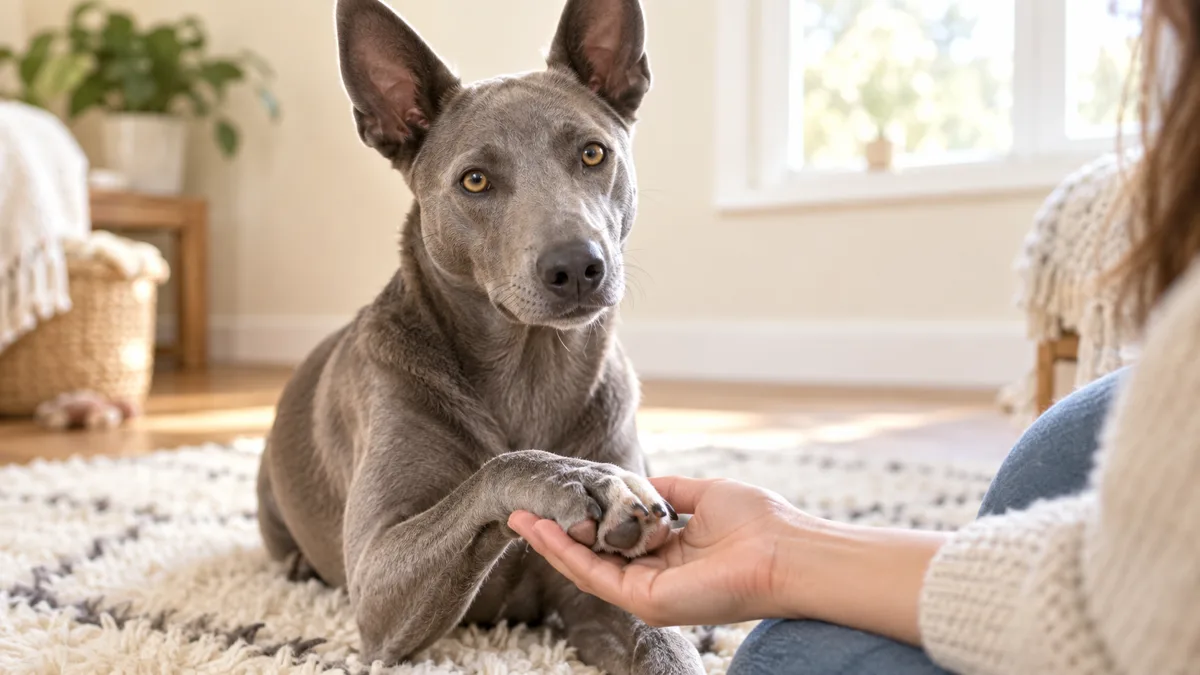
Build a predictable pre-grooming sequence that your dog learns to associate with good things. The pattern works the same way as the desensitization approach for brushing — start small, pair every step with a treat, and stop before your dog wants to leave.
Keep a treat jar at the station permanently — it is part of the design, not an afterthought
Start with short sessions of two to three minutes and work up gradually
End every session before your dog wants it to end — stopping on a positive note builds willingness for next time
Never chase, drag, or lift a reluctant dog onto the station — that creates a dog who hides when the brush comes out
Your dog should walk to the station on their own. If they do not, the problem is not the station setup — it is the association. Fix that first.
9. Create a cleanup plan so hair does not take over your house
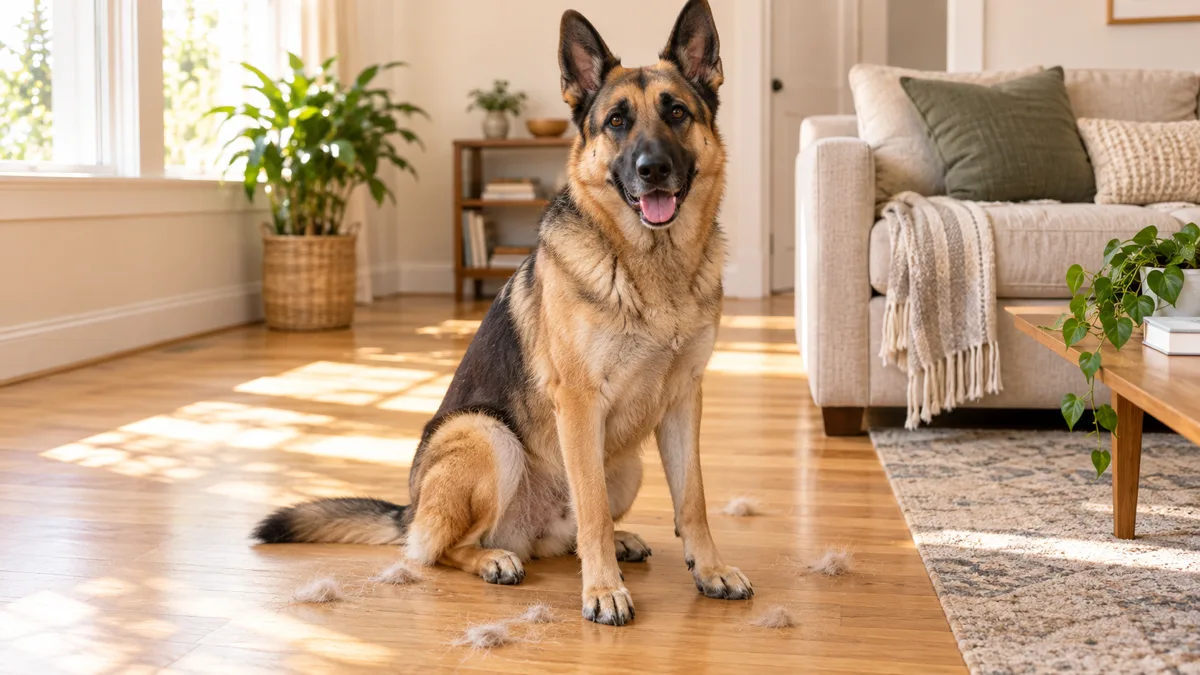
Every grooming session produces loose fur. Brushing a double-coated dog can fill a grocery bag. If you do not have a plan for where that fur goes, it ends up on your couch, in your air ducts, and stuck to your socks.
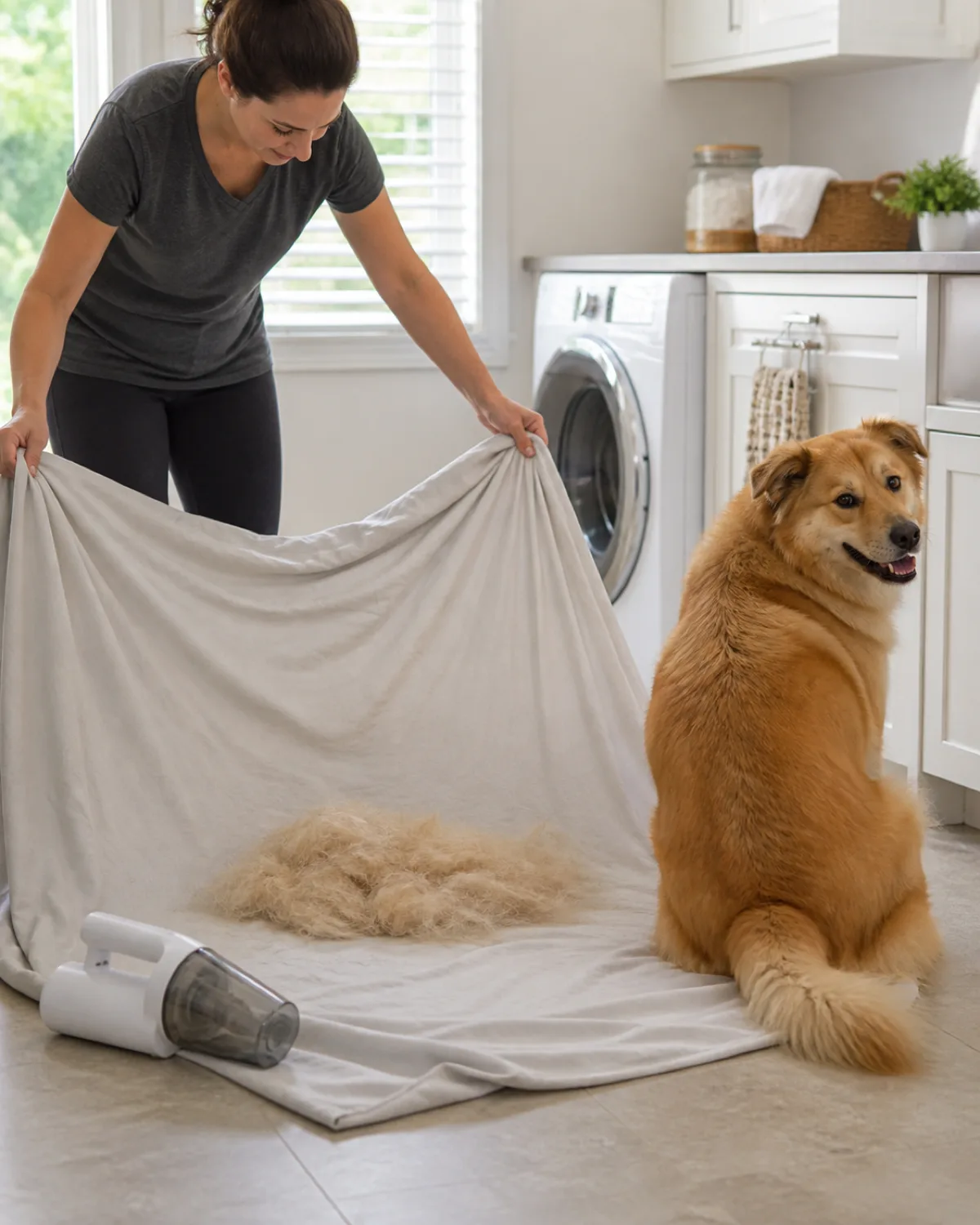
The simplest approach: drape an old bedsheet around your grooming area before you start. When you are done, gather the corners, shake the sheet outside or over a trash can, and toss it in the washing machine.
A handheld cordless vacuum parked at your station handles the fur that escapes the sheet
Lint rollers taped to the wall catch stray hairs on your clothes before you leave the grooming zone
Wipe down the mat and table with a damp cloth after every session to prevent buildup
Schedule a deeper clean weekly: vacuum the floor, wash the sheet, wipe down tools with a disinfectant spray
A two-minute cleanup after each session prevents a thirty-minute deep clean that nobody wants to do.
10. Add a drainage solution if your station includes a tub or basin
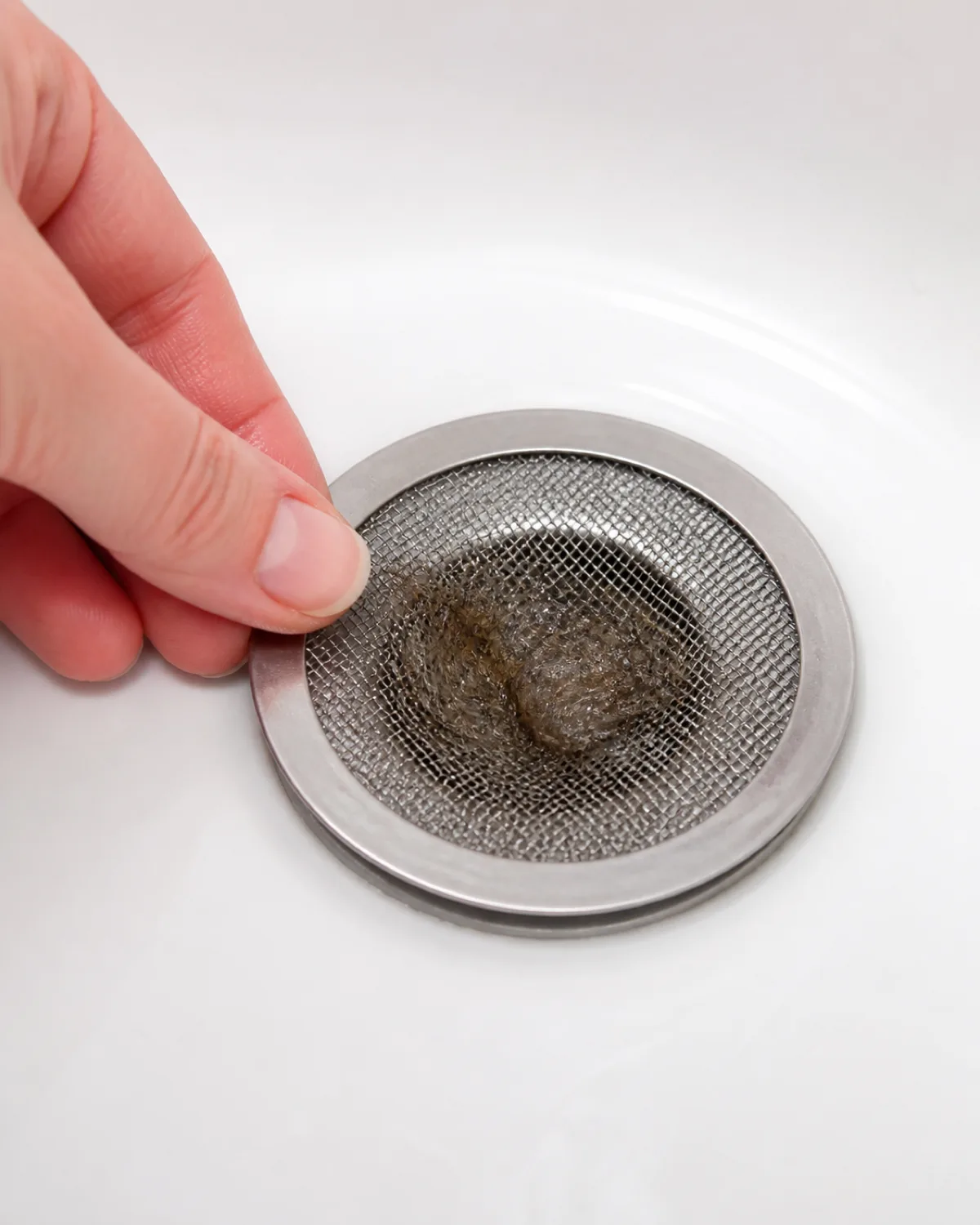
Dog hair in the drain is the number one maintenance problem for any station that involves water. A single bath can shed enough loose fur to slow a drain. Three baths without a filter can clog it completely.
A stainless steel mesh drain cover costs under five dollars and solves the problem permanently. Place it over the drain before you start, let it catch the hair, lift it out when you are done, and toss the clump in the trash.
Silicone hair catchers with suction cups work in showers and tubs where a flat mesh does not fit
Never let hair go directly down the drain — plumber visits cost two hundred times more than a drain filter
If you use a portable basin, pour used water through a mesh strainer into the toilet or outdoor drain
Clean the filter after every use, not every few uses — buildup makes it less effective and harder to clean
This is the most boring item on the list and the one that saves the most money over time.
11. Build a portable mini station for travel or outdoor grooming
Some grooming is better done outside. Deshedding in the yard means fur blows away instead of settling into your furniture. A quick brush at a campsite keeps mats from forming during a trip.
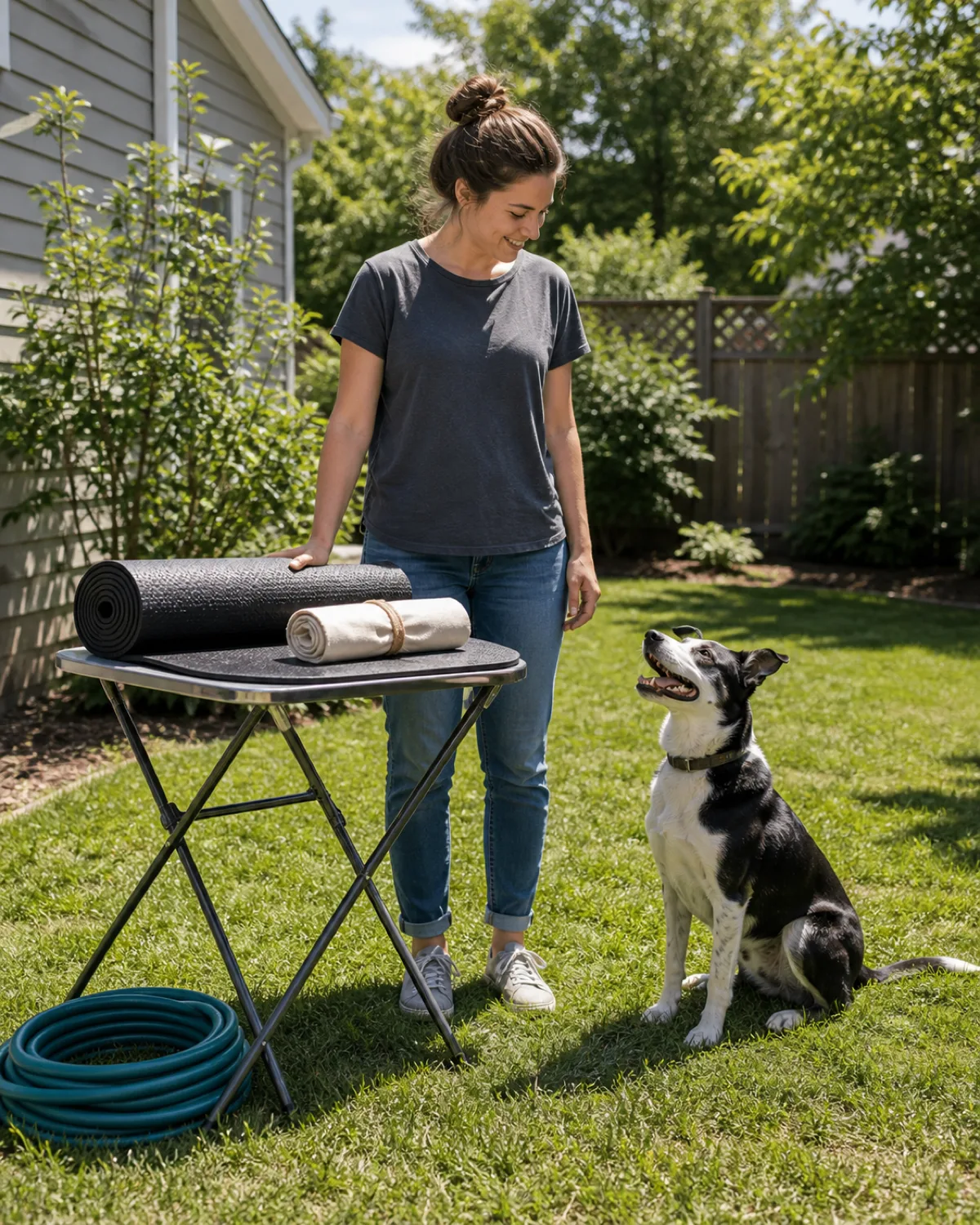
A portable station is three things: a lightweight folding table or mat, a rolled tool kit, and a small bag of essential products.
A canvas or nylon tool roll with individual pockets keeps brushes, combs, and clippers organized and protected in transit
A travel-size mat at yoga mat thickness gives your dog a familiar non-slip surface anywhere
Skip the full product caddy — pack only what you need for that session in a quart-size zip bag
A garden hose with a spray nozzle becomes an outdoor rinse station without any plumbing
The outdoor advantage goes beyond convenience. Natural light is the best grooming light, and you can see coat details outside that you miss under artificial indoor bulbs. If you are doing a full haircut at home, the backyard setup also keeps clippings out of the house entirely.
12. Start simple and upgrade one piece at a time
You do not need to build a full grooming suite on day one. The impulse to buy everything at once leads to a cluttered station full of tools you do not know how to use yet.
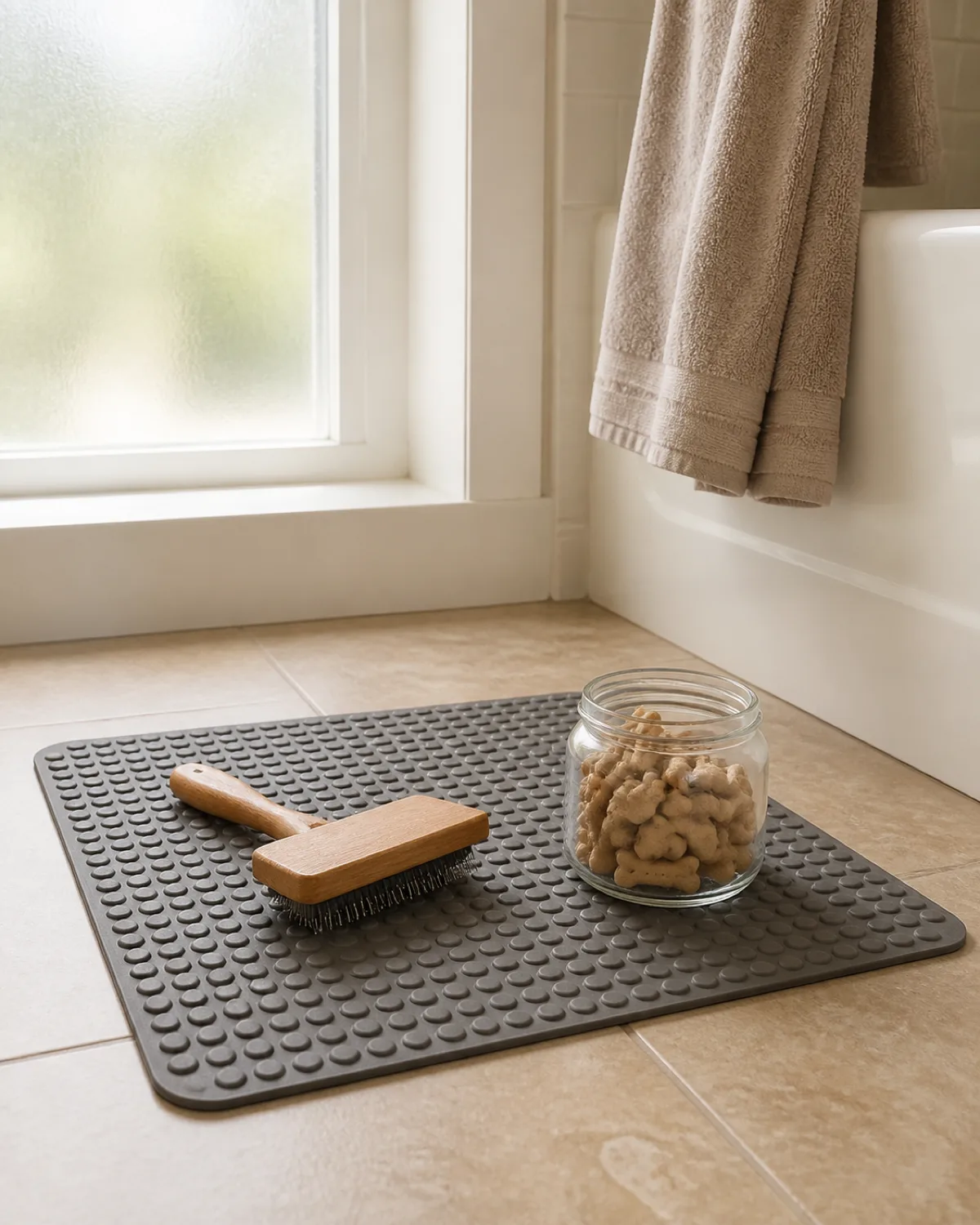
Start with three things: a non-slip mat, a good slicker brush, and a jar of treats. That is a grooming station. Use it for a week. Notice what is missing, what is annoying, and what works.
Week one: mat, brush, treats — get your dog comfortable with the spot
Week two: add a pegboard or cart for tool storage if you are tired of setting up and tearing down
Month one: add lighting, a towel station, or a splash guard based on what you actually do most
Month three: evaluate whether a raised table, a dryer mount, or a drainage upgrade would solve a real problem you have experienced
The grooming stations that people actually use long-term are the ones that grew organically around real needs — not the ones that arrived fully assembled from an online shopping spree.
Keep the station as simple as your routine demands, and add only what earns its space.
Save this for later
12 Dog Grooming Station Ideas for Any Home
1Pick the right spotHard floor, water access, and a door you can close. Laundry rooms and bathrooms top the list.
2Non-slip surface at the right heightSmall dogs on a table with a rubber mat. Large dogs on a floor mat. Surface stability comes first.
3Wall rack or rolling cart for toolsPegboard for permanent stations, rolling cart for mobile setups. One-hand grab access.
4Good task lightingClamp-on LED at 5000K to 6500K. See skin, nails, and coat details your overhead light hides.
5Waterproof splash zoneShower curtain plus landing mat if bathing is part of the routine. Skip if you only brush and trim.
6Towel and drying stationTwo microfiber towels within arms reach. Clip-on dryer bracket frees both hands.
7Portable product caddyOne shower caddy holds shampoo, ear cleaner, paw balm, styptic powder, and treats. One grab.
8Calming pre-groom routineTreat jar at the station. Short sessions. End before the dog wants to leave. They walk over willingly.
9Cleanup plan for furOld bedsheet draped around the area. Cordless vacuum at the station. Two-minute post-session sweep.
10Drain filter for bath stationsFive-dollar stainless mesh saves a two-hundred-dollar plumber call. Clean after every bath.
11Portable mini stationFolding table, tool roll, and a mat. Outdoor grooming means fur blows away and light is perfect.
12Start simple and upgrade laterMat plus brush plus treat jar is day one. Add only what solves a problem you have actually had.
pawliqa.com
About the author
Jess Calloway
Jess Calloway edits Pawliqa, where she shares dog care, grooming, training, and new-owner tips — plus DIY and pet-friendly home ideas — for anyone who wants a happy, well-cared-for dog. As a dog mom to three very different dogs, she writes the honest, tested version of what actually works. Every guide is image-led and reviewed for clarity, usefulness, image accuracy, and Pinterest-to-page alignment before it goes live. Visit the About page.
Fifteen dog paw care tips covering pad checks, nail length, moisturizing, hot pavement tests, winter balm, cracked pad first aid, and seasonal routines.