By age three, roughly eighty percent of dogs already have some form of dental disease. That number lands differently once you realize most owners never look inside their dog's mouth until something smells terrible.
Dog dental care is not just brushing. It is a daily stack of small habits that catch plaque before it hardens, gum inflammation before it spreads, and broken teeth before they abscess.
Here are fourteen ways to keep your dog's mouth healthy without turning every evening into a wrestling match over a toothbrush.
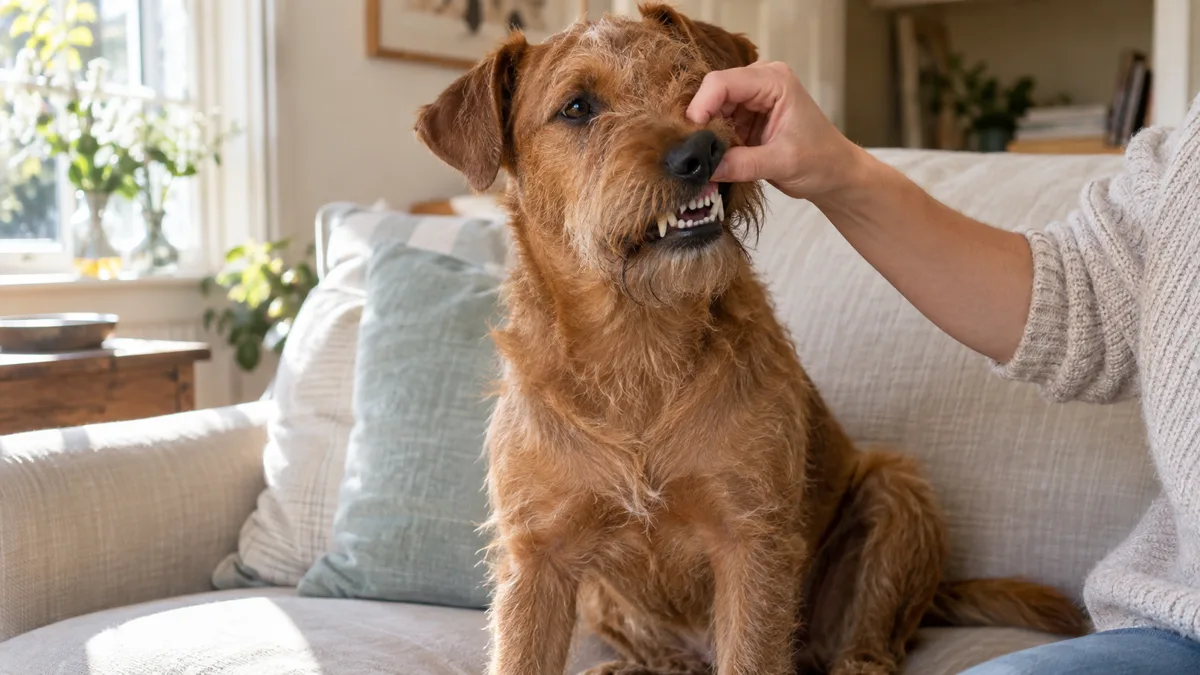
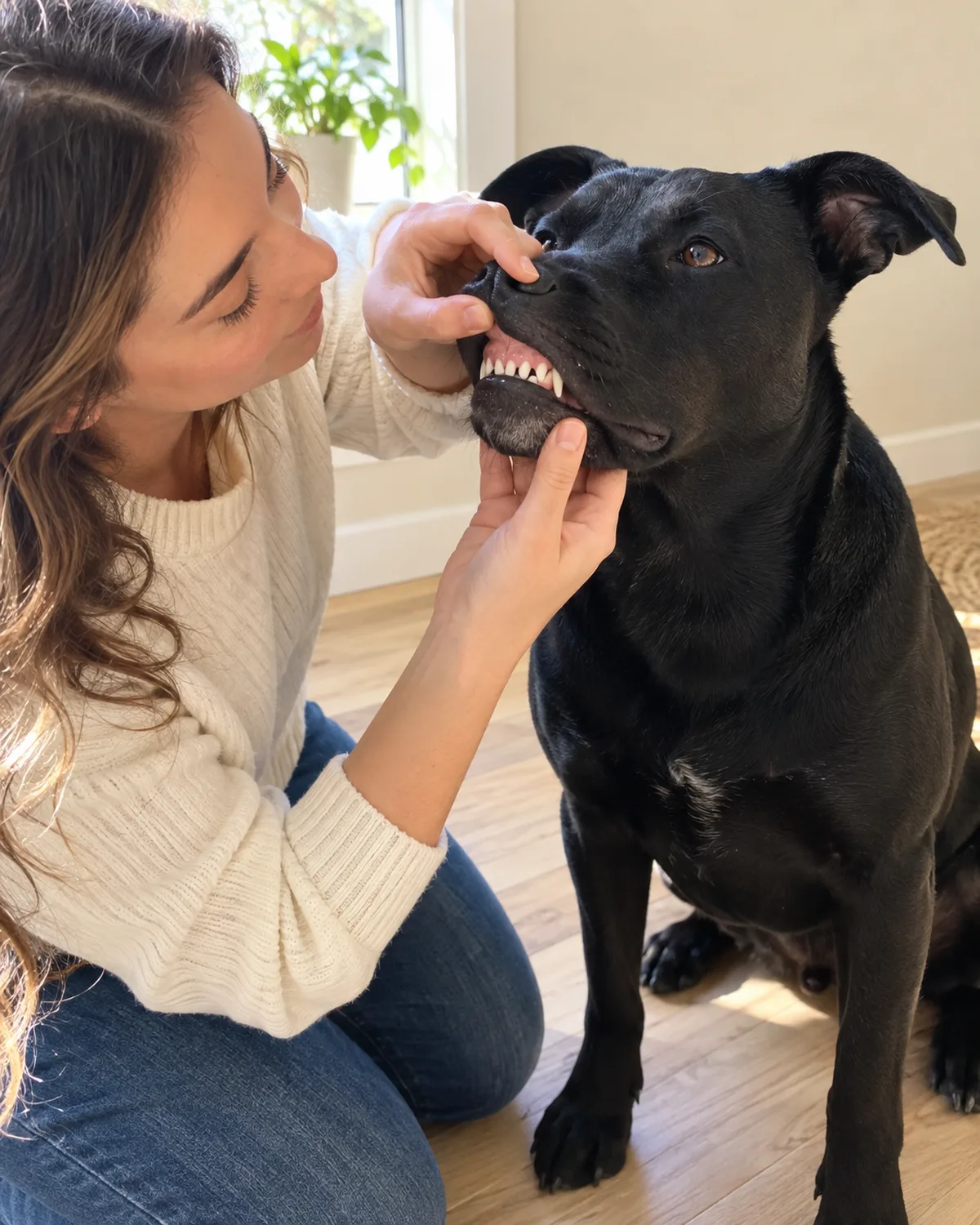
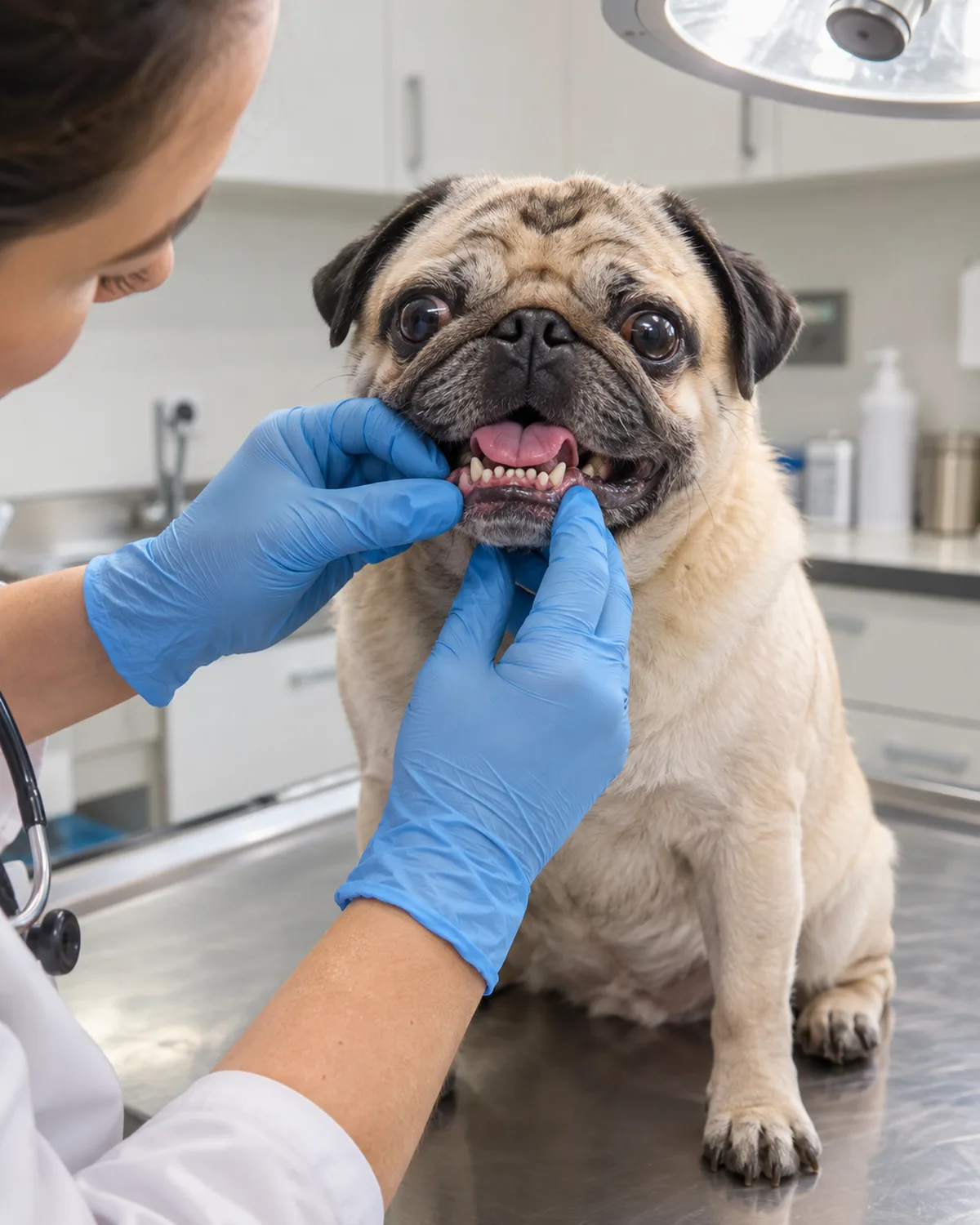
Lift your dog's upper lip and look at the gum line once a week. Healthy gums are salmon pink, firm, and smooth against the base of each tooth.
Run your finger along the outer gums from canine to back molars. You are feeling for swelling, heat, or any spot that makes your dog flinch. A healthy mouth should not produce a noticeable flinch anywhere.
Pink and firm = healthy baseline
Red or puffy along the gum line = early gingivitis, time to increase brushing frequency
White or pale = possible anemia or circulation issue, call your vet
Bleeding when you press lightly = inflammation already underway
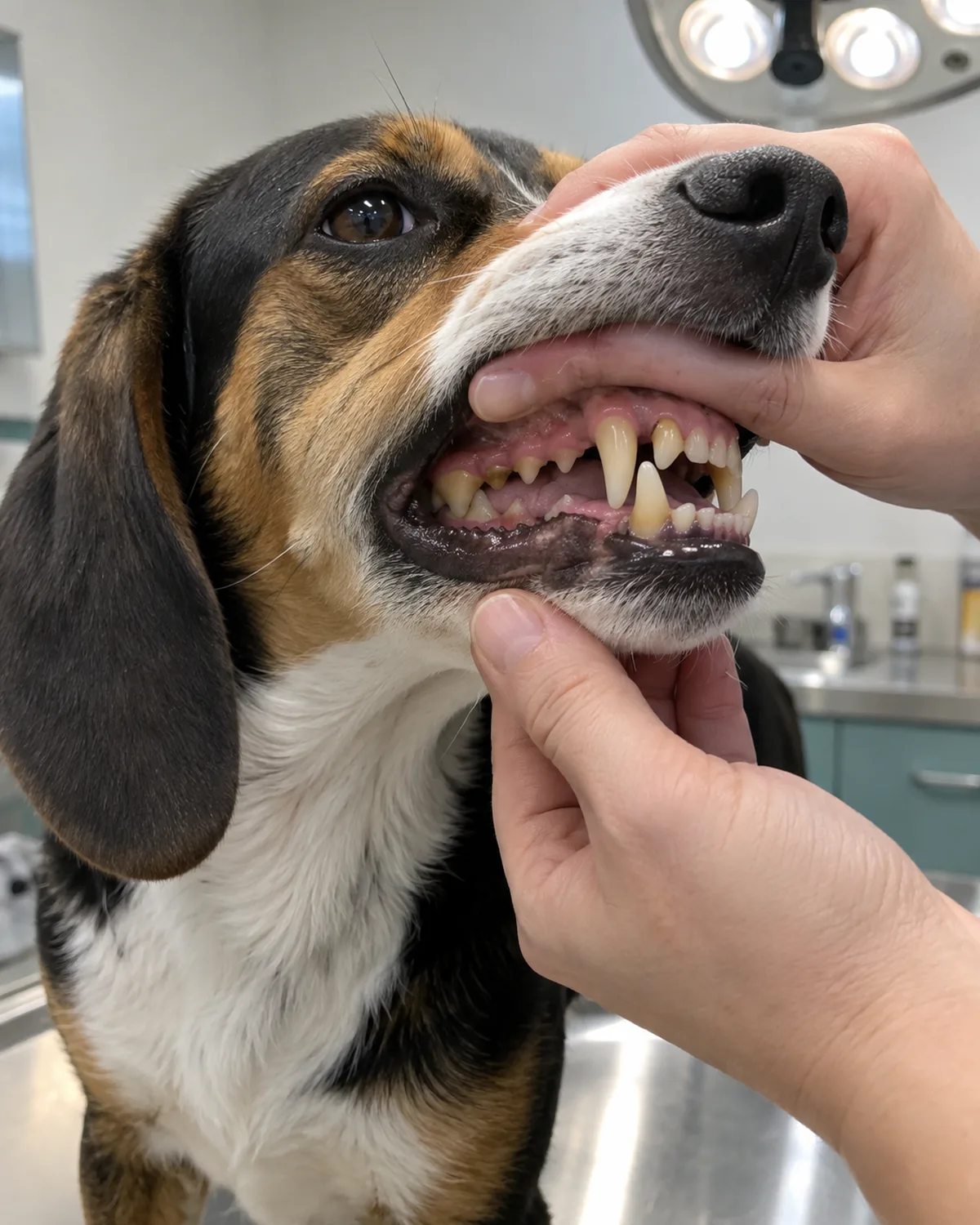
Check the teeth themselves for visible yellow or brown buildup near the gum margin. The back molars and the upper canines are the most common collection points because saliva flow is weakest there.
This sixty-second check catches problems weeks before they become painful. A dog will not tell you their tooth hurts until the pain is severe enough to change their eating behavior, and by that point the damage is already significant.
Know the Five Warning Signs of Dental Disease
Bad breath that persists beyond normal dog breath is the earliest signal most owners notice. A healthy dog's mouth should smell neutral to mildly warm, not rotten or metallic.
Beyond breath, four other signs point to dental disease progressing:
Yellow or brown buildup along the gum line that does not come off with a fingernail scrape
Red, swollen, or bleeding gums, especially along the back teeth
Drooling more than usual or thick, ropy saliva that was not there before
Dropping food, chewing only on one side, or refusing hard treats they used to eat without hesitation
Any one of those signs on its own warrants a vet visit. Two or more together usually mean the disease has moved beyond what home care alone can reverse, and professional cleaning may already be needed.
The tricky part is that dogs are remarkably good at hiding mouth pain. A dog with a cracked molar or an abscess will still eat, still play, still wag. They mask discomfort until it overwhelms them. That is why the weekly gum check from the first section matters more than waiting for visible symptoms.
Key takeaway
The two pillars of dog dental care
Daily plaque removalBrushing, finger caps, and dental chews remove plaque before it mineralizes into tartar within 24 to 72 hours.
Weekly visual checksCatching redness, buildup, or behavior changes early keeps small problems from becoming anesthesia-level cleanings.
Professional cleaningOnce tartar has hardened below the gum line, no home tool can safely remove it. That is the vet's job.
Early puppy habitsStarting mouth touches at eight weeks builds lifelong tolerance for brushing and vet exams.
Brush Daily, or at Least Three Times a Week
Plaque begins forming on tooth surfaces within hours of a meal. Left undisturbed for 24 to 72 hours, that plaque mineralizes into tartar, which no amount of brushing can remove.
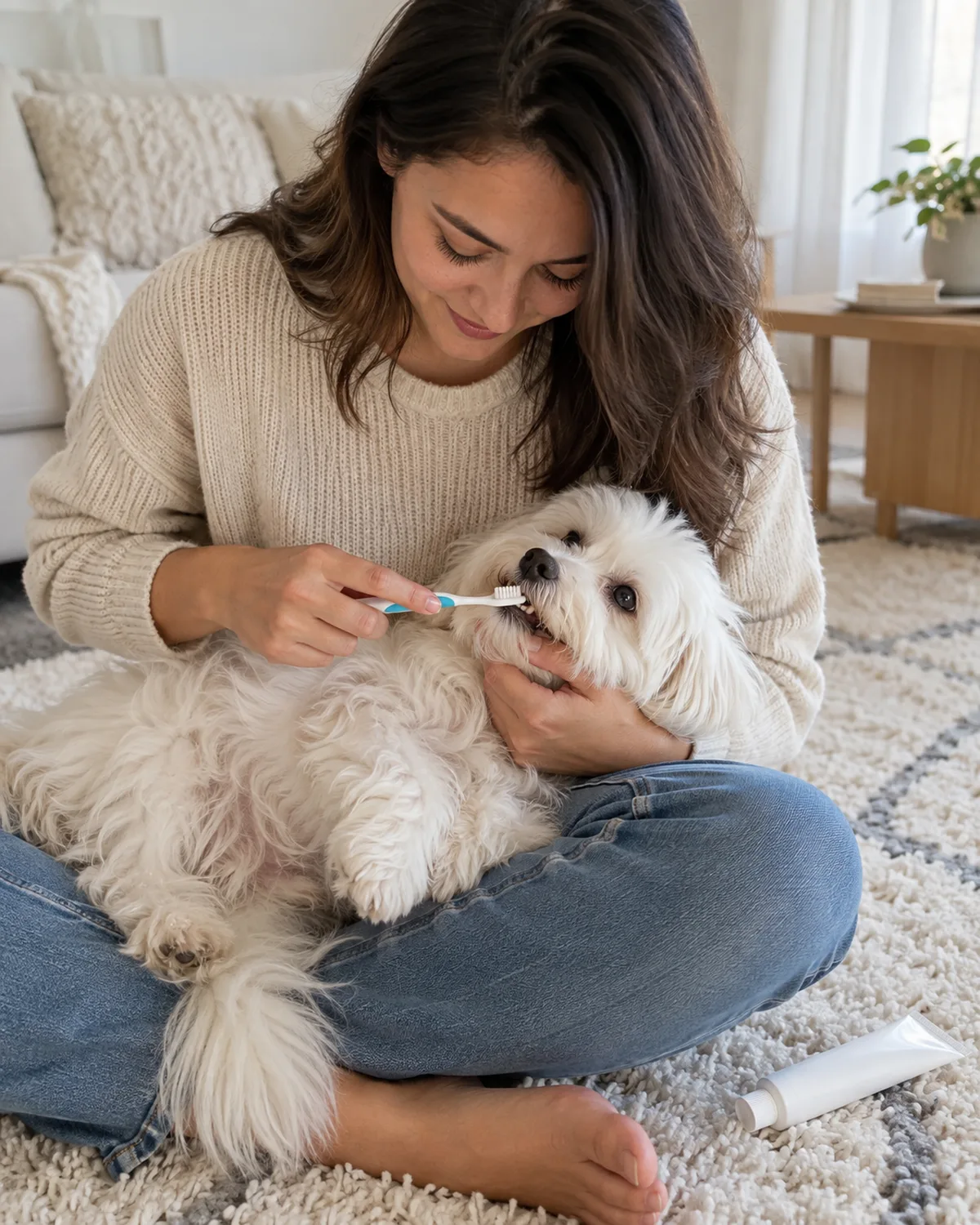
Daily brushing is the gold standard. If daily is not realistic for your schedule, three times a week is the veterinary-recommended minimum for meaningful plaque control. Anything less than that and the plaque cycle wins.
For a full walkthrough of technique, desensitization steps, and the 45-degree gumline angle that actually removes plaque, see our complete guide to brushing your dog's teeth at home.
Focus on the outer surfaces of the teeth, where plaque accumulates fastest
The tongue does a decent job cleaning the inner surfaces on its own
Brush in small circular motions along the gum line, not up and down
Thirty seconds per side is enough for a thorough pass
The evening is the best time to brush because plaque from the day's meals has not yet hardened overnight. Pair it with something your dog already anticipates, like the post-walk settle, so the habit sticks to an existing anchor.
Pick the Right Toothbrush and Toothpaste
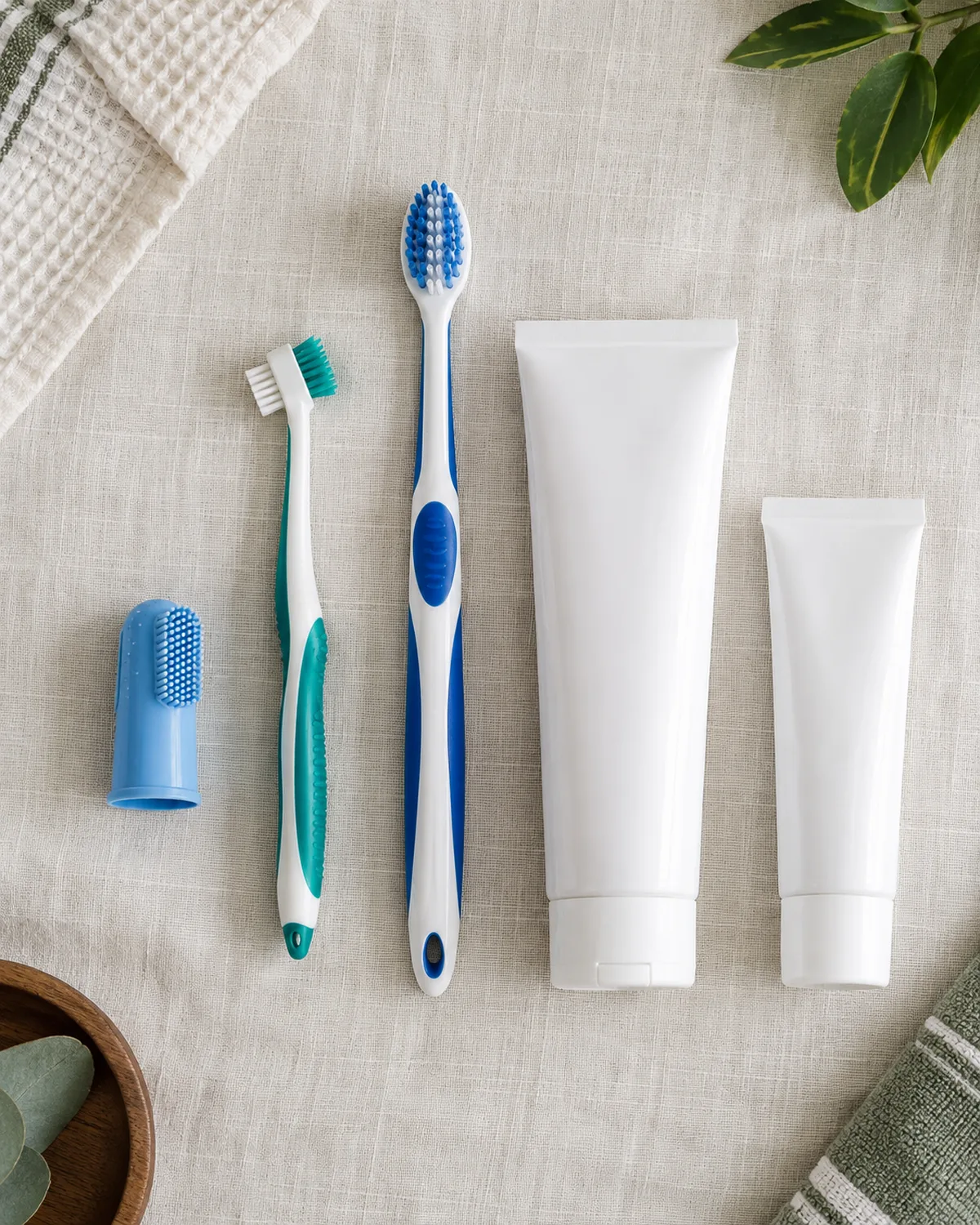
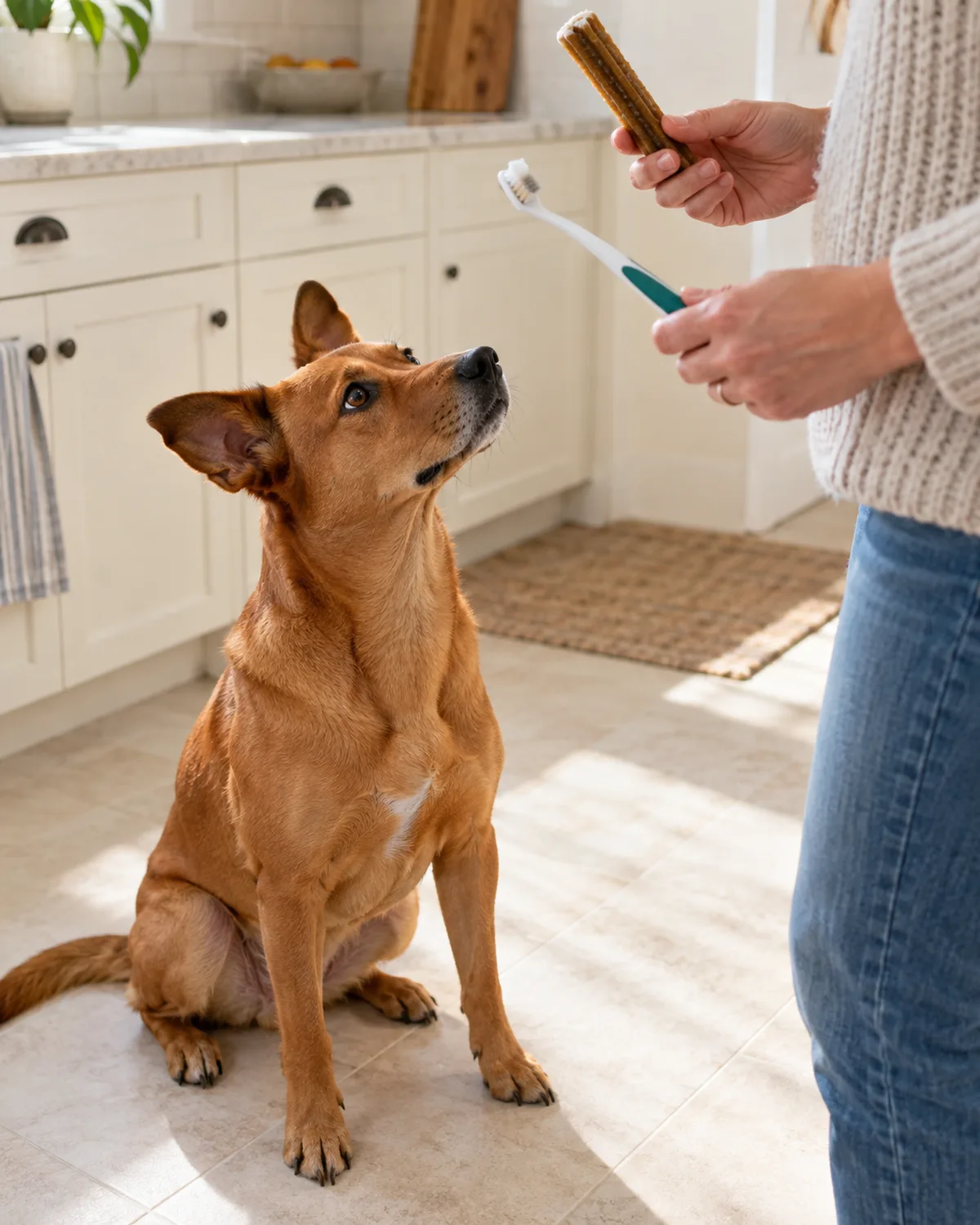
A dual-headed angled toothbrush reaches both the outer and inner tooth surfaces simultaneously. The angled neck matters because it lets you maintain the 45-degree gum line contact without contorting your wrist inside a dog's mouth.
For small dogs under fifteen pounds, a pediatric or finger-sized brush head covers more ground without gagging. For large breeds, a full-size dual-head with firm-but-flexible bristles works best.
Always use enzymatic dog toothpaste. Never human toothpaste:
Fluoride is toxic to dogs in the quantities found in human paste
Xylitol, a common human toothpaste sweetener, causes rapid insulin release and liver failure in dogs
Foaming agents in human paste are designed to be spat out, and dogs swallow everything
Enzymatic dog pastes come in poultry, beef, and peanut butter flavors. The flavor matters because it turns the toothbrush into a treat delivery system rather than a threat. Let your dog lick the paste off your finger before the first brush session to build a positive association with the taste.
Use a Silicone Finger Cap for Better Gum Contact
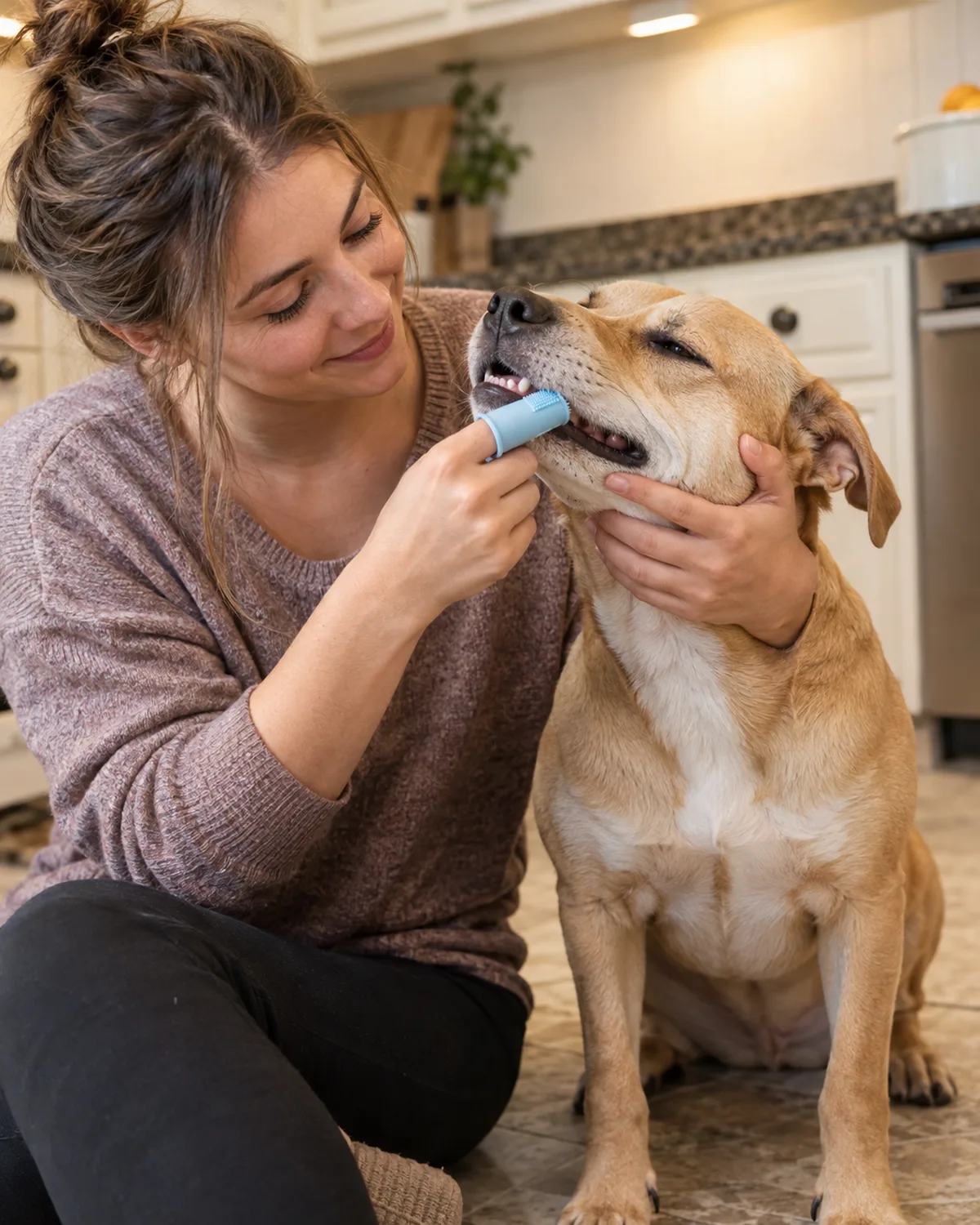
A textured silicone cap fits over your index finger and puts soft nubs directly against each tooth and gum ridge. Your fingertip feels exactly where plaque builds up along the gum line, giving you precision a long-handled tool cannot match.
This is particularly useful for dogs with small mouths where a standard brush head takes up too much space. Toy breeds, puppies, and dogs with crowded teeth all benefit from the direct contact and reduced bulk.
Slip the cap on, apply a pea-sized amount of enzymatic paste to the textured surface
Work along the outer gum line from front teeth to back molars on each side
Replace the cap every two to three weeks as the nubs flatten
The main drawback is that your finger is inside the dog's mouth, which means bite risk is higher than with a handled brush. If your dog has a history of snapping during mouth handling, start with the lip-lift exercises described in the brushing section before introducing any tool inside the mouth.
Did you know
Why plaque turns into tartar so fast
24-hour windowPlaque is a soft bacterial film that starts forming within hours of eating. At this stage a toothbrush or dental chew can wipe it away completely.
Mineral takeoverCalcium and phosphorus from saliva bind to the plaque within 24 to 72 hours, hardening it into tartar that no brush can remove.
Below the lineOnce tartar forms above the gum line, bacteria migrate below it where they attack the tooth root and jawbone, causing irreversible damage.
Dog saliva is alkalineA dog's mouth has a higher pH than a human's, which accelerates mineral deposition. This is why dogs rarely get cavities but develop tartar much faster.
Add a Dental Chew That Actually Works
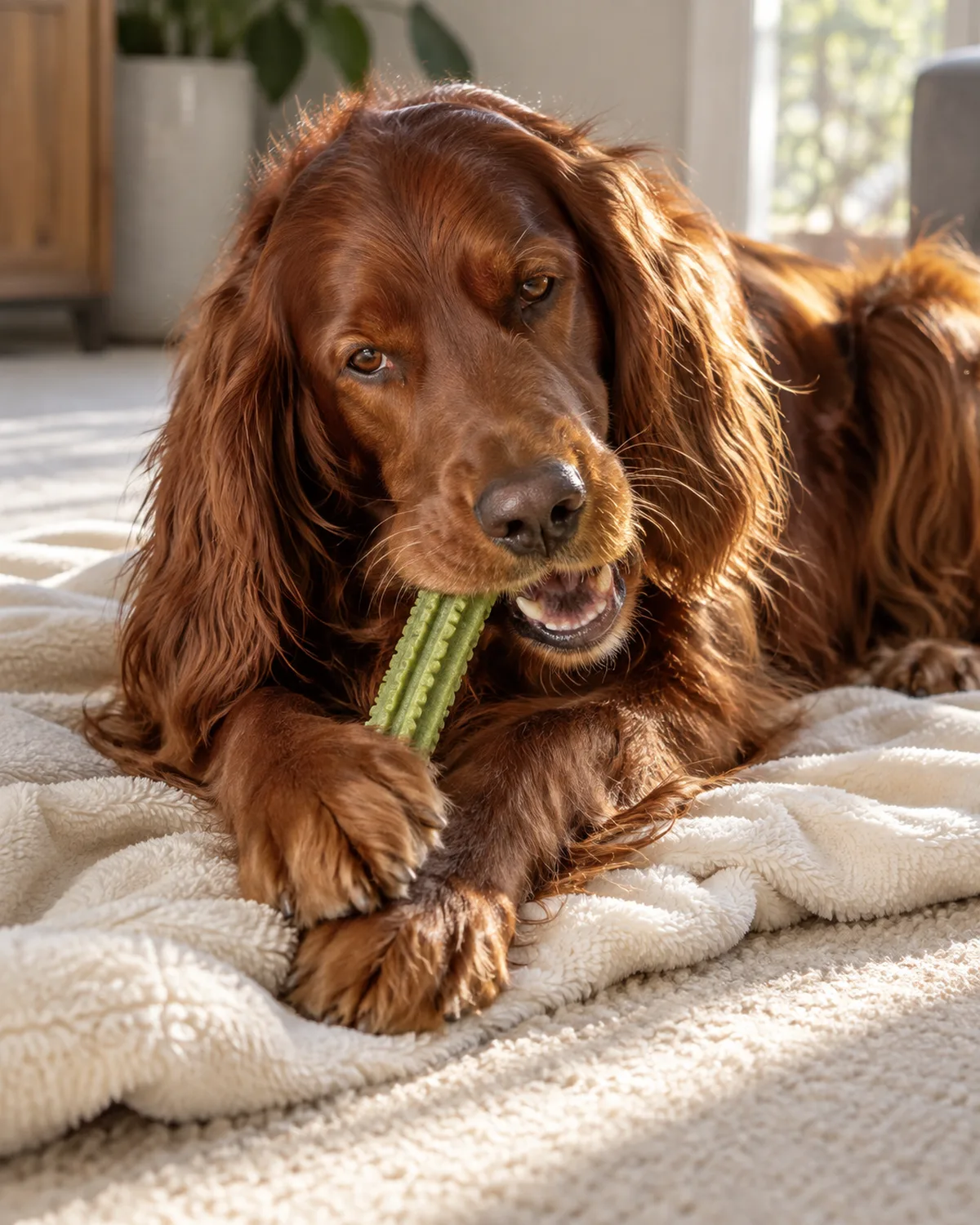
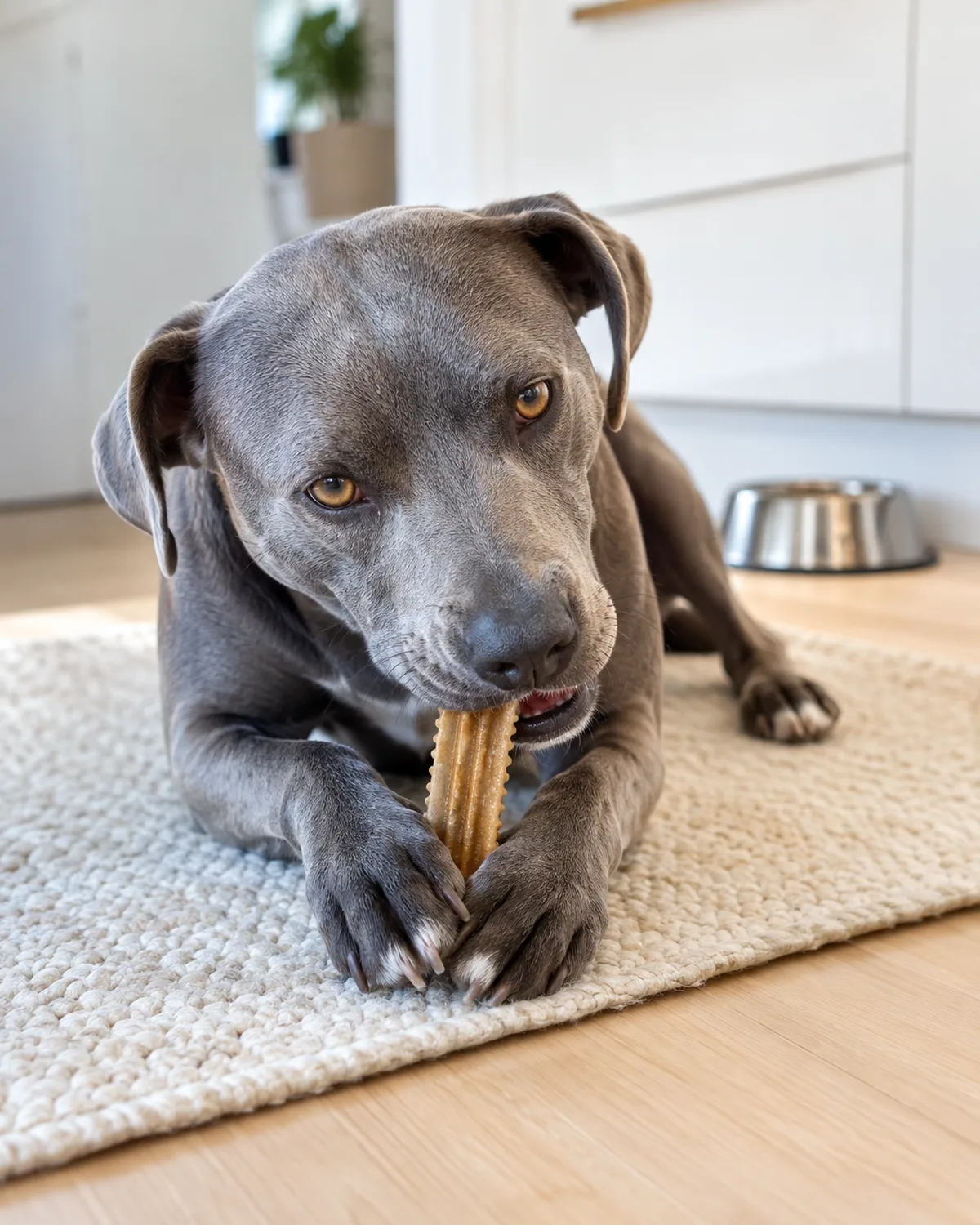
Look for the VOHC seal on the packaging. The Veterinary Oral Health Council independently tests dental products and only grants its seal to chews that have been proven to reduce plaque or tartar by a measurable percentage.
Not all dental chews are equal. Many products marketed as dental treats are just regular treats shaped like a toothbrush. The VOHC seal is the only third-party verification that the chew does what it claims.
Give one appropriately sized chew per day, after the main meal
Choose a chew that takes your dog at least five to ten minutes to finish; if they swallow it in two bites, it is too small or too soft to provide any scraping action
Avoid chews that are rock-hard, like antlers or dried hooves, which can fracture teeth
Dental chews work best as a complement to brushing, not a replacement. They reach the chewing surfaces and outer premolars effectively but cannot clean the gum line of the front teeth or canines, which is where plaque causes the most damage.
Use a Water Additive as a Plaque-Fighting Layer
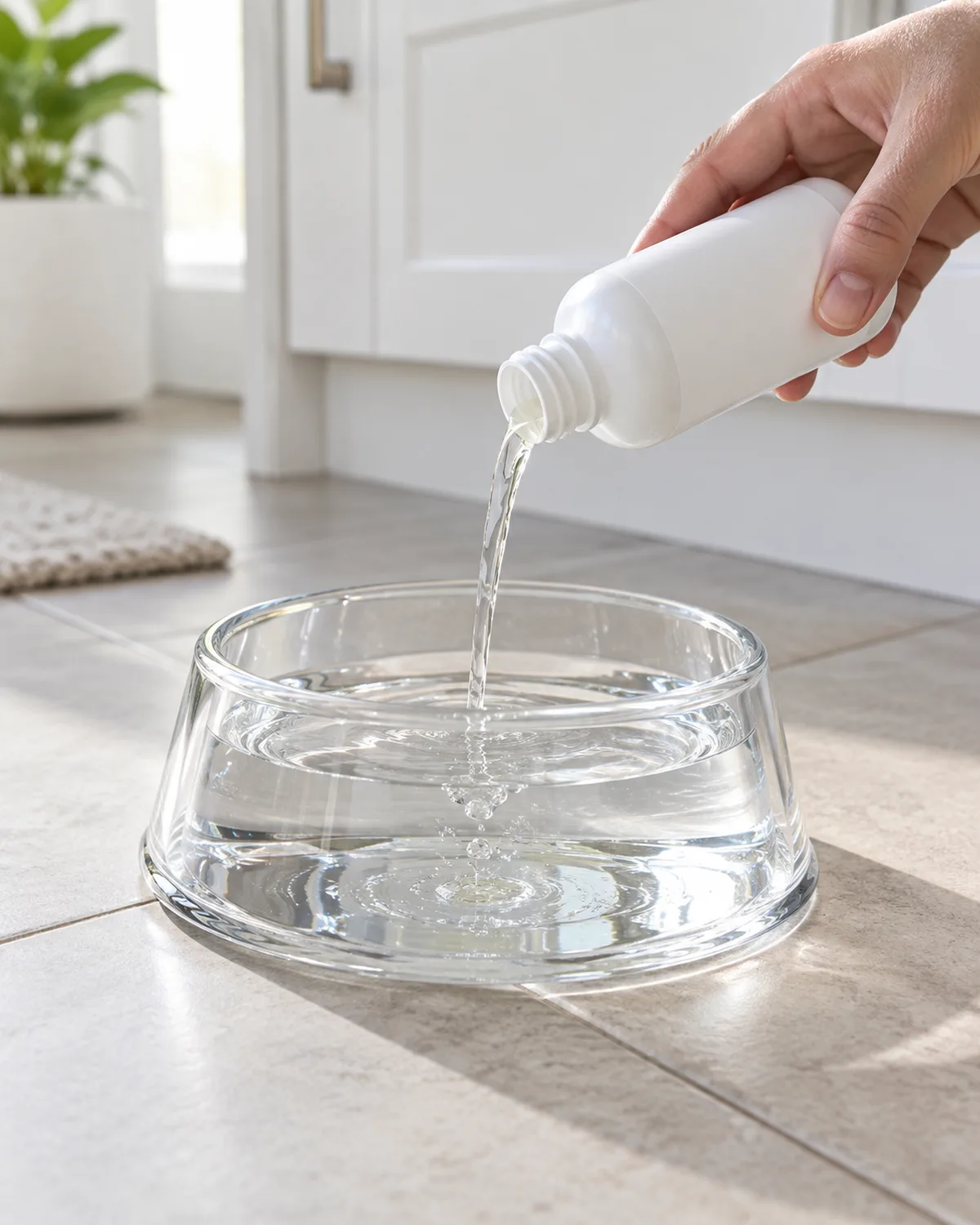
Dental water additives are tasteless antimicrobial liquids you pour into the water bowl once daily. They work passively every time your dog drinks, disrupting the bacterial film that forms plaque.
This is the lowest-effort dental care layer you can add. There is no handling, no holding the dog still, and no training required. Pour it in when you refill the bowl and it is done.
Look for products carrying the VOHC seal or containing cetylpyridinium chloride (CPC), a well-studied antimicrobial
Follow the dilution ratio on the bottle exactly; more is not better and can alter the water taste enough that your dog stops drinking
Change the water daily so the additive stays at effective concentration
Water additives will not remove existing tartar or replace brushing. They are a supplementary layer that slows plaque formation between brushing sessions. Think of them as mouthwash for dogs rather than a standalone dental solution.
Choose Kibble and Treats That Reduce Tartar Buildup
Kibble with a larger, denser texture forces dogs to chew rather than swallow whole, creating a mild mechanical scrubbing action on the tooth surface with every bite.
VOHC-approved dental diets take this further with a fiber matrix technology that holds the kibble together as the tooth sinks in, wiping the surface clean before the piece breaks apart. Standard kibble shatters on contact and provides almost no cleaning benefit.
Dental-specific kibble is most effective on the premolars and molars where chewing actually happens
It does nothing for the front teeth or canines, so brushing those areas remains essential
Wet food and soft treats leave more residue on teeth than dry food, which is worth knowing if your dog eats primarily canned food
Switching to a dental diet is not a substitute for brushing, but it turns every meal into a passive cleaning event. For dogs that refuse all forms of brushing, a VOHC dental diet combined with dental chews and a water additive is the best available fallback stack.
Give Raw Bones Only Under Supervision
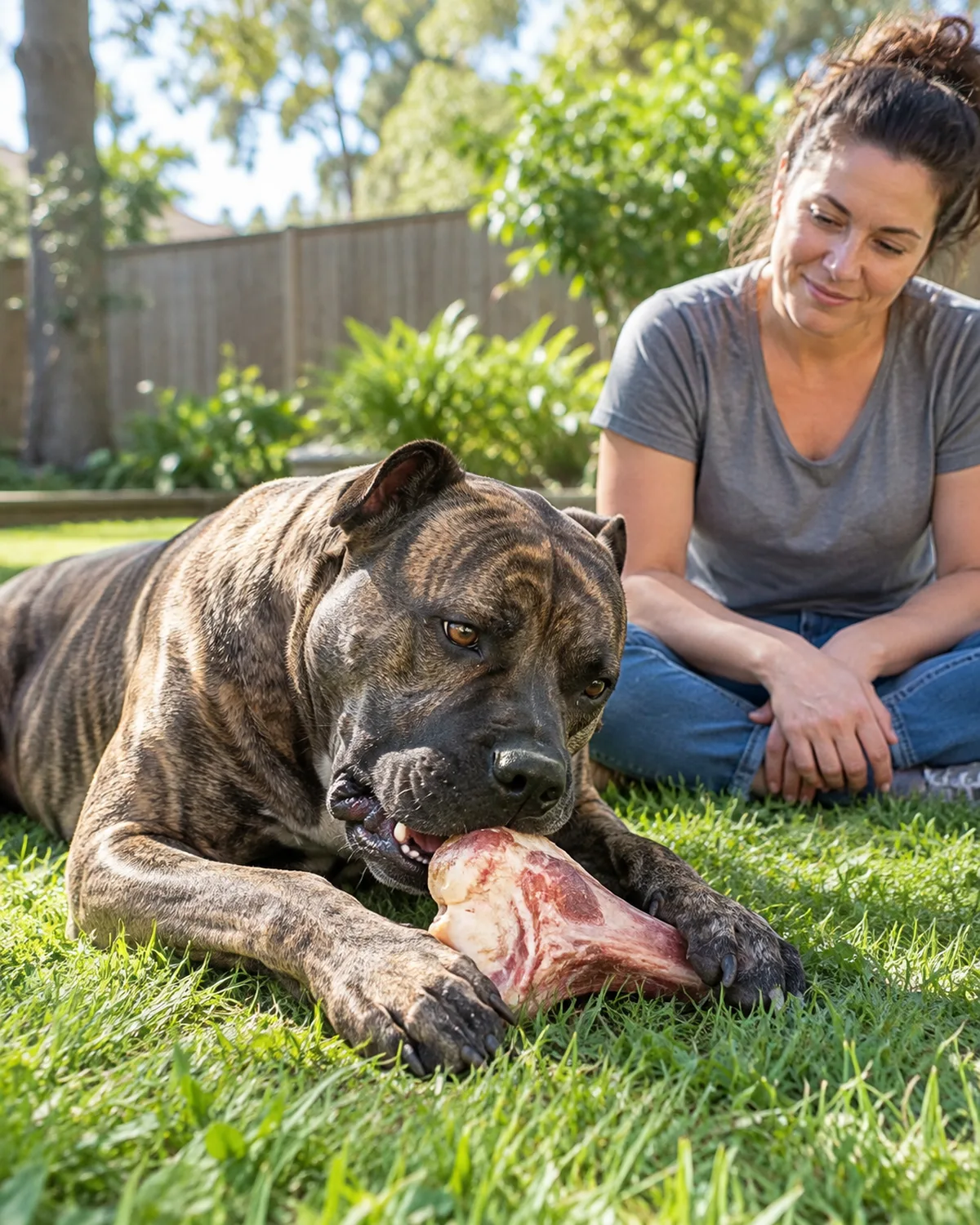
Raw beef knuckle bones can help scrape plaque mechanically as the dog gnaws and works the bone surface against their teeth. The key word is raw. Cooked bones become brittle, splinter into sharp fragments, and cause puncture injuries in the mouth, throat, and intestines.
The risks with raw bones are real even when they do not splinter:
Slab fractures on the upper fourth premolar, the large shearing tooth at the back, from biting down on a surface harder than enamel
Broken tooth tips on the canines from aggressive chewing angles
GI obstruction if the dog swallows a chunk large enough to lodge in the esophagus or intestine
Supervise every session. Remove the bone once it gets small enough to fit entirely inside the dog's mouth. Limit sessions to fifteen to twenty minutes and refrigerate the bone between uses.
If your dog is an aggressive power chewer who crushes bones rather than gnawing them, raw bones are not a safe option. Stick to VOHC-approved dental chews that are designed to yield before they crack a tooth.
Skip the DIY Scaling at Home
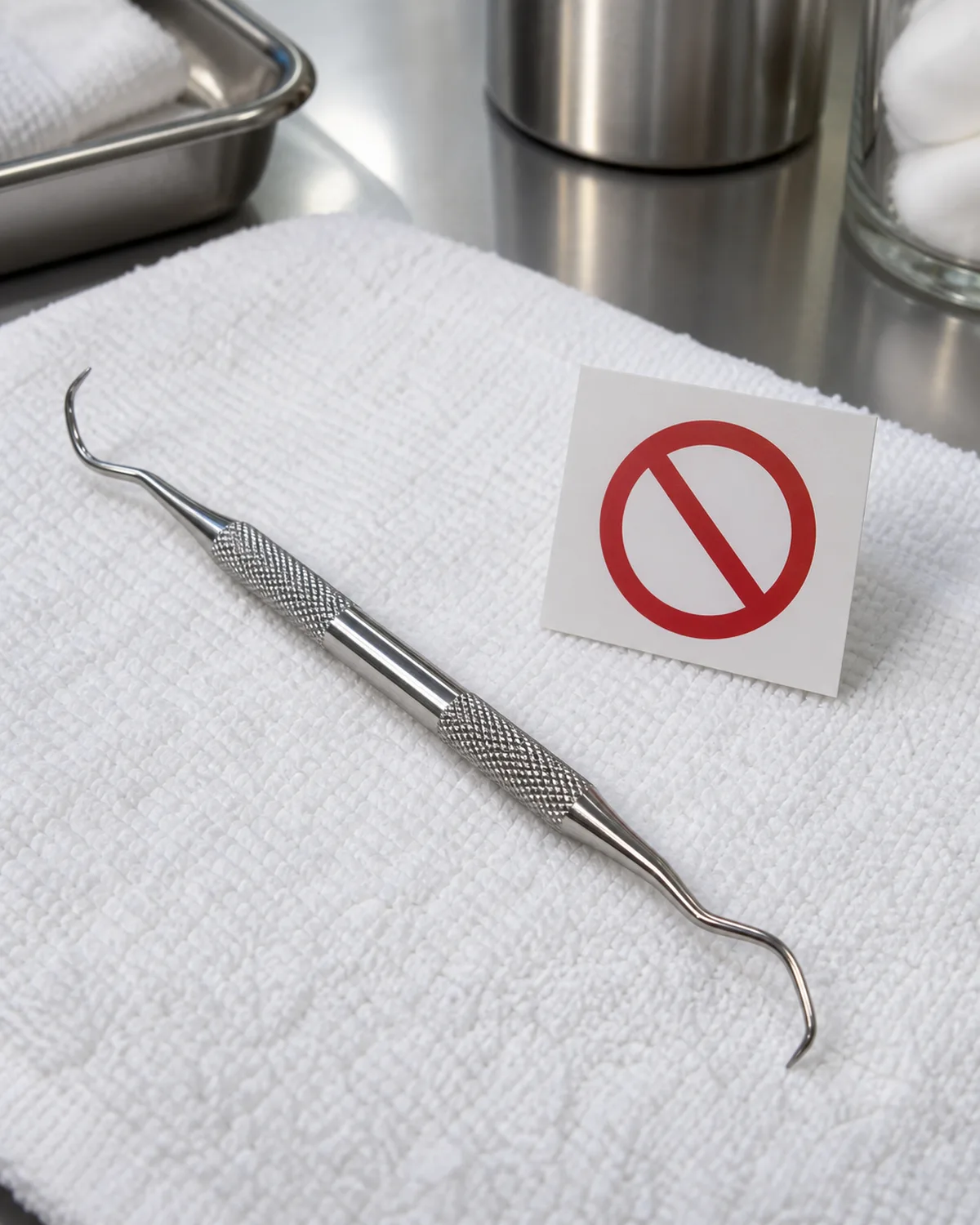
Dental scalers sold online look deceptively simple. A curved metal tip, a handle, and the promise of removing tartar at home without a vet bill. What the listings do not mention is the damage an untrained hand causes.
Scraping tartar off the visible crown does nothing to address the bacteria already living below the gum line, which is where periodontal disease actually progresses. Worse, an untrained scrape can:
Push bacteria deeper under the gum tissue, accelerating infection
Scratch and gouge the enamel surface, creating new pits where bacteria colonize faster
Lacerate the gum tissue, opening a direct path for oral bacteria into the bloodstream
Professional scaling under anesthesia allows the vet to clean below the gum line, take full-mouth X-rays to find hidden problems, and polish the tooth surface smooth so plaque has fewer places to grip. None of that is possible with a handheld scaler on a conscious, moving dog.
Home care is about prevention. Once tartar has hardened onto the teeth, the only safe removal is professional.
Understand What Happens During a Professional Dental Cleaning
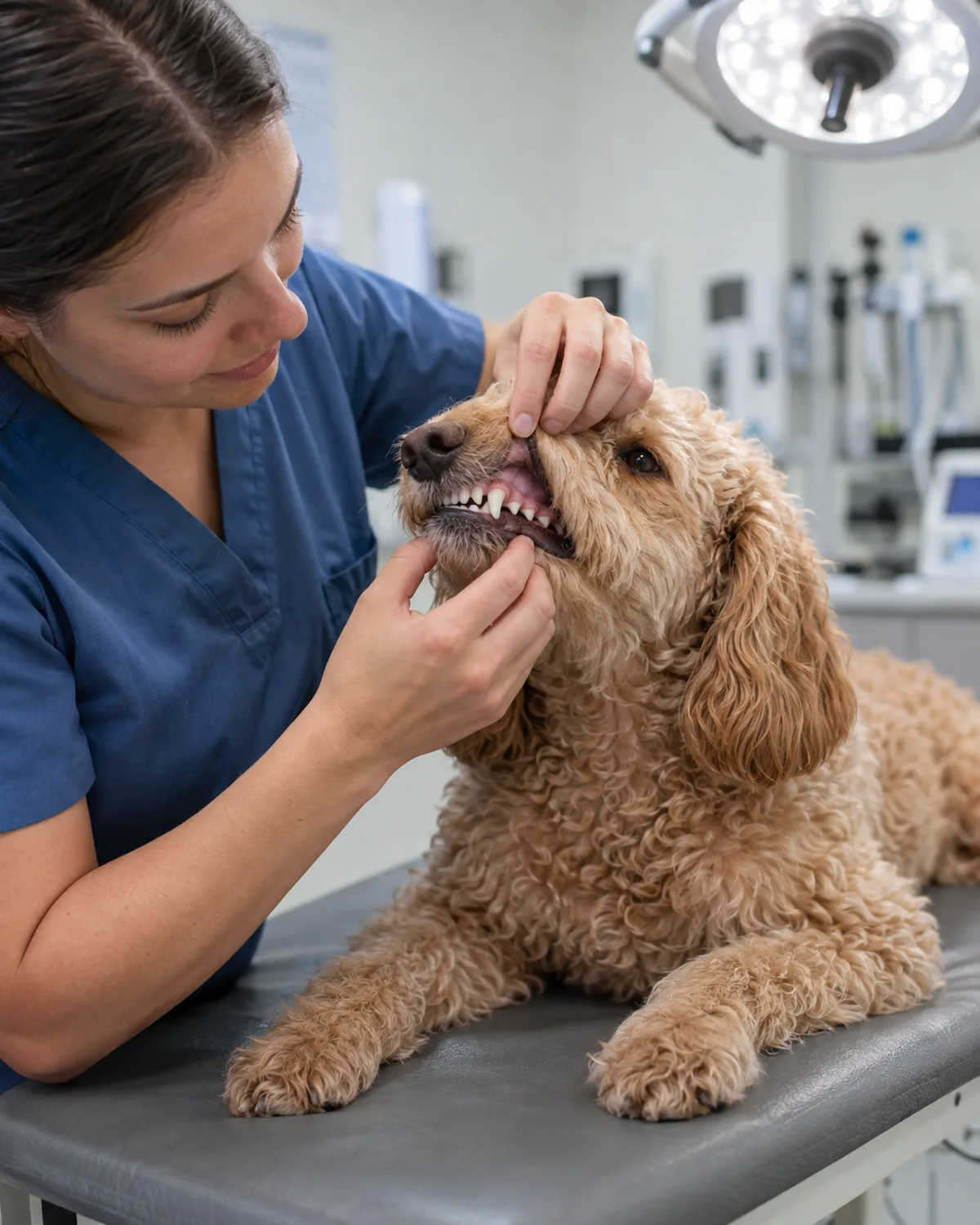
A professional dental cleaning is a full procedure under general anesthesia, not a quick scrape while the dog is awake. The anesthesia is necessary because the vet needs the dog completely still to work safely below the gum line and take diagnostic X-rays.
The standard sequence includes:
Pre-anesthetic bloodwork to confirm the liver, kidneys, and blood cell counts can handle sedation safely
Full-mouth dental X-rays that reveal root abscesses, bone loss, and fractures invisible above the gum line
Ultrasonic scaling above and below the gum line to remove all tartar deposits
Polishing the enamel surface smooth so plaque has fewer attachment points
Fluoride treatment to strengthen enamel
Extraction of any teeth that are fractured, abscessed, or loose beyond saving
The cost ranges from three hundred to over a thousand dollars depending on your region, the dog's size, and how many extractions are needed. That cost is the strongest argument for daily home dental care: every dollar you spend on toothpaste and chews is a dollar you are less likely to spend on anesthesia and extractions later.
Save this for later
14 Dog Dental Care Habits
1Weekly gum checkLift the lip, run a finger along the gum line, look for redness or buildup every week.
2Know the five warning signsPersistent bad breath, tartar, red gums, excess drool, and one-sided chewing.
3Brush three times a weekDaily is ideal, three times weekly is the minimum to outpace the plaque cycle.
4Use the right toolsDual-head angled brush and enzymatic dog paste. Never human toothpaste.
5Silicone finger capBetter gum contact for small mouths and crowded teeth.
6VOHC dental chewsOne per day after meals. Look for the seal, not the marketing.
7Water additiveTasteless antimicrobial poured into the bowl daily. Lowest effort layer.
8Dental dietVOHC kibble turns every meal into a passive cleaning event.
10No DIY scalingHome scalers push bacteria deeper and scratch enamel. Leave it to the vet.
11Professional cleaningFull anesthesia, X-rays, ultrasonic scaling, polishing. No shortcut exists.
12Start puppies earlyMouth touches from week one build lifelong tolerance before adult teeth arrive.
13Watch breed risksSmall and flat-faced breeds need cleanings earlier and more often.
14Track and adjustTally what you actually do each month. The honest count is the starting point.
pawliqa.com
Start Dental Habits Early with Puppies
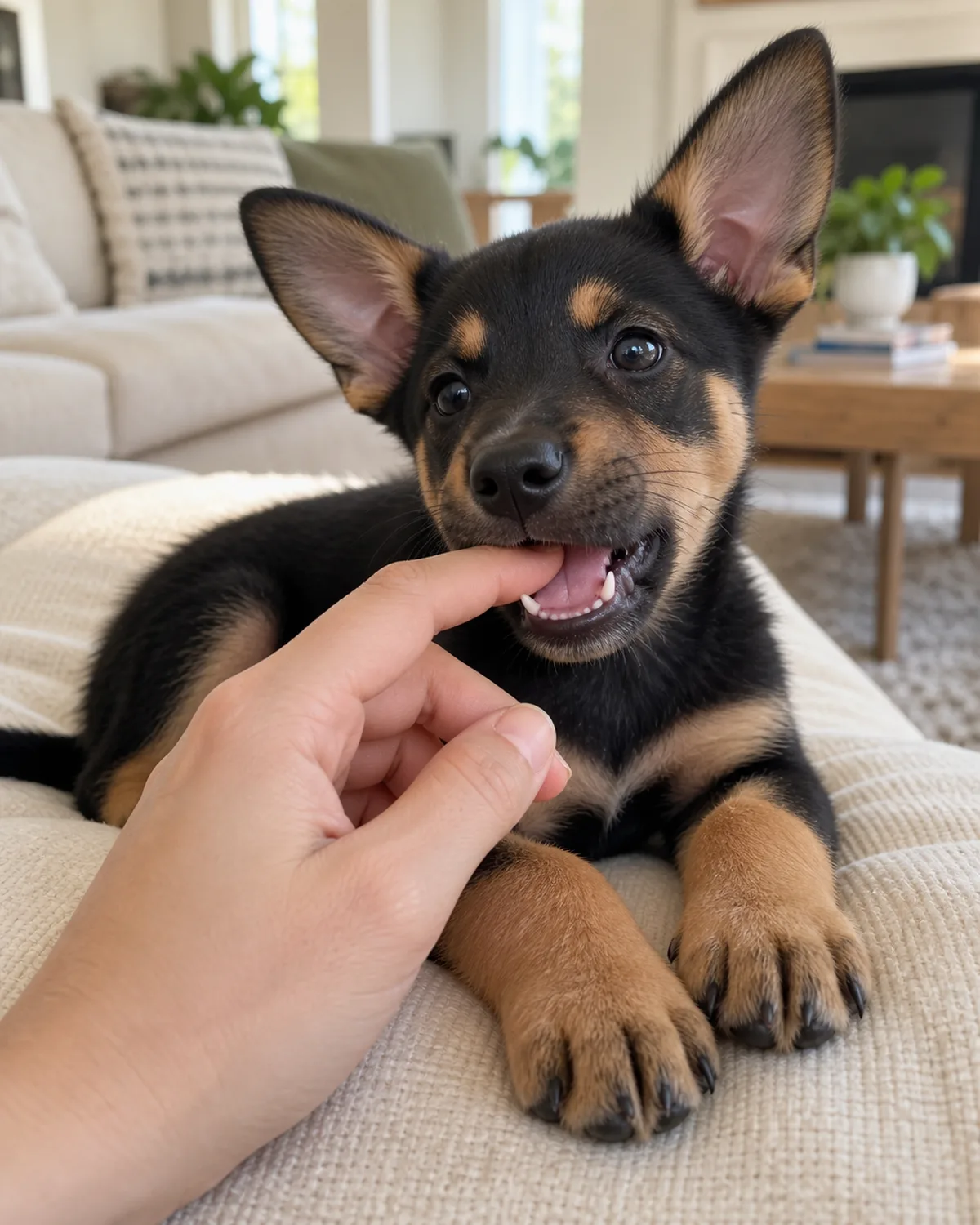
Begin touching your puppy's mouth during the first week home. Lift the lips, touch the gums, run a finger along the outside of the teeth. Pair every mouth touch with a tiny high-value treat so the puppy learns that hands near the mouth predict something good.
By four months, the socialization window begins closing and new experiences become harder to normalize. A puppy that has never had their mouth handled by twelve weeks will resist it as an adult, making brushing a battle for years.
The desensitization sequence for puppies:
Week 1 to 2: Lift the lip for two seconds, treat immediately. Repeat five times per session, twice daily.
Week 3 to 4: Run a wet finger along the outer gums for five seconds per side, treat after.
Week 5 to 6: Introduce enzymatic paste on the finger, let the puppy lick it, then rub the gums with the paste.
Week 7 onward: Graduate to a soft puppy toothbrush or silicone finger cap with paste.
For more on the early desensitization process and how it connects to broader puppy mouth management, see our guide to puppy teething relief.
Do not worry about brushing baby teeth for plaque control. The real goal here is building the habit and the tolerance. By the time the adult teeth come in around six months, your puppy should accept brushing as unremarkable.
Watch for Breed-Specific Dental Risks
Small breeds and flat-faced breeds have mouths where the standard dental playbook needs adjusting. Their jaws are proportionally smaller, but they have the same number of teeth as large breeds, which means crowding, overlapping, and food trapping between teeth that a brush cannot easily reach.
Breeds at higher dental risk include:
Small breeds (under twenty pounds): Crowded teeth trap plaque in tight spaces; they often need professional cleanings starting as early as age two
Flat-faced breeds: Misaligned jaws create gaps and overlaps that collect debris faster than brushing can clear
Sighthound types: Genetically predisposed to thin enamel and early enamel erosion, making them vulnerable to fractures and decay even with good home care
If your dog falls into any of these categories, ask your vet about scheduling professional cleanings annually rather than waiting for visible symptoms. The cost of an early cleaning is far less than the cost of extractions after years of unchecked sub-gum disease.
For all other dogs, your vet will assess the mouth during annual checkups and recommend cleaning frequency based on what they find. Most medium to large breeds with consistent home care can go two to three years between professional cleanings.
Track What You Actually Do and Adjust Monthly
Stick a tally sheet on the fridge for brushing days, chew days, and water additive refills. At the end of each month, count what actually happened versus what you planned.
Most owners discover they brush half as often as they think they do. That gap between intention and reality is the honest starting point for the next month, not a reason to abandon the effort.
A realistic dental care month might look like this:
Layer
Target
Realistic minimum
Brushing
Daily
3 times per week
Dental chew
Daily
5 days per week
Water additive
Every refill
Every refill
Gum check
Weekly
Weekly
If you hit the realistic minimum column consistently, your dog's mouth is in dramatically better shape than the eighty percent of dogs getting no dental care at all. Perfect is not the goal. Consistent and honest is.
Adjust the plan every month based on what the tally shows. If brushing drops to once a week, compensate by adding a second dental chew or upgrading to a VOHC dental diet. The stack is flexible as long as the total plaque removal stays above the threshold where tartar wins.
Common questions
FAQ
How often should a dog get a professional dental cleaning?
Most dogs with consistent home care need a professional cleaning every one to three years. Small breeds, flat-faced breeds, and dogs with a history of dental disease may need annual cleanings. Your vet will assess the mouth during yearly checkups and recommend a schedule based on what they find.
Is anesthesia safe for dental cleanings?
Modern veterinary anesthesia is very safe when preceded by bloodwork and administered by a trained team. The risk of untreated dental disease, including bacterial infection spreading to the heart, kidneys, and liver, is significantly higher than the risk of a properly monitored anesthetic event.
Can coconut oil clean a dog's teeth?
Coconut oil has mild antimicrobial properties, but there is no clinical evidence that it removes plaque or prevents tartar in dogs. It is not harmful in small amounts, but relying on it as a dental care strategy means plaque is accumulating unchecked. Use a VOHC-approved product instead.
What if my dog absolutely will not let me brush their teeth?
Start with the desensitization steps: lip lifts, finger on the gum, paste on the finger. If your dog still resists after weeks of gradual work, build the best non-brushing stack you can: VOHC dental chews daily, water additive, and a dental diet. Then schedule professional cleanings more frequently to compensate for what home care cannot cover.
Do dental sprays work?
Dental sprays with VOHC approval have been shown to reduce plaque when used as directed. They are not as effective as brushing but can be a useful layer for dogs that tolerate a quick spray on each side of the mouth. Without the VOHC seal, the claims on the label are unverified.
P
About the author
Jess Calloway
Jess Calloway edits Pawliqa, where she shares dog care, grooming, training, and new-owner tips — plus DIY and pet-friendly home ideas — for anyone who wants a happy, well-cared-for dog. As a dog mom to three very different dogs, she writes the honest, tested version of what actually works. Every guide is image-led and reviewed for clarity, usefulness, image accuracy, and Pinterest-to-page alignment before it goes live. Visit the About page.
Fifteen dog paw care tips covering pad checks, nail length, moisturizing, hot pavement tests, winter balm, cracked pad first aid, and seasonal routines.