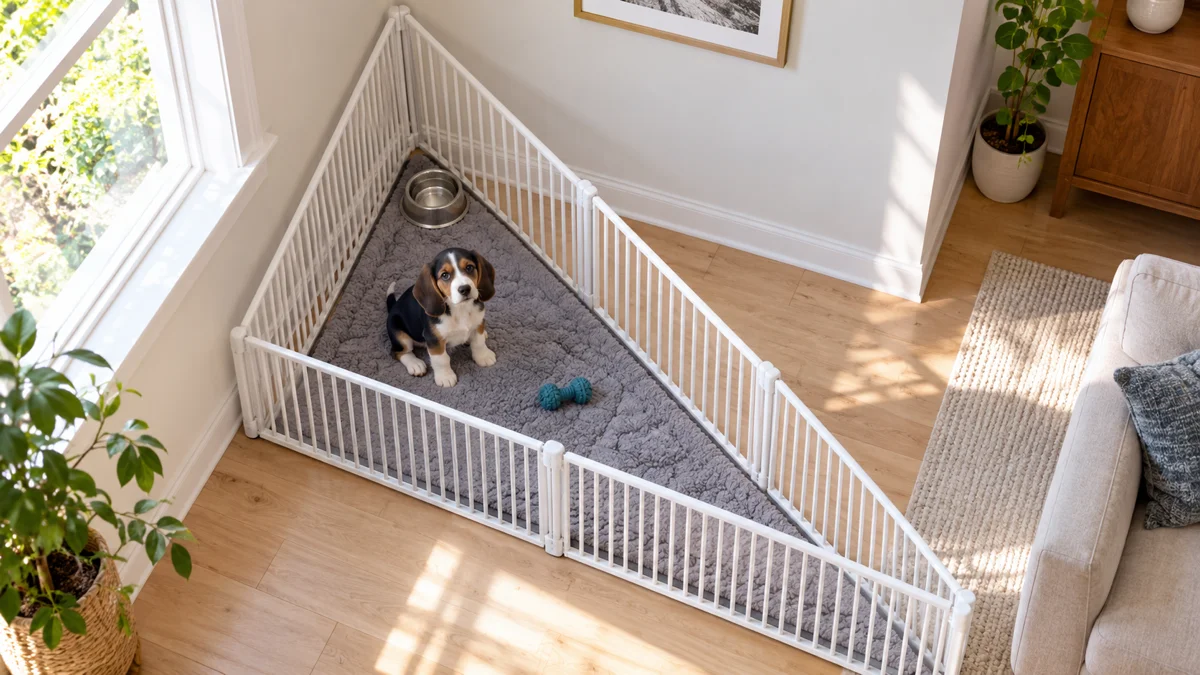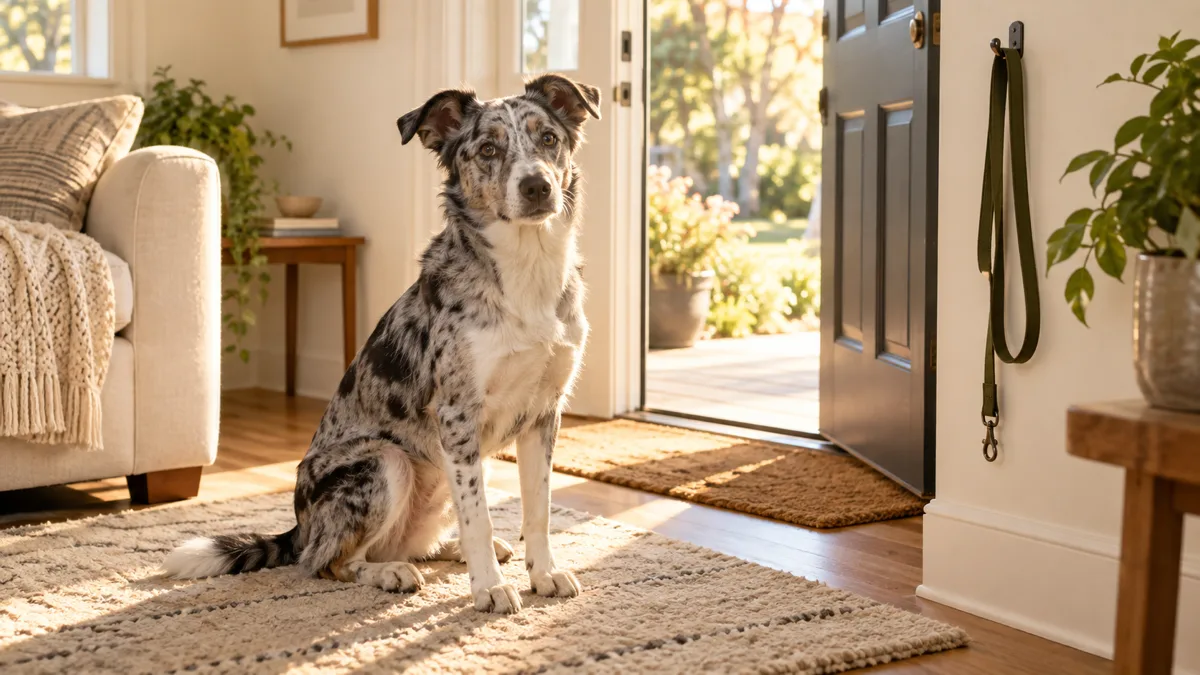
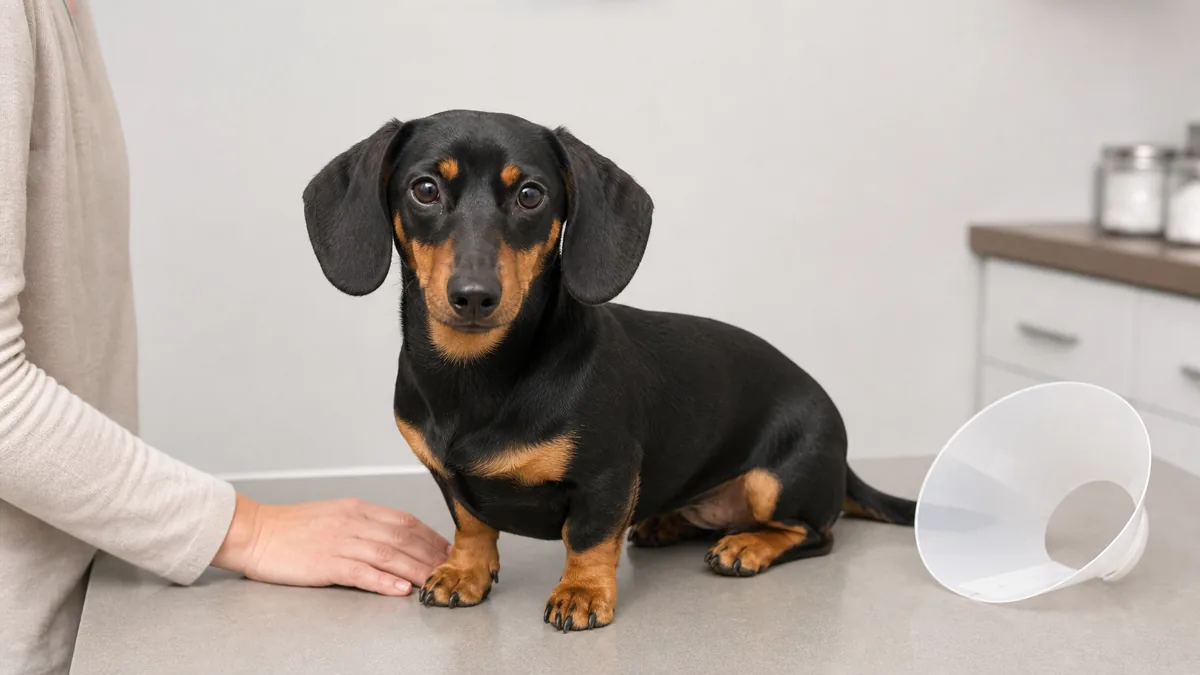
My vet asked me a question at my first puppy’s six-month checkup I wasn’t ready for: “What’s her adult size going to be?” I’d assumed spay day was just a box to check at six months. It isn’t, and the answer depends on the dog in front of you.
Spay and neuter timing used to be simple advice — six months, no exceptions. Current guidance treats it as a real decision shaped by breed, projected adult size, and sex. This guide walks through the factors your vet actually weighs and what recovery looks like once the day comes.
None of this replaces your own vet’s read on your dog. Think of it as the questions worth bringing to that conversation.
Timing depends on breed, projected adult size, and sex — not one date for every dog. Here’s the breed-size window your vet is weighing, plus what to expect before and after surgery.
- 1Why timing is a real decision
- 2The growth-plate factor
- 3Small and toy breeds
- 4Medium breeds
- 5Large and giant breeds
- 6Female dogs: first-heat timing
- 7Male dogs: behavior expectations
- 8Health considerations
- 9Getting the home ready
- 10Surgery day and right after
- 11Post-op activity restriction
- 12Reading the incision
- 13The timing mistakes to avoid
Why Timing Is a Real Decision, Not a Default 6-Month Date

For a long time, “six months, no exceptions” was the standard answer regardless of what kind of dog was on the table. It was easy to remember and easy to schedule around.
Current guidance has moved away from that single number. Vets now weigh breed, projected adult size, and sex together before landing on a window, because those factors change what’s actually happening inside a growing puppy’s body at six months.
The goal of this guide isn’t to hand you a universal date. It’s to walk through the factors your own vet will weigh, so the conversation at your puppy’s checkup makes sense instead of feeling like it came out of nowhere.
The Growth-Plate Factor: Why Size Changes the Math
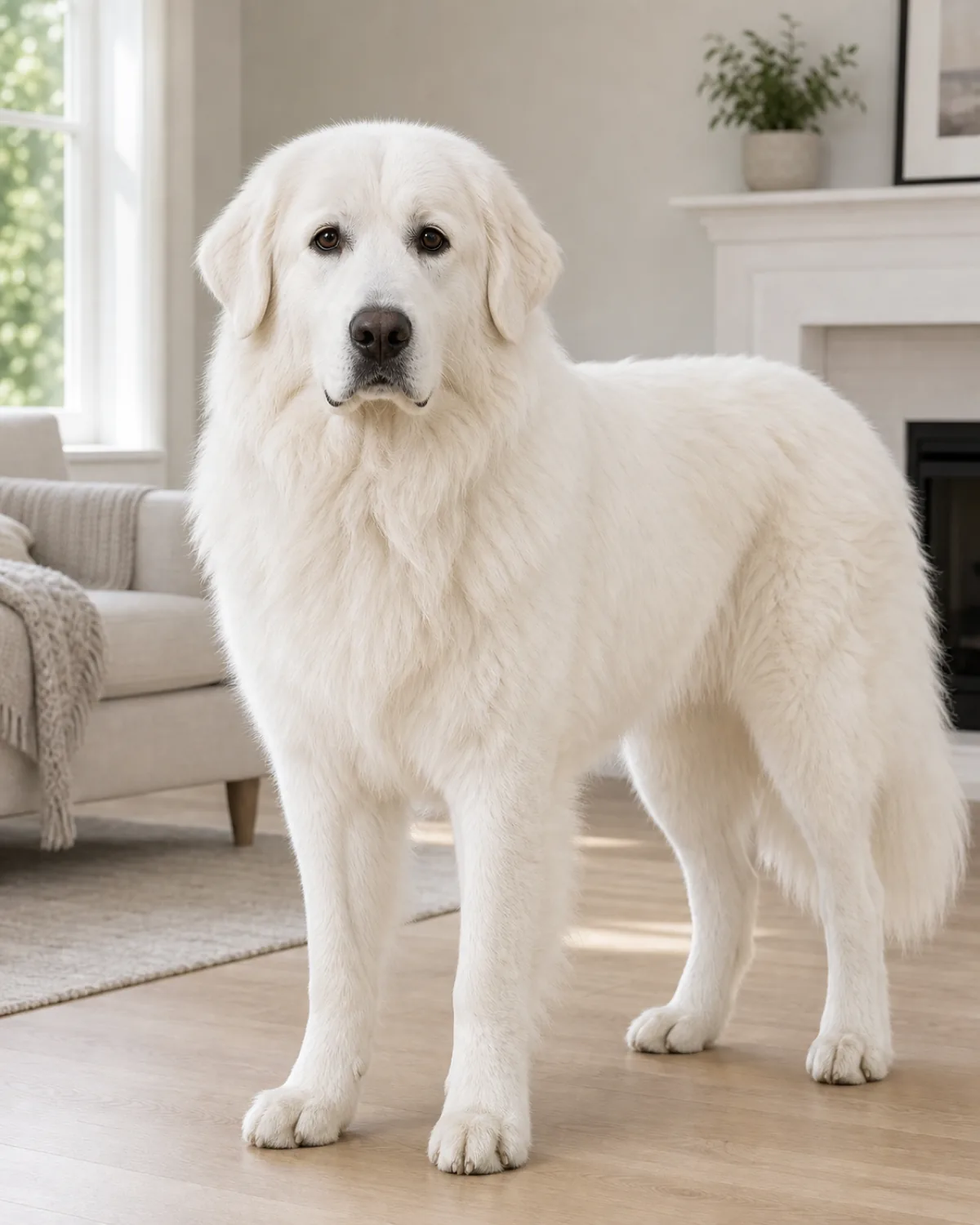
Sex hormones play a role in when a puppy’s growth plates close — the areas near the ends of the long bones where new bone growth happens. Removing those hormones too early in a dog that’s going to grow large can shift how and when those plates seal.
That shift matters because it can change bone growth patterns and joint alignment down the line, which is part of why large and giant breeds are typically given more time before surgery than small breeds.
Small dogs finish most of their skeletal growth much earlier regardless, which is the whole reason this factor barely moves the needle for them but matters a great deal for a puppy who’s going to end up seventy, eighty, or more pounds.
Small and Toy Breeds: Typically the Earliest Window

Small and toy breeds generally finish most of their skeletal growth well before larger dogs do. Because of that shorter growth timeline, many vets are comfortable spaying or neutering these dogs in the roughly six-to-nine-month range.
This is the size category where the old “six months for everyone” guidance still tends to hold up reasonably well, because a small dog’s growth-plate timeline was never the long process a giant breed’s is.
That doesn’t mean every small dog gets the exact same date — your vet is still weighing sex, individual growth, and health history — but the window itself tends to be narrower and earlier than what a large-breed owner will typically hear.
Spay/neuter timing isn’t one date for every dog. These four size categories cover most puppies — find the one closest to yours before you bring the question to your vet.
Medium Breeds: The Middle Window
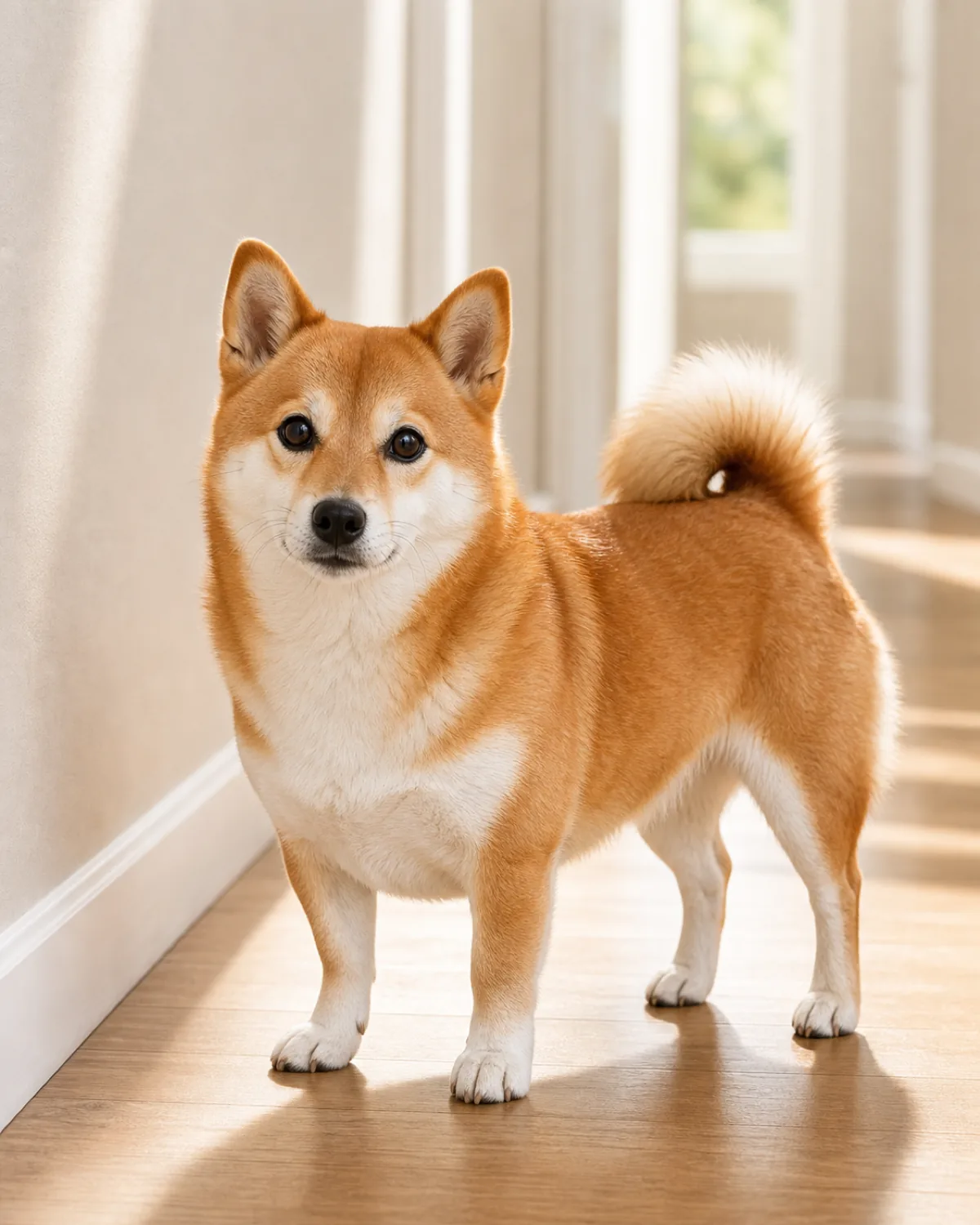
Medium-sized breeds tend to fall into a wider window than small breeds do, often somewhere in the nine-to-fifteen-month range. There isn’t a single number that fits this whole category the way there is for very small dogs.
That wider range comes down to a less sharp growth-plate cutoff than what giant breeds experience. A medium dog’s growth curve is more of a gradual slope than a clear line, which is exactly why an individual read matters more here.
This is the size group where the vet-visit conversation carries more weight than a chart. Your vet’s sense of your specific dog’s skeletal maturity, not a printed number, is what should be steering the final date.
Large and Giant Breeds: Why Vets Often Say Wait Longer
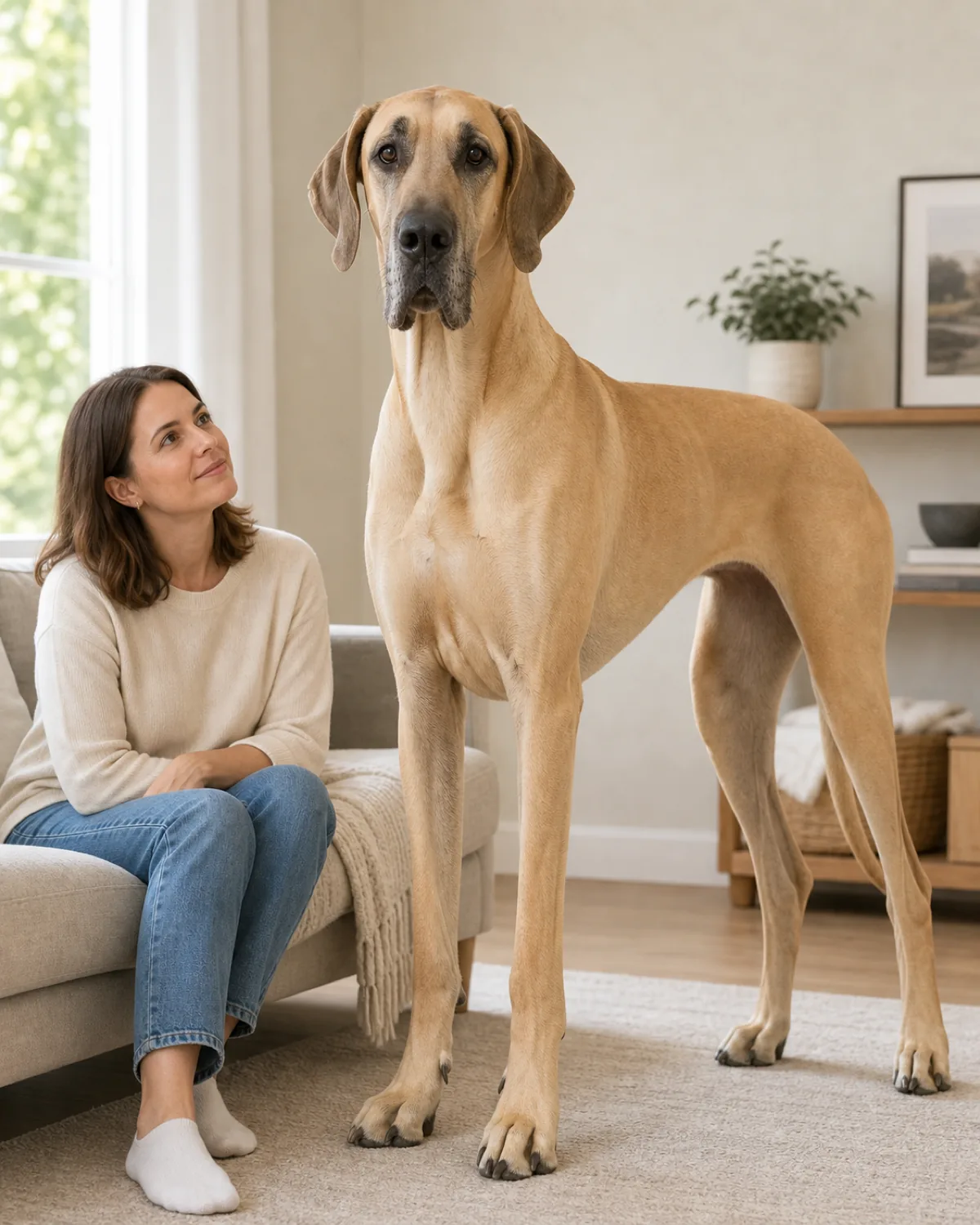
For many large and giant breeds, current guidance often points toward waiting until somewhere closer to twelve to twenty-four months, and sometimes later still for the biggest giant breeds. That’s a much longer window than the old universal rule ever accounted for.
The reasoning scales with size: the bigger the projected adult dog, the more skeletal growth is still happening well past the old six-month mark, and the joint-health tradeoff of operating too early scales right along with it.
If you have a puppy who’s projected to land in the large or giant range, this is the single biggest reason the “just do it at six months” advice doesn’t fit — your dog is still doing a lot of growing at an age when a small dog would already be finished.
Female Dogs: The First-Heat Timing Question

For female dogs, there’s an added factor layered on top of the breed-size timeline: whether spaying happens before or after the first heat cycle, which typically arrives somewhere around six months but varies by breed and by the individual dog.
This detail is part of the broader breed-size conversation rather than a rule that stands on its own. A small breed may reach its recommended spay window before a first heat even happens, while a large breed’s longer timeline means a first heat is much more likely to arrive first.
Your vet will fold this into the same conversation as growth-plate timing, not treat it as a separate decision — it’s one more piece of the picture for your specific dog, not an override of everything else.
Most timing regret comes from one of these lines, not from a bad vet. Read both columns once before you book the date, and again before surgery day.
Always Do
- Ask your vet about breed-specific timing, not just your dog’s current age.
- Factor in projected adult size, not the size your puppy is today.
- Set up a quiet recovery corner at home before surgery day arrives.
- Follow the fasting window your vet specifies before the procedure.
- Hold the full 10-to-14-day activity restriction, even once grogginess fades.
- Check the incision daily for the first week or so.
- Call your vet for spreading redness, pus, or a dog that won’t eat.
- Treat this as a medical decision made with your vet, not a fixed calendar date.
Never Don’t
- Never default to “six months for everyone” for a large or giant breed.
- Never let full activity resume the moment grogginess wears off.
- Never skip the pre-surgery vet conversation for a generic online chart.
- Never expect neutering to fix learned behaviors like leash reactivity.
- Never treat mild first-day redness or grogginess as automatically abnormal.
- Never wait out a gaping incision or persistent vomiting on your own.
- Never assume one sibling’s timing automatically fits another dog’s size.
- Never treat this guide as a diagnosis — it’s a framework for the vet conversation.
Male Dogs: Behavior Expectations vs. What Neutering Actually Changes
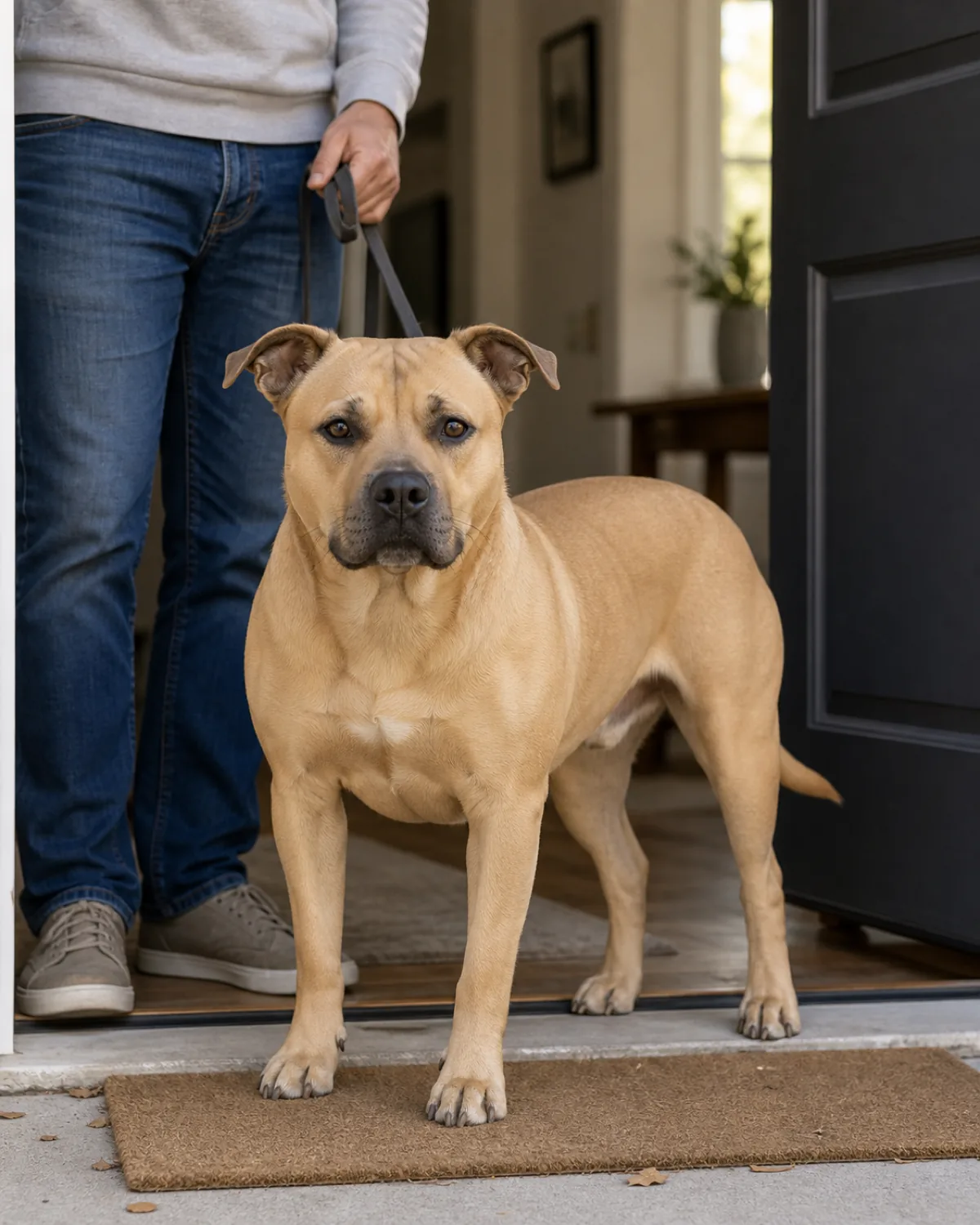
Neutering can reduce roaming, marking, and some hormone-driven behaviors in male dogs. That part of the reputation is generally accurate.
What it doesn’t reliably fix is learned behavior — leash reactivity, fear-based reactions, or gaps that come from training, not testosterone. Those patterns tend to stick around after surgery exactly as they were before it.
Separating “hormone-driven” from “learned” keeps expectations realistic going in. Neutering is a medical decision with some behavioral upside, not a substitute for the training work a reactive or under-socialized dog still needs.
Health Considerations That Factor Into the Timing Conversation
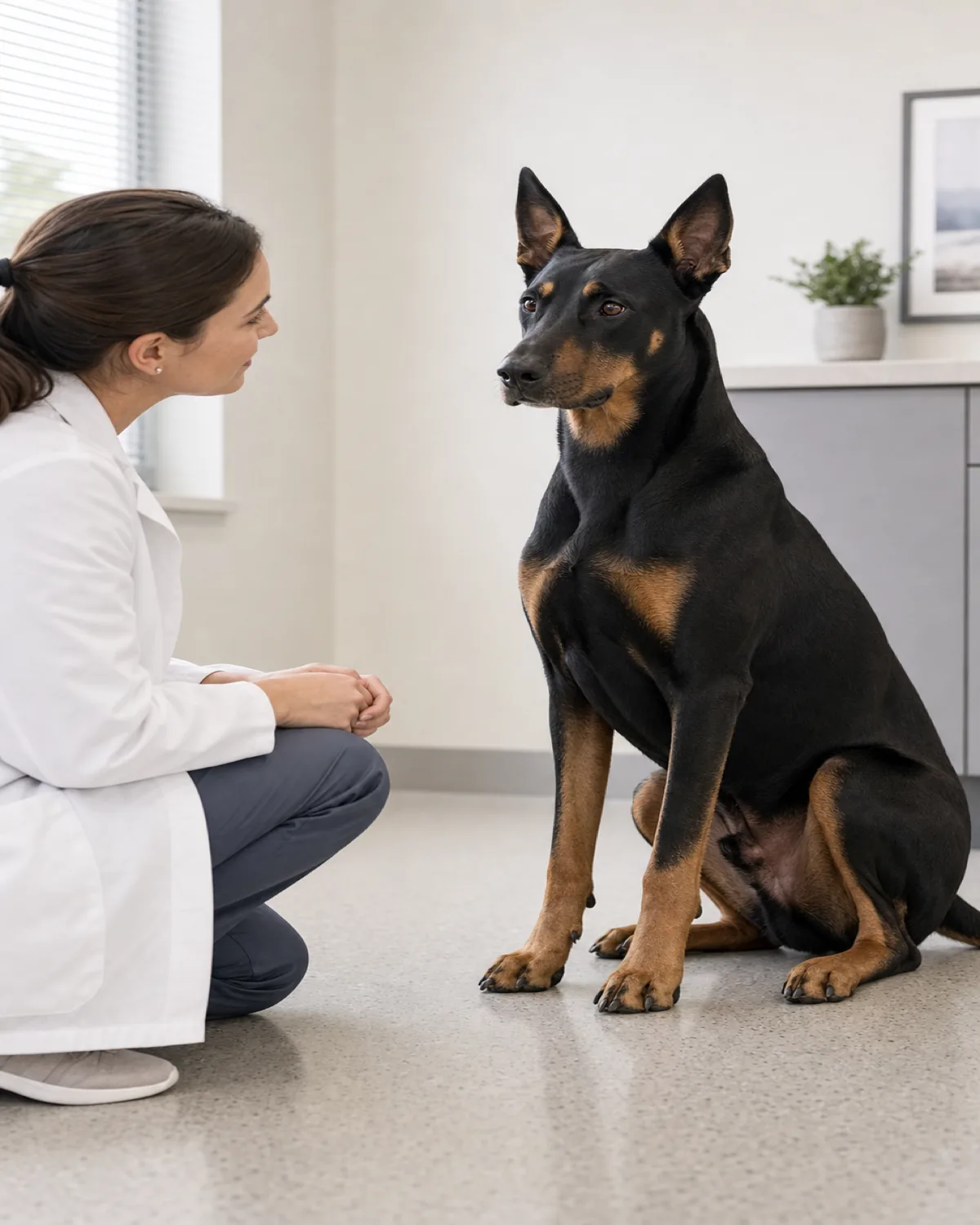
Alongside growth-plate and behavior factors, your vet is also weighing breed-specific risk data — certain cancers, certain joint conditions — that varies enough by breed to shape the final recommendation.
This is exactly why owners of some large breeds sometimes hear noticeably different guidance than owners of small breeds, even when both puppies are otherwise healthy and similar in temperament. The breed itself is doing real work in that recommendation.
It’s also exactly why a blanket answer from a general internet chart can’t replace an actual conversation with a vet who knows your dog’s breed, health history, and body condition specifically.
Getting the Home Ready Before Surgery Day

Pre-surgery prep usually includes a fasting window your vet specifies — commonly no food after a set time the evening before — plus setting up a quiet, low-traffic recovery corner at home ahead of the actual day.
It’s the same instinct you already used to puppy-proof a room before your dog ever came home: designating a calm, contained space in advance, rather than scrambling to improvise one once a groggy, disoriented dog is already back from the vet.
Having that corner ready — bed, water, no stairs or furniture to navigate — before the day arrives means one less thing to figure out while your dog is still coming out of anesthesia.
Spay/Neuter Timing Quick Checklist
Keep this nearby — it covers the core questions, not a substitute for your own vet’s read on your dog.
- Ask your vet about timing based on projected adult size, not current age.
- Small/toy breeds: roughly 6–9 months is a common window.
- Medium breeds: roughly 9–15 months, individualized by growth.
- Large/giant breeds: often 12–24+ months to let growth plates close.
- Set up a quiet recovery corner at home before surgery day.
- Hold the full 10-to-14-day activity restriction after surgery.
- Know the normal-healing signs vs. the call-the-vet signs for the incision.
- Bring breed, sex, and health history to the vet conversation — not a chart.
This is general guidance, not a substitute for a veterinarian’s recommendation for your specific dog.
PAWLIQA · NEW DOG OWNERS
What to Expect on Surgery Day and Right After
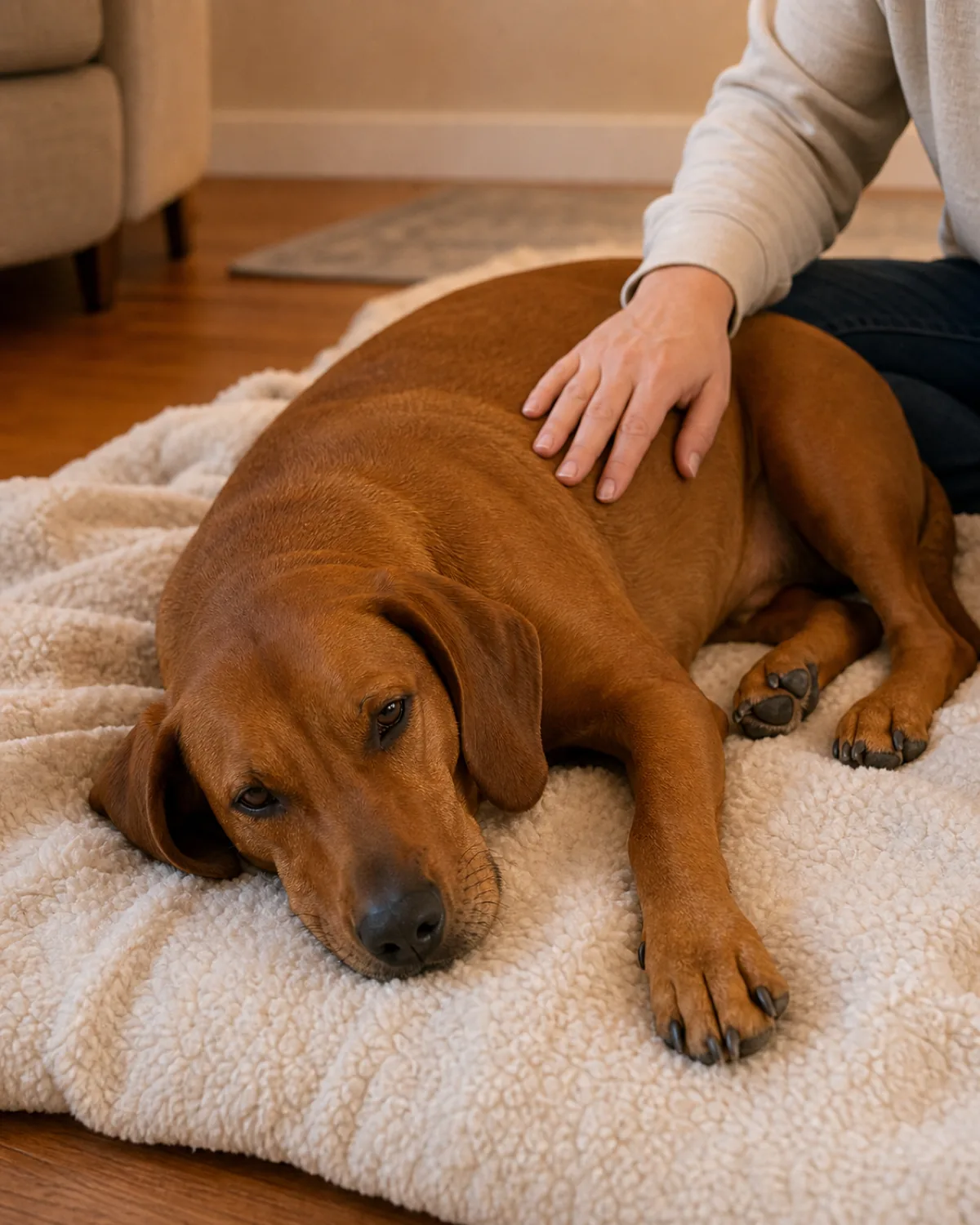
Most spay and neuter procedures are outpatient. Your dog typically goes home the same day, still groggy from anesthesia, and needs a calm, quiet environment with close supervision for the first several hours back.
Grogginess, a smaller appetite than usual, and low energy for the rest of that day are all part of the expected picture, not a sign that something has gone wrong.
Knowing what’s normal for those first few hours is what lets you tell ordinary recovery apart from an actual problem — which matters more than almost anything else on this list, because most of what happens on surgery day is exactly what’s supposed to happen.
The Post-Op Activity Restriction Window
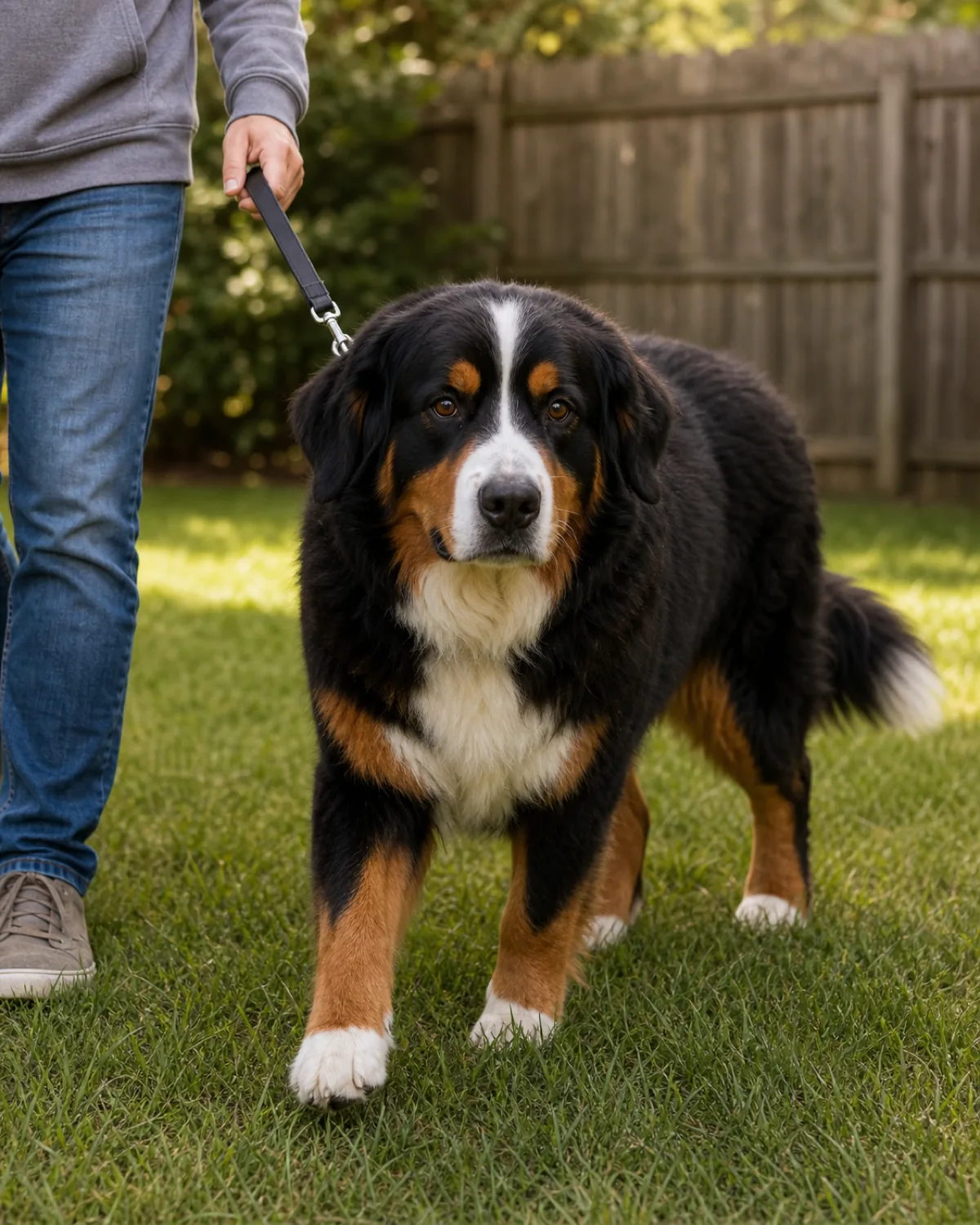
Most vets ask for roughly ten to fourteen days of restricted activity after surgery: no running, jumping, rough play, or off-leash time — just short, calm leash walks for bathroom breaks.
This temporarily overrides whatever normal daily-exercise routine you’d otherwise be building for your dog’s age and energy level. Incision healing depends on keeping that area still, not on hitting a typical activity target during this specific stretch.
It’s a short window in the scope of your dog’s life, even though it can feel long day to day with an otherwise energetic puppy underfoot. Holding the full restriction, rather than easing up once the grogginess wears off, is what protects the healing incision.
Reading the Incision: Normal Healing vs. Call-the-Vet Signs
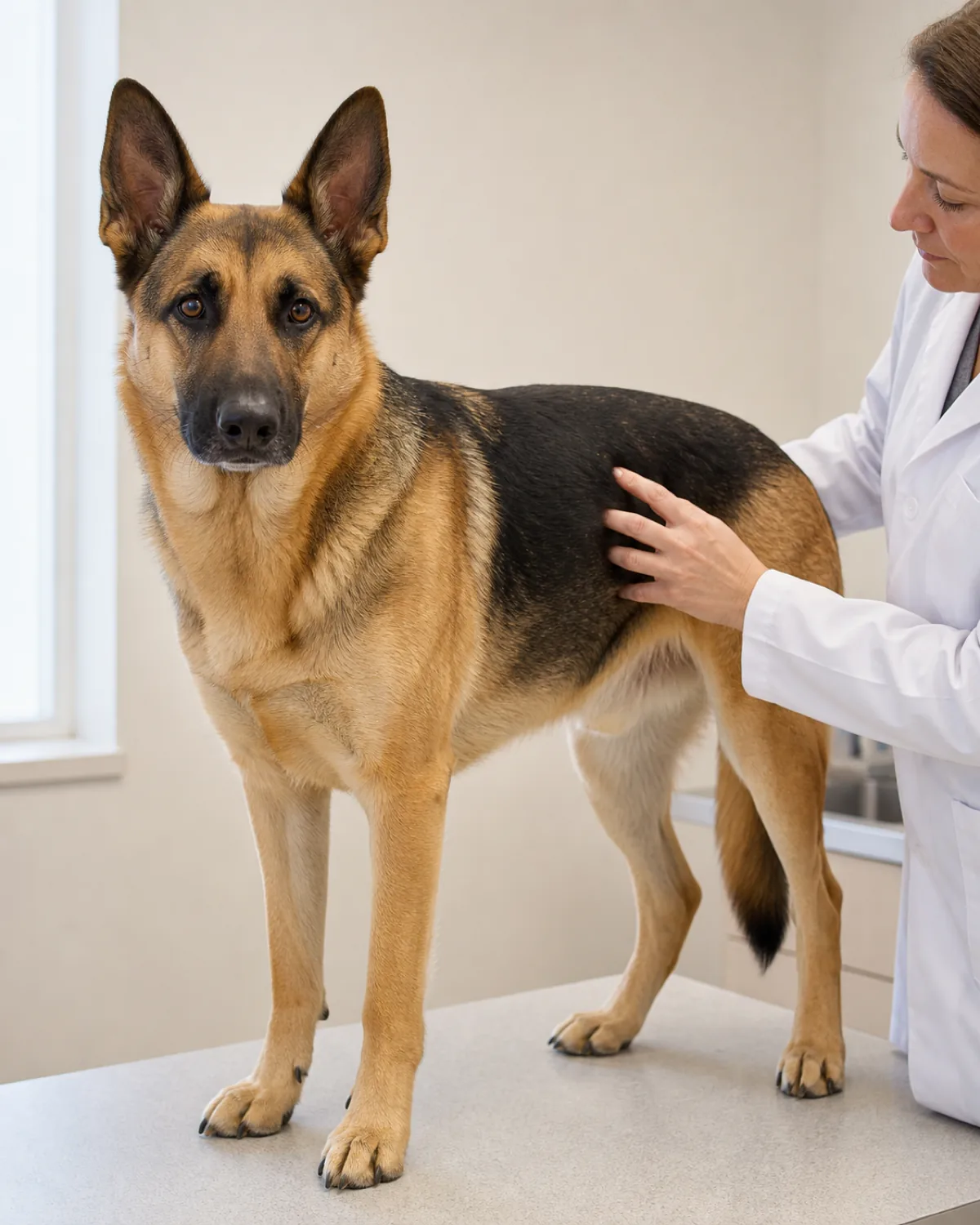
Mild redness, slight swelling, and a small amount of clear discharge in the first day or two after surgery can all be part of normal healing. It’s not unusual for an incision to look a little irritated right at the start.
Spreading redness, pus, a gaping incision, persistent vomiting, or a dog that won’t eat for more than a day are a different picture entirely — those are reasons to call your vet, not signs to wait out on your own.
Having a clear normal-versus-abnormal line in mind ahead of time cuts both ways: it keeps you from panicking over ordinary healing, and it keeps you from under-reacting to something that actually needs a vet’s attention.
The Timing Mistakes That Cause the Most Regret
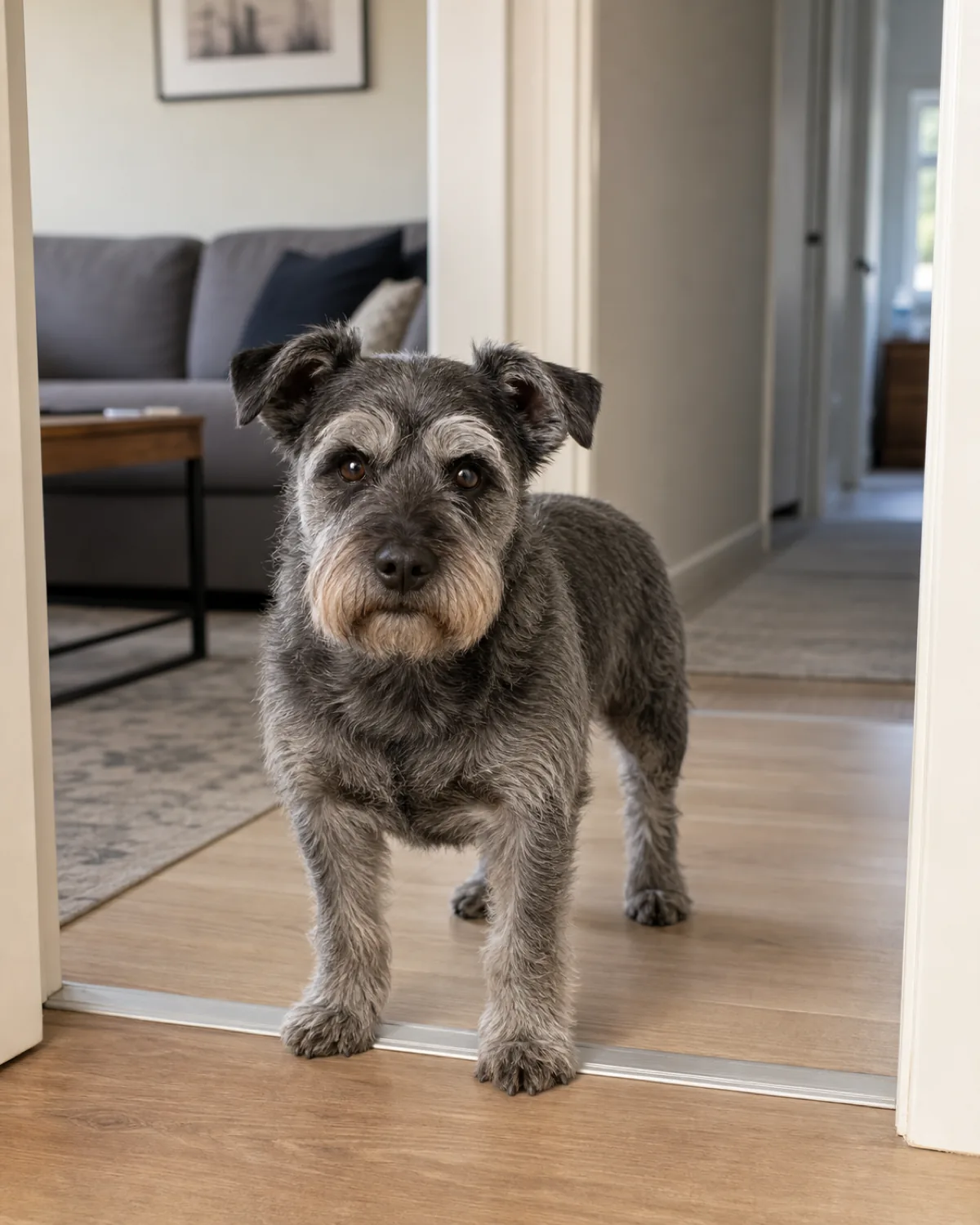
A handful of habits show up again and again around spay and neuter timing, and each one tends to cause more regret than it saves in convenience.
Mistake 1: Defaulting to the Old Six-Month Rule for a Large Breed
Booking a large-breed puppy for six months without ever asking about breed-specific growth-plate guidance skips exactly the conversation that matters most for that size dog.
Mistake 2: Ending Activity Restriction Early
Letting a dog resume full activity as soon as the grogginess wears off, instead of holding the full ten-to-fourteen-day window, puts a still-healing incision at risk right when it looks like the hard part is over.
Mistake 3: Skipping the Pre-Surgery Vet Conversation
Booking a date straight off a generic online chart, without a conversation with your own vet, misses the individual factors — breed, projected size, health history — that chart was never built to account for.
The right timing question was never “what age” in isolation. It’s “what age, for this breed, for this dog” — and your vet is the one best placed to finish that sentence with you.
— Jess Calloway is a dog mom of three, and all three came with a different answer to the same spay/neuter timing question — one small enough to go early, one who needed the vet’s patience through a much longer growth window, and one whose first heat beat the calendar she’d planned around.

Jess is a dog mom of three, and all three landed on a different spay/neuter timeline once she actually asked her vet the breed-size question instead of defaulting to six months. This guide covers why timing is a real decision, the growth-plate factor behind it, the small/medium/large-breed windows, the female first-heat question, what neutering does and doesn’t change in male dogs, the health factors your vet weighs, getting the home ready, what to expect on surgery day, the post-op activity window, reading the incision, and the timing mistakes that cause the most regret. Pawliqa is not a substitute for veterinary care — the right timing for your dog is a conversation for your own vet, who knows their breed, size, and health history. Visit the About page.