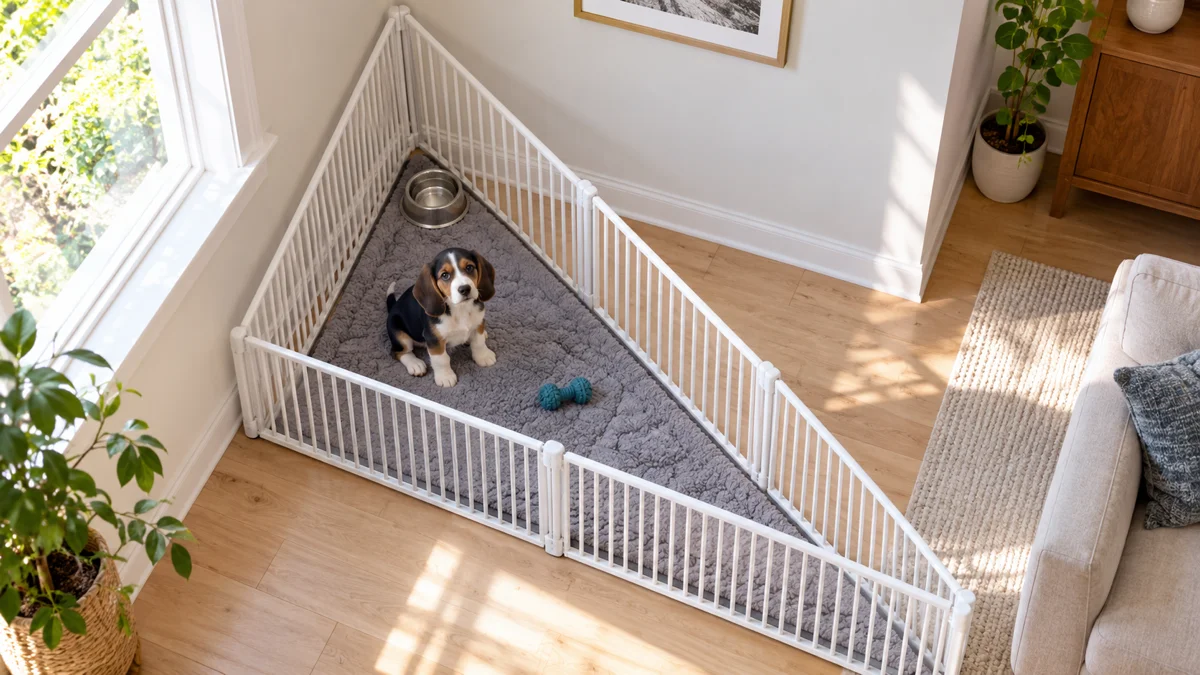
The first vet visit is not a medical errand. It is the appointment that codes whether your puppy walks into every future exam room calm or terrified.
Get it right with a 72-hour booking, an eight-item go-bag, ten written questions, and parvo protection from the parking lot in. Your calm in the lobby downloads into her nervous system harder than anything the vet does.
My first puppy met the vet untrained and unprepared. My second and third walked in with a packed bag, a question card, and a treat pouch — and they have never once feared the clinic since.
Your puppy’s first vet visit is the moment her nervous system decides whether clinics are safe or scary — for life. Calm prep at home encodes that first memory, and a tight 72-hour window plus a one-page question card does more than any pep talk on the drive over. This is the honest, step-by-step version.
- 1Why the first vet visit sets the tone
- 2Schedule inside the first 72 hours
- 3Build your question list before you walk in
- 4The vet-visit go-bag checklist
- 5Car ride to the vet, calm and quiet
- 6Parvo protection from parking lot to exam room
- 7Greeting the vet tech, choreography
- 8The physical exam, head to tail
- 9The vaccine plan without acronyms
- 10Weight, body score, and daily calories
- 11Heartworm, flea-tick, deworming
- 12Reading stress signals, when to pause
- 13Booking next visit + fridge card
Why the First Vet Visit Sets the Tone for Every Future Appointment

The first vet visit gets stored in your puppy’s brain as a one-line answer to a single question: is this room safe or not? The answer she writes at ten weeks runs the next decade of annual exams, nail trims, blood draws, and dental cleanings.
Eight-to-sixteen-week puppies sit inside what behaviorists call the fear-imprint window. One calm first visit codes as “vet room equals treats plus mom stays close.” One rough first visit codes as “vet room equals pain plus mom was scared too.” Both write to the same circuit.
The owner is the download cable
A puppy cannot read a vet’s intentions. She reads yours. Your breathing rate, your shoulder tension, your phone-scrolling distraction — all of it streams directly into her amygdala while the vet does the exam. Calm owner, calm puppy. Frantic owner, panicked puppy who needs sedation by age two.
That is why the next twelve sections are all about preparation, not speed. Preparation is what gives you the bandwidth to stand still and breathe slowly while a stranger touches your dog.
- The eight-to-sixteen-week fear-imprint window codes the first vet visit at high fidelity for the rest of her life.
- You are the download cable. A puppy reads your nervous system, not the vet’s words.
- Preparation is the mechanism, not a checklist obsession. It buys you the calm bandwidth to be the right cable.
Schedule the Appointment in the First 72 Hours After Pickup
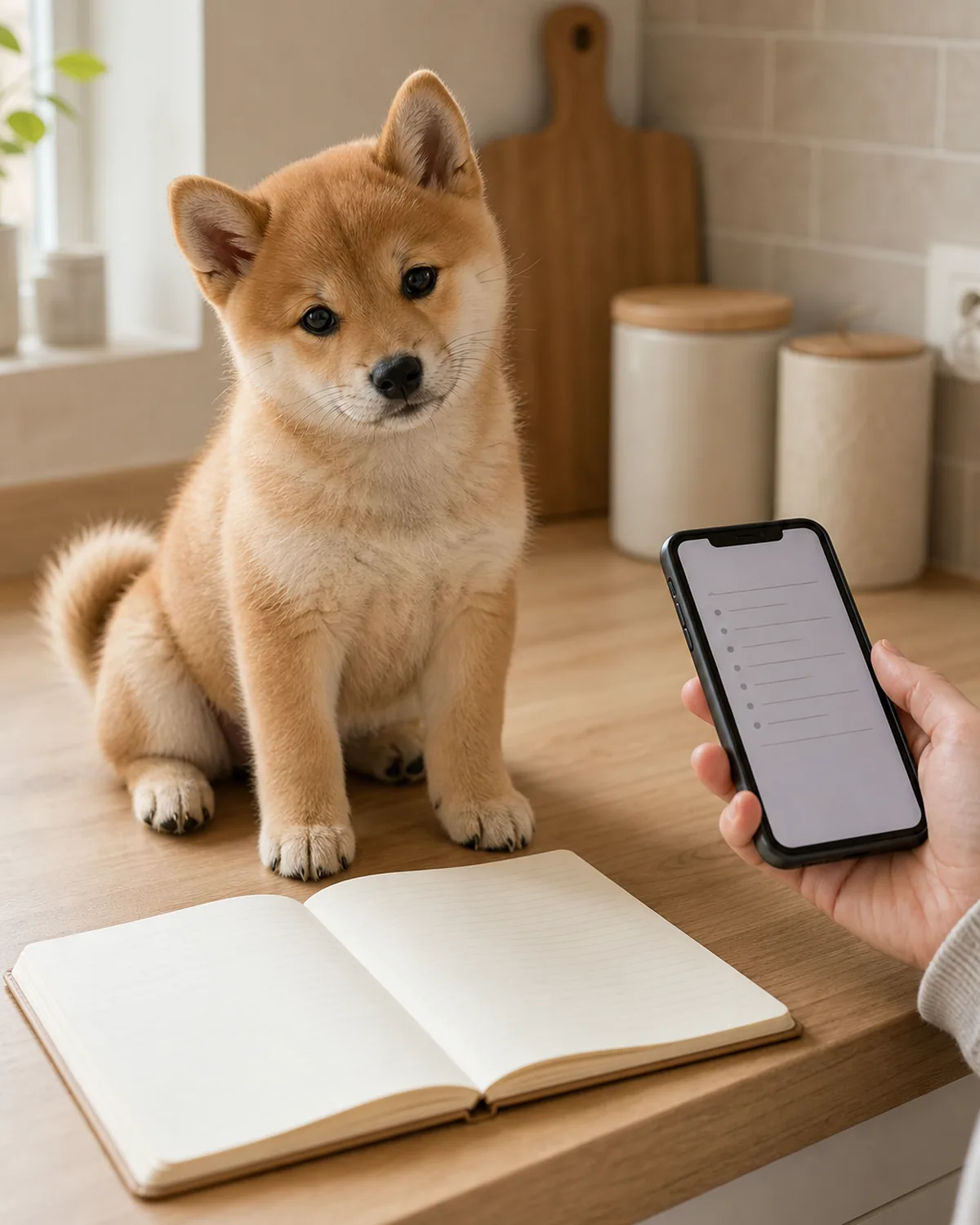
Call the vet before you ever pick up the puppy. Most clinics book one to two weeks out, and the seventy-two-hour window is non-negotiable.
There are four reasons it cannot slip: the breeder or rescue’s vaccine record needs verification while the paperwork is fresh, the DHPP timing window cannot drift, hidden issues like heart murmurs and umbilical hernias are easier to catch early, and microchip status needs a confirmed read.
Pick a clinic inside five miles if you can. A thirty-minute drive each direction stacks carsick stress on top of fear-imprint stress, and you will quietly skip future appointments. Ask about a puppy-wellness package — many clinics bundle the three DHPP rounds, one deworming, and microchip into a flat price that runs thirty percent below the a-la-carte total.
Get the after-hours number written down
Ask for the twenty-four-hour emergency line on the same call. It is usually a different clinic from your day vet, and you do not want to be searching for it at 2 a.m. while your puppy is vomiting. Write the number on the booking confirmation the moment you hear it.
This appointment is the day-three milestone inside the larger week-one rhythm. The full day-by-day plan for your puppy’s first week home covers what sits on either side of the vet visit — pickup, the first car ride, night one, and the seven-day decompression curve that the vet check sits inside.
- Call before pickup, book inside seventy-two hours. Clinics book one to two weeks out and the window will close on you.
- Ask about a puppy-wellness bundle. Three DHPP rounds, one deworming, and the microchip together often run thirty percent below a-la-carte.
- Get the twenty-four-hour emergency line written down on the same call and pasted to the fridge that night.
Build Your Question List Before You Walk In
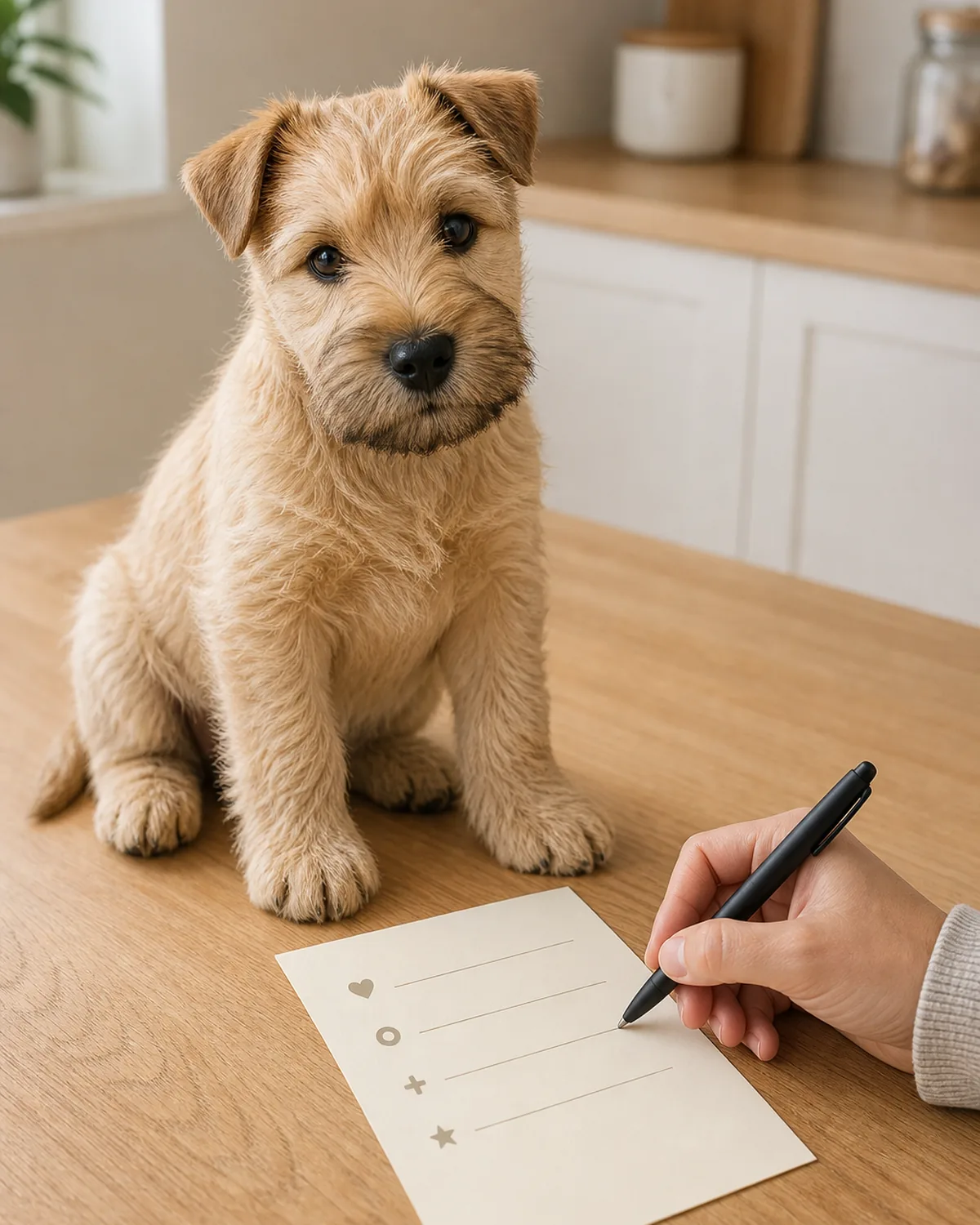
A printed question card matters because your hands will be holding a puppy, not a phone. Ten questions on one sheet of paper, handed to the vet tech at check-in, signals “engaged owner” and gets you more thorough answers than scrolling notes ever does.
The ten questions are the same for every first visit. The remaining DHPP dates. The deworming cadence. The heartworm start month. The flea-and-tick plan. Microchip status and which registry. Spay-neuter timing for her specific build. Whether the current food is appropriate. Expected adult weight and a healthy growth rate. Current body condition score. The twenty-four-hour emergency line.
Why paper beats phone
A paper card stays in the room when you set the puppy on the table. A phone gets pocketed, and three questions get forgotten. The vet writes answers next to your questions and hands the sheet back. You staple it to the take-home folder that night and you have a permanent reference.
Hand the card over before the exam starts, not after. Tech reads it, vet reads it, and the visit reshapes itself around your priorities instead of around their default script. Most clinics appreciate this — it makes the visit five minutes shorter and far more useful.
- A paper card stays in the room while your hands hold the puppy. A phone gets pocketed and three questions get lost.
- Ten questions, one page, handed to the tech at check-in. It signals “engaged owner” and gets thorough answers.
- The vet writes answers next to each question. Staple the sheet into the take-home folder that night for permanent reference.
Your puppy will not remember the vaccine. She will remember whether the floor smelled scary, whether your voice stayed soft, and whether the first human who touched her produced a treat or a needle. Four small choices — booked before pickup — decide which memory she walks home with.
What to Pack: The Vet-Visit Go-Bag Checklist
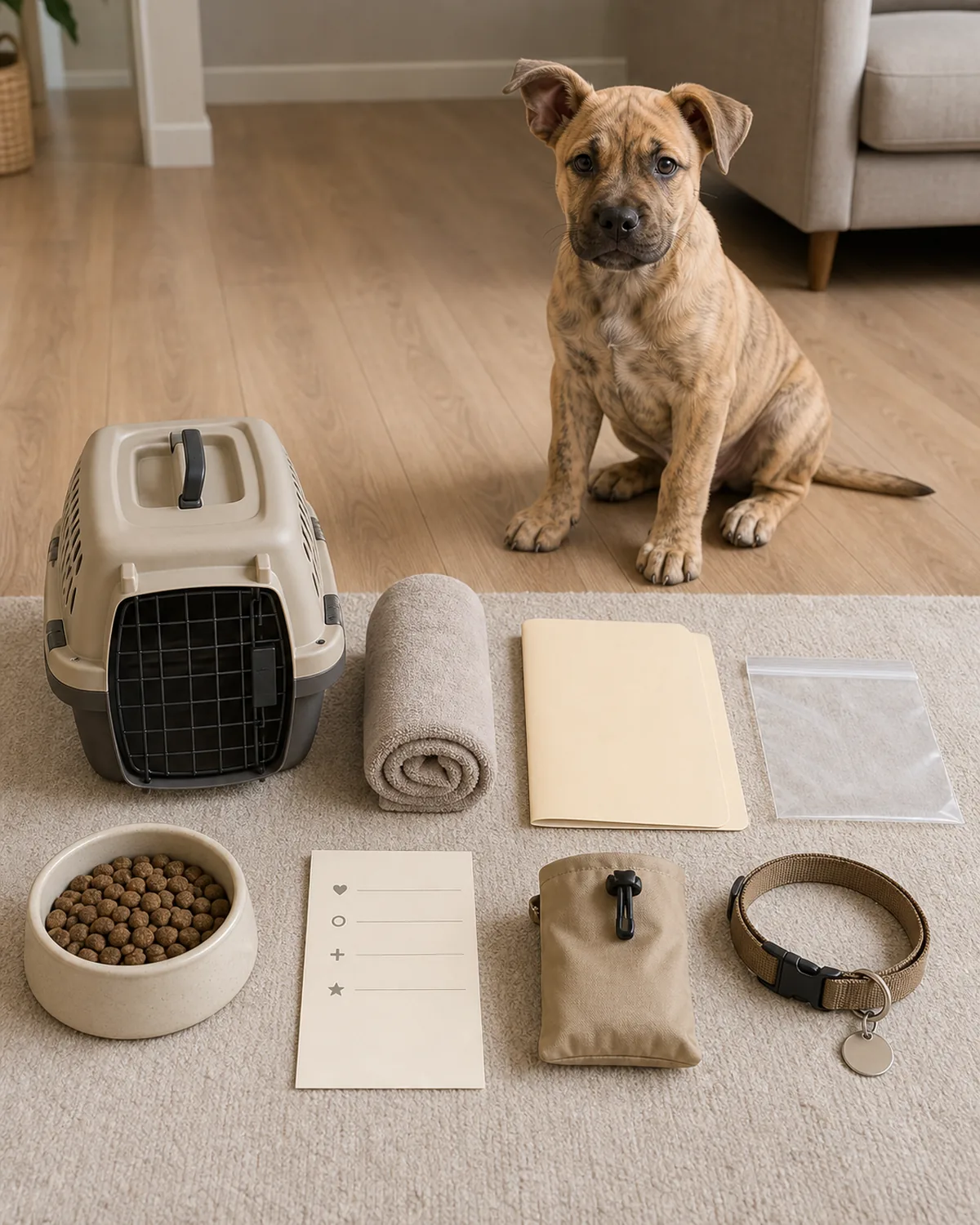
Pack the bag the night before so the morning of the appointment is calm. Eight items, no substitutions. The bag itself is your prep made physical, and every item earns its place in the next ninety minutes.
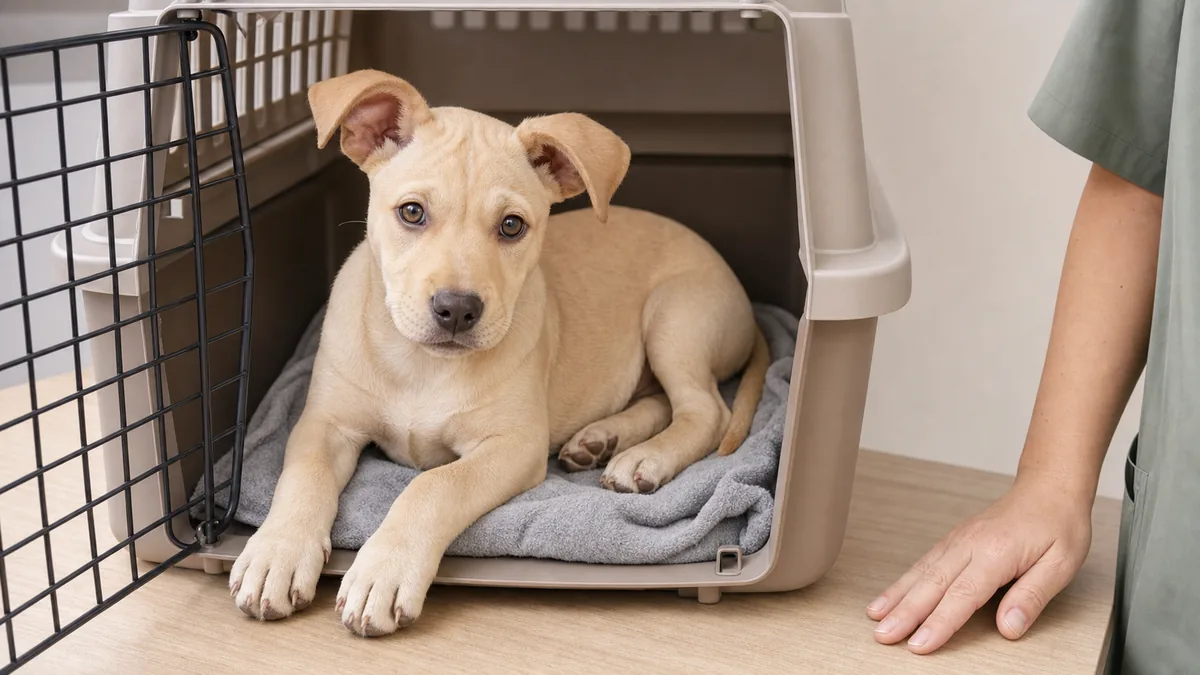
A plain unbranded carrier so the puppy never touches a parking lot or lobby floor. A rolled towel sprinkled with the smell of the breeder’s whelping room or your worn t-shirt, which lowers stress hormone levels in the first ten minutes inside the carrier. The breeder or rescue health record in the original paper version, not a phone photo.
The four items new owners forget
A fresh fecal sample under twelve hours old, sealed in a plastic bag with the puppy’s name and the collection time. A photo of the current kibble label showing ingredients and analysis, so the vet can comment on the food without you reciting the bag. A scribbled morning weight from your home scale as a baseline for the clinic measurement.
The printed question card from section three. A small treat pouch with high-value soft treats — a few of them go to the vet tech to hand-feed, which codes the first stranger she meets at the clinic as “the snack person.”
Her collar with an engraved ID tag goes on before you leave the house. Your driver’s license goes in your back pocket because reception will scan it for new-patient registration.
- Eight items packed the night before. Carrier, scented towel, breeder record, fresh fecal sample, kibble photo, home-scale baseline, question card, treat pouch.
- Fecal sample under twelve hours old and sealed with name plus collection time. The clinic lab needs both for the giardia panel.
- A few high-value treats handed off to the vet tech to feed the puppy. First stranger at the clinic equals “snack person.”
The Car Ride to the Vet: Calm, Quiet, Towel-Lined
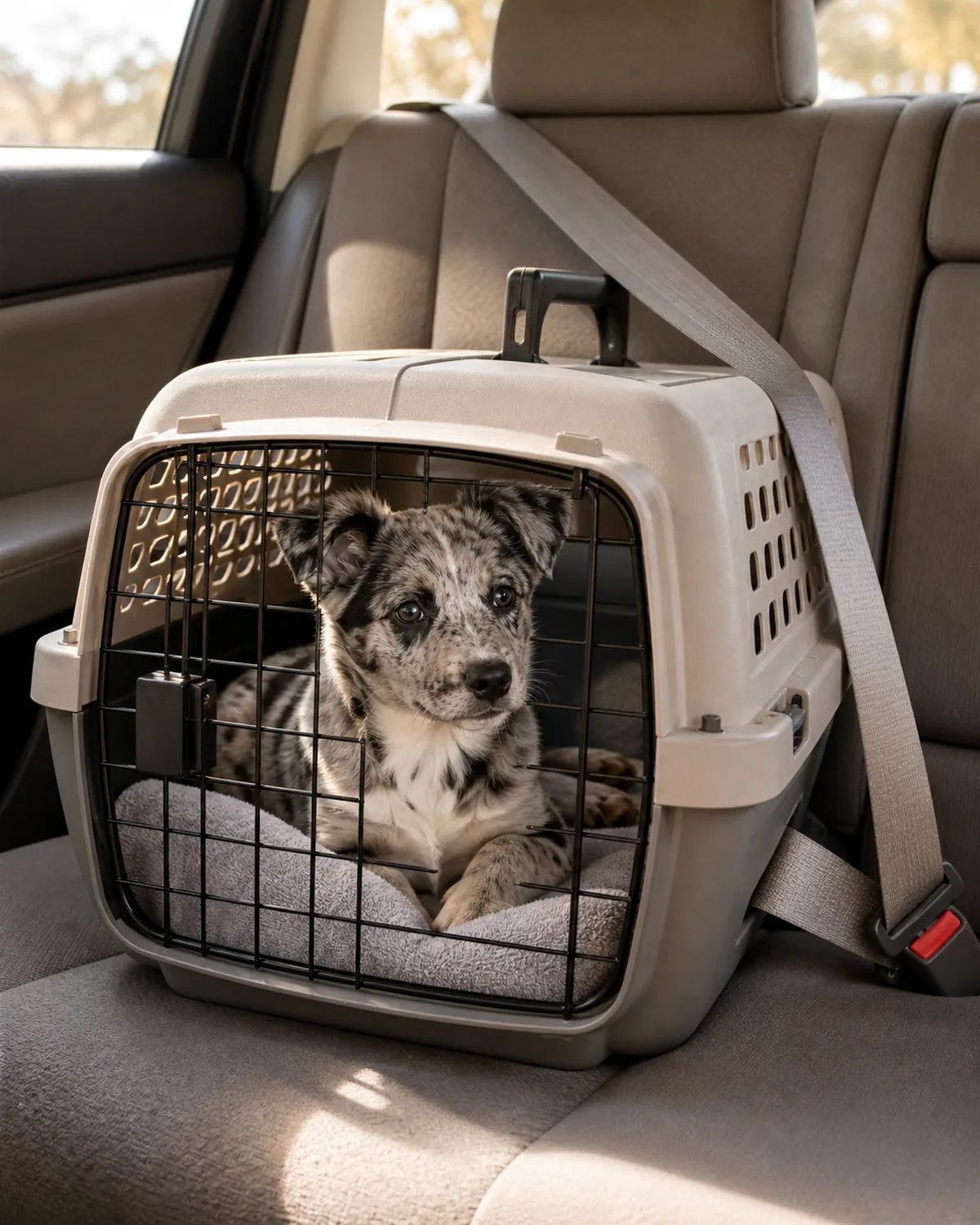
The carrier rides in the rear passenger footwell, not on a lap and not on the front seat. The footwell sits lowest, vibrates least, and stays shaded — three small variables that decide whether she arrives calm or queasy. The front-seat airbag is genuinely fatal for a small puppy in a sudden stop, and a lap-held puppy becomes a projectile.
Line the carrier with the scented towel. Skip food for the two hours before pickup so the stomach is empty for the ride and the clinic weigh-in is accurate. Crack the window one centimeter for fresh air without cold wind blowing in her face.
Drive straight there
No errands. No drive-through coffee. No stop to show her to a friend on the way. Every detour is another stress event piled onto a puppy already at her edge, and “I will just run in for five minutes” turns into a thirty-minute parking-lot wait while she pants in the carrier.
Arrive five minutes early, not thirty. Thirty minutes early means thirty minutes of carrier-in-parking-lot anxiety building before check-in. Five minutes is enough to sign the paperwork and walk straight into the exam room without sitting in the lobby longer than necessary.
- Carrier in the rear passenger footwell, strapped down, towel-lined. Front seat plus airbag plus lap holding is genuinely fatal.
- Empty stomach for the two hours before the ride. Preempts carsickness and gives the clinic an accurate weight.
- Drive straight, arrive five minutes early. Every detour and every extra lobby minute stacks stress on a puppy already at her edge.
Walking In: Parvo Protection from the Parking Lot to the Exam Room
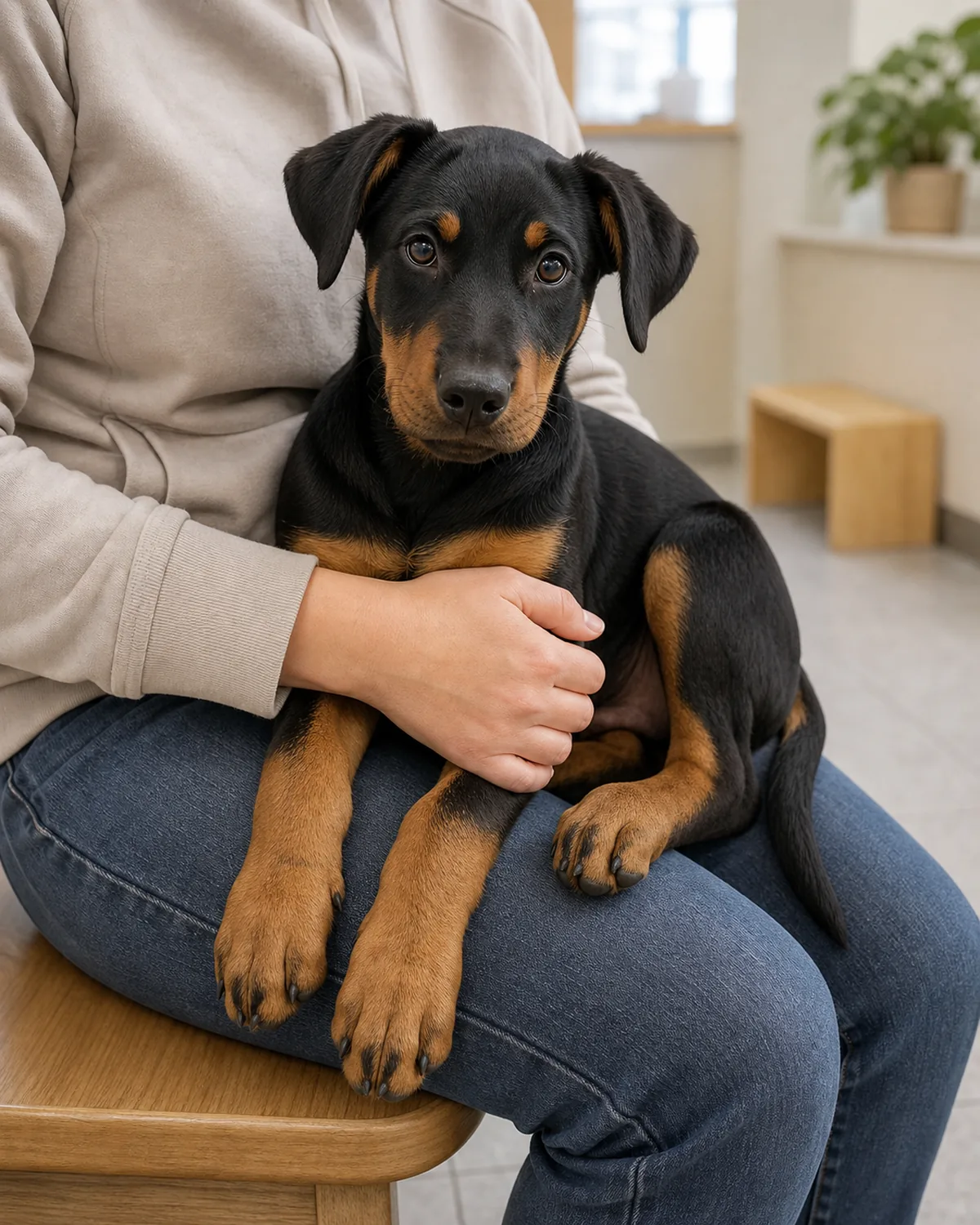
Parvo survives in the environment for six to twelve months. Every parvo-positive dog that has walked the parking lot, the lobby, or the exam-room floor in the last year has left virus behind. Your puppy’s vaccine series is not complete, and her immune system has no defense yet. The rule for the next forty minutes is simple: her paws do not touch the clinic.
Carry her in arms from the car to the door if she is under twenty-five pounds. Larger puppies stay in the carrier the whole way. The parking lot grass is the same rule — that strip beside the curb is where every sick dog has peed before going inside.
Inside the lobby
Sit with the carrier on your lap or beside you on the chair, not on the floor. If another dog is coughing or sneezing in the lobby, ask the front desk for an empty exam room to wait in. They will almost always say yes once you mention parvo.
The first thing you say walking into the exam room is “Can I have a clean towel for the table?” Lay your own rolled towel or the paper one they bring on top of the stainless steel. Stainless steel gets disinfected between patients, but the towel layer is a second margin and it also gives her grip so her legs do not splay on the slick surface.
- Parvo lives in the environment six to twelve months. Every surface from parking lot to lobby has hosted infected dogs.
- Carry in arms or stay in the carrier. Puppy paws do not touch parking lot grass, lobby floor, or exam room stainless steel.
- Ask for a clean towel on the exam table on entry. Paper from the clinic or your own rolled towel from the go-bag both work.
The difference between a puppy who lies down on the exam table at twelve months and a puppy who brace-shakes at the clinic door usually traces back to one of these sixteen lines. Read both columns once the night before the appointment, then again in the parking lot before you carry her in.
Always Do
- Book the appointment inside the first 72 hours after pickup, even if she looks perfectly healthy.
- Walk in with a one-page question card — vaccines, food amount, deworming, microchip, next visit.
- Bring a fresh stool sample collected within 12 hours of the appointment, sealed in a clean bag.
- Hand the breeder or rescue’s original health record straight to the tech, originals not photos.
- Carry her in your arms or in a closed carrier from the car all the way to the exam table.
- Lay your own plain towel on the exam table before the tech sets her down on the steel.
- Give the vet tech a treat pouch of soft, high-value treats to feed during restraint and shots.
- Book the next appointment at the front desk before you walk out the door, never “later by phone.”
Never Don’t
- Never let her paws touch the parking lot, lobby, or hallway floor until full vaccines are done.
- Never dose Tylenol, Advil, Pepto, or Imodium from your medicine cabinet — all are toxic to dogs.
- Never skip a core vaccine because she “seems fine” — the schedule exists for the silent weeks.
- Never pin or wrestle her down when she squirms — ask the tech to pause and reset the hold.
- Never call her by name while forcing a pill or restraint — her name has to stay a happy word.
- Never run pet-store, drive-thru, or grocery errands on the way home from the appointment.
- Never hold her on your lap in the front passenger seat for the ride to or from the clinic.
- Never seat her or her carrier in front of an active passenger airbag — back seat only.
Greeting the Vet Tech: First-Impression Choreography
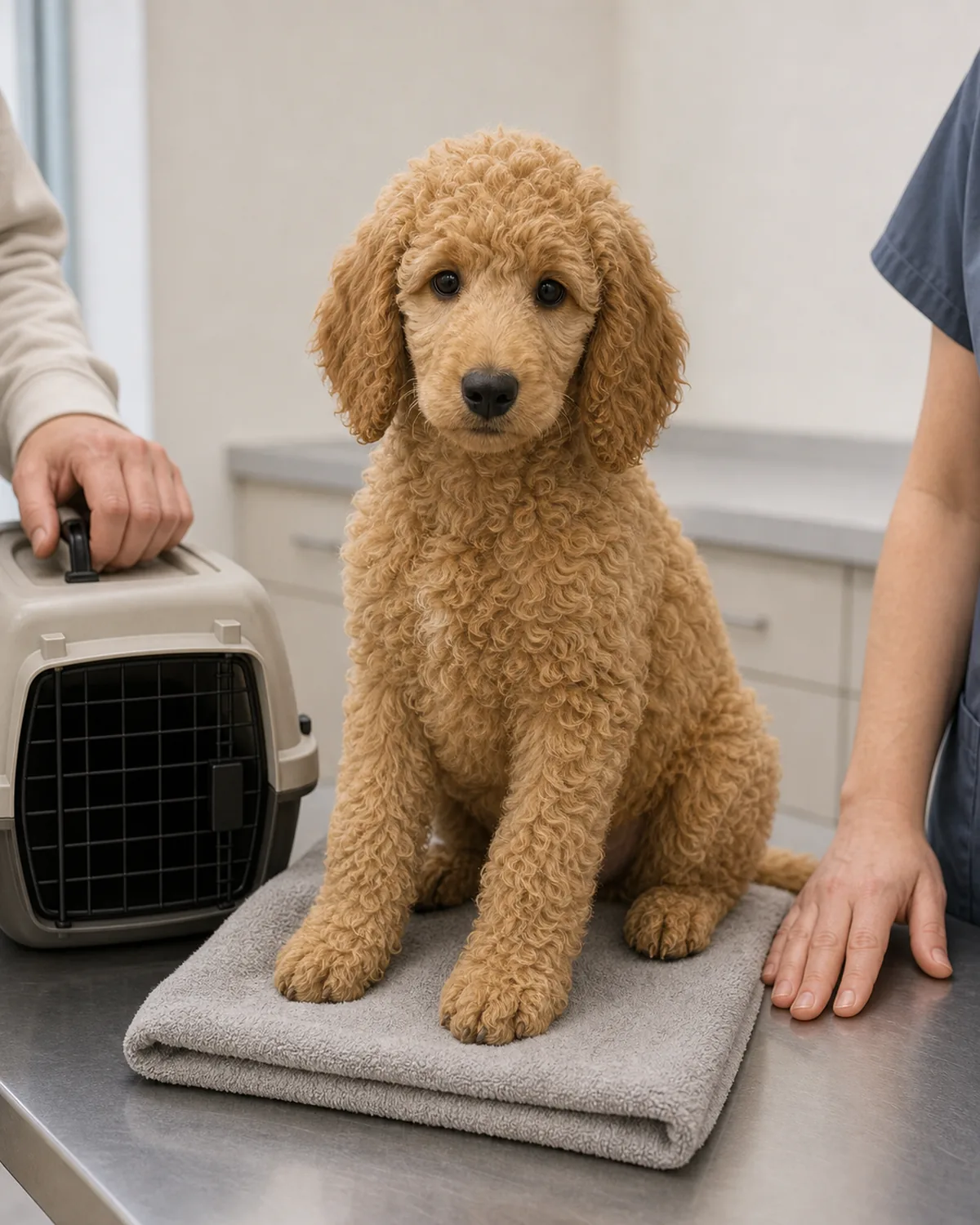
The vet tech is the first non-family human your puppy meets at the clinic. The way that thirty-second hello goes determines whether every future tech interaction is calm. Four moves make the choreography work.
The tech walks in and you model the calm by kneeling low yourself. Standing tall over a puppy you are about to weigh and temperature-check signals threat. Then you hand the tech three or four high-value treats from the pouch and say “Can you give these to her while you weigh her?” The puppy now associates this stranger with the snack person.
The weight trick and the temperature read
A large platform scale is terrifying for a puppy who has never stood on one. Most techs already know the workaround: tech weighs herself, picks the puppy up, weighs both, and subtracts. No forcing the puppy to stand alone on a sliding metal plate while you watch from three feet away.
A rectal temperature reading takes about five seconds and is universally disliked, but a treat handed off the moment the thermometer comes out turns it into one short surprise instead of a battle.
Your job through all of it is to stand a little to the side, breathe slowly, and not narrate. Talking to a stressed puppy in a high voice makes her more stressed because she reads the pitch as your fear, not your reassurance.
- Kneel low the moment the tech walks in. Standing tall over a small puppy signals threat from both of you.
- Hand the tech three or four high-value treats to feed during the weight check. Codes the stranger as “snack person.”
- Tech-holds-and-subtracts beats forced solo standing on the platform scale. No battle for the first weigh-in.
The Physical Exam: What the Vet Will Actually Check (Head to Tail)
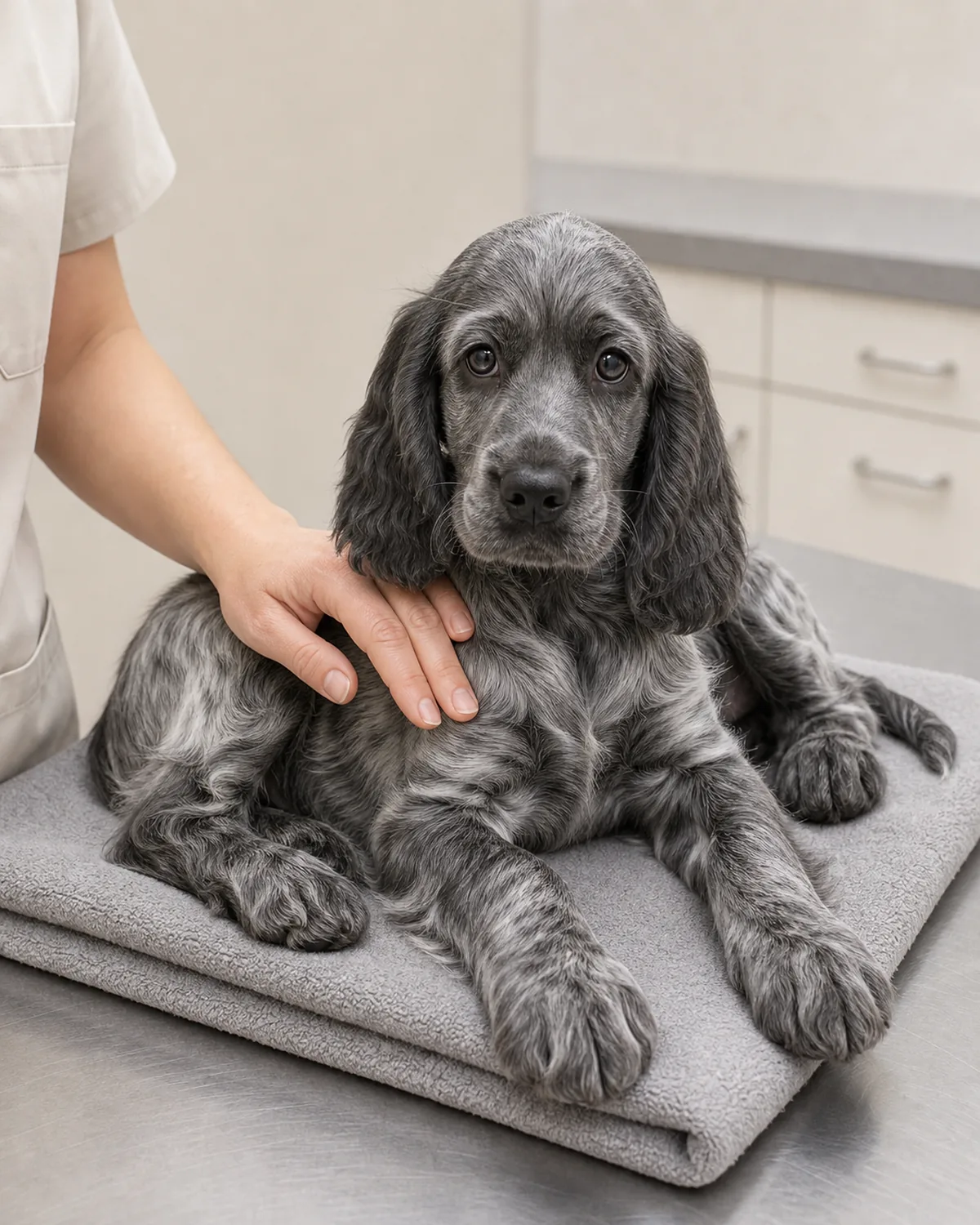
The head-to-tail exam takes five to seven minutes and follows a fixed order in every clinic. Knowing the order keeps you from flinching at moves that look invasive but are routine. Eyes first — clear, no discharge, third eyelid sitting where it should.
Ears next, checking for mites and the dark waxy buildup that signals them. Mouth, looking for twenty-eight deciduous teeth, a scissor bite, and pink gum color as the circulation baseline.
Heart auscultation comes after the head. A grade-one or grade-two innocent murmur shows up in about one in two hundred puppies and usually resolves on its own. Higher-grade murmurs trigger a cardiology referral. Lymph nodes under the jaw, along the neck, in the armpits, and at the groin get a quick palpation. Then the abdomen for hernia checks and a baseline organ feel.
The rest of the sweep
Coat and skin get a parasite scan — fleas, ticks, ringworm spots. Paws and nails for symmetry and pad health. A rectal temperature in the 101 to 102.5 Fahrenheit range is the normal puppy window. Genitals and anal area get a quick look for inguinal hernia and a sex confirmation that the breeder may have called wrong.
If she squirms or freezes during any of it, the tech offers a treat and the vet pauses for two seconds. Treat distraction works far better than restraint, and any vet worth seeing again uses it without being asked.
- Eyes, ears, mouth, heart, lymph nodes, abdomen, coat, paws, temperature, genitals. Fixed order, five to seven minutes.
- Grade-one or two innocent heart murmurs are common at this age and usually resolve. Higher grades trigger cardiology referral.
- Normal puppy temperature is 101 to 102.5 Fahrenheit rectally. Anything below 99 or above 103 is a same-day vet conversation.
Discussing the Vaccine Plan Without Drowning in Acronyms
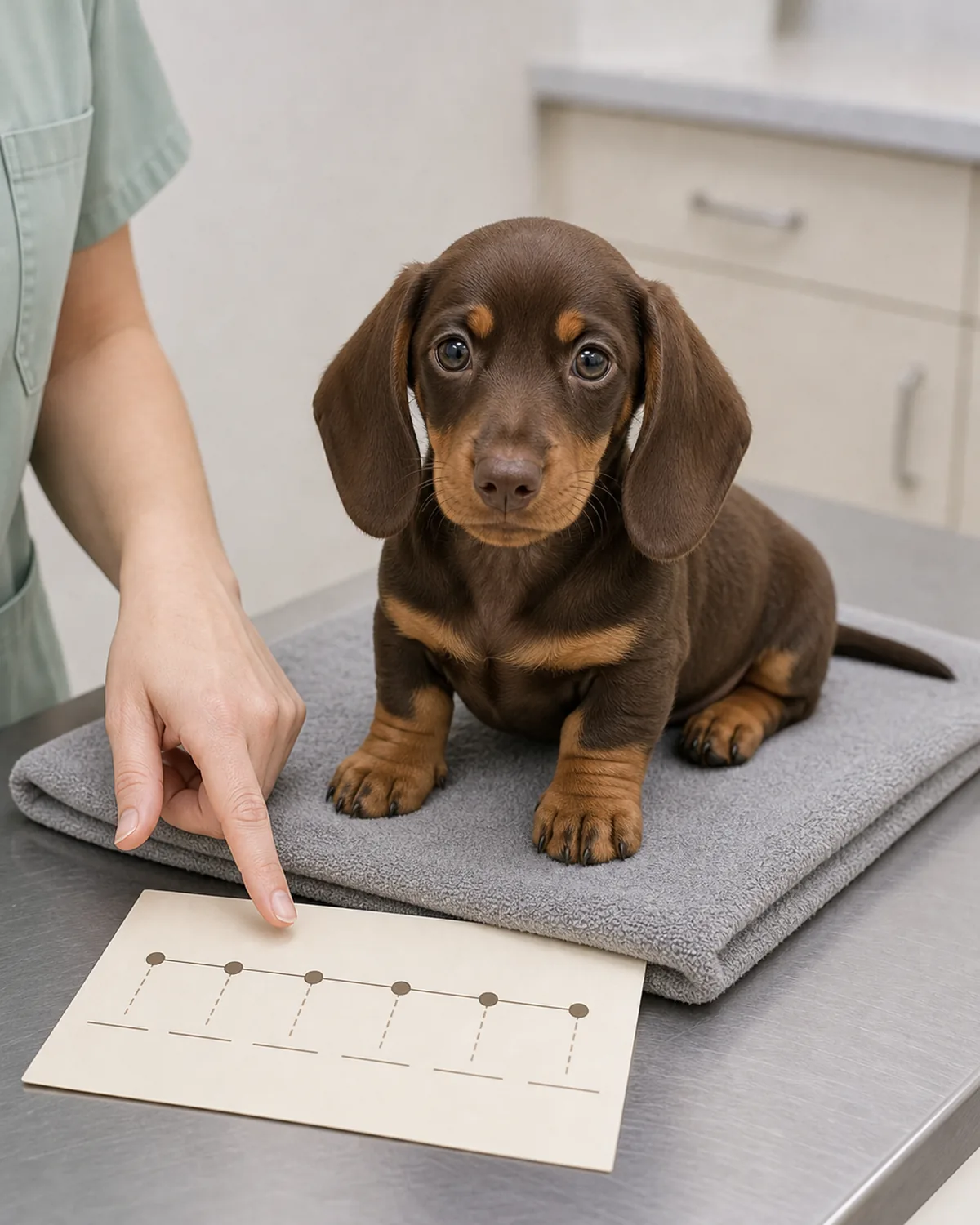
The vaccine plan sounds harder than it is. Five names, two timelines, and one reason the gaps cannot drift. DHPP is the core combination — distemper, hepatitis adenovirus, parainfluenza, and parvovirus — and it goes in at eight, twelve, and sixteen weeks. Missing one round leaves the parvo window open at the exact age when maternal antibodies have faded.
Rabies is a single sixteen-week dose, legally required in most states. Bordetella against kennel cough is optional unless she will go to daycare, boarding, or a groomer. Leptospirosis is regional — strongly recommended in the South, rural areas, and anywhere wildlife crosses your yard. Lyme is added in tick-heavy regions across the East and Upper Midwest.
Normal reactions versus call-the-vet reactions
Mild soreness at the injection site, half a day of low energy, and a slightly reduced appetite for one meal are all normal post-vaccine signs that pass inside twenty-four hours. The vet-call list is shorter and sharper: facial swelling, repeated vomiting, collapse, labored breathing, hives across the body, or a seizure.
Any of those means you call the twenty-four-hour line right then, not in the morning.
Skip every human medication temptation. Pepto, Benadryl, Tylenol, Advil all carry real toxicity at common doses and the hotline call is faster and cheaper than the ER visit they cause.
- DHPP at 8, 12, and 16 weeks plus rabies at 16. Missing a round opens the parvo window while maternal antibodies fade.
- Bordetella, leptospirosis, and Lyme are conditional adds based on lifestyle and geography. The vet recommends based on your zip code and plans.
- Normal post-vaccine signs pass in 24 hours. Facial swelling, repeat vomiting, collapse, or labored breathing is a 24-hour vet call right then.
First-Vet-Visit Quick Card
Vet-visit go-bag — 8 items
- Closed carrier or sling, paws never touch clinic floor.
- Plain old towel, your scent, for the exam table.
- Breeder or rescue health record, originals not photos.
- Fresh stool sample collected within 12 hours, sealed.
- Phone photo of her current kibble bag, front and back.
- Today’s baseline weight from your bathroom scale.
- One-page question card, paper, written the night before.
- Treat pouch of soft, high-value treats for the tech.
10 questions to ask
- Which core vaccines today, which at next visit?
- Exact daily kibble grams for her weight?
- Deworming schedule and which products?
- Heartworm and flea-tick start date?
- Body condition score, ideal range?
- Microchip today or at neuter?
- Neuter or spay window for her breed mix?
- What stool, vomit, or limp warrants a call?
- After-hours emergency clinic name?
- Next appointment date, on the calendar?
Parvo protection — 4 rules
- Carry in, carry out — no parking lot sniffs.
- Carrier or arms only across the lobby floor.
- Your towel on the exam table, not bare steel.
- Wipe paws and your shoes when you get home.
Stress signals — pause or call
- Calm: soft body, ears neutral, takes a treat.
- Calm: blinks slowly, leans into your hand.
- Calm: yawns once, then resettles on towel.
- Call vet: lip licks plus whale eye plus tucked tail.
- Call vet: stiff freeze, refuses food she normally takes.
- Call vet: trembling that does not stop within 60 seconds.
3-number fridge card — save now
- 24-hour emergency vet — your local number here
- ASPCA Animal Poison Control 888-426-4435
- Pet Poison Helpline 855-764-7661
PAWLIQA · NEW DOG OWNERS
What the Vet Will Weigh, Measure, and Recommend
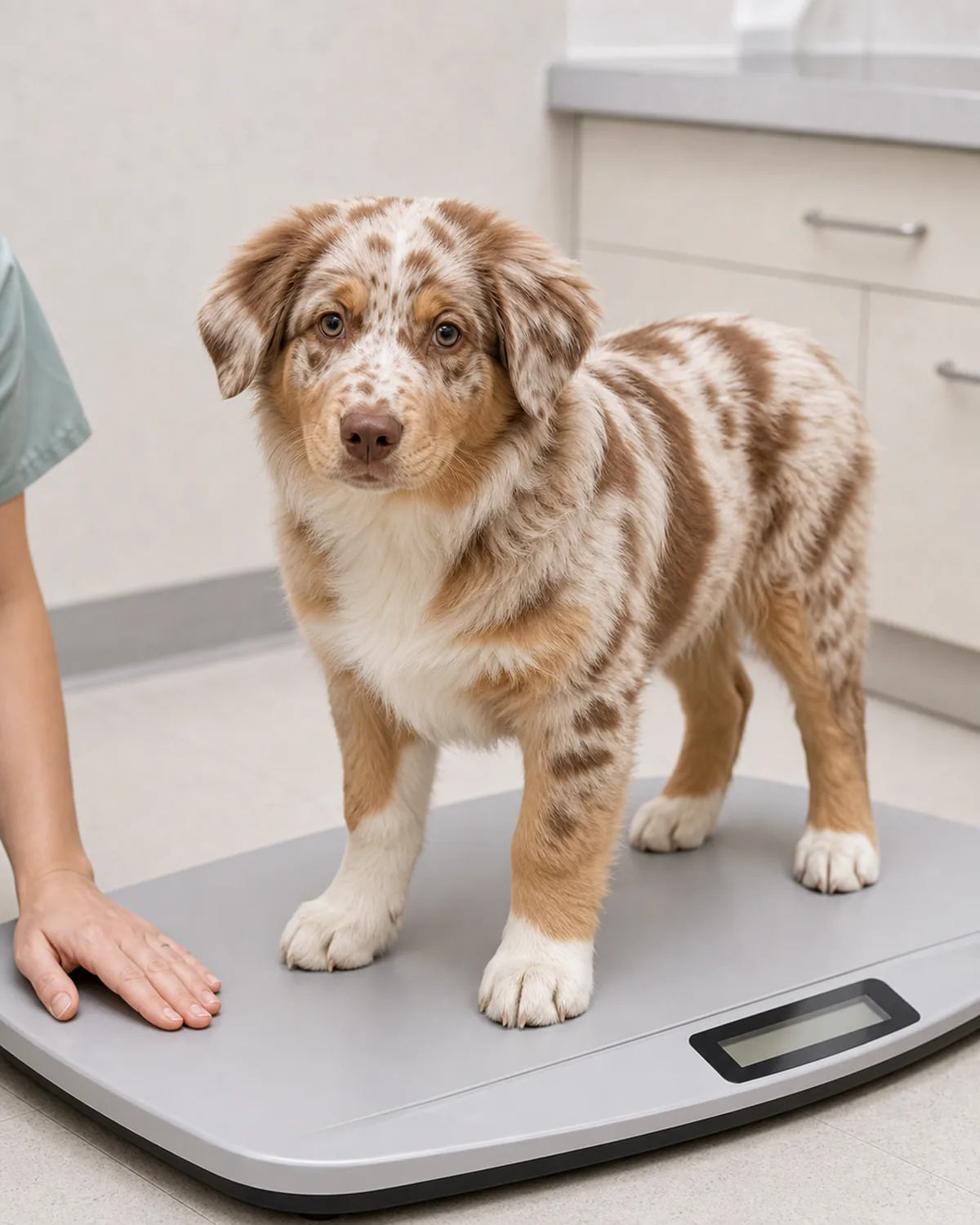
The exam ends with three measurements and one recommendation. Weight gets written down as the baseline she will be tracked against for the next eighteen months. Healthy puppy growth runs five to fifteen percent a week — flatten that line and the vet looks closer, spike it past twenty-five percent and they look closer too.
Body condition score on a one-to-nine scale is the second number. Four to five is ideal: visible waist from above, palpable ribs without prominent ridges, abdomen tucked up toward the back leg.
The estimated adult weight comes third, based on paw size, parent weights if you know them, and her current build. It is a range, not a precise number, but it sets your frame for collar size, crate purchase, and food portioning over the next year.
The daily calorie range
Then the vet recommends a daily caloric range based on her build, age, and activity level. This is the most important number to write down because it converts directly to how many cups of her current kibble she gets each day.
The math from caloric range to actual meals — how it splits across four feedings at eight weeks and tapers to three then two as she grows — lives in our full guide on how often and how much to feed a puppy, and that guide is where the cup-by-cup table belongs.
If the vet flags the current food as wrong for her build, the recommendation will be a category like “large-breed puppy formula” rather than a brand. The category guidance is what matters; the brand inside it is your choice.
- Three measurements: weight baseline, body condition score on a 1-9 scale, and estimated adult weight range.
- Healthy weekly growth is 5 to 15 percent. Flatter or steeper than that range gets a closer look from the vet.
- Vet recommends daily caloric range by build, age, and activity. Write down the range and convert it using the full feeding guide.
Heartworm, Flea-Tick, and Deworming: The Year-Round Preventive Talk
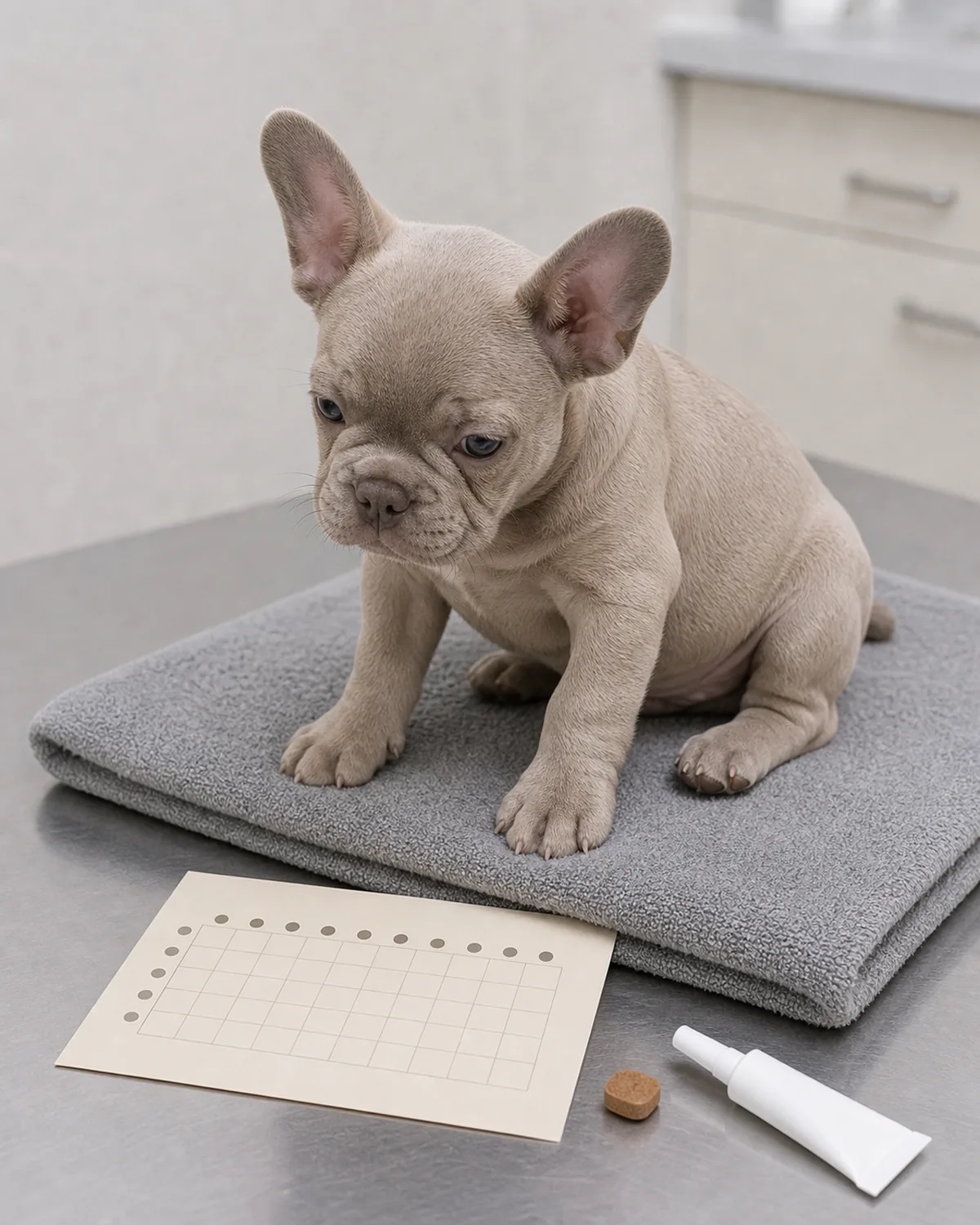
Three preventives get bundled into one conversation at the end of the visit. Heartworm prevention starts at six months as a monthly chew or topical and runs year-round even in northern climates — climate shifts have stretched mosquito season far past the old June-to-September window.
Skipping a month at the wrong time of year lets one larva mature, and adult heartworm treatment is brutal compared to the chew that prevents it.
Flea and tick coverage runs on a monthly chew, a monthly topical, or a long-wear collar. The vet picks among the three based on your yard, your other pets, and whether the dog will swim. Outdoor-heavy lifestyles get monthly chews for the stronger protection. Indoor-only dogs can do well on topicals or collars.
Deworming on the vaccine schedule
Internal parasite control runs alongside the vaccine series for the first sixteen weeks because most puppies carry intestinal worms at birth via the placenta or the mother’s milk. After sixteen weeks the cadence steps down to monthly through six months and then to a quarterly or monthly plan the vet sets based on her lifestyle.
Skip every human-medicine deworming temptation and every internet home formula. The dosing math is tight, the drug differs by parasite species, and the vet’s choice is faster, cheaper, and safer than the ER bill from getting it wrong. The vet writes the year-round plan on the take-home sheet and you photograph it for your phone backup that night.
Reading Stress Signals in the Exam Room: When to Pause and Re-Cue
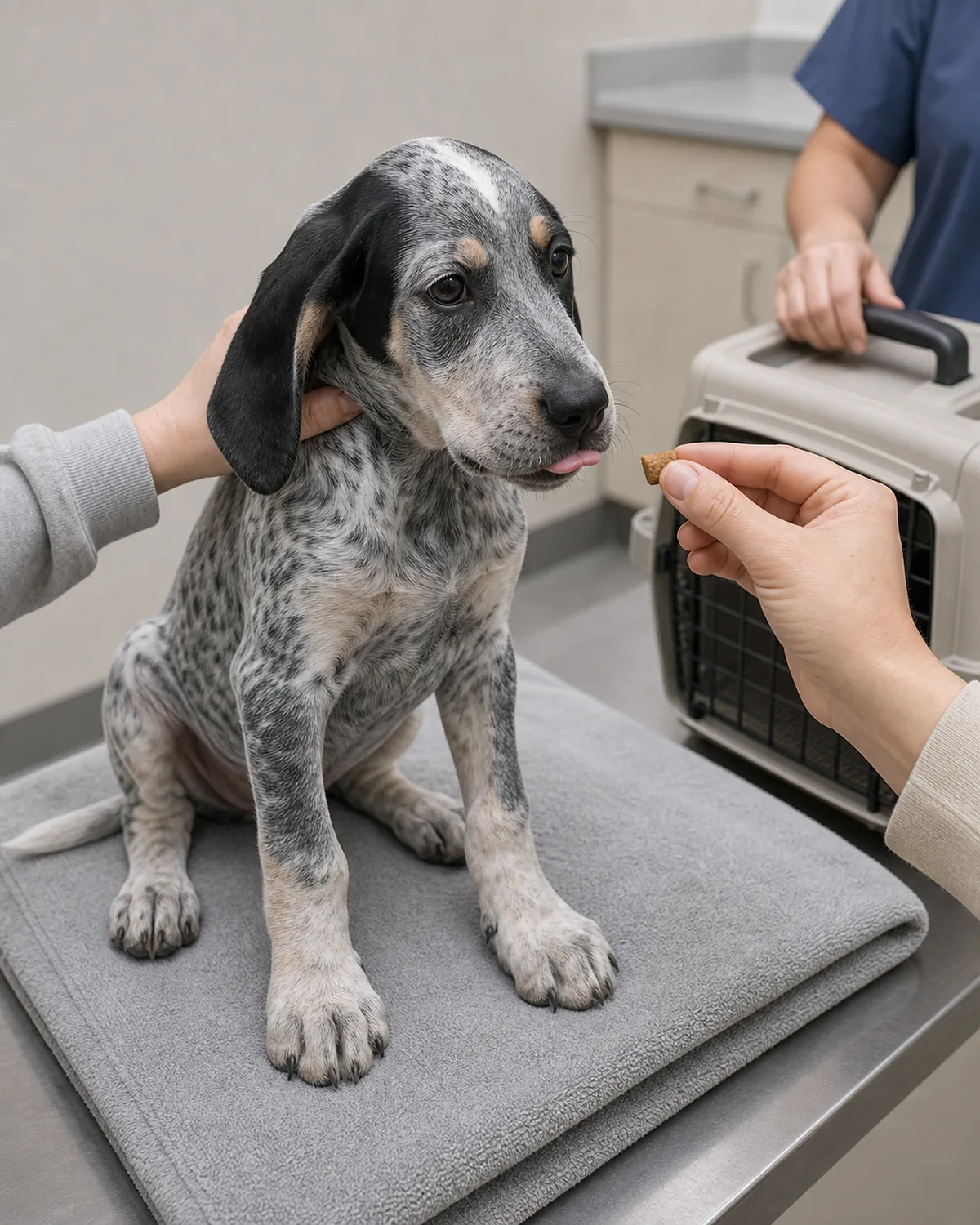
Seven stress signals show up over and over in exam rooms. Persistent body trembling that does not stop after thirty seconds. Tucking the legs and shrinking. Lip licking and yawning when there is no food or sleep cue around — these are calming signals, not boredom.
Rolling onto the back, which is appeasement, not “good girl.” Refusing a high-value treat she would inhale at home. Rapid panting with no heat source. Whale eye, where the whites show along the rim.
Two of those signals at once means you ask the vet to pause for thirty seconds. The exact words are “Can we pause for thirty seconds?” and any good vet says yes immediately. You let the puppy sniff the scented towel from the carrier, you rest a hand on her shoulder without lifting or talking, and you offer one high-value treat.
If she takes the treat, her threshold has dropped back below the line and the vet resumes.
When to push, when to leave
You do not push through a puppy who is refusing treats and showing whale eye. Pushing codes the experience as “I begged for help and no one came,” which is the exact circuit you spend the next two years trying to rewire. A calm puppy with a slower exam is always worth more than a quick exam with a traumatized one.
A vet who refuses to pause, who calls your puppy “dramatic,” or who muscles through restraint is the wrong vet. Fear-free certified clinics exist in every metro area and most small towns, and the change is worth it.
- Seven signals to watch: trembling, tucking, lip-lick or yawn, belly-up appeasement, refusing high-value treats, panting with no heat, whale eye.
- Two signals at once means a 30-second pause. Scented towel, hand on shoulder, one treat, no talking.
- A vet who refuses to pause or calls the puppy “dramatic” is the wrong vet. Fear-free certified clinics exist and are worth the switch.
Booking the Next Visit Before You Leave + the Three-Number Fridge Card
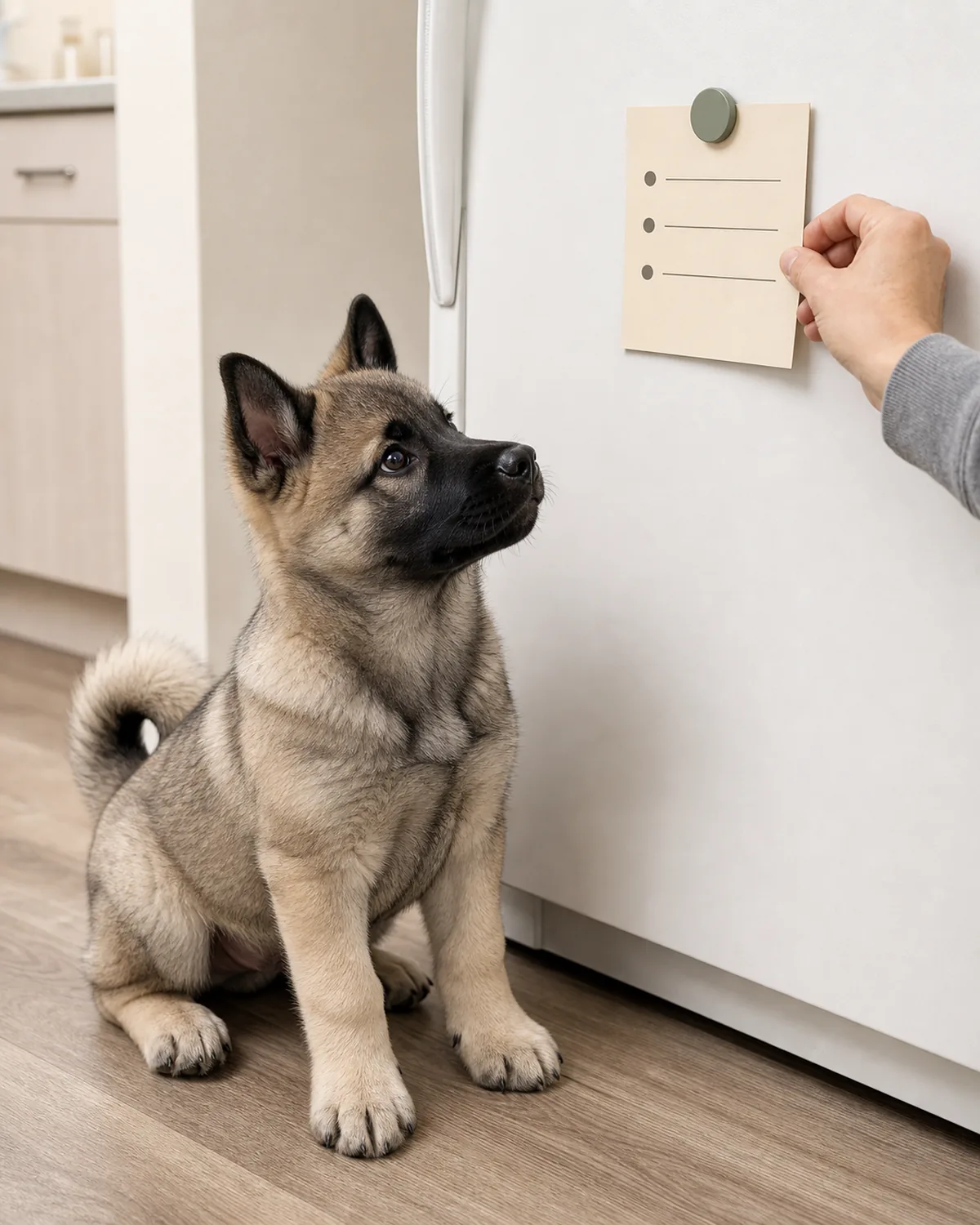
Three things happen at the reception desk before you walk out the door. The next vaccine appointment gets booked right then, not “in a few weeks when I look at my calendar.” Calendar reminder set for the day before and the hour before.
The twenty-four-hour emergency line gets written on paper a second time, in case the first copy gets misfiled. The full health record gets photographed page by page and emailed to yourself before you reach the car.
The fridge card is the last build of the day. Three numbers, written large, magnet to the front of the fridge. Your day vet for routine calls. The twenty-four-hour emergency vet for nights and weekends. ASPCA Animal Poison Control at 888-426-4435 with Pet Poison Helpline at 855-764-7661 as backup for any ingestion question.
The first-visit milestone
Day one of vet care is done. The puppy walked out without a trauma imprint. You know the next vaccine date, the deworming cadence, the preventive plan, the body condition baseline, and the daily caloric range. Three emergency numbers are on the fridge. The record is backed up in your email.
The next decade of annual exams will sit on top of this morning. That is the first deposit in the trust account that keeps her calm at every visit until she is fourteen.
- Book the next appointment at the reception desk before you leave. Calendar reminders set the day before and the hour before.
- Photograph the take-home record page by page and email it to yourself before you reach the car.
- Three-number fridge card: day vet, 24-hour emergency vet, ASPCA 888-426-4435 with Pet Poison 855-764-7661 as backup.

Jess Calloway edits Pawliqa, where she shares dog care, grooming, training, and new-owner tips — plus DIY and pet-friendly home ideas — for anyone who wants a happy, well-cared-for dog. As a dog mom to three very different dogs, she writes the honest, tested version of what actually works. This first-vet-visit guide covers the 72-hour booking window, the one-page question card, the eight-item go-bag, the parking-lot-to-exam-room parvo plan, the vet-tech treat-pouch handoff, the head-to-tail physical exam, the vaccine plan without acronyms, the weight and body-score reset, the heartworm and flea-tick start, the stress signals that should pause the visit, and the three-number fridge card every new owner needs on the door. Every guide is image-led and reviewed for clarity, usefulness, image accuracy, and Pinterest-to-page alignment before it goes live. Visit the About page.