Our first dog handled the pregnancy beautifully. Then we brought the baby home and he spent two weeks pacing, refusing food, and barking at every cry.
We had prepared the nursery. We had not prepared the dog. That gap between the room being ready and the dog being ready is where most of the problems start.
This is the sequence that closes it: what to do months before, the day of, and the weeks after so the dog and the baby can share the house without anyone losing sleep over it.
Jump to a section
How to introduce your dog to a new baby
From months-before prep to the first meeting, and the daily habits that keep both safe and settled.
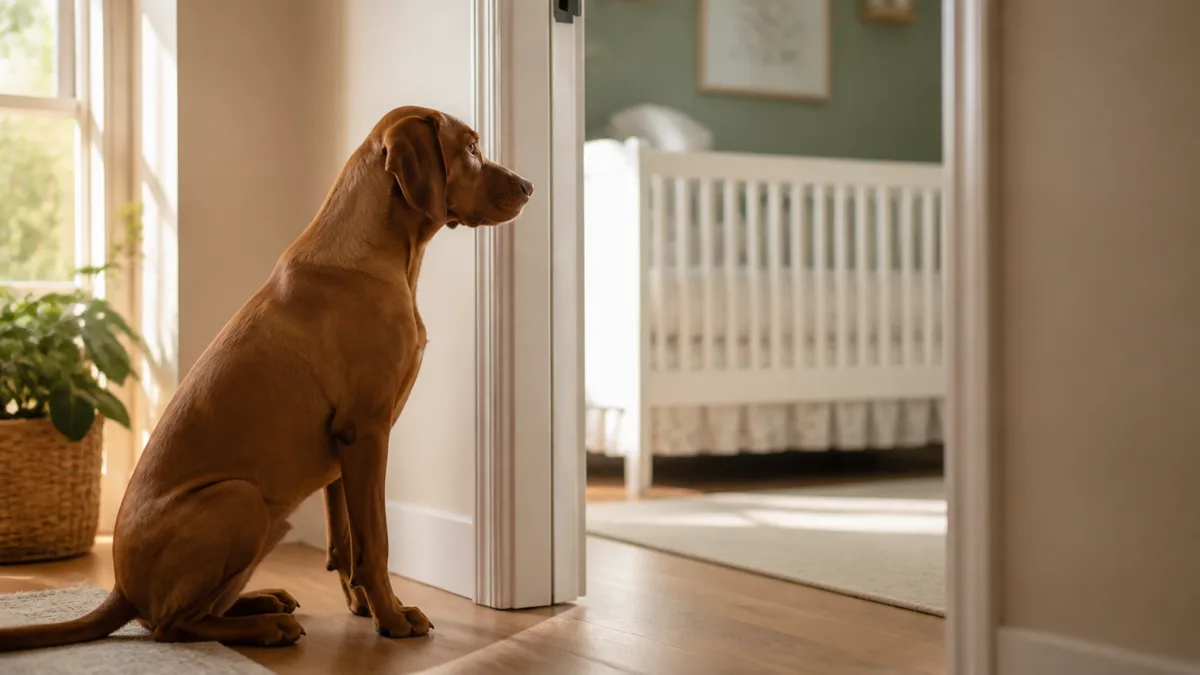
The biggest mistake is waiting until the baby comes home and then scrambling to fix problems that already have momentum. A dog who has had free run of the nursery for years will not accept a closed door calmly on day one.
Three to four months before the due date is the window. Start changing access rules now. Close the nursery door. Rearrange furniture. Set up any gates or barriers so the dog has time to accept them as normal rather than as punishment tied to the baby.
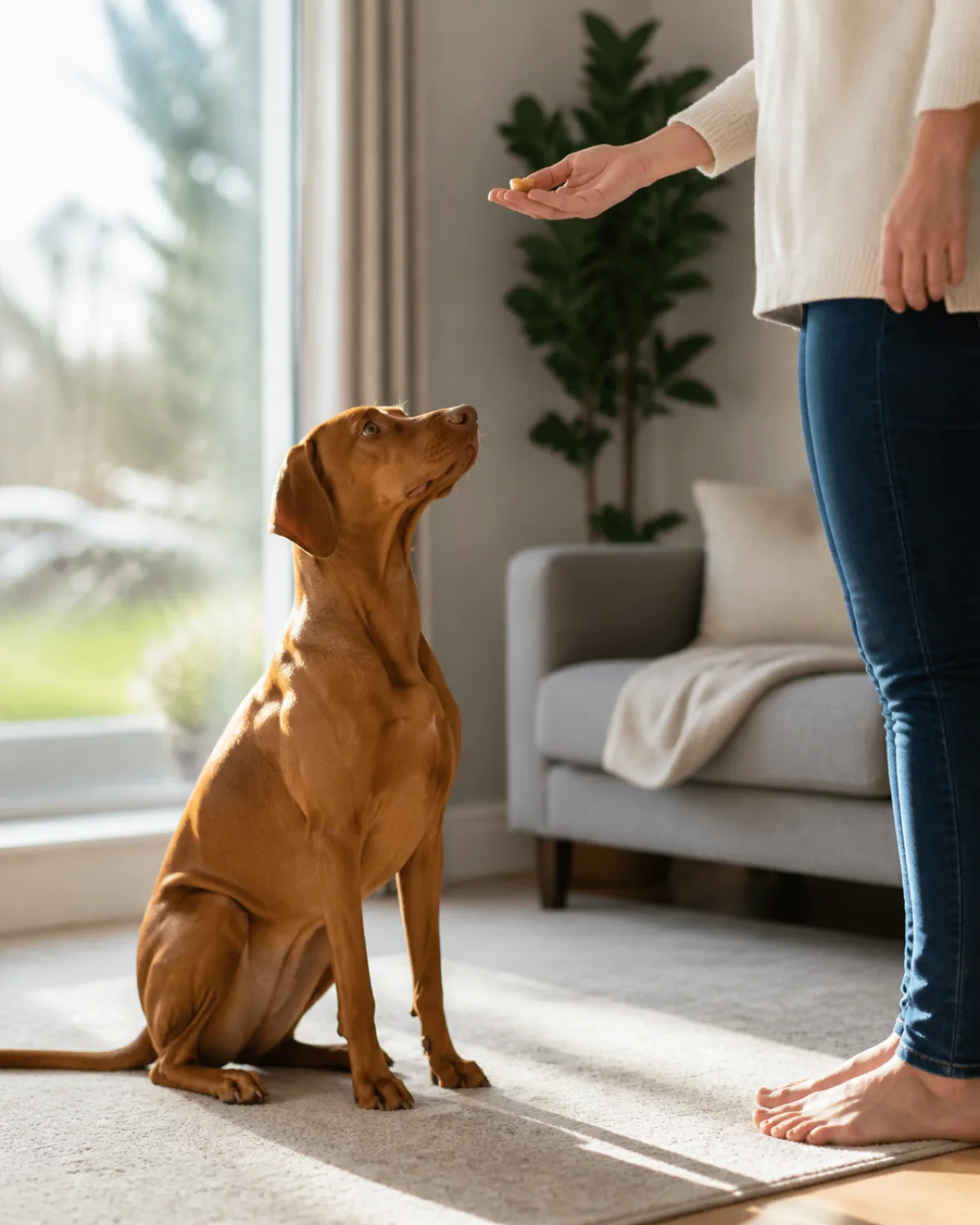
If your dog does not yet have reliable sit and stay commands, this is the time to build them. You will need both constantly once the baby arrives, and learning under pressure works for dogs about as well as it works for people.
Let your dog hear and smell baby things first
Dogs process new information primarily through scent and sound. A crying baby is an alien noise to most dogs, and the chemical profile of baby products is completely outside their experience.
Play recordings of baby sounds at low volume during calm moments. Pair them with treats. Gradually increase the volume over weeks until your dog can hear a full-volume cry without startling.
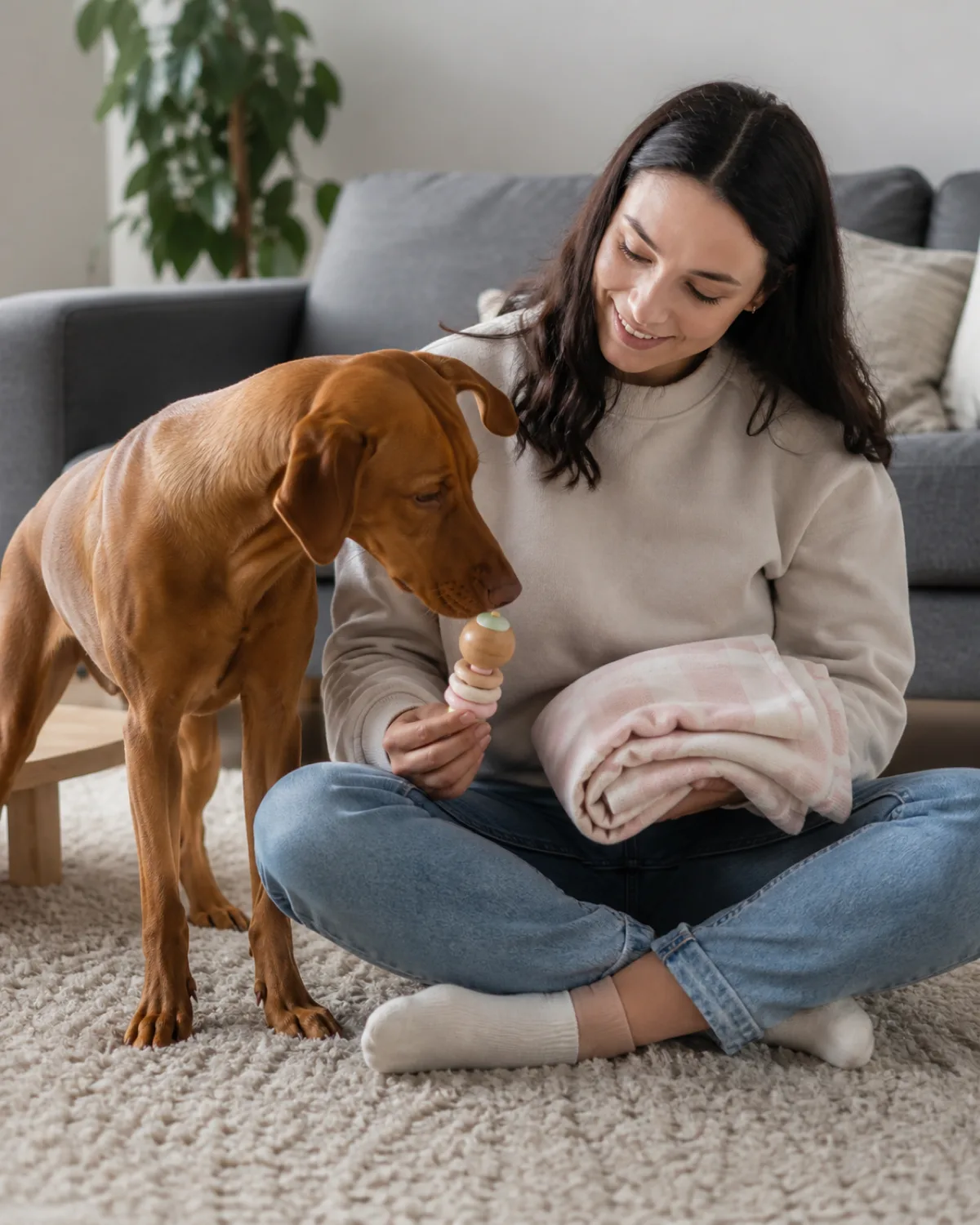
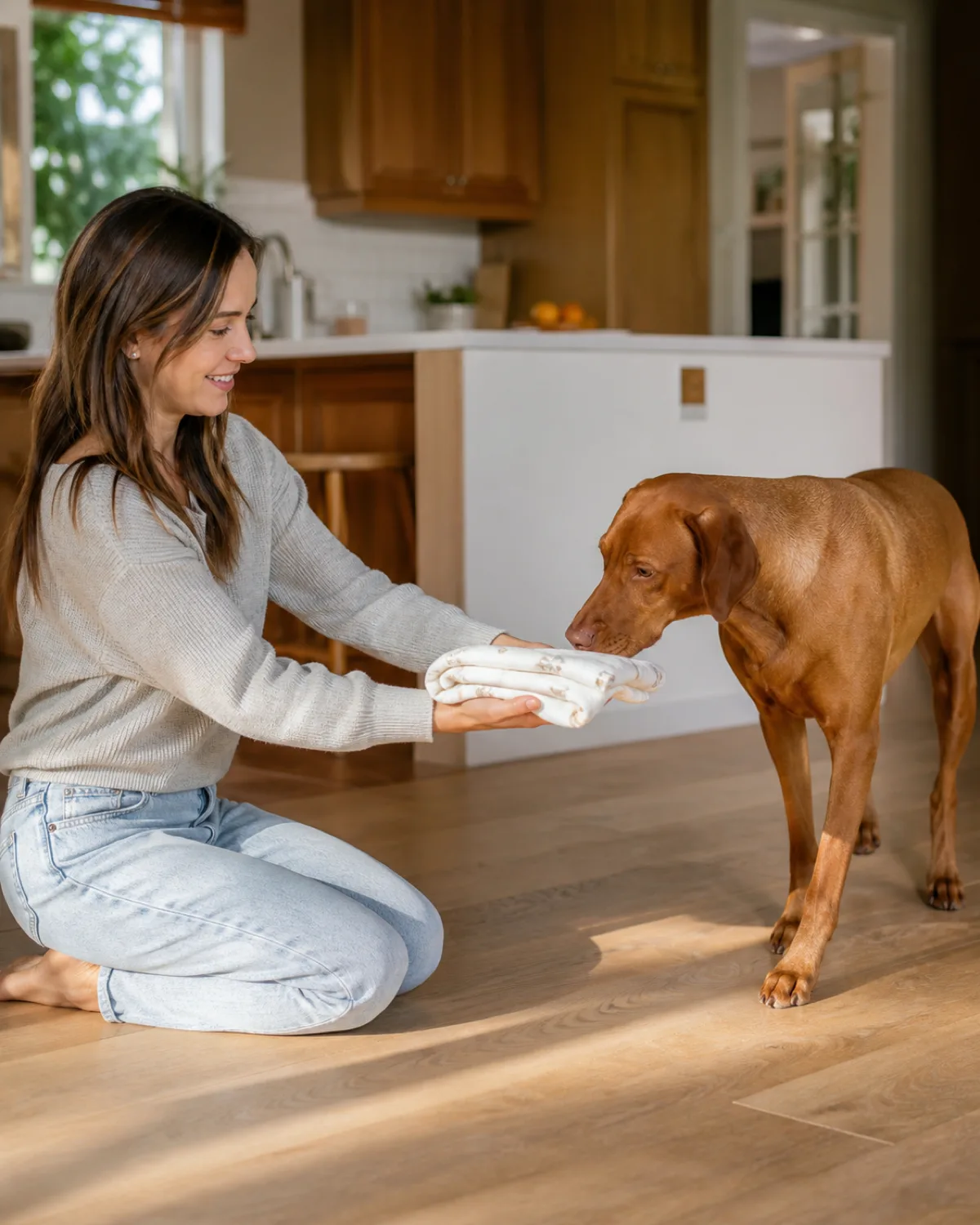
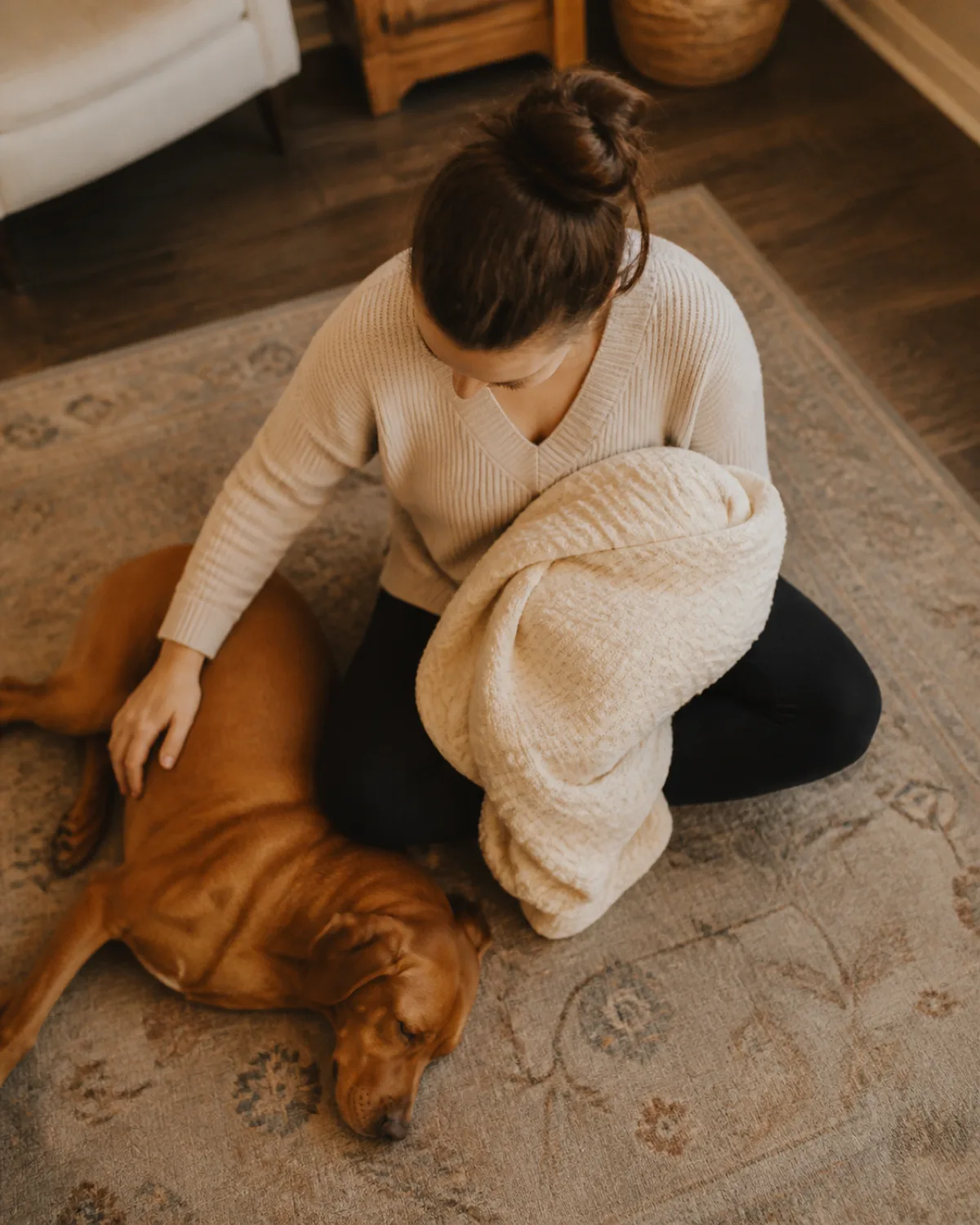
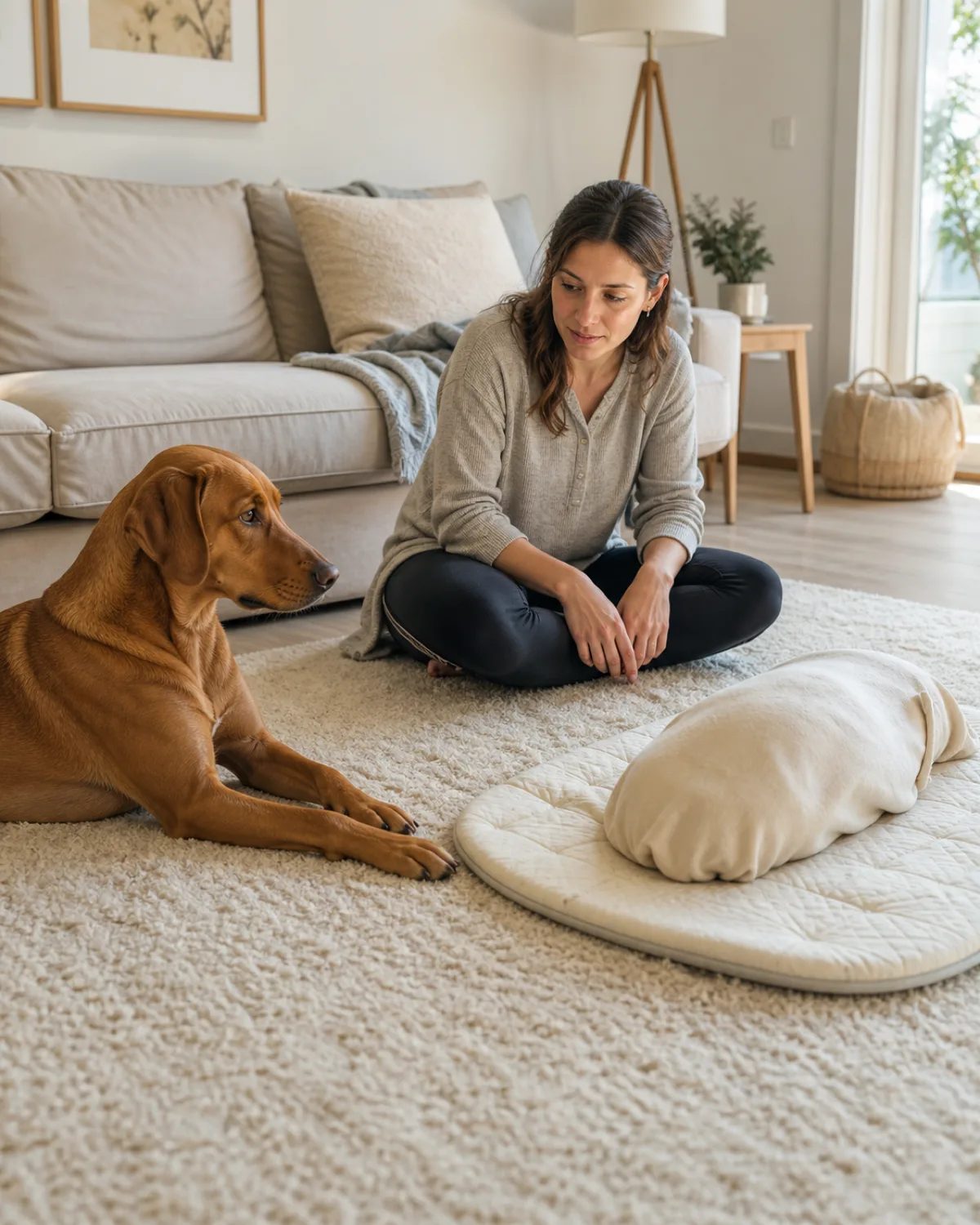
Open baby products and let your dog sniff them on their own terms. Set out a blanket washed in baby detergent. Leave it on the floor. Do not hold it to the dog's face or force an introduction. The goal is familiarity, not a reaction.
Adjust your dog's daily routine gradually
Babies demolish routines. The 7 AM walk might shift to 6 AM or 8:30 depending on the night. Meal times slide. Evening play gets cut short.
Start shifting these now. Fifteen minutes earlier one week, twenty minutes later the next. Your dog adapts to variability better than a sudden, permanent schedule change.
If someone else in the household will take over the morning walk once the baby arrives, have them start doing it now. The transition should feel like a gradual handoff, not an abandonment.
Hospital stayBring home a worn blanket before the baby arrives
First weeks homeSupervised meetings, reward calm behavior, maintain dog\'s routine
Reinforce basic commands before the introduction
Sit, stay, leave it, go to your bed. These four commands are the toolkit you will rely on hourly once the baby is home.
Sit and stay keep the dog in place while you carry the baby through a room. Leave it stops the dog from investigating a dropped pacifier or a spit-up cloth. Go to your bed gives the dog a clear, positive exit when things get overwhelming.
Practice these in the specific rooms where baby activity will happen. The living room floor, next to the crib, beside the changing table. A dog who can stay perfectly in the kitchen but has never practiced near the nursery will not generalize on their own.
Bring home a blanket with the baby's scent
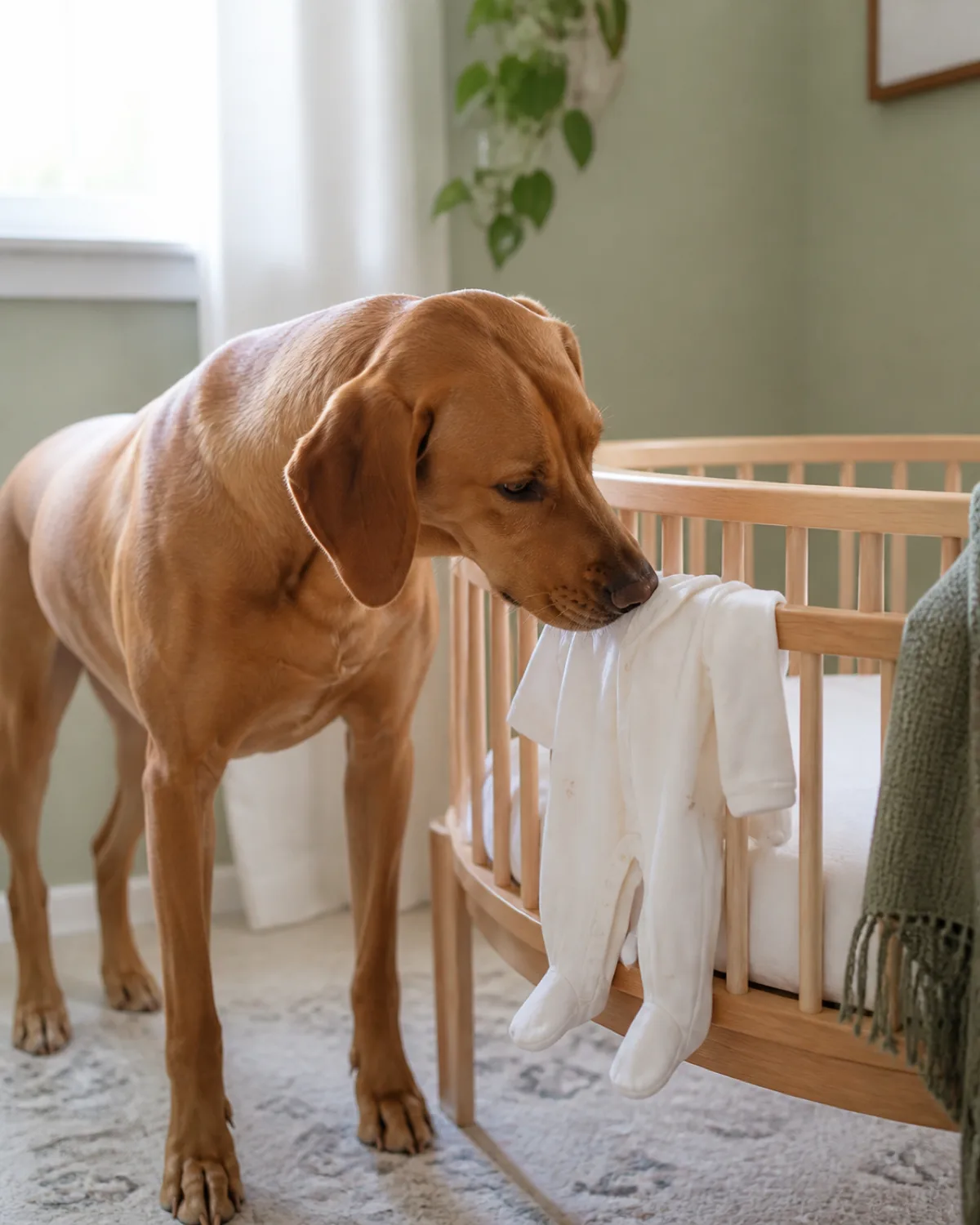
Before the baby comes home from the hospital, have someone bring back a blanket or onesie the baby has worn. This is the dog's first introduction, and it should happen without the baby present.
Let the dog approach the item on the floor. Do not hold it up, wave it, or push it toward the dog's nose. Watch the body language. Sniffing is good. Ignoring is fine. Growling or stiffening means you need more preparation time and possibly professional help.
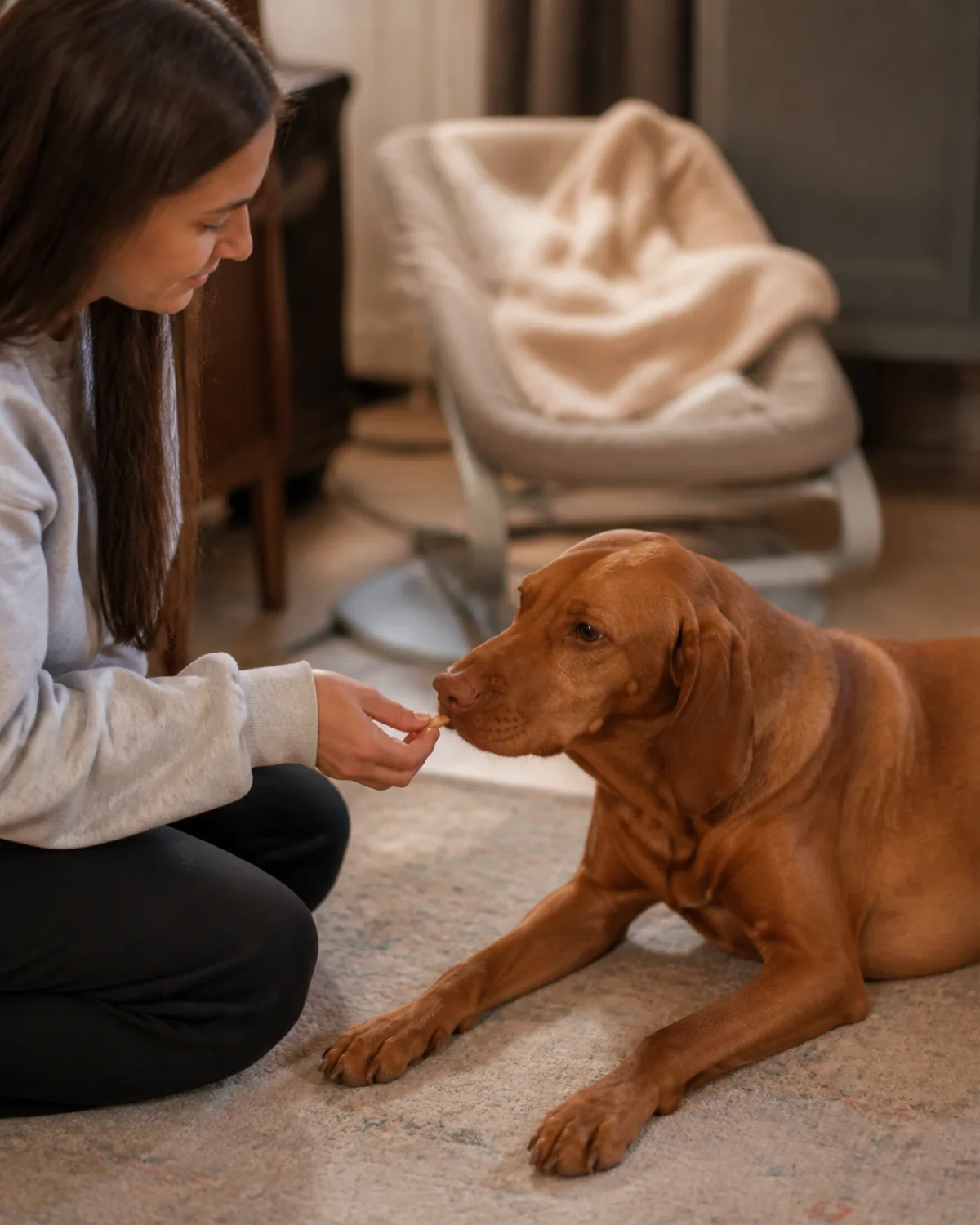
Reward calm investigation with a quiet treat. No excited praise, no party. The tone you set here is the tone you want for the real introduction: calm, low-energy, positive.
Keep the first meeting calm and controlled
The real introduction matters less than you think, and more than you think. It will not define the relationship permanently, but the energy in the room during the first meeting sets the emotional baseline your dog will reference every time the baby cries or moves.
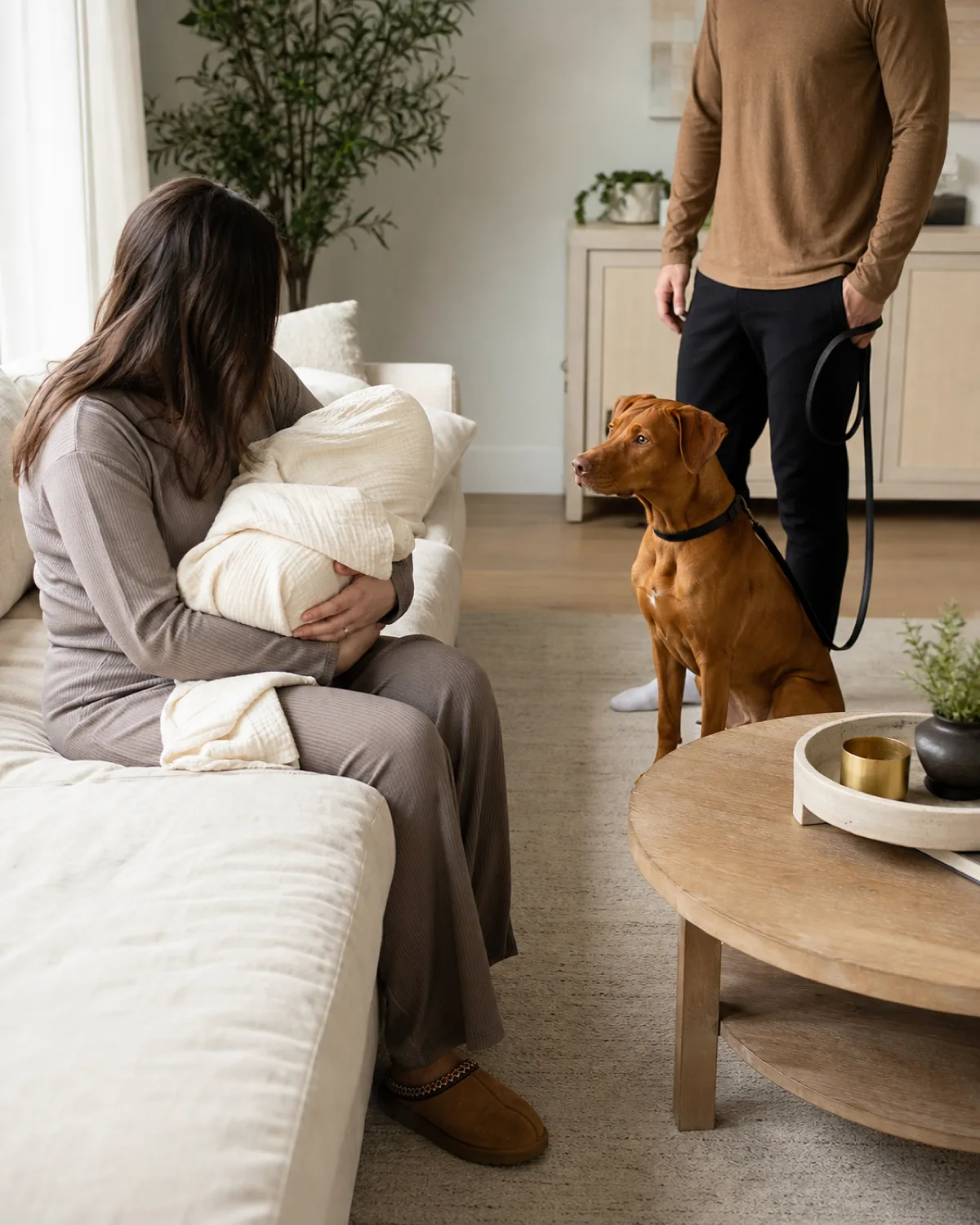
One person holds the baby seated on the couch. Another person has the dog on a loose leash. Let the dog approach at their own pace. No pulling, no luring, no picking the dog up to bring them closer.
Three feet of distance is fine for a first meeting. The dog does not need to sniff the baby's face. They need to be in the same room, calm, and associate the baby's presence with nothing bad happening. That is a successful first meeting.
The first introduction ground rules
What to do and what to avoid
ALWAYS Do this
Keep the dog on a loose leash with a calm handler
Let the dog set the pace and distance
Reward calm interest with a quiet treat
Keep the session short (under five minutes)
NEVER Do this
Force the dog closer or hold them near the baby
Let the dog lick the baby\'s face or hands
Scold the dog for being nervous or backing away
Have excited guests present during the introduction
Reward calm behavior around the baby
From the first day home, every moment your dog chooses to be calm near the baby is worth marking. A quiet word and a small treat when the dog lies down while you nurse. A scratch behind the ears when the baby cries and the dog stays on their bed instead of rushing over.
The pattern you are building is straightforward: baby sounds and baby presence predict good things happening to the dog. Not exciting things. Calm, reliable good things.
What to avoid: pushing the dog away when they approach calmly, yelling when they sniff in the baby's direction, or isolating the dog in another room whenever the baby is present. All of these teach the dog that the baby's arrival means bad things for them.
Set up safe spaces for your dog
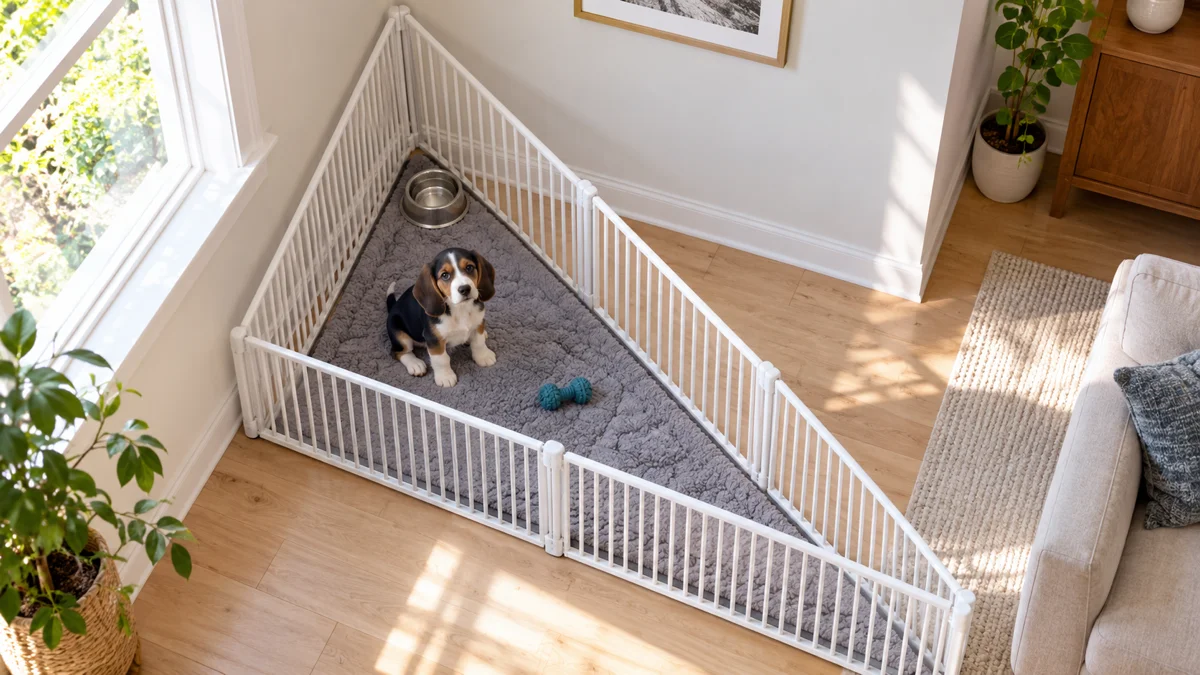
Your dog needs a place that is entirely theirs. Somewhere the baby cannot reach, the noise is lower, and no one asks them to perform. A crate with the door left open, a bed in a quiet corner behind a baby gate, or a separate room with their water bowl and a favorite blanket.
This mirrors the same decompression space logic that helps any dog adjust to a new environment. The principle does not change with a baby in the house. It becomes more important.
This is not a timeout space. The dog should go there voluntarily and be left alone when they do. If the dog retreats to their safe space during a crying spell, that is healthy self-regulation, not avoidance that needs correcting.
Never leave your dog and baby unsupervised
This is the one rule with no exceptions, no matter how gentle the dog is, no matter how many years you have had them, no matter how many babies they have been around before.
Dogs are not babysitters. They are animals with reflexes, startle responses, and thresholds that can shift on a bad day. A wagging tail is not consent to be grabbed. A tolerant dog is not an infinitely tolerant dog.
Supervision means an adult in the room, eyes on both the dog and the baby, within arm's reach. It does not mean being in the next room with the monitor on. If you need to leave the room for thirty seconds, take the baby or put the dog behind a gate. Every time.
Save this for later
10 Steps to Introduce Your Dog to a New Baby
Start preparation 3-4 months before the due date
Play baby sounds and introduce baby product scents
Gradually shift the dog\'s daily routine
Practice sit, stay, leave it, and go to bed commands
Bring home a blanket with the baby\'s scent
Keep the first meeting calm with a leash and distance
Reward every calm moment near the baby
Set up a dog-only safe space behind a gate
Never leave the dog and baby alone together
Carve out daily one-on-one time with the dog
A printable version of this checklist sits at the top of the post.
pawliqa.com
Give your dog extra attention during the transition
The baby gets a lot of attention. That is unavoidable. But a dog who suddenly goes from being the center of the household to being an afterthought will develop problems: demand barking, destructive chewing, house soiling, or anxious shadowing.
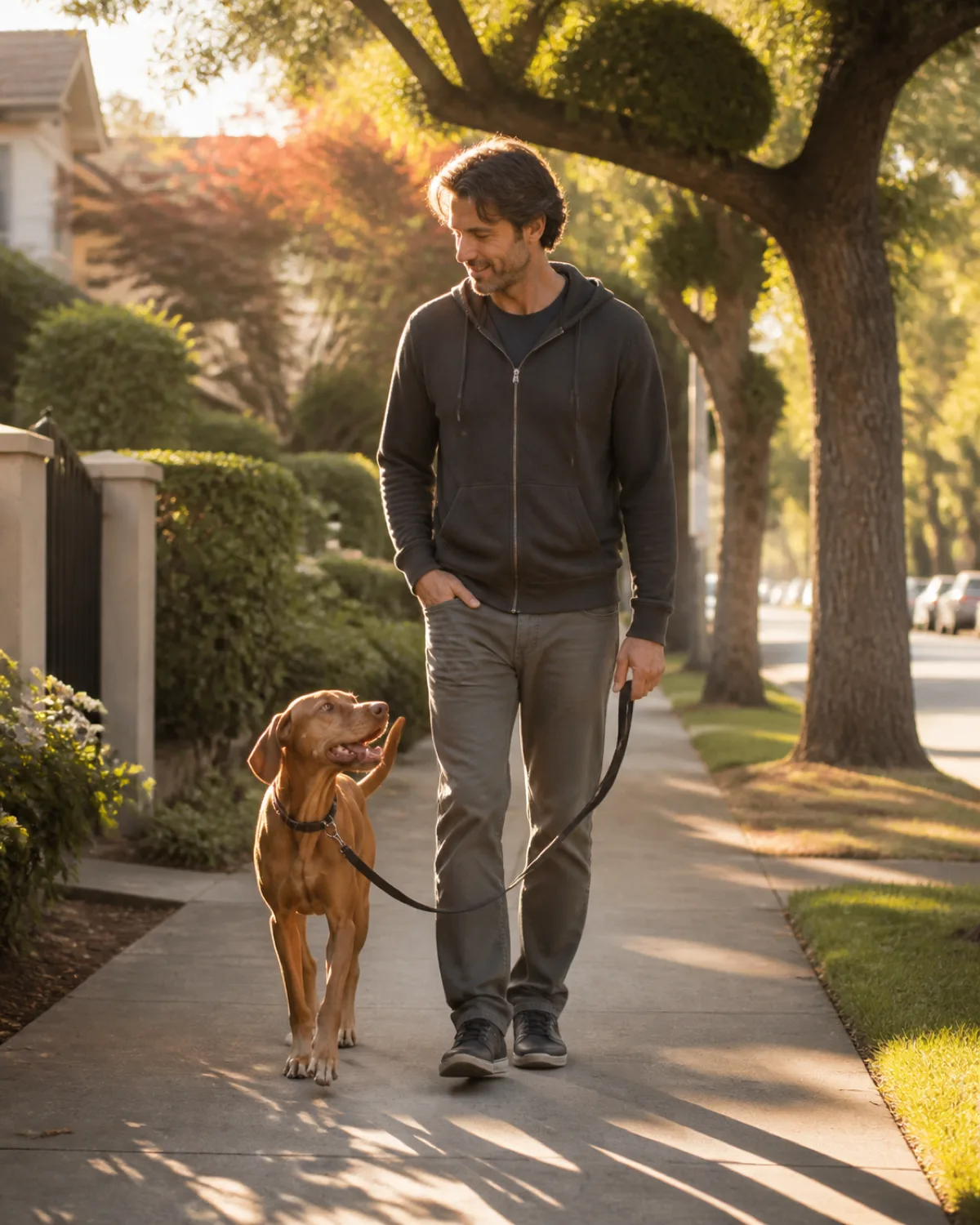
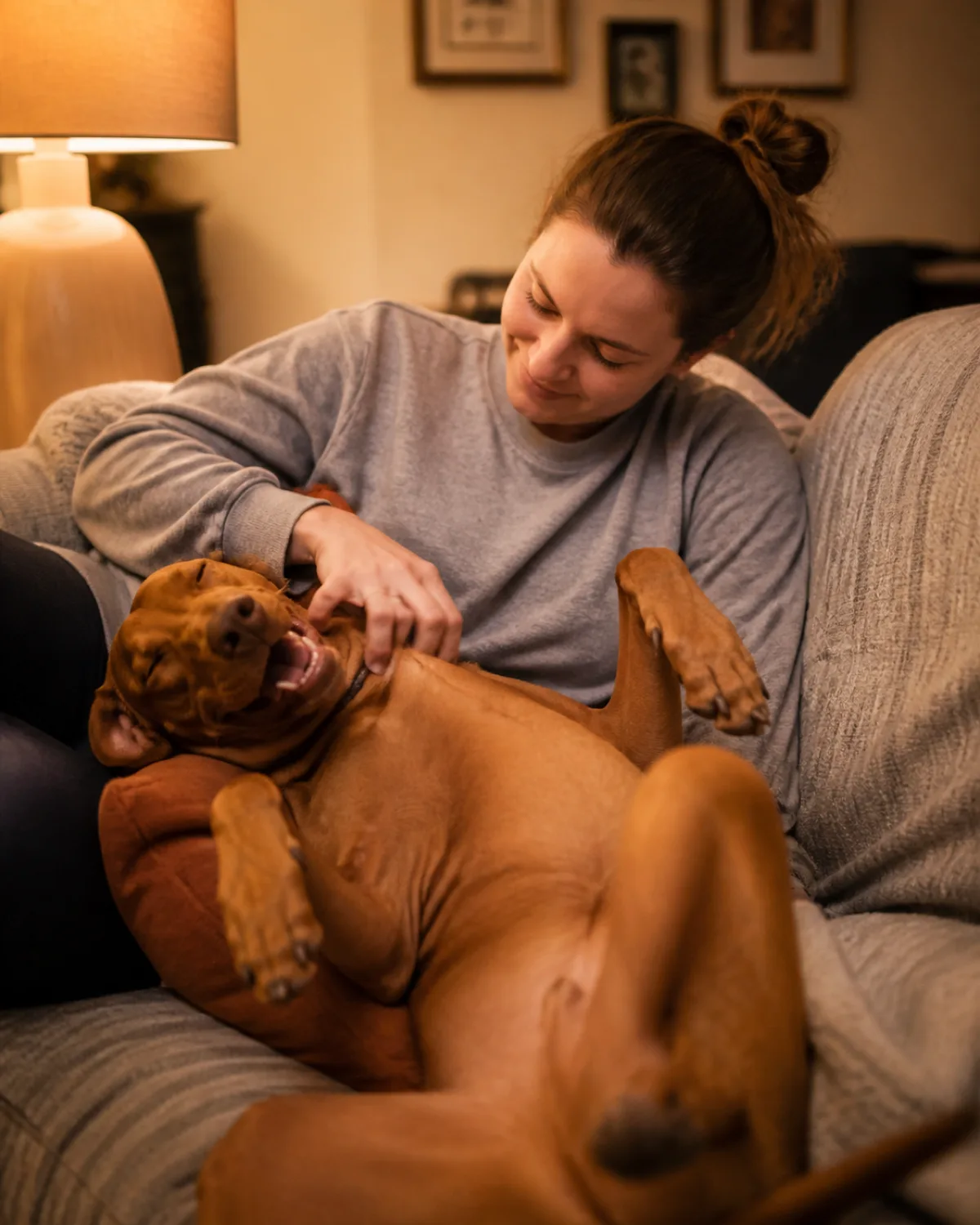
Carve out ten to fifteen minutes a day that is just for the dog. A short walk without the stroller. A brief training session with high-value treats. Belly rubs on the couch while the baby naps. These moments tell the dog they still matter.
Include the dog in baby activities when safe
Involve the dog in baby-related activities when it is safe. Let them lie nearby during tummy time. Include them in walks with the stroller once they are leash-steady around it. The goal is the baby is part of our life, not the baby replaced you.
Keep the dog's exercise up
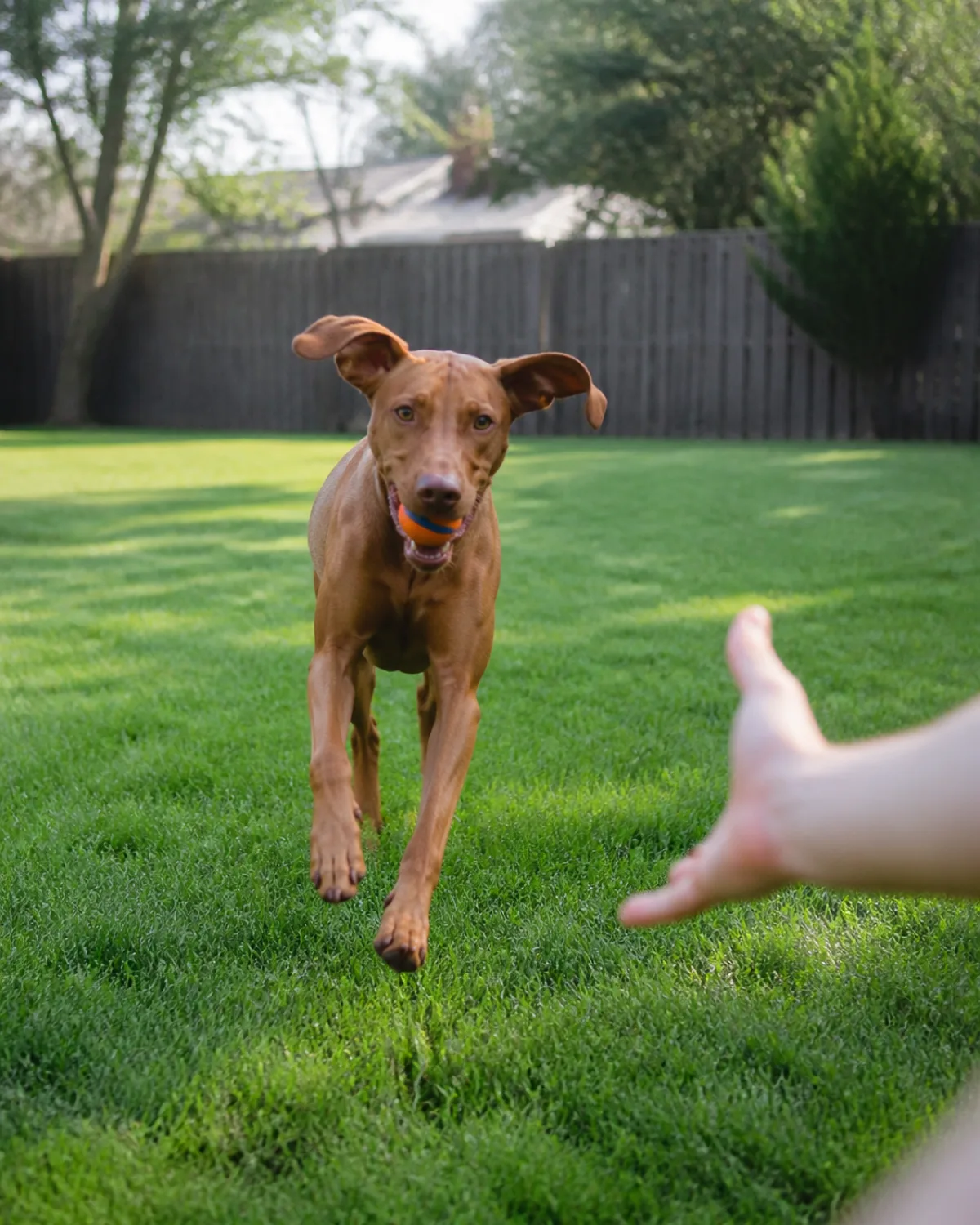
A tired dog is a patient dog. When the walks get shorter or the schedule gets tighter, replace duration with intensity. A ten-minute fetch session in the backyard burns more energy than a twenty-minute leash walk.
The transition period does not last forever. Within a few weeks, the baby becomes background noise. The dog settles into the new normal. But those first weeks set the pattern, and a dog who feels safe, included, and attended to during that window adjusts faster than one who gets pushed aside.
About the author
Jess Calloway
Jess Calloway edits Pawliqa, where she shares dog care, grooming, training, and new-owner tips — plus DIY and pet-friendly home ideas — for anyone who wants a happy, well-cared-for dog. As a dog mom to three very different dogs, she writes the honest, tested version of what actually works. Every guide is image-led and reviewed for clarity, usefulness, image accuracy, and Pinterest-to-page alignment before it goes live. Visit the About page.
Twelve tips for bringing home a rescue dog covering setting up a safe room before pickup day, stocking essentials before arrival, keeping the first day quiet and boring, letting the dog explore one room at a time, using a crate as a decompression den, establishing a feeding routine from day one, starting house training from scratch regardless of age, expecting and allowing the shutdown period, following the three-three-three decompression timeline, introducing existing pets on neutral ground, building trust through boring predictability, and knowing rescue-specific behaviors that need professional help.
Fourteen rules for building a puppy feeding schedule from eight weeks to twelve months, covering meal frequency, portion sizing, food transitions, treat budgets, and warning signs that something needs adjusting.