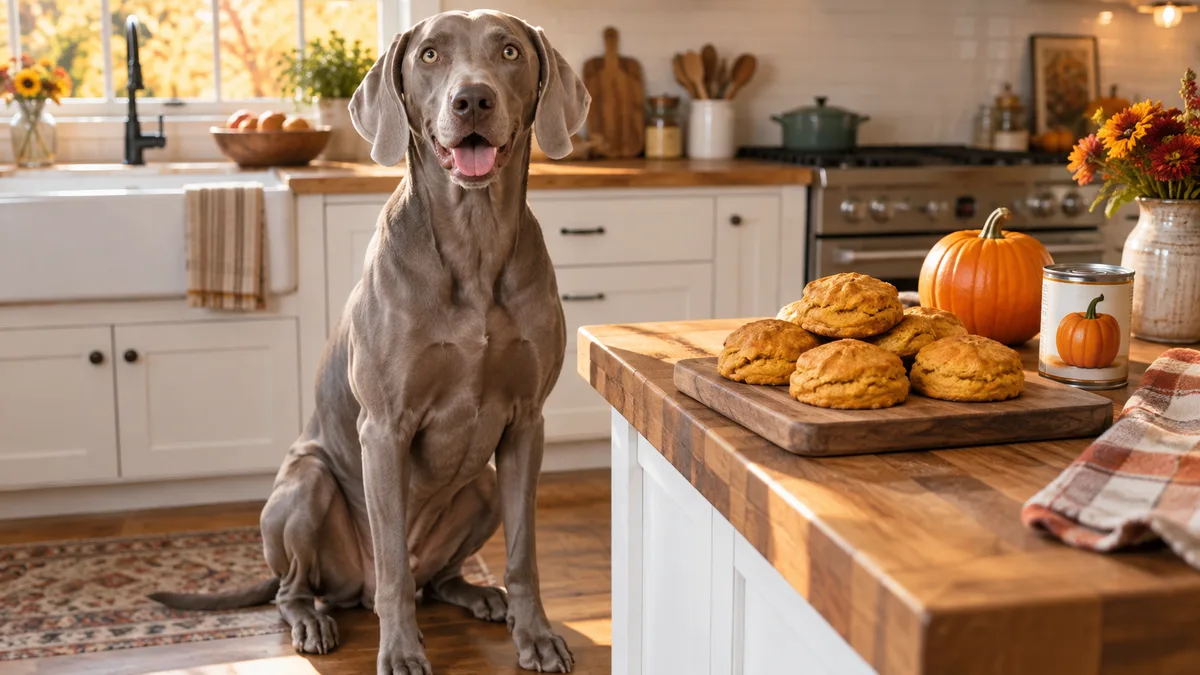
Your dog does something adorable every single day, and your camera roll is full of blurry proof. The lighting is off, the background is cluttered, and your dog moved the second you opened the camera app.
The fix is not a better camera. It is a setup that works before your dog loses interest. A clean background, good light, and one prop can turn a phone snapshot into something you actually want to print.
These eleven dog photoshoot ideas use things you already own — blankets, bandanas, craft paper, a kiddie pool — and work whether your dog sits on command or bolts the moment you crouch down.
Jump to a photoshoot idea
11 Dog Photoshoot Ideas You Can Set Up at Home
From window-light portraits to treat-toss action shots, these eleven setups use things you already have and work with any dog — even the ones who will not hold still. Jump to the setup that fits your space.
1. Use Window Light and a Plain Background for a Quick Portrait
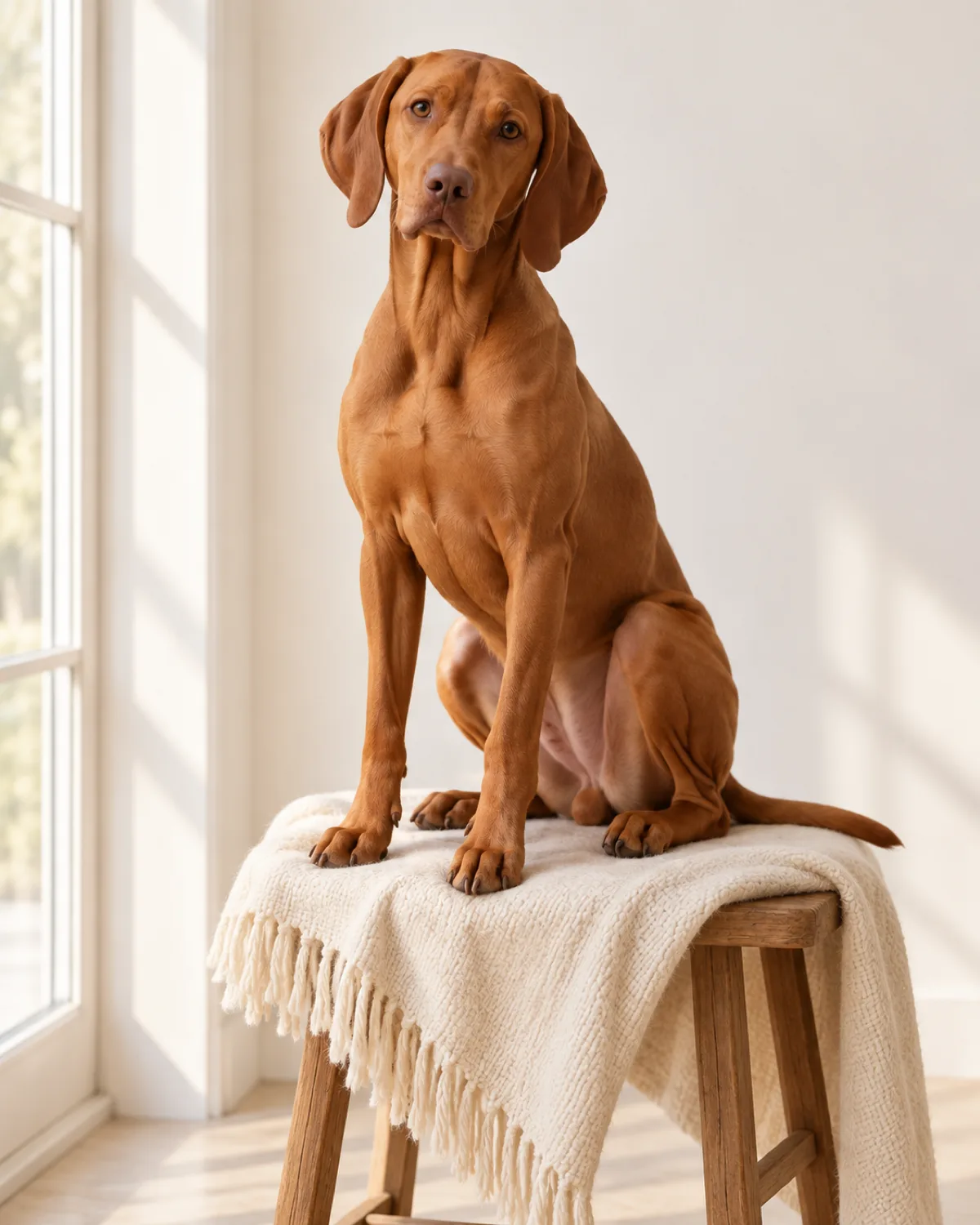
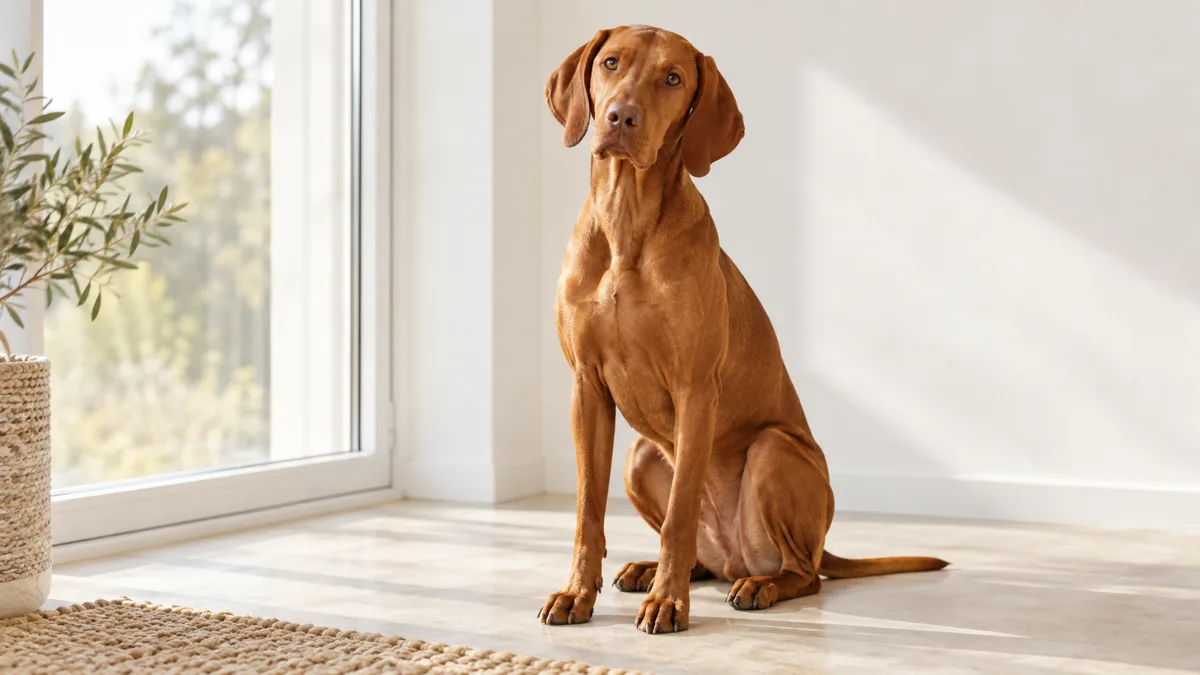
Window light is the single biggest upgrade you can make to any dog photo without spending a cent. The soft, directional glow from a large window wraps around your dog's face and creates gentle shadows that give the image depth.
Pick a window that gets indirect light — north-facing windows work all day, while east or west windows give you about two hours of soft light in the morning or late afternoon. Direct sunlight streaming in creates harsh shadows and squinty eyes, so pull your dog back a few feet from the glass if the sun is hitting the floor.
Clear the background completely. Push furniture out of the frame, drape a plain sheet or blanket over a chair behind your dog, or simply angle your camera so the wall is the only thing visible. A cluttered background pulls attention away from your dog's face every time.
- Set your dog on a stool, chair, or low table so you can shoot at their eye level without lying on the floor
- Turn your dog's body slightly so the window light hits one side of the face more than the other — that asymmetry is what makes the portrait look professional
- Use a squeaker toy held right next to the camera lens to lock eye contact for the two seconds you need
2. Set Up a Seasonal Porch Backdrop With Natural Props
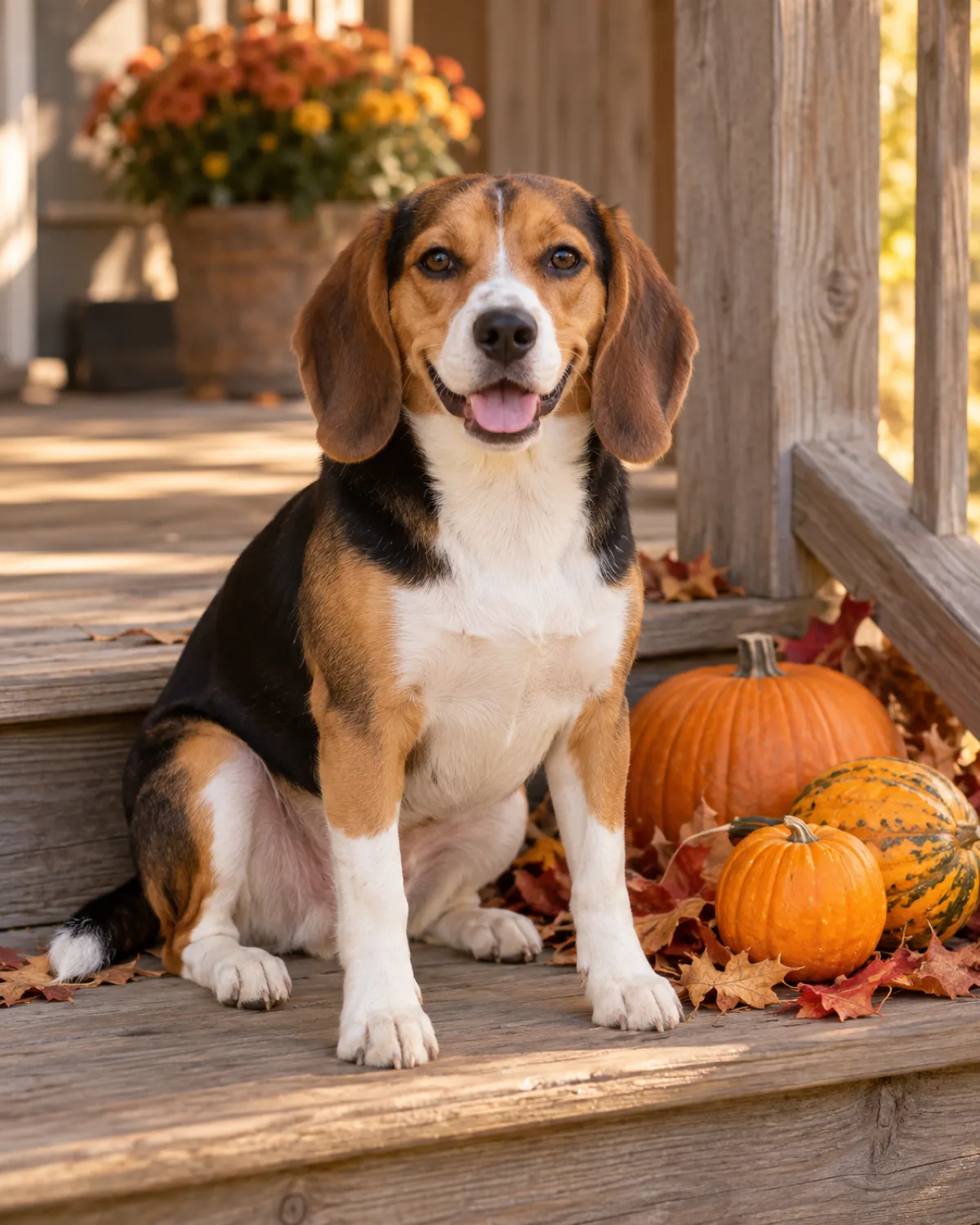
A porch or front step gives you a built-in frame — the railings, the door, and the step itself create natural leading lines that draw the eye straight to your dog. Adding a few seasonal props turns that everyday backdrop into something that feels intentional without any setup time.
Fall is the easiest season to nail because the props are free. A handful of gourds from the grocery store, a small pile of dried leaves, and maybe a plaid blanket draped over the railing give you a warm, textured scene in under five minutes.
Spring and summer work with potted flowers, a watering can, or even a simple wreath on the door behind your dog. Winter calls for a knit scarf loosely draped (never tied tightly) and a mug of cocoa set beside your dog for the human touch.
- Keep the prop count low — three items maximum, or the scene starts competing with your dog
- Place your dog on the top step and shoot from slightly below so the porch frame is behind them, not above
- Overcast days are your friend here because porch roofs create deep shadows in direct sun
Start with the setup that matches your space and your dog's energy level
Indoor or outdoor — where should you shoot?
Your dog's temperament decides this more than your gear. A dog who freezes at the front door needs an indoor setup; one who cannot sit still indoors needs a yard and an action shot.
3. Toss a Treat for a Mid-Air Action Shot
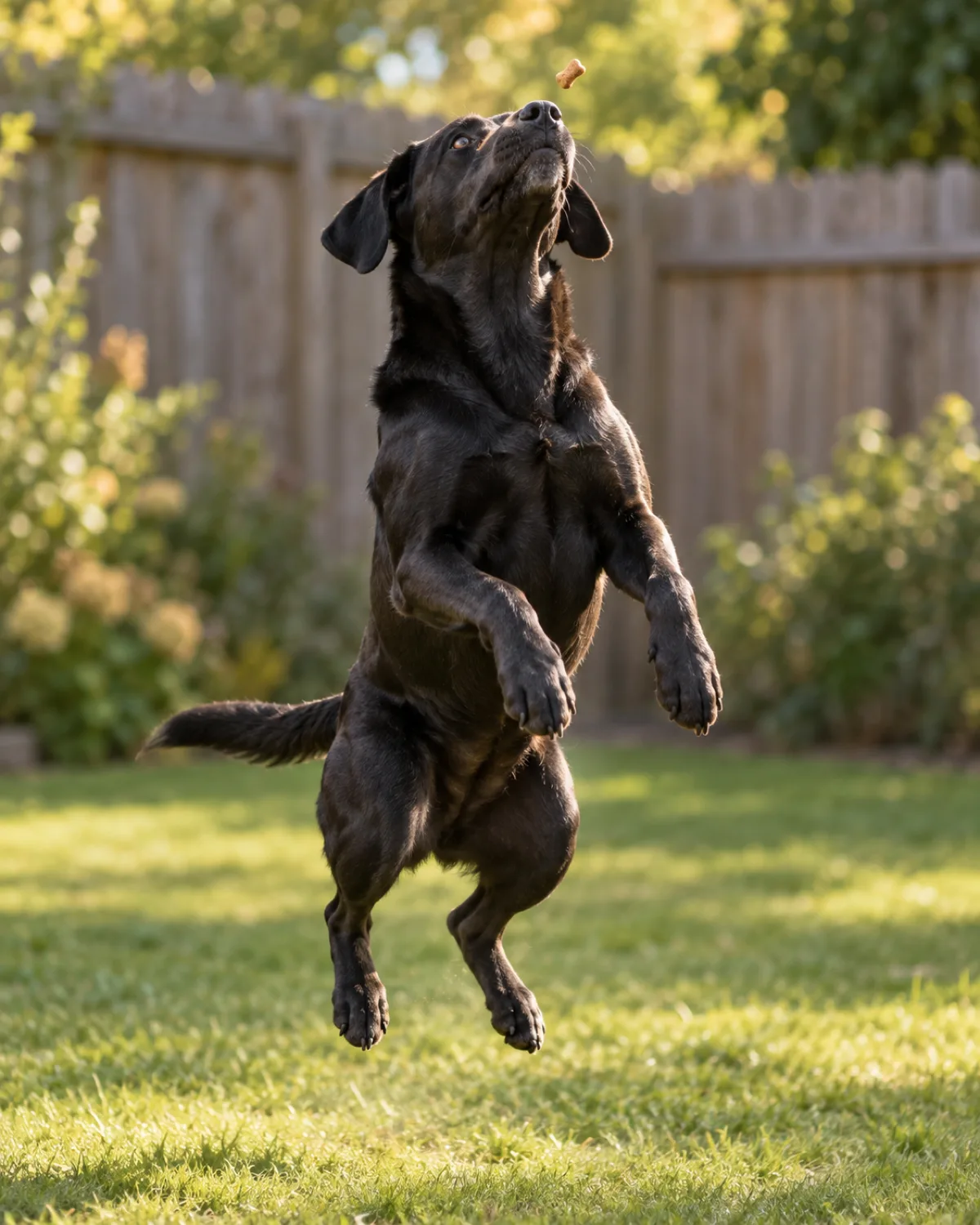
Action shots look impressive, and they are actually easier to get than a perfectly posed portrait because your dog does not need to hold still. You just need fast shutter speed and a treat worth jumping for.
Switch your phone camera to burst mode — on an iPhone, hold the shutter button and slide it left; on most Androids, hold the shutter button down. Burst mode fires off ten to twenty frames per second, and you only need one good frame out of the batch.
Stand about six feet from your dog, hold a treat above your head, and toss it straight up so your dog leaps toward you. The backyard is the best spot for this because the grass gives your dog traction and the fence keeps the background clean.
- Afternoon light is best for action shots because the sun is lower and warmer, and faster shutter speeds freeze the motion without blur
- Small, high-value treats work better than large ones — your dog will jump faster and higher for something they really want
- Delete the blurry frames immediately so you do not fill your phone with 200 unusable shots of a black blur
4. Coordinate a Matching Bandana or Collar Setup
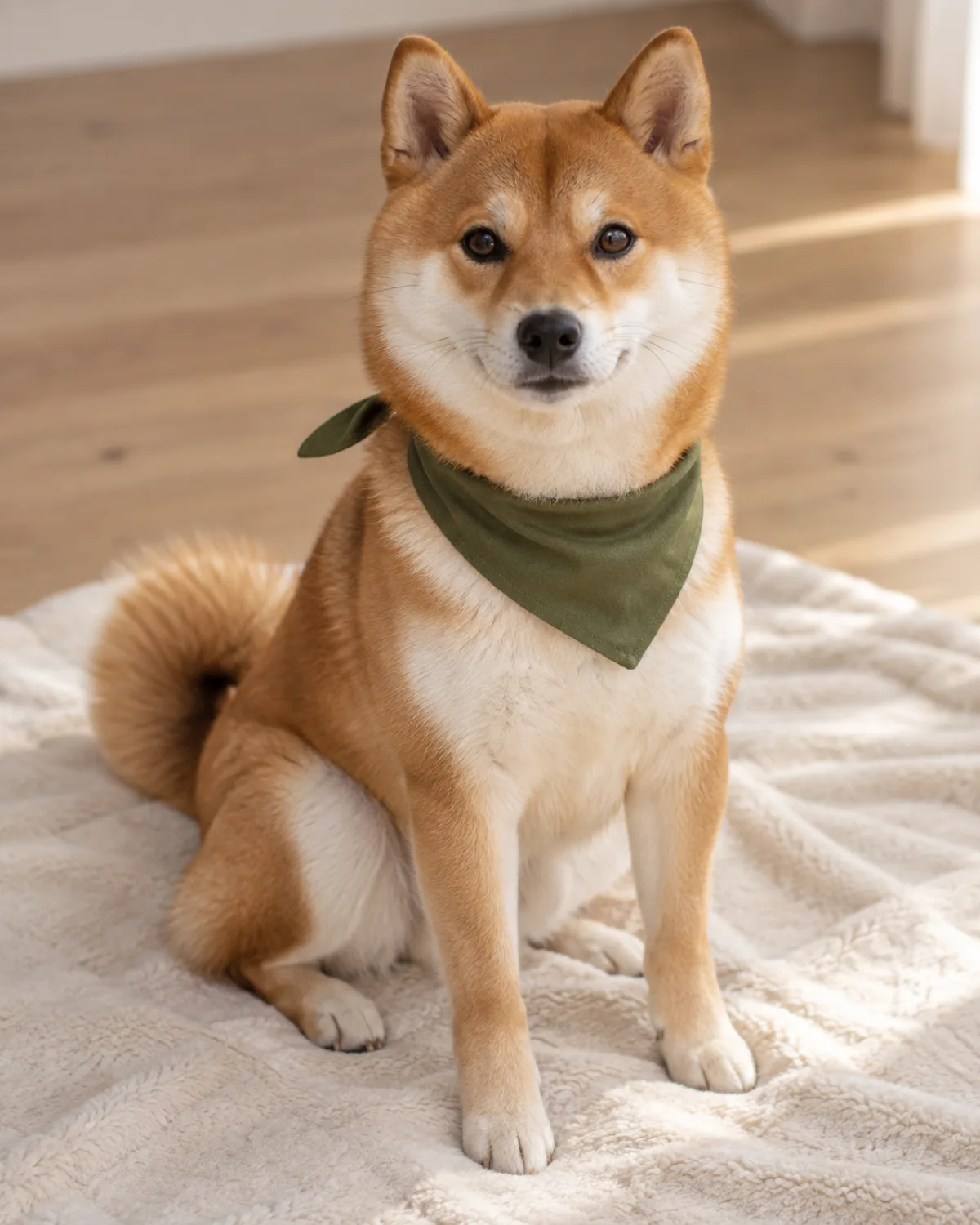
A bandana is the fastest way to make a casual dog photo look styled. It adds a pop of color, signals that the shot is intentional, and costs almost nothing — you can cut a triangle from any fabric scrap you have in the house.
Pick a color that contrasts with your dog's coat. A deep green or navy bandana pops against a light or red coat; a mustard or rust bandana stands out on a dark-coated dog. Avoid patterns that are too busy because they compete with your dog's face in the frame.
Fold the bandana into a triangle, roll it loosely from the long edge toward the point, and tie it gently around your dog's neck with the point facing down. It should be loose enough to slide two fingers underneath — a tight bandana makes a dog paw at their neck, and you will spend the whole session re-tying it.
- Match the bandana to one other item in the scene — a blanket, a pillow, or even your own shirt — for a coordinated look without overdoing it
- If your dog hates anything around their neck, clip a bow tie to their collar instead, or drape the bandana flat under their front paws as a color accent
- Iron the bandana before the shoot because wrinkled fabric looks like a rag, not a prop
5. Build a Cozy Blanket Nest for a Nap-Time Shot
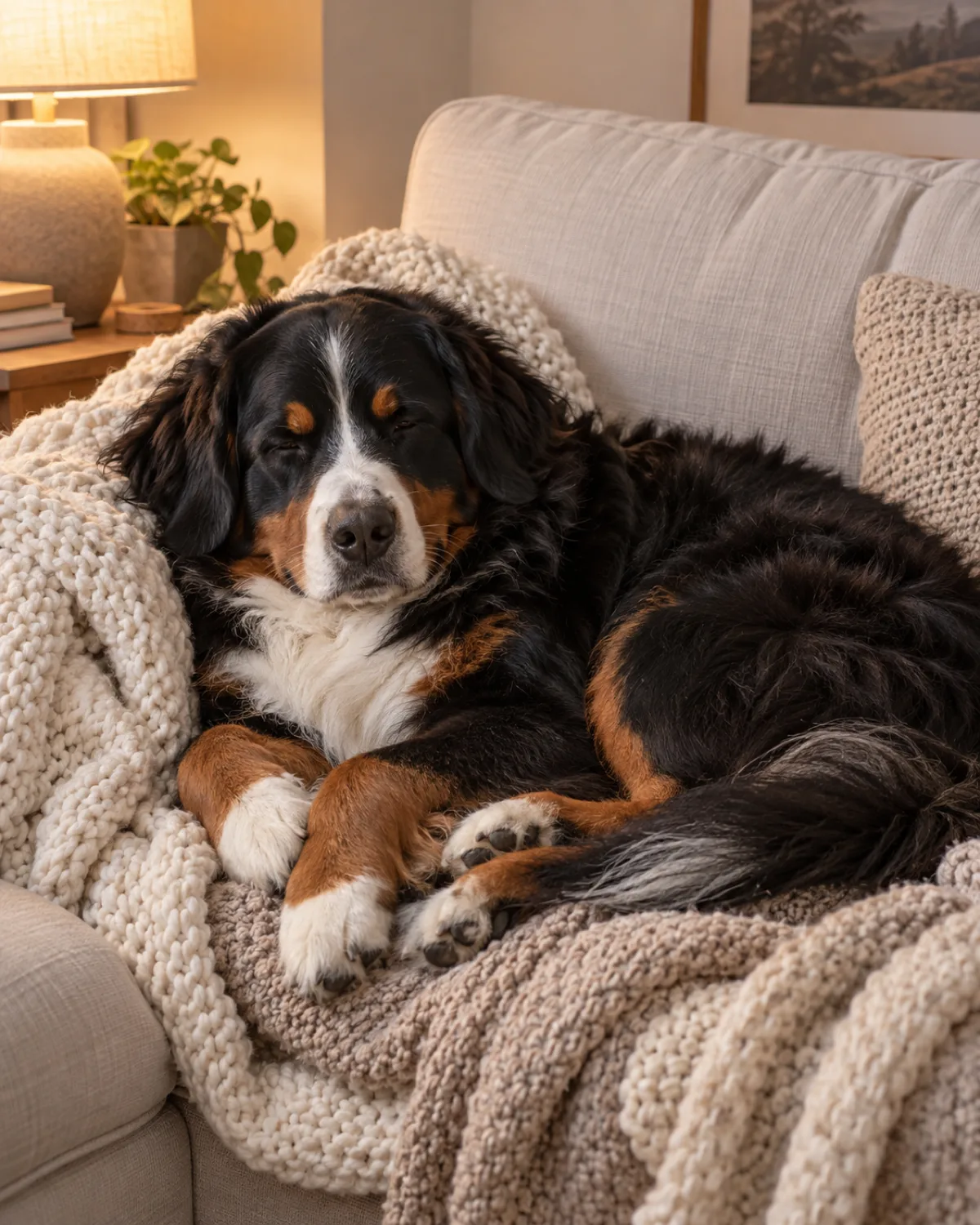
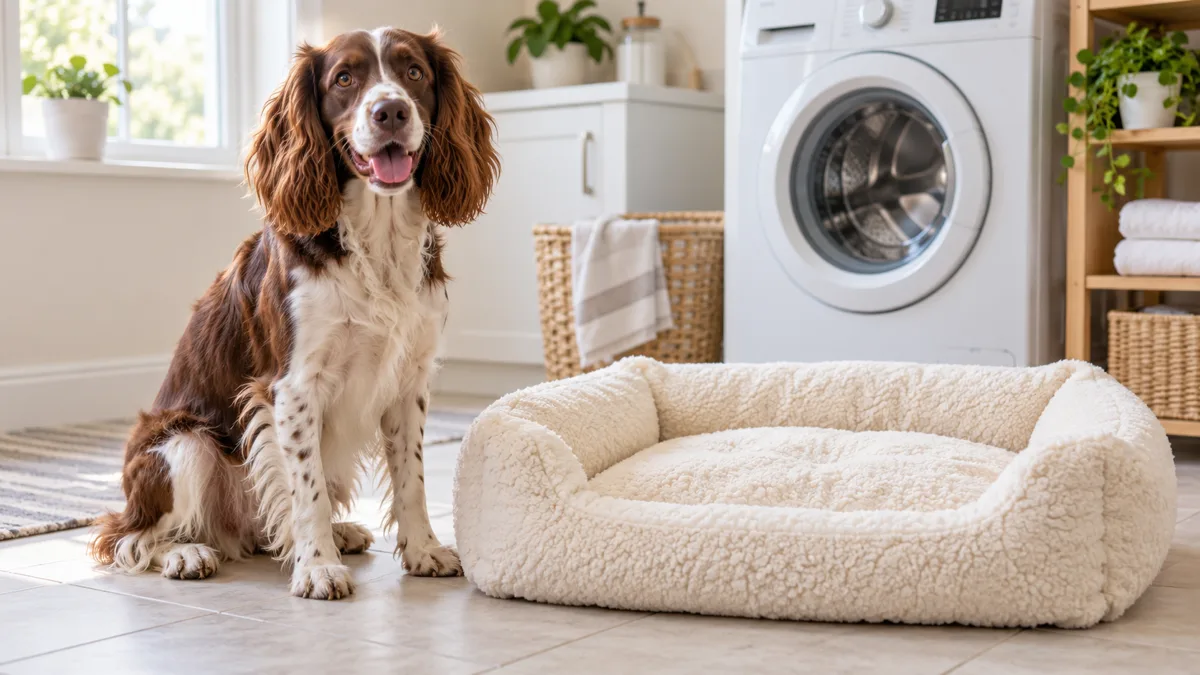
Sleeping dogs are the most photogenic subjects you will ever work with because they hold perfectly still and their relaxed faces look genuinely peaceful. The trick is building a nest that photographs well before your dog claims it.
Pile two or three blankets in neutral tones — cream, oatmeal, light grey — on a sofa or a large dog bed. Scrunch them loosely so the folds create texture and shadows. A flat, perfectly smoothed blanket looks boring in photos; the wrinkles are what give the image warmth.
Wait for your dog to settle in naturally. Forcing a dog into a blanket pile results in a photo of a confused dog sitting on rumpled fabric. Let them circle, dig, and arrange themselves the way they always do, and start shooting the moment their eyes get heavy.
- Shoot from slightly above and to the side so you catch the curve of your dog's body nestled into the blankets
- Turn off overhead lights and use a single warm lamp placed to one side — the directional light creates soft shadows in the blanket folds
- A knit or chunky-weave blanket photographs better than fleece because the texture is visible even in a small image
Three things that separate a good dog photo from a forgettable one
3 Rules for Better Dog Photos
Gear matters less than timing, light, and knowing when to stop. These three rules apply to every setup on this list.
Shoot at your dog's eye levelStanding over your dog and shooting down makes them look small and disconnected. Get on the floor, kneel, or put your dog on a raised surface so the camera is level with their eyes. Eye-level shots create connection — the viewer feels like the dog is looking at them.
Focus on the eyes every timeA photo where the ears or nose are sharp but the eyes are soft looks like a mistake. Tap your dog's nearest eye on the phone screen to lock focus there. If only one thing in the frame is sharp, make it the eyes.
Keep sessions under five minutesDogs lose patience fast. Five minutes of enthusiastic shooting gets you more keepers than thirty minutes of a dog who checked out twenty minutes ago. End on a treat and a release cue so your dog associates the camera with good things.
6. Catch a Golden-Hour Silhouette in the Backyard
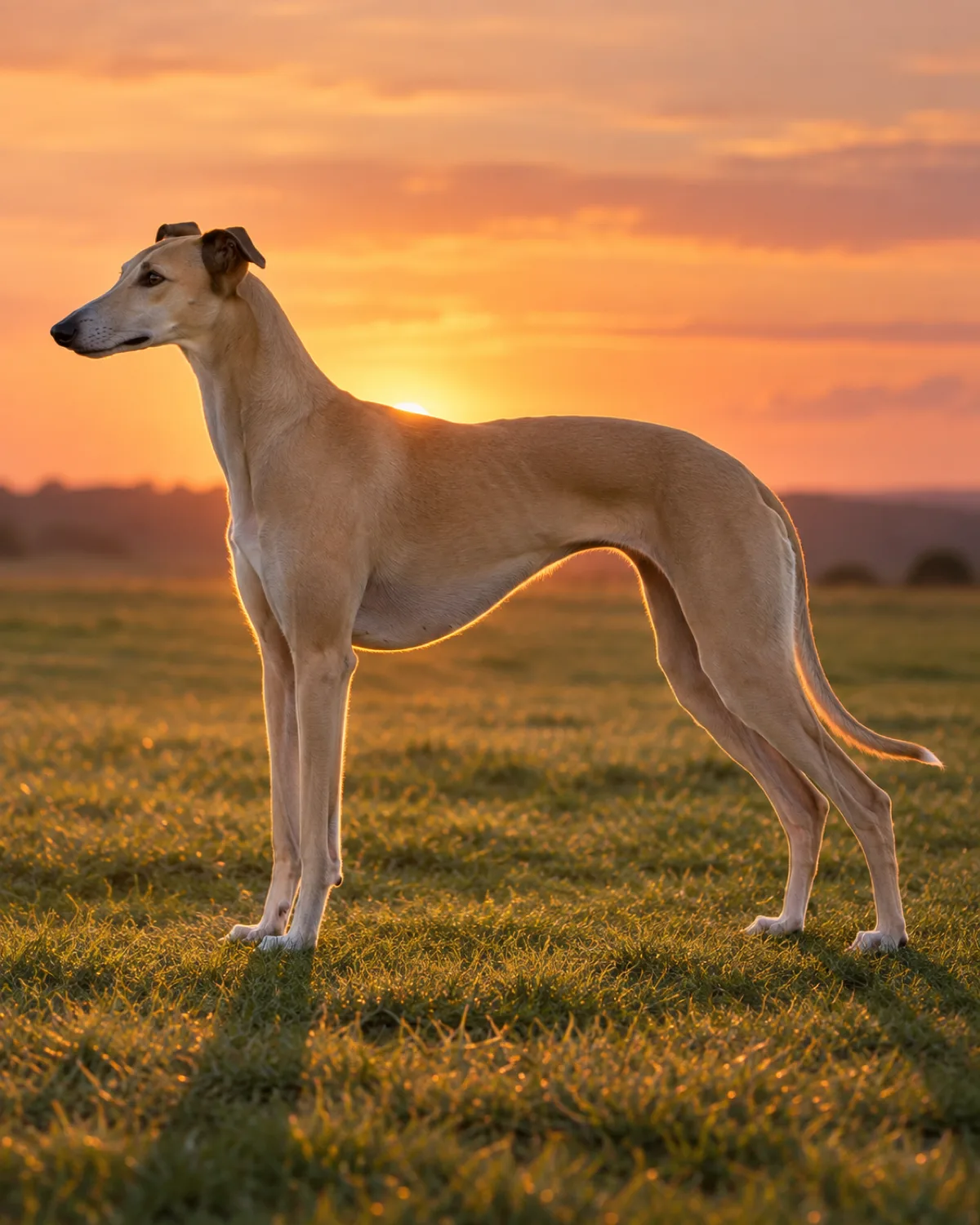
Golden hour — the last hour before sunset — turns any backyard into a studio. The light is warm, low, and directional, and it wraps around your dog's outline to create a glowing rim that separates them from the background.
Position your dog between you and the setting sun so the light comes from behind. Your phone will try to expose for the bright sky and turn your dog into a dark shape, which is exactly what you want for a silhouette. If your dog is too dark, tap the bright part of the sky on your screen to lock the exposure there.
Profile shots work best for silhouettes because the shape of your dog's ears, muzzle, and tail are what tell the story. A front-facing silhouette just looks like a dark blob. Have someone stand to the side with a treat to get your dog to turn their head into a clean profile.
- Check the sunset time for your location and start shooting about forty minutes before — the light changes fast and the best window is only about fifteen minutes
- Avoid shooting directly into the sun because the lens flare will wash out the image; position the sun just behind your dog's head or body
- Silhouettes work for any dog regardless of coat color, which makes this one of the most universally flattering setups
7. Create a Birthday or Gotcha-Day Stage With Simple Props
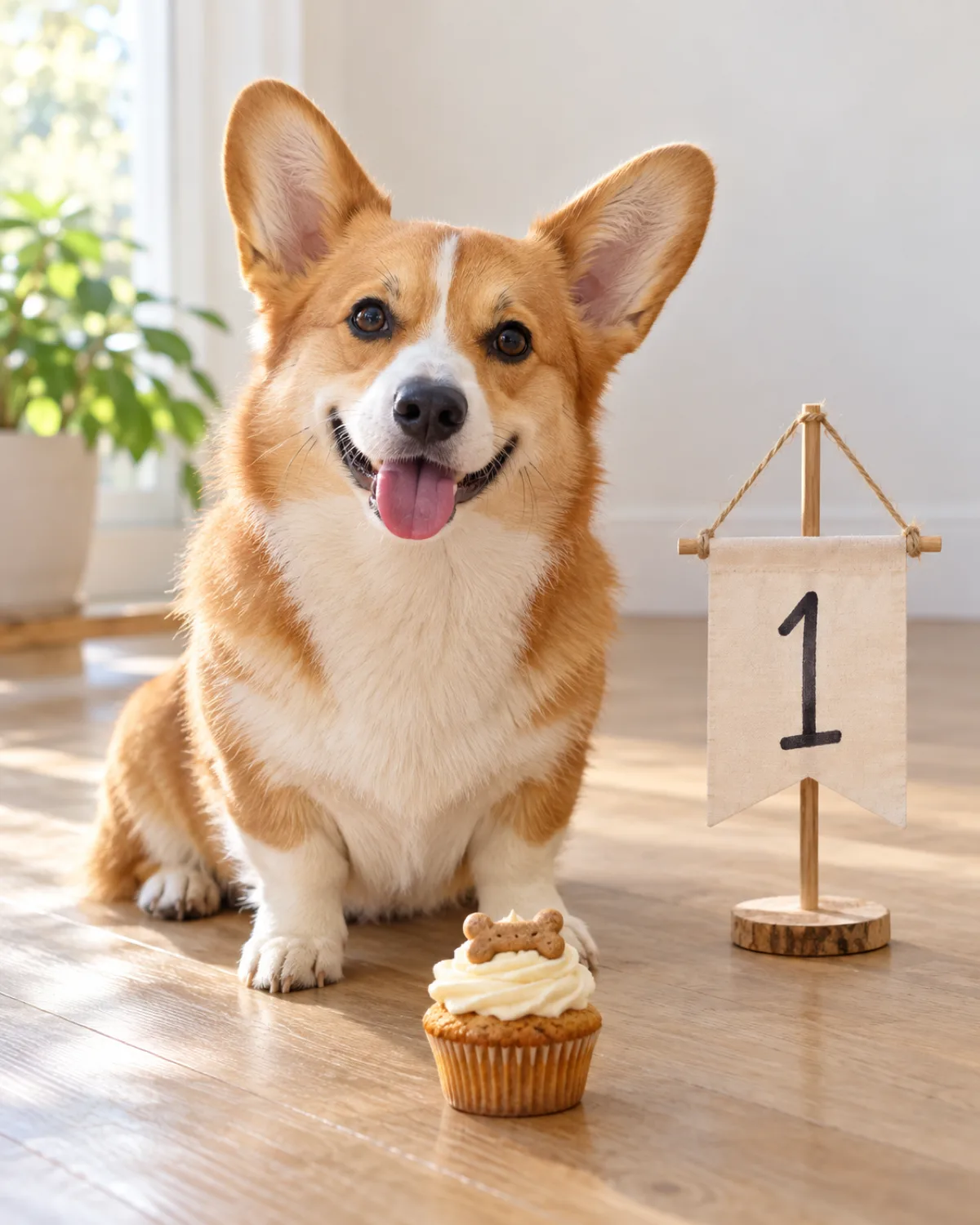
Birthday and gotcha-day photos are some of the most shared dog content on social media because people love celebrating their dogs, and a themed setup makes the moment feel special without a lot of effort.
Keep the stage minimal. One dog-safe cupcake or a small treat stack, a hand-lettered number or age sign, and maybe a paper banner or a few balloons in the background. The more props you add, the more cluttered the photo gets, and clutter steals attention from your dog's face. If you are celebrating your dog's birthday or gotcha day, this setup doubles as party decor.
Skip the candles entirely. An open flame near a curious dog is a safety hazard, and the tiny birthday candle does not read in a photo anyway. A bone-shaped treat on top of the cupcake is more photogenic and completely safe.
- Use a plain floor or a simple mat as the base so the props and your dog are the only things in the frame
- Shoot from your dog's eye level or slightly above so the banner and treats are visible without dominating the composition
- Let your dog sniff and investigate the setup before you start shooting — a dog who is still exploring looks more engaged than one who has been told to sit and stay
8. Use Paw-Print Stamps on Craft Paper as a Backdrop
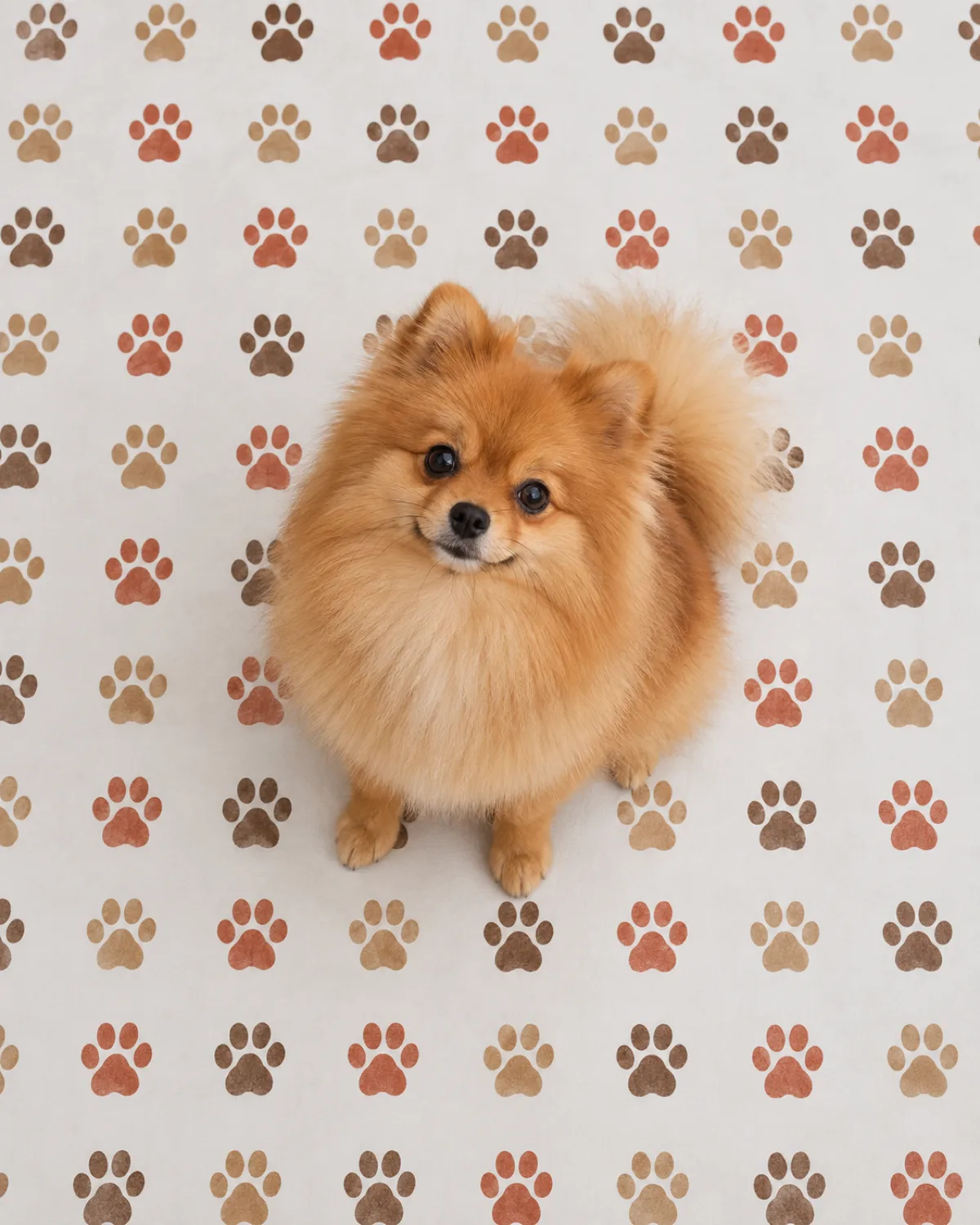
Craft paper is the cheapest backdrop you can build, and stamping it with paw prints adds a playful, on-theme pattern that frames your dog without competing for attention. A roll of white butcher paper, a foam paw-print stamp from any craft store, and two or three ink colors in warm earth tones are all you need.
Roll the paper out on a flat surface and stamp the prints in a loose, even grid — not perfectly aligned, but roughly the same spacing. Let the ink dry completely before you set your dog on it, or you will get real paw prints mixed in with the stamped ones, and they will not match.
Tape the paper to the floor or weight the corners so it stays flat when your dog walks on it. If your dog is small enough, tape a second sheet to the wall behind for a seamless backdrop that extends from floor to background.
- Earth tones — brown, terracotta, tan, olive — photograph better than neon colors because they do not pull focus from your dog
- Stamp the prints slightly smaller than your dog's actual paws so the pattern reads as a design element, not a mess
- This setup is reusable — roll the paper up carefully after the shoot and store it for the next session
9. Set Up a Kiddie Pool Splash Zone on a Warm Day
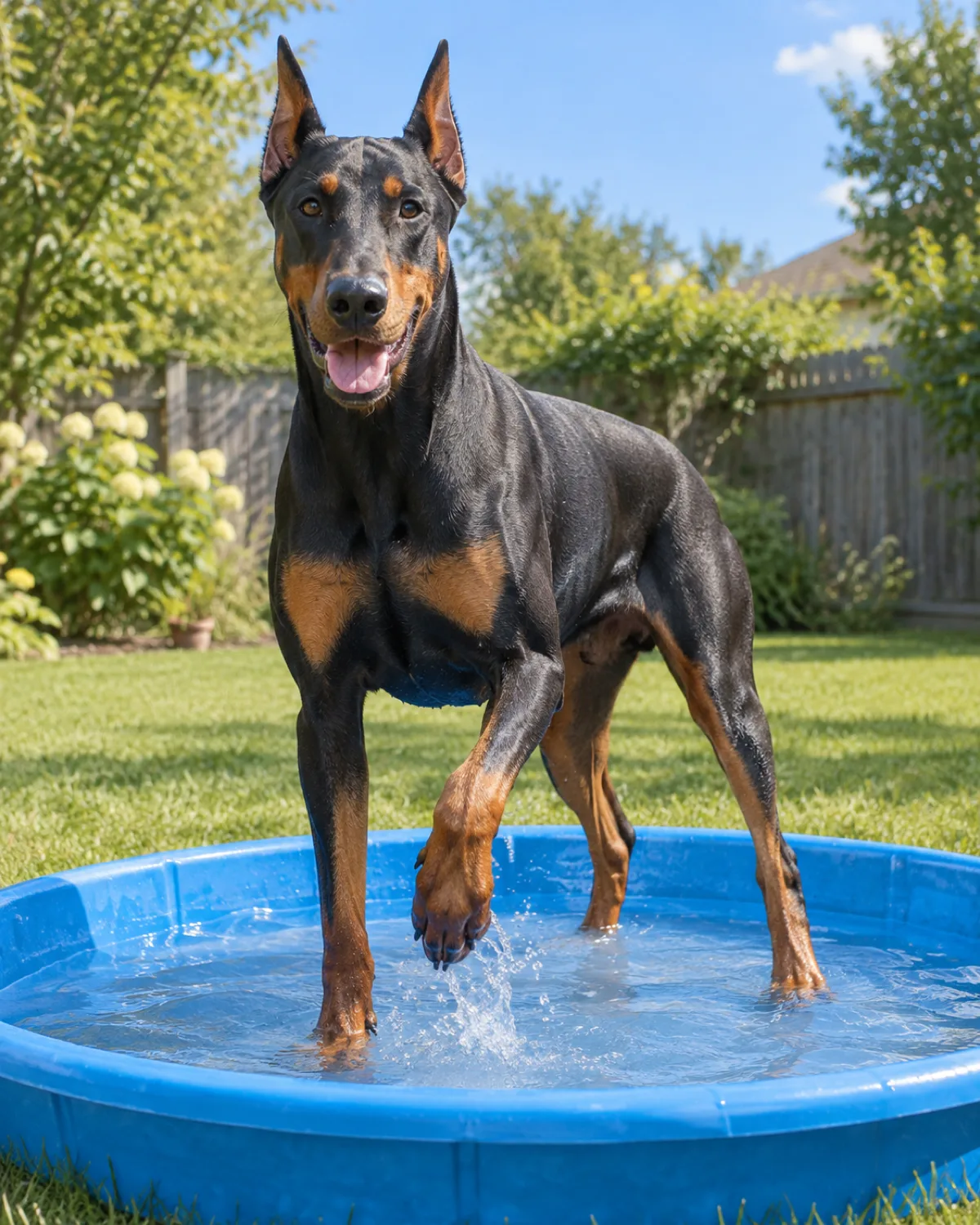
Water and dogs create some of the most dynamic, joyful photos you can take, and a kiddie pool in the backyard gives you a controlled splash zone with a clean background. Fill the pool with just a few inches of water — ankle depth for your dog, not swimming depth.
The key to great splash photos is catching the water droplets in sunlight. Bright, direct afternoon sun makes each droplet sparkle and freeze in mid-air, which is the opposite of the soft, diffused light you want for portraits. This is one of the few setups where harsh light actually helps.
Toss a floating toy or drop treats into the water to get your dog pawing and splashing. Use burst mode again and shoot from a low angle — kneeling beside the pool so the water spray is between you and the sky. The backlit droplets against a blue sky background is the shot you are after.
- Put your phone in a waterproof case or a zip-lock bag with the camera lens uncovered — splash photos and water damage often happen in the same session
- A blue or green pool photographs better than a patterned one because the solid color acts as a clean backdrop
- Dry your dog thoroughly afterward and check their ears for trapped water, especially if they have floppy ears — this is a grooming fundamental that applies after any water play
10. Shoot an Overhead Flat Lay While Your Dog Rests on a Bed
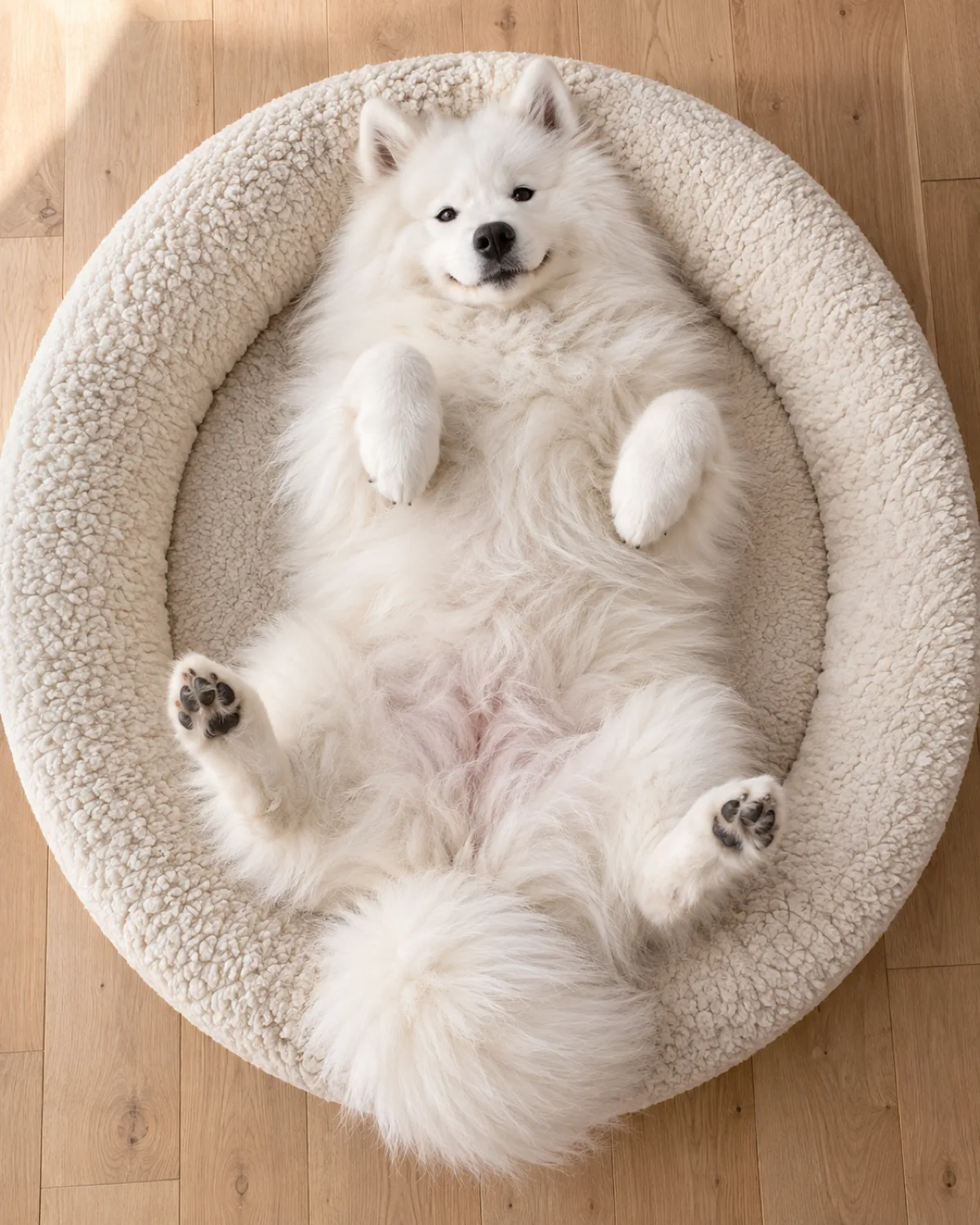
Overhead shots are trending on Instagram and Pinterest because the bird's-eye angle looks fresh and shows off details — your dog's paw pads, the curl of their tail, the way their legs splay when they are fully relaxed. This angle also solves the biggest problem in dog photography: a messy background. When you shoot straight down, the background is just the bed and the floor.
Wait until your dog is genuinely relaxed on their bed. The belly-up pose, where all four paws are in the air, is the gold standard for overhead dog photos, but a curled-up nap or a stretched-out side sleep works just as well. Forced poses look forced from every angle, including directly above.
Stand on a step stool or a sturdy chair directly over your dog and hold your phone parallel to the floor. Tilt even slightly and the perspective warps — the head looks bigger than the body or the legs look uneven. Keep the phone flat and centered over your dog's torso.
- Scatter a few themed props around your dog on the bed — a toy, a small blanket, a treat — to fill the corners of the frame and make the flat lay feel styled
- Use natural light from a nearby window; overhead room lights cast unflattering shadows straight down onto your dog's face
- This angle works for any size dog, but giant breeds are especially photogenic from above because their sprawl fills the entire frame
11. Capture a Candid Mid-Walk Moment on a Quiet Trail
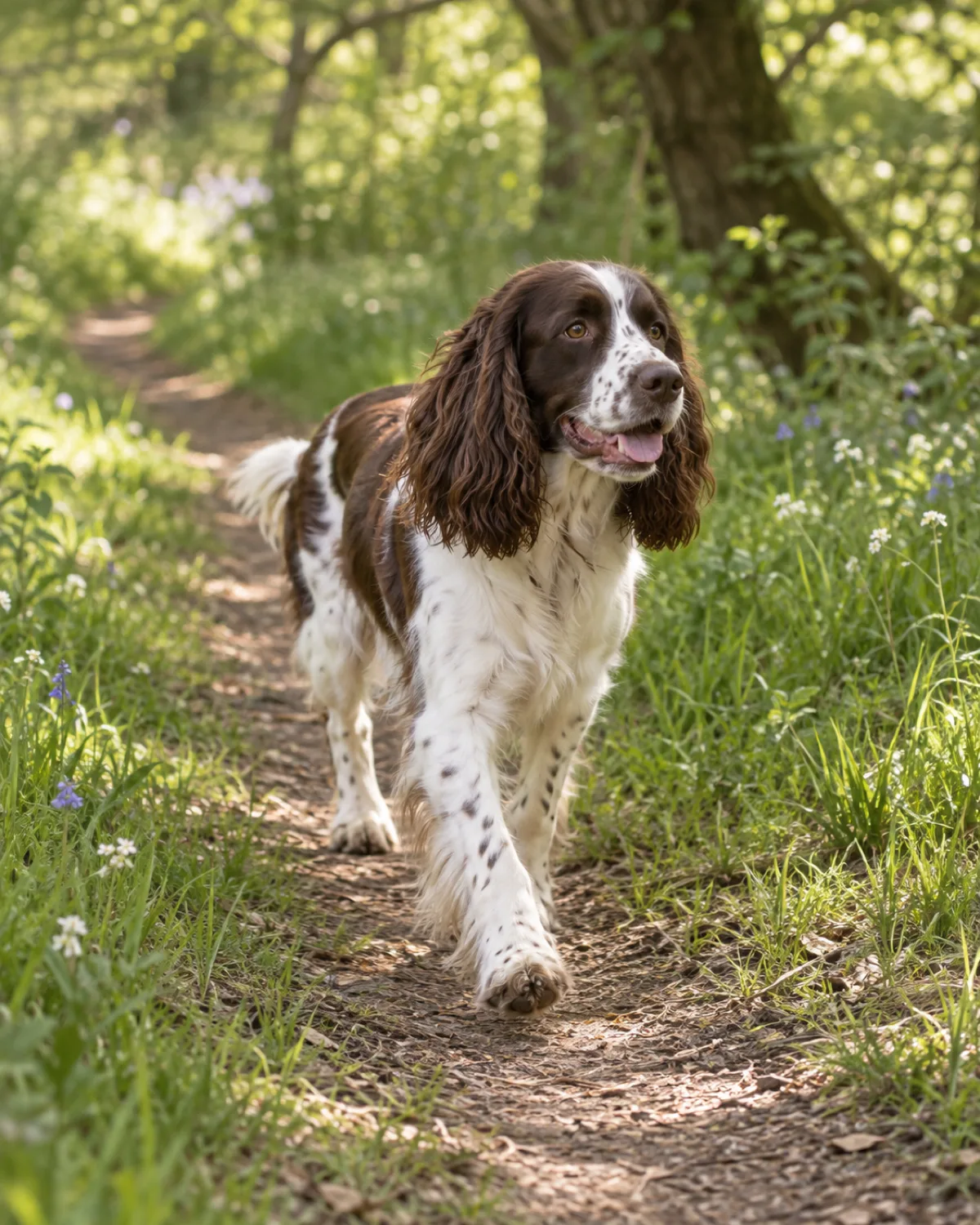
Some of the best dog photos are not posed at all. A candid shot of your dog mid-stride on a trail, ears bouncing, nose working, tail at a natural height — that is the photo that captures who your dog actually is when they are not being told to sit and look at a treat.
Pick a quiet trail or path with a clean, natural background. A dirt path through green grass, a leaf-covered woodland trail, or a sidewalk lined with low hedges all work because the greenery frames your dog without visual clutter. Busy parks with trash cans, benches, and other dogs in the background do not.
Walk slightly ahead of your dog and turn around to shoot as they walk toward you. The forward motion creates a sense of energy in the photo, and the slight angle of their body as they look where they are going gives the shot a natural, documentary feel. Do not call their name — the moment they look directly at the camera, the candid quality disappears.
- Dappled light filtering through trees creates beautiful, unpredictable light patterns on your dog's coat, but watch for harsh bright spots on their face
- Let the leash go slack or use a long lead so there is no visible tension pulling your dog's neck — a taut leash makes a candid shot look like a dog being dragged
- Shoot continuously as your dog moves and pick the best frame later — mid-stride with one front paw up and ears forward is the timing you want
Frequently Asked Questions
What camera settings work best for dog photos?
On a phone, tap your dog's eye to lock focus, swipe down slightly on the exposure slider to darken the image just a touch (slightly underexposed photos retain more detail than overexposed ones), and use burst mode for action shots.
On a dedicated camera, start with aperture priority mode (A or Av), set the aperture to f/2.8 or f/4 for a blurred background, and let the camera handle shutter speed. Bump the ISO to 800 or higher indoors if the shutter speed drops below 1/250, which is the minimum for a moving dog.
How do I get my dog to sit still for pictures?
Tire them out first. A fifteen-minute walk or a quick game of fetch before the session burns off the energy that makes dogs fidget.
Then use a high-value treat — something they do not get every day — held right next to the camera lens. Give the sit or stay cue, hold the treat steady, take three to five shots, and release with a treat. Repeat in short bursts. Five seconds of stillness is enough for a great photo.
What time of day is best for outdoor dog photos?
The first and last hour of daylight — golden hour — gives you the warmest, most flattering light. Midday sun creates harsh shadows under your dog's brow and muzzle that are almost impossible to fix in editing. Overcast days work all day long because the clouds act as a giant softbox, diffusing the light evenly across your dog's face with no hard shadows at all.
How can I get my dog to look at the camera?
Hold a squeaker toy or a crinkly treat bag right next to the camera lens and squeeze or crinkle it once. Your dog will look directly at the sound source, which puts their eyes right on the lens. Do not repeat the sound over and over — your dog will lose interest after three or four squeaks. One squeeze, one shot, one treat. Reset and repeat.
Do I need a professional camera for dog photoshoots?
No. Any phone made in the last four years has a camera that can take a printable, shareable dog photo if the light is good. The difference between a phone photo and a professional photo is almost entirely about light and composition, not megapixels. A phone in golden-hour window light will beat a professional camera in a dim, cluttered room every time.
Save this for later
11 Dog Photoshoot Ideas to Try at Home
- 1Window light portraitSoft side light from a large window, plain wall background, dog at eye level on a stool.
- 2Seasonal porch backdropPorch steps with a few seasonal props — gourds, flowers, or a scarf — for a themed frame.
- 3Treat-toss action shotBurst mode, backyard grass, one high-value treat tossed above head height.
- 4Matching bandana setupA contrasting bandana around the neck, neutral backdrop, one matching prop.
- 5Cozy blanket nestCream and oatmeal knit blankets scrunched on a sofa, single warm lamp, sleeping dog.
- 6Golden-hour silhouetteDog in profile between you and the setting sun, rim light glowing around the outline.
- 7Birthday or gotcha-day stageOne dog-safe cupcake, a hand-lettered number sign, no candles, plain floor.
- 8Paw-print craft paperWhite butcher paper stamped with earth-tone paw prints, dog sitting centered.
- 9Kiddie pool splash zoneShallow blue pool on grass, bright sun, burst mode, backlit water droplets.
- 10Overhead flat layDog belly-up on a round bed, shot straight down from a step stool, props around edges.
- 11Candid mid-walk momentQuiet trail, slack leash, shoot as your dog walks toward you, ears forward.
P
About the author
Jess Calloway
Jess Calloway edits Pawliqa, where she shares dog care, grooming, training, and new-owner tips — plus DIY and pet-friendly home ideas — for anyone who wants a happy, well-cared-for dog. As a dog mom to three very different dogs, she writes the honest, tested version of what actually works. Every guide is image-led and reviewed for clarity, usefulness, image accuracy, and Pinterest-to-page alignment before it goes live. Visit the About page.