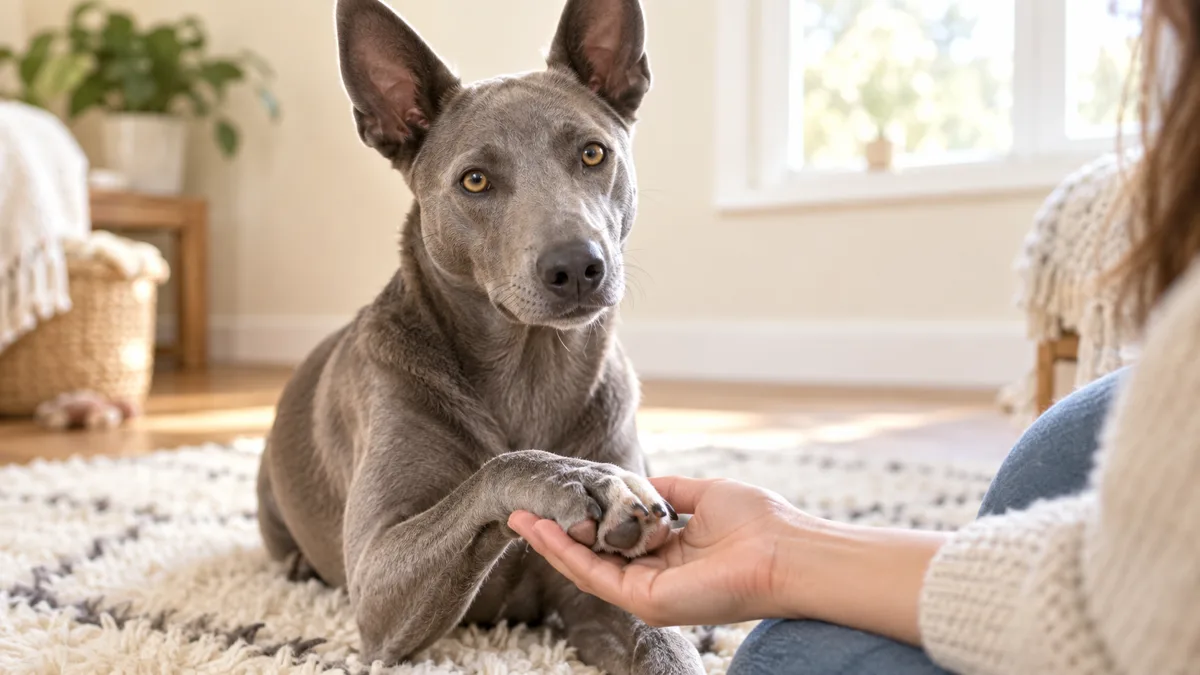
Our oldest dog used to bolt the moment he heard the brush drawer open. Two months of the same short routine, same order, same spot — now he walks over and lies down before the brush is out.
Home grooming does not need to look like a salon visit. It needs a fixed spot, the right tools for the coat in front of you, and sessions short enough that your dog still wants to come back tomorrow.
These are the ten habits that turned our grooming from a wrestling match into the calmest fifteen minutes of the day.
Jump to a section
10 dog grooming tips at home
Habits that keep your dog calm, your tools ready, and every session short enough to repeat tomorrow.
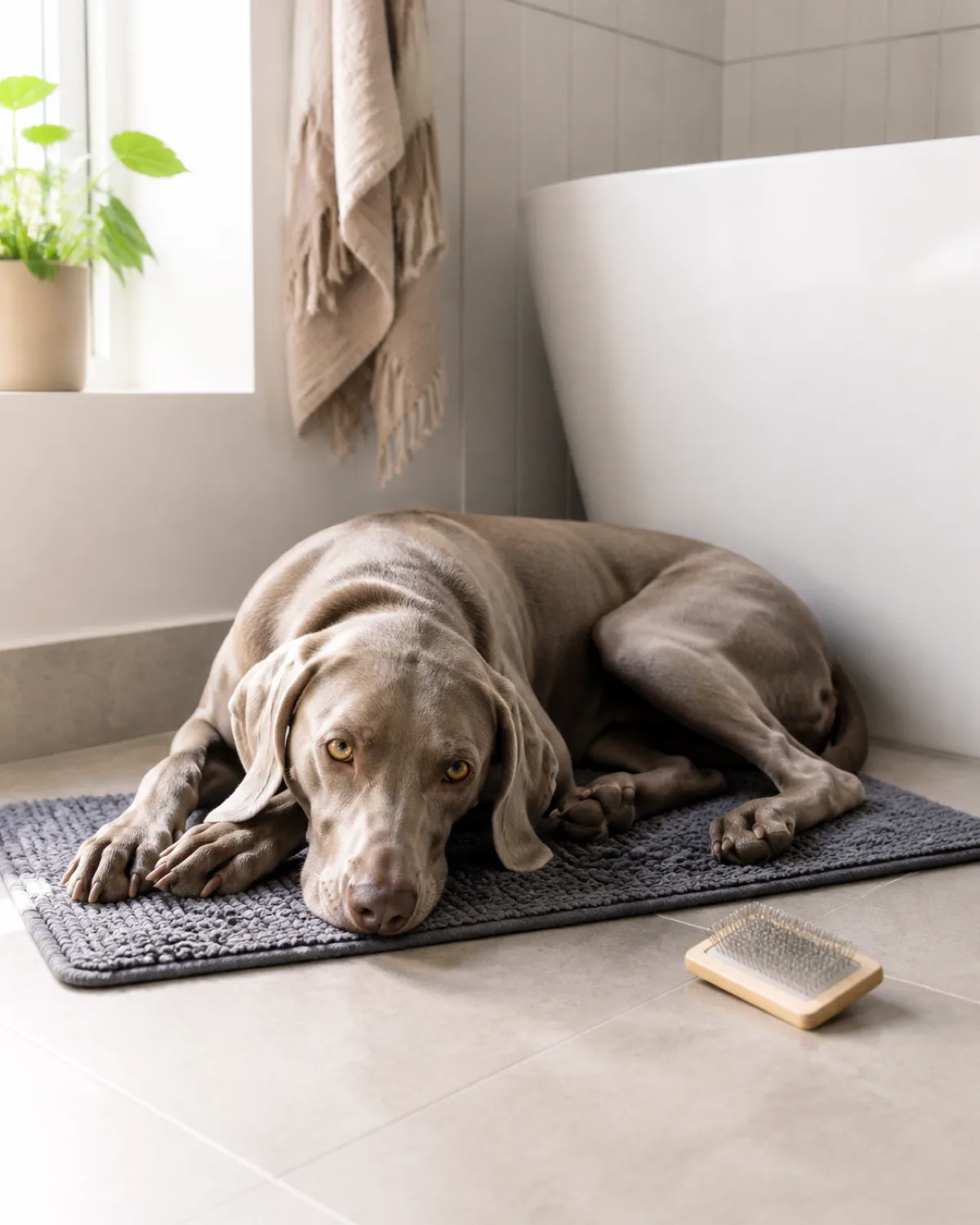
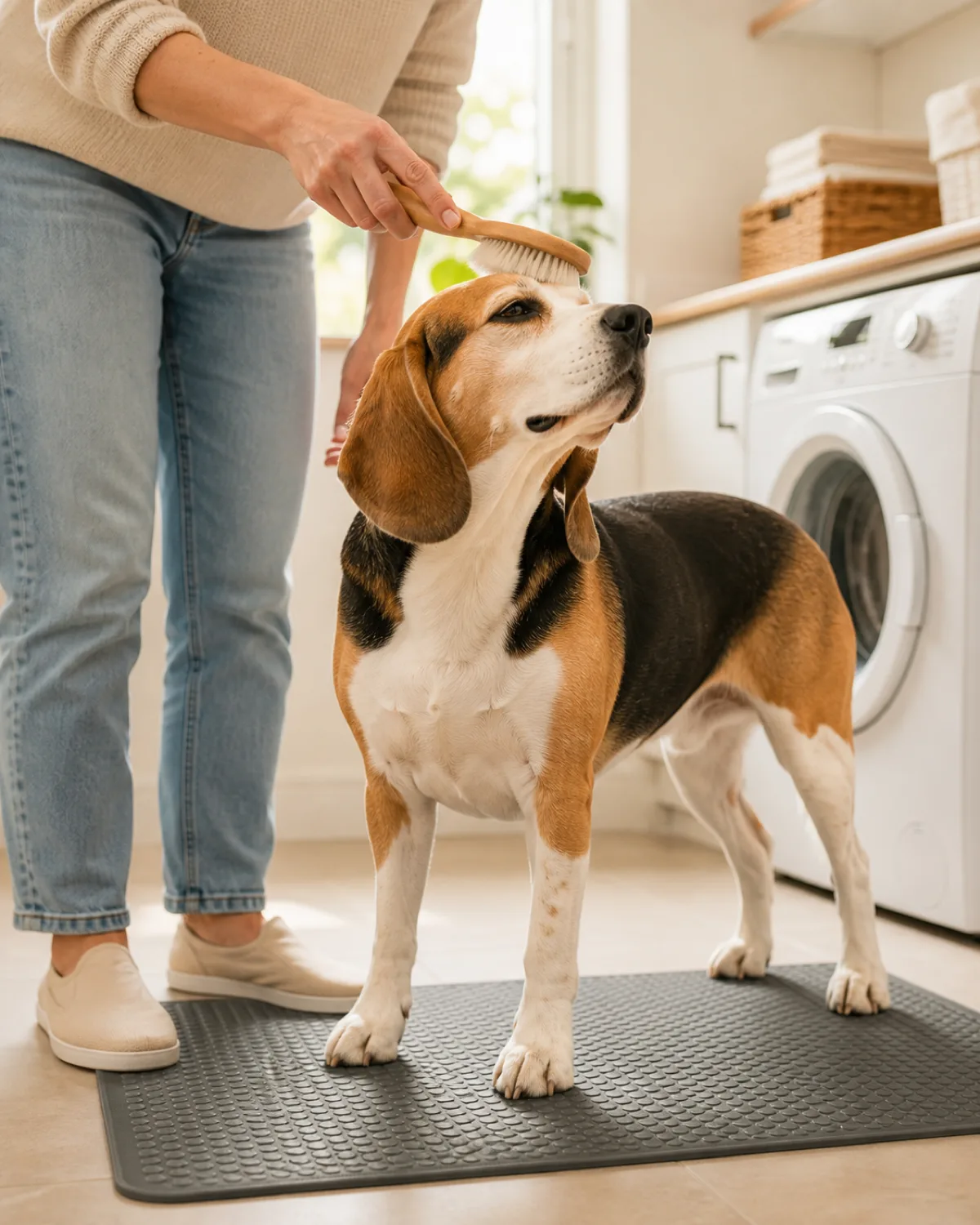
Location shapes behavior before you touch a single tool. The bathroom where your dog naps on the cool tile, the corner of the kitchen where they wait during dinner prep, the hallway mat where they settle after walks — any space where your dog already defaults to a calm posture works.
Choosing a spot with built-in calm means you skip the first five minutes of convincing your dog to relax. Add a rubber-backed mat for grip if the floor is slippery, and keep your brush within arm reach so you never have to leave your dog mid-session to search a drawer.
The location becomes a cue over time. Your dog sees the mat and their body softens, the same way they settle at the sound of your evening routine.
Start Every Session When Your Dog Is Calm
Timing matters more than technique. A dog who sprinted around the yard for twenty minutes has a heart rate and energy level that make standing still feel impossible. Wait until your dog has settled — after a nap, after a calm walk, after they have been lying on the couch for a while.
The goal is a dog whose body is already relaxed before you pick up the brush. Starting calm means staying calm. Starting wound-up means fighting momentum the entire session.
When to skip a session entirely
Two signs your dog is not ready today
Panting after play or heatA dog that is still panting is too aroused or too warm. Wait until the breathing is slow and the body is loose.
Already stressed from something elseThunderstorm, vet visit, new visitor — stacking grooming on top of existing stress builds a negative association fast.
Brush Before Every Bath, Not After
Wet tangles turn into cement. A mat that slides through dry fur becomes a locked knot the moment water hits it, and no amount of conditioner will undo it without pulling. Brushing first removes loose hair, separates any small tangles, and lets water and shampoo reach the skin instead of pooling on top of a matted layer.
This single habit eliminates the most common post-bath problem: a dog whose coat looks clean on the surface but is tangled underneath, drying into a mess that takes twice as long to fix.
Work in the Same Order Every Time
Dogs learn sequences faster than commands. When you always start at the head, move down the neck, across the shoulders, along the back, down each leg, then finish with the tail, your dog knows what comes next. That predictability lowers anxiety because there are no surprises.
It also trains you to be thorough — when the order is the same every time, you notice if you skipped a section. Head to tail, left to right, top to bottom. Pick one direction and keep it.
A sample head-to-tail order
Head and face (wipe around eyes, check for debris)
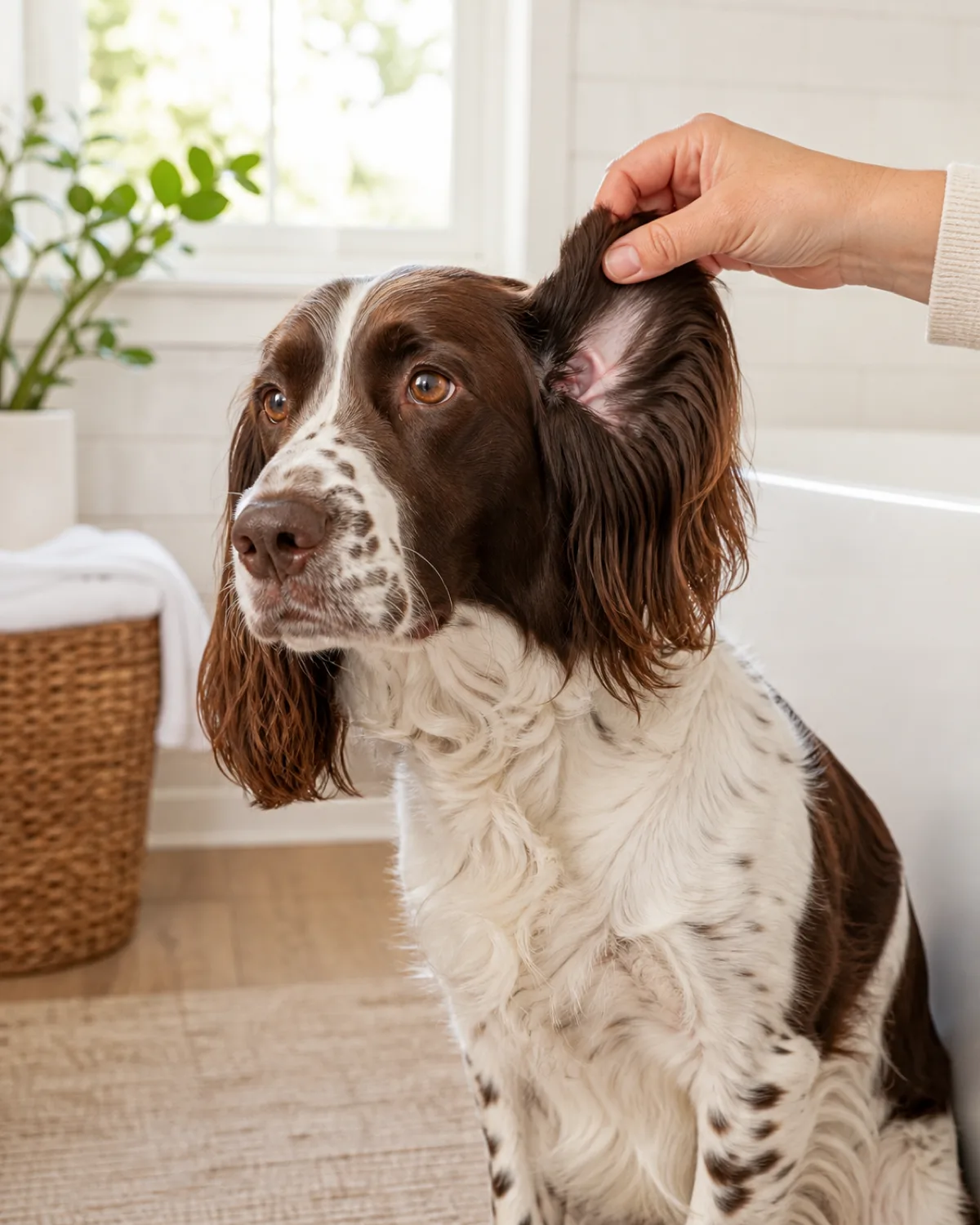
Ears (lift flap, look inside, wipe outer fold)
Neck and chest
Shoulders and back
Belly and sides
Each leg, front to back
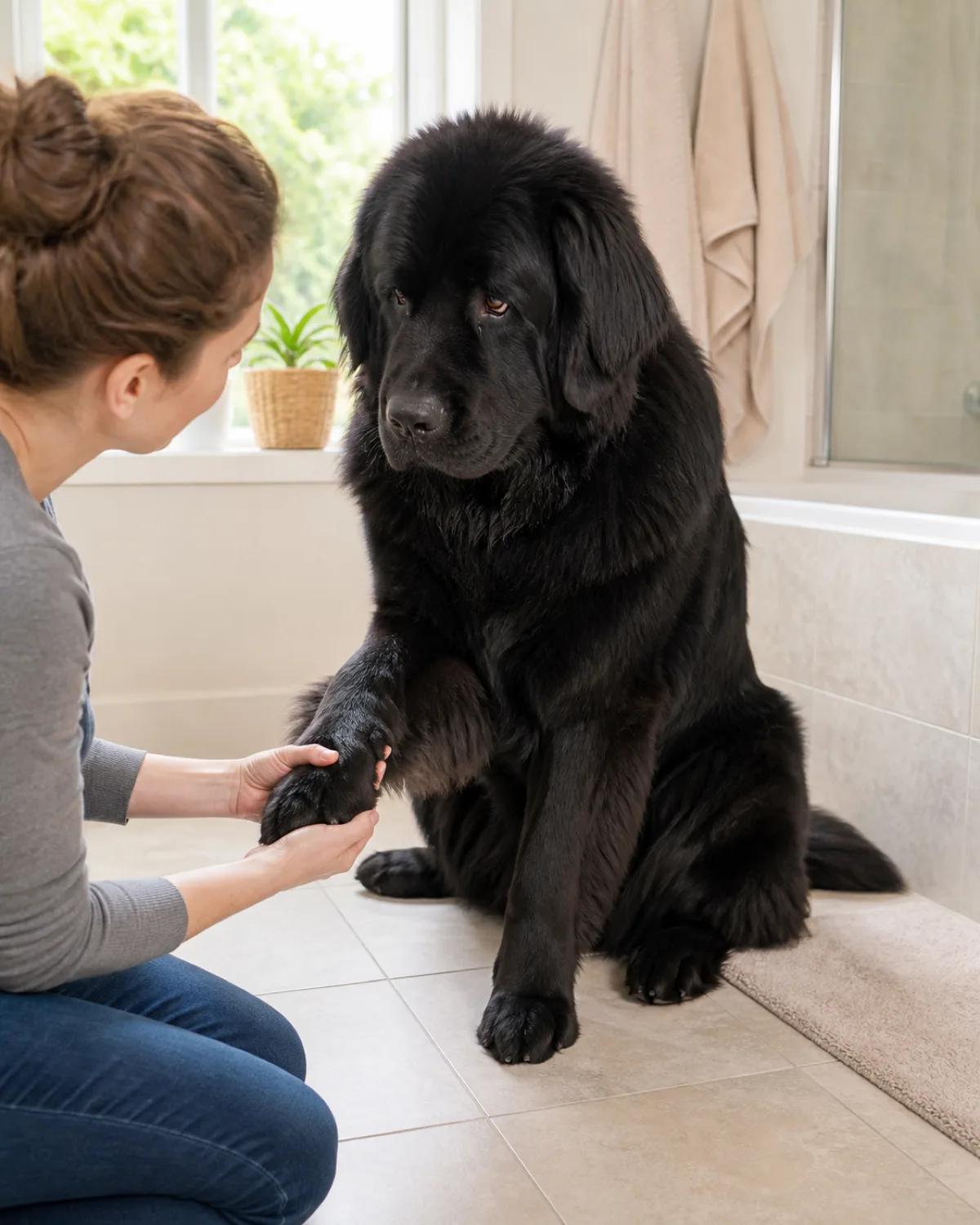
Paws (check between pads)
Tail and rear
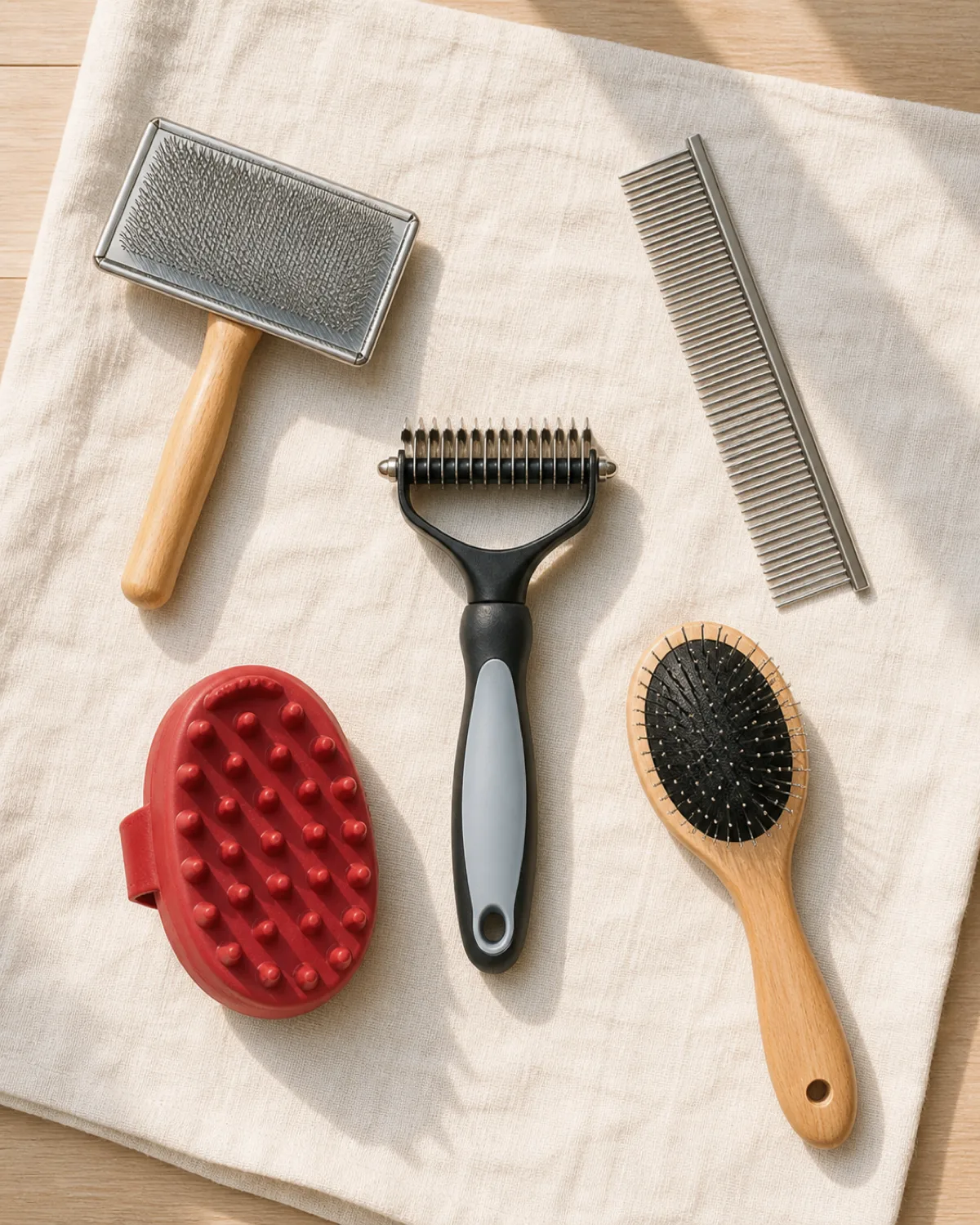
Match Your Tools to Your Dog's Coat Type
A slicker brush on a short smooth coat wastes your time and irritates the skin. A rubber curry on a tangled long coat does nothing useful. The wrong tool teaches your dog that grooming hurts.
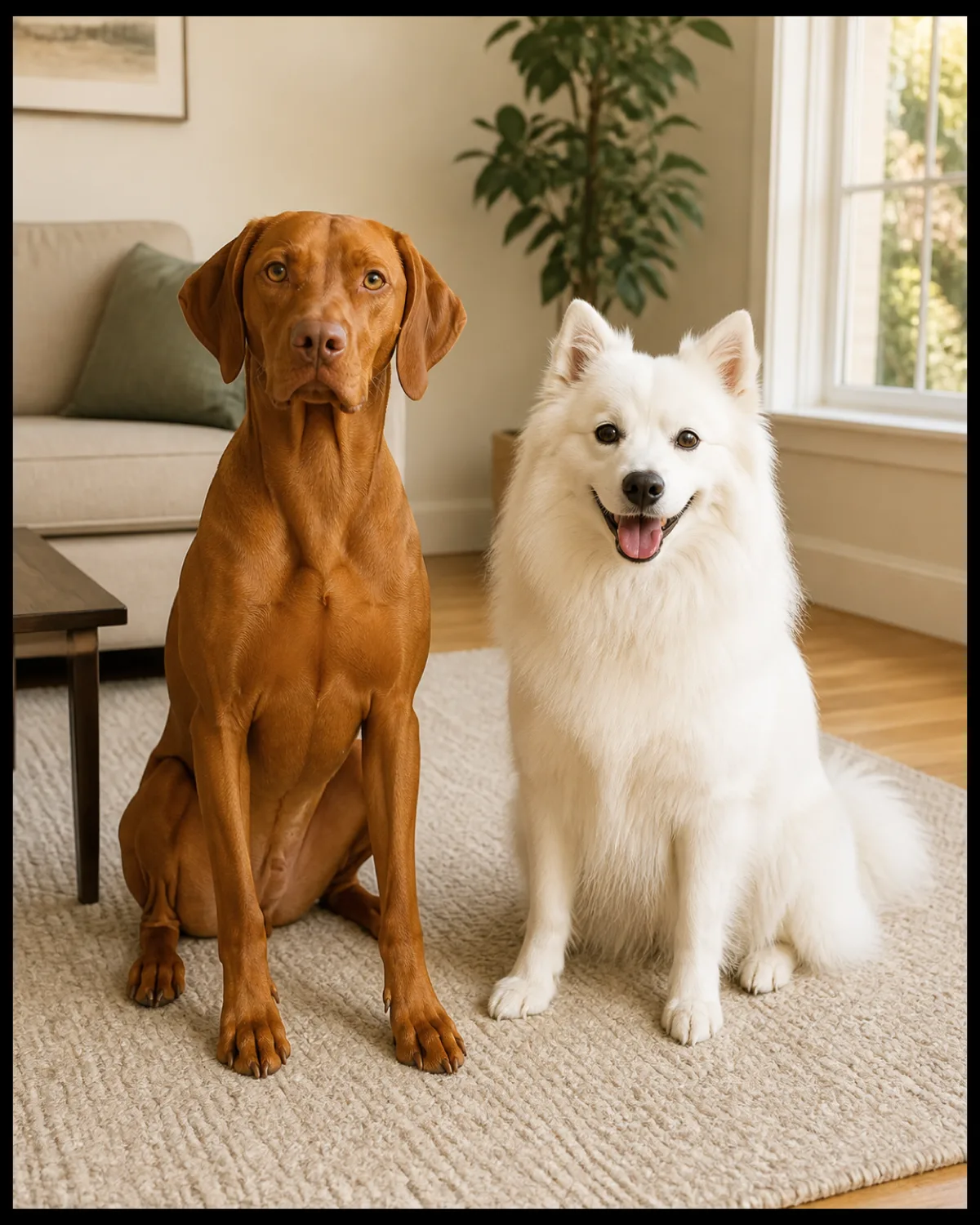
Short smooth coats (like hounds and pointers): rubber curry brush or grooming mitt — lifts loose hair without scratching
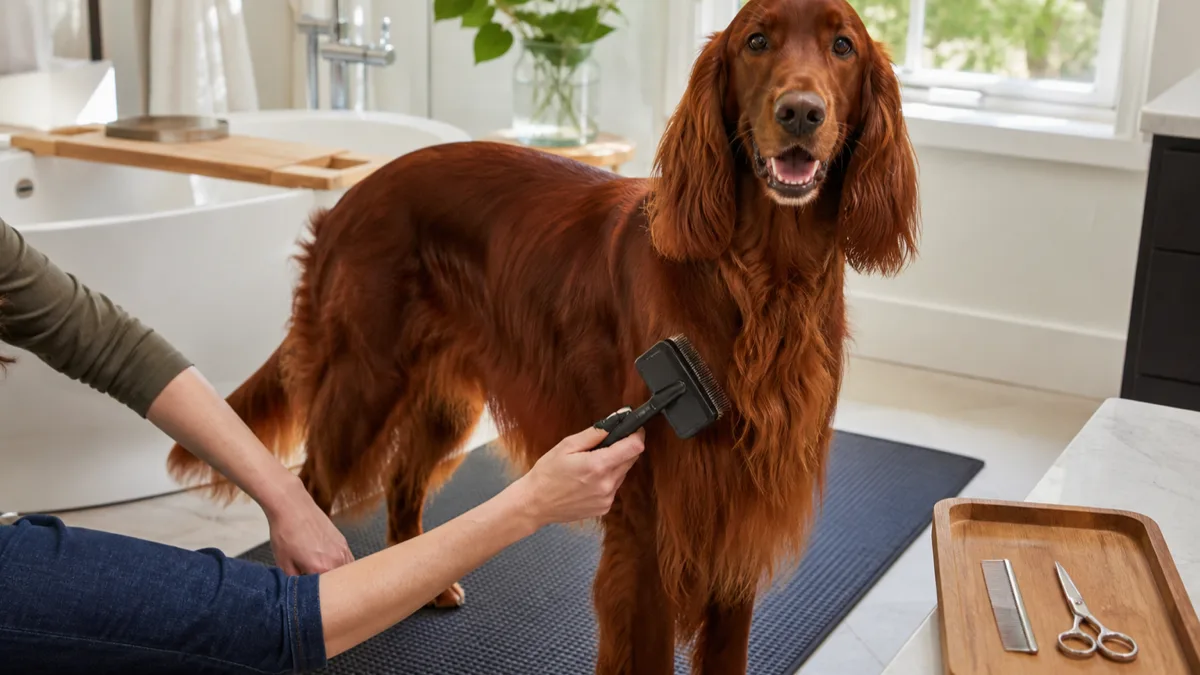
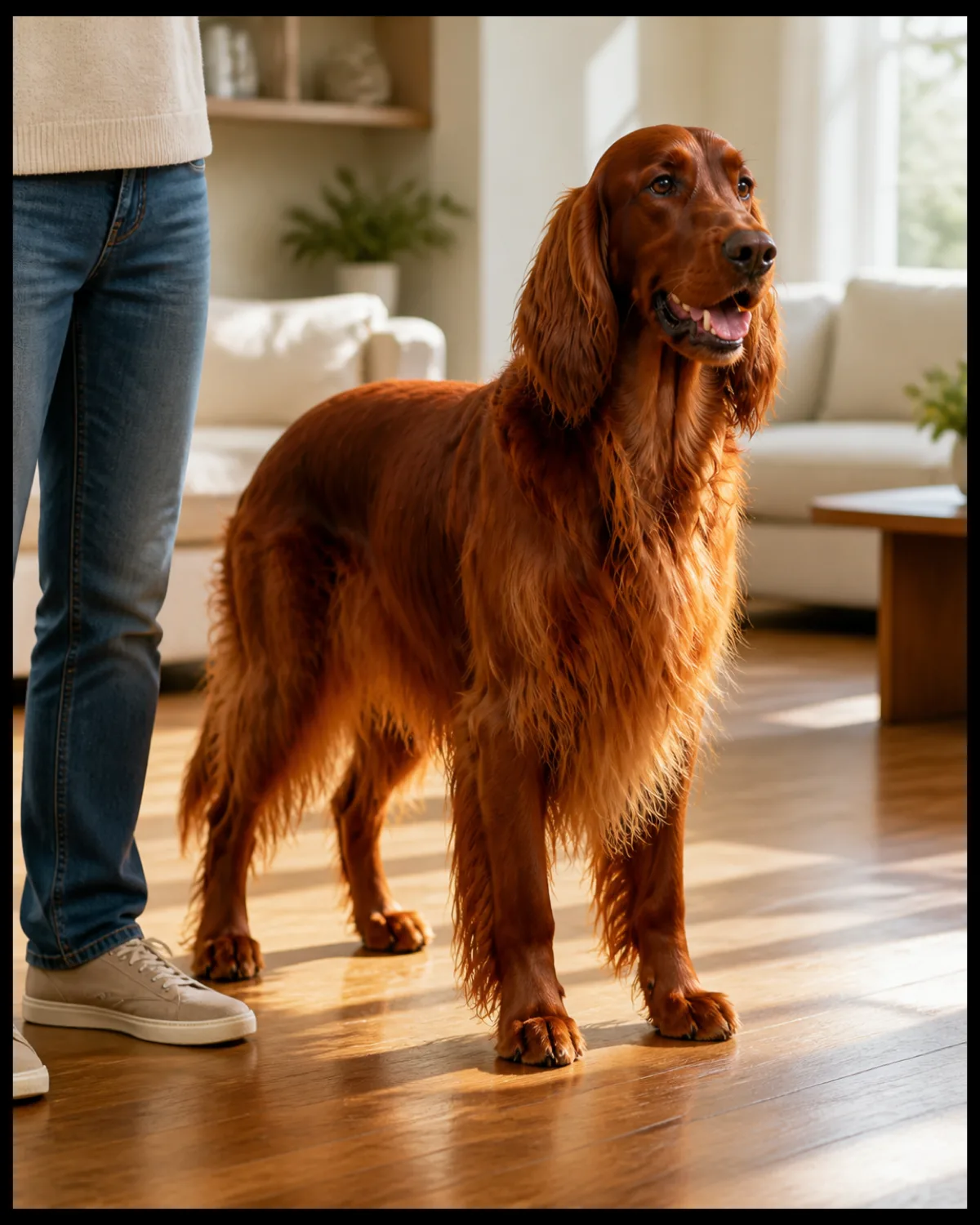
Long silky coats (like spaniels and setters): pin brush for daily passes, steel comb for checking behind the ears and under the legs
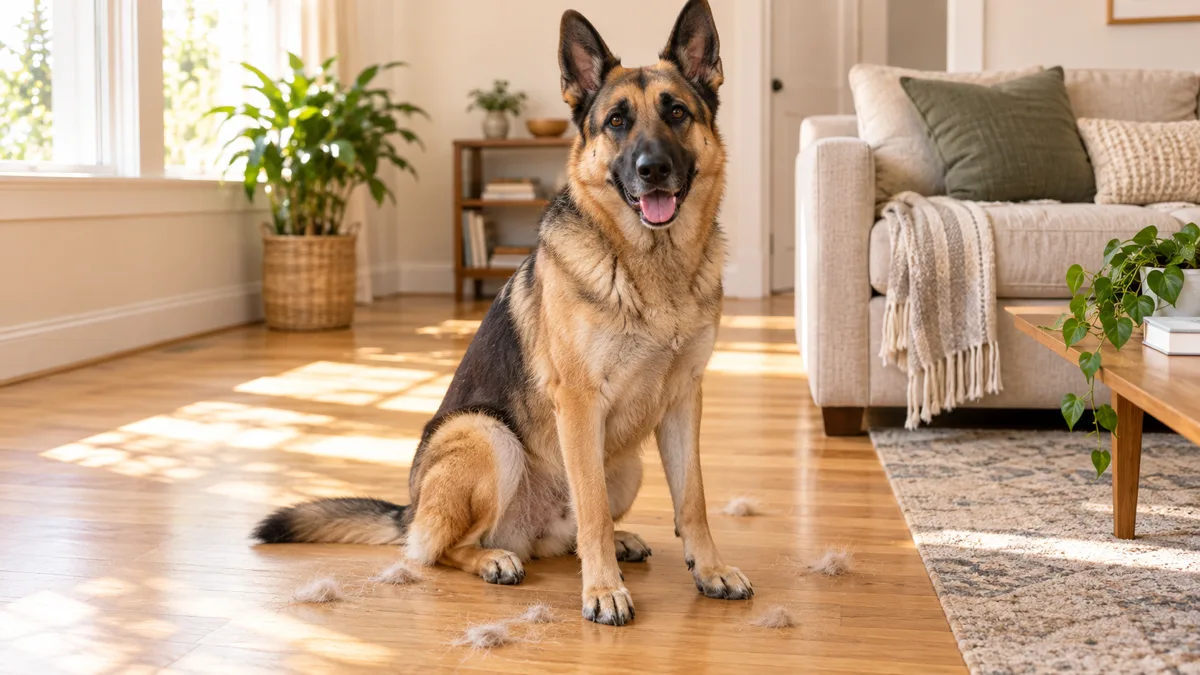
Double coats (like shepherds and huskies): undercoat rake for seasonal blowouts, slicker for the topcoat
Wire coats (like terriers and schnauzers): stripping comb or a firm slicker
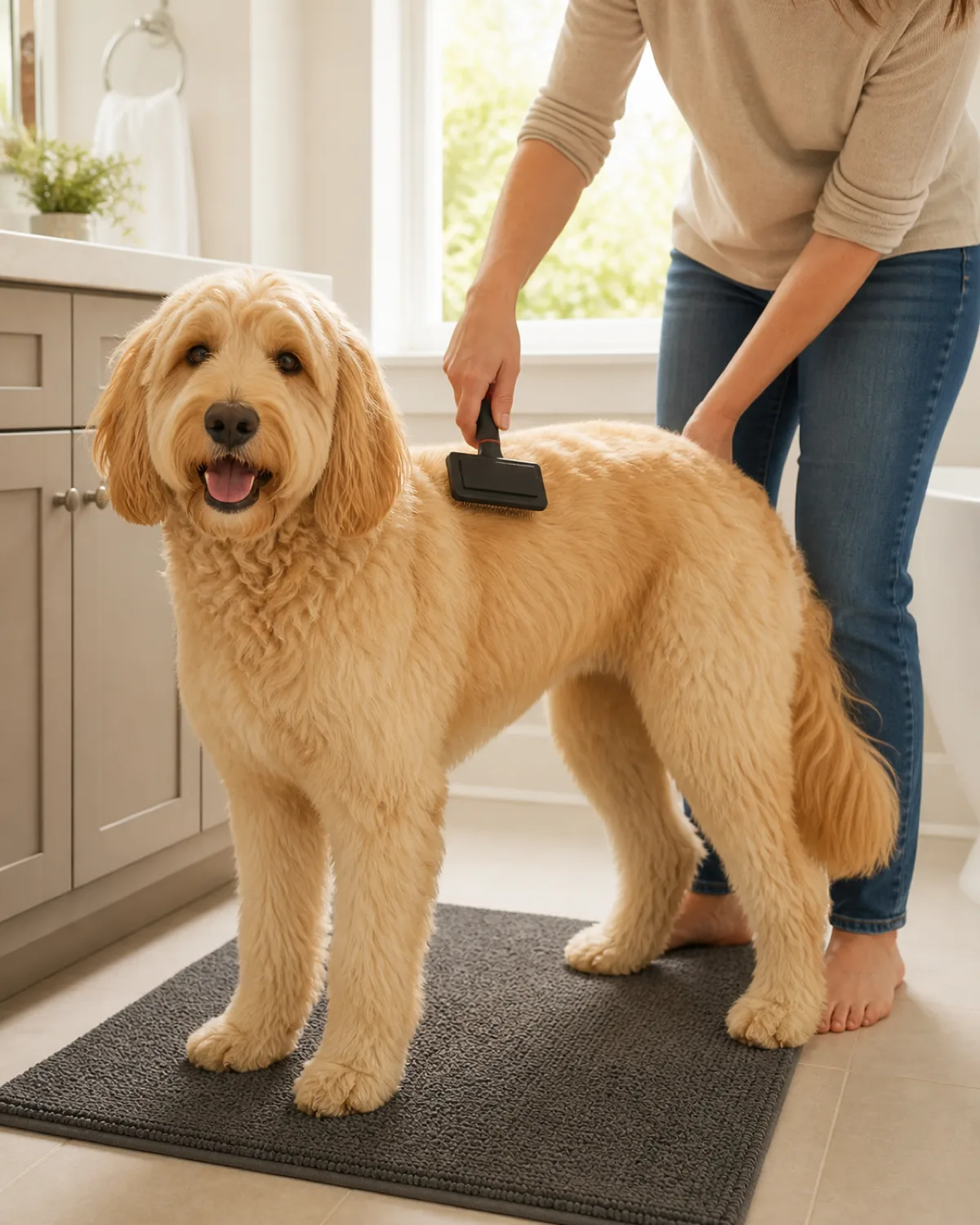
Curly coats (like poodle-type mixes): slicker brush plus a wide-tooth comb to prevent matting between grooming appointments
Quick-reference coat guide
Four coat types and their core tool
Short smoothRubber curry brush or grooming mitt. Two passes weekly. Sheds fine hairs steadily, no tangles.
Long silkyPin brush daily, steel comb weekly behind the ears. Mats fast when skipped.
Double coatUndercoat rake during blowouts, slicker between. Three to four sessions weekly minimum.
Wire or curlyFirm slicker plus wide-tooth comb. Mats hide near the skin, so comb to the root.
Keep Sessions Short and Treat-Heavy
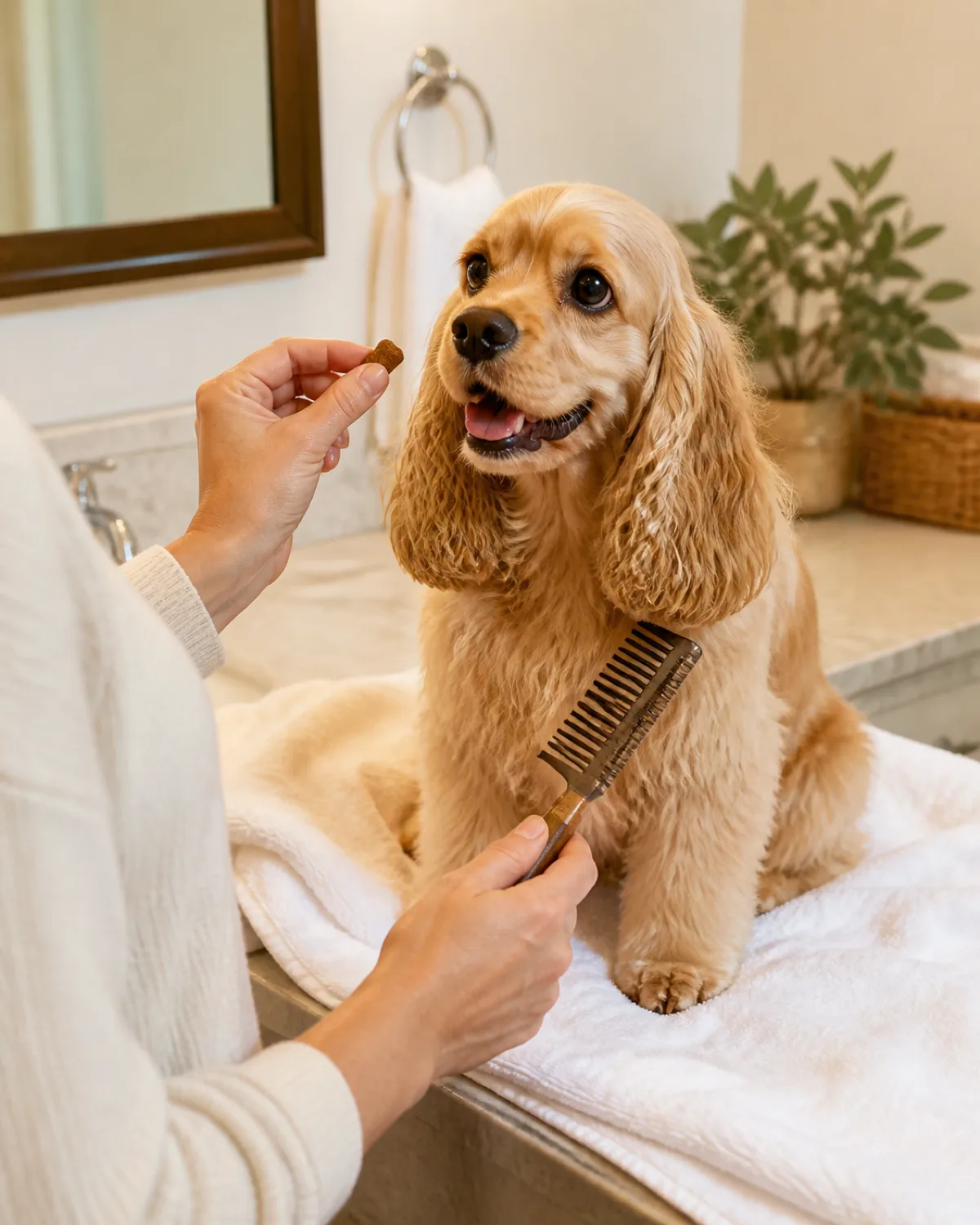
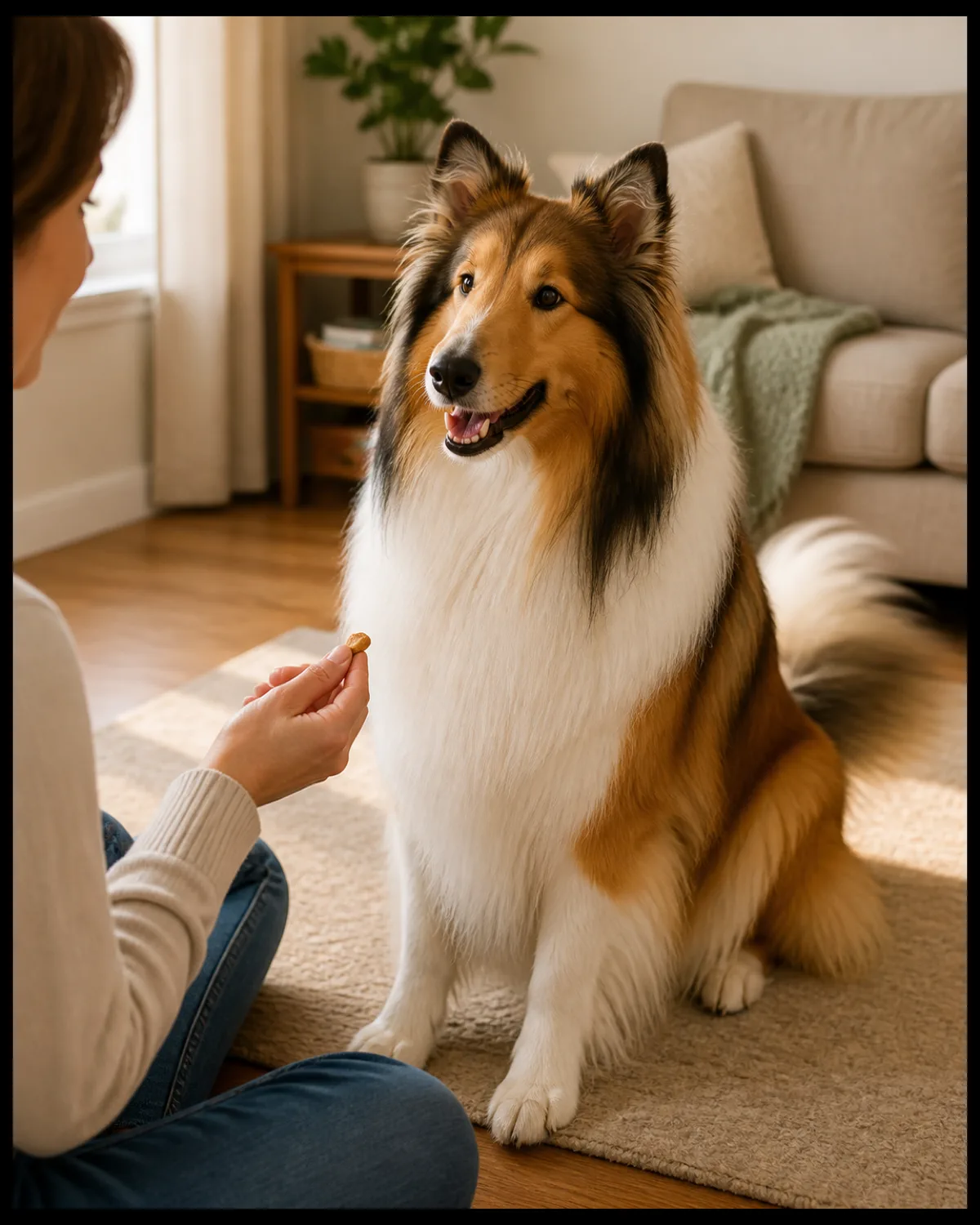
Five minutes with treats is worth more than thirty minutes of endurance. Puppies should not sit through anything longer than three to five minutes at first. Adult dogs with a solid grooming history can handle fifteen to twenty, but only if those minutes include regular treat breaks — one after each body section, one at the halfway mark, one at the end.
The goal is not to finish the entire coat in one sitting. The goal is for your dog to walk away thinking that was fine. Consistency across short daily sessions beats one marathon weekend session every single time.
Learn to Read Your Dog's Stress Signals
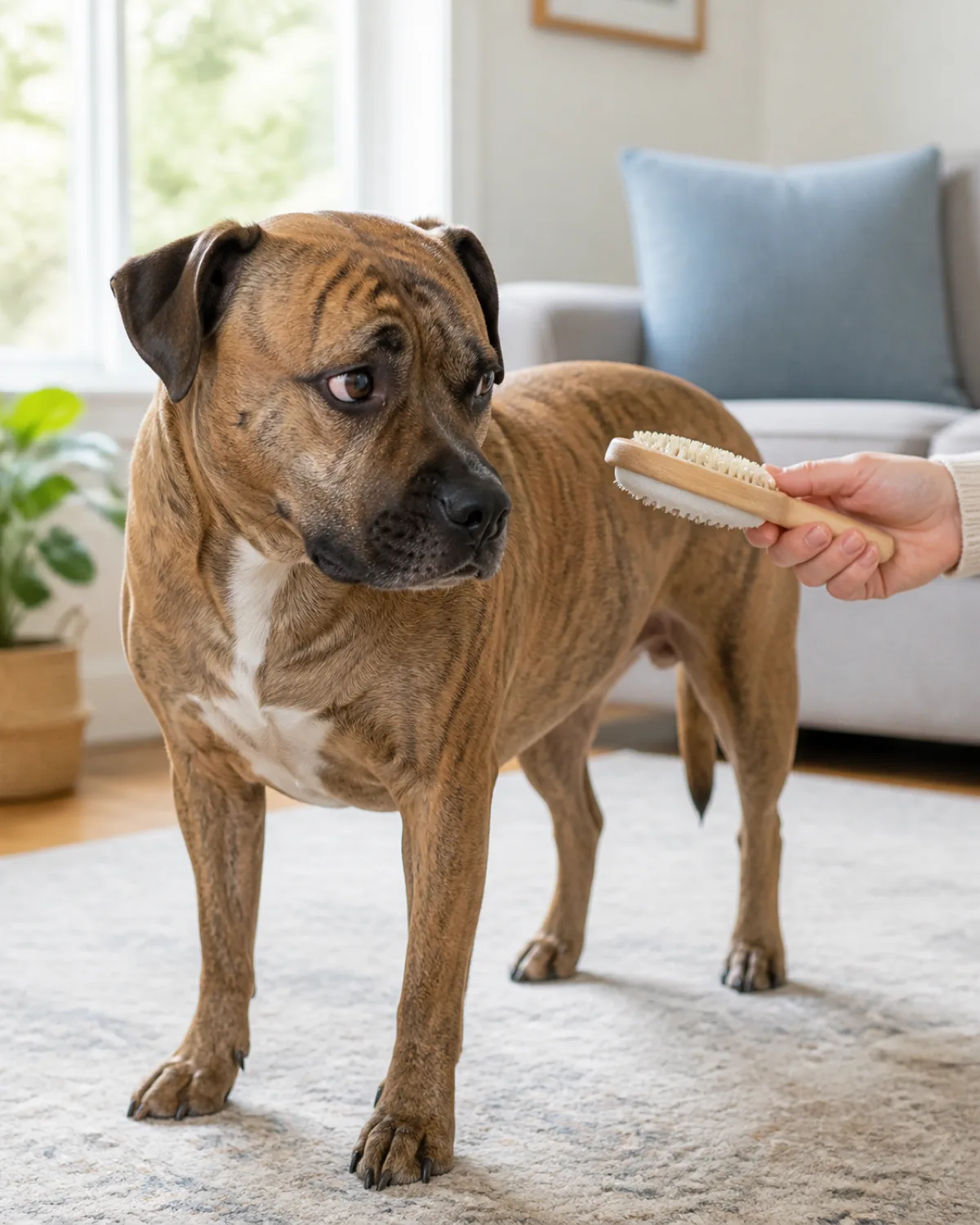
A dog who freezes, licks their lips repeatedly, shows the whites of their eyes, or turns their head away from the brush is telling you something. These are not quirks. These are stress signals, and pushing through them teaches your dog that grooming ignores their communication.
When you see a signal, pause. Take the brush off the coat. Offer a treat or a short break. Wait for the body to soften again before continuing.
Most grooming disasters — the snapping, the fleeing, the lifelong brush phobia — start with a handler who missed or ignored the early warnings.
Common stress signals during grooming
Lip licking or yawning when not tired
Whale eye (whites of the eyes visible)
Turning the head sharply away from the brush
Body going stiff or rigid
Low tail or tail tucked under
Panting in a cool room
Check Ears, Teeth, and Nails Every Session
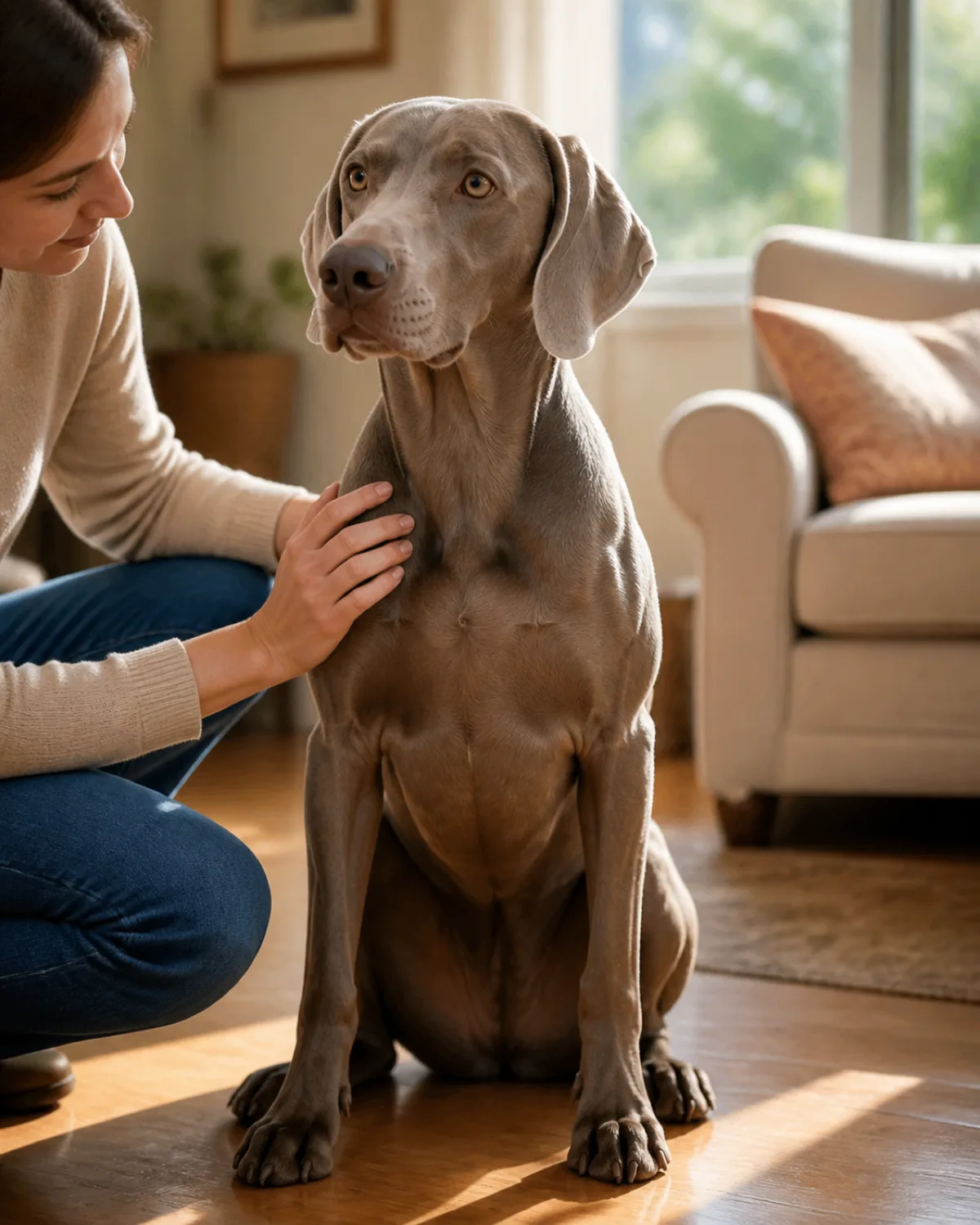
A full grooming routine is not just coat care. Every time you brush your dog, spend thirty seconds checking each area. Flip the ear flap and look for redness, excess wax, or an unusual smell. Lift the lip and check for tartar buildup along the gum line. Pick up each paw and look at the nail length — if the nails click on hard flooring, they are too long.
These micro-checks catch problems early, when they are cheap and easy to address, instead of late, when they require a vet visit. They also desensitize your dog to having those areas handled, which makes future vet exams much easier.
End Every Session Before Your Dog Wants to Quit
The biggest home grooming mistake is going too long. If your dog is still relaxed at the ten-minute mark, stop at ten. Do not push to fifteen because you have not finished the belly. Ending while your dog is still comfortable means the last thing they remember about grooming is good.
That positive final memory is what brings them back willingly next time. If you end after your dog is already squirming, pulling away, or yawning from stress, the last memory is discomfort — and next session starts with resistance instead of cooperation.
Save this for later
10 Dog Grooming Tips at Home
1
Pick a calm spotUse a location your dog already associates with settling down
2
Start when calmWait until after a nap or quiet walk, not after play or excitement
3
Brush before bathWet tangles lock into mats — always brush first, then bathe
4
Same order every timeHead to tail, left to right — predictability lowers anxiety
5
Match tool to coatRubber curry for short, pin brush for long, undercoat rake for double
6
Keep sessions shortFive minutes for puppies, fifteen max for adults, treats throughout
7
Read stress signalsLip licking, whale eye, body stiffness — pause and offer a break
8
Check ears, teeth, nailsThirty-second micro-checks catch problems early and build handling trust
9
End before they quitStop while your dog is still relaxed — the last memory shapes the next session
10
Build a weekly schedulePair grooming with an existing habit so it sticks instead of drifting
pawliqa.com
Build a Weekly Schedule You Will Actually Follow
A schedule works only if it fits your real life, not your aspirational one. Short smooth coats need a full brush once a week and a quick rubber curry every other day. Long silky coats need daily brushing and a weekly deep comb-through. Double coats need three to four brushing sessions per week outside of shedding season, daily during blowouts.
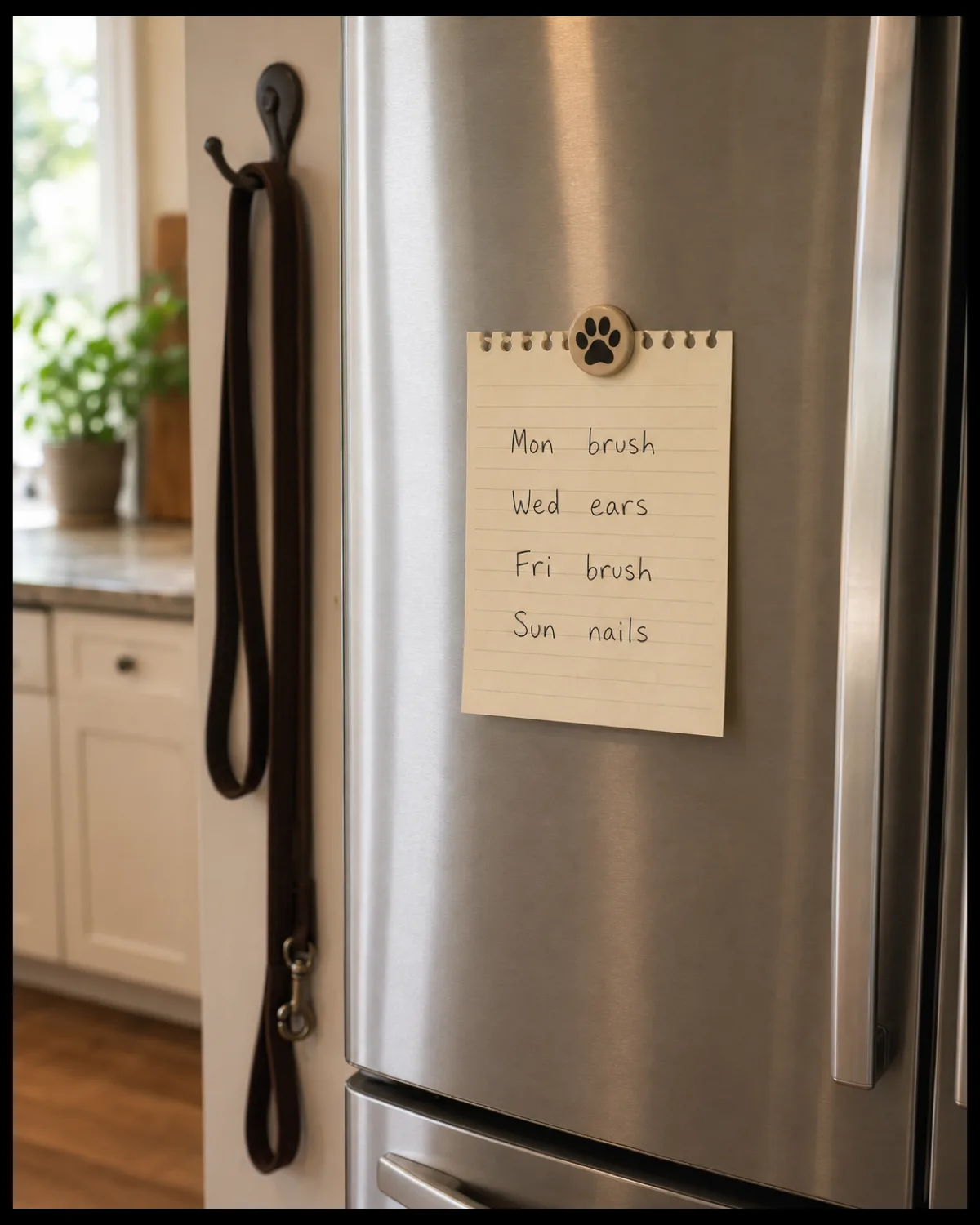
Write the schedule on a sticky note and put it on the fridge, not in a planner you never open. Pair grooming with something you already do — right after the evening walk, right before breakfast. When it is tied to an existing habit, it sticks. When it is floating in your calendar, it drifts.
If you have more than one dog, stagger the schedules. Grooming two dogs back to back builds your fatigue and shortens your patience for the second dog, who learns that their session is always the rushed one. One dog per sitting, on alternating days, is better for everyone.
Home grooming is not about perfection. It is about consistency — showing up three times a week with a brush, a handful of treats, and ten quiet minutes. The coat takes care of itself when the routine does.
About the author
Jess Calloway
Jess Calloway edits Pawliqa, where she shares dog care, grooming, training, and new-owner tips — plus DIY and pet-friendly home ideas — for anyone who wants a happy, well-cared-for dog. As a dog mom to three very different dogs, she writes the honest, tested version of what actually works. Every guide is image-led and reviewed for clarity, usefulness, image accuracy, and Pinterest-to-page alignment before it goes live. Visit the About page.
Frequently Asked Questions
How often should I groom my dog at home?
It depends on the coat. Short smooth coats need a quick brush two to three times a week. Long or curly coats need daily brushing to prevent mats. Double coats need three to four sessions weekly, with daily brushing during seasonal shedding. A weekly ear, teeth, and nail check should happen regardless of coat type.
What tools do I need to groom my dog at home?
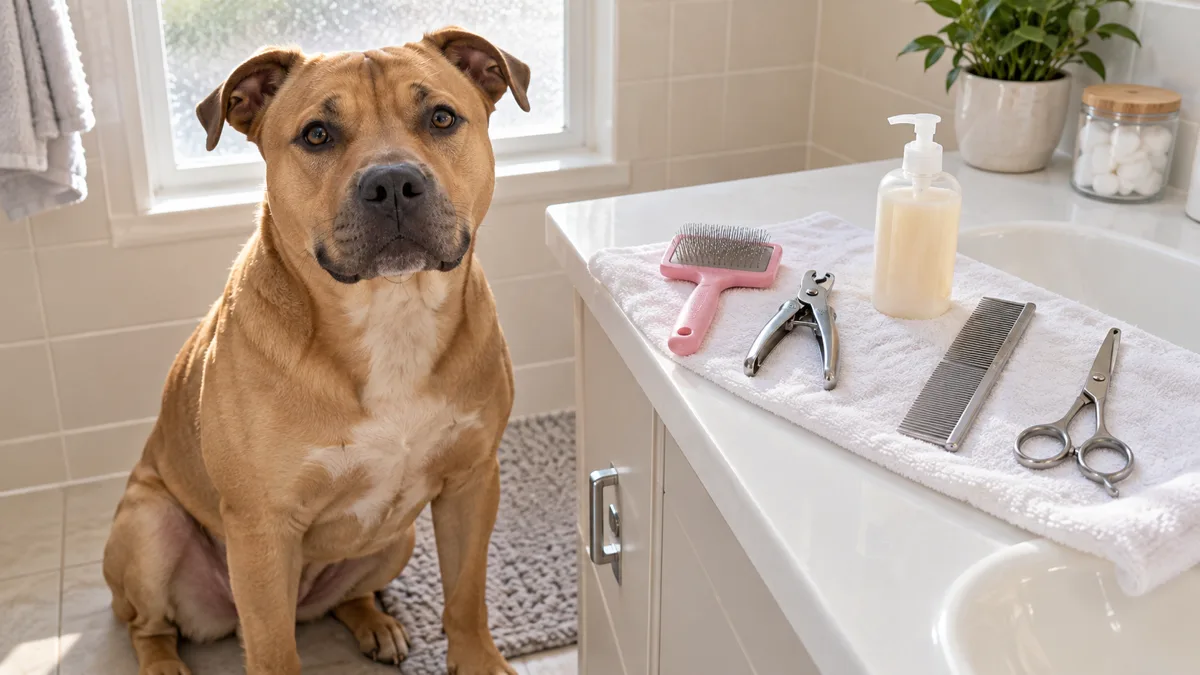
Start with a brush matched to your coat type (rubber curry for short, slicker for medium, pin brush for long), a steel comb for detail work, round-tipped scissors for trimming around paws and sanitary areas, and nail clippers or a grinder. A non-slip mat is essential for safety on hard floors.
How do I get my dog to stay still during grooming?
Start with short sessions of two to three minutes and build gradually. Use treats after each body section. Choose a time when your dog is already calm, not after exercise or excitement. If your dog is truly fearful of the brush, see our guide on how to brush a dog that hates being brushed for a step-by-step desensitization approach.
Can I use human shampoo on my dog?
No. Human shampoo has a different pH balance that strips the natural oils from a dog's coat and can irritate the skin. Use a shampoo formulated for dogs. If your dog has sensitive skin, look for oatmeal-based or fragrance-free options.
Should I groom my dog before or after a bath?
Always brush before the bath. Wet tangles turn into tight mats that are painful to remove and can cause skin irritation underneath. A thorough brushing before the bath removes loose hair and small tangles, letting the water and shampoo reach the skin.
Fifteen dog paw care tips covering pad checks, nail length, moisturizing, hot pavement tests, winter balm, cracked pad first aid, and seasonal routines.