
How Much Exercise Does Your Dog Need? A Breed-by-Breed Chart With Daily Schedules
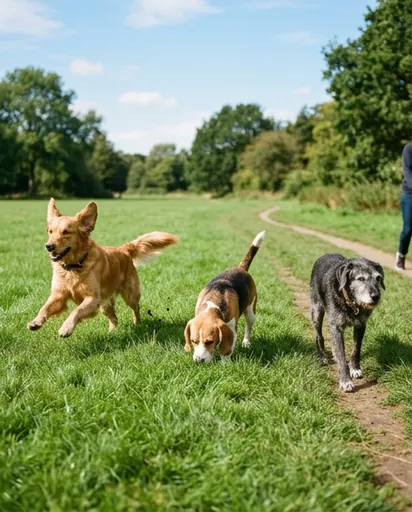
I have three dogs and not one of them agrees on what counts as exercise. My Golden Retriever can finish a five-mile trail run and still meet me at the back door with a tennis ball in her mouth like I owe her a second shift. My Beagle has never voluntarily run anywhere in his life, but point his nose at a patch of grass with a squirrel history and he will investigate it with the intensity of a crime scene detective for 40 minutes straight. Then there is the senior mutt, who considers a single lap around the block a full cardio session and spends the rest of the afternoon recovering on the couch. How much exercise does your dog actually need? The answer depends almost entirely on breed, age, and size — and the chart and daily schedules in this guide will help you figure out exactly where your dog falls.

Why Exercise Matters More Than Most Owners Think

Exercise is not just about keeping your dog slim, although that part matters more than many owners realize. Research from the University of Liverpool and Mars Petcare found that overweight dogs live up to 2.5 years less than dogs at a healthy weight, and insufficient exercise is one of the primary drivers of canine obesity. But the benefits extend well beyond the scale.
On the physical side, regular movement strengthens the cardiovascular system, maintains joint mobility, builds lean muscle, and supports healthy digestion. On the behavioral side, a dog who burns adequate energy during the day is dramatically less likely to chew your furniture, bark at every passing squirrel, or dig craters in the backyard. These are not personality flaws — they are almost always symptoms of pent-up energy with nowhere to go.
Then there is the mental side, which most exercise guides underestimate. Activities that engage your dog’s brain — sniffing, problem-solving, learning — lower cortisol levels and improve overall emotional stability. A dog who gets the right mix of physical and mental exercise is calmer, more focused, and genuinely happier. But more is not always better. Over-exercising carries its own risks, especially for puppies, senior dogs, and flat-faced breeds. The goal is finding the right amount, not the maximum amount. For any health concerns about exercise tolerance, always consult your veterinarian.
The Breed-by-Breed Exercise Chart: 20 Popular Breeds Compared

This chart covers 20 of the most popular dog breeds in the United States. It gives you a starting point — the daily exercise minutes, preferred activity types, and general energy level for each breed. Use it as a quick reference, then adjust based on your individual dog’s age, health, and personality.
| Breed | Size | Weight (lbs) | Energy Level | Daily Exercise (min) | Best Activities | Lifespan (yrs) |
|---|---|---|---|---|---|---|
| Labrador Retriever | Large | 55–80 | High | 80–120 | Swimming, fetch, hiking | 11–13 |
| Golden Retriever | Large | 55–75 | High | 60–120 | Fetch, swimming, running | 10–12 |
| German Shepherd | Large | 50–90 | Intense | 90–120 | Running, agility, tracking | 9–13 |
| French Bulldog | Small | 16–28 | Low | 30–45 | Short walks, indoor play | 10–12 |
| Bulldog | Medium | 40–50 | Low | 20–40 | Slow walks, light play | 8–10 |
| Poodle (Standard) | Large | 40–70 | High | 60–90 | Swimming, agility, fetch | 12–15 |
| Beagle | Medium | 20–30 | Moderate | 60–80 | Scent walks, fetch, hiking | 10–15 |
| Rottweiler | Large | 80–135 | High | 60–90 | Walking, swimming, tug | 9–10 |
| Dachshund | Small | 11–32 | Moderate | 30–60 | Short walks, indoor games | 12–16 |
| Yorkshire Terrier | Small | 4–7 | Moderate | 30–45 | Short walks, indoor play | 11–15 |
| Boxer | Large | 50–80 | Intense | 90–120 | Running, agility, fetch | 10–12 |
| Siberian Husky | Medium | 35–60 | Intense | 90–120+ | Running, hiking, sledding | 12–14 |
| Australian Shepherd | Medium | 40–65 | Intense | 90–120 | Herding, agility, frisbee | 12–15 |
| Cavalier King Charles | Small | 13–18 | Low-Moderate | 30–45 | Gentle walks, indoor play | 12–15 |
| Great Dane | Giant | 110–175 | Low-Moderate | 30–60 | Slow walks, light play | 7–10 |
| Pembroke Welsh Corgi | Medium | 25–30 | Moderate-High | 60–80 | Herding games, fetch, walks | 12–13 |
| Doberman Pinscher | Large | 60–100 | Intense | 90–120 | Running, agility, training | 10–12 |
| Shih Tzu | Small | 9–16 | Low | 20–40 | Short walks, indoor play | 10–18 |
| Border Collie | Medium | 30–55 | Intense | 120+ | Herding, agility, frisbee | 12–15 |
| Pug | Small | 14–18 | Low | 20–40 | Short walks, indoor games | 13–15 |
One important note: these numbers represent the total daily exercise a healthy adult dog of each breed typically needs. That includes walks, play, training, and mental enrichment combined — not just time spent running. A Border Collie who gets 60 minutes of physical activity and 60 minutes of mental stimulation across the day is hitting the mark just as well as one who runs for two straight hours, and probably with less wear on the joints. Also remember that individual dogs within any breed can vary significantly. A mellow Labrador exists. A hyperactive Bulldog exists. The chart gives you the baseline — your dog tells you the rest.
Physical Exercise vs. Mental Exercise — Why Your Dog Needs Both

Most owners think of exercise as movement — walks, runs, games of fetch. That covers half the equation. The other half is mental exercise, and it is just as tiring for your dog as a sprint around the park, sometimes more so. Researchers at the University of Bristol found that dogs who engaged in regular cognitive activities like nosework and puzzle solving showed fewer signs of anxiety, less destructive behavior, and better overall welfare scores compared to dogs whose exercise was purely physical.
Think of it this way: a 20-minute walk where your dog trots beside you on a tight leash at your pace is moderate physical exercise but almost zero mental exercise. That same 20 minutes spent on a “sniff walk” — where your dog chooses the direction, sets the pace, and spends as long as they want investigating each bush, fire hydrant, and mysterious patch of dirt — is light physical exercise but intense mental exercise. Both count toward the daily total, and the ideal routine includes a mix of each.
A useful framework is to think in ratios. High-energy breeds like Border Collies, Huskies, and Australian Shepherds do best with roughly 60 percent physical and 40 percent mental stimulation. Moderate-energy breeds like Beagles, Corgis, and Cocker Spaniels thrive with an even 50-50 split. Low-energy breeds like Bulldogs, Pugs, and Shih Tzus actually benefit from flipping the ratio: about 40 percent physical and 60 percent mental, since their bodies overheat or fatigue quickly but their brains still need engagement. Good mental exercise options include sniff walks, puzzle feeders, frozen Kongs stuffed with peanut butter or pumpkin purée, hide-and-seek games with treats scattered around the house, nosework training, and short five-to-ten-minute obedience or trick-training sessions.
Sample Daily Exercise Schedules by Energy Level

Knowing the total number of minutes is helpful. Knowing how to distribute those minutes across a real day is what actually makes the routine stick. Here are three sample schedules built around the most common energy levels. Adapt the exact times to your own rhythm — the sequence and spacing matter more than the clock.
High-Energy Dog Schedule (90–120 min/day)
Example breeds: Border Collie, Australian Shepherd, Siberian Husky, German Shepherd, Boxer. These dogs need both volume and variety. A single long walk will not cut it — they need multiple sessions spread across the day with at least one high-intensity burst and at least one dedicated mental enrichment block.
7:00 AM — 30–40 minutes of brisk walking, jogging, or an off-leash run in a safe fenced area. This is the biggest energy dump of the day and sets the tone for a calmer morning. 10:00 AM — 15 minutes of mental enrichment: a puzzle feeder at breakfast, a stuffed frozen Kong, or a short nosework game hiding treats around the house. 3:00 PM — 20–30 minutes of high-intensity play: fetch, frisbee, tug-of-war, swimming, or an agility practice session. 6:00 PM — 20 minutes of a sniff walk at the dog’s own pace, letting them lead and investigate. 8:30 PM — 10 minutes of low-key training or a chew session to wind down before bed.
Moderate-Energy Dog Schedule (60–80 min/day)
Example breeds: Beagle, Pembroke Welsh Corgi, Cocker Spaniel, Standard Poodle, Dachshund. These dogs have genuine energy but also genuine off switches. Two solid outings plus a couple of short enrichment breaks will keep them balanced without overloading their joints or your calendar.
7:30 AM — 25–30 minutes of a regular-pace neighborhood walk with some dedicated sniffing time. 12:00 PM — 10 minutes of indoor play or a quick training session working on a new trick. 4:00 PM — 20–25 minutes of a second walk, ideally in a different location or route to add novelty. 7:00 PM — 10 minutes of a puzzle feeder, a short tug game, or a frozen Kong to close out the active part of the day.
Low-Energy Dog Schedule (20–45 min/day)
Example breeds: French Bulldog, Bulldog, Pug, Shih Tzu, Cavalier King Charles Spaniel. Low energy does not mean no energy. These dogs still need daily movement to prevent obesity and joint stiffness, but sessions should be short, low-impact, and scheduled around temperature — brachycephalic breeds in particular should never exercise during the hottest part of the day.
8:00 AM — 10–15 minutes of a slow morning walk in cooler temperatures. 2:00 PM — 10 minutes of indoor play, a short training session, or a puzzle feeder. Avoid outdoor exercise if temperatures are above 80°F. 6:00 PM — 10–15 minutes of a gentle evening walk after the heat has broken. For flat-faced breeds, always carry water and watch closely for excessive panting or slowing down.
How Age Changes Your Dog’s Exercise Needs

The breed chart gives you the adult baseline. Age shifts that baseline in both directions — puppies need less structured exercise than you probably think, and senior dogs need more than most owners give them.
Puppies (under 12 months). The widely used guideline is five minutes of exercise per month of age, twice a day. That gives you a simple reference across the first year of life.
| Puppy Age | Max per Session | Sessions per Day |
|---|---|---|
| 2 months | 10 minutes | 2 |
| 4 months | 20 minutes | 2 |
| 6 months | 30 minutes | 2 |
| 8 months | 40 minutes | 2 |
The critical thing with puppies is avoiding high-impact repetitive activity — long runs on pavement, repeated jumping for frisbees, or forced jogging alongside a bike — until their growth plates have fully closed. For small breeds that typically happens around 10 to 12 months. For large and giant breeds it can take 14 to 18 months. Until then, keep exercise exploratory and playful rather than structured and intense. Free play in a yard, short leash walks, and supervised socialization sessions are more than enough.
Adult dogs (1–7 years). This is the stable zone. Follow the breed chart, adjust based on your individual dog’s behavior and energy cues, and aim for consistency. A regular routine matters more than occasional marathon sessions.
Senior dogs (7+ years). Exercise needs typically drop to about 50 to 70 percent of the adult baseline, but they should never drop to zero. Gentle daily movement is what keeps aging joints mobile and muscles from wasting. Low-impact activities work best: slow walks on soft surfaces, swimming if your dog enjoys water, and sniff walks that prioritize mental engagement over distance. One important signal to watch for — if a dog who has always happily walked 40 minutes suddenly wants to turn around at 15, that is not laziness. It may be pain from arthritis, a joint injury, or another condition that warrants a veterinary visit.
5 Signs Your Dog Is Not Getting Enough Exercise

Dogs cannot tell you they are bored out of their minds, but their behavior tells you clearly if you know what to look for. These five patterns are the most reliable indicators that your dog’s daily activity level is falling short of what their body and brain need.
Destructive behavior. Chewing furniture legs, shredding pillows, tipping over trash cans, ripping up carpet edges — these are not signs of a bad dog. They are signs of a dog with surplus energy and zero acceptable outlets. Destructive behavior that appears specifically when you are away or during low-activity periods is almost always exercise-related.
Unexplained weight gain. If your dog’s diet has not changed but their waistline has, insufficient exercise is the most likely culprit. A quick check: run your hands along your dog’s ribcage. You should be able to feel individual ribs with light pressure. If you cannot feel them at all, your dog is carrying too much weight and needs both a dietary review and more daily movement.
Excessive barking or whining. A dog who stands at the window barking at every person, car, and leaf that passes is often a dog who has not burned enough energy to settle down. The barking is not aggression — it is arousal from boredom, and it typically decreases significantly when exercise increases.
Restlessness at night. Pacing, inability to settle on a bed, repeatedly getting up and lying down in a new spot, or suddenly wanting to play at 10 PM are classic signs of a dog whose energy bank was not sufficiently emptied during the day.
Constant attention-seeking. Nudging you with a toy every few minutes, pawing at your leg, following you from room to room, or dropping a ball in your lap for the fifteenth time in an hour — your dog is not being needy. Your dog is telling you, as clearly as they can, that they have energy and nowhere to spend it.
5 Signs You Are Over-Exercising Your Dog

The opposite problem gets far less attention but it can be just as harmful, especially for puppies, senior dogs, giant breeds, and brachycephalic breeds. Over-exercising does not build fitness — it causes injury, exhaustion, and joint damage that can shorten your dog’s active years. Watch for these five signals.
Limping or stiffness during or after exercise. A dog who is moving normally at the start of a walk and starts favoring a leg halfway through, or who gets up stiffly the morning after a long hike, has been pushed past their physical limit. Occasional stiffness after an unusually big day can happen, but if it is recurring, you are consistently overdoing it.
Prolonged heavy panting. It is normal for a dog to pant during and immediately after vigorous exercise. It is not normal for heavy open-mouth panting to continue more than 10 to 15 minutes after the activity has stopped and the dog is resting in a cool environment. Prolonged panting can signal overexertion, overheating, or in flat-faced breeds, respiratory distress.
Refusal to continue mid-walk. A dog who sits or lies down during a walk and refuses to move forward is not being stubborn. They are telling you their body has had enough. This is especially important to respect in puppies and in hot weather, when dogs will push past their limits to stay with you and then crash suddenly.
Worn or damaged paw pads. Rough pavement, hot asphalt, long trail runs, and extended sessions on abrasive surfaces can wear paw pads raw, cause cracks, or even lead to bleeding. Check your dog’s paws after every intense outing. Healthy pads should be firm and smooth, not cracked, peeling, or tender to the touch.
Unusual lethargy or appetite loss after exercise. A dog who sleeps for an extra hour after a big play session is normal. A dog who is completely flattened for 24 hours, refuses their dinner, or shows no interest in their usual activities the following day has been over-exercised. Reduce intensity and duration by 25 to 30 percent for the following week and monitor the response.
7 Exercise Ideas That Work for Almost Every Dog

Not every dog wants to run, and not every owner wants to run with them. The good news is that effective exercise comes in many forms. Here are seven activities that can be adapted to virtually any breed, age, and energy level.
Sniff walks. Put away your step counter and let your dog lead. A sniff walk is a walk where your dog chooses the direction, sets the pace, and spends as long as they want investigating every scent. Use a long leash — six feet or more — and let them zigzag. Twenty minutes of focused sniffing can be as mentally tiring as a 40-minute jog. Works for every energy level.
Fetch variations. Standard fetch in the backyard is great, but you can scale the intensity up or down. Uphill fetch forces your dog to work harder on the return. Water fetch in a shallow lake or kiddie pool adds resistance without joint impact. Hallway fetch on a rainy day keeps an apartment dog moving. Works for moderate to intense energy levels.
Tug-of-war. An underrated full-body workout that also doubles as impulse control training if you teach a reliable “drop it” cue. Tug builds jaw, neck, shoulder, and core strength. Keep sessions to five to ten minutes to avoid overexcitement. Works for moderate to intense energy levels.
Swimming. The gold standard for low-impact exercise. Water supports body weight, eliminates joint stress, and works every major muscle group simultaneously. It is ideal for senior dogs with arthritis, large breeds prone to hip dysplasia, and any dog recovering from injury. Always supervise, and never assume a dog can swim just because they are a dog — not all breeds are natural swimmers. Works for every energy level.
Puzzle feeders and frozen Kongs. Stuff a Kong with peanut butter and banana and freeze it overnight. Your dog spends 20 to 30 minutes working to extract the food, which engages problem-solving circuits and keeps them occupied without any physical strain. Puzzle feeders that require pushing, pawing, or flipping to release kibble serve the same purpose. Works for every energy level, especially low-energy and brachycephalic breeds.
Hide-and-seek with treats. Scatter five to ten small treats around a room while your dog waits in another room, then release them to find the hidden rewards. This combines light physical movement with intense scent work and is one of the easiest ways to tire a dog indoors on a day when weather makes outdoor exercise impractical. Works for every energy level.
Short training sessions. Five to ten minutes of focused obedience training — teaching a new trick, practicing recall, or working on impulse control exercises like “leave it” and “wait” — is surprisingly exhausting for dogs. The mental effort of concentrating, processing cues, and making decisions burns real cognitive energy. Works for every energy level and doubles as behavior improvement.
The Right Amount Is the One That Fits Your Dog

My Golden still gets her five-mile runs and her evening swim in the kiddie pool. The Beagle gets two dedicated sniff walks and a frozen Kong stuffed with pumpkin purée, and he considers that a full and satisfying day. The senior mutt does two slow 15-minute loops around the neighborhood plus a puzzle feeder, and he sleeps like a rock every night. Three dogs, three completely different exercise routines — 30 minutes a day for one, 90 minutes for another, and over two hours for the third.
The chart and schedules in this guide will get you started, but the real calibration happens when you watch your dog. A dog who settles calmly after their last activity of the day, sleeps well through the night, maintains a healthy weight, and is not destroying your belongings is a dog who is getting the right amount. If something in that picture is off, the answer is usually in the balance — a little more physical activity, a little more mental stimulation, or sometimes just a different kind of exercise altogether. Start with the breed baseline, adjust for age, watch the signals, and trust what your dog is telling you.
Frequently Asked Questions
- How much exercise does a puppy need per day?
A widely used guideline is five minutes of exercise per month of age, twice a day. A 3-month-old puppy would get two 15-minute sessions, while a 6-month-old would get two 30-minute sessions. Avoid high-impact repetitive activities like long runs, forced jogging, or repeated jumping until your puppy's growth plates have fully closed — around 10 to 12 months for small breeds and 14 to 18 months for large and giant breeds. Focus on exploratory play, short leash walks, and supervised free play instead.
- Can you over-exercise a dog?
Yes. Over-exercising can cause joint damage, muscle soreness, paw pad injuries, and heat exhaustion. Warning signs include limping or stiffness during or after exercise, prolonged heavy panting more than 10 to 15 minutes after stopping, refusal to continue mid-walk, worn or cracked paw pads, and unusual lethargy or appetite loss lasting 24 hours after activity. Puppies, senior dogs, giant breeds, and brachycephalic (flat-faced) breeds like Pugs and Bulldogs are at the highest risk of over-exercising.
- How do I know if my dog is getting enough exercise?
A well-exercised dog typically settles calmly after their last activity of the day, sleeps well through the night, maintains a healthy weight, and does not engage in destructive behaviors like chewing furniture or excessive barking. Signs your dog needs more exercise include unexplained weight gain, restlessness at night, constant attention-seeking, destructive chewing, and excessive barking or whining — especially during periods of inactivity.
- What is the best exercise for an older dog with joint problems?
Swimming is widely considered the best exercise for senior dogs with joint issues because water supports body weight and eliminates impact stress while still working every major muscle group. Slow walks on soft surfaces like grass or dirt trails are also excellent. Sniff walks — where the dog sets the pace and focuses on scent exploration — provide mental stimulation without physical strain. Avoid hard pavement, running, jumping, or any activity that requires sudden stops and starts. Always consult your veterinarian if your senior dog shows new signs of stiffness, reluctance to move, or changes in their usual activity tolerance.
- Do small dogs need less exercise than large dogs?
Not always. Size influences exercise needs, but breed and energy level matter more. A small but high-energy Jack Russell Terrier may need 60 to 90 minutes of exercise per day, while a giant but low-energy Great Dane may only need 30 to 60 minutes. Flat-faced small breeds like Pugs and French Bulldogs genuinely need less physical exercise — around 20 to 45 minutes daily — but still benefit from mental stimulation like puzzle feeders and short training sessions. The best approach is to check your specific breed's requirements and then adjust based on your individual dog's behavior and energy cues.